Tuning Cost Peachtree City: A Plain-English Price Guide
What a dyno really measures, why a bike runs lean or rich, and how an honest shop figures the work before naming a number.
The plan was easy. Coffee on the porch, a clear sky, and a short run down to Senoia with a couple of friends before the day got hot. Then you thumbed the starter and the bike coughed, surged, and dropped into a lumpy idle that felt more like a hiccup than a heartbeat. The ride got parked before it ever left the driveway. If that’s you, and you’ve started wondering about tuning cost Peachtree City riders can actually trust, you’re in the right place. A bike that runs lean, rich, or just plain grumpy is fixable, and it starts with understanding what a tune really does.
First, take a breath. A rough-running bike almost never means a dead engine. Most of the time it means the fuel and air aren’t mixed the way your motor wants them, and that’s a setting, not a funeral. So the ride you missed today is a ride you get back once the tune is dialed in. Let’s walk through the whole thing in plain words, from what’s wrong to how we fix it.
Why your bike runs lean or rich in the first place
Your engine burns a mix of air and fuel. When there’s too much air and not enough fuel, we call that lean. When there’s too much fuel and not enough air, that’s rich. A lean bike often runs hot, pops on decel, and feels flat or hesitant when you crack the throttle. A rich bike can feel sluggish, smell like gas, foul plugs, and leave soot on the tailpipe. Neither one is the end of the world, but both make a great bike feel like a stranger.
Here’s the part that surprises folks. Most bikes leave the factory tuned a little lean on purpose, because the maker has to pass emissions rules across every climate in the country. That’s a safe average, not a setting built for your bike, your air filter, and a humid Georgia summer. So even a bone-stock bike can benefit from a proper tune. Add a pipe, a new filter, or a big-bore kit, and the factory numbers get further off, because more air moving through means the fuel side has to catch up.
Altitude, temperature, and even the ethanol in our pump gas all nudge that mix around too. A bike that felt perfect last October can feel soft in July heat. None of that is your fault, and none of it is permanent. It’s just physics doing its thing, and physics is something we can adjust for.
What a dyno actually measures
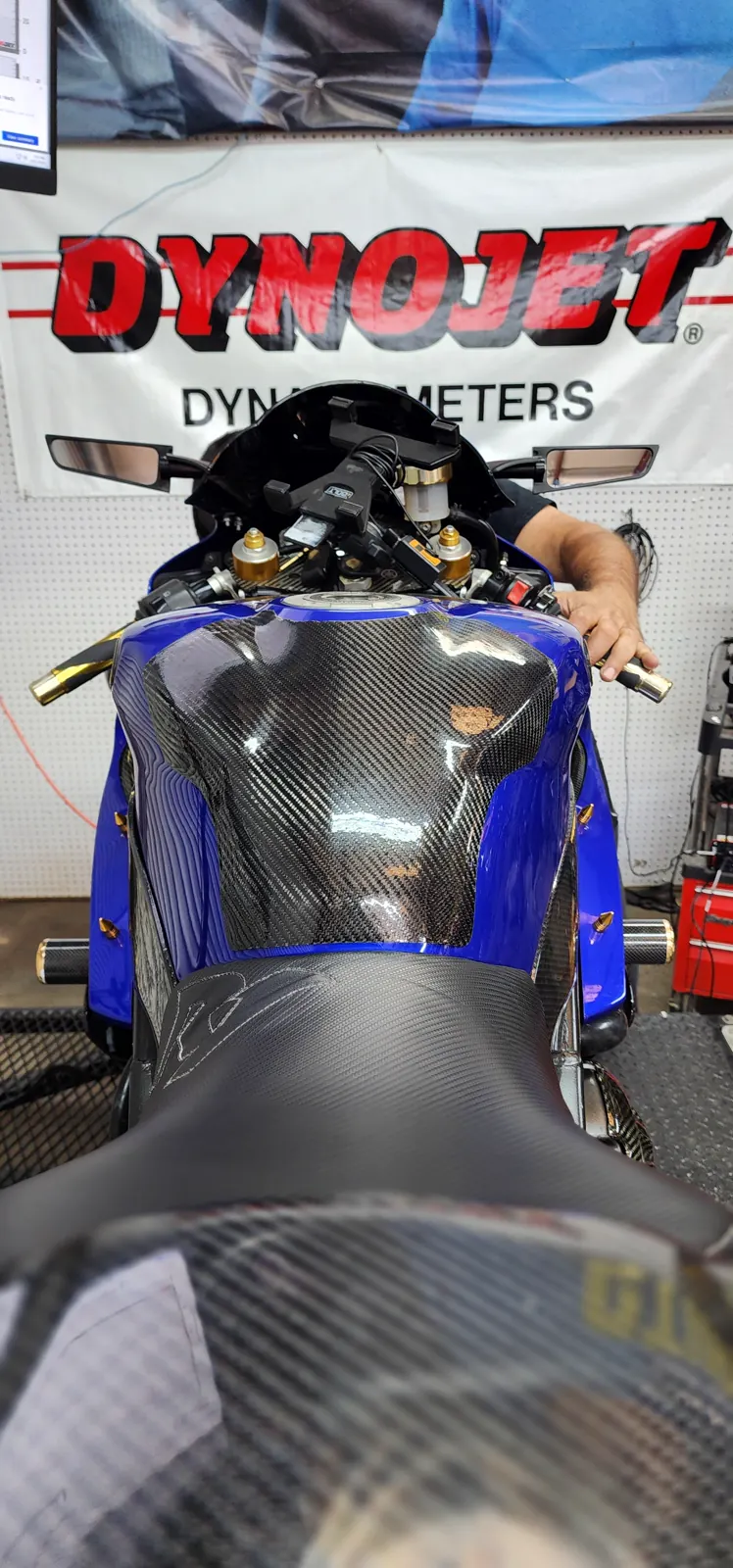
A dyno is a machine that lets your bike run hard while it stays put. The rear wheel sits on a big roller, and as you roll on the throttle, the dyno reads how much force the engine is making across the whole rev range. Think of it like a treadmill that can push back and measure your effort at the same time. It shows us the truth about how the bike is performing, not a guess.
While the bike runs, we also read the exhaust with a wideband sensor. That tells us the real air-fuel ratio at every point, from a lazy cruise to a full pull. Now we’re not guessing whether it’s lean or rich. We can see it, right there on the screen, spot by spot. That’s the difference between fixing a bike and poking at it and hoping.
NO MADE-UP NUMBERS
We won’t promise you a magic horsepower figure over the phone. Every engine, mod list, and state of tune is different. The dyno tells the real story once your bike is on it — and that honesty is the whole point of doing this in-house.
This matters because a lot of shops around here don’t have a dyno at all. Plenty of the bigger multi-line dealers up and down the metro area will sell you a part and bolt it on, but real custom mapping in-house is rare. When we adjust the tune, we run the bike, read the data, change the map, and run it again, until the numbers line up with how the engine wants to breathe. If you want the full picture on how a mapped bike stacks up against a factory setup, we broke down the tradeoffs between them in a separate post.
Here's what a good shop checks that a rushed one skips
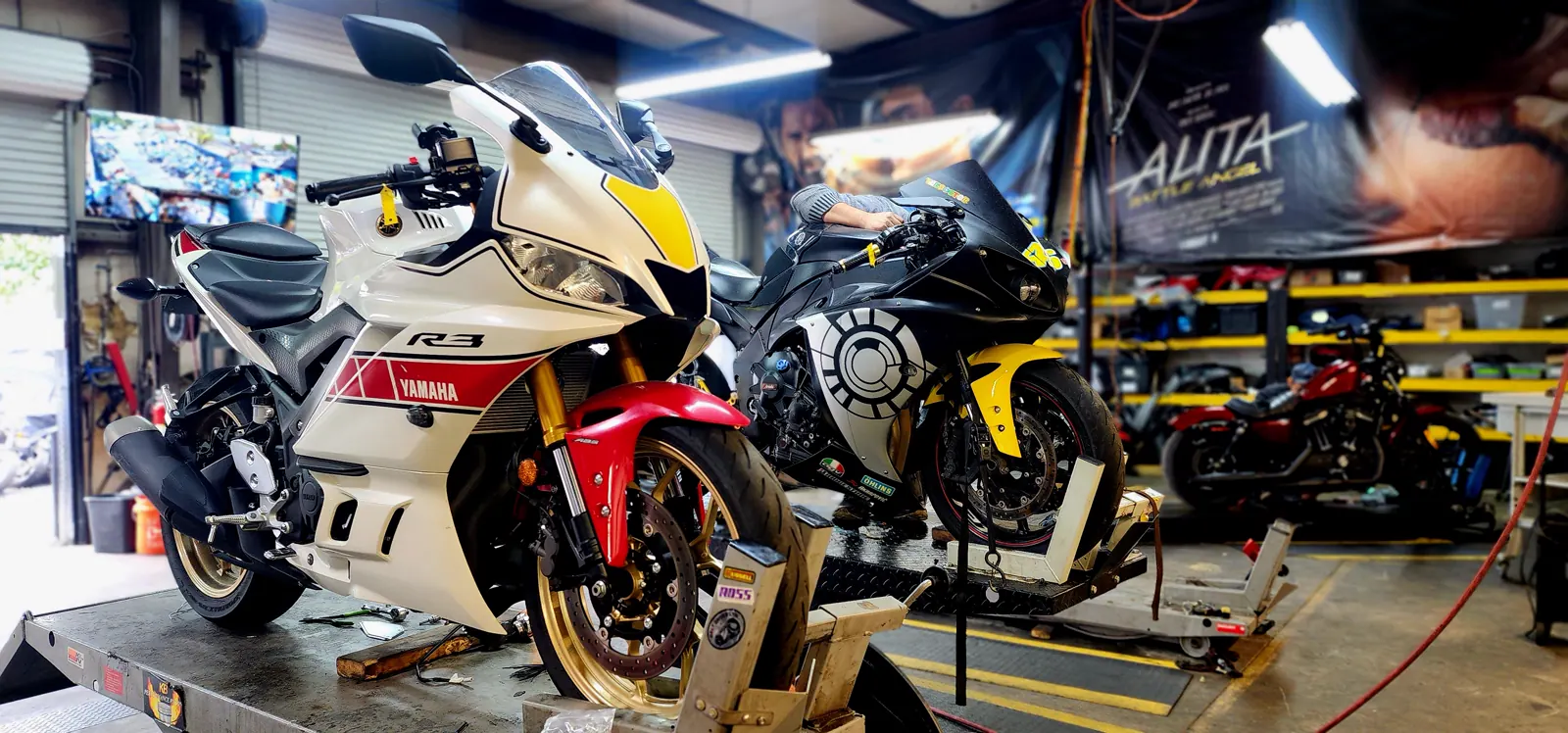
A tune is only as good as the setup around it. If a shop straps your bike down and starts pulling before the basics are right, you get a map built on a shaky foundation. So before we ever record a single run, we walk through a checklist. It’s boring, and it’s exactly why the finished tune feels so clean.
- Fresh, healthy spark plugs, because a tired plug reads like a fueling problem that isn’t there
- A clean air filter, since a clogged one starves the engine and throws off the whole mix
- No air leaks at the intake or exhaust, which can fake a lean reading and send the map the wrong way
- Correct valve clearances and a healthy engine, so we’re tuning a sound motor, not masking a mechanical issue
- Proper warm-up, because a cold engine and a hot engine want different things
- Tire condition and pressure, so the bike sits safely on the roller
A rushed shop skips half of that to save an hour. Then the tune drifts a month later and everyone’s confused. We’d rather spend the extra time up front and hand you a bike that stays right. That’s not us being fussy, that’s us respecting a garage-kept bike you clearly care about.
What the fix involves, start to finish
Let’s walk the whole job the way it actually happens in the bay. No mystery, no smoke, just steps.
- We talk. You tell us how the bike feels, what you’ve changed, and what you want out of it. A commuter and a weekend canyon carver get tuned differently.
- We inspect. The checklist above gets run, and we fix anything that would poison the tune.
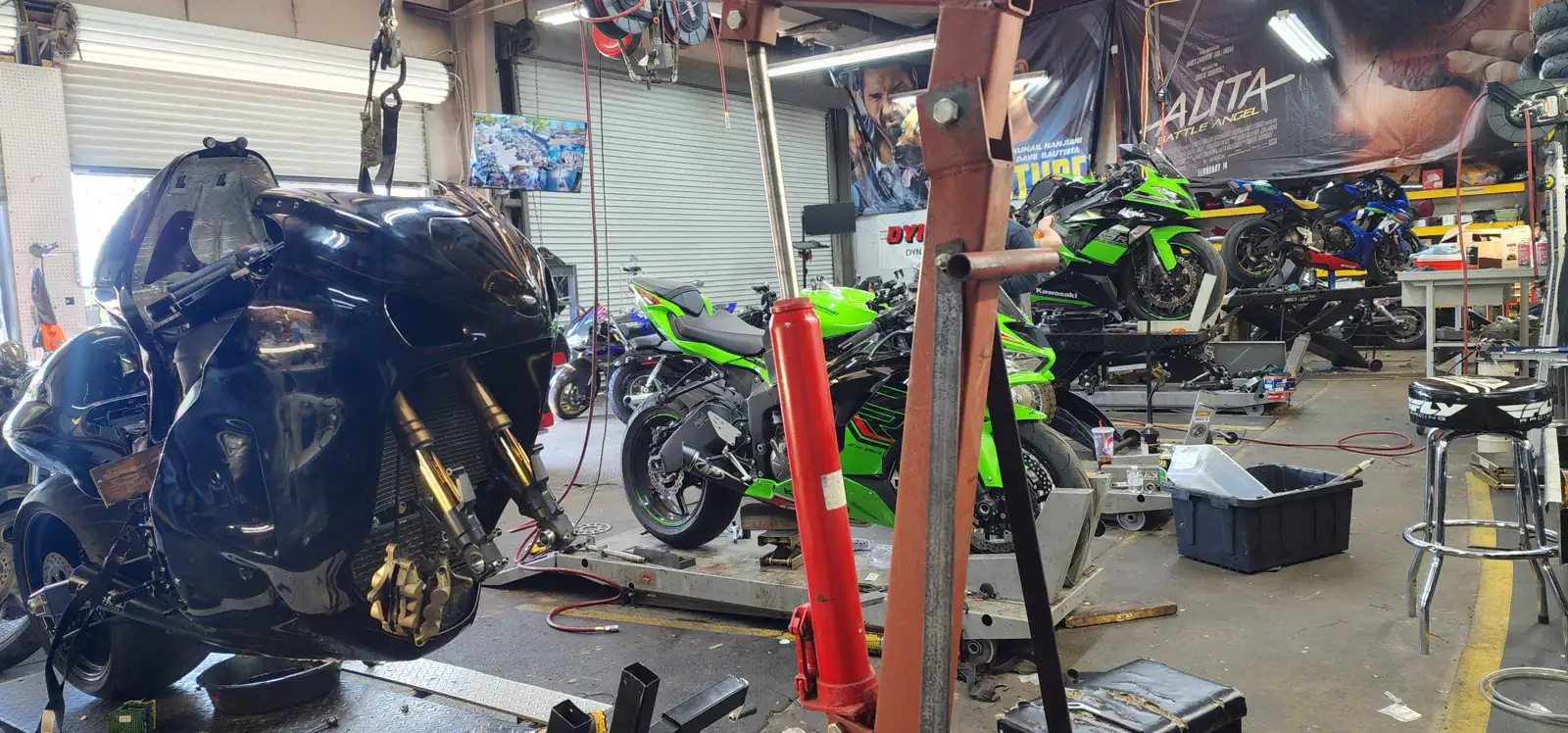
- We strap the bike to the dyno and take a baseline run to see where it stands right now.
- As a result we read the air-fuel data across the rev range and find the lean and rich spots.
- We adjust the map, using an ECU flash on the bike’s own computer or a piggyback like a Power Commander, depending on your bike and setup.
- On the other hand we run it again, and again, tightening the fueling until it’s smooth from idle to redline.
- We check the throttle feel, the idle, the decel behavior, and the temps, then hand you the printout so you see the before and after.
An ECU flash rewrites the settings inside the bike’s factory brain. A Power Commander sits between the sensors and the engine and tweaks the fuel and timing without touching the original computer. Both work great. Which one we reach for depends on your make, model, and what mods you’re running. We’ll explain the pick before we touch anything, and here is what we take care of here.
Parts vs labor, and why we won't quote it blind
Here’s the honest breakdown without a single number attached. A tune is mostly labor and know-how. The real value is the time on the dyno, the data reading, and the judgment to make the map right. Sometimes there are no parts at all, just a stock bike getting dialed to its best. Other times the job needs plugs, a filter, or a fueling device, and that’s where a parts side shows up. A bike with a fresh pipe and intake asks for more mapping time than a stock bike getting a light clean-up.
That’s exactly why an honest shop won’t quote a firm number sight-unseen. We don’t know if your plugs are shot, whether there’s a sneaky air leak, or how many mods are stacked on there until we look. Anyone who rattles off a hard price over the phone is either padding it to be safe or planning to rush the job. We’d rather see the bike, tell you what it truly needs, and then talk numbers with nothing hidden. You deserve a real answer, not a dartboard guess.
A good tune isn't sold by the phone. It's earned on the dyno, one honest pull at a time.
Bike type matters here too. A big V-twin bagger, a peaky inline-four sportbike, and a modern liter bike each want a different touch. The dyno process is the same, but the map and the time involved shift with the machine. So the fair way to price it is per bike, once we’ve had eyes on it. If you want to see the same job framed for a different town, here’s how this plays out in Canton.
PTC riders and the trip to us
Peachtree City is its own kind of place, and PTC riders know it. Folks orient by village, whether that’s an original-era corner of Aberdeen, the north end around Kedron and its Kedron Village shops, or a settled street over in Wynnmeade. Bikes here tend to be garage-kept, low-mileage, and cared for like the hobby they are. That’s a rider who wants the job done right, not fast and cheap, and that’s the rider we love working with.
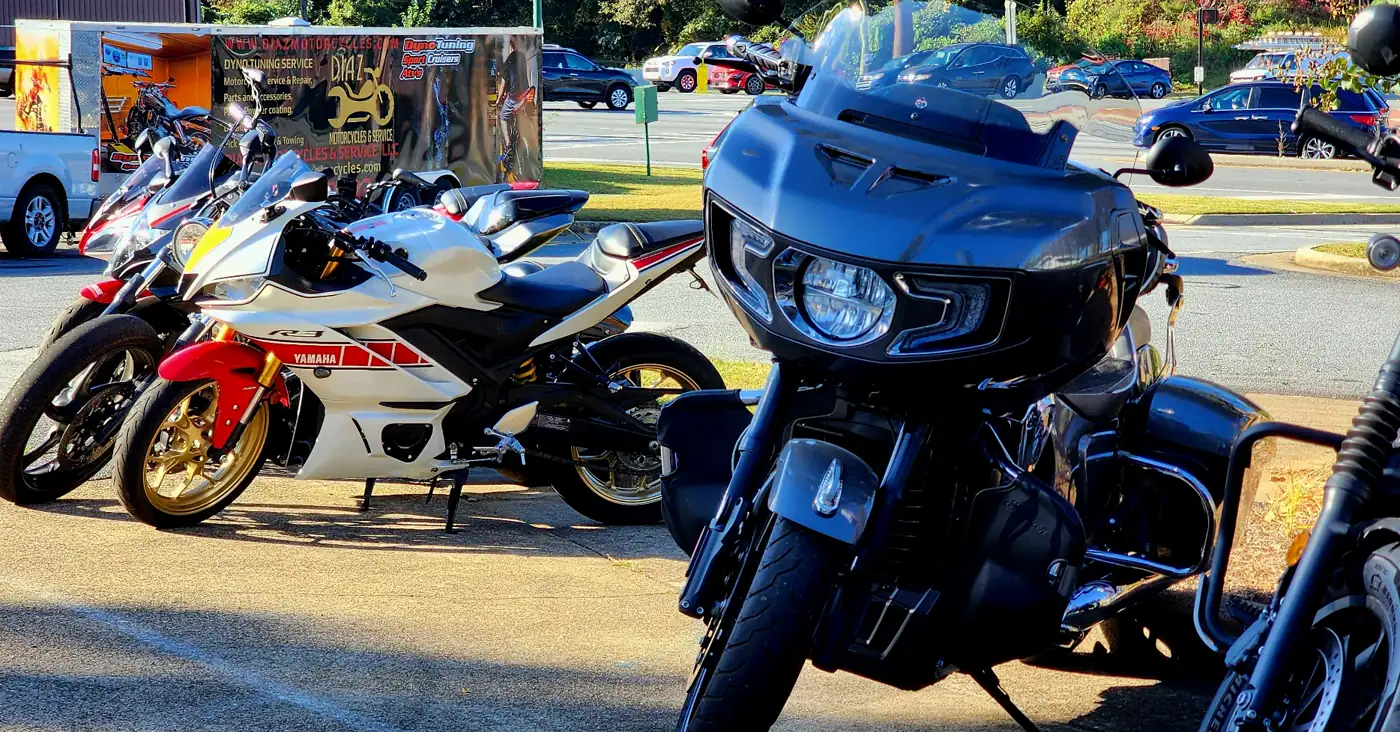
There’s no motorcycle shop inside the city limits, so a service trip is already a planned errand for you. Most days that means heading up GA-54, the east-west artery that runs toward Fayetteville one way and toward Coweta the other, near where GA-54 meets GA-74 at the busiest corner in town. The closest marque option, Moto Guzzi Peachtree City, is really over in Fairburn and only helps if you ride that one brand. For real in-house dyno work, the drive north to East Cobb is a deliberate one, roughly an hour give or take. Plenty of our friends make a morning of it, and some just ask us to trailer the bike both ways so they never miss a beat.
It fits the town, honestly. This is the same area film crews have used for shows and movies like The Walking Dead and Joyful Noise, so folks here already understand that good work takes setup, patience, and craft. A tune is no different. And once it’s done, that short historic ride down to Senoia, the very trip that got cancelled at the start of this story, is waiting for you with a bike that finally pulls clean.
Here's how this played out for someone over by Lake Peachtree
A friend who lives near Lake Peachtree brought us a touring bike with a new exhaust and a soft spot in the midrange. He’d bolted the pipe on himself and figured it would just wake the bike up. Instead it ran lean where he rode most, right in the cruising range, and it popped on decel every time he rolled off along the lake paths. He’d been living with it for a season, half-convinced the engine was tired.
On the dyno, the story showed up in about two runs. Lean midrange, exactly where the new pipe changed the airflow. We flashed the map, tightened the fueling through the cruise zone, and smoothed the transition on and off the throttle. By the last pull it held a clean mix from idle to the top, and the popping was gone. He didn’t need a new engine. So he needed a map that matched the parts on his bike. He rode off feeling like he’d gotten a different motorcycle, and really he’d just gotten his own bike back, finally running the way it should.
That’s the feeling we’re after. Not a mystery, not a sales pitch, just a bike that does what your right wrist asks. If you like reading the deeper stuff before you commit, our neighbors up north got the same treatment, and we spelled out what that service actually involves in that guide too.
You've got this
You don’t need to be a mechanic to make a smart call here. You just need to know the shape of the job. A dyno reads the truth. Lean and rich are settings, not sentences. The fix is mostly skilled labor, sometimes a part or two, and always worth seeing the bike before naming a number. If a group like the American Motorcyclist Association or the Georgia Department of Revenue is part of your riding life, you already know paperwork and patience pay off, and a clean tune is the same deal.
So bring us the bike, tell us how it feels, and let the dyno do the talking. The cancelled ride was just a delay, not a goodbye. Your best riding days are still out front, and now you know exactly how to get the bike ready for them.
Questions Peachtree City riders ask us
What's included in a dyno tune?
You get a full inspection, a baseline run on our in-house dyno, live air-fuel readings across the rev range, and a custom map loaded through an ECU flash or a Power Commander. We also hand you the before-and-after printout so you can see the change. It’s the whole job, not just a bolt-on part.
How long does a tune take?
Most tunes are a same-day job once the bike is on the schedule. Simple stock bikes go quicker, while bikes with several mods or a needed part take longer because we run and re-run until the mix is right. We’d rather take the extra hour than rush and hand back a bike that drifts later.
Is it mostly parts or mostly labor?
A tune is mostly skilled labor and dyno time, which is where the real value lives. Some bikes need no parts at all, just a clean map. Others need plugs, a filter, or a fueling device, and that’s where a small parts side shows up. We’ll always show you which is which before we start.
Does my bike type change the work?
It does. A big V-twin bagger, a screaming inline-four, and a modern liter bike each want a different touch, so the map and the time involved shift with the machine. The dyno process stays the same, but the tune is built for your exact bike. That’s why we quote each one after we’ve seen it.
What if you find something else while tuning?
If we spot an air leak, a tired plug, or a mechanical issue while we’ve got the bike, we stop and call you before doing anything. You’ll always hear what we found and what it means before we move ahead. No surprises land on your bill, ever.
Why won't you quote a firm price over the phone?
Because we can’t see your plugs, your mods, or a hidden air leak through a phone. An honest number comes after we look, not before. Anyone who quotes a hard price sight-unseen is either padding it or planning to rush, and we won’t do either to you.
We take care of riders all across the south metro and beyond, from Fayetteville and Tyrone to Newnan, Senoia, Sharpsburg, Brooks, and Woolsey. If you’re coming from Union City, Fairburn, Jonesboro, Riverdale, or Palmetto, the run up to our East Cobb bay is a straight shot, and we’re glad to trailer the bike both ways if that’s easier on your week. Wherever you park it, a garage-kept machine deserves a real tune, and we’re happy to make the trip worth it.
READY WHEN YOU ARE, PEACHTREE CITY
If your bike’s running rough and you’re tired of guessing, let’s put it on the dyno and read the real story. Peachtree City riders make the drive north because in-house custom mapping is worth it, and we’ll tell you exactly what your bike needs before we name a number. Text us today, tell us how it feels, and let’s get you back on the road to Senoia.
470-460-9883Diaz Motorcycles and Service, LLC · 847 Barnes Mill Road, Marietta, GA 30062