Motorcycle Service Cost Marietta — What You Actually Pay For
The honest version: what a real service checks, what makes one job bigger than another, and why we look before we quote.
You usually know the sound before you can name it. What’s more, a dry chain makes a thin, gritty rasp as you roll down Canton Road. Meanwhile, a brake pad worn to the backing plate lets out a metal-on-metal squeal at the first light past the Strand Theatre. After that, an air-cooled engine that’s overdue for oil starts to feel busy under you, a little hotter, a little rougher in stop-and-go. That first hint is your bike talking to you. And when you start asking what motorcycle service cost Marietta shops will hand you for the fix, the honest answer begins with a look, not a number.
That’s not a dodge. Also it’s the whole trick to getting a fair deal. Instead a motorcycle isn’t a car with two wheels missing. Besides Parts sit tucked behind bodywork, tanks, and pipes. Actually two bikes can need the exact same job and take wildly different time to reach it. So before we talk about what you pay, let’s talk about what actually goes into the work. Once you can see it, the whole thing stops feeling like a mystery.
The short answer, up front
Here it is in plain words. That’s why Routine service is a set of small checks and swaps that keep your bike honest. Oil and filter. Chain and sprockets. Brake pads and fluid. Tire condition and pressure. Either way a real look at everything that wears. In short Catch a worn pad early and it’s a quick swap. Ignore it, though, and that pad chews into a rotor, and now you’re buying the rotor too. At the same time the cheap fix is almost always the early one.
So the price of any given job comes down to three things: how long it takes to reach the part, how worn that part is once we see it, and whether the small problem stayed small. As a result that’s the honest core of any motorcycle service cost Marietta riders are handed. On the other hand None of those three can be read over the phone. That’s why a straight shop wants eyes on the bike first. So For the bigger picture on what separates a good shop from a slow one, we wrote that up too.
What drives the work
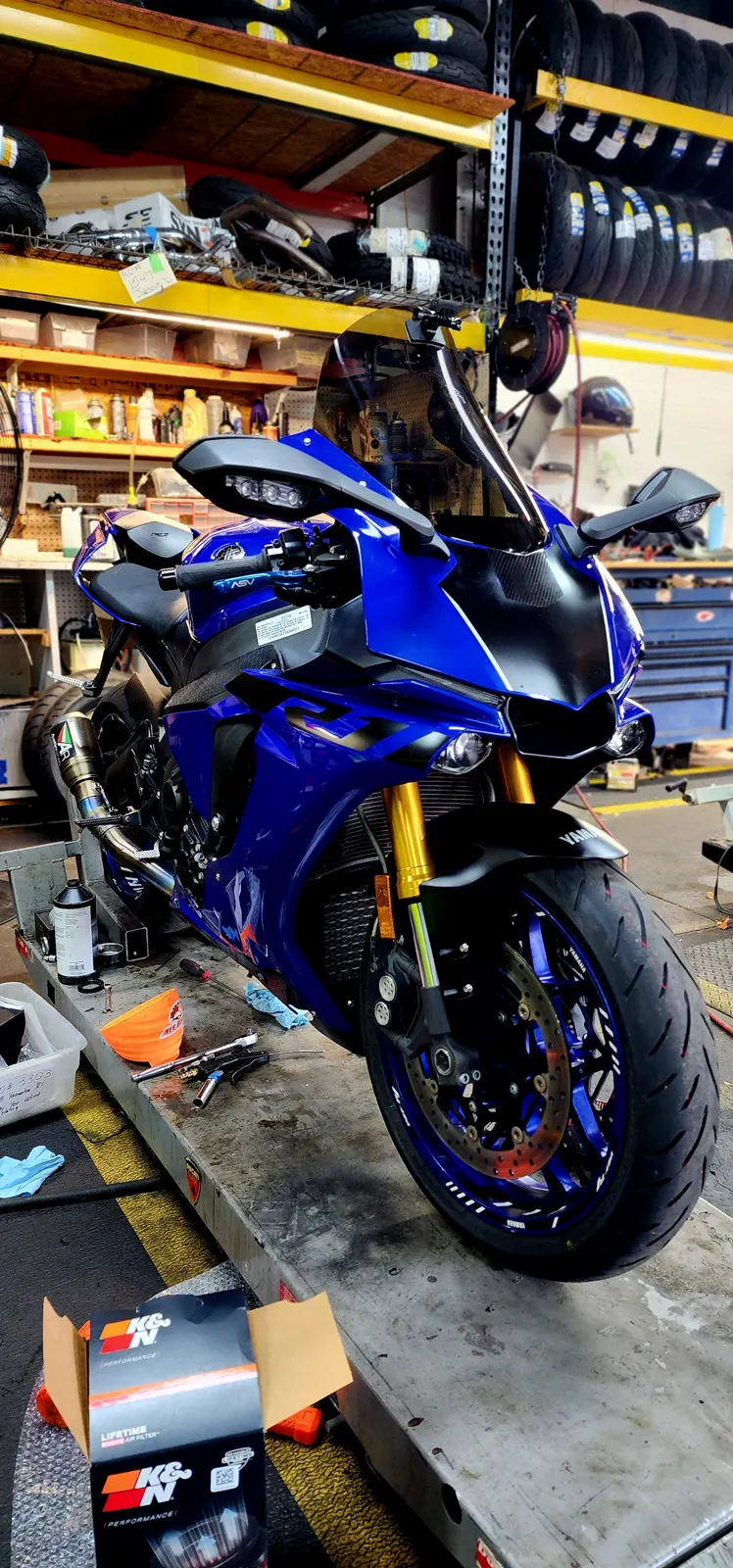
Still, the single biggest thing riders don’t expect is access. Plus, On some bikes, an oil change is ten minutes and a drain plug. Meanwhile, On others, the same oil change means pulling a fairing, moving a pipe, and working around a full tank. The oil costs the same either way. The time to get to it does not. A faired sportbike like a Yamaha R1 buries a lot behind its plastics. Of course, a bare cruiser leaves it out in the open.
This is the labor-versus-parts split, and it matters more than most folks think. Parts have a set price. Labor is time, and time is where two jobs pull apart. A chain and sprocket kit is the same box on most bikes. But reaching the countershaft sprocket behind its cover, cleaning off years of grime, and setting the slack just right takes real minutes. The part is cheap. The care is what you’re paying for.
Here’s the good news. On a routine service, most of the time goes into looking, not fixing. We’re checking pads before they score a rotor. We’re catching a weeping fork seal before it soaks a brake. Every minute spent looking early saves an hour later. That’s the whole honest game, and it’s why a service done on time never really hurts.
Where you ride changes the math too. Marietta commuting is stoplight-to-stoplight. Canton Road, the old GA-5 business route, is surface arterial the whole way, and Georgia doesn’t allow lane splitting, so you sit in the same I-75 crawl the cars do. That heat and clutch work is hard on chains, pads, and air-cooled engines. A bike that only ever saw open highway would wear far slower than one grinding out the daily Canton Road commute.
Here’s the question we’d ask if you were standing in the shop: what first tipped you off? A noise, a smell, a soft lever, a stain on the garage floor? Your answer tells us where to look first, and looking in the right spot saves you both time and money. A rider who says “it squeals only when I brake” just pointed us straight at the pads.
What a real service actually checks
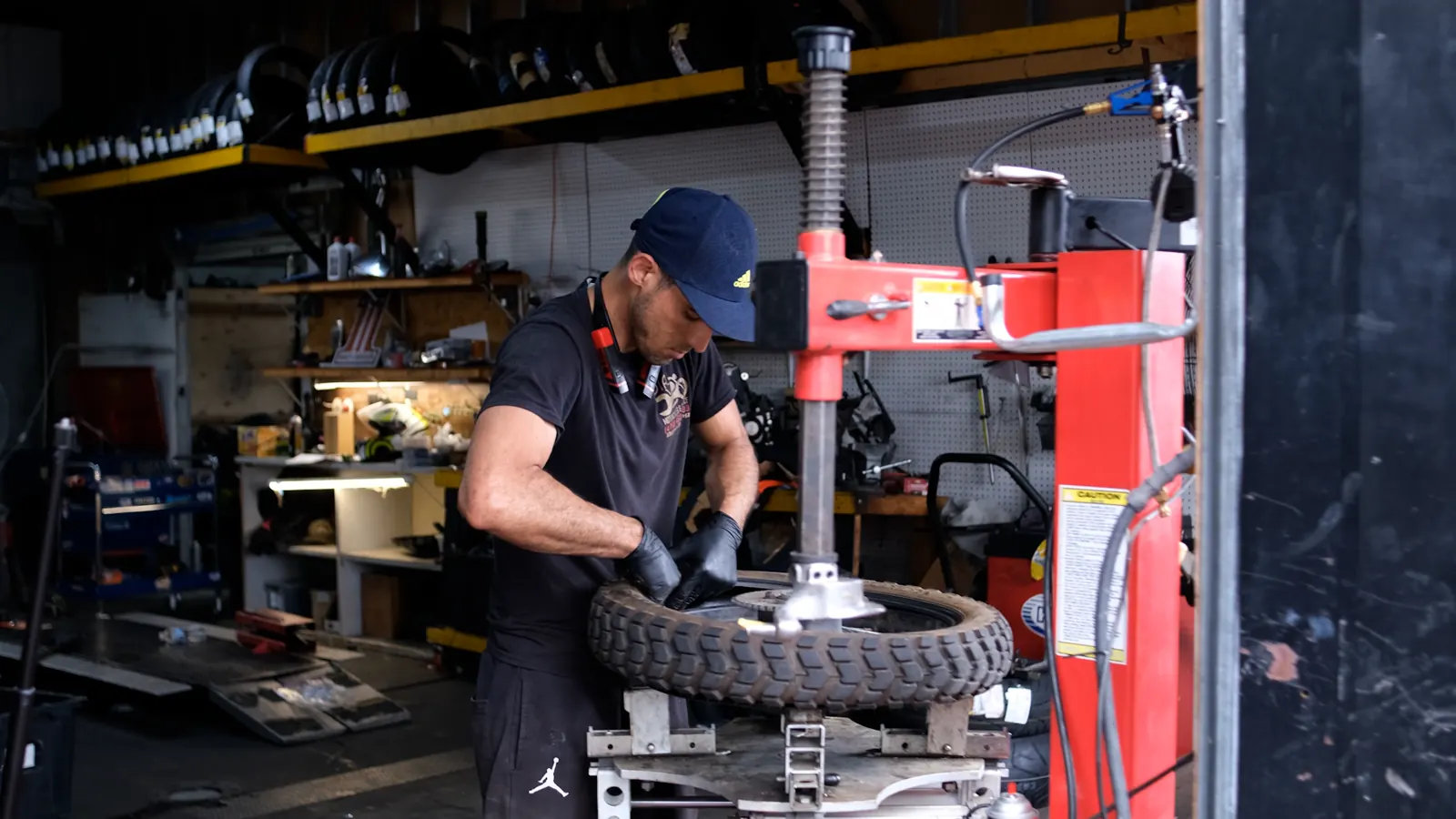
When your bike comes up on the lift, here’s the walk, start to finish. It’s not some mystery ritual. It’s a checklist a good friend would run for you, out loud, so you know exactly what happened.
- Oil and filter: drain the old, look at what comes out, fresh filter, fill to spec. The old oil tells a story if you read it.
- Chain and sprockets: check slack, clean, lube, and eyeball the teeth for hooking. A stretched chain wrecks sprockets fast.
- Brakes: pads for thickness, rotors for scoring, fluid for color. Old brake fluid goes dark and drinks up water over time.
- Tires: tread depth, age cracks, and pressure. Your owner’s manual sets the pressure, and it matters more than almost any other number.
- The wear check: fork seals, wheel bearings, cables, coolant, and battery, plus a hunt for anything leaking, loose, or about to be.
Intervals are the part people always ask about, so let’s be straight. There is no magic mileage that fits every bike. Your owner’s manual sets the interval, and it’s built around your exact engine, oil type, and riding style. A chain-drive sportbike ridden hard needs attention sooner than a shaft-drive cruiser babied on weekends. When in doubt, we go by the book and by what we actually see, never by a number we made up.
THE HONEST RULE
We won’t quote a repair we haven’t seen. A real estimate needs eyes on the bike, not a guess over the phone. In fact, a guess only ever runs high or runs short, and neither one is fair to you.
Reading the early signs
Your senses are the cheapest diagnostic tool you own. A gritty rasp is usually a dry chain. For example, a squeal that fades the moment you brake is a wear tab saying hello. A sweet smell points to coolant. Even so, a sharp one means a scorched pad. A wet spot under the forks is a seal letting go. None of these mean the sky is falling. Instead, they mean the fix is still small, and small is exactly where you want to catch it.
Mistakes to avoid
A few honest traps we see all the time, and every one is easy to dodge once you know it’s there.
- Chasing a phone quote. A number without a look isn’t a real estimate. It’s a guess, and guesses run high or run short.
- Skipping the small stuff. A worn pad is cheap. The rotor it eats is not. Early always wins.
- Letting a bike sit. Bikes parked outdoors under a cover get gummy fuel and dead batteries. A tender and a little fuel care fix it.
- Ignoring tire age. Old rubber cracks even with tread left on it. The date matters, not just the depth.
- Wrenching past your comfort line. DIY is great. Knowing when to hand it over is smart, not weak.
That last one is real here. Plenty of our friends in Marietta wrench on their own bikes, and honestly, we love that. We’ll happily take the part you’d rather not, like a stubborn fork seal or a chain that’s decided to fight back. Curious how that looks on a bigger repair? Here’s how we handle that job, start to finish.
The cheap fix is almost always the early one.
What Marietta does to a bike
Our roads leave their marks. Cobb DOT grades pavement on a condition index and is working through a six-year resurfacing plan funded largely by 2022 SPLOST money, but the older arterials still go long stretches between passes. Pothole and expansion-joint hits are a leading cause of bent rims, blown fork seals, and knocked-out wheel alignment. The railroad crossings running through the Square district are their own little ambush. Every one of those shows up on the lift eventually.
The old bones of town add their own wrinkle. Around the Whitlock Avenue Historic District, eighty-two acres listed on the National Register back in 1989 with more than a hundred contributing buildings, you get narrow streets, tight driveways, and pavement that has seen a lot of decades. Older infrastructure and tighter parking make routine care matter more, not less.
Where the bike sleeps matters too. Plenty of Marietta single-family homes have a garage, but the city also has a big apartment and townhome population along Delk Road, Powers Ferry, and Roswell Road where bikes live outside under a cover. That means battery tenders, fuel that turns after sitting, and slow corrosion. Newer builds like Barrett Preserve on the Barrett Parkway side, or the townhome infill at Marietta Walk near the Square, often mean tighter parking and outdoor storage, which is its own maintenance story.
None of this is doom, so don’t read it that way. It just means a Marietta bike earns its service a little faster than a bike in a quiet suburb, and knowing that keeps you comfortably ahead of it. For riders just over the county line, we broke down the Douglasville side of things the same honest way.
Not all Marietta miles are grind, thankfully. Roll out Dallas Highway, the GA-120 route heading west toward Paulding County, and you get the standard short weekend loop that reminds you why you own the thing. Those cleaner miles are gentler on the bike than the daily crawl. But they hide their own small trap: a bike that only comes out on weekends can sit long enough between rides to gum up. Riding it, it turns out, is good for it.
This is where Marietta is genuinely different from other towns. You’re sitting in the middle of metro Atlanta’s densest patch of motorcycle retail. Five real dealers line up along about four miles of Cobb Parkway, plus Hellbender Harley-Davidson over on South Cobb Drive, on a site that’s been a bike destination since 1986. That density exists for one plain reason: this is where northwest metro Atlanta buys its bikes.
So you’ve got choices, and that’s a good thing. But most of those dealers are brand shops, and the common gripe we hear is a flat book rate and a wait that stretches into weeks. Above Dobbins Air Reserve Base, next to the Lockheed plant, the low military jets are part of daily life here, and the riders under them run from V-twin baggers to student sportbikes to a real vintage Japanese restoration crowd. One brand counter simply can’t serve all of that well.
We sit about three miles from Marietta Square, eight to twelve minutes up Roswell Road, over on Barnes Mill Road. Nothing inside the city limits is more than about twenty minutes from us. Being in town matters when your bike is the thing that gets you to work on time. And because we work on all makes, the R1, the Harley, and the old project bike all get the very same straight answer.
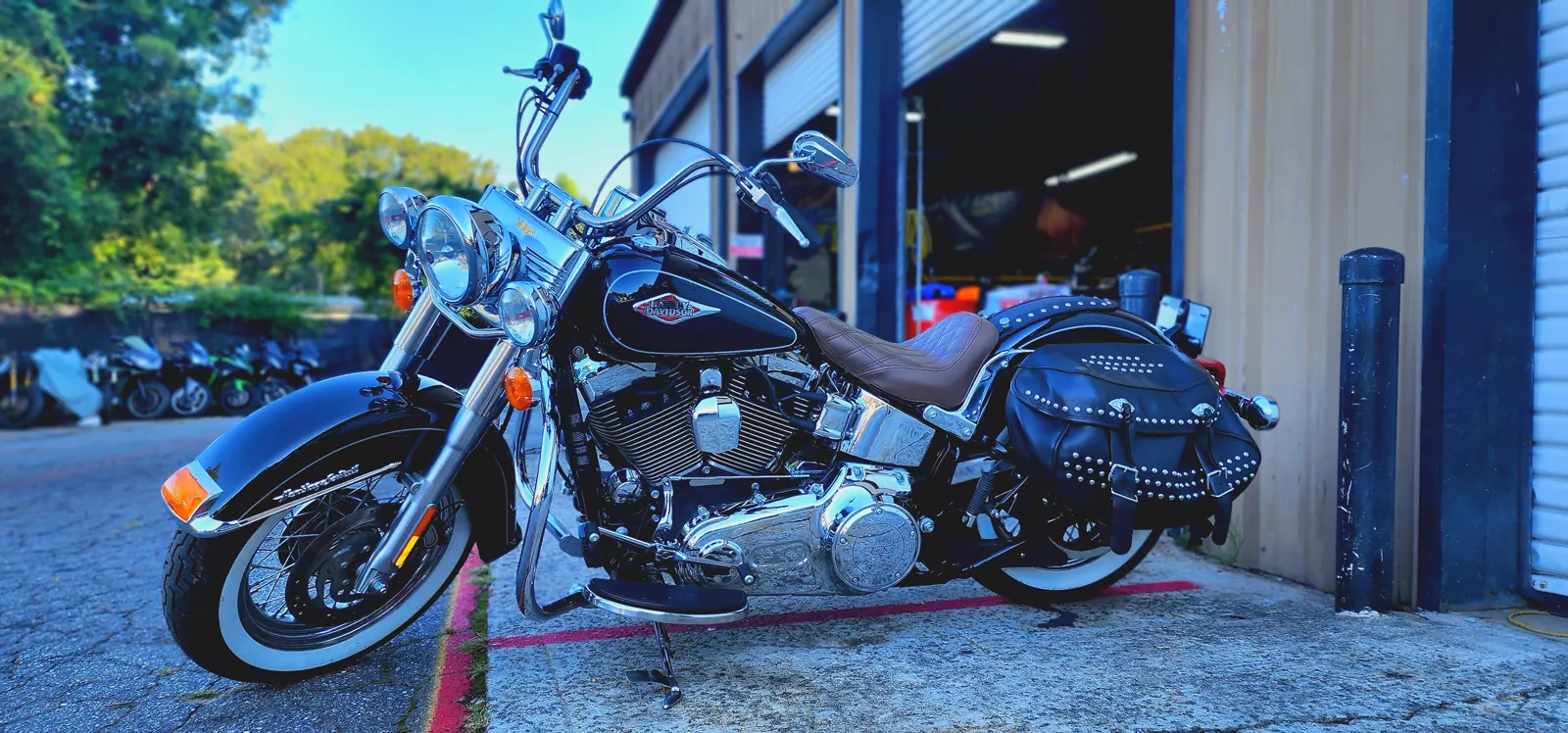
Why an honest shop looks first
So back to that number you came for. The honest reason we won’t put a motorcycle service cost Marietta price on your bike over the phone isn’t to be cagey. It’s because a fair price needs three facts we can only get with eyes on the bike: how buried the part is, how worn it is, and whether a small thing quietly grew. Guess at those, and we’re either overcharging you or setting you up for a surprise. Neither one is how we treat friends.
Tires and brakes aren’t just wear items, either. They’re the two things that keep you upright, which is exactly why we never wave them through. If you like the data behind that, the IIHS motorcycle research lays out why condition matters so much. And if you’re newer to riding, make sure your Georgia Class M licensing is squared away before the season peaks from spring through fall.
Here’s how we want you to feel walking out: like you know exactly what you paid for and why. A good service isn’t a mystery bill. It’s a clear list of what wears, what got checked, and what got saved before it grew. You’ll leave knowing your chain, brakes, and tires are honest, and knowing that the next time your bike whispers to you on Canton Road, you’ll hear it early. That’s the whole point. Want the full menu? Here’s the full list of what we do.
Questions Marietta riders ask us
Why can't you just quote it over the phone?
Because a fair price needs three things we can only see in person: how buried the part is, how worn it is once we look, and whether a small issue grew into a big one. A phone number is a guess, and guesses run high or short. We’d rather look and tell you straight.
What's actually included in a routine service?
Oil and filter, a chain and sprocket check, brake pads and fluid, tire condition and pressure, and a full wear check of seals, bearings, cables, coolant, and battery. Most of the time goes into looking, not fixing, so we catch small stuff before it turns costly.
How long does a service take?
It depends on access. On a bare cruiser, routine work moves quickly. On a full-faired sportbike, we may pull bodywork just to reach the same part, so it takes longer. We’ll give you a real time estimate once we see the bike, not a vague promise.
Why is labor sometimes more than the parts?
Parts have a set price, but labor is time, and time is where two jobs split apart. The same chain kit fits many bikes, yet reaching the sprocket, cleaning years of grime, and setting slack right takes real minutes. You’re paying for the care, and that care is what makes it last.
Does my type of bike change the work?
Yes, quite a bit. A shaft-drive cruiser and a chain-drive sportbike wear differently and are built differently, so their service needs differ too. We work on all makes, from Harleys to Yamahas to old Japanese projects, and each one gets a checklist matched to it, not a one-size guess.
How do I know when it's time?
Your owner’s manual sets the interval for your exact bike, and your senses fill in the rest. A gritty chain, a brake squeal, a hotter-feeling engine, or a stain under the forks all mean it’s time to look. Catch those early and the fix stays small.
We take care of riders all across Cobb County and the northwest metro. That means friends in East Cobb, Kennesaw, Smyrna, Acworth, Powder Springs, and Mableton, plus Austell and Vinings just down the road. We also see plenty of bikes coming in from Woodstock, Roswell, Sandy Springs, and out toward Dallas. Wherever you ride from, you’re only a short hop from the shop, and your bike gets the same honest look every time.
STRAIGHT ANSWERS, NOT GUESSES
If your bike is whispering something you can’t quite name, bring it by. We’re right here in Marietta, about three miles from the Square, and we’ll look before we quote so you know exactly what you’re paying for. Text us a quick note about what you’re hearing or feeling, and we’ll tell you what to expect. No mystery bills, just a friend who fixes bikes for a living.
470-460-9883Diaz Motorcycles and Service, LLC · 847 Barnes Mill Road, Marietta, GA 30062