What Drives Service Cost East Cobb Riders Get Quoted
Two identical bikes can need two completely different mornings on the lift. Here's what actually decides which one you have.
After that, here’s the straight answer, right up front. Also a routine service on a bike that’s been ridden all season is a small job. Instead the same service on a bike that sat in a garage since November can be three times the work. Same model. What’s more, Same shop. Same wrench. That’s why the service cost East Cobb riders hear quoted moves around the way it does. Besides it isn’t a shop being cagey with you. It’s what your bike is actually asking for.
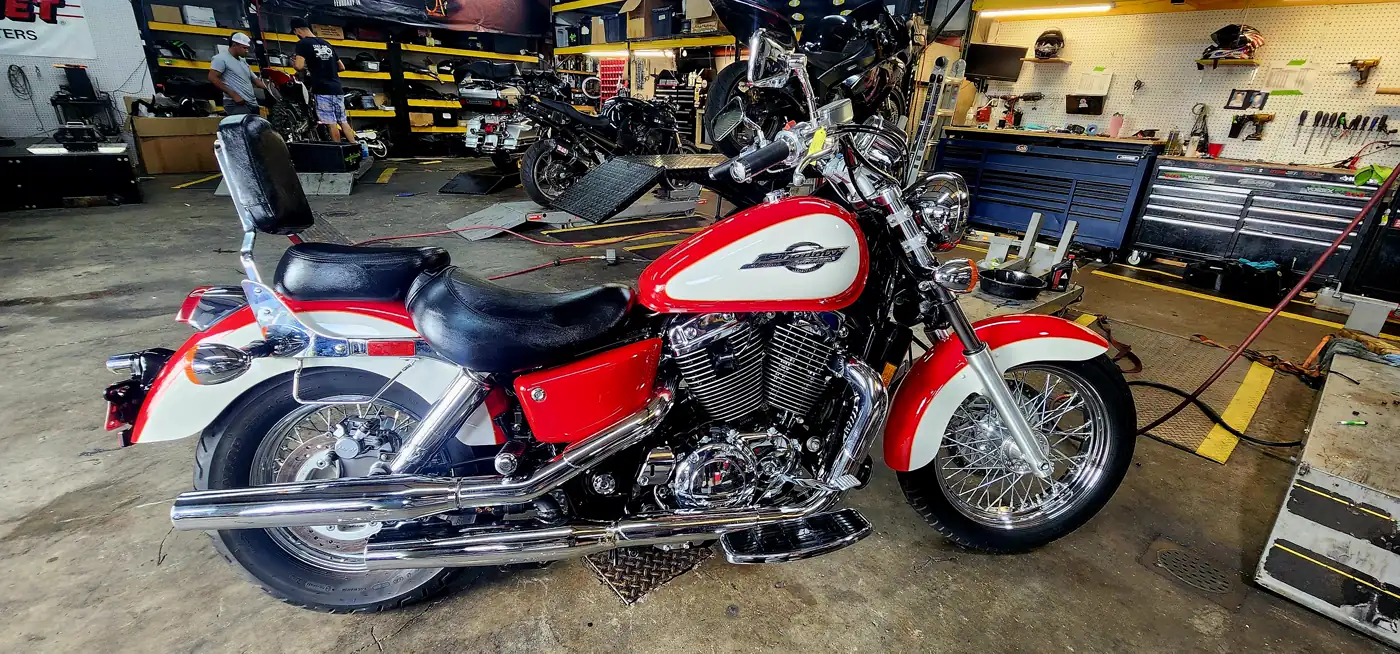
A friend we helped last spring rolled a Gold Wing over from Chimney Springs. Beautiful machine. Garage-kept under a cover, mature trees out front, walking trails down the street, the whole picture. Actually He’d put maybe a few hundred miles on it in two years. That’s why he wanted an oil change and a once-over before a north Georgia trip. Simple ask. Either way the oil change took about forty minutes. In short Everything else we turned up took the rest of the day.
Nothing was broken. At the same time that part is worth sitting with for a second. As a result the tires had plenty of tread and no cracks. The brake fluid had gone dark. On the other hand one caliper piston had started to stick because it hadn’t moved in a season. So the fuel had gone thick down in the bottom of the tank. None of that was a disaster. Still, All of it was a small thing that had been quietly getting less small.
What makes one service bigger than another
Plus, two things drive it, and only two. Parts and labor. Meanwhile, Parts are the easy half of the conversation. Of course, a filter is a filter, a set of pads is a set of pads, and we can tell you exactly what’s going on your bike and why we picked it. Labor is where the swing lives. In fact, and labor, honestly, comes down to one word: access.
For example, Access means how much of the bike has to come off before anybody touches the thing we came for. Even so, On some machines the oil filter is right there staring at you. What’s more, On others it hides behind a fairing panel, a heat shield and a bracket, and every one of those has to come off and go back on. Neither bike is better than the other. They’re just built differently.
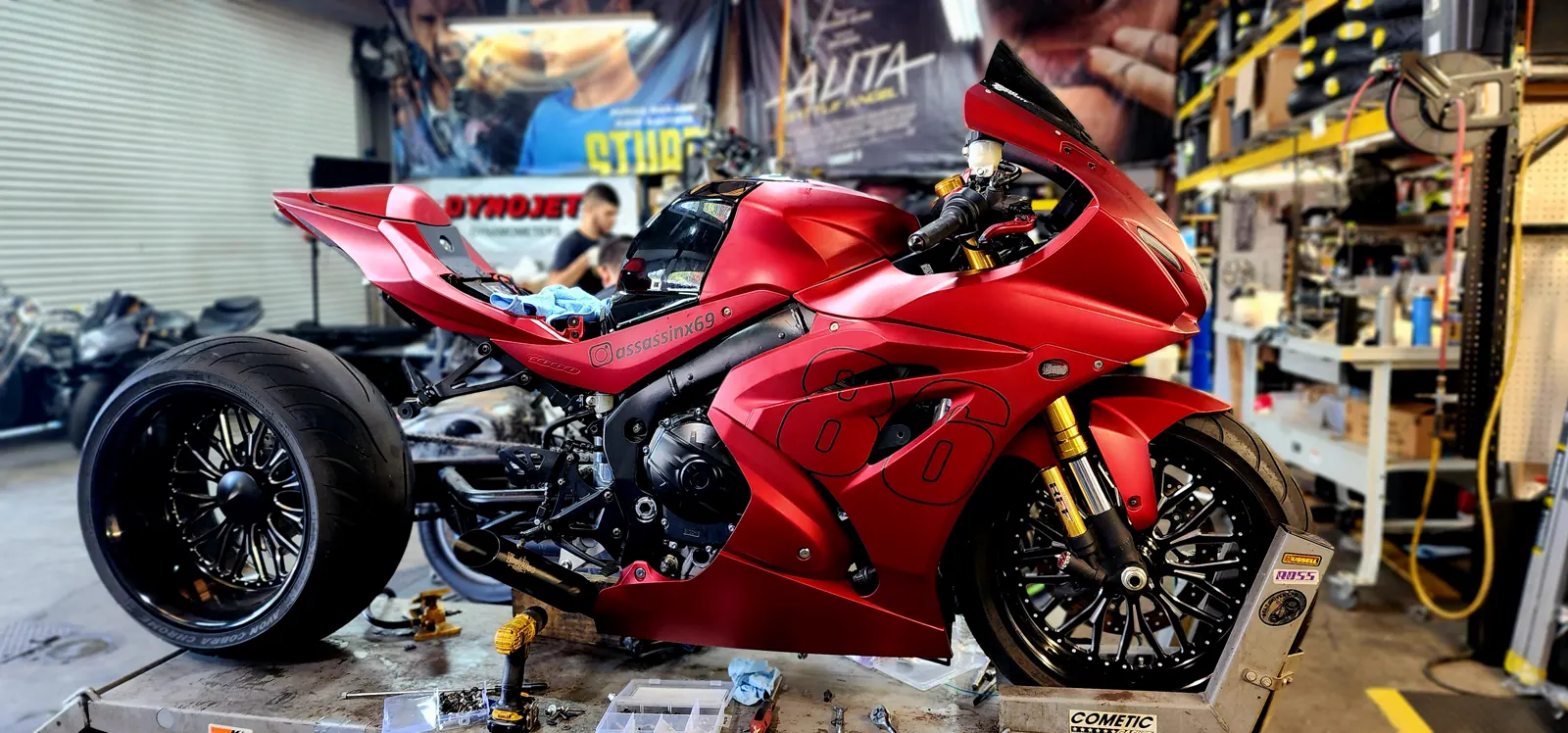
After that, a valve check is the clearest example we can give you. Also On some engines you pull a cover and you’re looking right at it. Instead On others the tank comes off, the airbox comes out, the coolant gets drained and the radiator moves before anyone measures a thing. The measuring takes minutes. Besides the path to the measuring takes hours.
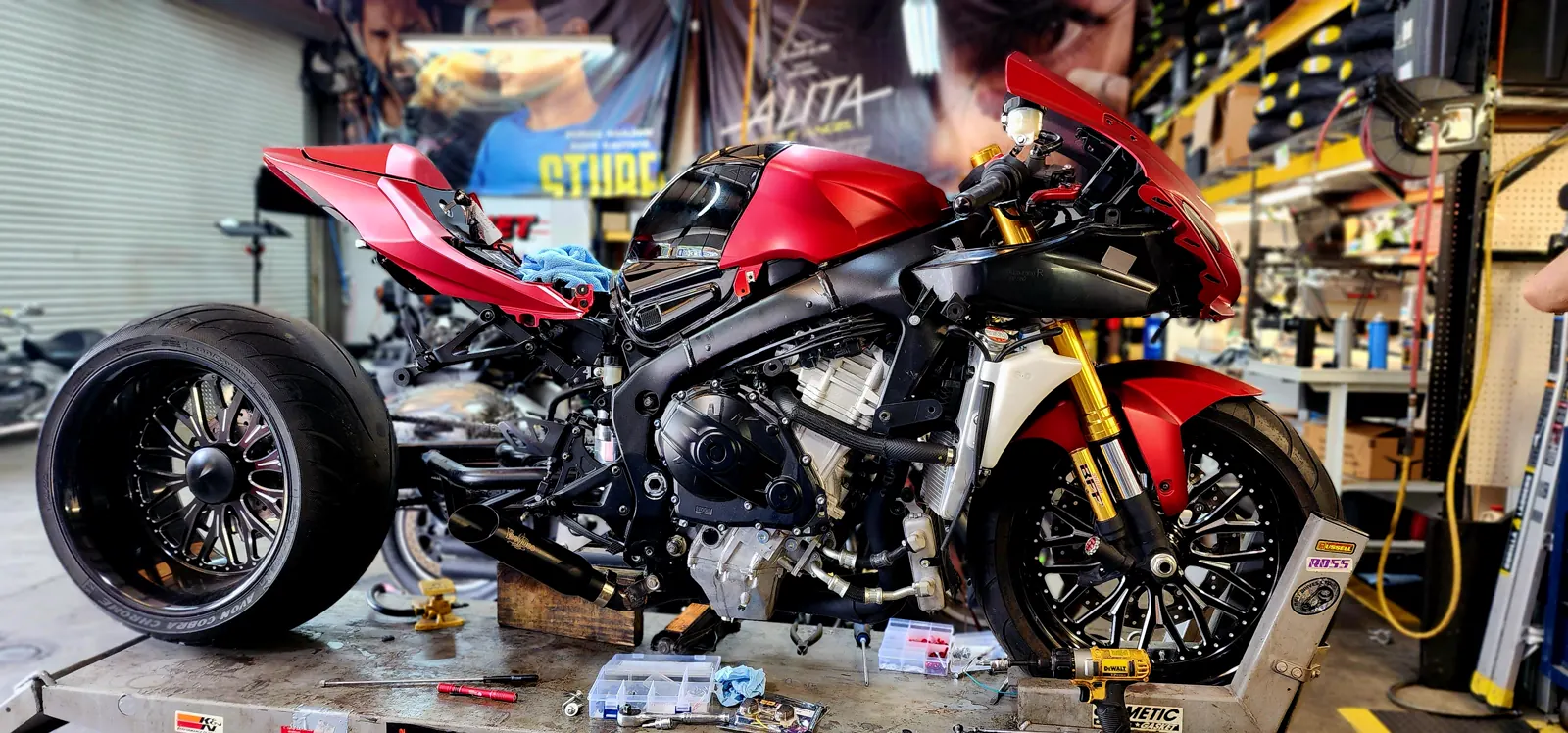
Chain and sprockets tell the same story. The parts list is basically identical on any bike. But a single-sided swingarm with luggage mounts and a hugger over it is a very different afternoon than a naked bike with a bolt-on rear wheel. When we walk around your machine at intake, that’s the thing we’re reading. Not the badge on the tank.
The wrench time is almost never in the repair. It's in the road to the repair.
Why bikes around here wear differently
East Cobb isn’t a commuting town, and we love that about it. Most bikes here are a second or third vehicle. They come out Saturday morning for a coffee run down Johnson Ferry Road toward the Chattahoochee, over to Paper Mill, home before lunch. That is a wonderful way to own a motorcycle. It’s also a low-mileage life, and low-mileage bikes come with their own list.
Sitting is the enemy, not miles. Garages are great for paint and terrible for batteries. Fuel goes stale. Tires flat-spot on the one patch of rubber holding the weight. Brake pistons get lazy. Rubber lines dry out from the inside where you can’t see it. Once in a while a mouse decides your airbox is a fine place to raise a family, which is lovely for the mouse and rough on the air filter.
Roads factor in too. Older subdivision streets and the creek crossings along Sewell Mill, Paper Mill and Terrell Mill still carry patched sections, sunken utility cuts and steep dips down in the creek bottoms. The heavy tree canopy that makes the riding so pretty also holds wet leaves, acorns and pine straw long after the rest of the county has dried out. Tires, brakes and suspension all feel that, and we see the evidence on the lift.
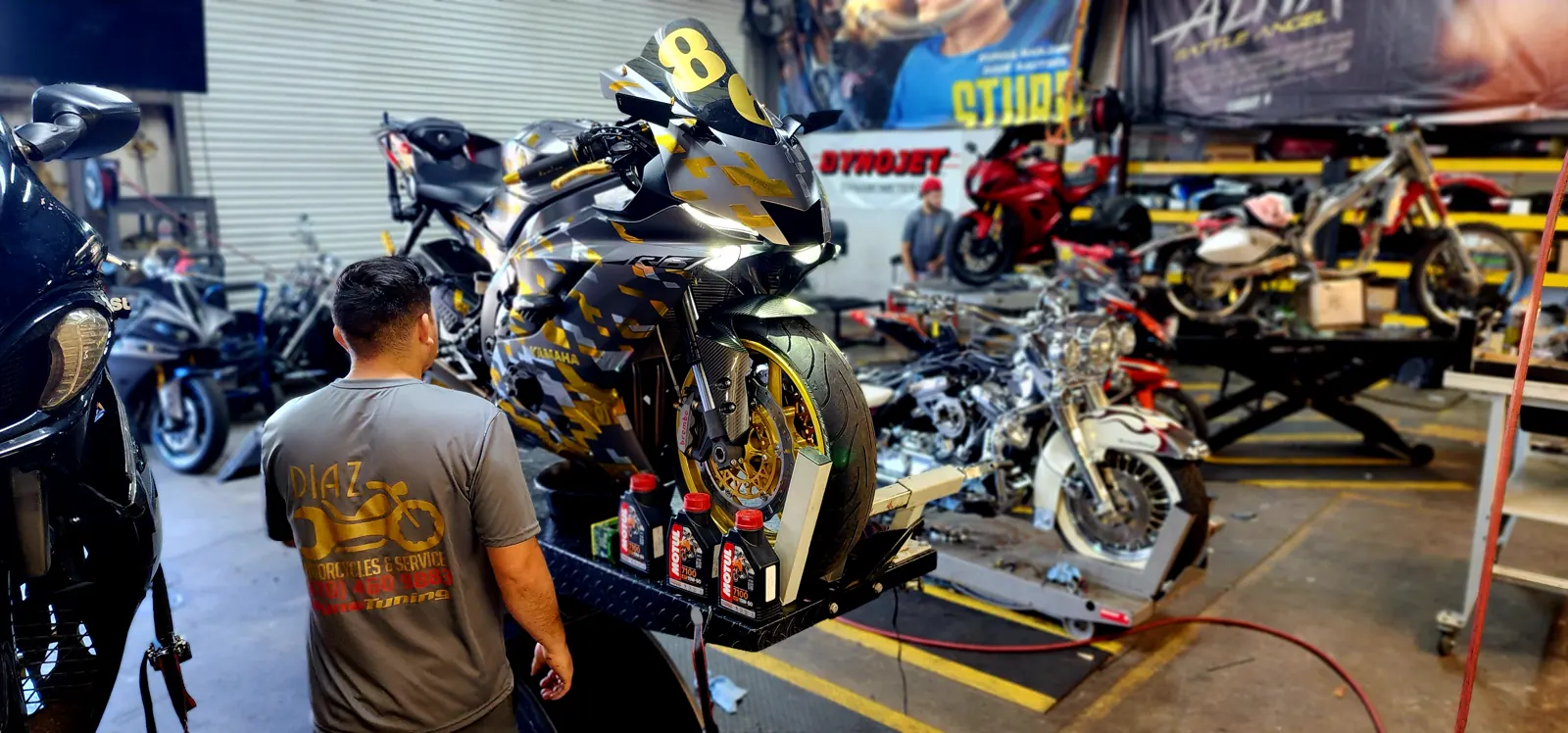
But here’s what most riders get wrong about this. They assume a bigger service bill means something went wrong with the bike. Usually it means the opposite. It means four small items got caught in one visit, on one lift, while the machine was already open. Handling four little things on a single morning is the cheap version of this story. Meeting those same four things one at a time, on the shoulder of Roswell Road, is the version nobody enjoys.
That’s the honest math of maintenance, and it isn’t close. Small and early beats big and late every time. A sticky caliper caught this month is a cleaning. Left alone, it becomes a pad, a rotor and a bad afternoon.
Why we won't quote your bike sight-unseen
We get this call most weeks. What does a service run on a bike like mine? Totally fair question, and here’s the honest reason any shop worth trusting gives you a range and then asks you to bring it by. Two identical model years can need completely different work. One got ridden and looked after. One got parked with old fuel in it and a tender that quit. Same bike on paper. Different job in the bay.
A firm number over the phone is a guess wearing a promise costume. We’d rather look at it, tell you what we find, and let you make the call. You see the full picture before anything gets billed, and you approve the work first. Nobody likes surprises, and we’re not big fans of handing them out.
If you want the plain-language version of our process, here’s how we handle that job from drop-off to handoff. It’s the same conversation riders over in Peachtree City have with us, because the questions don’t change with the ZIP code.
What a service actually includes, start to finish
People picture a mystery back room. It’s honestly pretty boring, in the best way. Here’s the whole thing in order.
- You tell us how the bike’s been living. Ridden weekly, or parked since fall? That one answer changes the plan more than the mileage does.
- We do a walk-around with you standing there. Tires, chain slack, lever feel, leaks, chafed lines, the date codes on the rubber.
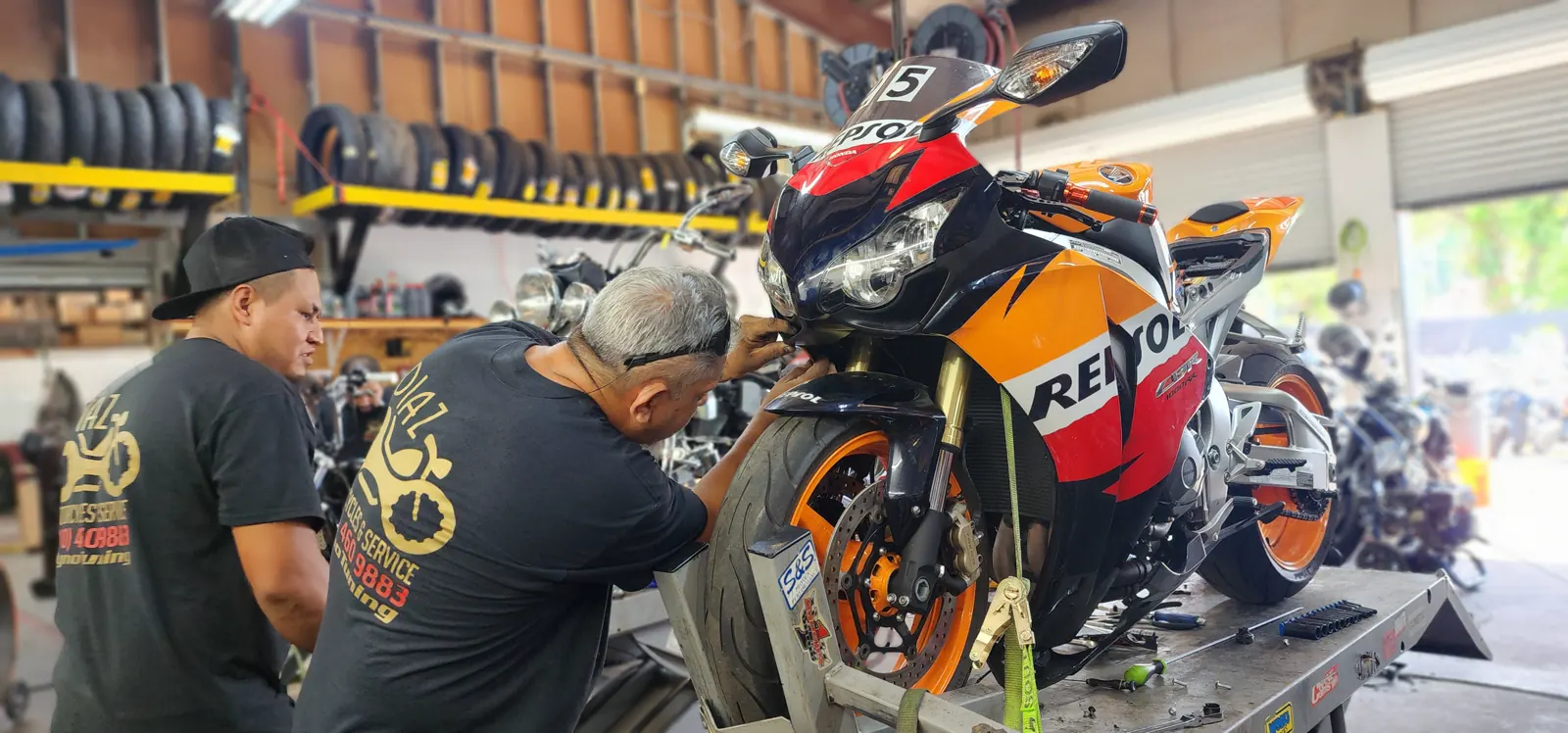
- The bike goes up on the lift and we get underneath it, where every honest surprise lives.
- Fluids and filters. Oil, filter, brake fluid condition, coolant if the engine takes it, and a look at the air filter.
- Chain and sprockets get cleaned, measured and adjusted, or flagged if they’re past adjusting.
- Brakes come apart far enough to see pad thickness, rotor condition and whether the pistons still move freely.
- Battery and charging get tested under load, not just poked with a meter while it’s sitting there.
- We call you with a list, sorted into what it needs now and what can wait a season. You choose.
- The approved work gets done, and the bike gets a real test ride before we call it finished.
One thing we’ll never do is make up a mileage number for your machine. Your owner’s manual sets the intervals for your specific bike, and that book is the boss. Our job is to read it with you and be straight about the calendar side, because on a garage-kept bike, time matters every bit as much as miles.
THE SHORT VERSION
Parts are predictable. Labor depends on how much of your bike has to come apart to reach the part. That’s the whole equation, and it’s why we look first.
Let us tell you about a rider near Atlanta Country Club. He kept two bikes in an immaculate garage, a bagger and an older air-cooled twin, both spotless and both barely ridden. He’d been putting off service for a year because he was certain it would turn into a giant production. It didn’t. The bagger wanted fluids and a battery. The twin wanted fuel work, a chain, and one brake caliper freed up and cleaned.
Both went home the same week. The part we still think about is what he said afterward. He told us he’d quietly stopped riding without noticing, because he didn’t trust either bike enough to leave the driveway with it. Now he’s out Saturday mornings again. That’s the real product here. Not the parts. The confidence.
What it feels like after
A sorted bike gives itself away in the first mile. Throttle response is clean right off idle. The brakes bite where you expect them to instead of a half-inch later. The chain stops slapping. It fires on the first press instead of the third. You quit listening for weird noises and start listening to the road again.
That’s the relief riders actually describe to us, and it has nothing to do with paperwork. It’s the moment you swing a leg over and realize you’re not negotiating with the machine anymore. Riding gets easy again. That feeling is available to almost every bike that rolls in here, which is the genuinely good news buried in all of this.
The East Cobb convenience part
Here’s the quiet advantage nobody mentions. There is no motorcycle dealership in East Cobb. Every single one sits over on Cobb Parkway or South Cobb Drive, out past The Big Chicken at Cobb Parkway and Roswell Road, which turns one oil change into a drop-off run, a ride back, a pickup run and a ride home. WOW Motorcycles up on Cobb Parkway is the largest pre-owned powersports dealer in the country, and like most shops out that way, it’s closed Sunday and Monday.
We’re at 847 Barnes Mill Road, just off Roswell Road, GA-120, the east-west spine that runs from Marietta Square out to the Fulton County line. From Windsor Oaks, or from the Johnson Ferry and Lower Roswell hub, you’re looking at roughly ten minutes. Nothing in East Cobb is much more than twenty minutes out. If you know the old Sewell Mill site on Sewell Mill Road, where ruins from the Samuel and Isaac Sewell days still stand, you’re already in the neighborhood.
Being close matters more than it sounds. Short trips mean you’re willing to bring the bike in for the small stuff, and the small stuff is exactly what keeps the service cost East Cobb riders pay from ever getting dramatic. You can see what we take care of here if you’d like the service list in one place.
None of this is guesswork about how people ride, either. Groups like the Motorcycle Industry Council track how bikes actually get used, and NHTSA crash data is public if you want to dig into the safety side yourself. The takeaway is simple. A well-kept bike behaves predictably, and predictable is what keeps a good Saturday good.
If you’re still deciding who ought to touch your bike, we wrote the full rundown on it, including the questions we’d ask if we were the customer. Ask them of us. We like those conversations, and a shop that flinches at them is telling you something.
So here’s where it lands. Bring the bike by, let us put eyes on it, and you’ll leave knowing exactly what it needs now and what can wait until fall. No mystery, no pressure, no number invented over the phone. Just a plan you can see, and a bike you trust enough to point down Johnson Ferry on a Saturday morning without thinking twice about it.
Questions East Cobb riders ask us
What makes one service bigger than another?
Access, almost every time. The parts list for an oil change or a chain job barely changes from bike to bike, but the amount of bodywork, brackets and shielding in the way changes a lot. A bike that has to be half undressed to reach a filter is simply more hours than one that doesn’t. How long the bike sat also adds items.
Why won't you quote my service over the phone?
Because two identical bikes can need completely different work, and we’d rather be accurate than fast. We’ll happily talk through a range and what’s likely on your model. Then we look at the actual machine, give you a written list sorted by urgency, and get your approval before any wrench turns.
What's included in a routine service?
Oil and filter, a fluid check including brake fluid condition, air filter inspection, chain cleaning, measuring and adjustment, brake pad and rotor inspection, tire condition and pressure, a battery and charging test, and a full walk-around for leaks, chafing and loose fasteners. It ends with a real test ride, not a lap around the parking lot.
How often should my bike be serviced?
Your owner’s manual sets the intervals for your specific machine, and we follow that book rather than inventing a number. The one thing we’d add is the calendar. Bikes in East Cobb are mostly garage-kept and low-mileage, so time-based items like fluids, fuel and rubber often come due well before the odometer says anything interesting.
How long does a service take?
A straightforward routine service on a bike that’s been ridden regularly is usually a same-day or next-day job. A bike waking up from a long sit takes longer, mostly because we find more and because some parts have to be ordered. We’ll tell you the timeline up front and call you if anything changes it.
Is more of the work parts or labor?
It depends entirely on the job. Tires and brake components lean toward parts, while valve checks and anything buried under bodywork lean heavily toward labor. We break the two out for you every time so you can see exactly where the work is going and decide what to do now versus later.
Our shop sits right in East Cobb on Barnes Mill Road, and we take care of riders all over the north metro. That means Marietta and the Square crowd, Roswell and Sandy Springs just across the river, Kennesaw and Acworth up the northwest side, Woodstock and Canton coming down from Cherokee, Smyrna and Vinings heading toward the city, plus Alpharetta and Dunwoody on the east end. Riders come to us from Atlanta proper too, usually because they’d rather deal with one shop that knows their bike than a rotating cast of counter people.
BRING IT BY, WE'LL LOOK FIRST
Text us what you’re riding and how long it’s been sitting, and we’ll tell you what to expect before you load it up. We’re minutes from anywhere in East Cobb, we’ll show you what we find on the lift, and nothing gets done until you say go.
470-460-9883Diaz Motorcycles and Service, LLC · 847 Barnes Mill Road, Marietta, GA 30062