Dealer vs Indie Service Acworth — Which Is Right
Both can do good work. Here's the honest breakdown of what each one is built for, and which one we'd send you to.
In fact, Saturday morning, garage door up, coffee going cold on the bench. For example, you thumb the starter and the bike turns over slow, like it’s thinking it over first. It catches, eventually. Then you roll it forward a few feet and the chain makes a dry little rasp it wasn’t making last month. Nothing’s broken. Nothing’s on the floor. But something’s off, and standing there in your own garage is usually where the dealer vs indie service Acworth question starts, because somebody has to put eyes on it.
Take a breath, because this one has a happy ending. Even so, a lazy crank and a dry chain are two of the easiest things on a motorcycle to put right. What’s more, they only turn into big jobs when they get ignored long enough to drag something else down with them. So the fix isn’t the hard part. After that, the only real decision is who you hand the keys to.
Start with what your bike is already telling you
Before you pick a shop, it helps to know what you’re actually walking in with. Also most bikes give you plenty of warning. Instead they just do it quietly, in small ways that are easy to talk yourself out of. Here’s the short list we hear most often from riders around the lake.
- Slow, lazy cranking after the bike sat for a few weeks, then normal cranking once it’s been ridden
- A chain that sounds dry, or has a tight spot when you roll the bike back and forth by hand
- A brake lever that pulls closer to the grip than it used to, or a squeal only on the first stop of the day
- A front end that dives hard over a railroad crossing and takes an extra beat to settle
- A worn strip down the middle of the rear tire, with the edges still looking brand new
- Hard cold starts and a rough idle in spring, after the bike napped through the winter
Every one of those points at something specific. Lazy cranking is almost always a battery that got sulfated from sitting, not a dying starter. A dry chain with a tight spot means the lube’s gone and the links are wearing unevenly, which chews the sprockets next. A soft brake lever usually means old fluid that’s soaked up moisture. That harsh front end is fork oil that’s tired, or seals starting to weep. The flat strip down the tire is just honest highway miles.
Notice a pattern? None of that is a disaster. It’s all normal wear, and every item on that list is simpler to handle now than after it takes a friend down with it. A stretched chain eats a sprocket set, and a quick job turns into a long one. That’s the whole argument for regular service in one sentence.
What a dealership service department is built for
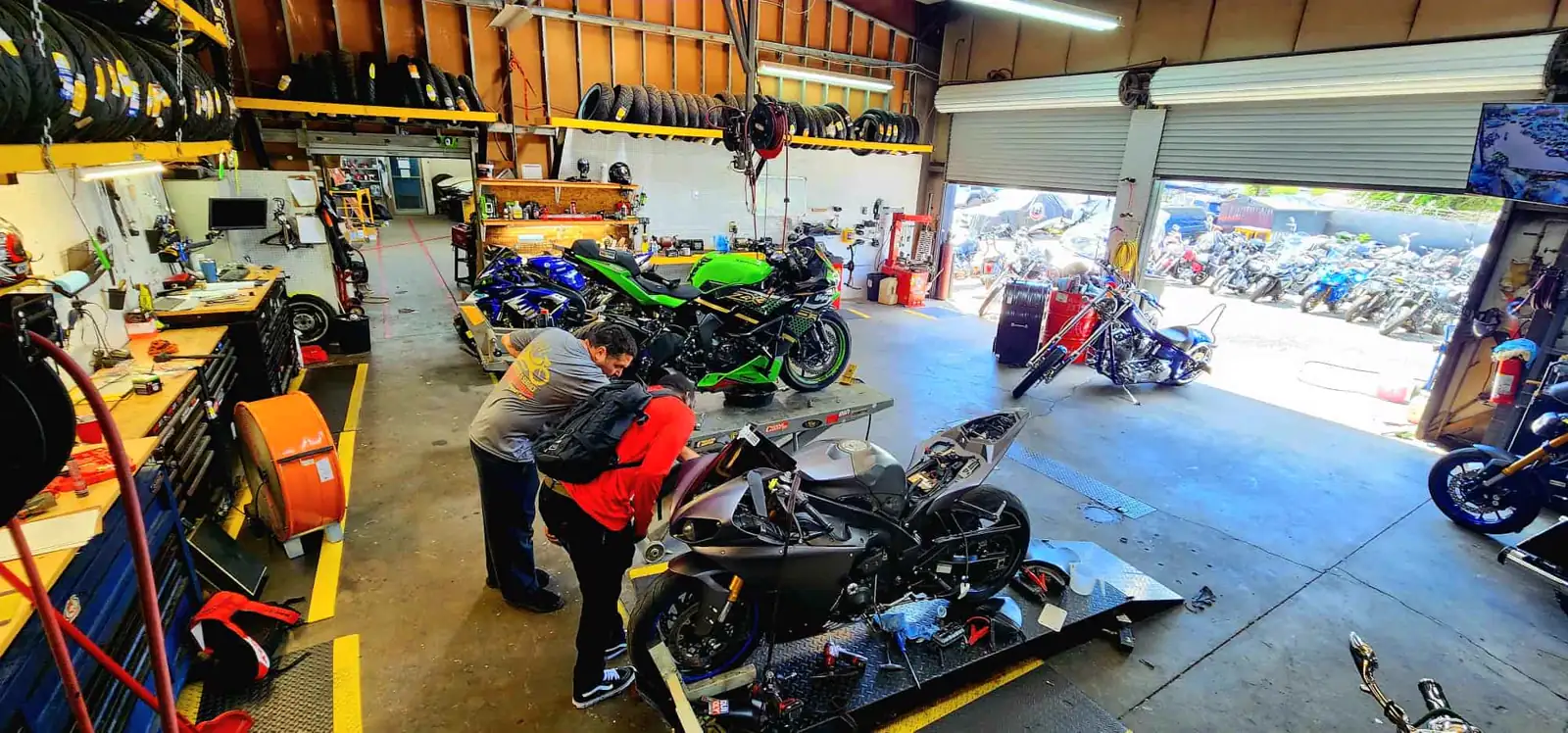
Let’s be fair to the dealers, because they earn their keep. A franchised dealer is tied to one brand, and that tie comes with real advantages. Their techs get factory training on that brand. They have the factory diagnostic tool, the factory software updates, and a parts shelf stocked with pieces for the bikes they sell. If your bike is new and still under warranty, that relationship matters a lot.
Dealers also own recall work and warranty claims outright. If the manufacturer says a part gets replaced at no cost to you, the dealer processes that. They also have direct access to factory documentation, and some brands publish theirs openly, like the Harley-Davidson service information portal. For a newer bike with a warranty still on it, that’s a strong hand.
What an independent shop is built for
An independent shop plays a different game. We’re not tied to one badge, so on any given day there’s a Japanese sportbike, an Italian twin, a cruiser and somebody’s project bike in the building at once. That variety is the point. A tech who’s seen the same failure across five brands spots it faster.
The other difference is who you talk to. At an independent shop, the person who explains the job is usually standing near the person doing it, or is the person doing it. You can ask why. You can ask what can wait. Nobody hands you a menu with names for packages you didn’t ask about. If you want to see exactly what you get when you bring it in, it’s all spelled out plainly, in the same words we’d use standing in the shop with you.
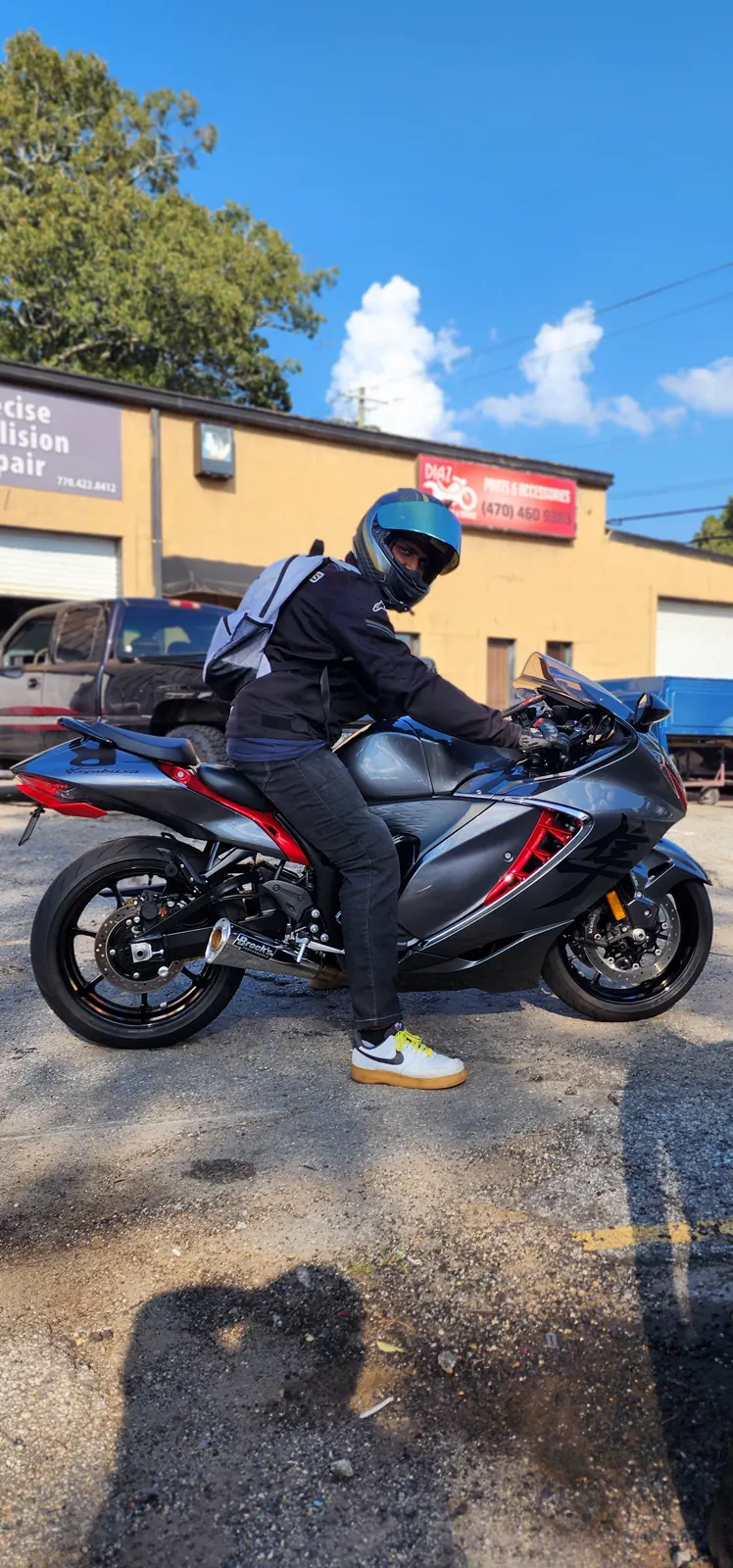
But here’s what most riders get wrong about this. They treat it like a loyalty question, like you pick a side at the beginning and stay there forever. It isn’t. It’s a job-by-job question, and the right answer changes depending on what’s actually wrong with the bike that week. Warranty claim on a new machine? Dealer, every time, no argument. Chain and sprockets, fluids, brakes, tires, forks, carbs on an older bike, or anything that needs somebody to actually diagnose instead of look up? That’s independent territory.
Riders around here are sharp about this, and it shows. Acworth is a garage town: two- and three-car garages, detached shops on the bigger lots toward the county lines, and folks who already own a torque wrench. Most people who call us have done what they can do themselves. They’re calling because the next step needs a lift, a press or a dyno. That’s a smart way to use a shop, and we like it.
What actually happens once your bike is on the lift
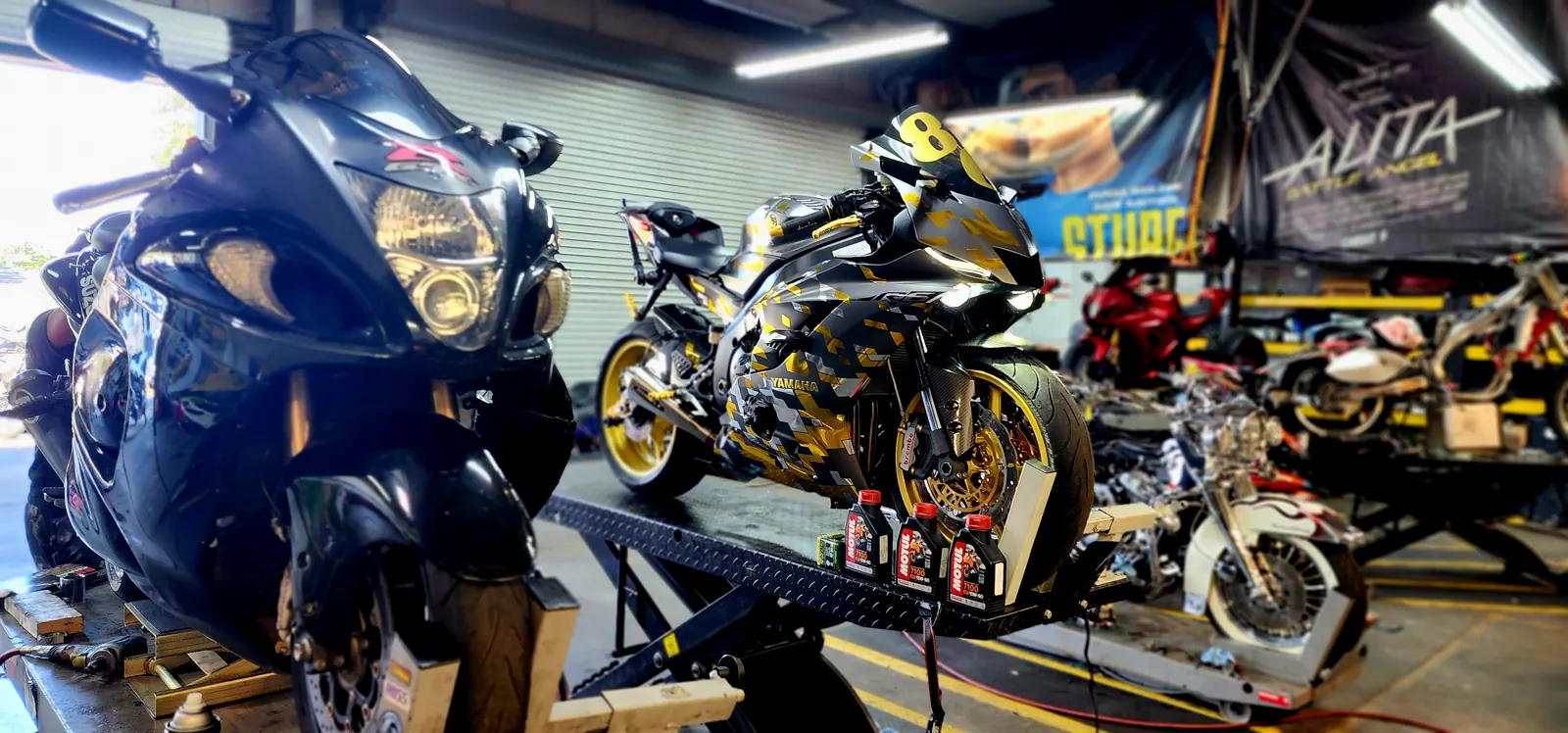
“A service” sounds vague, so let’s make it concrete. A routine service on most bikes runs about like this, and none of it is mysterious.
- Oil and filter out, fresh oil in, drain plug torqued properly instead of gorilla-tight
- Air filter pulled and inspected, because a dusty filter makes a bike run rich and feel lazy
- Chain cleaned, adjusted to spec and lubed, with the sprocket teeth checked for hooking
- Brake pads measured, rotors checked for scoring, fluid checked and flushed when it’s dark
- Tires checked for tread depth, age cracking, flat spots and correct pressure
- Battery load tested, charging output measured, and every light and switch clicked through
- A last pass over fasteners, cables, coolant and anything that looked odd along the way
That’s it. No wizardry. The value isn’t in any one step, it’s in trained eyes going over the whole bike in one sitting and catching the small thing while it’s still small. When something turns up, we tell you what it is, what it’ll do if you leave it, and how long you’ve got. Then you decide. For the deeper version, we walk through how we handle that job start to finish.
So how often does it need this?
Here’s where we refuse to give you a number, and we hope you like us better for it. Your owner’s manual sets your service interval. Not us, not a forum, not the guy at the gas pump with strong opinions. Manufacturers test their own machines and publish the miles and the months. Pull the manual out from under the seat and use that.
THE ONE RULE
Whichever number the manual gives you, treat months as seriously as miles. A bike that sits all winter still needs fresh fluid and a healthy battery in spring, even if the odometer never budged.
That second half matters more here than almost anywhere. Bikes in this town live indoors on clean concrete, so they sit undisturbed for long stretches. That sounds great, but sitting is the number one reason bikes around the lake come to us. Batteries sulfate, fuel turns to varnish, carbs gum up, calipers seize, tires flat-spot, and something small and furry decides your airbox is a fine place to raise a family.
| Your situation | Who we'd send you to |
|---|---|
| Bike is new and under factory warranty | Dealer |
| Open recall on your model | Dealer |
| Routine service, fluids, brakes, chain | Independent |
| Older bike, carbs, or a long sit | Independent |
| Tuning, ECU work or a dyno run | Independent |
| Nobody can figure out what the noise is | Independent |
The Acworth part of the answer
Geography does a lot of the deciding here, so let’s talk about it honestly. Acworth sits with I-75 running along its eastern edge, with exits at Glade Road, the Acworth and Highway 92 exit, and Red Top Mountain Road just north of town. From downtown Acworth to our door is about twenty miles, roughly thirty-two to forty minutes taking I-75 south to Roswell Road. From the Paulding side, out around Cedarcrest Road, figure twenty-four to twenty-six miles and forty to fifty minutes.
That sounds like a lot until you remember where you already drive. Folks over in Camden Pointe go farther for a decent dinner. Riders near the Lake Acworth beach and boat ramp think nothing of a run down to Kennesaw Mountain National Battlefield Park, about fifteen minutes southeast, with its nearly three thousand acres and eighteen-plus miles of trails. Nobody here blinks at a thirty-minute drive.
Distance does a second thing, though, and riders here figure it out fast. Once you’re already driving half an hour, every shop in a half-hour radius competes on equal footing. You stop picking by distance and start picking by capability. If all you need is a tire mounted, a specialty outfit like Ken’s Motorcycle Tires up in Woodstock does that one job all day. Tuning or a stubborn diagnosis is a different shopping list.
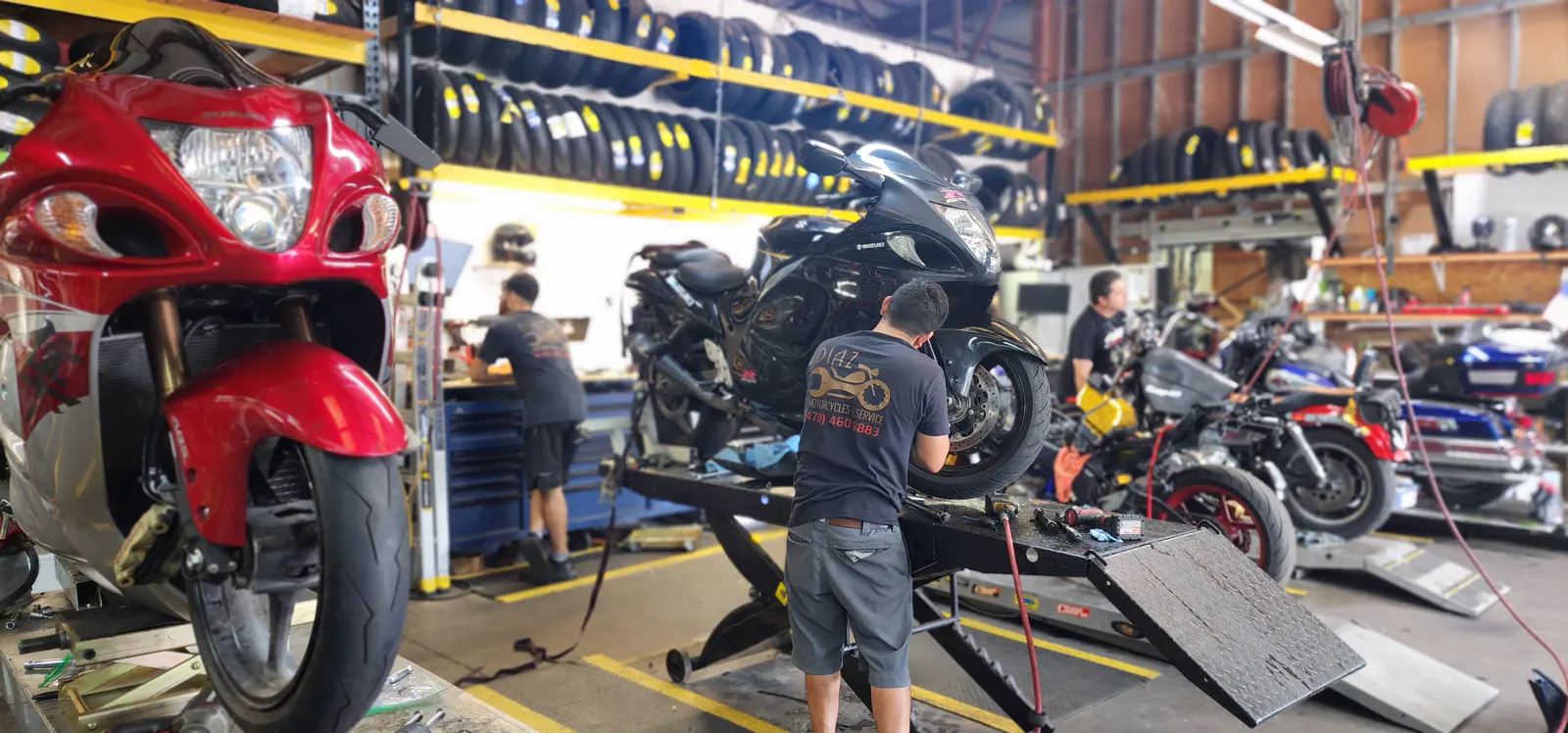
Let us tell you about a rider near Bentwater. Big neighborhood out on the Paulding side off Cedarcrest, over sixteen hundred homes and something like thirteen entrances, pools and tennis courts and trails. He had a cruiser that had been parked since fall. Come spring it cranked slow, ran rough for the first ten minutes, and the chain had that dry rasp we talked about up top. He’d already charged the battery himself. He’d already checked the plugs. He called because the next step was fuel system work he didn’t want to do on his garage floor.
It was exactly what it sounded like. Old fuel, a battery that never recovered from sitting, and a chain past its adjustment range. Nothing dramatic. Fresh fuel, a proper battery, chain and sprockets, fluids and brakes, and it went home running like it remembered how. He picked it up in time for a weekend loop from Emerson up to Canton by way of Burnt Hickory Park, about fifty-three miles of sweepers, twisties and elevation change wrapping around Hickory Log Creek and Reservoir, starting right off the north end of town.
Small problems are loud if you listen early. They only get expensive when nobody's listening.
Our actual recommendation, no fence-sitting
For most riders here, most of the time, the dealer vs indie service Acworth answer is the independent shop. Here’s the reasoning. Your bike probably isn’t brand new. Your riding is highway and back roads rather than stop-and-go city miles, so it wears tires, stretches chains, tires out forks and shocks and loads up air filters. That’s bread-and-butter independent work. Your bike also spends real time parked, and sit-related problems reward a tech who’s seen a hundred of them. We told riders over in Gainesville the same thing, for the same reasons.
Now the honest other side, because you deserve it. If your bike is under factory warranty, go to the dealer. Of course, if there’s an open recall, go to the dealer. If your machine needs a factory software update that only the brand’s tool can push, go to the dealer. Those aren’t cases where an independent shop is merely worse. Those are cases where the dealer is the only right answer, and any shop that tells you otherwise is selling you something. When you’re weighing a shop on everything else, we put the full rundown on it in one place.
One more thing worth saying plainly. There’s no contract here. You can use the dealer for warranty work this year and us for service the same year, then switch entirely once the warranty runs out. Keeping receipts and knowing what’s been done is the only thing that really carries over, and any good shop will hand you that paperwork without being asked.
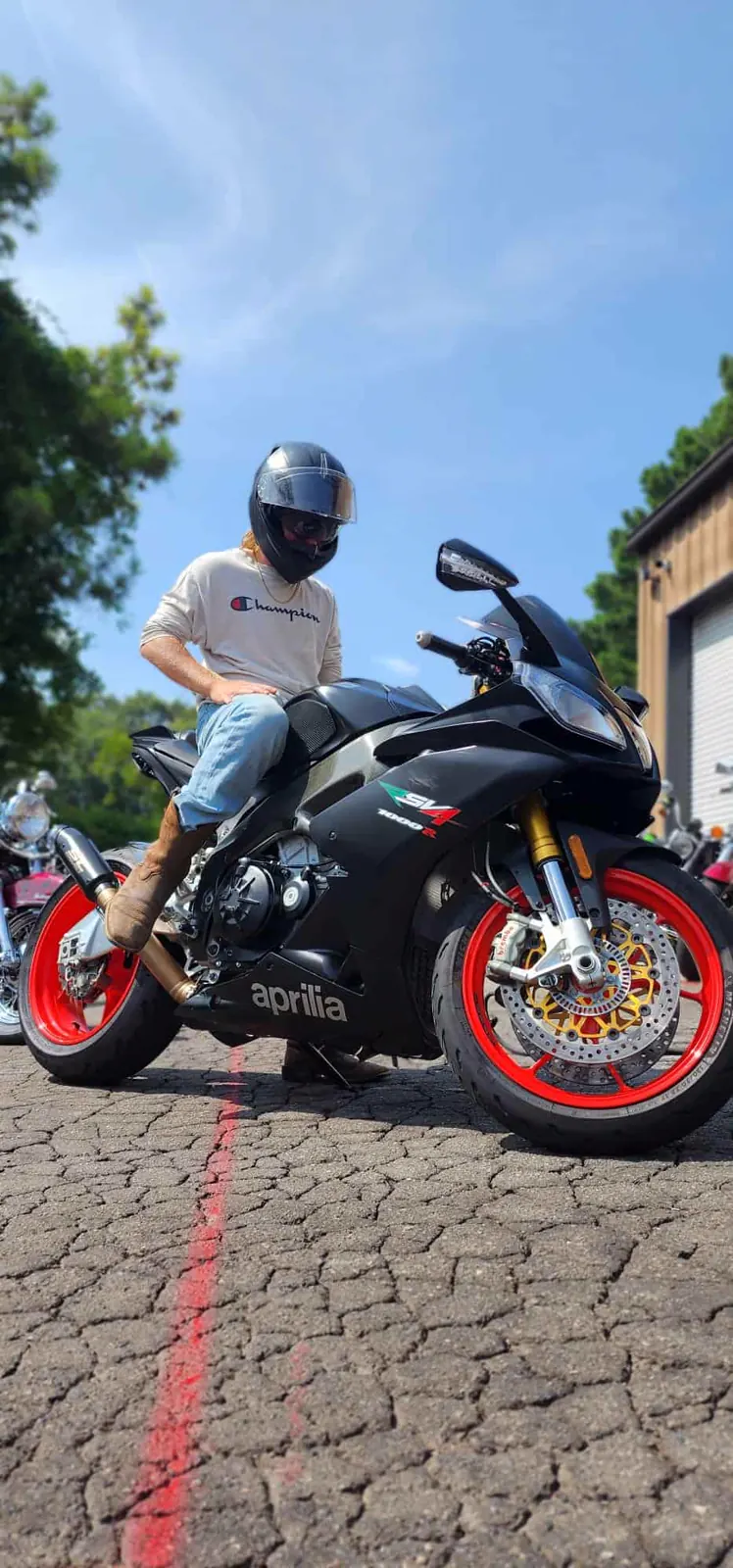
Here’s how we’d like you to feel walking away from this: relieved. That slow crank in your garage isn’t the start of a bad month. It’s your bike speaking up early, while the fix is still small. Pick the shop that matches the job, get it on the calendar, and go ride. When the Acworth Art Fest fills downtown with pottery, metalwork and glass, your bike ought to be running well enough to get you there without drama.
And keep sharpening the rider too. Bikes reward maintenance, riders reward practice, and a day on one of the MSF rider courses pays off on every twisty road you point that machine down afterward.
Questions Acworth riders ask us
Dealer or independent — which one should I pick?
If your bike is under factory warranty or has an open recall, pick the dealer. For everything else, an independent shop is usually the better fit, especially for older bikes, long sits and anything that needs real diagnosis. Most Acworth riders end up using both over the life of a bike, and that’s completely normal.
What's the real difference between the two?
A dealer is tied to one brand, with factory training, factory tools and factory parts on the shelf for the bikes they sell. An independent shop works across many brands, so the techs see the same failures on different machines and spot patterns quickly. One is depth on a single badge, the other is breadth across all of them.
Which one's work lasts longer?
Neither has a built-in edge — quality comes down to the tech and the parts, not the sign on the building. What actually makes a service last is proper torque, correct fluid, a chain set right and honest inspection instead of a rushed checklist. Ask any shop what they found and what they’d watch next, and the answer will tell you plenty.
I mostly ride highway and back roads. Does that change the answer?
It does, and it leans independent. Sustained highway and back-road miles wear tires, stretch chains, load up air filters and tire out forks and shocks, which is exactly the routine work an independent shop handles all week. Riders here rack up those miles instead of city stop-and-go, so the wear pattern is predictable and easy to stay ahead of.
Can I switch shops later?
Yes, anytime. There’s no agreement to sign and nothing that locks you in. Just keep your service records, since knowing what was done and when is the only thing that really needs to travel with the bike.
How often does my bike actually need service?
Your owner’s manual sets the interval, and that’s the number to follow rather than anything you hear secondhand. Manufacturers publish both a mileage figure and a time figure, and the time one matters just as much for a bike that sits through winter. When you’re unsure, call us with your year and model and we’ll help you read it.
We take care of riders all across the northwest metro, and Acworth is right in the middle of it. Folks come to us from Kennesaw and Marietta, from Woodstock and Canton on the Cherokee side, and from Dallas out past Cedarcrest in Paulding County. Head north up I-75 and we look after riders in Emerson, Cartersville and Adairsville, plus the smaller communities out toward Euharlee, Taylorsville and White. Powder Springs riders make the trip too. If you’re farther out than you’d like to ride a bike that isn’t feeling right, just ask us about picking it up.
LET'S GET IT SORTED
Text or call us with your year, make and model, and tell us what the bike’s doing. We’ll tell you straight whether it’s a quick service, a bigger job, or something your dealer should handle under warranty. Acworth riders make the run down I-75 all the time, and if that drive isn’t going to work with a bike that’s acting up, we’ll come get it.
470-460-9883Diaz Motorcycles and Service, LLC · 847 Barnes Mill Road, Marietta, GA 30062