Best Motorcycle Service Acworth — What to Look For
How to judge a shop before you hand over the keys, and what a real service actually covers.
Even so, the first truly warm Saturday in Acworth has a sound to it. What’s more, Boat trailers creaking toward the ramp at Lake Acworth, garage doors rolling up all down the street, somebody’s leaf blower going. And then there’s the sound nobody wants: a starter motor spinning, and spinning, and never quite catching. Helmet on. Gloves on. Nowhere to go. That morning is usually when a rider starts hunting for the best motorcycle service Acworth has within reach, which is a perfectly good time to start. Three weeks earlier would have been better, but we’ll take it.
The myth: a bike is either fine or it's broken
After that, most people carry a simple idea about machines. The bike runs, so it’s fine. In fact, the bike doesn’t run, so now it’s broken, and now you pay somebody. Clean, easy, no thinking required. It’s also the version of ownership that costs the most, and it costs the most in the least fun way possible: in weekends.
Because bikes don’t really break. They drift. Also a chain goes from snug to a little loose, then dry, then it starts sawing at the sprocket teeth. Instead a battery goes from strong to lazy to a Saturday-morning click. Besides Brake fluid pulls in moisture and the lever creeps toward the grip so slowly your hand adjusts without telling your brain. Nothing announced itself. Actually it all moved a half step at a time.
The reality: your bike gives notice
That’s why here’s the good news, and it’s most of this article in one sentence: bikes are honest. Either way they tell you early, in small ways, long before the expensive version shows up. A faint chirp at low speed. In short a front end that wants to stand up in a curve it used to hold. At the same time an oil level that’s a little lower every time you look. Those are notices, not emergencies. Catching one is a ten-minute conversation. As a result Ignoring one for a season turns it into a project.
On the other hand Acworth adds a wrinkle most towns don’t have. So this is the best garage market around, and that’s not a compliment we hand out lightly. Two- and three-car garages, detached shops, real lots out on the Paulding and Cherokee edges. Still, Bikes here live indoors, dry and covered. Which sounds perfect, and mostly is, except that the number one thing that hurts a motorcycle in this town isn’t riding. It’s sitting. Plus, Sulfated batteries, varnished fuel, gummed-up carbs, calipers that stick, tires with flat spots and dry cracks, fork seals that weep, and the occasional mouse who thinks your airbox is a starter home.
Then February shows up and the pollen starts. Meanwhile, From late winter into May the counts climb high enough to turn a green bike yellow, and it doesn’t stay on the outside. Of course, it settles into air filters, radiator fins and chain lube on any bike parked in an open garage or sitting on a trailer. In fact, a bike that napped through pollen season and then got fired up cold is one of our most common calls, and here’s the honest breakdown of what usually causes it. It’s rarely one dramatic thing. It’s four small ones stacked up.
What a service actually includes, in plain words
“Service” sounds vague on purpose sometimes, so let’s take the mystery out of it. A real routine service is a list of checks, a list of replacements, and a road test. Nobody should have to guess which parts they paid for. Here’s the plain-English version of what a proper once-over covers.
- Oil and filter, with a look at what came out — metal flake, fuel smell and milkiness all tell a story.
- Chain, belt or shaft drive: tension, wear, lube, and whether the sprocket teeth still look like teeth.
- Brakes front and rear: pad thickness, rotor wear, fluid condition, and whether the calipers move freely.
- Tires: tread depth, age, cracking, flat spots from sitting, and pressures set cold.
- Fluids: coolant strength, brake and clutch fluid, fork oil if it’s due, plus a hunt for leaks.
- Air filter, because a bike that breathes through pollen paste never feels right.
- Battery and charging system, tested under load instead of just eyeballed.
- Cables, controls, levers and pivots — cleaned, adjusted and lubed so nothing binds.
- Fasteners and torque on the parts that matter: axles, calipers, sprocket bolts, engine mounts.
- Lights, horn, switches, kill switch, and then a real test ride instead of a lap around the lot.
You’ll notice we didn’t give you a mileage number. That’s on purpose. Every bike has its own schedule and your owner’s manual sets it — valve checks, fork oil, coolant, brake fluid, the whole calendar. A shop that quotes you an interval off the top of its head for a bike it hasn’t looked up is guessing. A shop that opens the book is doing the job. That’s the same standard we hold ourselves to on everything in what we take care of here.
There’s a second failure that hides behind the first one. This is what separates a shop that fixes the complaint from a shop that fixes the bike. A dead battery is a symptom. Sometimes the battery is just old, and that’s an easy afternoon. Sometimes it died because a stator is fading or a ground strap corroded, and a fresh battery buys two happy weeks before the same Saturday repeats itself. Brakes work the same way: a soft lever might be air in the line, or a caliper piston that seized over the winter and now drags on one side.
That’s the question worth asking any shop, and it’s a fair one: what caused this? If the answer is a shrug and a part number, keep shopping. If the answer walks you back one step — here’s the failure, here’s why it failed, here’s what we checked to be sure — you’ve found someone worth driving to.
How to tell a good shop from a merely busy one
A packed lot means people show up. It doesn’t tell you how the work gets done. So here’s our list for judging the best motorcycle service Acworth riders can reach, and honestly, it’s the list we’d want a customer to test us on.
- They ask questions before they quote. How does it act cold? How long did it sit? What changed recently?
- They keep the old parts and show you. A worn pad next to a fresh one ends every argument in about four seconds.
- They write down what they checked, not just what they replaced. That list is worth as much as the repair.
- They tell you what can wait. A shop that puts everything in the “urgent” pile isn’t reading the bike, it’s reading you.
- They open the manual for intervals and torque specs instead of going by feel.
- They say plainly what they don’t do. Nobody is great at everything, and pretending otherwise costs you time.
Let’s be straight about the competition, since riders talk anyway. Dealers are genuinely good at what they do, with deep knowledge of the one brand they carry and access to factory updates. The generalist powersports shops around the lake handle routine work well, and plenty of Acworth riders are happy with them. Toward Marietta, CayloR-Made Motorsports on Rosewood Circle is another independent with a dyno, about the same drive from Acworth as we are. Good options are a good problem to have. The question isn’t who’s bad, it’s who fits the job in front of you.
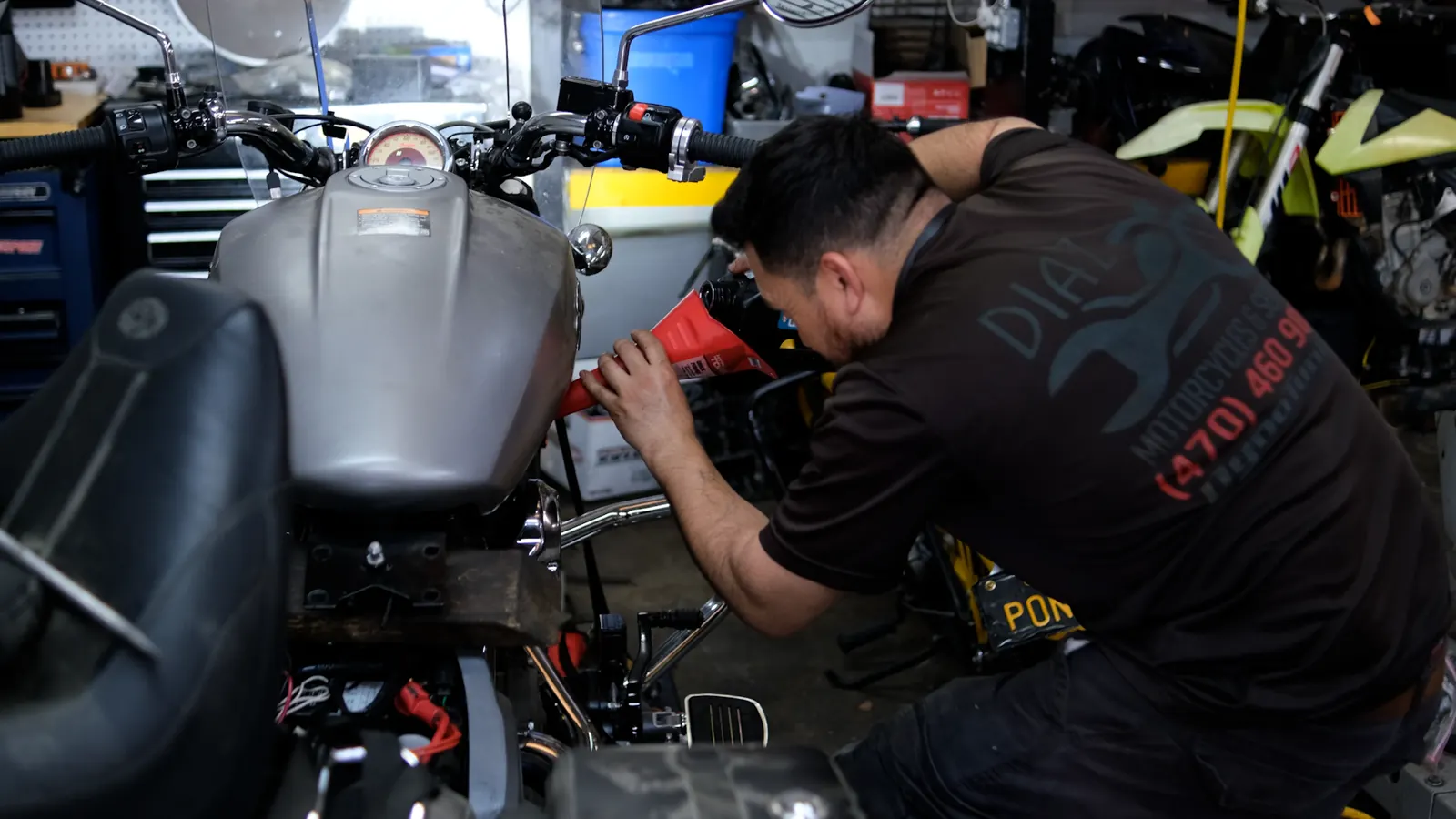
One more filter: how a shop handles a bike it hasn’t seen before. Project bikes, barn finds, an ADV that’s been three states deep — none of those come with clean histories. Shops that do well with them think in systems instead of symptoms, and that habit travels. It’s the same approach behind what Lawrenceville riders run into across the metro, where the bikes differ but the diagnosing doesn’t.
ASK THIS ONE QUESTION
“What did you find that I didn’t ask about, and does it need doing now or later?” A good shop has a clear answer ready. A great one already wrote it down for you.
Acworth is its own kind of market
They call it The Lake City for a reason, and locals never mix up the two. Lake Acworth is the small city lake with the beach and the boat ramp, the town’s front yard. Lake Allatoona is the big reservoir north of it. That water shapes the garages here. Households in this town don’t own a motorcycle so much as a fleet — a boat, a couple of side-by-sides, a dirt bike for the kid, and a cruiser or dual-sport for whoever pays the insurance. That’s why the independent shops in town are cycle and ATV shops.
Where you live changes the bike, too. Out in Brookstone, with the golf course, the courts and the pools straddling that Acworth-Kennesaw identity line, we see a lot of touring baggers and clean cruisers with low winter miles. Over in Sable Trace on the Cherokee side near GA-92, the early-2000s subdivision crowd leans toward dual-sports and dirt bikes that see real dust. Down in Historic Downtown Acworth, where the Victorians and mid-century houses line the Main Street district, the railroad tracks cut straight through and those crossings will teach you fast whether your fork seals and steering head bearings are still doing their jobs.
The roads deserve their own paragraph, because an Acworth address can sit in Cobb, Paulding or Cherokee County. The pavement you ride gets maintained by three county DOTs plus the city and the state, and you can feel the seams. Cobb runs an organized resurfacing plan. The Paulding and Cherokee edges are rougher. GA-92 — Alabama Road on one side, Cherokee Street through town — is the main east-west connector, and running it west along Cedarcrest Road toward Dallas and Hiram gets rural in a hurry: shoulder drop-offs, gravel at driveway aprons, tar snakes that go slick in July. Add wet leaves, boat-ramp sand and morning fog off the lake, and your tires and suspension are earning their keep.
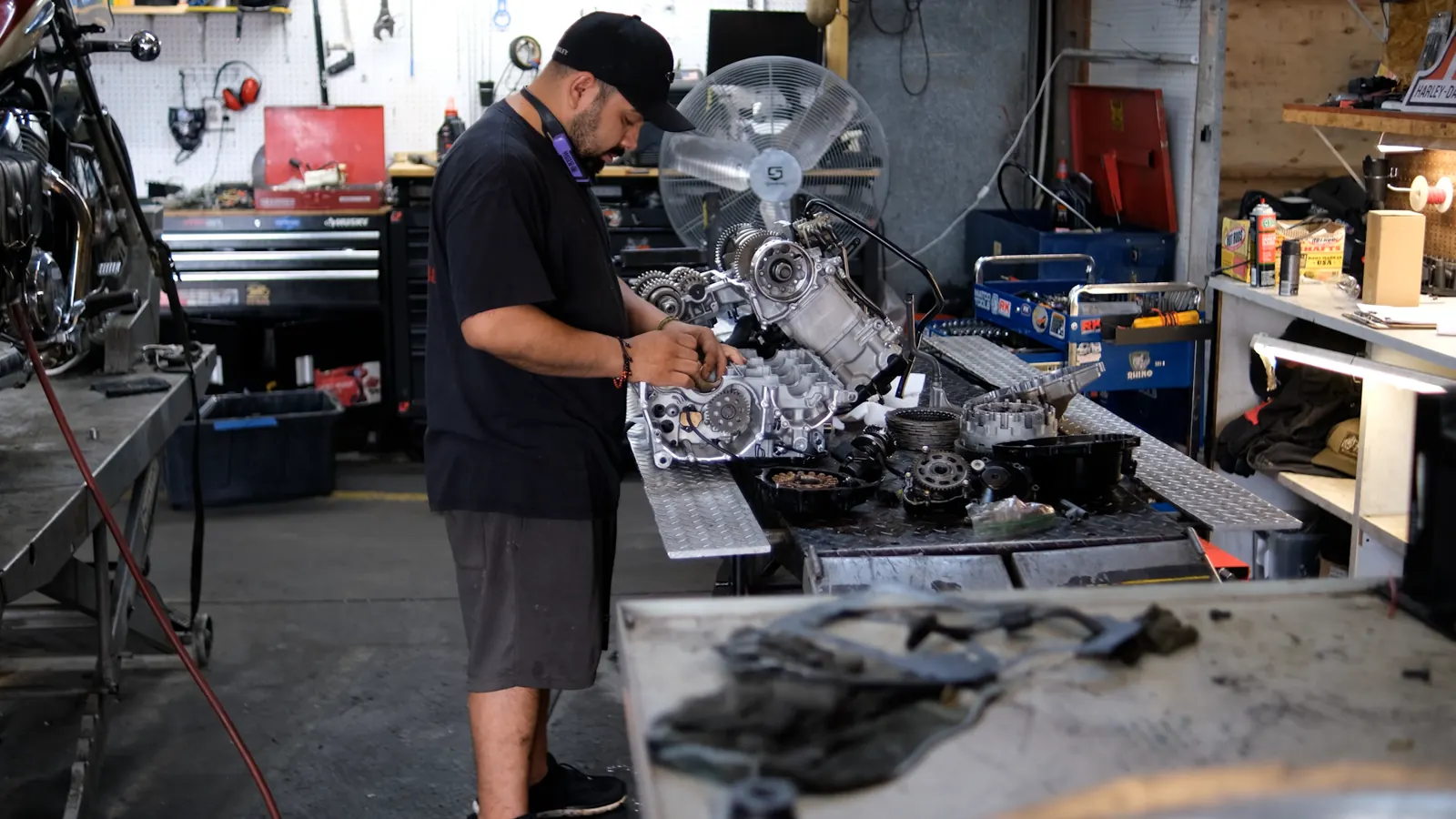
Distance isn’t really the obstacle people assume it is. Folks in Acworth drive thirty to forty-five minutes for almost everything, and downtown to our shop is about twenty miles, roughly a half hour down I-75 to Roswell Road. From the Paulding side near Bentwater and Cedarcrest it’s more like twenty-five miles and closer to fifty minutes. Since you’re already driving, it’s worth knowing what a shop can do that others can’t — in-house paint and restoration work, for one, and tuning where we can show you the numbers. If a bagger or a build is in your future, here’s what the work covers. And if the drive is the sticking point, we’ll come get the bike.
Picture the version of this where you caught it early. Same first warm Saturday. Same boat trailers, same garage doors going up. Only this time the tender’s been on the battery, the tires got checked in the fall, the chain got cleaned and set before the bike went to sleep, and a shop already told you the fork seals had another season in them. You thumb the starter, it catches on the first turn, and you’re rolling toward the lake while the guy down the street is still standing over his bike with a coffee going cold. Nothing heroic happened. You just handled it in February instead of April.
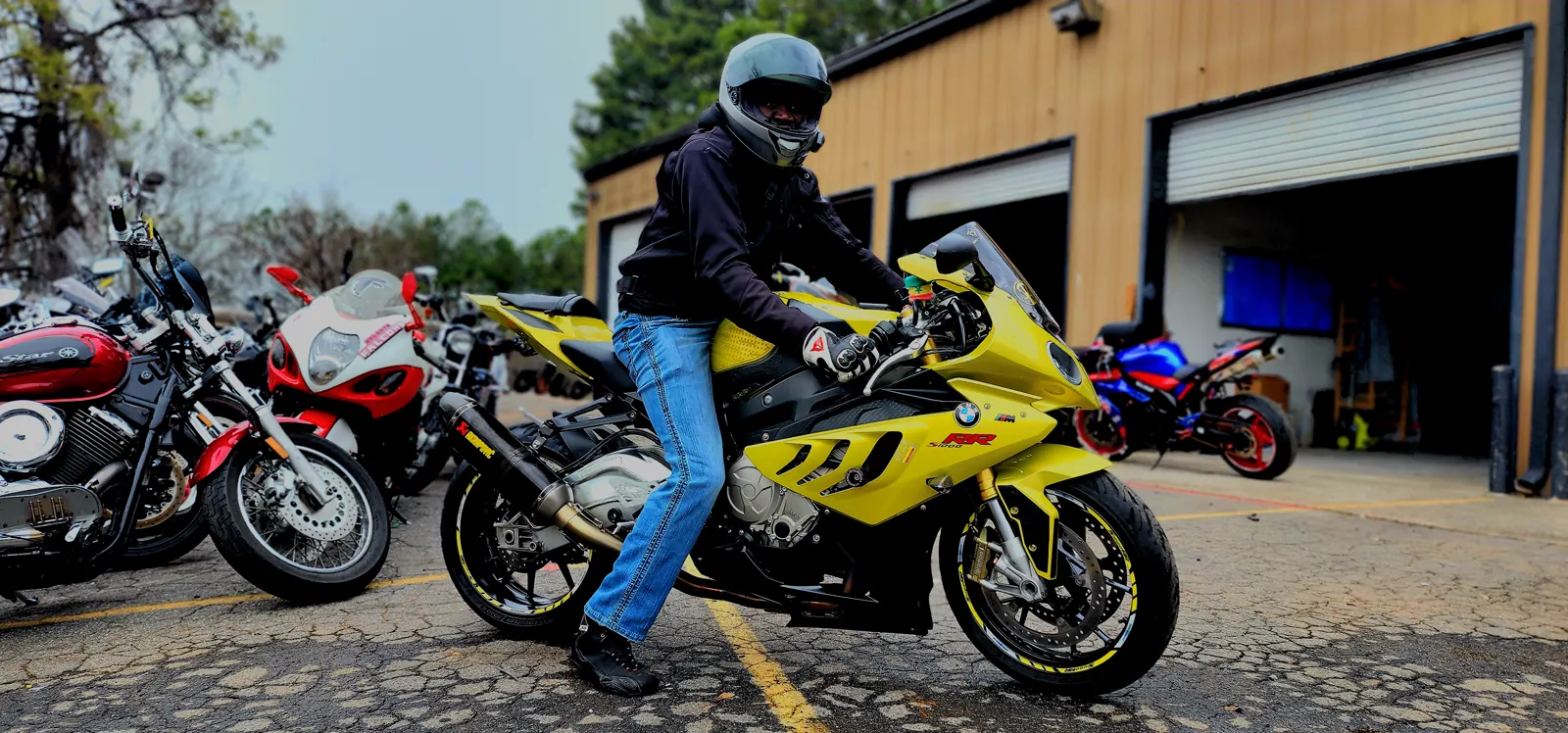
Almost nobody commutes a bike out of Acworth, since Georgia doesn’t allow lane splitting and the I-75 crawl isn’t anyone’s idea of fun. So these bikes pile up highway and back-road miles instead of stop-and-go, which shifts what wears out. Tires, chains, fork and shock life, and air filters take the hit first. Spring is also a fair moment to knock rust off the rider, not just the machine; an MSF Basic RiderCourse refreshes habits even for lifers, and public NHTSA crash data is there if you like the wider picture.
Small things caught early are cheap. Small things ignored get creative.
The outcome you're actually after
Every rider knows somebody whose bike simply works. It starts. For example, it stops. It doesn’t drip on the garage floor. That person isn’t lucky and they’re no wizard with a wrench. They just have a rhythm: check the simple stuff, keep the sitting time from doing damage, and let somebody with a lift and a manual handle the rest. Do that for two seasons and your bike stops being a thing that might let you down. It becomes the reliable one in a garage full of toys, which around here is a real accomplishment.
That’s what we want you walking away with. Not a scare, just the quiet confidence of a rider who knows exactly where their machine stands. Come the next warm Saturday, you’ll be the one already gone.
Questions Acworth riders ask us
Do you work on all brands?
Yes. Harley, Honda, Yamaha, Kawasaki, Suzuki, BMW, KTM, Ducati, Triumph and plenty of older machines that don’t have a dealer left anywhere nearby. Cruisers, baggers, sport bikes, dual-sports and dirt bikes all come through the bays. If we ever hit something outside our lane, we’ll tell you straight instead of learning on your bike.
How far out do you serve?
We take care of riders all over northwest metro Atlanta, and Acworth is well inside that. Kennesaw, Woodstock, Cartersville, Dallas, Canton and Powder Springs riders come in regularly. The drive from downtown Acworth is roughly a half hour, and folks up around the lake communities make it all the time.
Can you pick up my bike?
We can. If the bike won’t start, won’t shift, or you just don’t feel like wrestling a trailer on a Saturday, we’ll come to you and bring it back when it’s done. For a lot of Acworth riders that’s the whole reason distance stops mattering. Just call and tell us where the bike is sitting.
How do I know the diagnosis is right?
Ask us to show you. We keep the old parts, we walk you through what we tested and why, and we explain what caused the failure rather than just naming the part. If something is a judgment call, we’ll say that too. You should never leave a shop unsure what you paid for.
What makes you different from the shops near me?
The shops around the lake handle routine work well and the dealers know their own brand deeply. Where we add something is on the jobs that already have to leave Acworth: in-house paint and restoration, performance and tuning work, and full teardowns. Since you’re driving thirty minutes for those anyway, you might as well get pickup service with it.
When should my bike be serviced?
Your owner’s manual sets the schedule, and it’s the only number worth trusting for your specific model. Beyond that, storage matters as much as mileage here. A bike that sat all winter deserves a look before the first real ride, even if the odometer says nothing changed.
Diaz Motorcycles serves riders across Acworth and the surrounding lake communities, including Kennesaw and Woodstock just over the line, Marietta down I-75, and Cartersville and Emerson to the north. We regularly help friends in Dallas and Canton, out toward Powder Springs, and up through Adairsville, Euharlee, Taylorsville and White. Wherever an Acworth address happens to land — Cobb, Paulding or Cherokee — the drive works, and if it doesn’t, we’ll come get the bike ourselves.
GET AHEAD OF IT
If your bike has been napping in an Acworth garage, let’s give it a proper look before the next good riding weekend. Text or call us, tell us how it’s been acting, and we’ll tell you what actually needs doing and what can wait. Can’t get it here? We’ll pick it up.
470-460-9883Diaz Motorcycles and Service, LLC · 847 Barnes Mill Road, Marietta, GA 30062