Motorcycle Transport Cost Gainesville — What You Pay
Here is what actually moves the number when you need a bike picked up and brought home — no dollar guessing, just the honest drivers.
The morning here starts the same way for a lot of folks. You back the car out of the garage, roll down toward I-985, and point south toward Gwinnett for work. The bike stays home. Around here, riding is a Saturday thing, not a commute thing — you save it for a run up into the mountains, not a rainy Tuesday stuck behind a poultry truck on GA-365. So when the day finally comes to move that bike somewhere, most people have no clue what it takes. That is exactly why the question of motorcycle transport cost Gainesville riders bring us gets a longer answer than they expect.
Good news up front: the answer is knowable, and by the time you finish this you will know the same things we look at. No mystery, no runaround. We just have to walk through what a shop is actually pricing when it moves a bike, because it is almost never what people assume. Most folks think it is all about miles. Miles are the easy part.
The Short, Honest Answer First
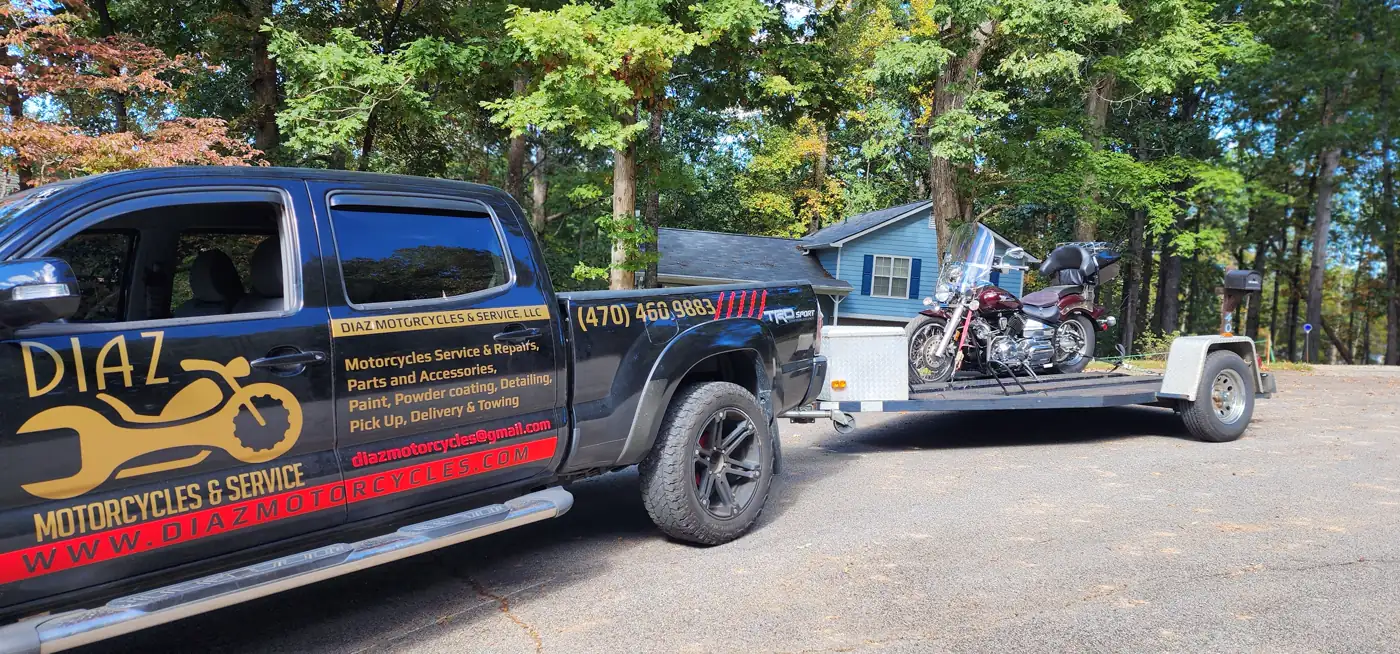
The real answer is that it depends on four things: distance, access, the bike itself, and its condition. A trip from downtown to our Marietta shop runs roughly 55 to 62 miles, and you can figure something like 65 to 85 minutes each way depending on the route. We estimate that from the map, by the way — not a stopwatch — so treat it as a ballpark. You can take the pretty way around the lake on GA-53 and GA-369 through Cumming, or grind the highways on I-985 into I-85, I-285 and I-75. Either way, here is the important part: we come to you. That is the whole point of pickup and delivery when your shop is over an hour off.
Now here is what nobody tells you up front. The mileage is the simplest thing to price. What actually moves the number is everything around the bike — where it sits, whether it rolls, and what it takes two people to load it safely. A running bike in a flat driveway is one kind of afternoon. A dead bike wedged sideways in a tight garage is a completely different one. Same miles on the map, very different job in real life.
Miles are the easy part. Access is the part that surprises people.
What Actually Drives the Work
Think of a transport job the way you would think of any other kind of work: some of it is the drive, and a lot of it is the labor and care on both ends. Let’s break the four drivers down so you can see your own situation in them before you ever call. Once you can picture your bike here, you can picture the job.
Distance and route
This is the one everybody already gets. Farther is more. But route matters too. The lake loop through Cumming is easy on a trailer, while the interstate stretch can crawl in traffic and eat time. Time is part of the cost, so a job that should take an hour but sits in a Lanier boating-season backup on a holiday weekend is honestly a bigger ask than the map suggests.
Access — where the bike lives
This is the sleeper. A bike parked flat in an open driveway loads in minutes. A bike at the back of a two-car garage, boxed in behind a boat and a lawn mower, does not. Some of the estate lots out at Grey Oak Plantation and Red Oak Plantation have long gravel drives that a trailer has to nose down carefully. The larger lots around Saddle Creek and Saddle Club can mean a longer walk from garage to street. And a grand old home in the Green Street District might have a narrow, settled driveway that was never built for a truck-and-trailer combo. None of that is a problem for us — we just need to know, because it shapes the plan.
The bike itself
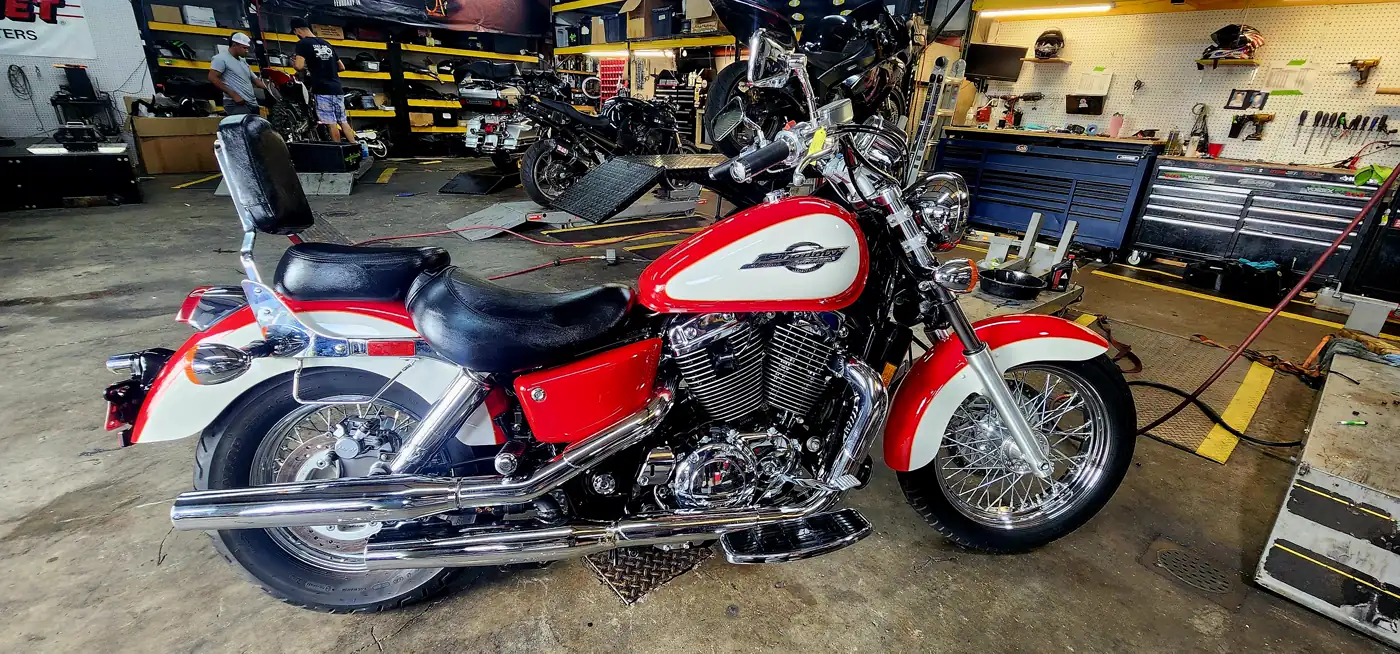
A 900-pound Harley bagger and a 400-pound sportbike do not load the same way. Weight, seat height, low fairings, hard bags, and trikes all change the tie-down setup and sometimes the number of hands. A Hayabusa with delicate bodywork gets treated one way; a beat-up dual-sport headed for restoration gets treated another. Heavier and more awkward means more careful work, plain and simple.
Condition — does it roll and steer
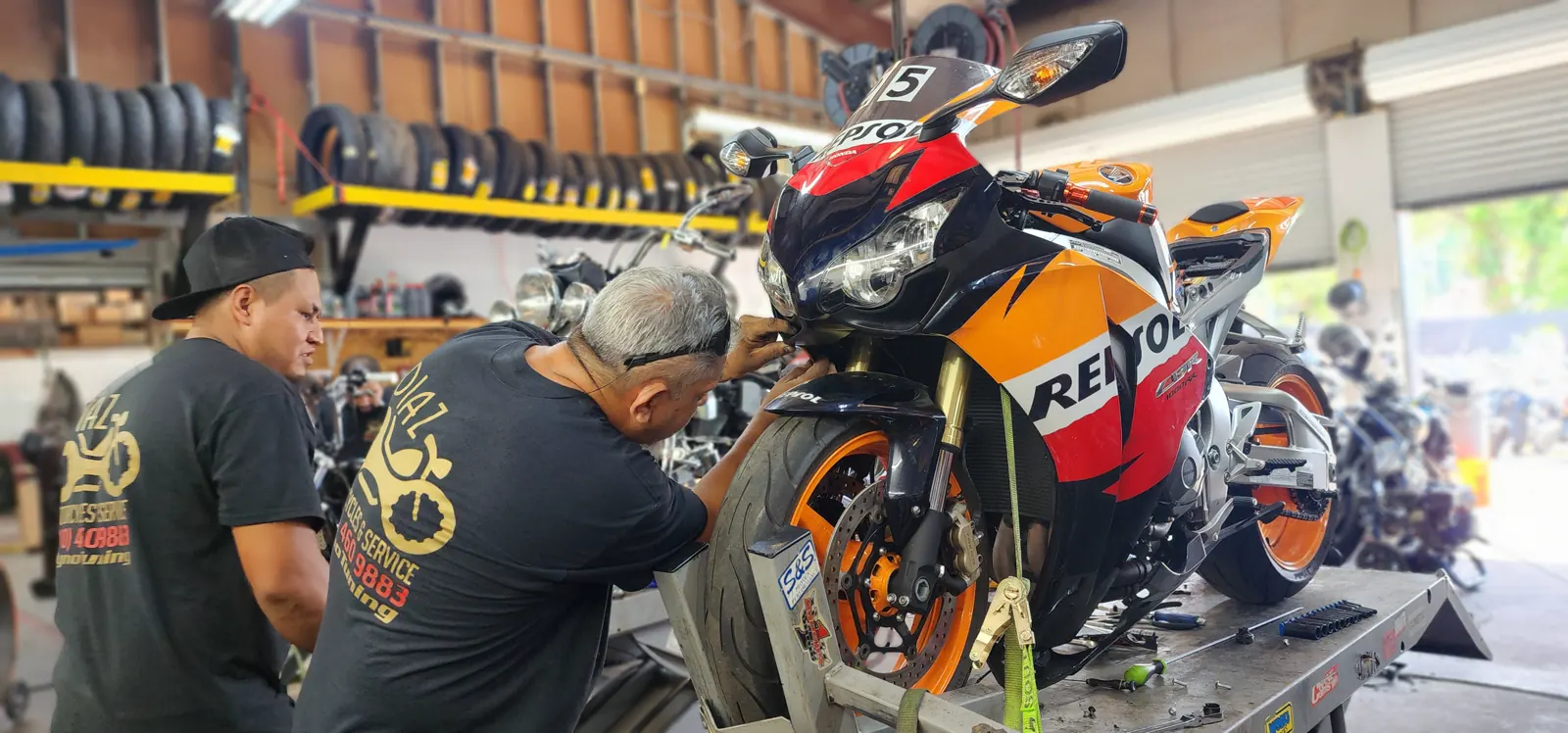
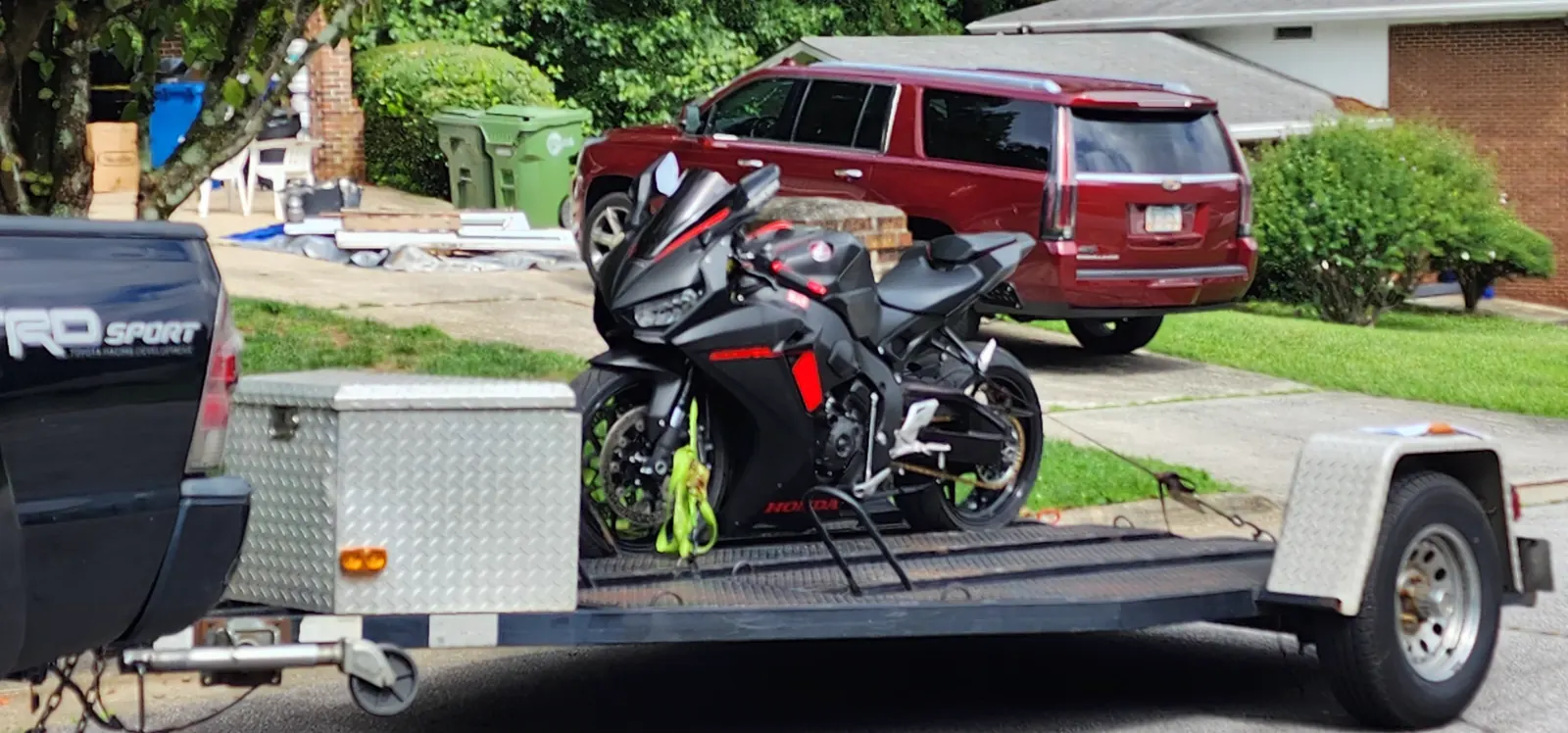
A bike that rolls, rolls onto a ramp under its own steam with a spotter. A bike with a flat tire, seized brakes, a locked engine, or crash damage has to be muscled, winched, or lifted. That is more labor and more risk to the machine, so it fairly counts as a bigger job. If your bike quit on you and will not budge, that is a specialty in its own right — here is how we handle that job when a bike simply refuses to move.
What We Check Before We Ever Give You a Number
Something changes once you know what to look for. Suddenly the whole thing stops feeling like a black box and starts feeling like a checklist — and a checklist is something you can control. When you reach out, a couple of quick photos and answers tell us almost everything. Here is what we are actually reading in those photos.
- Where the bike sits — driveway, garage, back lot, or curb, and how tight the approach is
- Whether it rolls and steers, or whether a tire, brake, or crash has it stuck
- The make, model, and rough weight, so we bring the right straps and ramp
- Any low bodywork, bags, or add-ons that change how it gets tied down
- The exact pickup and drop-off spots, so nobody is guessing at the curb
That five-minute exchange is the difference between a smooth pickup and a surprise. It also means the price we talk about is the price you actually pay, because we already know what we are walking into. If you want to see the standards a shop should hold itself to, this rundown of what separates a good shop from a guy with a trailer is worth a read.
Open Trailer or Enclosed — Which One You Actually Need
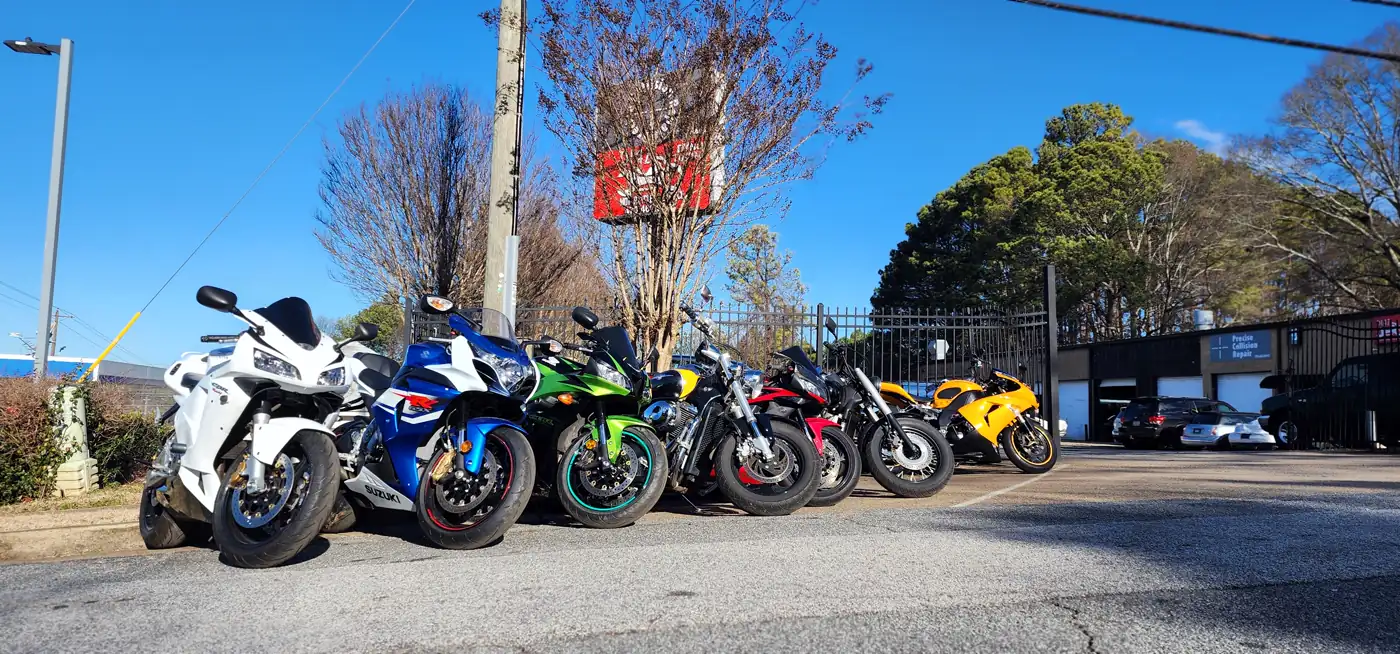
You have two ways to move a bike, and the choice nudges the number. An open trailer is quicker to load and perfect for most local hops. Your bike rides in the fresh air, strapped tight, and it is home in an afternoon. An enclosed trailer costs a little more to run but wraps your machine in walls — no road grit, no weather, no eyes at a stoplight. For a long-distance haul, a fresh out-of-state purchase, or a show bike with paint you love, enclosed earns its keep.
| Open trailer | Enclosed trailer |
|---|---|
| Great for local pickup and delivery | Great for long-distance and out-of-state |
| Faster to load and unload | Full protection from weather and debris |
| Ideal for everyday riders and project bikes | Ideal for show bikes, new buys, and prized paint |
There is no wrong answer — just the right one for your bike and your trip. For a Saturday-morning cruiser that already has some road miles, open is plenty. For a garage-kept beauty out on a Saddle Creek estate lot, enclosed lets you sleep easy.
Mistakes That Cost You More Than They Should
Most transport headaches are avoidable, and they usually trace back to a few honest slip-ups. Dodge these and you keep the whole thing smooth. Better yet, you keep it cheap.
- Trusting a phone quote from someone who never saw the bike — that number tends to grow at the curb
- Forgetting to mention a flat tire, a dead battery, or a tight garage until the driver shows up
- Skipping the condition photos, so nobody can prove what the bike looked like before it moved
- Letting an unmarked truck and a couple of cheap straps handle a bike you love
- Waiting until a race weekend or peak lake traffic, when every hauler in the area is slammed
None of that is hard to avoid. A few honest photos and a straight description fix almost all of it. And if you want to compare how this plays out in a closer-in market, here is the Smyrna side of things, where the miles are shorter but the drivers are the same.
The Part That Has Nothing To Do With Parts At All
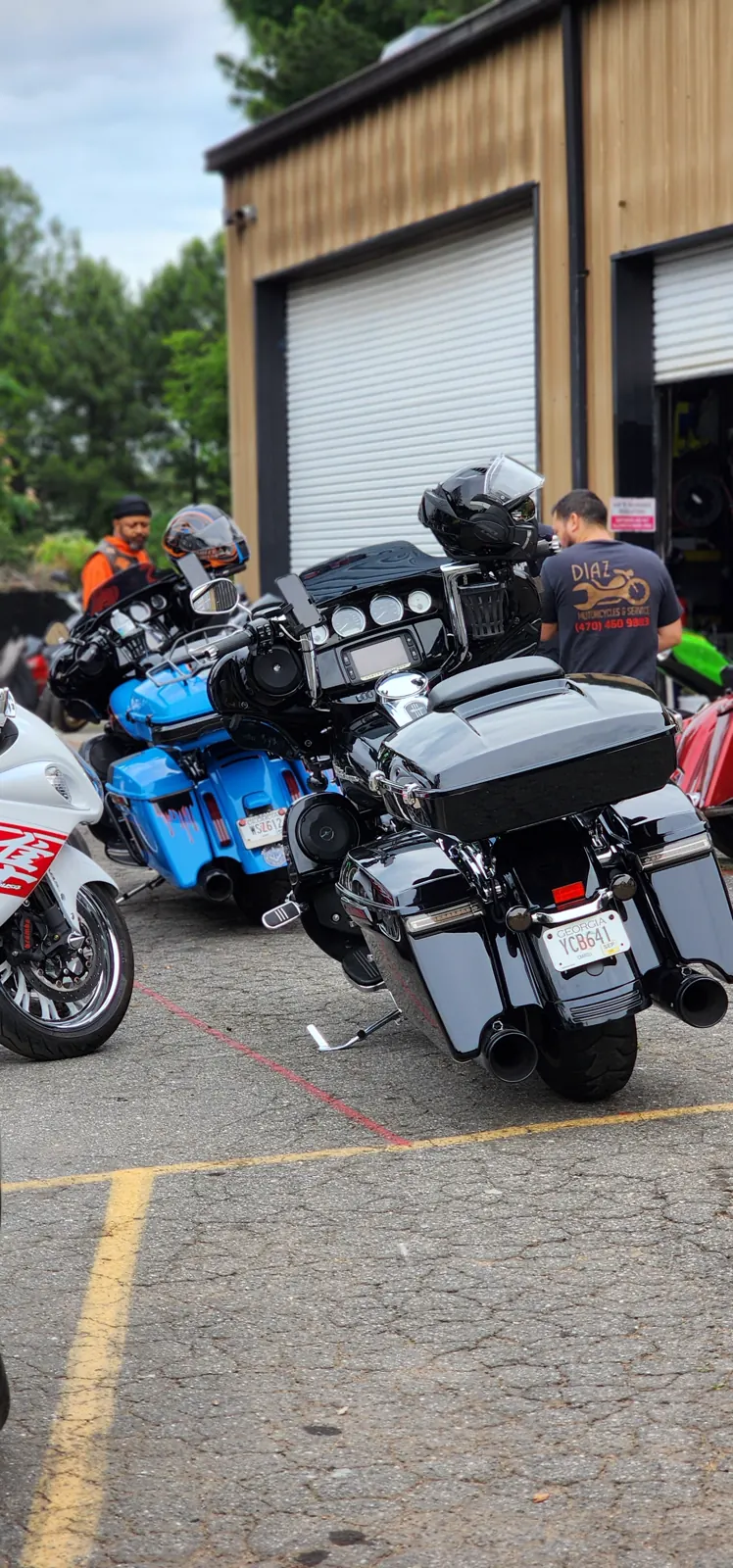
Now for the part that has nothing to do with parts at all. Paperwork. It sounds boring, but it is the thing that actually protects you, and a shop that skips it is a shop to skip. Before your bike leaves its spot, there should be a written condition report and clear photos of every side — before and after. That is your proof, plain and simple. If a scratch shows up, everyone already knows whether it was there when we arrived.
For a bike you just bought out of state or one you inherited, the paperwork stretches a little further. You want the title, the bill of sale, and a clean handoff so there is never a question about who owns what. If you are getting back on two wheels after time away, it is also worth a quick check that your Georgia Class M licensing is current before the bike lands in your garage ready to ride. And because riding safe is the whole reason we love this, the plain-spoken IIHS motorcycle research is a solid gut-check on gear and habits once you are rolling again.
A condition report is not red tape. It is your receipt for peace of mind.
Gainesville Is Its Own Place — And That Matters
Let’s be honest about the drive. We are in Marietta, and you are up in Hall County, in Northeast Georgia — your own city, your own hospital system, your own MSA. This is not an Atlanta suburb, and we would never pretend the trip is nothing. It is real. That is exactly why pickup and delivery is the offer. You should not lose a Saturday hauling your own bike down two interstates when we can bring the trailer to you.
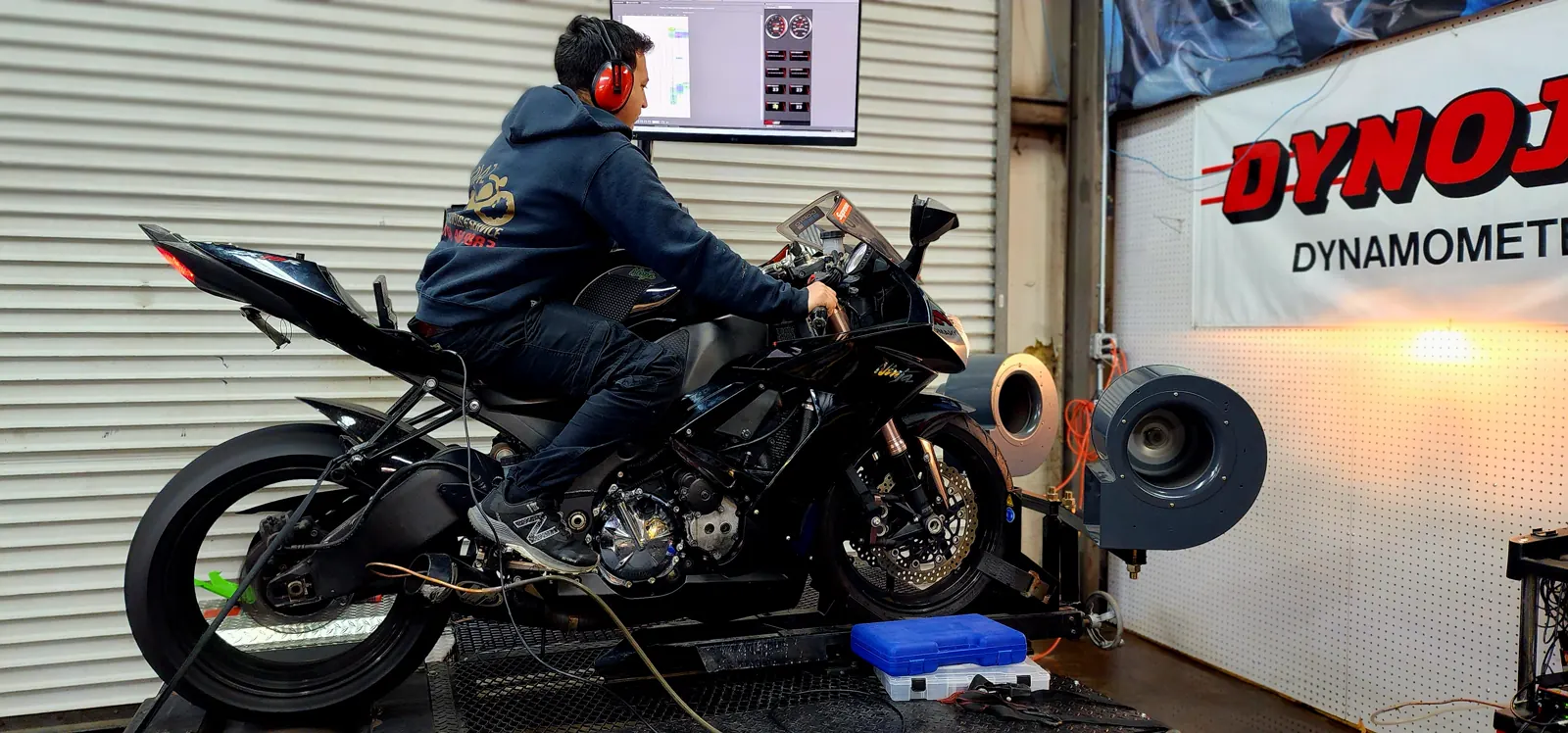
Here is the framing that makes it make sense: keep your local shop for the everyday stuff. A place like Gainesville Cycles, about ten minutes from downtown, handles pre-owned sales and accessories just fine. When you need the thing they do not do — real dyno tuning, a fresh ECU flash, custom paint, a full ground-up restoration — that is when the bike comes to us. No switching allegiances. Just bring us the one job nobody up your way is set up for.
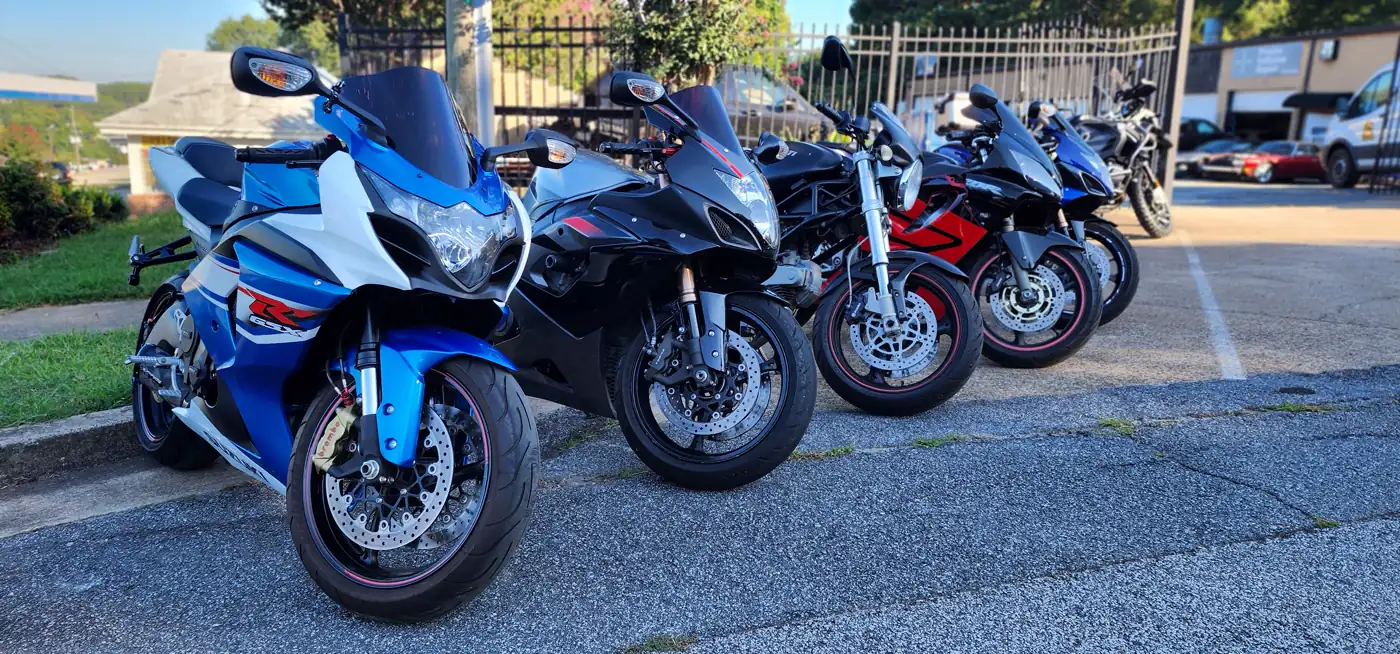
We know these roads because riders like you point us toward them all the time. The lake loop on GA-53 around the north end of Lanier is an easy one right out of town, and GA-60 — Thompson Bridge Road — runs north toward Murrayville, Dahlonega, and Suches when you want real mountain miles. Plenty of the bikes we pick up spend their good days out that way, or parked near River Forks Park with the lake in the background. Lanier has shaped life here since Buford Dam backed it up in 1956, and around here the boat slip and the garage bike often live at the same address. We get it. We just want to make sure the bike that carries all those good memories moves safely when it has to.
What You Walk Away With
So where does that leave you? In control. You now know the four things that move a transport number, you know what photos to send, you know open from enclosed, and you know the paperwork that has your back. That is the whole game, and it is why the motorcycle transport cost Gainesville riders worry about turns out to be a straight, knowable thing. Anyone quoting you a hard price sight-unseen is guessing, and an honest shop would rather ask two quick questions than surprise you at the curb. If you want the complete picture of everything we can do once the bike is here, take a look at the full list of what we do. Then send a couple of photos and let us give you a straight answer.
Questions Gainesville riders ask us
Does the type of bike really change the transport work?
It does. A heavy Harley bagger, a low-slung sportbike, and a three-wheeled trike all load and strap differently. Weight, seat height, low bodywork, and hard bags all shape the tie-down setup and sometimes the number of hands. Heavier and more awkward simply means more careful work on both ends.
What happens if you find something wrong when you arrive?
We talk to you before anything changes. If the bike turns out to have a flat, a seized brake, or damage we did not know about, we walk you through what it means for the plan and the price right there. No quiet upcharges, no surprises after the fact. You stay in the driver’s seat the whole time.
How do I avoid surprise charges on the day of pickup?
Send a few clear photos and a straight description before we roll out. Show us where the bike sits, whether it rolls and steers, and any tight garage or long driveway. Because we already know what we are walking into, the number we talk about is the number you pay.
What makes one transport job bigger than another?
Four things: how far the bike travels, how easy it is to reach, how heavy and awkward it is, and whether it rolls under its own power. A running bike in a flat driveway is a quick job. A dead bike boxed into a tight garage on a long gravel drive is a much bigger one, even over the same miles.
Why can't you just quote it over the phone?
Because a real price needs a real look. A phone number based on a guess tends to grow once the driver sees the bike and the spot it is parked in. We would rather see two photos first and give you a firm answer we both trust. That is what keeps an honest shop honest.
Is the drive from Gainesville worth it?
For an oil change, no — keep that local. For dyno tuning, an ECU flash, custom paint, or a full restoration, yes, because that work is worth doing right. And since we bring the trailer to you with pickup and delivery, the distance stops being your problem and starts being ours.
We roll our trailers all across Hall County and Northeast Georgia, so if you are down in Oakwood or Flowery Branch, out toward Braselton or Buford, or up in Clermont, Lula, and Murrayville, we can come get your bike. We also cover Dahlonega, Cumming, Sugar Hill, Chestnut Mountain, and Talmo, whether your machine is running strong or has not turned over in a season. Wherever it sits in the Lanier corridor, pickup and delivery means you never have to make the drive yourself.
LET US COME GET IT
You should not lose a Saturday hauling your own bike down two interstates from Gainesville when we can bring the trailer to you. Text us a couple of photos of your bike and where it sits, and we will give you a straight, honest answer — no phone guesses, no curbside surprises. Keep your local shop for the everyday stuff and bring us the work nobody up your way is set up for. We will handle the miles.
470-460-9883Diaz Motorcycles and Service, LLC · 847 Barnes Mill Road, Marietta, GA 30062