Motorcycle Sitting for Years in Marietta? Here's What It Takes to Fix It
What actually goes bad when a bike sits, why you shouldn't just fire it up, and how we bring one back to life safely.
You found it in the garage, or you inherited it, or you finally pulled the cover off after five years. And the question hits: can I just put a battery in it and ride? A motorcycle sitting for years Marietta riders bring us always looks more ready than it is. The truth is that sitting still is hard on a bike, sometimes harder than riding it. Cranking it cold can turn a cheap fix into an expensive one in about three seconds.
So before you hit that starter, let’s walk through what actually goes bad when a bike sleeps for years. None of it is a disaster. All of it is fixable. But you want to fix it in the right order, because doing it wrong is how good bikes get hurt. Think of this as the wake-up plan your bike actually needs.
The fuel turns to varnish, and the carbs pay for it
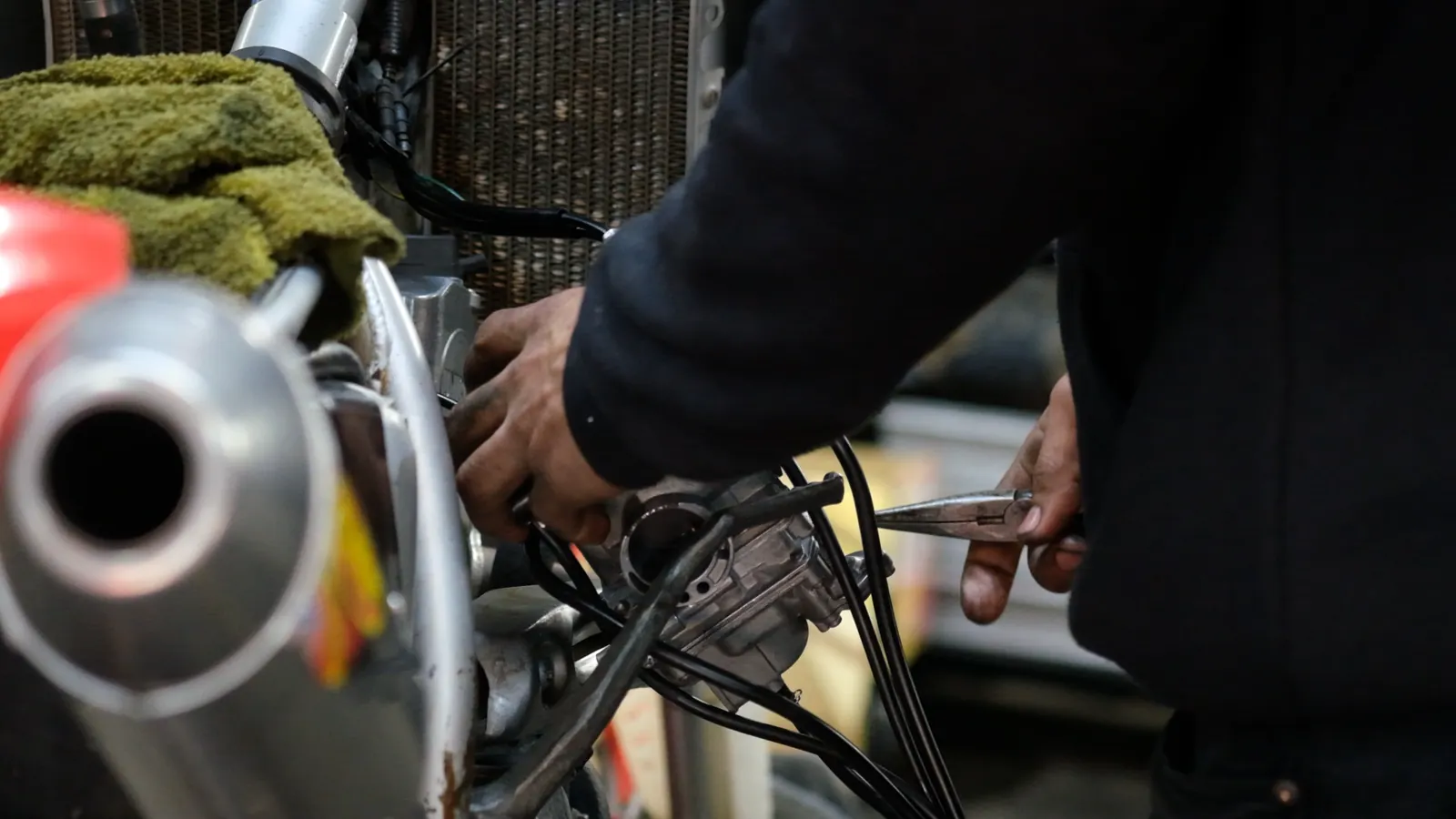
Gas does not age well. Leave it in a tank for a few years and it breaks down into a sticky, gummy varnish that coats everything it touches. In a carbureted bike, that goo clogs the tiny passages inside the carburetor, the ones thinner than a hair. The bike either won’t start, won’t idle, or runs like it’s choking, because in a way it is.
The fix isn’t a splash of fresh gas and a prayer. We pull the carbs, open them up, and clean every passage back to clear. On fuel-injected bikes, the old fuel gums up the pump and injectors instead, so those get cleaned or replaced too. Skip this step and you’re just pouring good fuel through a clogged straw. It never ends well, and it never ends cheap.
The tank rusts from the inside out
Here’s the sneaky one. While that old fuel sits, moisture creeps into the tank, and Georgia’s humidity makes it worse. Bare steel plus water equals rust, and it grows on the inside of the tank where you can’t see it. Then the flakes break loose and travel straight down into your fuel system, clogging filters and carbs all over again.
This is why a bike parked outside under a cover on a Delk Road apartment slab often needs tank work that a dry-garage bike doesn’t. We check the inside of the tank, clean out the rust, and seal it if it’s bad. A rusty tank you ignore will keep feeding grit into everything you just cleaned. Fix the source, not just the symptom.
The tires dry-rot even if they look fine
Tires don’t just wear out from miles. They age. Sit long enough and the rubber dries out and cracks, usually in the sidewalls and between the tread blocks. The scary part is that a dry-rotted tire can look totally fine from ten feet away. Then it lets go on a hot afternoon on I-75, and that’s a very bad day.
DON'T RISK IT
Tires older than about five to six years should be replaced no matter how much tread is left. Rubber has a shelf life, and a blowout at speed isn’t worth saving a set of tires.
We check the date codes stamped right on the sidewall and look for cracking. If they’re aged out, they get replaced, full stop. This is one of those safety items we won’t cut corners on, because a bike that sat is exactly the bike most likely to be riding on old rubber. It’s a cheap fix compared to what a failure costs.
The brakes seize and the fluid goes bad
Brake fluid is thirsty. It pulls moisture out of the air over time, and after years of sitting it’s full of water. Water in your brake lines means rust inside, spongy stopping power, and calipers that stick or seize entirely. On a bike that sat, it’s common to find pistons frozen in place and pads glued to the rotor.
So we flush the old fluid, rebuild or free up the calipers, and make sure the brakes actually stop the bike hard and straight. Brakes are the one system where good enough is never good enough. You want them right before the bike ever leaves the lot, not discovered the first time you grab a fistful at a red light on Canton Road.
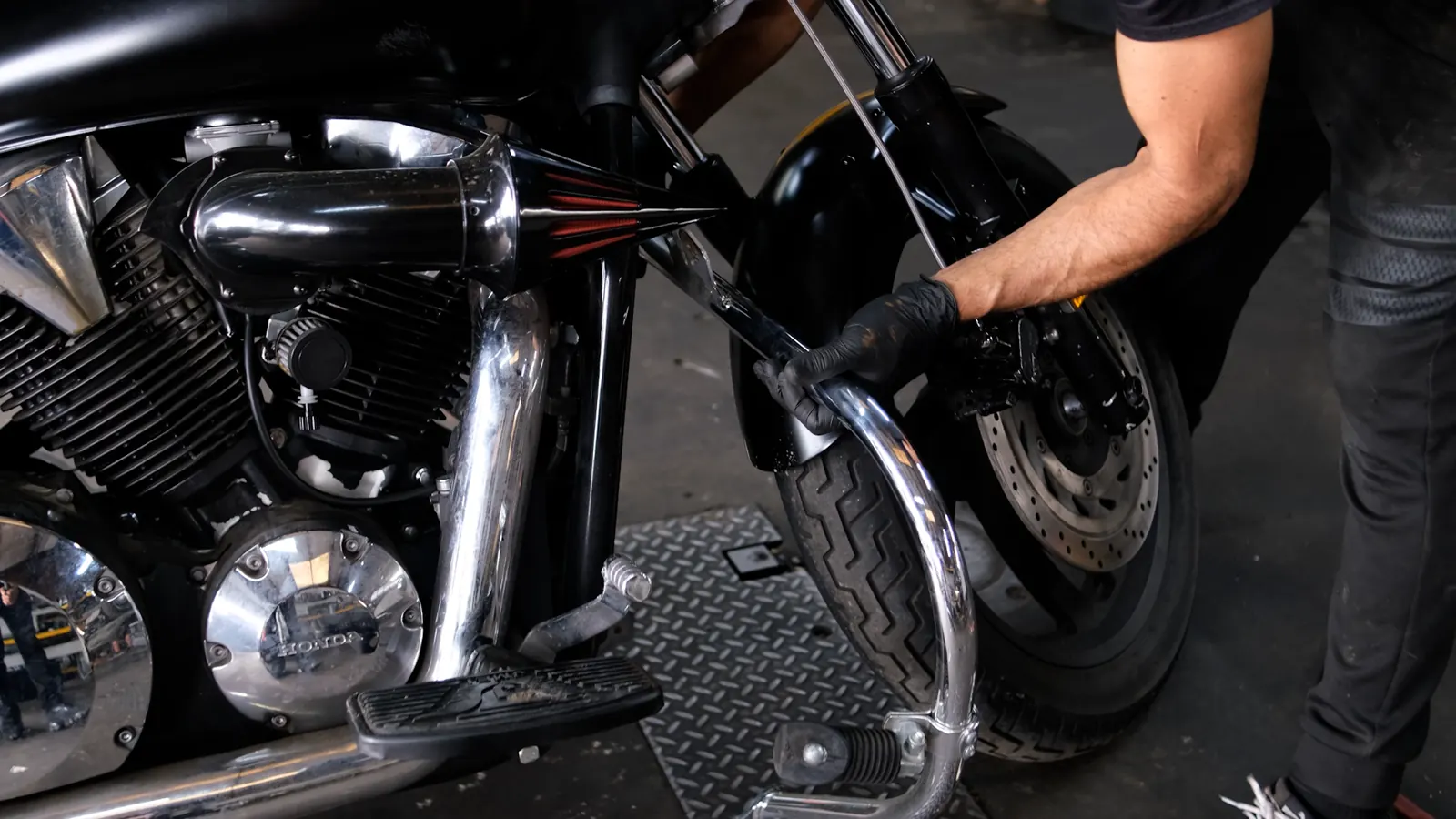
The battery is dead, and the seals have dried out
The battery is the obvious one. A battery that sat for years without a tender is almost always toast, and no amount of charging brings it back. That’s an easy swap. But the sneakier problem is the rubber. Gaskets, fork seals, and O-rings all dry out and shrink when a bike sits, and dried rubber leaks.
So we don’t just drop in a battery and call it done. We check for weeping fork seals, oil seeping past dried gaskets, and cracked fuel lines that could pour gas on a hot engine. Perished seals are the difference between a bike that runs and a bike that runs safely. One of those is worth having. The other one is just asking for trouble.
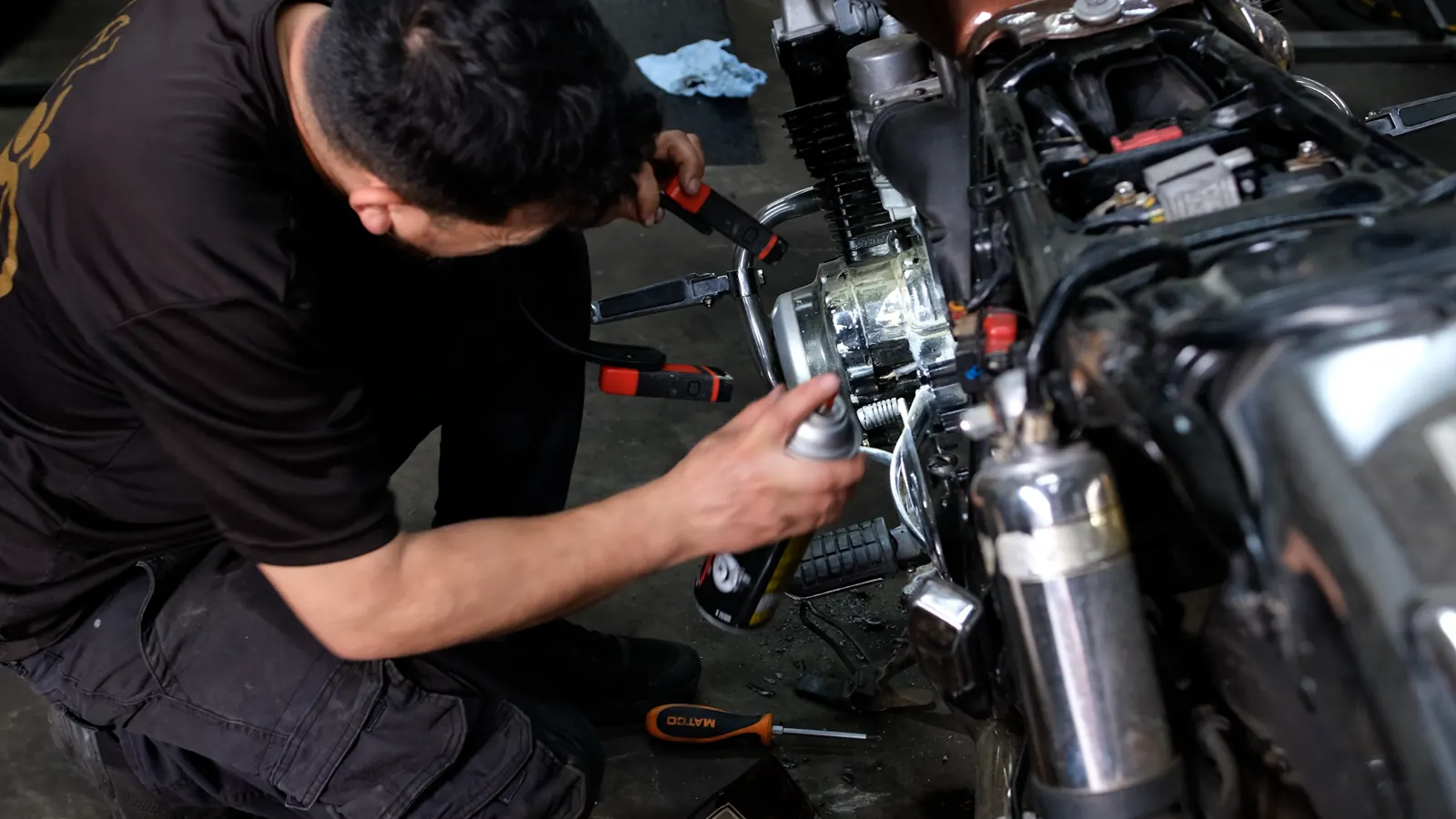
A bike that sat isn't broken. It's asleep. The job is waking it up in the right order.
Why you shouldn't just crank it and hope
We get why the temptation is real. You want to hear it run. But firing up a bike that sat for years, before checking it over, is how small problems become big ones. The oil has drained off the internals and settled at the bottom, so a cold crank runs metal on dry metal. Old fuel floods a stuck float. A seized brake fights every roll of the wheel.
The safe way is boring, and boring is good here. We turn the engine over by hand first, prime the oil, check for spark and compression, and only then think about starting it. Patience early saves you a rebuilt engine later. A five-year nap deserves a careful morning, not a hard slap.
BEFORE YOU HIT START
If the bike has truly sat for years, don’t crank it. Roll it in first. A twenty-minute look-over can save you from turning a battery-and-fuel job into an engine job.
The revive checklist we actually follow
Every bike is different, but the wake-up follows a real order. Each step protects the next one, which is the whole point of doing it right instead of fast. Here’s the honest sequence when a long-parked bike lands on our lift.
- Look it over cold and tell you honestly what it needs before anything gets started.
- Drain the old fuel and clean or rebuild the carbs, pump, and injectors.
- Check the tank for rust inside, clean it out, and seal it if needed.
- Flush the brakes, free the calipers, and confirm it stops straight and hard.
- Replace aged tires and the dead battery, and check every seal and line for leaks.
- Change the oil, prime it, and start the bike carefully once it’s actually ready.
- Test ride and go back over the safety items before it ever goes home.
Notice the first step is looking, not starting. A bike from a dry Barrett Preserve garage and one that lived under a cover through three Georgia summers are not the same job, and the humidity here makes storage matter more than folks expect. If your project needs more than a wake-up, our full restoration pricing and tiers lay out where it can go from here.
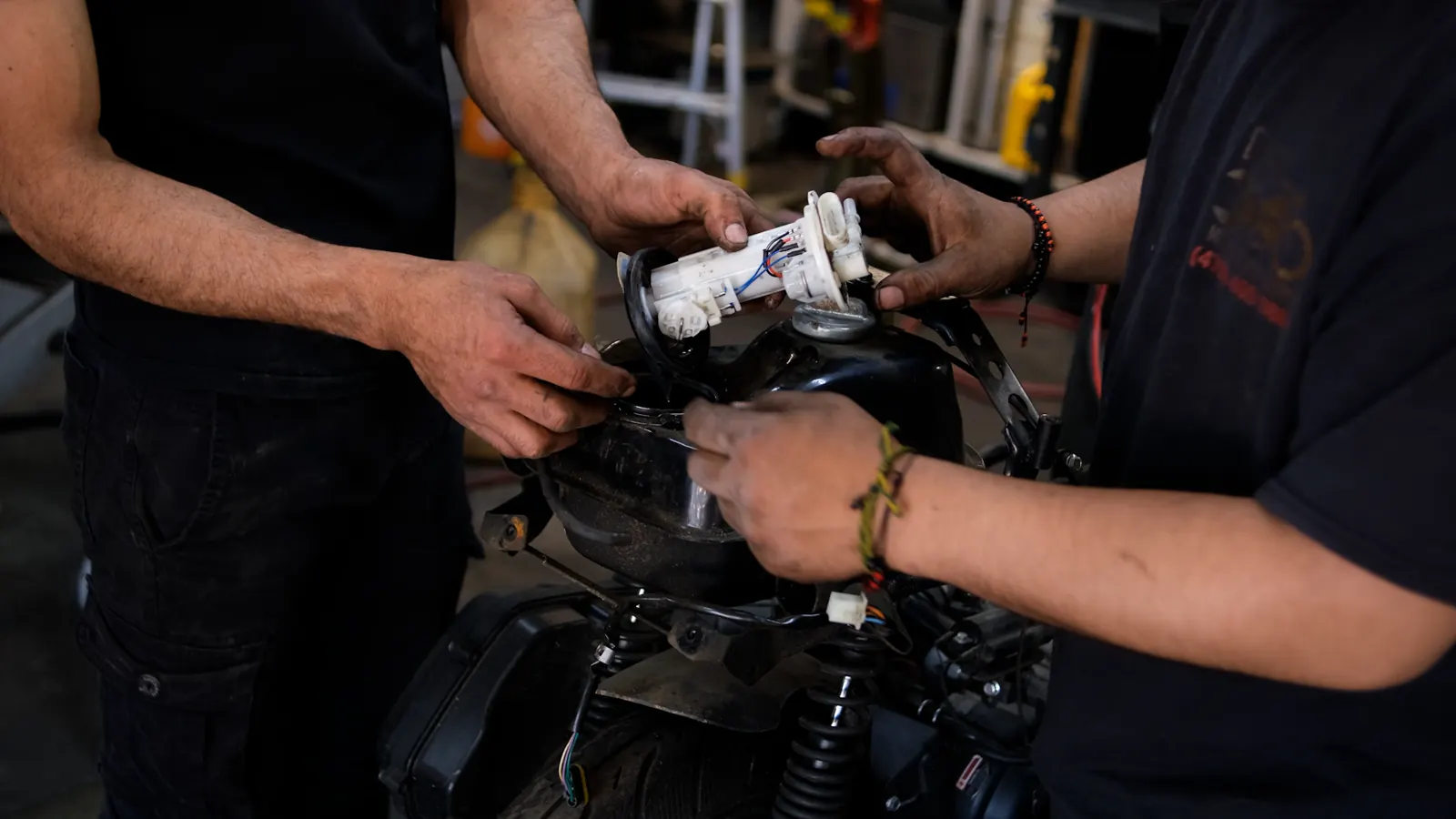
The good news: almost all of it is fixable
Here’s the part that should make you smile. Everything we just listed sounds scary, but none of it is the end of the road. Gummed carbs clean up. Rusty tanks get sealed. Seized brakes come apart. That old bike in your garage is almost always more alive than it looks, and bringing it back is genuinely one of the best parts of this job.
The feeling when a bike that hasn’t run in years fires up clean and idles smooth never gets old, not for you and not for us. Whether you inherited it, found it, or just never got around to it, that machine wants to run again. If you’re weighing whether it’s worth the effort, our take on restoring versus selling can help you decide with a clear head.
So don’t crank that long-sleeping motorcycle Marietta riders keep finding in the back of the garage. Roll it to us instead. We’re a quick run off Roswell Road, about three miles from the Square, and we’ll tell you straight what it needs to ride safe again. If you learned to ride through the Georgia Motorcycle Safety Program and want your first bike to be a trustworthy one, this is exactly the right first move. Text us a few photos and let’s wake it up the right way.
Questions Marietta riders ask us
My bike sat for years. Can I just put a battery in it and ride?
Please don’t. A dead battery is usually the least of it. Old fuel gums the carbs, tanks rust inside, tires dry-rot, brakes seize, and seals dry out. Cranking it before checking those can turn a cheap fix into an engine job. Roll it in and let us look it over first, then it’ll be safe to ride.
How do you know if the tank is rusty inside?
We look inside it. Years of sitting lets moisture in, and Georgia humidity makes it worse, so bare steel tanks often rust from the inside where you can’t see it. If we find rust, we clean it out and seal it. Skipping this just feeds grit into the carbs and filters you paid to clean.
Do I really need new tires if the tread looks fine?
If they’re older than about five to six years, yes. Tires age even without miles, and a dry-rotted tire can look fine while it’s cracking and ready to fail. We check the date codes on the sidewall and look for cracking. A blowout at speed on I-75 isn’t worth saving an old set.
Why can't I just start it to see if it runs?
Because a cold crank after years of sitting runs metal on dry metal, floods stuck floats, and fights seized brakes. The oil has drained off the internals. We turn the engine by hand, prime the oil, and check spark and compression before starting. Patience early saves you a rebuilt engine later.
How long does it take to revive a bike that sat for years?
It depends on how it was stored and what we find. A dry-garage bike moves faster than one that lived outdoors under a cover through Georgia summers. We give you a realistic window once we’ve looked it over, and we won’t rush the safety steps just to hand it back early.
Is it worth reviving an old bike, or should I just buy a running one?
Often it’s very worth it, especially if the bike has meaning to you or is a solid model. A proper revive is usually cheaper than a comparable running bike and gives you one you actually trust. If it’s a common bike with deep problems, we’ll tell you honestly when walking away is the smarter call.
We revive long-parked bikes for riders across Marietta and the northwest metro. Projects roll in from Historic Marietta near the Square, the Whitlock area west of downtown, and Rustic Village, plus apartment corridors along Delk Road where bikes sit under covers. We’re a short run off Roswell Road, about three miles from Marietta Square and minutes past the Big Chicken. Riders also come from East Cobb, Kennesaw, Smyrna, and Acworth.
DON'T CRANK IT. TEXT US FIRST
Found a bike that’s been sitting for years? Don’t hit the starter. Text us a few photos, tell us how long it sat and where, and we’ll tell you what it takes to wake it up safely. We’re an easy run off Roswell Road, about three miles from Marietta Square, and reviving old bikes is one of our favorite jobs. No pressure, just an honest plan to get it running right.
470-460-9883Diaz Motorcycles and Service, LLC · 847 Barnes Mill Road, Marietta, GA 30062