Motorcycle Sitting for Years in Smyrna? Here's What Happens
What quietly falls apart while a bike sits, why Georgia humidity makes it worse, and what a safe wake-up really takes.
Plus, a motorcycle sitting for years Smyrna riders swear “still runs fine” almost never does, and that’s not an insult, it’s just chemistry. Meanwhile, the bike looks the same under its cover in the garage, so it feels frozen in time. In fact, it’s been quietly falling apart the whole time it sat still. For example, the fuel turned to varnish, the tank started rusting from the inside, and the tires aged out even though you never rode a mile on them. So before you hit that starter, let’s talk about what’s really going on in there.
We get it. You bought the bike, life happened, a move or a kid or a busy stretch of Cumberland commuting, and it sat. Now it’s a few years later and you want it back. Good news: most bikes that sat are absolutely worth waking up. Bad news: “turn the key and go” is how you turn a cheap fix into an expensive one. A bike that’s been still for years needs a wake-up, not a jump-start, and the difference matters a lot.
Sitting still is worse than riding hard
Here’s the counterintuitive truth: a bike that gets ridden regularly stays healthier than one that sits. Riding keeps the fuel fresh, the battery charged, the seals wet, and everything moving. Sitting does the opposite. Fluids break down, rubber dries out, metal corrodes, and gravity pulls oil off every surface that needs it. The engine that fires up on the first cold morning after years in storage is the exception, not the rule.
And Smyrna makes it worse, because Georgia is basically a spa for corrosion. We average around 70% humidity year-round, and summer mornings push past 90%. That damp air creeps into the tank, the exhaust, the crankcase, everywhere. If your bike sat outside under a cover behind a Belmont Hills carport or in an un-air-conditioned townhome garage near Windy Hill, it’s been marinating in moisture the entire time. The cover kept the rain off. It did nothing about the air.
You might wonder why none of this shows up when you glance at the bike. That’s the trap: corrosion and varnish do their work out of sight, inside the tank, the carbs, the crankcase, the calipers. The paint can still shine while the guts quietly go south. A bike that looks parked-and-ready is exactly the one most likely to bite you the moment you thumb the starter.
The fuel system is where it starts
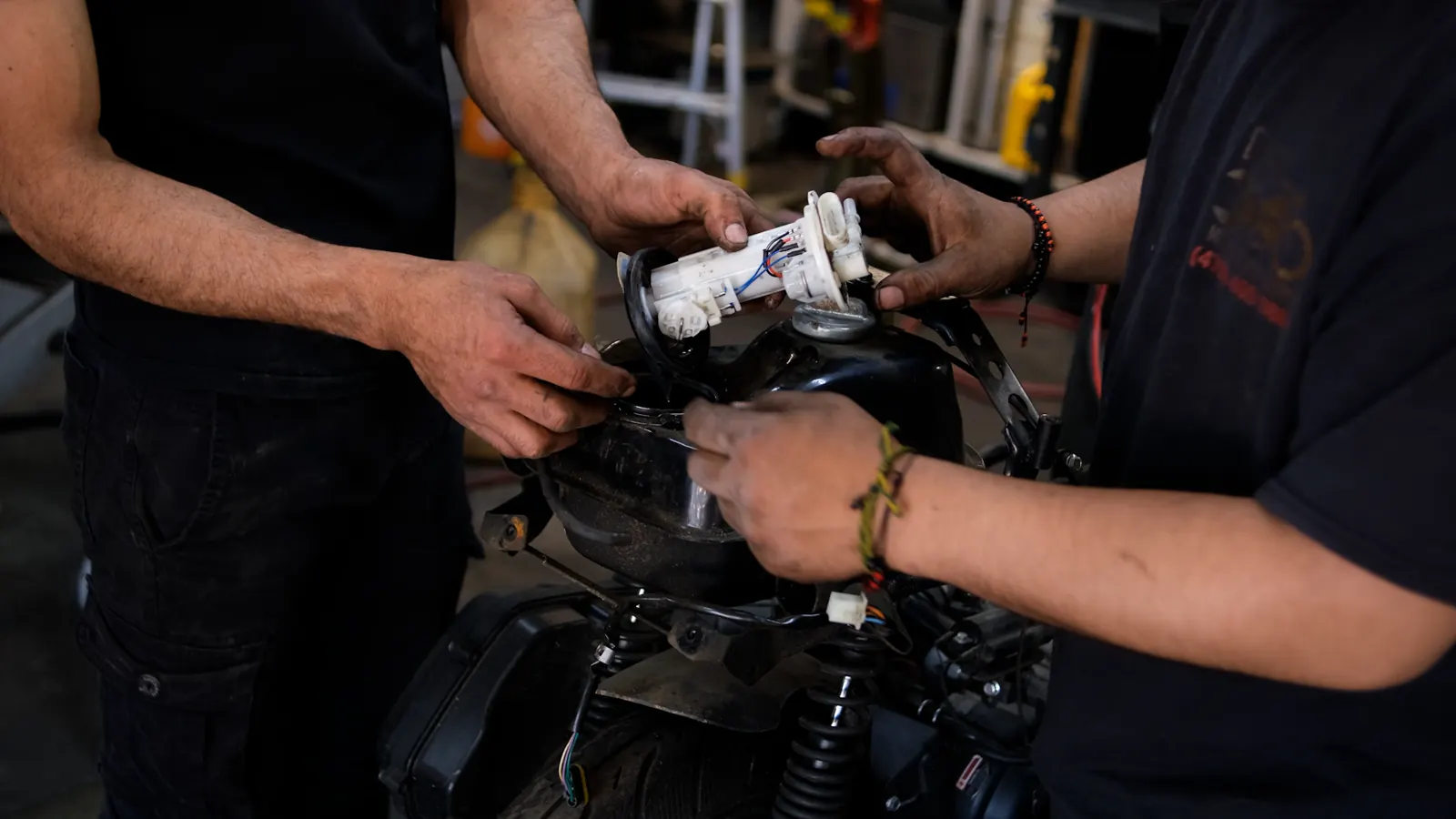
Gasoline has a shelf life, and it’s shorter than you’d think. In a few months it starts to break down. In a few years it turns into a sticky varnish that gums up everything it touches. In carbureted bikes, that gunk clogs the tiny passages the engine needs to run, so it either won’t start or runs terribly. In fuel-injected bikes, it fouls injectors and the pump. Either way, old fuel is almost always the first thing we deal with.
The tank itself is the other half of the problem. Ethanol fuel loves to pull water out of humid Georgia air, and that water sits in the bottom of a steel tank and rusts it from the inside out. So a bike that sat with a half-empty tank often has a floor of rust and a puddle of varnish waiting for you. We clean or reline the tank, rebuild or clean the fuel system, and get fresh fuel flowing before we trust the engine with any of it.
Rubber, seals, and tires: the quiet killers
Rubber doesn’t care whether you rode the bike, it ages on a calendar, not an odometer. Tires that sat for years develop hard spots and hairline cracks in the sidewalls, and a cracked tire is a blowout waiting to happen no matter how much tread it has. That’s a hard no for us on a bike headed back out onto South Cobb Drive traffic. Aged tires get replaced, full stop, because the alternative is a very bad day.
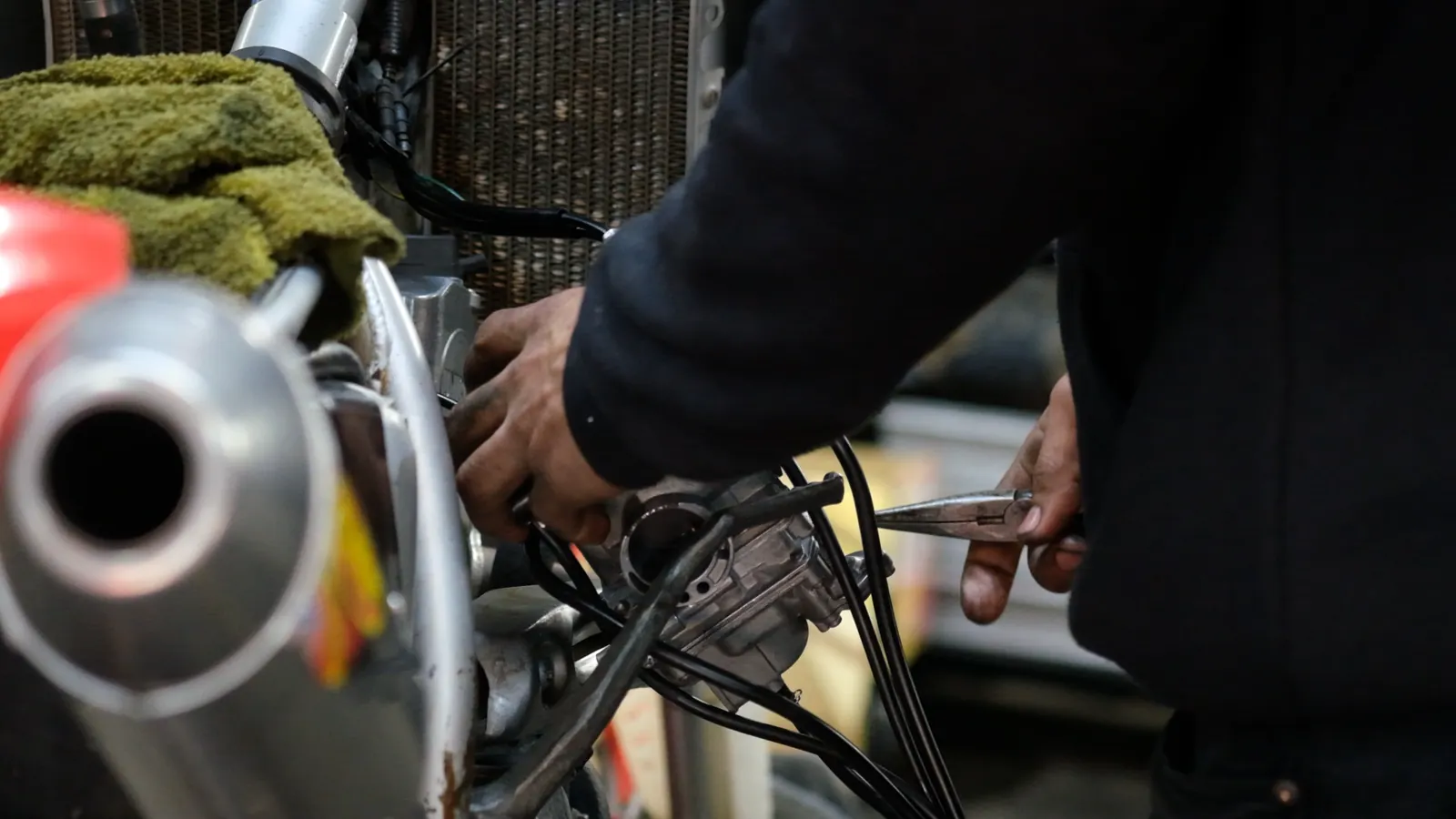
It’s not just tires. Fork seals dry out and start weeping. Brake and clutch lines get brittle. Rubber intake boots crack and cause air leaks. And the grease in the wheel bearings and steering head can dry to a paste. None of this shows up when the bike is standing still looking pretty, which is exactly why a bike that “looks fine” can still be unsafe to ride until someone actually checks all of it.
HEADS UP
Tires and brake lines age on a calendar, not a mileage counter. “Low miles” on a bike that sat means nothing for safety.
The stuff you can't see: engine and brakes
When a bike sits, the oil drains off the cylinder walls, cam, and bearings, leaving bare metal exposed to that humid air. Combine that with acids that build up in old oil and you can get surface corrosion inside the engine. Cranking a dry, corroded engine hard with a jump pack is how you turn light surface rust into real scoring. That’s why we never just “send it,” we prep the engine to turn over safely first, then bring it to life gently.
Brakes are the other buried hazard. Brake fluid absorbs water over time, and water in the lines lowers the boiling point and rusts the caliper pistons from the inside. Pistons seize, pads stick to rotors, and the whole system gets spongy or grabby. On a bike you’re about to ride in Smyrna’s stop-and-go event traffic near The Battery, brakes are not the place to gamble. We flush the fluid and free up the calipers before anything rolls.
None of this means your engine is toast, by the way. Most engines that sat are mechanically healthy once the fuel and fluids are handled, they just need a careful, gentle first startup instead of a violent one. The whole point is to protect the good, expensive parts while we replace the cheap ones that aged out. That’s the difference between a wake-up and an accidental teardown.
The battery and electrical gremlins
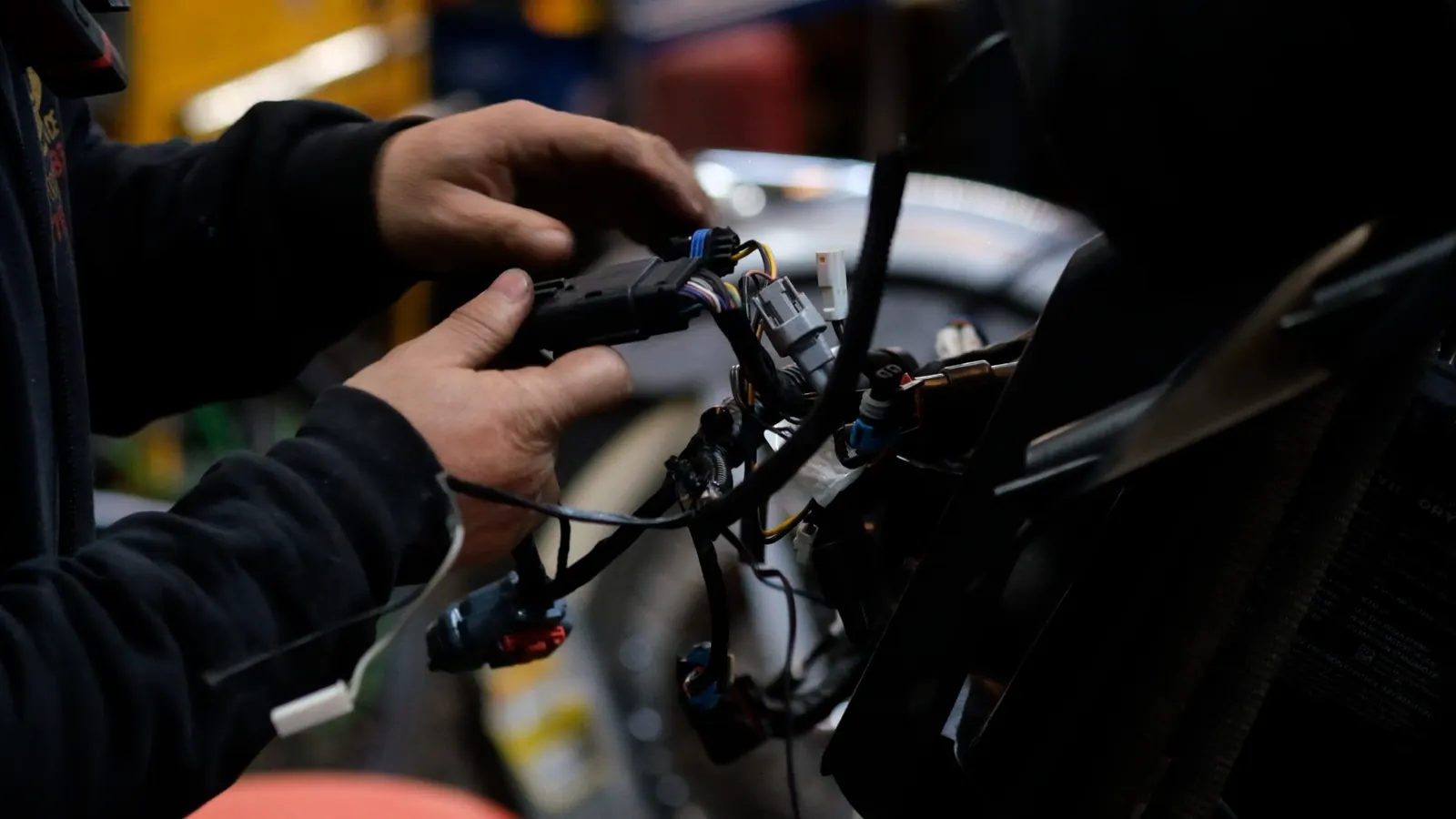
A battery that sat for years without a tender is almost always dead beyond saving, and that’s the easy part. The trickier issue is corrosion sneaking into connectors and grounds, especially in our humidity. Green crusty terminals, brittle wiring, and mouse-chewed harnesses are all common on stored bikes, and they cause maddening problems: no spark, dim lights, a bike that starts then dies. We check the whole electrical picture instead of just slapping in a new battery and hoping.
And yes, mice. A garage or shed bike is prime real estate for critters, who love to nest in airboxes and chew wiring for fun. We’ve pulled some truly impressive nests out of bikes that sat. It’s worth a laugh right up until you realize a chewed harness is why nothing works. Part of a proper wake-up is checking the places a rodent would love, before they become a mystery you chase for weeks.
DON'T DO THIS
Don’t dump fresh gas in, charge the battery, and mash the starter. On a bike that sat for years, that’s how a cheap revival becomes a costly repair.
What a safe wake-up actually takes
So what’s the right way? We work in an order, because each step protects the next. We don’t want to fire a dry, gummed-up engine and cause damage we then have to fix. A real revival is patient and methodical, and it’s the whole reason a bike that sat comes back reliable instead of limping. Here’s the honest sequence we follow on a bike that’s been parked for years.
- Inspect first: look the whole bike over and tell you honestly what it needs before touching anything.
- Drain the old fuel and clean or reline the tank, then rebuild or clean the fuel system.
- Change the oil and filter, and prep the engine so it can turn over safely without dry-scoring.
- Flush the brakes, free the calipers, and check the clutch and hydraulics.
- Replace aged tires, check bearings and seals, and go through the electrical system.
- Bring it to life gently, then run it, road-test it, and confirm it’s genuinely safe.
Notice step one is looking, not turning the key. A bike that sat two years in a dry East Cobb garage and a bike that sat five years outside a Mableton apartment are very different jobs, and the inspection tells us which one you’ve got. If it turns out the bike needs more than a revival, that’s where the conversation about a fuller restoration and its cost begins, and we’ll lay it out plainly.
The good news for Smyrna riders
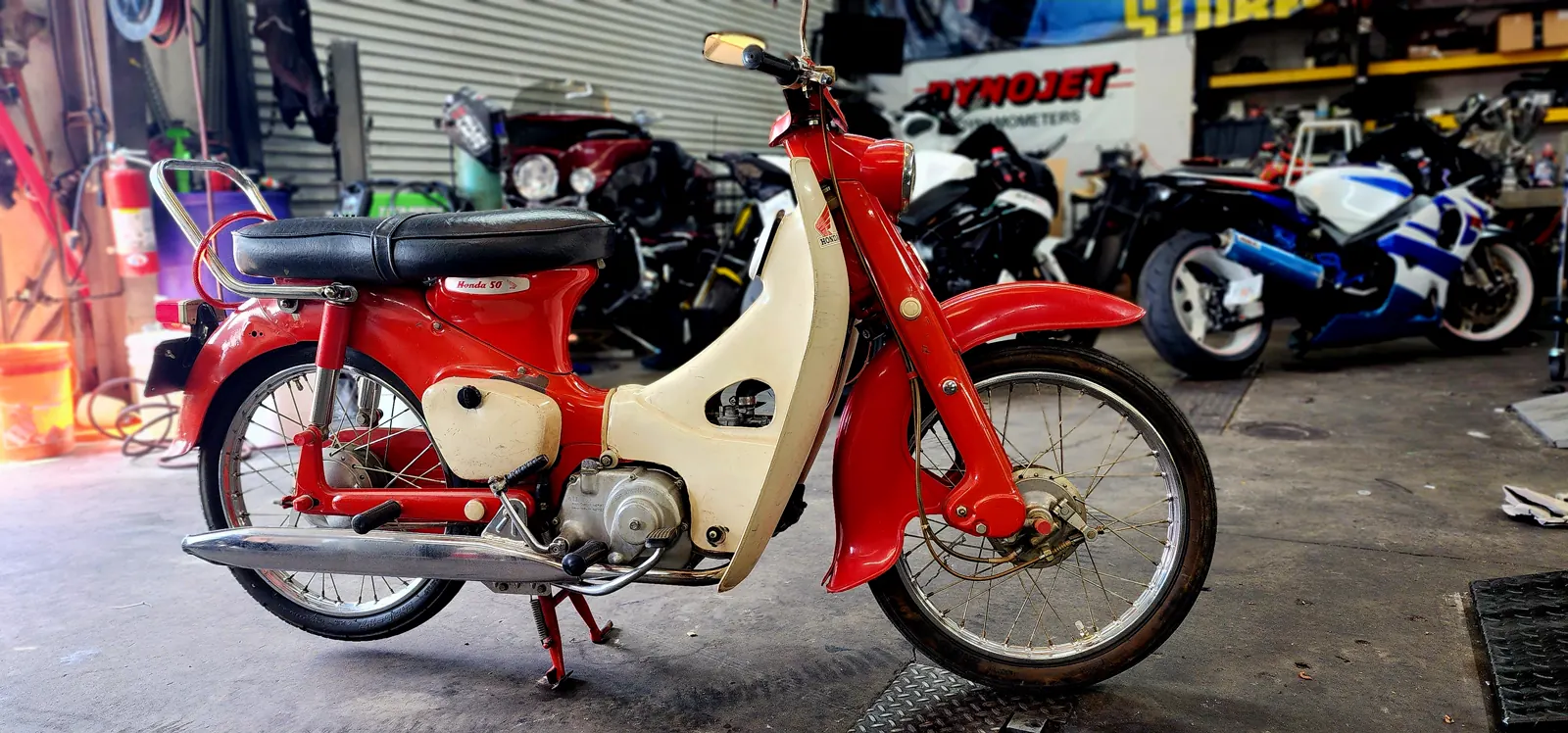
Here’s the encouraging part, and it’s the truth: the vast majority of bikes that sat for years are worth reviving. The problems are almost all things that break down over time, fuel, rubber, fluids, battery, not the expensive core of the bike. The engine and frame are usually fine. So you’re typically paying to replace the consumables that aged out, not to rebuild the whole machine, and that makes a wake-up one of the better deals in this whole trade.
That’s genuinely reassuring if you’ve been dreading a huge bill. The scary word “restoration” often turns out to mean “replace the fuel, fluids, tires, and battery, then check everything carefully.” It’s honest, finite work, and once it’s done you’ve got a bike you can actually trust in Smyrna traffic instead of one you’re nervous to ride past the end of the driveway.
A bike that sat needs a wake-up, not a jump-start. Fire it dry and you turn a cheap fix into an expensive one.
And we make it painless. You don’t have to trailer a non-running bike anywhere, we come get it from wherever it’s been parked, from a King Springs garage to a Windy Hill lot. We do the wake-up right, and we bring it back running. So if there’s a bike that’s been sitting and quietly nagging at you, text us a few photos and tell us how long it’s been down. We’ll give you an honest read on what it’ll take to get you back on Atlanta Road where you belong.
Questions Smyrna riders ask us
My bike sat for years but has low miles. Can I just ride it?
Please don’t, not yet. Low miles means nothing for safety on a bike that sat, because tires, brake lines, and fluids age on a calendar, not an odometer. Old fuel turns to varnish, the tank can rust from the inside, and a dry engine can score if you crank it hard. It needs a proper wake-up first. Then you ride it with confidence.
What's the first thing that goes wrong when a bike sits?
The fuel system, almost always. Gasoline breaks down in months and turns to sticky varnish in a few years, clogging carbs or fouling injectors and the pump. Meanwhile ethanol fuel pulls water out of Georgia’s humid air and rusts the tank from the inside. That’s why cleaning the fuel system and tank is usually step one on any bike that sat.
Is a bike that sat for years worth fixing?
Usually, yes. The things that break down while sitting, fuel, rubber, fluids, battery, are consumables, not the expensive core of the bike. The engine and frame are typically fine. So most wake-ups are about replacing what aged out, not rebuilding the whole machine, which makes them one of the better values we offer. We’ll tell you honestly if yours is the exception.
Why is Georgia humidity so hard on a stored bike?
Because moisture is the enemy, and we’ve got plenty. Smyrna averages around 70% humidity year-round and over 90% on summer mornings. That damp air creeps into the tank, exhaust, and crankcase, rusting metal from the inside even under a cover. A cover keeps rain off but does nothing about the air, which is why stored bikes here corrode faster than in drier climates.
Can you pick up a bike that won't start?
Absolutely, that’s the whole point of our pickup service for Smyrna. You don’t need to find a trailer or wrestle a dead bike anywhere. We come get it from your garage, carport, or apartment lot, do the wake-up right in our shop, and deliver it back running. For a non-running project, it’s the easiest way to get started.
How long does a revival take?
It depends on how long it sat and what we find. A bike parked two years in a dry garage moves faster than one that sat five years outside with a rusted tank and seized calipers. We inspect first and give you a realistic window, and we won’t rush a step just to hand it back, because on a sitting bike the shortcuts are exactly what cause damage.
We wake up sitting bikes across the Jonquil City and its neighbors. Projects come from Belmont Hills, Williams Park, The Highlands, and the King Springs area, plus the apartments and townhomes near Market Village and Windy Hill Road. We pick up by Taylor-Brawner Park and the Silver Comet Trail’s Mavell Road Trailhead, and along South Cobb Drive and Atlanta Road toward Vinings. If your bike sat near The Battery, we’ll come get it running.
TEXT US ABOUT YOUR PARKED BIKE
Got a bike that’s been sitting and nagging at you? Text us a few photos and tell us how long it’s been down. We’ll give you an honest read on what a safe wake-up takes, no guessing and no pressure. We pick up non-running bikes across Smyrna, so you never have to trailer it, and we bring it back running and road-tested. Let’s get you back on Atlanta Road.
470-460-9883Diaz Motorcycles and Service, LLC · 847 Barnes Mill Road, Marietta, GA 30062