Motorcycle Repair Cost Alpharetta — Full Breakdown
A plain-English walk through what makes one repair small, what makes another one big, and why an honest shop looks before it quotes.
It started as a tick. Then again, Barely a sound at all, more of a tap you only caught at idle with the garage door down. Even so, a friend of ours off McGinnis Ferry Road heard it in April and figured it would fade. Meanwhile, By June it was a knock he could feel in the bars. In fact, that said, that little tap is the honest starting point for every question about motorcycle repair cost Alpharetta riders bring us. Small things stay small. Work grows when a small thing gets ignored, and honestly, that’s good news, because it means you hold most of the controls.
The Direct Answer: Access Sets the Size of the Job
Here’s the short version. What makes one repair bigger than another is usually not the broken part. For example, It’s how hard that part is to reach. Reaching it takes time. After that, Time is labor, and labor is almost always the bigger half of the work. What’s more, Parts have a price you can look up in a minute. So and Better yet, Access is the piece nobody sees until the fairings are on the floor.
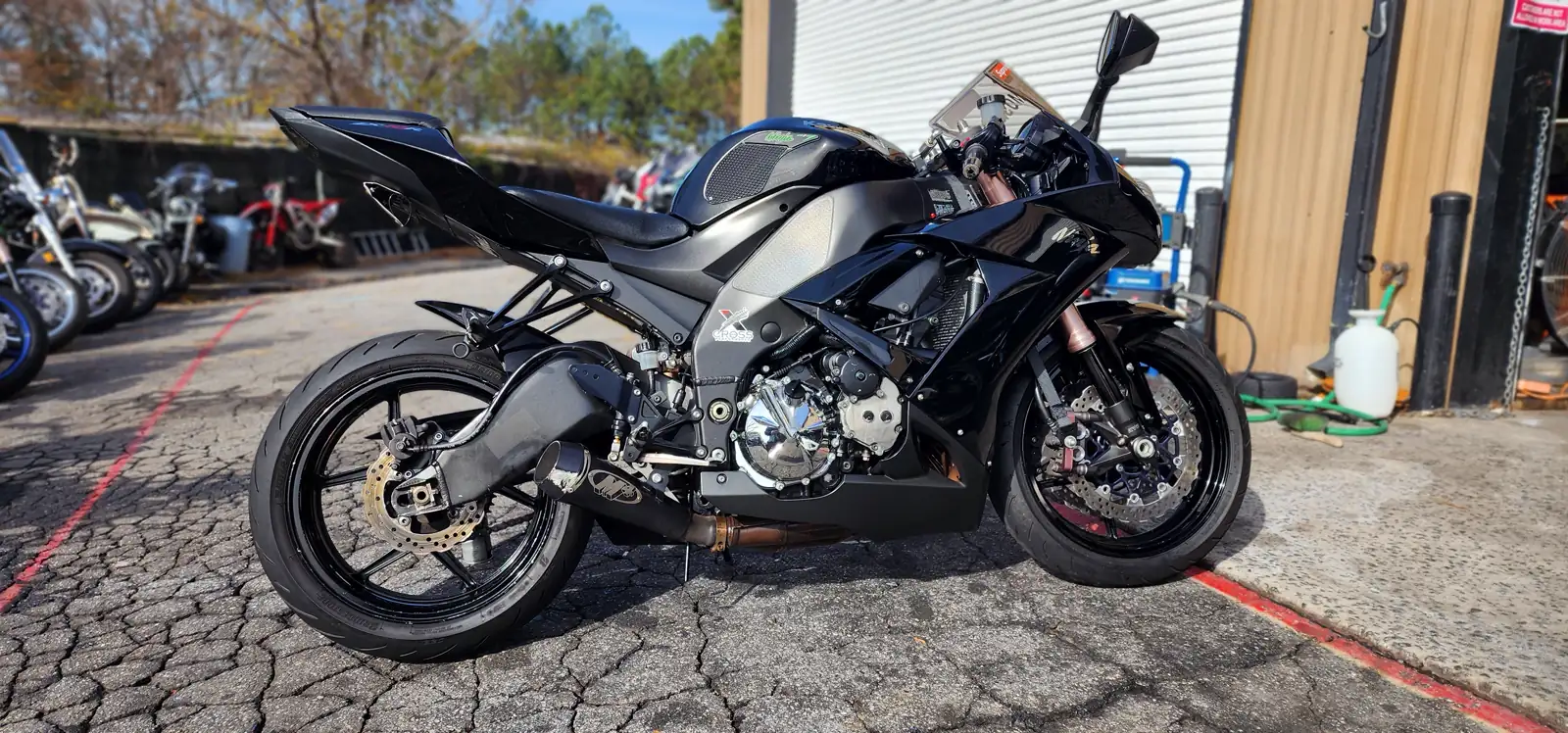
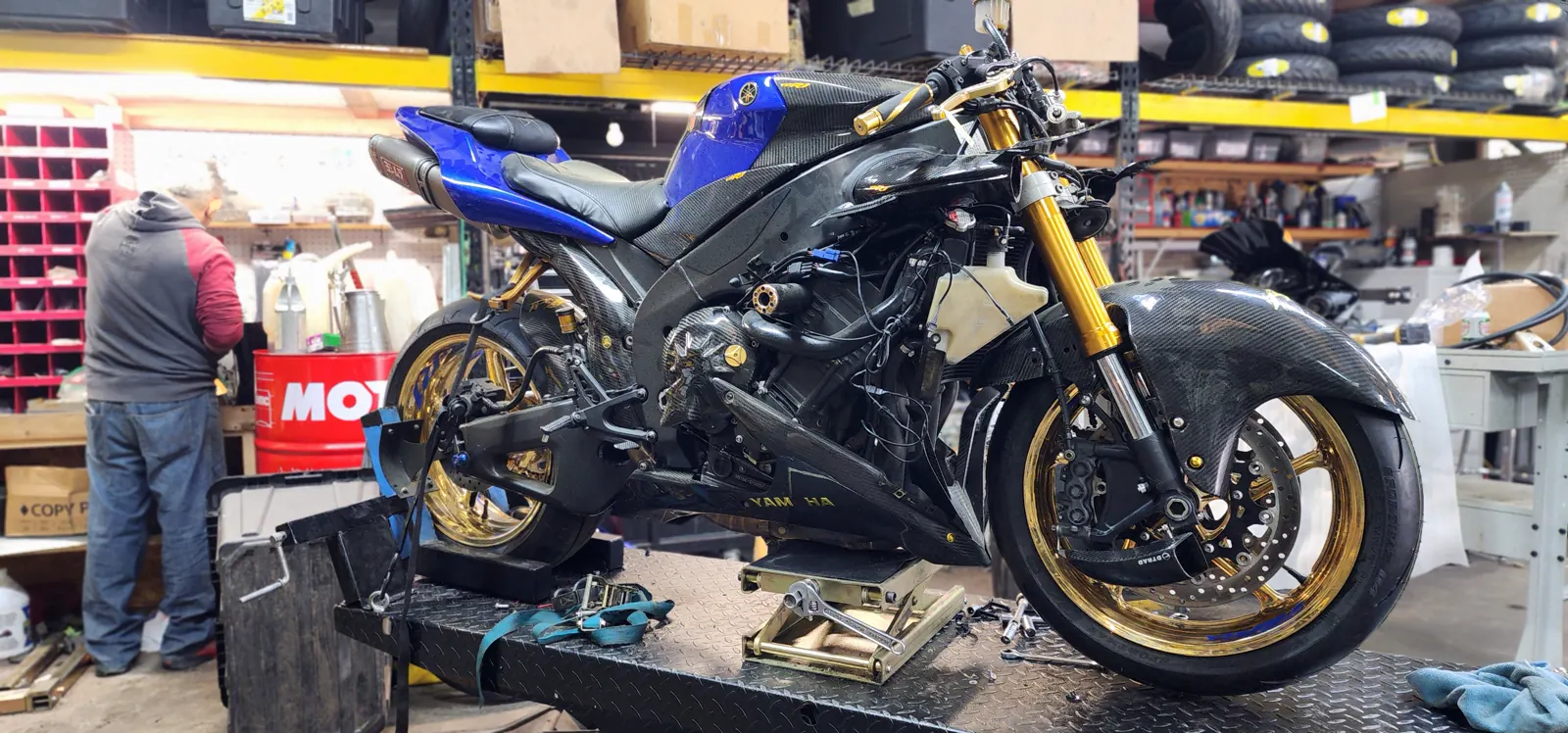
Still, Picture two bikes with the same failed component. Plus, On a naked standard, that part sits in the open, and a tech can have hands on it in minutes. Of course, on a full-fairing sportbike, it might live behind bodywork, a radiator and a wiring loom. Same part, very different afternoon. Then again, Nothing broke worse on the second bike, it just parked itself in a harder neighborhood.
So when somebody asks what a repair runs, the real question underneath is: how deep is this, and how much has to come apart to get there? That’s answerable. Even so, it just isn’t answerable from a voice on the phone describing a noise.
THE ONE-LINE VERSION
Parts are what broke. Meanwhile, Labor is how far we have to travel to get to it. Depth drives the work, not drama.
What Actually Drives the Work
Of course, After enough years on the lift, the same handful of factors show up over and over. None of them are mysterious. Once you know them, you can look at your own bike and make a pretty smart guess about whether you’re in for a short visit or a real project.
- How buried the part is. Then again, Bodywork, tanks, exhausts and airboxes have to come off and go back on, and that time counts twice.
- Whether it’s mechanical or electrical. Even so, a worn cable is a known quantity. An intermittent electrical gremlin is a hunt, and hunting takes time.
- How long the bike was ridden after the symptom started. A loose chain is a chain. A loose chain ridden all summer can take sprockets with it.
- Parts availability. Common service parts sit on the shelf. A model-specific piece for a vintage build has to be sourced, and that stretches the calendar more than the labor.
- How many systems the symptom touches. Fuel, spark and air all live in the same conversation, so a rough-running bike can start in one place and end in another.
- Whether the bike sat. Stored bikes bring their own list, and around here, a lot of bikes sit.
That last one matters more in this city than almost anywhere else we serve. Alpharetta is a destination-riding market, not a commuting one. Bikes live in three-car garages inside swim-and-tennis and golf neighborhoods, they come out for a good weekend, and then they wait. A single garage in Windward, the 3,400-acre master plan built around Lake Windward, might hold a tourer, a sportbike and something vintage that hasn’t turned a wheel since fall.
Stored bikes are healthy bikes in every way except the ones that count in March. Fuel goes stale. Batteries quietly give up. Carbs and injectors gum. Tires flat-spot and age out even while the paint stays showroom clean. It’s the cleanest sick bike you’ll ever see, which is a funny thing to say out loud, but it’s true. If yours won’t wake up after a long nap, we broke down what usually causes it in plain terms.
This Is the Point Where a Lot of Riders Make the Wrong Call
The wrong call is almost never a dramatic one. Usually it’s a reasonable-sounding decision made with good intentions. A rider hears a noise, reads three forum threads, orders the part that thread number two swore by, and installs it on a Sunday. Sometimes that works beautifully. Other times the noise was a symptom of something upstream, and now there’s a new part on the bike plus the original problem plus a weekend gone.
The other version is waiting. Riding season here runs long and gorgeous, and nobody wants to give up a perfect Saturday to a shop visit. So the tick becomes a tap, the tap becomes a knock, and a small job that could have been handled between rides turns into one that keeps the bike off the road. Waiting never makes a repair smaller. That’s about the only rule in this trade with no exceptions.
Flip side, and this is the encouraging part: riders who bring a bike in while the symptom is still boring almost always get the boring outcome. Small, contained, back on the road quickly. Boring is the goal. Boring is the whole product.
What We Actually Check, Start to Finish
So here’s the real process, in order, with nothing hidden. This is what happens between you handing over the key and us handing it back.
- We listen to you first. You’ve heard this bike more than anyone. When it started, what changed, what it does cold versus hot, what you were doing when it happened.
- We ride it or run it if it’s safe to. Symptoms describe themselves better than words do.
- We do a full visual pass. Tires, chain or belt, brakes, fluids, cables, fasteners, leaks, chafed wiring. Sometimes the answer sits right there in plain sight.
- We narrow the system. Fuel, spark, air, electrical, drivetrain, chassis. We rule things out instead of guessing in.
- We open only what we need to open. Access has a cost, so nobody pulls bodywork for fun.
- We confirm the actual cause, not just the symptom. Replacing what broke without finding what broke it is how the same repair happens twice.
- We call you with what we found, what it takes, and what it runs. Then you decide. Nothing gets done that you didn’t say yes to.
- We do the work, torque to spec, and test it. Then we test it again after it cools down.
- We hand it back and tell you what to watch for next season.
That’s the whole thing. No mystery step. For a fuller picture of the shop side, here’s what you get when you bring it in, laid out service by service.
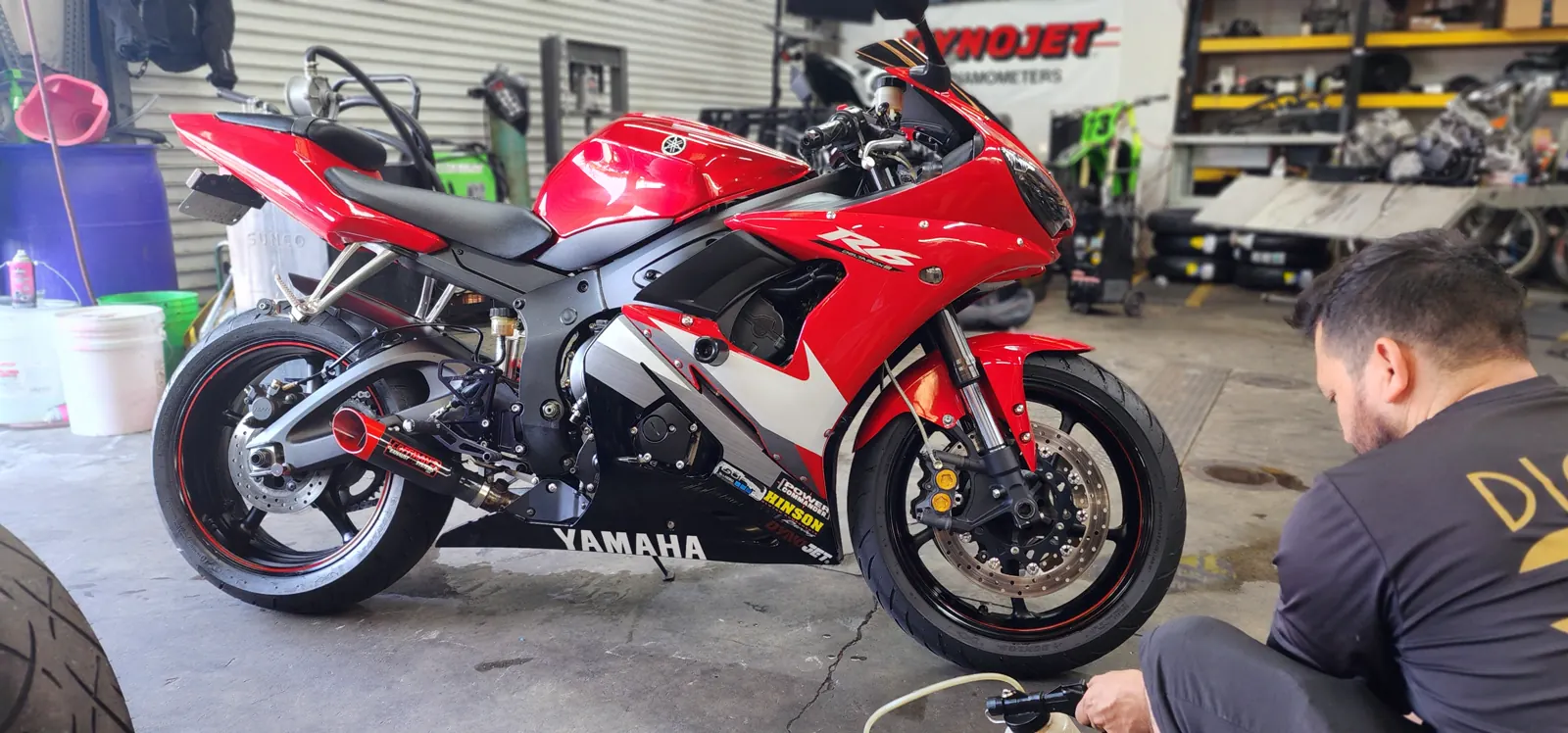
Why an Honest Shop Won't Quote It Sight-Unseen
People ask us to price it over the phone all the time, and we understand why. You want to plan. Totally fair. Trouble is, motorcycle repair cost Alpharetta bikes land at depends on what we find, and a number given before anybody has touched the bike is a guess dressed up as an answer.
Think about what you’d have to describe over the phone: a noise, a feel, a smell, a light. Those point to a dozen causes with wildly different depths. A shop that fires off a confident number anyway is either padding it to stay safe or lowballing it to get the bike in the door. That second habit is why so many riders have a story that starts with one figure and ends with another.
Our way instead: look, confirm, then quote a real number and hold it. If we find something extra mid-job, you get a call before a single extra bolt turns. Riders here research hard, read reviews and compare shops before they ever pick up the phone. That’s a good instinct, and it’s exactly why we’d rather give you one accurate answer late than a comfortable one early. Before you book anywhere, it helps to know what the work covers.
A quote before anyone looks at the bike isn't a quote. It's a wish.
Mistakes Worth Skipping
- Chasing a symptom with parts instead of diagnosis. Parts cannons are expensive and rarely accurate.
- Approving work you don’t understand. Ask what failed and why. Any good tech will happily explain it.
- Skipping tires because the tread still looks fine. Rubber ages on the calendar, not the odometer, and a garage-kept bike hides that beautifully.
- Ignoring a leak because it’s small. Small leaks are the easiest problem you’ll ever fix and the most annoying one to fix late.
- Storing a bike with old fuel and a tired battery, then being surprised in March.
- Assuming a dealer is the only place that can handle tuning or diagnostics. Independents do this work every day.
The Alpharetta Part of the Story
Local roads shape local repairs more than people expect. Tar-snake and utility-cut patching along GA 9 and the older Roswell-corridor pavement turns slick the moment the first rain hits. Constant redevelopment around Old Milton, North Point and Encore leaves construction plating and loose gravel where none sat last month. Late-March pollen bakes a film onto painted lines and manhole covers that makes them genuinely greasy, and the shaded back roads out around Crabapple, founded in 1830 where GA 140 meets GA 372 and known locally as the Silos, collect pine needles and leaves all fall.
All of that shows up on the lift as brake wear, tire wear and suspension that’s worked harder than the mileage suggests. Riders coming home from a weekend on the North Georgia Triangle, the Dahlonega-Suches-Blairsville loop documented by Rider Magazine, put real heat and real miles into a bike in two days. That’s the good kind of wear, though it’s still wear.
Commuting adds its own flavor. GA 400 southbound in the morning and northbound at five is one of the region’s most dependable backups, so taking the bike is tempting. Georgia bans lane splitting though, so a bike saves you parking and fuel rather than time. Most riders here commute on the good spring and fall days instead of daily, which keeps the miles low but the stop-and-go concentrated. If you’re newer to two wheels and sorting out endorsements, the state lays out Georgia Class M licensing clearly, and the IIHS motorcycle research is worth a scroll too.
North Fulton is dealer-rich and independent-poor, which is a big reason riders drive to us. Good independents do exist nearby, and G&G Cycles of Roswell handles repair and tire service on most makes if you want a closer option. What’s missing inside Alpharetta itself is a large multi-brand independent doing performance work, dyno tuning, ECU flashing and restoration under one roof. That’s the gap we fill, and it’s why the drive pencils out for people.
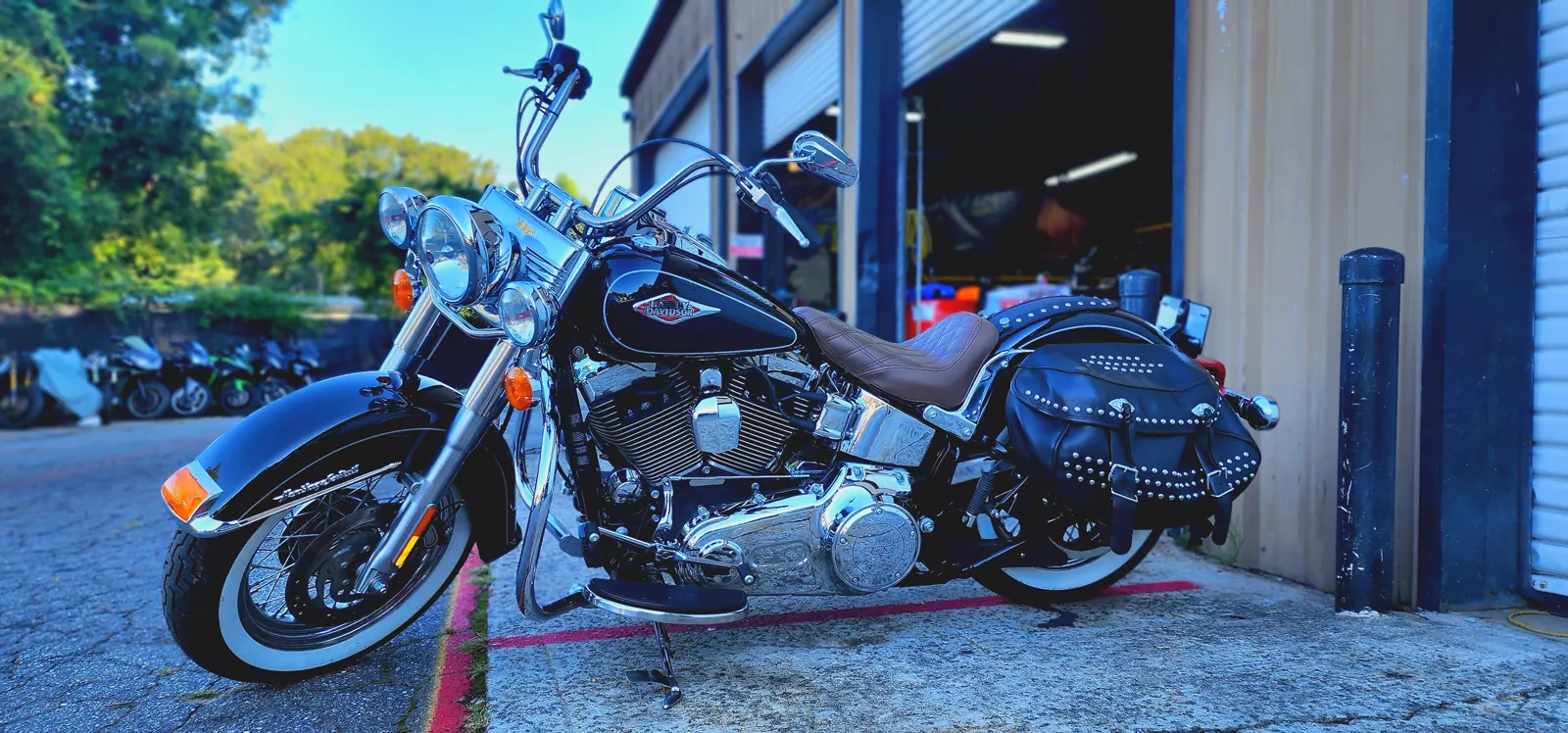
Here's the Thing We Wish Every Rider Knew a Season Earlier
Almost every big repair we see was once a small one that nobody was mad at yet. The knock was a tick. Of course, the seep was a shine. The dead battery was a slightly lazy crank in November that the owner shrugged off. None of those moments feel urgent, which is exactly the trap, because urgency shows up right when the fix stops being simple.
So the most useful habit you can build costs you nothing: pay attention to the small change. New sound, new smell, new feel in the lever, new drip on the floor. Say something while it’s still boring. Riders who do that spend far less over the life of a bike than riders who wait, and they lose fewer good weekends to a shop visit. Curious how this plays out elsewhere in the metro? Here’s what Gainesville riders run into with the same bikes.
What the Outcome Looks Like
You bring the bike in. We look, we find it, we call you with a real number and a real timeline. You say go or you say not yet, and either answer is fine with us. Then you get a bike that starts when you thumb it and behaves the way it did the day you fell for it.
That’s what we want you walking away with: no fog, no guessing, no wondering whether you got worked. Whether your bike lives behind a gate at The Manor Golf & Country Club, the Tom Watson course with roughly one-acre lots, or in a garage a few minutes from Avalon, the 86-acre village on Old Milton Parkway and about the most recognized address in the city, the story is the same. Understand access, labor and parts, and motorcycle repair cost Alpharetta riders once dreaded turns into a normal, plannable thing.
The ride down to us runs roughly eighteen to twenty-two miles. Off-peak that’s thirty to forty minutes. At rush hour, closer to forty-five to sixty, since no freeway connects the two directly. Most riders take Old Milton or Rucker over to GA 9, run south through Roswell and cut west on GA 120 into East Cobb. Time it the way you’d time a run to a festival at Alpharetta City Center and Brooke Street Park and you’ll be fine. Bring coffee. We’ll have the lift open.
Questions Alpharetta riders ask us
How do I avoid surprises on a repair?
Ask for the diagnosis before you approve anything, and ask what failed and why. Get the quote in writing, plus a promise that you’ll be called before any extra work happens. We work that way by default, so nothing new gets touched without your yes first.
What makes one job bigger than another?
Access, mostly. The same failed part can sit out in the open on one bike and behind bodywork, a radiator and a wiring loom on another. Everything that comes off has to go back on, and that time counts. How long the bike was ridden with the symptom matters too, since one worn part can take its neighbors with it.
Why can't you quote it over the phone?
Because a noise or a warning light can point to a dozen different causes with wildly different depths. Any number given before somebody touches the bike is a guess, and guesses only ever move one direction. We’d rather look first, then give you one accurate answer and hold it.
What's included when you do the work?
Diagnosis, the repair itself, torque to spec, and a road or bench test before it goes back to you. We also tell you what we saw that isn’t urgent yet, so you can plan the next season instead of getting caught by it.
How long does it take?
Simple service work is often same-day or next-day. Deeper jobs depend on how much has to come apart and whether a part has to be sourced. Vintage and model-specific pieces stretch the calendar more than the labor does. You’ll get a real timeline when we call with the diagnosis.
My bike sat all winter. Is that a big deal?
It’s the most common spring visit we get, and it’s usually very manageable. Stale fuel, a tired battery, gummed carbs or injectors and aged tires make up the usual list. Caught early, it’s a short visit and you’re back out for the good weather.
We take care of riders all over the north metro, and plenty of them make the run to us on purpose. Alpharetta is home base for a lot of our customers, along with neighbors in Roswell, Milton and Johns Creek just across the line. Folks come down from Cumming and over from Suwanee and Duluth, and we see plenty of bikes from Sandy Springs, Dunwoody and East Cobb. Woodstock riders head our way too, and the historic Crabapple area sends us its share of vintage projects. If you’re already in Marietta, you’re practically next door.
TEXT US ABOUT YOUR BIKE
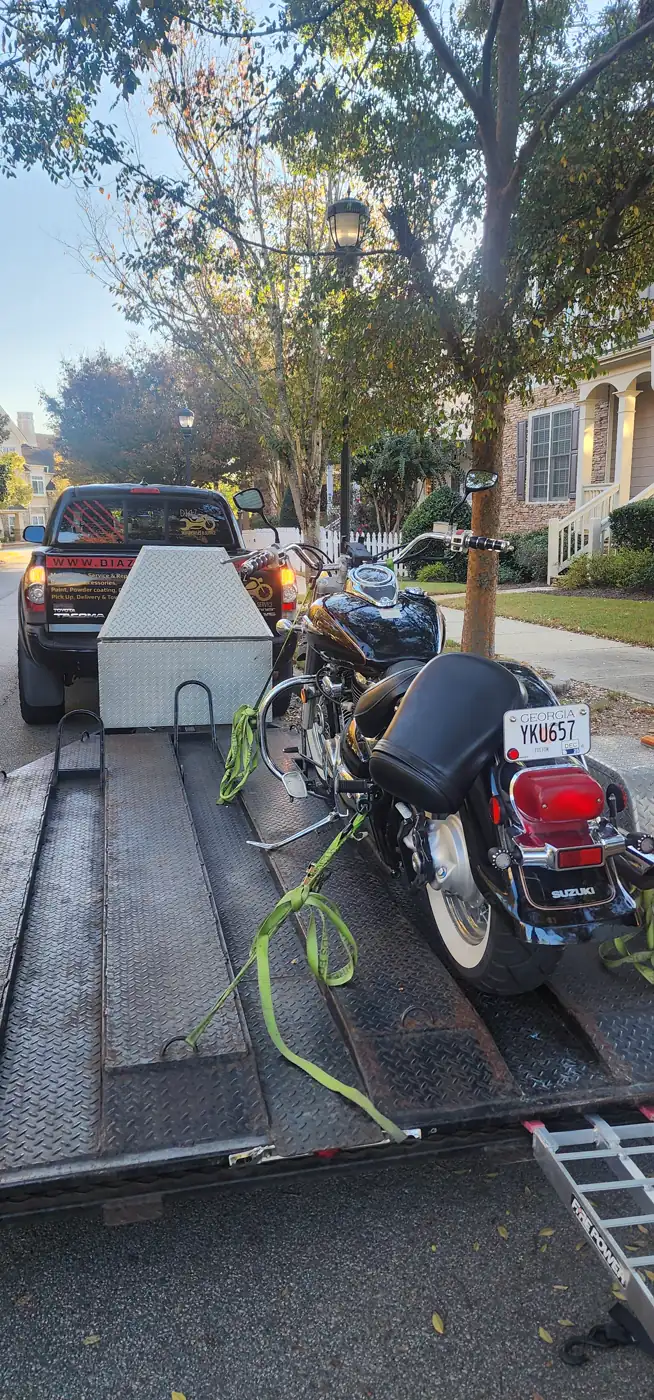
If something on your bike changed and you’re not sure how big it is, text us. Tell us what it’s doing, what it sounds like and how long it’s been going on, and we’ll tell you straight whether it sounds small or worth a look. Alpharetta riders make the drive to us all the time, and you’ll have a real answer before you ever load the trailer.
470-460-9883Diaz Motorcycles and Service, LLC · 847 Barnes Mill Road, Marietta, GA 30062