Choosing a Motorcycle Shop Sandy Springs Riders Can Trust: Dealer Floor vs. Independent
Two kinds of shops, one honest comparison, and a clear pick for the way you actually ride.
For example, it almost always starts with a sound. After that, a dry, scratchy rasp from the chain as you roll down the driveway on the first warm Saturday of the year. Sometimes it’s a smell instead, that sharp varnish note off a tank that sat all winter with half a gallon in it. What’s more, Sometimes it’s a feel, like a front brake lever that pulls a little farther and a little softer than it did back in October. So and Better yet, those three little signals send more riders hunting for a motorcycle shop Sandy Springs can actually reach than anything else does. Still, and that’s where the real decision begins, because you have two very different kinds of shops to choose from.
Here’s the honest setup. Plus, Sandy Springs is its own city, full of good bikes, with no dealership or established dedicated repair shop inside the city limits. So you’re already driving somewhere. Of course, the only real questions are which direction you point the truck and what kind of shop is waiting when you arrive. Then again, We’ll lay out both choices fairly, say plainly who each one is right for, and then give you a straight recommendation. No fence-sitting, we promise.
The short answer, before anything else
Even so, option one is the big multi-brand sales floor. Meanwhile, Think of a place like WOW Motorcycles over in Marietta, about twelve to fifteen miles west of you, carrying Honda, Suzuki, Kawasaki, Yamaha and Harley in new and used, with roughly thirty years behind the name. In fact, that said, Option two is the independent full-service shop, where the lifts are the whole business instead of the back half of it. Both are legitimate. For example, They’re just built to solve different problems.
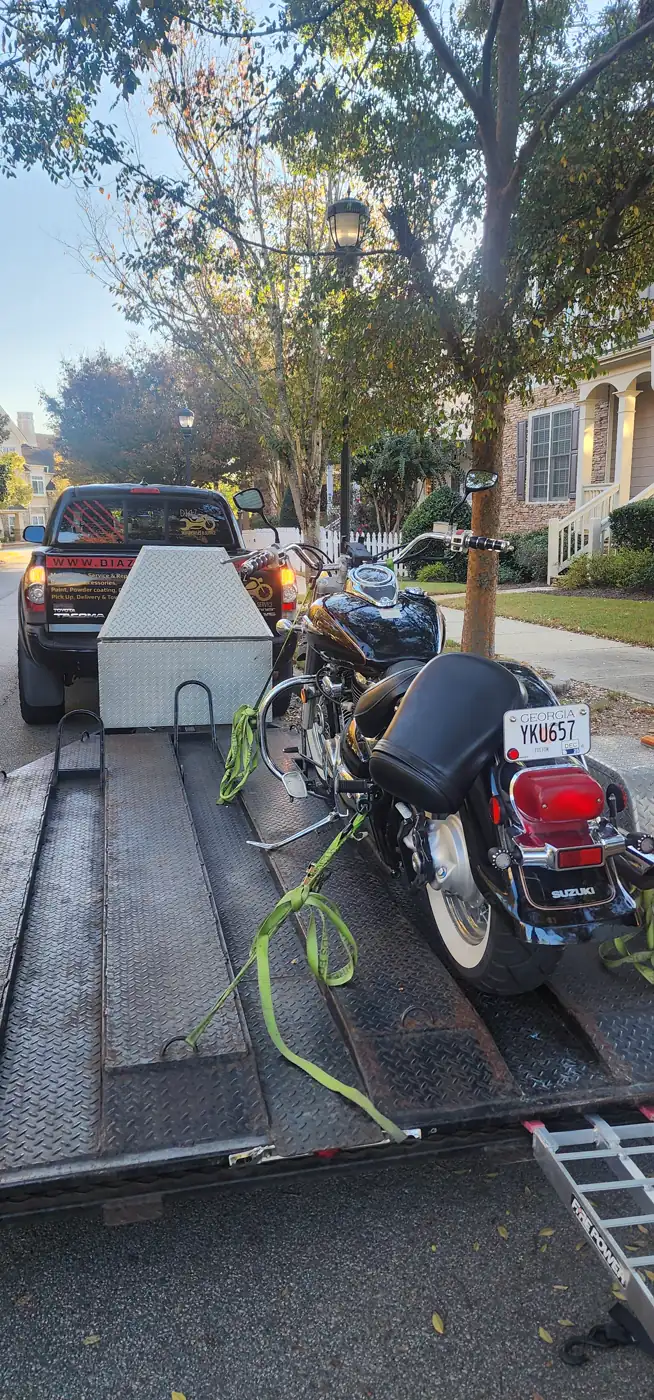
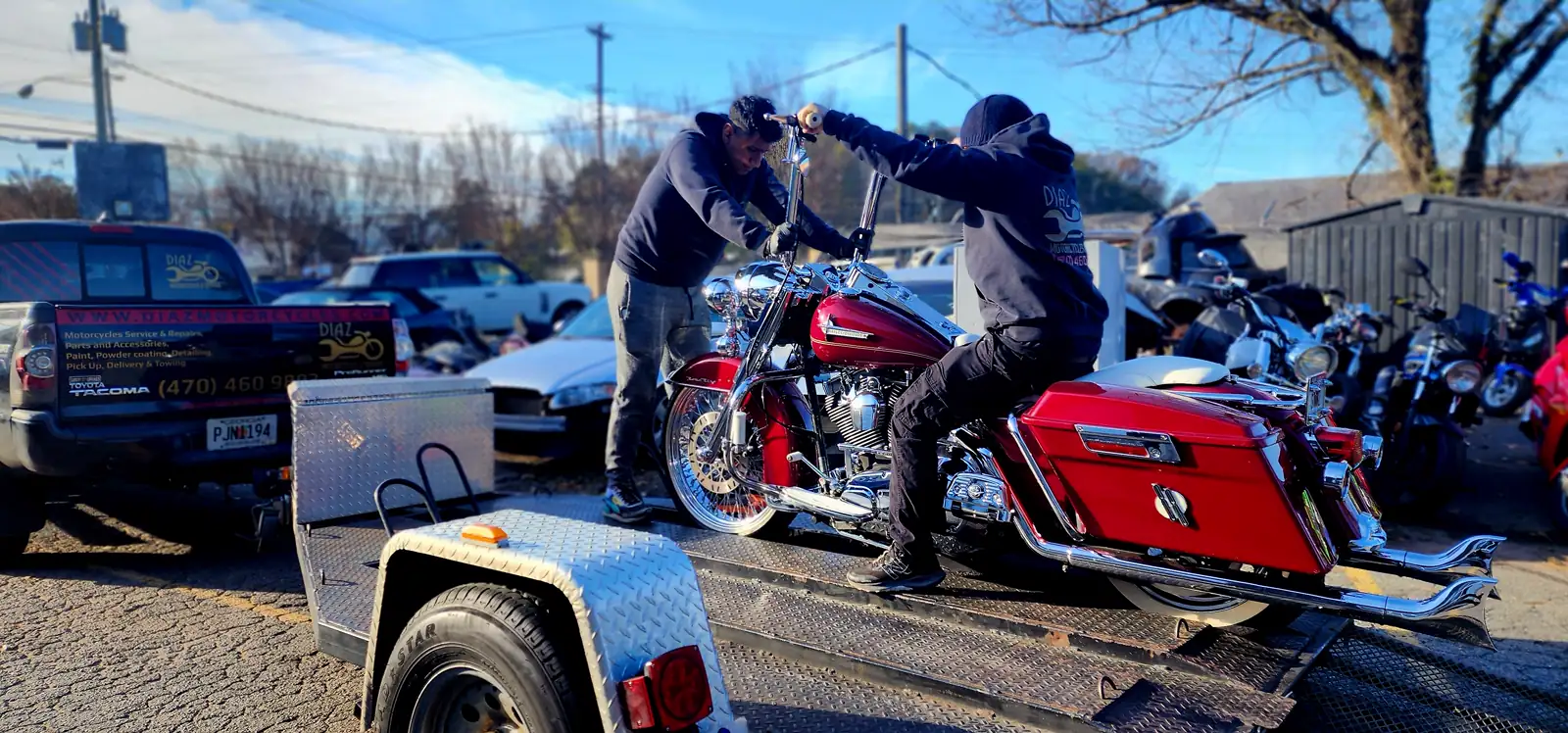
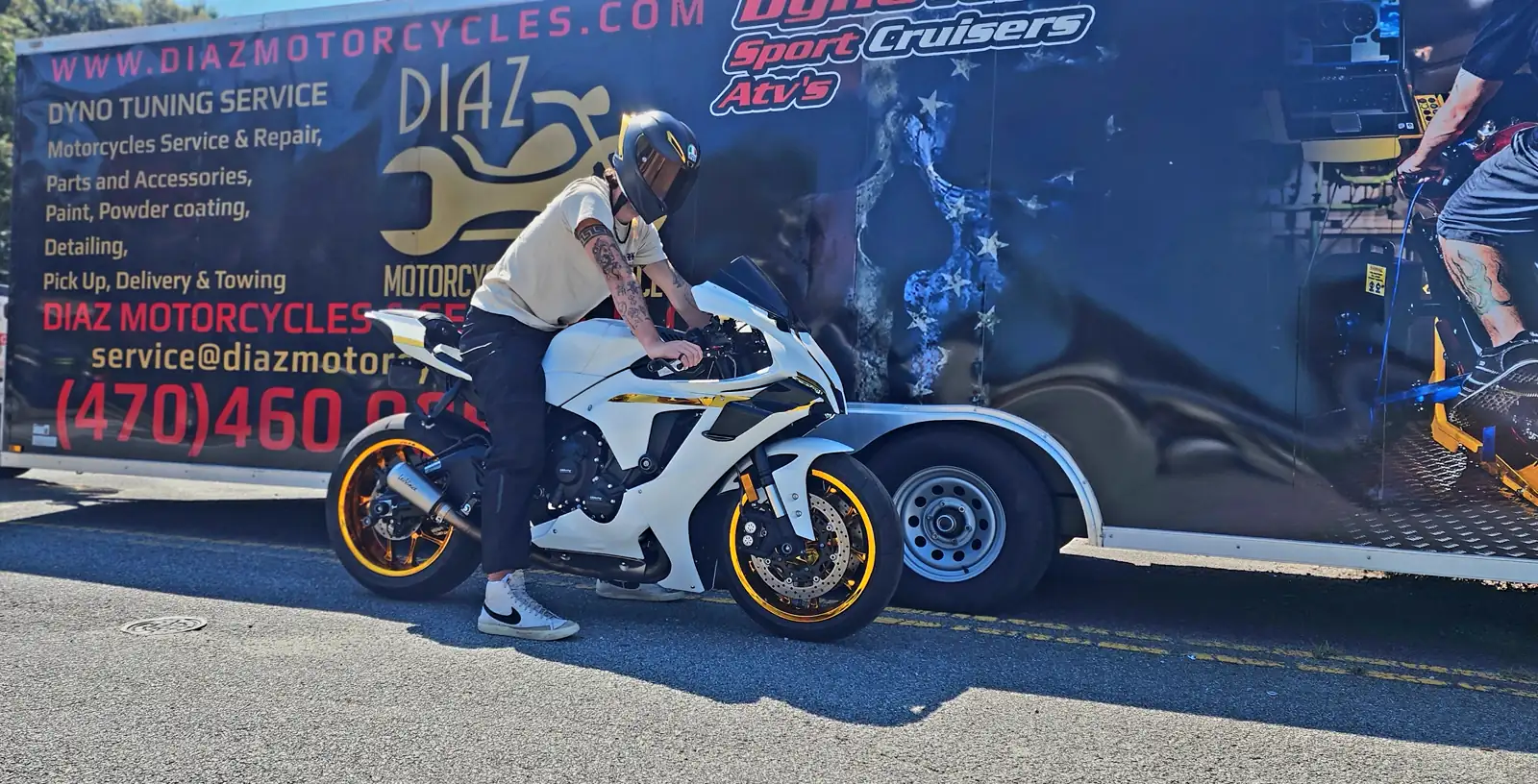
Our recommendation, plainly: if your bike is out of warranty and you plan to keep it, the independent wins for most Sandy Springs riders. You get the same tech on your bike each visit, you get bodywork, paint and performance work under one roof, and you get pickup and delivery that matters enormously in a city where most riders park outdoors. That’s the pick.
Now the fair part. The dealer floor wins in a few real situations, and we’ll name them instead of pretending they don’t exist. If your bike is still under factory warranty, go to the authorized dealer. In fact, if you need a recall handled, same answer. If you’re cross-shopping three brands and want to sit on all of them in one afternoon, a sales floor is exactly the right room to be in. Warranty labor isn’t something an independent can hand you, and no amount of good wrenching changes that.
What actually drives the work in your city
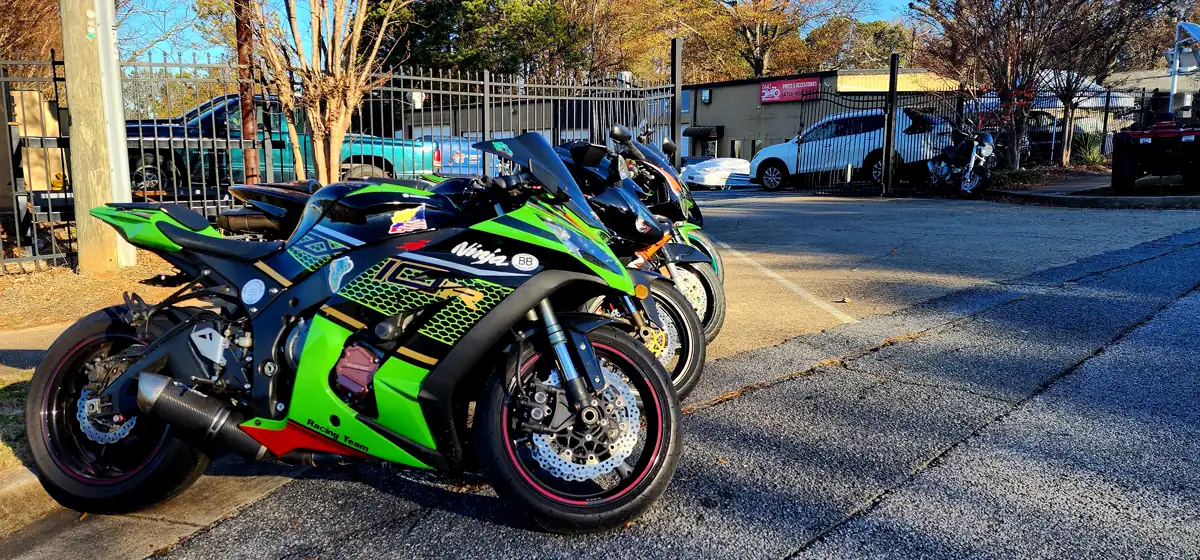
Every town breaks bikes in its own particular way, and Sandy Springs has a signature. Roswell Road, Hammond Drive and the older interior streets carry heavy traffic on aging pavement, so you get utility-cut patches, raised seams and manhole lips that a stiff sportbike fork finds instantly. Add the long construction footprint where GA-400 meets I-285, with its lane shifts, temporary tar-snake surfaces and steel plates, and you have a steady supply of bent rims, wheel damage and alignment that quietly walked out of spec. Winter and spring freeze-thaw potholes finish the job. Good news, though: wheels and alignment are fixable, and a straightened setup feels like a new bike under you.
Storage is the other big driver, and it’s the one nobody plans for. Roughly half of occupied housing here is renter-occupied, and the mayor has cited more than sixty percent of the housing stock as rental across ninety-six apartment complexes. About eighteen percent of those apartment units date to the 1970s, which means old surface lots, carports, full sun and no outlet anywhere near your bike. So a battery tender isn’t an option for a huge share of riders. The result is predictable: dead batteries every spring, moisture trapped under covers, ethanol-degraded fuel turning to syrup, and UV chewing on plastics and paint.
That’s the problem. The fix is simple and it isn’t dramatic. A fresh battery, a fuel system cleaned instead of merely cursed at, a proper wash-and-seal on sun-tired paint, and the bike behaves again. The feeling on the other side is the good part, which is thumbing the starter in March and hearing it catch on the first try like nothing ever happened.
Here’s the question we’d ask if you were standing in the shop with us: how long do you plan to keep this bike? That single answer sorts almost everyone. Riders who trade every two or three years live inside the warranty window, and the dealer relationship serves them well. Riders keeping a bike five years or more are buying a decade of small decisions, and those decisions go better when the same set of hands knows your machine’s history.
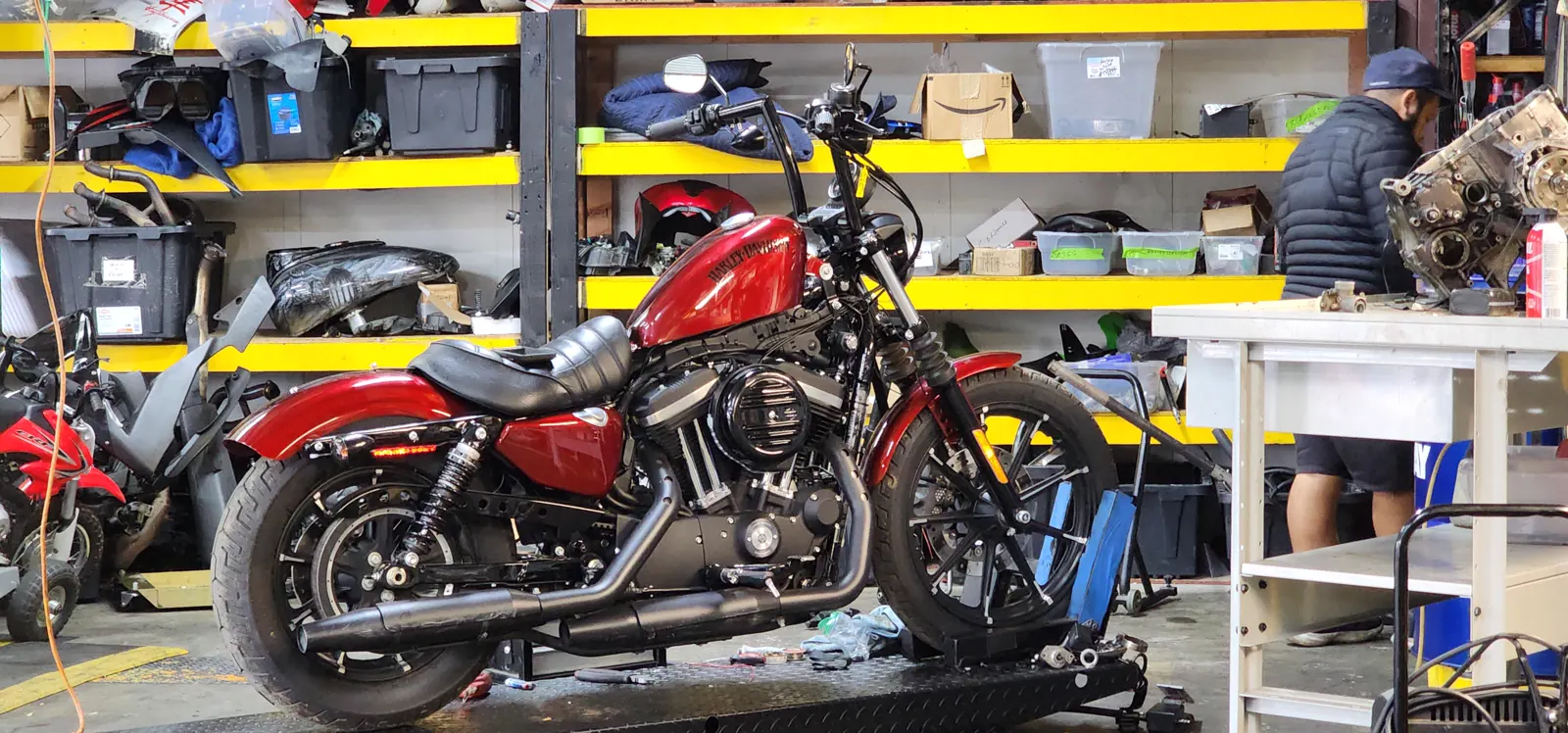
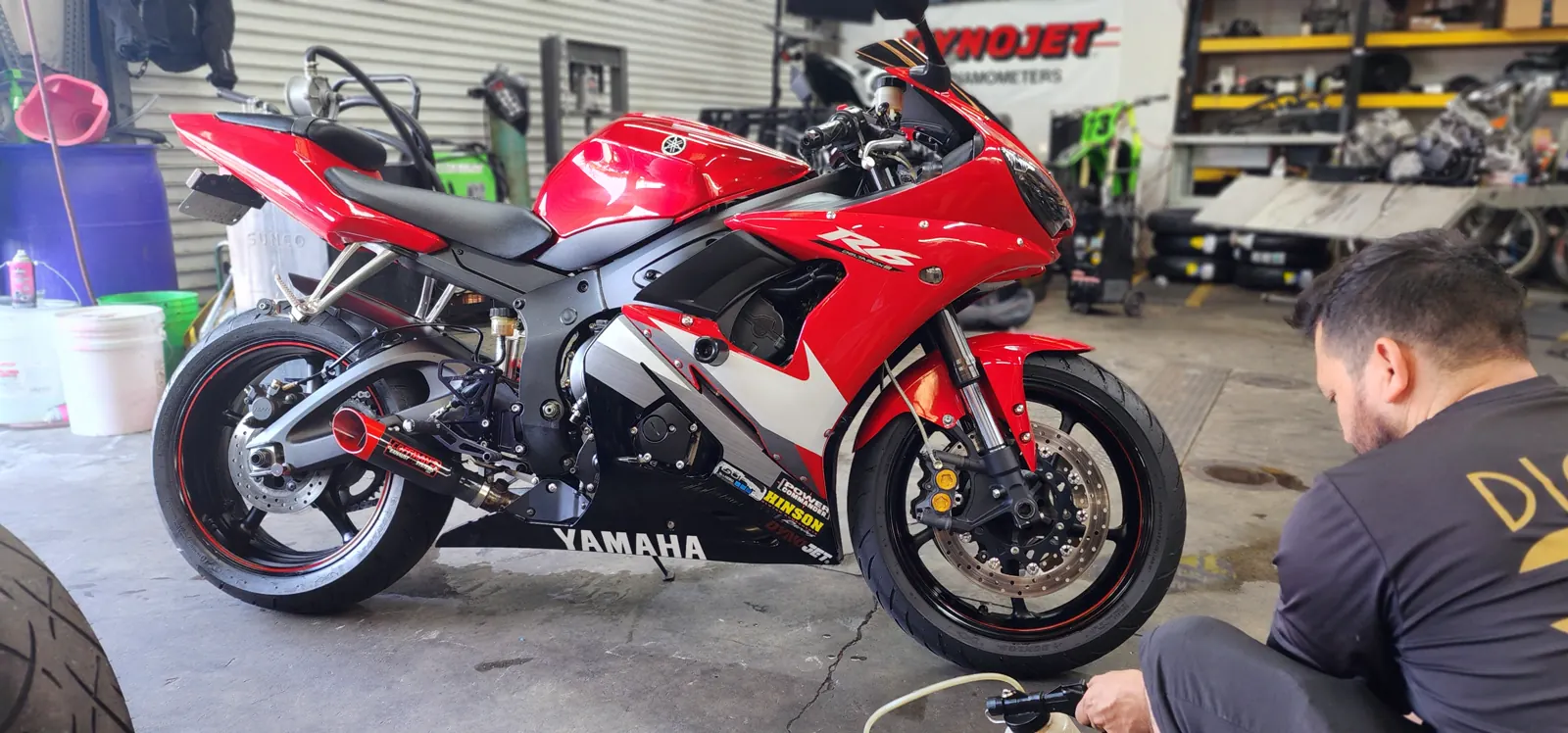
There’s a second question right behind it. What do you want done that nobody nearby will touch? Around here, that’s dyno tuning and ECU work for the weekend sportbike and European crowd, and it’s restoration for the 1970s-era garages holding older Hondas, Triumphs and Moto Guzzis. Bodywork and paint belong on that list too. An in-house paint booth has essentially no local equivalent when a bike is faded, scuffed or wearing somebody else’s idea of a color.
What we check when a bike comes in
A comparison is only useful if you know what the work actually looks like. Whichever shop you choose, this is the list worth asking about, and it’s the list we run before we quote anything.
- Battery health under load, not just resting voltage, plus charging output at idle and at speed
- Fuel condition and injector or carb cleanliness after long outdoor storage
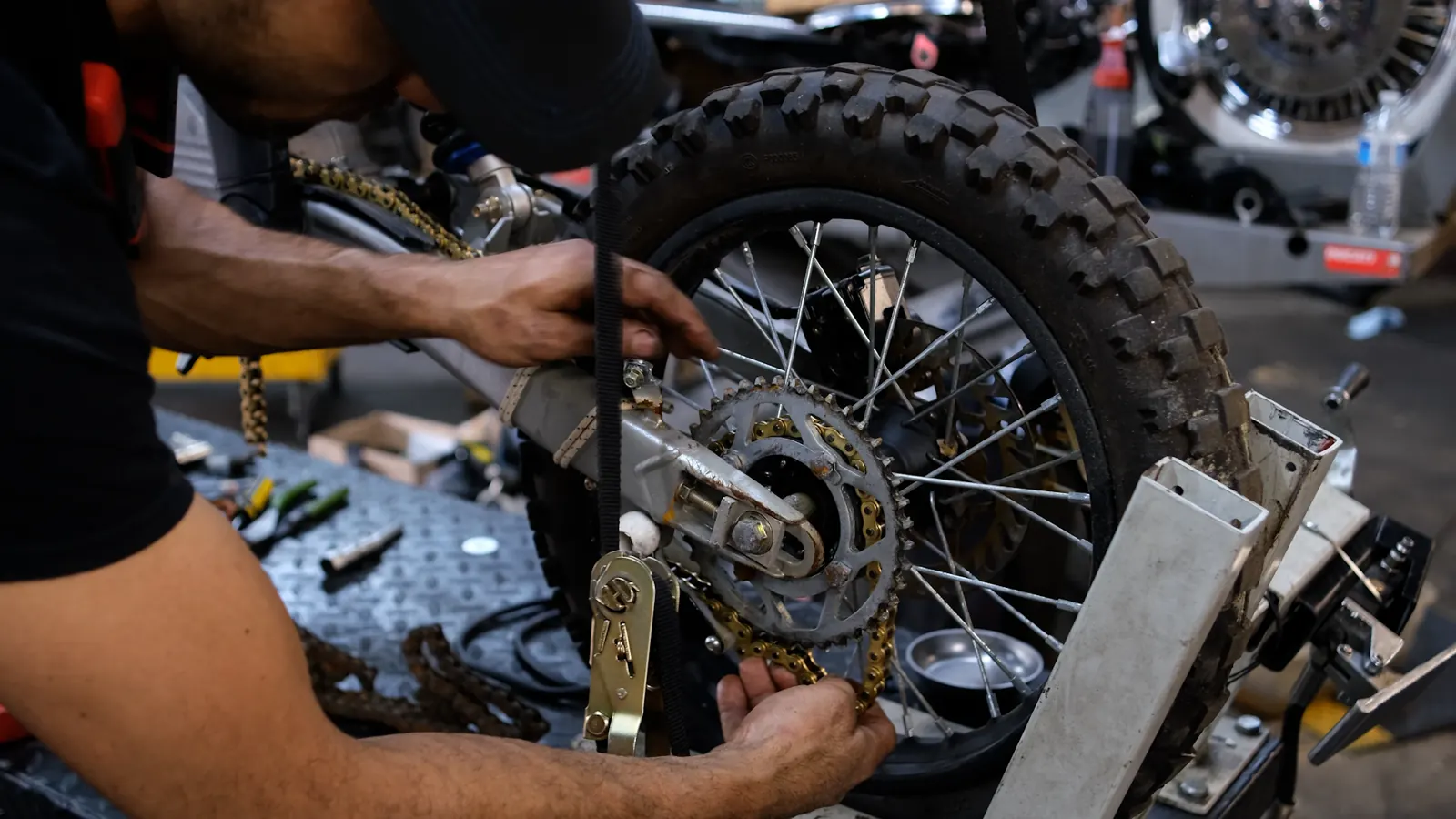
- Chain and sprocket wear, slack and lubrication, or belt condition on a bagger
- Tire age and wear pattern, since a cupped front usually means something else is wrong
- Wheel trueness and rim damage from patched pavement and steel plates
- Brake fluid color, pad thickness and lever feel, front and rear
- Coolant strength and radiator airflow, which matters a lot in a Georgia August
- Fork and shock condition, because rough interior streets punish a tired suspension
- Paint, plastics and chrome for sun and moisture damage from outdoor parking
None of that is exotic. It’s just thorough, and thorough is the whole product. If you’d rather see it laid out service by service, here’s the full list of what we do, along with the practical version of this same conversation written for riders who just want the appointment made.
Mistakes riders make when they pick
The most common one is choosing on price alone. Sandy Springs riders are usually skeptical of the cheapest option anyway, and that instinct is correct. The cheapest quote often skips the diagnostic step, which means you pay twice for the same symptom. Read the reviews carefully, look for the ones full of specifics instead of adjectives, and trust detail over enthusiasm.
- Waiting until the first perfect riding weekend to book. Everyone else has the same idea on the same Saturday.
- Assuming a dealer floor and a service bay are the same commitment. Sales volume and lift time are different businesses.
- Ignoring a slow leak, a soft lever or a new noise because the bike still moves. Small things are cheap to fix and stubborn to ignore.
- Storing a bike outdoors under a plastic cover with no airflow, which traps moisture against paint and metal.
- Skipping the tune after a pipe or filter change, then blaming the parts.
One more worth naming: assuming distance equals hassle. It rarely does. The route that matters here is Johnson Ferry Road heading west across the Chattahoochee into East Cobb, roughly eight to eleven miles and typically eighteen to twenty-eight minutes, with no I-285 required at any point. From the Riverside and Powers Ferry side it’s often under fifteen minutes. From Perimeter Center, figure twenty-five to thirty.
QUICK RULE
Under warranty or chasing a recall? Dealer. Out of warranty and keeping the bike? Independent. Wanting paint, restoration or tuning? Independent, and it isn’t close.
This is where Sandy Springs is genuinely different from other towns
Most cities have at least one shop of their own, so riders compare two nearby options and call it a day. Not here. Any motorcycle shop Sandy Springs riders settle on has to earn the drive first. Sandy Springs is a medium-density, high-income rider market with almost no local motorcycle infrastructure, which makes riders here something like service orphans. Great bikes, nowhere close to take them. That single fact changes what a good shop has to offer, because convenience stops being a perk and becomes half the value.
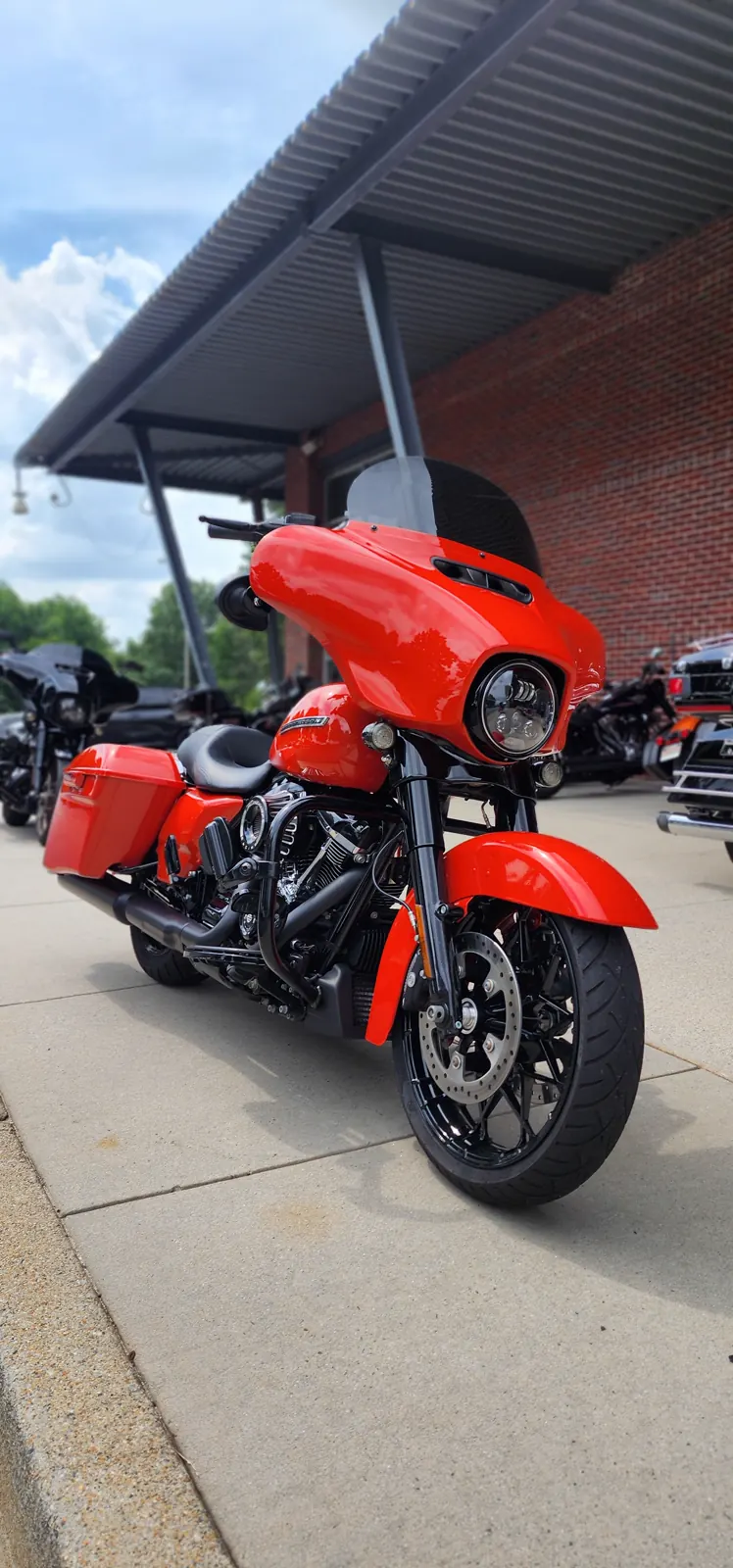
The rider population splits in interesting ways too. Commuters working around Perimeter Center and the hospital district ride smaller and mid-size bikes, helped along by office decks and hospital garages where bike parking is genuinely easy. North-side homeowners up in Huntcliff, on those big estate lots near the river, tend toward garage-kept touring bikes and premium cruisers, Harley baggers and Gold Wings and BMW RT and GS machines. Families over in Riverside and river-adjacent North Harbor keep a mix of everything, often parked outdoors. Then there’s the weekend crowd on Ducati, Triumph, KTM and BMW liter bikes who want dyno time and ECU work nobody local performs.
Georgia doesn’t allow lane splitting or filtering, so nobody here is riding to beat traffic where GA-400 ends at I-285. That interchange doesn’t care what you’re on. Riders commute by bike for the parking, the fuel cost and the plain enjoyment of it, which tells you something: these are people who ride because they want to. Bikes that get ridden need real service, not a once-a-season glance.
Weekend plans shape the work as well. Plenty of riders here start or finish a river-road day at Island Ford, the national recreation area’s headquarters and visitor center, and plenty more point north for the Dahlonega to Vogel State Park leg of US-19. That’s a real ride, with real elevation and real corners, and it exposes tired tires and soft brakes fast. A bike prepped for that run is a bike prepped for everything else.
And in a city that built a 1,070-seat main theater plus a Studio Theatre at the Sandy Springs Performing Arts Center, the standard for how things look is already set pretty high. Riders notice. A faded fairing or a scuffed tank bugs people here more than it does elsewhere, which is exactly why an in-house paint booth ends up being the thing folks drive for.
Convenience isn't a perk in a city with no shop of its own. It's half the reason you picked the shop.
What you get on the other side
Summer here runs a heat index in the mid-nineties to a hundred and beyond, with heavy humidity and near-daily afternoon storms from June through September. So cooling system service, a coolant flush on schedule and honest battery testing aren’t upsell items, they’re the difference between a fun August and a frustrating one. Handle them early and the season belongs to you.
For a Harley owner who likes to read up first, the factory publishes its own Harley-Davidson service information, which is a genuinely useful way to see what your model’s schedule calls for before you book anything. Nothing wrong with an informed customer. Those are our favorite kind, honestly, because the conversation starts three steps ahead.
Here’s the outcome we want for you. A bike that starts on the first try in March. Tires that match how you actually ride. A chain that’s quiet, brakes that bite the same every time, and paint that looks like somebody cared. Then the freedom to book a Friday pickup, hand over the keys, and get the bike back sorted without ever rearranging your week around it. That’s the whole point of choosing well.
If you’re newer to riding or coming back after a break, a skills refresher pairs beautifully with a freshly serviced bike, and the MSF rider courses are the standard for a reason. Confidence in the machine plus confidence in your own hands is a hard combination to beat on a north Georgia Saturday.
One last thought on switching. You’re never locked in. Plenty of riders run the dealer through the warranty period and then move over, which is a perfectly smart plan. Bring whatever records you have, tell us how the bike feels, and we’ll pick up the thread. If you want a sense of how we approach the same decision elsewhere, here’s the Kennesaw side of things, and if a big job like paint or a full teardown is what you’re weighing, this walks through how we handle that job start to finish.
Questions Sandy Springs riders ask us
What's the real difference between a dealer service department and an independent shop?
A dealer floor is built around selling bikes, with service supporting those sales and factory warranty work. An independent is built around the lifts, so the shop lives or dies on repair quality. In practice you’ll usually see the same technician more often at an independent, and you’ll get access to work like paint, restoration and tuning that a sales floor rarely handles.
Which one keeps a bike running longer?
Consistency does, more than the sign out front. A bike serviced on schedule by people who remember its history will outlast one that bounces between shops. That said, an independent tends to win on longevity for older bikes, simply because a shop that does bodywork, paint and engine work will keep a machine alive that a sales floor would rather trade in.
Which is right for the way I ride?
If you commute around Perimeter Center on a mid-size bike and trade every couple of years, the dealer relationship fits fine. If you keep a touring bike in the garage in Huntcliff, or a European sportbike you plan to tune, an independent fits better. Adventure riders headed up US-19 usually land on the independent side too, since that riding is hard on tires, brakes and suspension.
Can I switch shops later, or am I stuck?
You can switch any time, and lots of riders do. The usual pattern is dealer service during the factory warranty, then a move to an independent once that window closes. Bring whatever service records you have so the next shop starts with a full picture instead of a guess.
Do I really have to leave Sandy Springs for service?
For now, yes, since there’s no dealership or established dedicated repair shop inside the city limits. The upside is the drive is easier than people expect. Johnson Ferry Road west across the Chattahoochee into East Cobb runs roughly eight to eleven miles and eighteen to twenty-eight minutes, with no I-285 involved at all.
So which do you actually recommend?
For most out-of-warranty riders here, the independent, and we’d say that even if you picked a different one than us. You get continuity, broader capability and pickup and delivery that solves the outdoor-parking problem. Go to the authorized dealer for warranty repairs, recalls, or when you want to sit on three brands in one afternoon.
We take care of riders across the north side and well beyond it. Sandy Springs sits at the center of that map, with regulars coming from Roswell, Dunwoody, Brookhaven and Chamblee, plus riders rolling in from Buckhead and Atlanta proper. East Cobb, Vinings, Smyrna and Marietta are practically neighbors to the shop, and we see plenty of bikes from Alpharetta and Doraville too. If you’re somewhere in that ring and the drive still feels like a hassle, ask about pickup and delivery, because it exists for exactly this reason.
LET'S GET YOUR BIKE SORTED
If you’re in Sandy Springs and tired of guessing where to take your bike, tell us what it’s doing, what it sounds like, and how you ride. We’ll tell you straight whether it’s a quick fix, a full service, or a job worth the paint booth. Text or call, and we’ll set up a time that works, pickup included if your bike lives outdoors.
470-460-9883Diaz Motorcycles and Service, LLC · 847 Barnes Mill Road, Marietta, GA 30062