Repair Shop Sandy Springs — How to Choose
Real ways to judge a shop before you hand over the keys, from a crew that would rather show you the part than lecture you about it.
So you showed up with one simple question. Still, what you got back was a sigh, a quick glance at your bike, and an answer pitched at someone a lot dumber than you. Plus, Nobody walked you out to the lift. Of course, nobody put the worn part in your hand. Then again, you paid, you rode off, and you felt smaller than when you pulled in. Even so, that feeling is the real reason most people start hunting for a repair shop Sandy Springs riders can actually trust.
We hear that story a lot. Meanwhile, a guy in Riverside brings in a bike with a soft front brake, asks what the fluid looked like, and gets told not to worry about it. For example, a rider in Trillium asks why the same battery died twice and gets a shrug. None of that is a repair problem. In fact, that said, It’s a respect problem, and it’s fixable, which is the good news buried in here.
So let’s do something useful with that frustration. For example, Below is how we judge a shop, including our own, plus what a good diagnosis looks like. After that, take this list to any shop in the area. That’s the point.
Why shops talk down to riders in the first place
What’s more, most of the time, it isn’t malice. It’s math. A busy service counter is measured on tickets per day, so the fastest route through a conversation wins. Explaining a stator test takes six minutes. Saying “it’s electrical” takes two seconds. Multiply that across a Saturday and you can see how a shop drifts into short answers without ever deciding to be rude.
There’s a second reason, and it’s structural. Sandy Springs has no motorcycle dealership and no established dedicated bike shop inside the city limits. Riders here already drive somewhere for service, which means the shops they land on are usually slammed with work from four directions. When demand outruns bay space, communication is the first thing that gets cut.
Plenty of good people work at those counters, by the way. Dealers are excellent at warranty work, recalls and factory-specific software. Independents like Atlanta Motorcycle Works show up in area listings because riders genuinely need options across the north side. We’re not here to throw rocks. We’re here to say that friendliness isn’t the metric you should be grading on anyway.
A shop that won't show you the part is asking you to trust an adjective.
Seven things that actually tell you a shop is good
Reviews help, but you already know they’re noisy. When you’re grading a repair shop Sandy Springs riders recommend, these are the signals that hold up in person, and each one can be checked in about ten minutes on a first visit.
- They ask you questions before they touch anything. Cold or hot? Every time or sometimes? First ride of the week? Symptoms live in the details.
- They show you the failed part, or a photo of it, without you asking twice.
- They separate what’s urgent from what can wait, out loud, and they’re comfortable telling you something is fine.
- The bays are organized. Tools on the mat near the bike is normal work. Tools buried under six months of clutter is not.
- They have real diagnostic gear, not just wrenches. A dyno, a load tester, torque wrenches that get calibrated.
- They write down what they did, so the next visit starts with history instead of guesswork.
- They tell you when a job isn’t for them. Honest limits beat confident guessing every time.
Notice what’s missing. Nothing about building size, and nothing about how many brands are on the sign. A small shop that documents work well beats a large one that doesn’t.
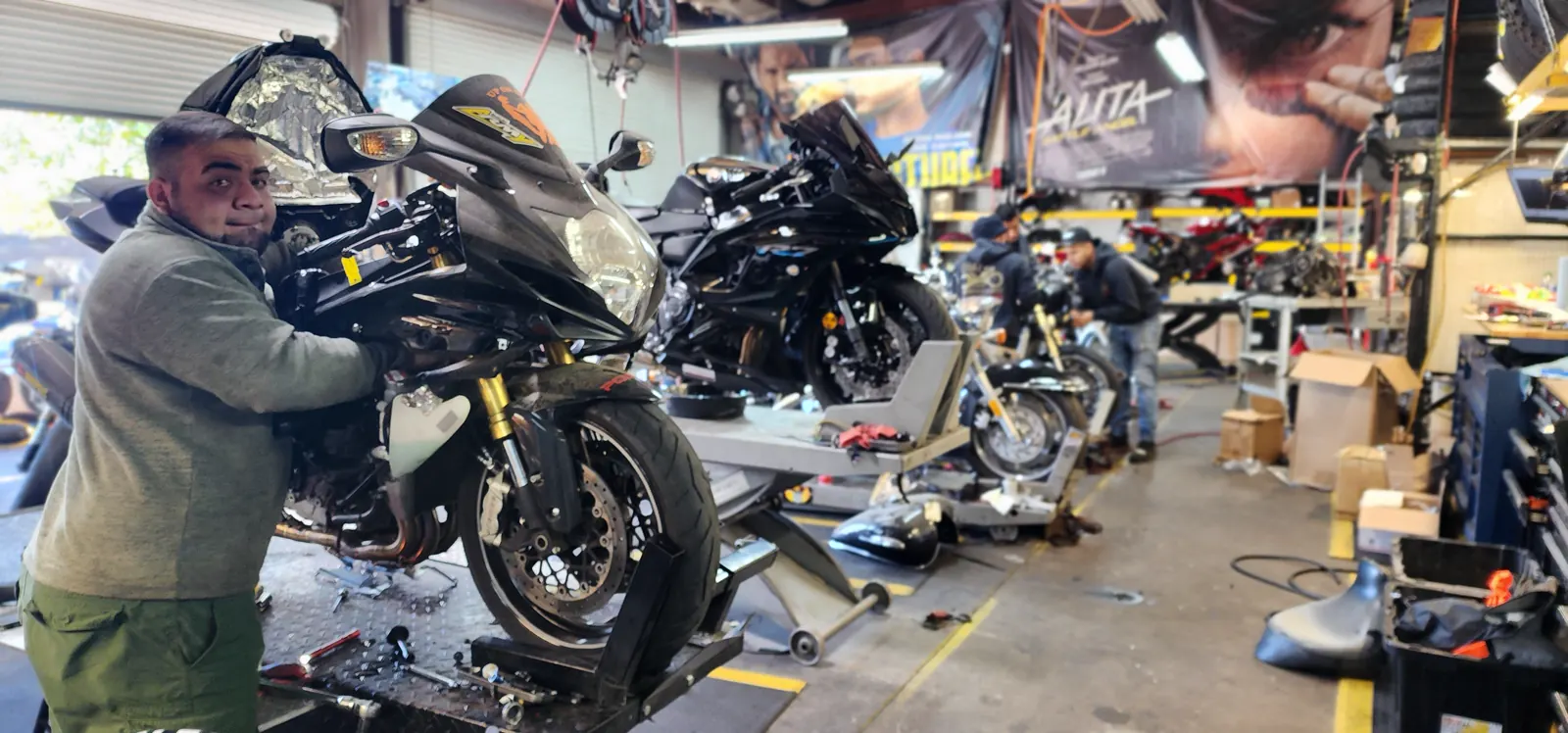
One more test, and it’s the cheapest one. Ask a question you already know the answer to. Better yet, ask what chain slack should be, or how often the brake fluid ought to be changed on your model. How they answer tells you far more than what they say.
Now flip it around and look at it from the bike's side
Your motorcycle isn’t confused about what’s wrong with it. It’s been telling you for weeks in the only language it has. A hesitation at 3,000 rpm. After that, a click that only shows up on left turns. A fork that packs down over a manhole lip and never quite settles. The bike is a very honest witness. It just needs someone willing to sit and listen.
That’s really all diagnosis is. We start with the story you tell us, then we go get the same symptom to happen with the bike in front of us. Riding it matters. A lot of faults hide at idle and only wake up under load, so a short loop down Riverside Drive and around Powers Ferry Road tells us more than an hour of poking in the stand.
Then we measure. Battery under load, not just resting voltage. Charging output at speed. Compression when the engine’s warm. Fork oil condition when the symptom is suspension. Numbers instead of vibes, because numbers can be repeated, and anything that can be repeated can be proven to you.
After that, we test the theory by fixing the smallest thing first. If a rough running condition is probably a clogged pilot circuit, we don’t sell you a top end. We clean, we ride, we confirm. If we’re wrong, we say so and keep going. Being wrong out loud early is a lot cheaper for you than being wrong quietly for three weeks.
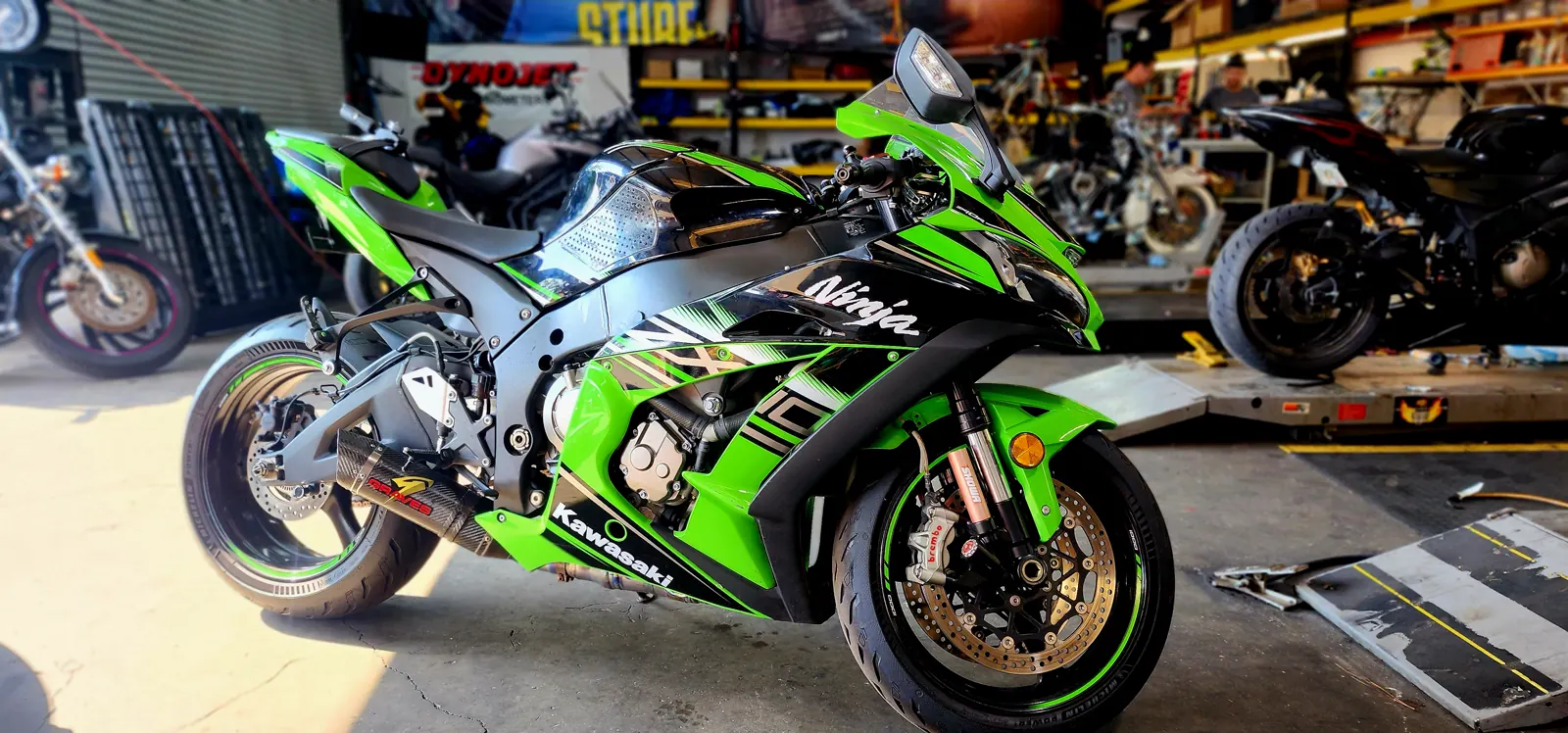
This is also where the dyno earns its keep. Weekend sportbike and European riders around here want tuning and ECU work that nobody local performs, and that job simply can’t be done by feel. If a shop is going to touch fueling on a Ducati, a Triumph, a KTM or an S1000RR, it should be able to hand you a chart afterward.
What the fix actually involves
Once we know what’s wrong, the work splits into three buckets, and we’ll tell you which bucket each item lands in before anything comes apart. Safety items come first. Reliability items come second. Nice-to-have items wait for a slow month, and we’re genuinely fine with you saying not yet.
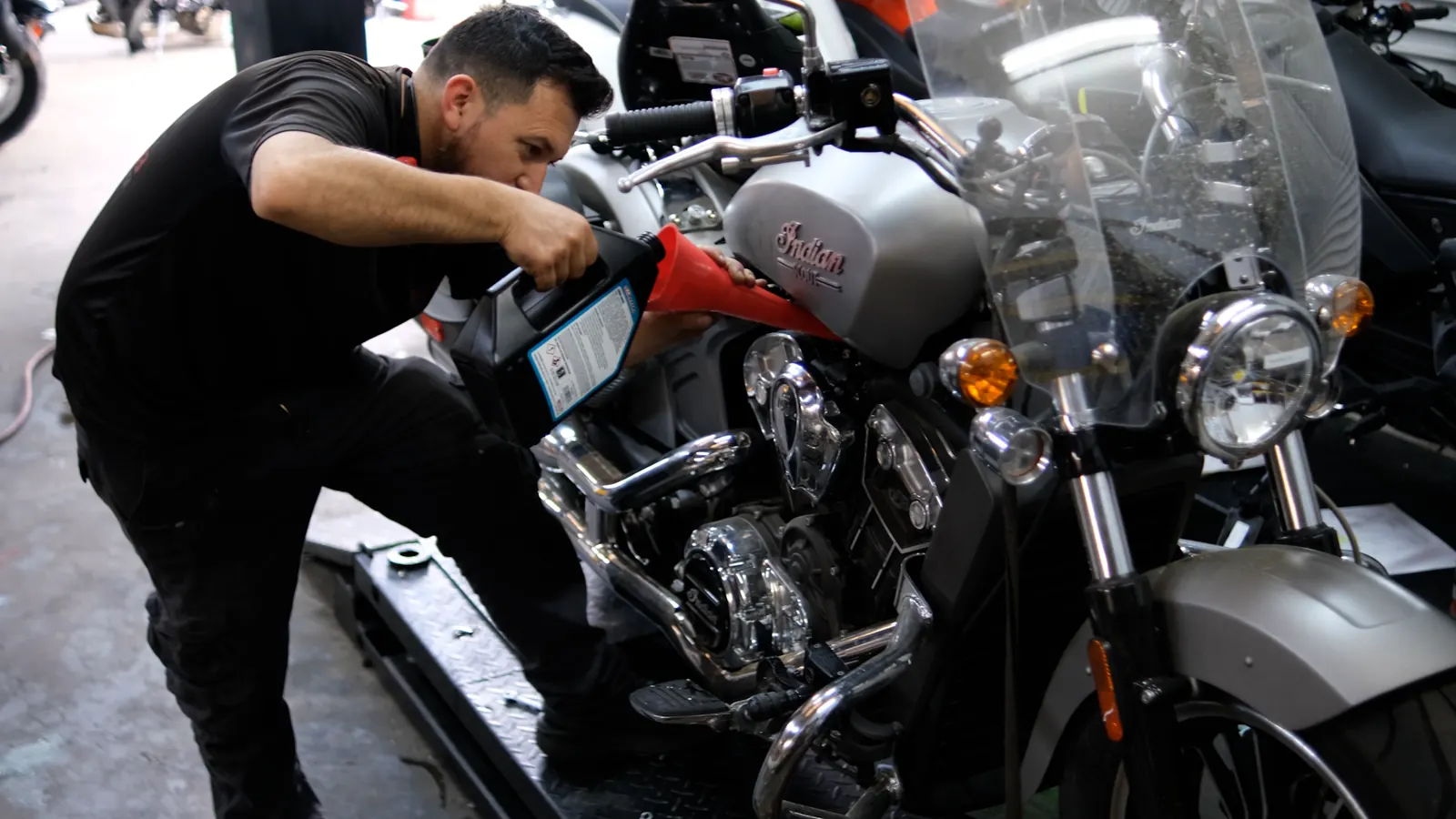
For a typical service visit, that means fluids, filters, brake condition, tire condition and date codes, chain or belt, and a look at anything the bike flagged during the test ride. If you want the deeper version, we wrote out what that service actually involves so you can see it laid out step by step.
Parts get discussed before they’re ordered. Some jobs are worth OEM, some are better aftermarket, and some aftermarket parts are honestly a downgrade. You get the tradeoff in plain words, then you pick. It’s your bike and your call.
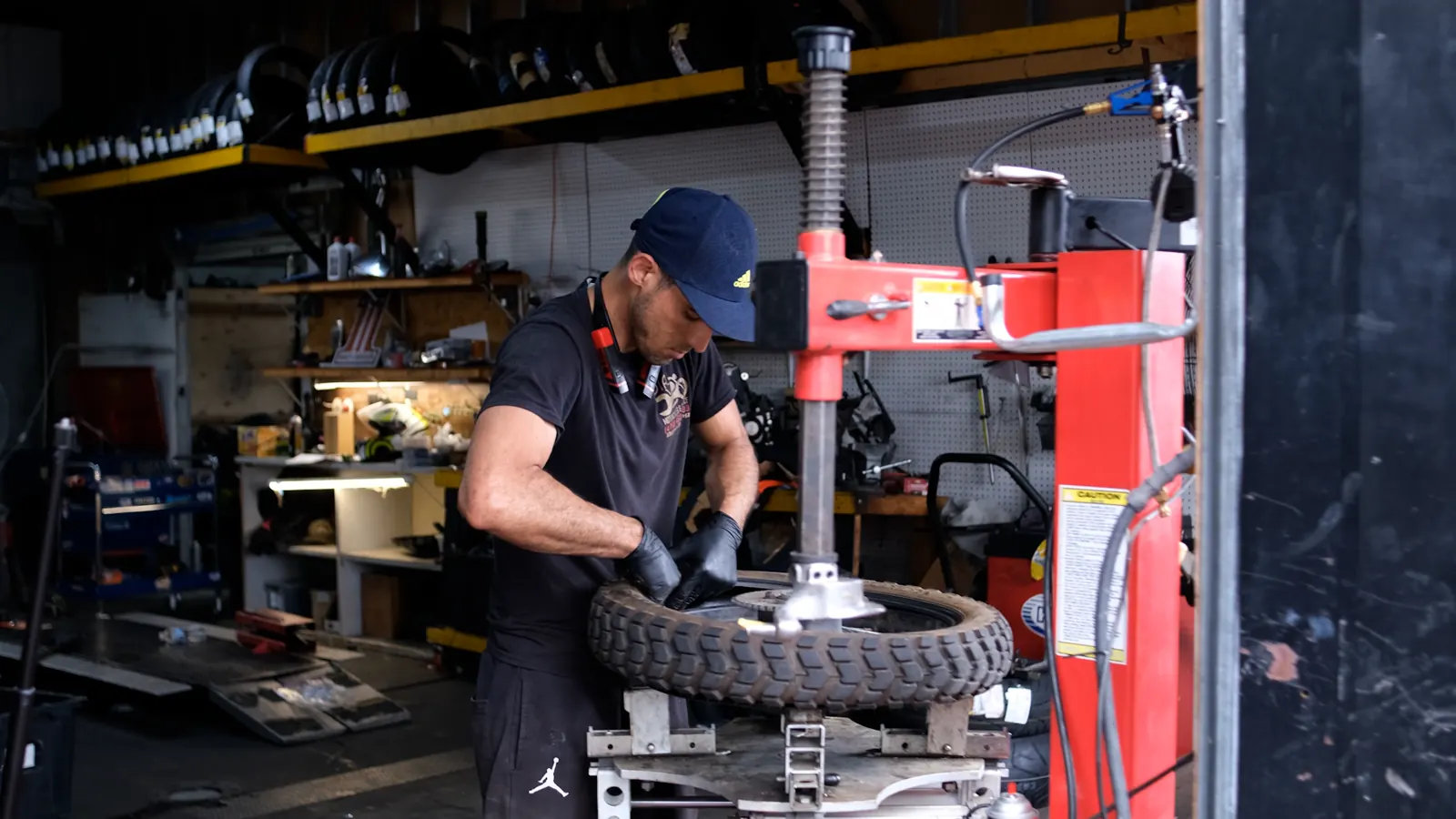
Wheels are their own category around here, and there’s a reason for that. Roswell Road, Hammond Drive and the older interior streets carry heavy traffic on aging pavement, with utility-cut patches, seams and manhole lips stacked up. Add the long construction footprint at GA-400 and I-285, with its lane shifts, tar snakes and steel plates, and bent rims stop being rare bad luck.
Stiff-suspension sportbikes feel every bit of that. So do adventure bikes loaded for a trip. If your bike started tracking funny after a rough stretch, the fix is often a wheel and an alignment check rather than anything dramatic, and that’s a nice thing to hear on a Tuesday.
What choosing a shop looks like from Sandy Springs specifically
Geography drives this decision more than anyone admits. From the Riverside and Powers Ferry side, we’re under fifteen minutes. What’s more, From most of the city it’s roughly eight to eleven miles and about eighteen to twenty-eight minutes, west on Johnson Ferry Road across the Chattahoochee into East Cobb, with no I-285 required. From Perimeter Center it runs closer to twenty-five or thirty.
That routing matters because Georgia doesn’t allow lane splitting or filtering. A bike gets you no traffic advantage at the GA-400 and I-285 interchange, so a shop that adds a Perimeter crossing to your errand is quietly charging you an hour of your life. Riders here commute for parking, fuel and enjoyment, not for time saved, and the office decks around Perimeter Center make bike parking easy.
Storage is the other half of the story. Roughly half of occupied units in the city are renter-occupied, and the mayor cites more than sixty percent of the housing stock as rental across ninety-six apartment complexes. Plenty of those buildings date to the 1970s, which means surface lots, carports, full sun, and no outlet anywhere near your bike for a battery tender.
That produces a very predictable spring: dead batteries everywhere, moisture trapped under covers, ethanol-degraded fuel, and faded plastics. It also produces HOA rules that make working on your own bike in the lot a non-starter. This is exactly why pickup and delivery is the main product for us here rather than a bonus feature.
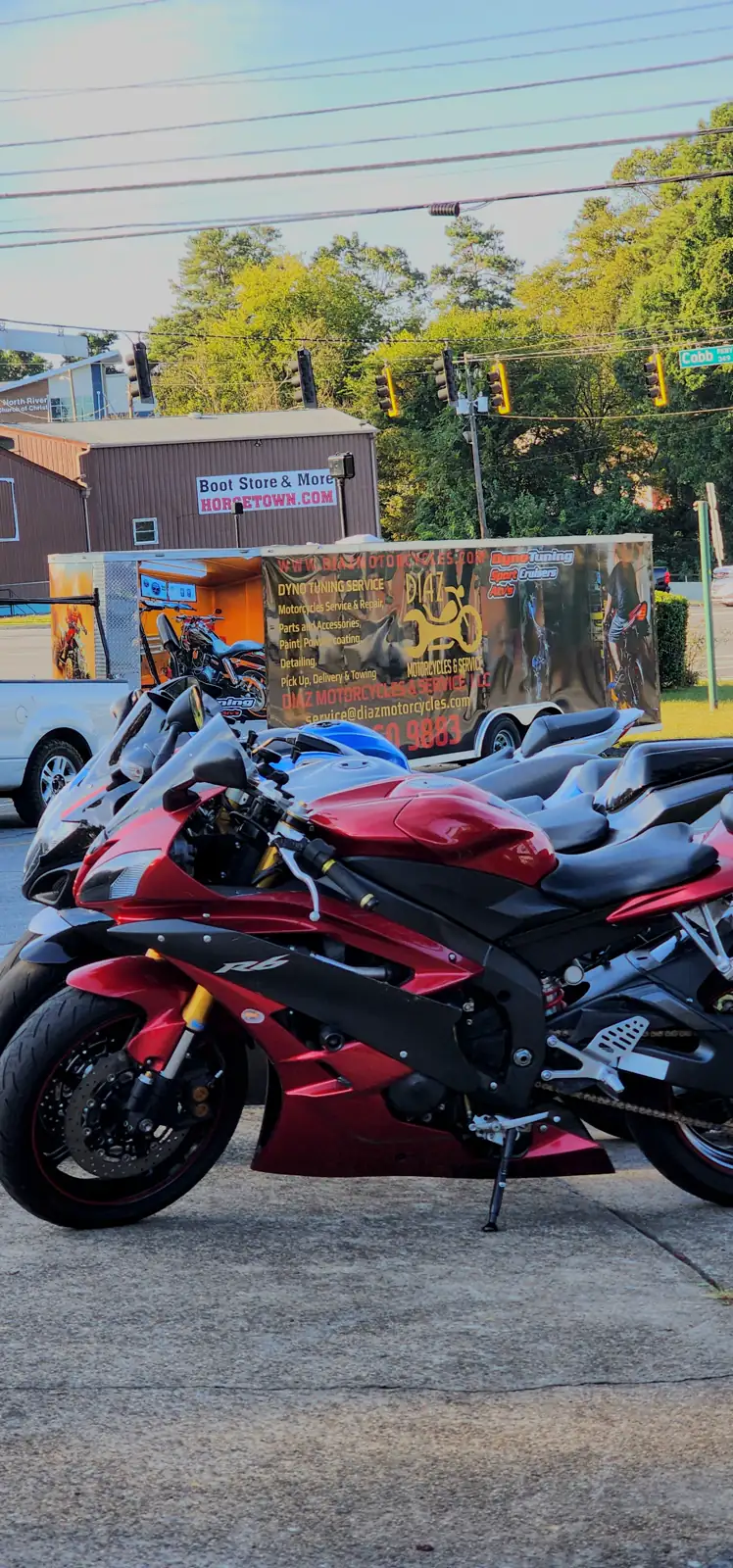
The riding population splits about four ways. Perimeter and Pill Hill commuters on smaller and mid-size bikes. North-side homeowners in Huntcliff, on those big estate lots near the river, running garage-kept baggers, Gold Wings and BMW RT and GS tourers. Weekend sportbike and European riders chasing tuning. And a quiet restoration crowd with 1970s-era garages holding old Hondas, Triumphs and Moto Guzzis.
That last group has the hardest time finding help, because restoration work eats bay space and doesn’t fit a flat-rate schedule. We take those jobs. Somebody should, and honestly they’re the ones the whole crew wanders over to look at.
There's a detail in all this that changes how you'll ride out of here
Here it is. The best shops don’t just fix the thing you came in for. They tell you what the bike is going to need next, and roughly when, so you stop getting ambushed. That single habit is what turns motorcycle ownership from a series of surprises into something you can plan around, and it costs a shop nothing but honesty.
So when you leave, you should have three things: the repair, the reason it happened, and a short list of what’s coming. If a shop hands you all three, keep them. If you only ever get the first one, you’re renting a mechanic instead of having one.
BEFORE YOU HAND OVER KEYS
Ask for the old part back. And ask what they’d do if it were their bike. Ask what they would not fix right now. Three questions, ten seconds each, and you’ll know exactly who you’re dealing with.
Timing helps too. Fall, from September into early November, is the best riding of the year and peak leaf season for north Georgia mountain runs, so pre-trip inspections stack up fast. Book that inspection in late August and you’ll be riding while everyone else waits. Nobody enjoys finding a bald rear tire the night before a mountain trip.
Sandy Springs is its own city, incorporated in 2005, and it acts like it. There’s a real center of gravity here, from the 1,070-seat Byers Theatre and its Studio Theatre at the Sandy Springs Performing Arts Center to the thirty acres of wildlife sanctuary at the John Ripley Forbes Big Trees Forest Preserve on Roswell Road. Big employers anchor it too, with UPS, Mercedes-Benz USA and Cox Enterprises all headquartered nearby.
You feel that mix on Abernathy Road, the east-west connector that runs past Mercedes-Benz USA at Barfield Road. It’s a city full of people with good bikes and no local shop, which is a strange gap for a place this size. New riders can close part of it themselves with an MSF Basic RiderCourse before they ever need us.
What good looks like on the way out
A good visit ends quietly. The bike starts on the first press. The brakes bite where you expect. Nothing rattles at the speed that used to make you wince. You get a note about what was done, and you already know what the next visit is for. That’s the whole outcome, and it’s not complicated.
We do this for riders over in Smyrna the same way we do it here, and the routine doesn’t change with the zip code. If you want to see the process end to end, here’s what happens in our bays from intake through the final test ride.
And if you’re still comparing options, that’s healthy. Go ask two shops the same three questions and see who reaches for the part. We wrote the full rundown on it for riders doing exactly that. A repair shop Sandy Springs riders stick with is just one that treats you like the owner, because you are.
Questions Sandy Springs riders ask us
How far out do you serve?
We cover the whole north side, and Sandy Springs is a regular stop for us. From most of the city we’re about eight to eleven miles away, roughly eighteen to twenty-eight minutes via Johnson Ferry Road into East Cobb. You never have to touch I-285 to get here.
Can you pick up my bike?
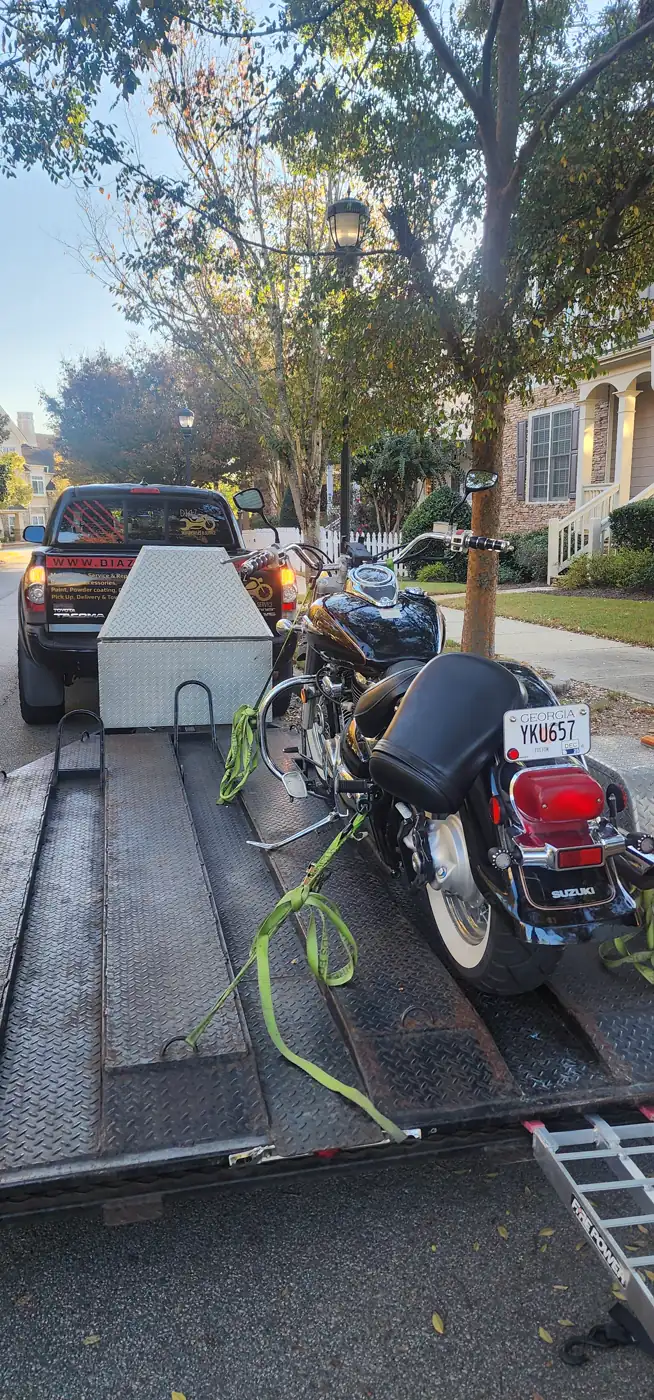
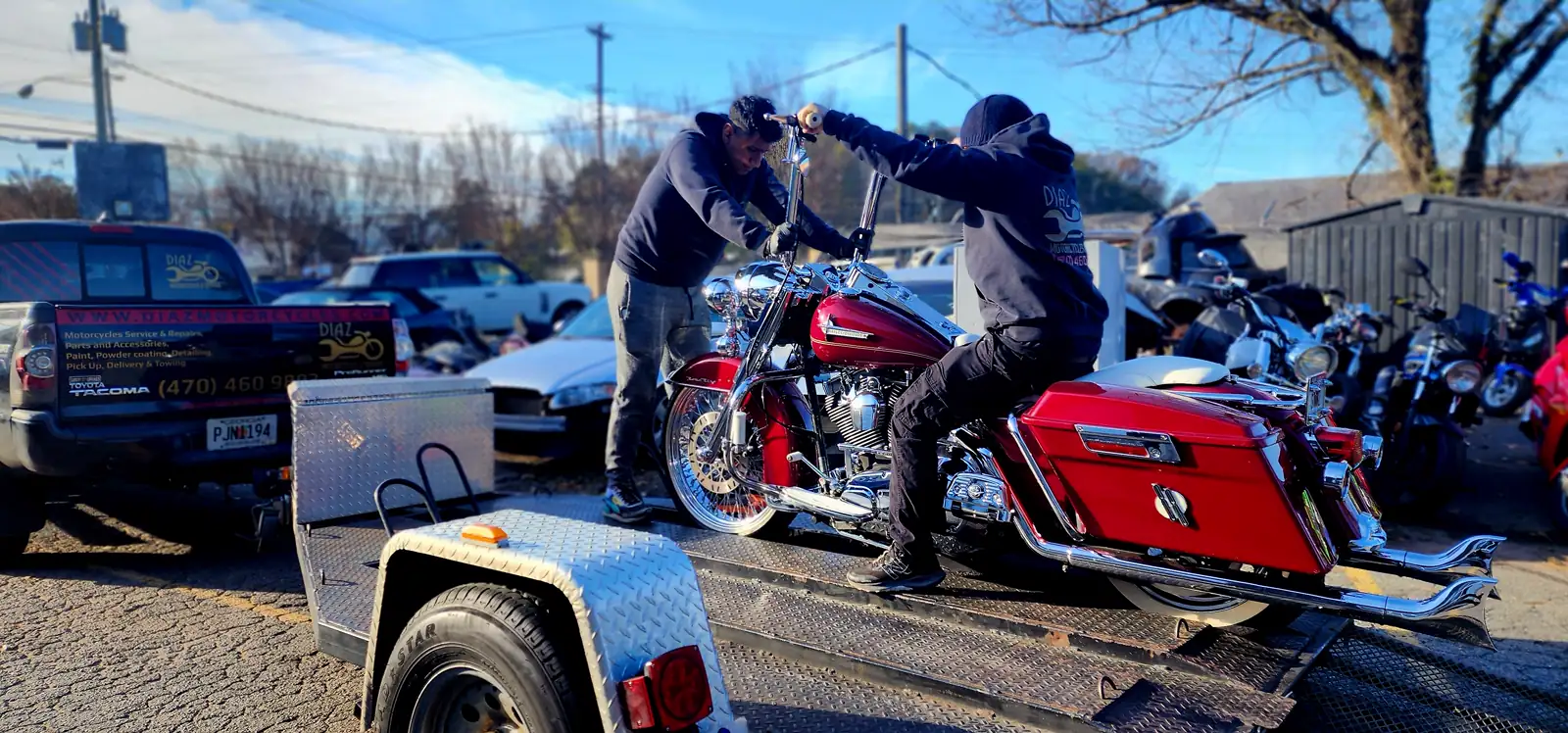
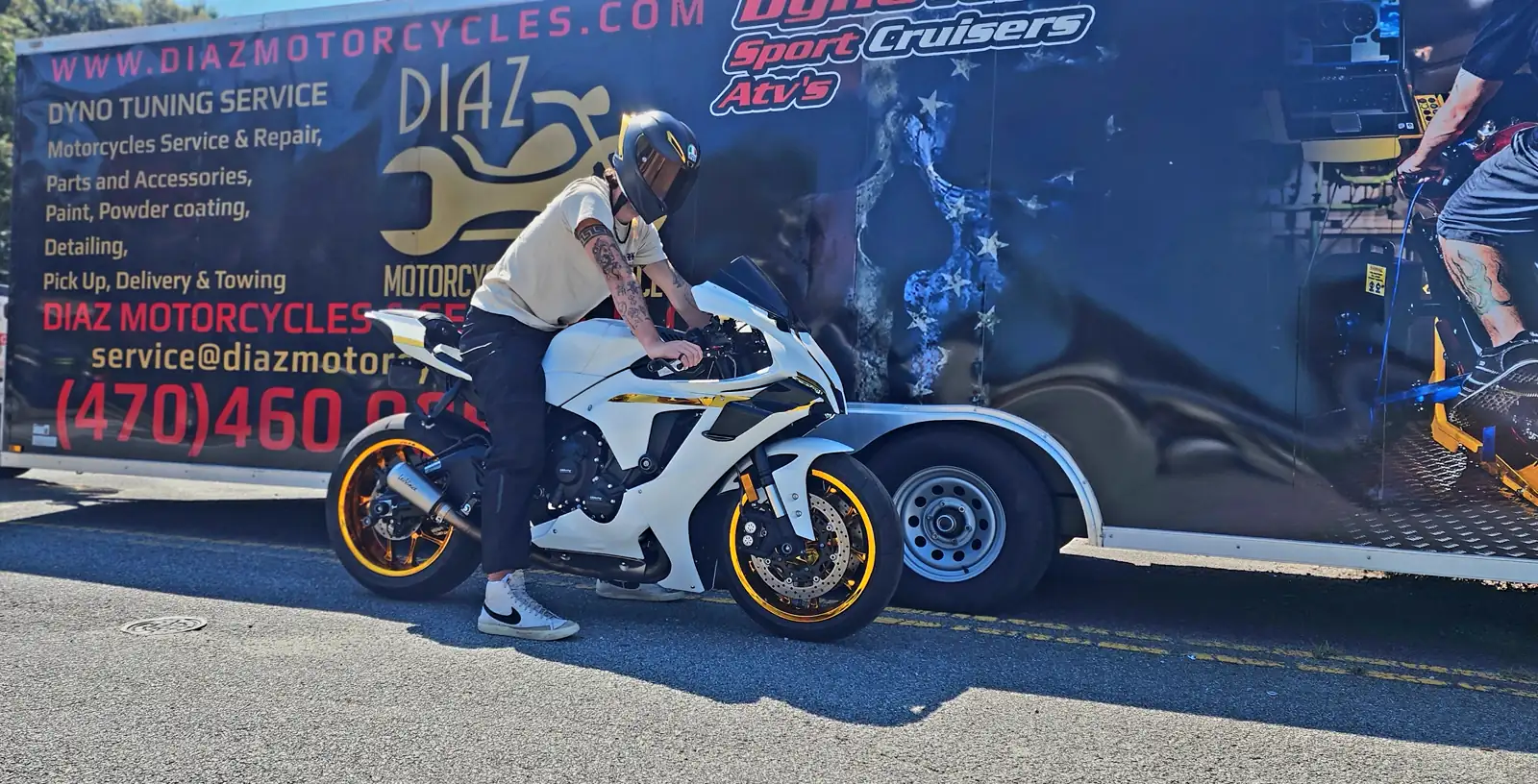
Yes, and for a lot of riders here that’s the main reason they call. We run an enclosed trailer, so a condo deck in Trillium or a carport with no outlet isn’t a problem. We load it, service it, and bring it back to you. If your HOA has rules about lot work, this solves that too.
How do I know the diagnosis is right?
Because we show our work. We reproduce the symptom before we touch it, we measure instead of guessing, and we hand you the failed part or a photo of it. If a fix doesn’t hold, you bring it back and we keep digging. A diagnosis you can’t verify isn’t a diagnosis.
What makes you different from a dealer?
Dealers are great at warranty work and factory software, and we’ll tell you when that’s the right call. What we add is range under one roof: performance tuning on the dyno, bodywork and paint, restoration on older Hondas, Triumphs and Moto Guzzis, and transport. We also just talk to you like a rider.
How do I pick a good shop in general?
Watch how they answer a question you already know the answer to. Good shops ask about symptoms before touching the bike, separate urgent from optional, keep tidy bays, and write down what they did. Ask for the old part back. That one request tells you almost everything.
My battery dies every spring. Is the bike bad?
Almost never. Around here it’s usually storage, since a huge share of riders park in lots, carports or decks with nowhere to plug in a tender. Add heat, sun and ethanol fuel sitting all winter and you get a predictable spring headache. We can test the charging system and set you up with a routine that fits where you actually park.
We take care of riders all over the north metro, starting with Sandy Springs and the neighborhoods along the river corridor, then running out to Roswell and Alpharetta on the north end and Dunwoody, Brookhaven, Chamblee and Doraville on the east side. Closer to the shop, we’re a short hop from East Cobb, Marietta, Smyrna and Vinings, and we see plenty of bikes from Buckhead and in-town Atlanta too. If you’re somewhere in that ring and the drive doesn’t work for you, the trailer does.
LET'S LOOK AT IT TOGETHER
Text us what your bike is doing and where you park it in Sandy Springs, and we’ll tell you straight whether it needs a bay, a tender, or nothing at all. If a drive across the river isn’t happening this week, we’ll come get it in the enclosed trailer and bring it back running the way you remember. No lectures, no shrugs, and you’ll get the old part back.
470-460-9883Diaz Motorcycles and Service, LLC · 847 Barnes Mill Road, Marietta, GA 30062