What Really Drives Repair Cost Peachtree City Riders Get Quoted
A plain-English look at what a motorcycle repair actually involves, and why two similar-sounding jobs are never the same size.
Plus, you found it online, a couple of towns over, and it looked perfect in the photos. Of course, Now, the seller handed you a folder of receipts covering about two of the six years he owned it. Then again, you rode it home, it ran fine, and you felt pretty smart about the whole thing. Then a month goes by and the bike starts doing three small things it wasn’t doing on day one. That’s usually the moment a rider starts searching repair cost Peachtree City and hoping for a straight answer instead of a sales pitch.
Here’s the good news up front. A used bike with unknown history isn’t a problem bike. It’s just a bike nobody has read yet. Once somebody reads it properly, the mystery goes away and you’re left with a short list of real work. Below is exactly how that reading happens, what makes one job bigger than another, and why an honest shop will not throw a number at you over the phone.
Start with what the bike is telling you
Bikes are honest. They give you symptoms long before they give you trouble. Most riders who bought secondhand come to us with some mix of these, and it helps to write yours down before you call anybody.
- A hard start when the engine is cold, then normal once it’s warm
- Brakes that feel spongy, or a lever that pulls closer to the bar than it used to
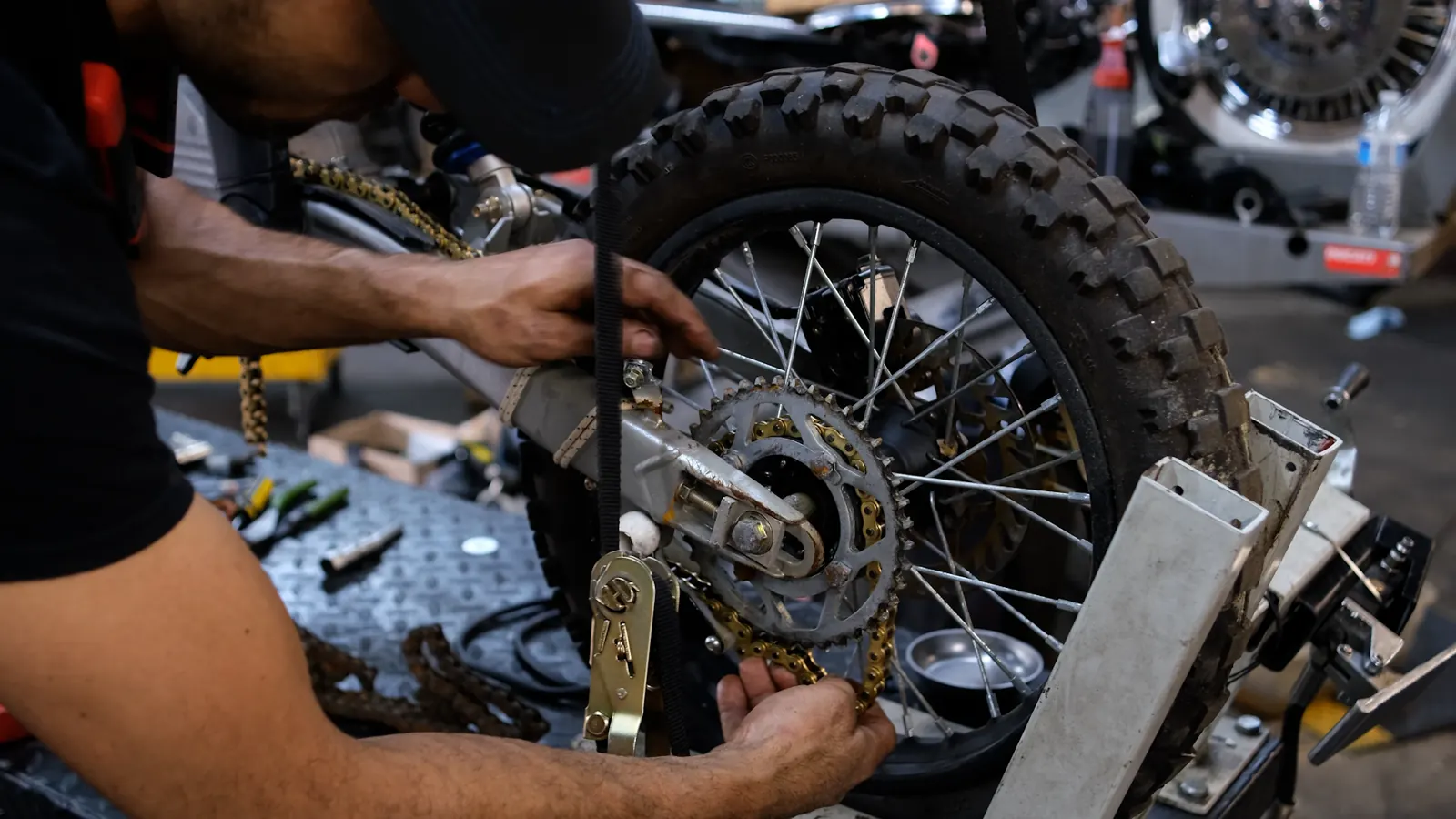
- A chain that gets loud, or tight in one spot and loose in another
- Weeping oil at a seal or gasket, especially after a hot August afternoon
- A battery that dies if the bike sits two weeks
- Fork legs with a wet, shiny film on them
- Tires with plenty of tread but a hard, cracked look at the sidewall
None of that means the bike is bad. Almost all of it means the bike sat, or got maintained on somebody else’s schedule instead of yours. That’s a very fixable situation.
What each of those symptoms usually means
A cold-start stumble on a bike that sat is almost always fuel-side. Old gas leaves varnish behind, and varnish narrows the tiny passages that meter fuel. The fix ranges from a fresh tank of gas and a filter to a proper cleaning of the fuel system, and which one you need depends on how long it sat, not on how bad it sounds.
A soft brake lever is usually old fluid. Brake fluid pulls in moisture over years, and moisture compresses where fluid doesn’t. Sometimes it’s a bleed and fresh fluid. Sometimes the caliper pistons are crusted and need to come apart. Same symptom, two very different sizes of job.
Tight-and-loose chain spots point at the sprockets, not the chain. Shiny fork legs mean seals. A battery that won’t hold two weeks is either a tired battery or something quietly drawing power while the bike sleeps. Oil weeping in summer is worth watching, because our June-through-August heat and humidity are hard on seals and gaskets and will turn a slow weep into a real leak. If the engine itself is talking to you, it’s worth reading up on what that service actually involves before you assume the worst.
What actually happens when you bring it in
The process is less mysterious than people expect. Here’s the whole thing, start to finish.
- You tell us the story. When you bought it, what it does, what it did before, what the receipts cover.
- We ride it or run it, if it’s safe to do so. Symptoms feel different than they read.
- We put it on the lift and go over it in order: fluids, brakes, tires, chain and sprockets, controls, electrical, fasteners.
- We find out what’s actually wrong, and just as importantly, what’s fine. Half of a good inspection is the list of things you don’t have to buy.
- We call you with a plan split into three buckets: safety now, wear soon, and cosmetic whenever.
- You pick. We only touch what you approve.
- We do the work, road test it, clean it up, and you get a written record of what was done.
That call in the middle is the part that matters. It’s a conversation, not a checkout screen. You should hang up understanding your own bike better than you did that morning.
There's a version of this that's cheap and a version that isn't
Same repair name, wildly different job. That’s the thing nobody explains well, so let’s explain it well.
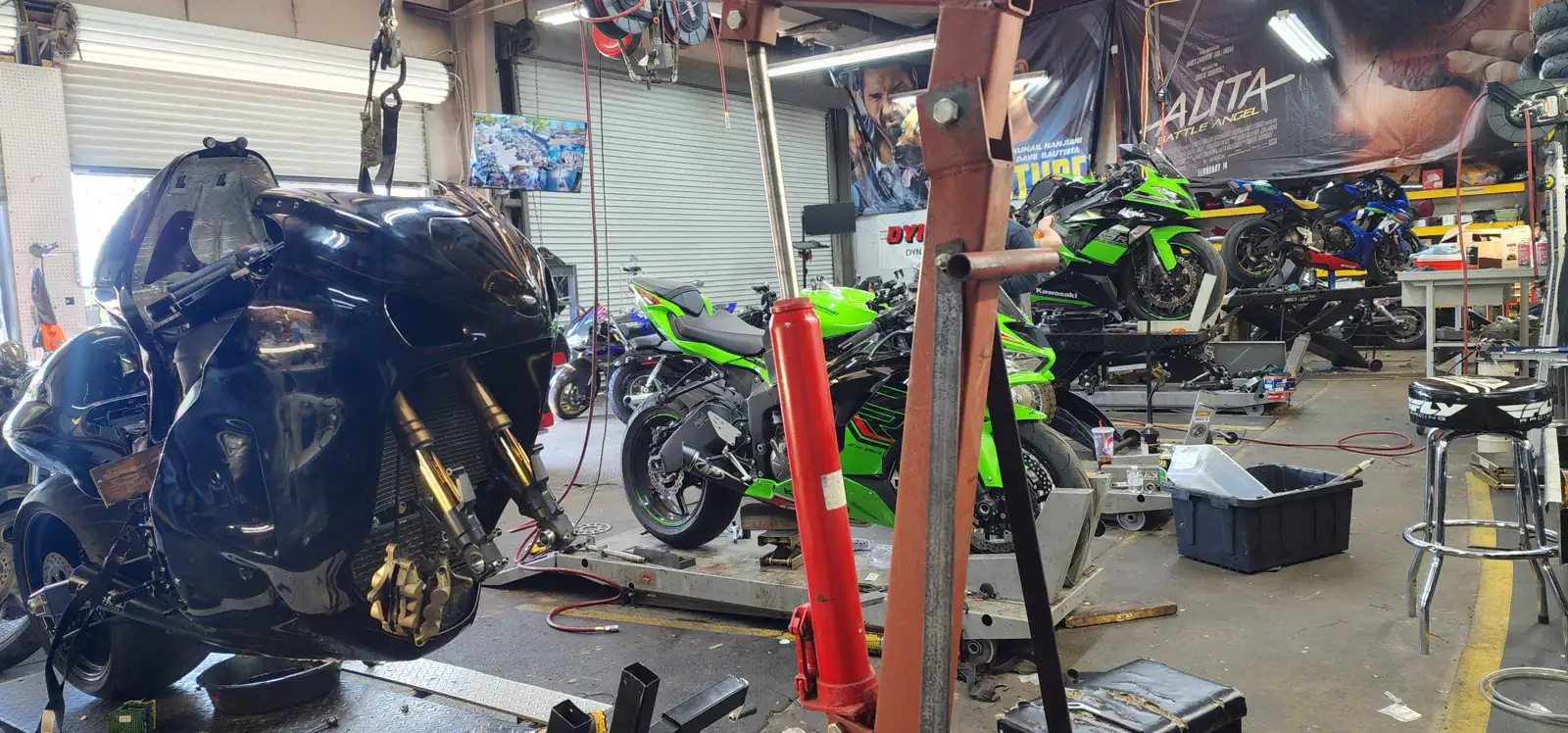
Parts are the boring part. A gasket is a gasket. What changes the size of the job is access — how much of the bike has to come apart before a tech can put a hand on the thing that’s broken. On a naked bike with an open frame, some jobs are a wrench and twenty minutes. On a full touring bagger with fairings, speakers, wiring and hard bags, the exact same part sits behind an hour of careful disassembly, then an hour of careful reassembly, with every clip and fastener going back the way the factory intended.
Parts don't decide the size of a job. Access does.
A few other things move the needle. Whether the bike sat for years. Still, Whether a previous owner already went in there and left something half-done. Whether a fastener is seized after a decade of Georgia humidity. Whether the part is common or has to come from a marque specialist. That’s a real consideration around here, since a Moto Guzzi owner is used to running down to Moto Guzzi Peachtree City, which despite the name actually sits in Fairburn, about twenty minutes up the road.
Why we won't quote it sight-unseen
When somebody asks about repair cost Peachtree City shops would charge, the honest answer starts with a question, not a number. Because a phone quote is a guess wearing a nice shirt. If we guess high, we scare you off a bike that’s actually in decent shape. If we guess low, we have to call you back later with worse news, and nobody enjoys that call. Neither version is fair to you.
What we can do over the phone is narrow it down. Tell us the year, model and mileage, send a few photos, describe the noise, and we can tell you the likely causes and which end of the range you’re probably sitting in. Then the inspection makes it exact. Riders who read everything before they buy tend to like that approach, and this town is full of those riders.
BEFORE YOU CALL
Have four things handy: year and model, mileage, what it does and when, and whether it sat. Those four answers get you a much better conversation than “it’s making a noise.”
One more thing worth saying plainly. A big repair cost Peachtree City riders worry about is usually a stack of small deferred items rather than one catastrophe. Fluids, a chain, a set of tires, a battery. On paper it reads like a lot. On the lift it’s an afternoon of ordinary maintenance that somebody put off for a few seasons. Catching all of it in one visit is cheaper than catching it in four, and it means you leave with a bike that’s fully caught up instead of partly caught up.
How long it takes
Timing follows the same logic as everything else. A fluid-and-brakes refresh is usually a same-day or next-day visit. Chain, sprockets and tires depend on stock. Fork seals, fuel-system cleaning and anything behind bodywork run longer, because the disassembly and reassembly are real hours. Paint and restoration work run on their own clock entirely, and that’s a good thing — nobody should rush a finish.
We’ll tell you the timeline before we start, and we’ll tell you if it changes. If waiting on a part means the bike sits, we’d rather you know that Tuesday than find out Friday. If you want the full picture of what a visit includes, here’s what you get when you bring it in.
What all of this looks like in PTC
Peachtree City bikes are different, and it changes the work. Between the hundred-plus miles of multi-use golf cart paths that connect every village to retail, schools, worship, medical parks and lakes, and a city slogan that literally invites you to discover life at 15 miles per hour, the short trips around town get handled on four quiet wheels. So the motorcycle in a PTC garage almost never plays commuter. It’s the fun one. It lives indoors, covered, often on a tender, and it comes out on purpose.
That shows up on the lift. Bikes from Aberdeen, one of the original villages, and from down in Braelinn near Braelinn Village tend to arrive clean, low-mileage and well kept — and time-based rather than mileage-based. Fluids age on the calendar. Tires and seals age on the calendar. A bike from one of the golf-named streets like Spyglass Hill, Muirfield, Prestwick, St Andrews Square or Golfview can show up with beautiful paint, perfect chrome and brake fluid that’s older than the kid who just graduated from J.C. Booth Middle School and moved up to McIntosh High School.
Riding conditions here matter too. Pavement is in good shape, so potholes aren’t the story. The hazards are the cart path crossings tucked in everywhere, curvilinear streets with short sight lines, and heavy tree canopy that drops leaves, acorns and sap and holds moisture on shaded curves long after the sun’s out. Add deer along the greenbelt and you have a place where brakes and tires earn their keep. Then there’s 74, the north-south spine everybody just calls by its number, busy with turning traffic and worth a healthy following distance. And when the fun ride happens, it’s usually south toward Pine Mountain, FDR State Park and Callaway Gardens on the GA-190 ridge road, roughly an hour out. That’s a real ride, and it’s a bad day to discover your fork seals.
Something worth knowing before you book anywhere
There’s no motorcycle repair shop inside the Peachtree City limits, so every rider here already drives out for service. Since you’re traveling either way, the question isn’t who’s closest. It’s who does the work you actually need. We’re in East Cobb, and from PTC that’s roughly 48 to 56 miles — call it an hour to an hour and a half depending on traffic, though that’s estimated from the map rather than clocked. The usual route runs 74 north to I-85, then I-285 west and I-75 north.
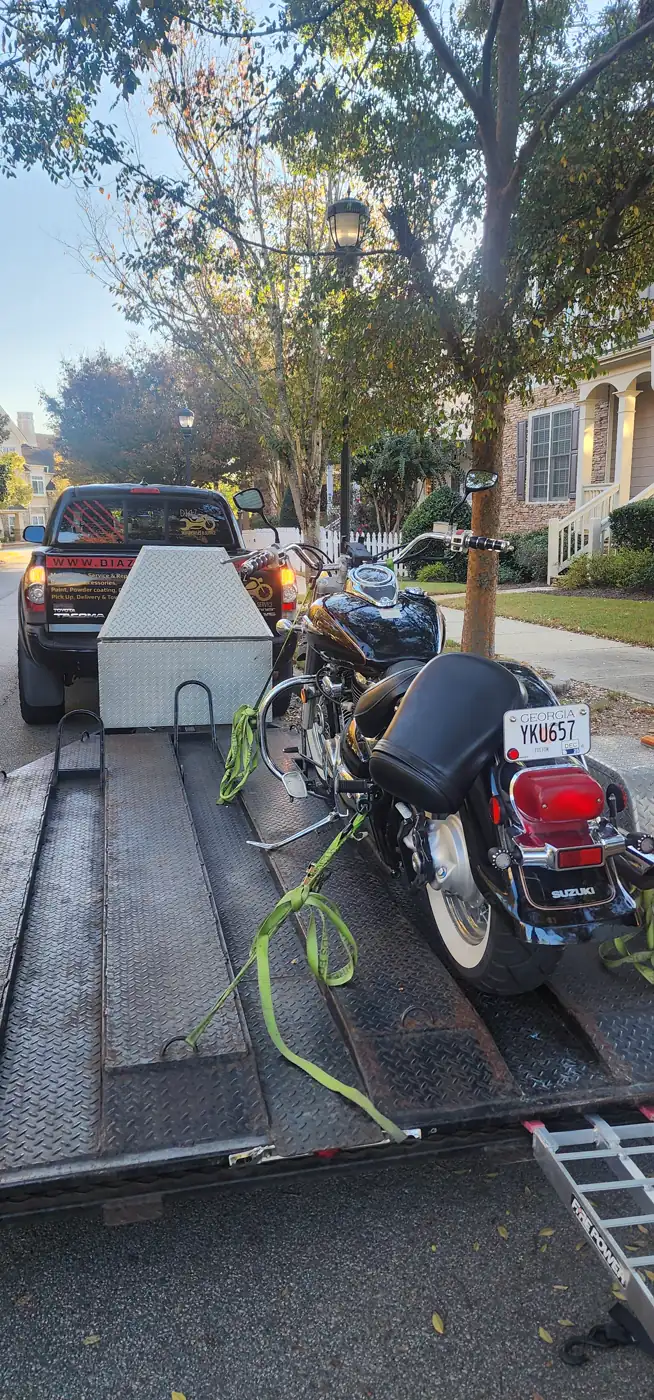
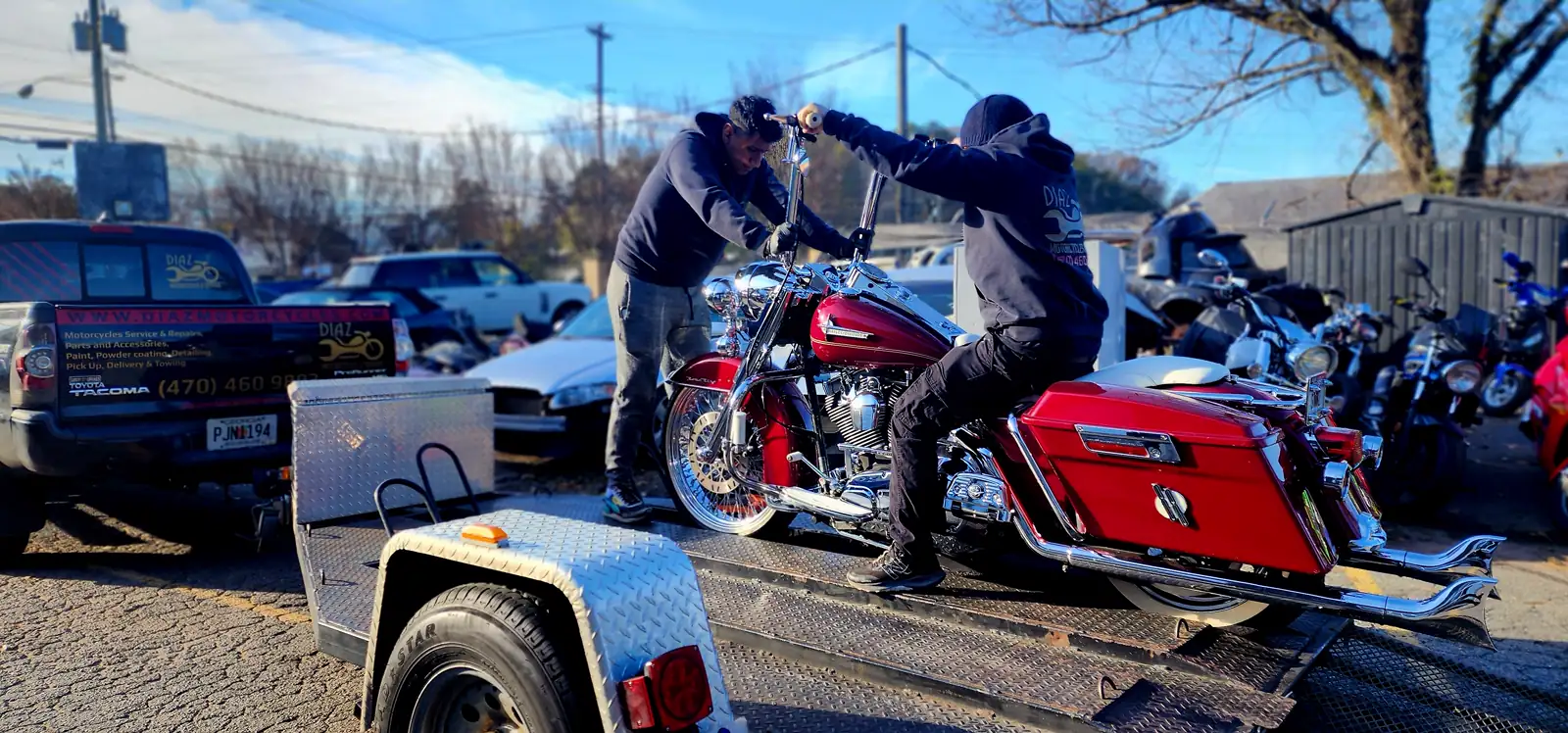
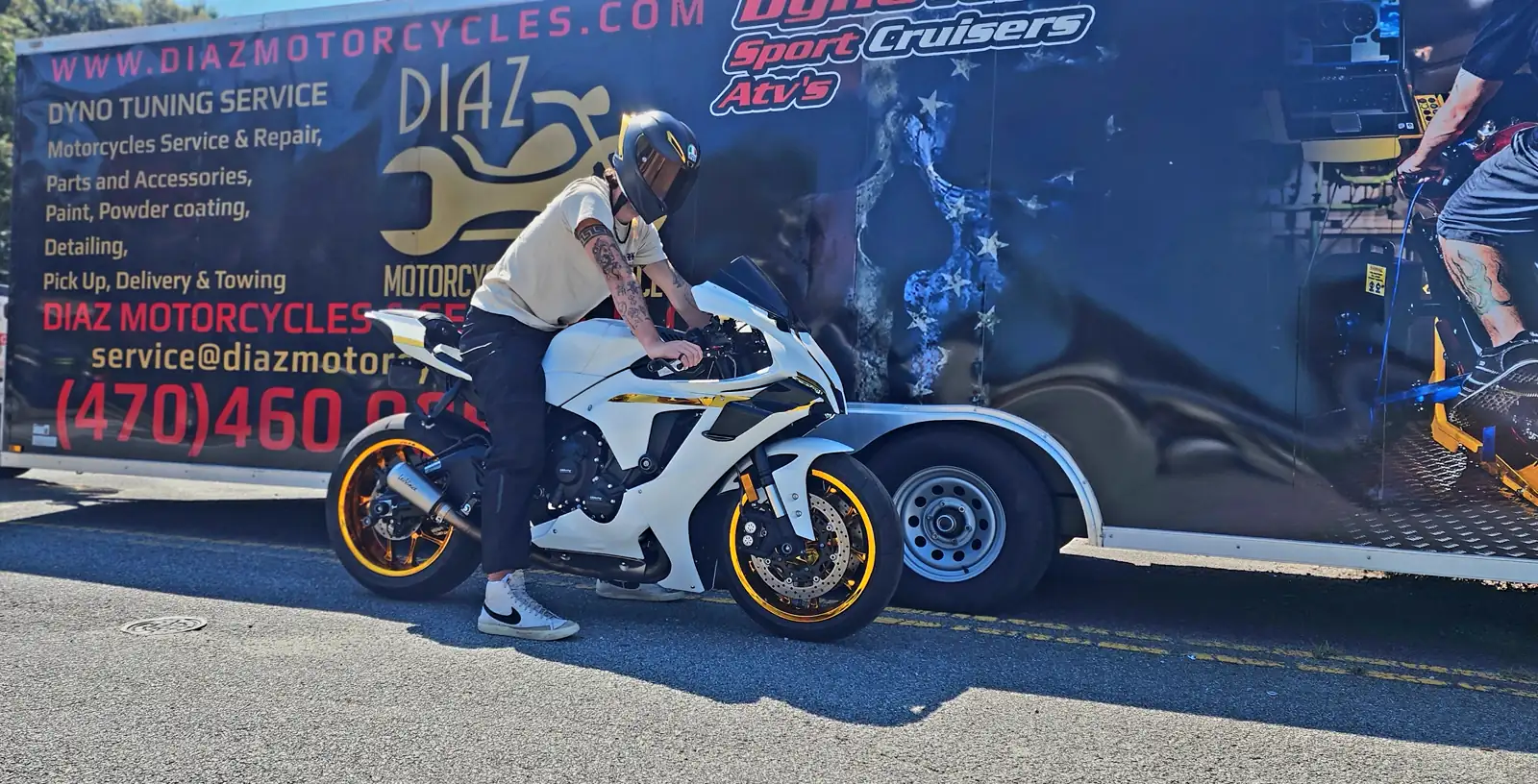
You don’t have to ride it, either. Our enclosed trailer picks bikes up, which is the normal choice for a bike that isn’t running right or one you’d rather not put highway miles on. If you’re weighing your options, we broke down the tradeoffs between them, and you can also see how this plays out in Smyrna for a closer-in comparison. Newer riders sorting out Georgia Class M licensing usually find the maintenance side less complicated than they feared, and the IIHS motorcycle research is a solid read on why brakes and tires deserve the attention.
Where this ends up
That used bike with the half-finished receipt folder ends up being a known quantity. You get a list of what was actually wrong, a shorter list than you feared, and a record you can hand to the next person years from now. Then the bike stops being a question mark in the garage and goes back to being the reason you keep a garage.
So if you’re staring at a bike you just bought and wondering what you signed up for, send us photos and the story. We’ll tell you what we think it is, what it probably isn’t, and what it’ll take to find out for sure. No pressure and no guessing games.
Questions Peachtree City riders ask us
What happens if you find something else once it's apart?
We stop and call you. Nothing extra gets done without your okay, period. We’ll explain what we found, whether it’s urgent or can wait, and how it changes the timeline. You decide, not us.
How do I avoid surprises?
Tell us everything you know up front, including the stuff you think doesn’t matter. When it sat, what the last owner did, any noise you’ve been ignoring. Then approve the inspection so we’re working from facts instead of guesses. Surprises almost always come from missing history, not from hidden fees.
What makes one job bigger than another if it's the same part?
Access. Some parts sit right there in the open, and some sit behind fairings, bags, wiring and a tank. The part is the same either way, but the hours to reach it politely and put everything back correctly are not. Bikes that sat for years and seized fasteners add time too.
Why can't you just quote it over the phone?
Because the same symptom can have a simple cause or a deeper one, and we can’t tell which from a description. A phone number would either scare you off unnecessarily or set you up for a worse call later. We’ll happily narrow it down by phone or text, then make it exact after we look.
What's included in the work?
A proper inspection, the repairs you approved, correct fluids and torque specs, a road test, and a written record of what was done. You also get the list of things we checked that were fine. That list is worth as much as the repair list on a used bike.
Do I have to ride it up there?
No. Our enclosed trailer picks up bikes across the south metro, including Peachtree City, and it’s the usual choice for anything that isn’t running right. Plenty of riders use it even for healthy bikes, simply because it saves the round trip. Just ask when you text us.
We take care of riders all over the south metro and beyond. That includes Peachtree City and neighboring Fayetteville and Tyrone, plus Newnan, Senoia and Sharpsburg out to the southwest, and the smaller Fayette communities of Brooks and Woolsey. We also see plenty of bikes from Union City, Fairburn, Palmetto, Jonesboro and Riverdale. Whether you ride up to East Cobb yourself or we bring the enclosed trailer to your driveway, the work and the conversation are exactly the same.
TEXT US A PHOTO AND THE STORY
If you bought a bike in Peachtree City and you’re not sure what you inherited, send us a few photos, the year and model, and what it’s doing. We’ll tell you what it likely is, what it probably isn’t, and whether it’s worth trailering up. Straight answers, no pressure, and no guessing at numbers before anybody has looked at your bike.
470-460-9883Diaz Motorcycles and Service, LLC · 847 Barnes Mill Road, Marietta, GA 30062