Dealer or Independent? The Motorcycle Shop Peachtree City Riders Should Pick
Two real choices, laid out honestly, with a straight recommendation for a bike you plan to keep.
You’ve had the bike eleven years. Of course, Now, It’s the one you rode home with a full tank and no plan, and it still sits under a cover in the garage with the battery on a tender. Then again, you aren’t shopping for a new bike. Even so, Honestly, you want this one to keep going for another decade. So the real question was never which model to buy next. Meanwhile, It’s who puts hands on it, and when riders start hunting for a motorcycle shop Peachtree City can send a long-owned bike to, they hit the same fork in the road every single time.
Here’s that fork. In fact, that said, On one side sits an authorized dealer service department for your brand. On the other sits an independent shop that works on everything that rolls through the door. Both are real. Both keep bikes running. We’re going to lay them out fairly, say which one we’d pick for a garage-kept bike with a long future, and name the exact situation where the other one wins instead.
The myth: the badge on your tank picks the shop for you
Plenty of riders believe there’s only one correct answer. Harley goes to Harley. BMW goes to BMW. Ducati goes to Ducati, and anything else counts as a compromise. That belief feels safe, and honestly, it’s a leftover from the warranty years. While a bike is new and covered, the dealer really is the simple answer, because warranty claims have to run through the brand’s own network. That’s a paperwork rule, though. It was never a quality ruling.
The myth sticks because your first few years of ownership train you into it. You drop the bike off, the forms work, the bike comes back, and you assume the arrangement is permanent. Then year eight arrives, the coverage is long gone, and nobody sends a letter explaining that the rules changed. Your bike quietly graduated and never mailed you the diploma.
Federal warranty rules are also friendlier than most riders think. A manufacturer can’t void your coverage just because someone outside the network changed the oil, as long as the work and the parts are correct. So even during the covered years, you have more room than the myth admits. Once the coverage ends, that room becomes the whole room.
The reality: what actually separates the two
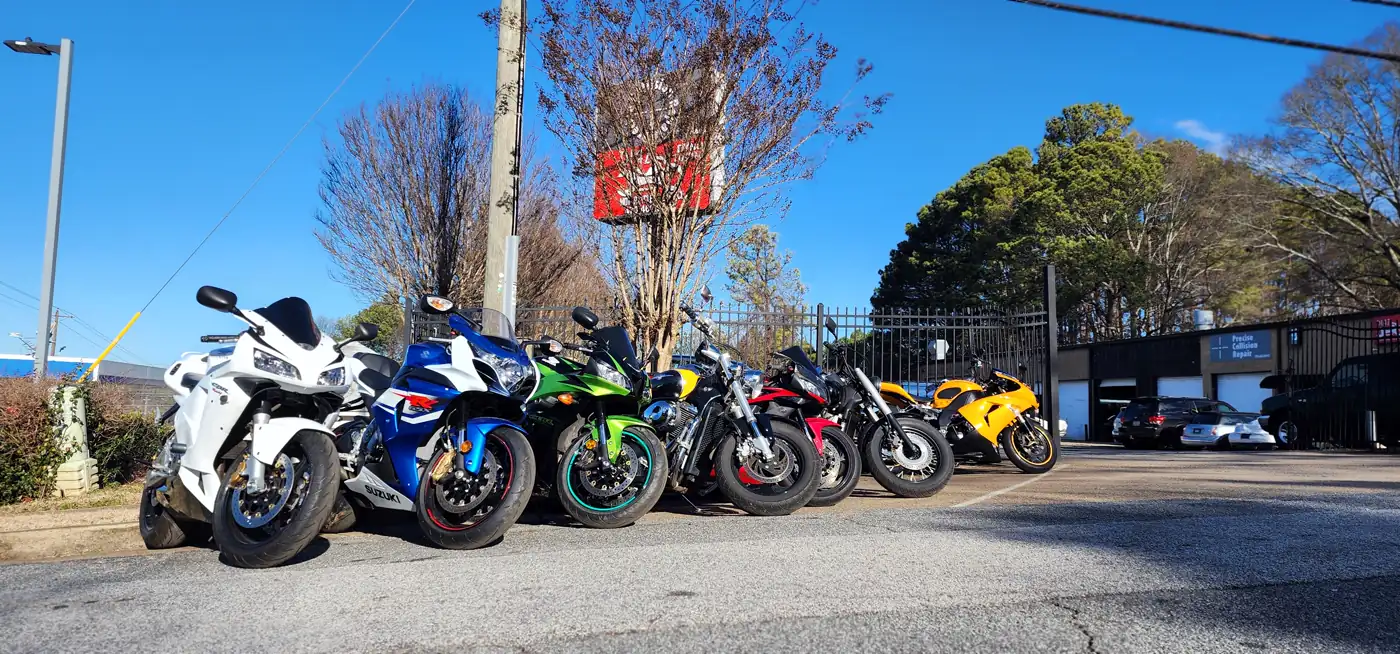
An authorized dealer brings brand depth. Factory tools, factory training, factory diagnostic software, and a parts counter stocked for the models they sell. If your bike throws a strange fault code tied to one model year and one wiring harness, that depth is worth real money. Great South Harley-Davidson over at 185 Highway 16 E in Newnan is a full authorized Harley-Davidson retailer, roughly twenty-five minutes west, and for recall work or a warranty claim on a newer bagger, that’s exactly the door you want.
An independent shop brings breadth and continuity. We see Harleys and Indians and BMWs and Triumphs and Ducatis and old metric cruisers in the same week, which means we see how the same failure shows up across different machines. We also tend to keep the same hands on the same bike year after year. That matters more than riders expect on a bike you’ve owned a long time, because the second visit is always faster when someone remembers the first one.
| What you're weighing | Authorized dealer | Independent specialist |
|---|---|---|
| Brand-specific software | Deepest for their brand | Broad across brands |
| Warranty and recall work | Required, and free to you | Not eligible |
| Multi-brand garages | One door per brand | One door, all bikes |
| Older or discontinued bikes | Support thins out over time | Bread and butter |
| Same tech every visit | Varies by staffing | Usually the same hands |
| Restoration, paint, detailing | Rarely offered | Where we live |
Neither column is a villain. The honest read is that they’re built for different stages of a bike’s life. A new bike under coverage lives comfortably in the left column. A long-owned, low-mileage, garage-kept bike with a hobby-object relationship to its owner lives in the right column, and that describes a huge share of what’s parked in PTC garages.
The timing on this matters more than the fix does.
Here’s what we mean. The same repair, caught in April, is a service. Caught in September, it’s a rescue. Fall from September through November is the best riding of the year here, and it’s also leaf and acorn season on those shaded curvilinear streets. Every rider in the county wants the bike ready during the same eight weeks. If you wait for the first perfect Saturday to discover the front tire is squared off, you’re not competing with the repair. You’re competing with the calendar.
So the better habit is a slow-season checkup, done in the flat months when nobody’s in a hurry. That’s when a shop has room to actually look at the whole bike instead of just the complaint you brought in. If you want the no-drama rundown of that, here’s the practical version.
The actual process, start to finish
Whichever column you pick, the good version of the process looks about the same. Knowing the shape of it makes it easy to spot when a shop is skipping steps.
- You describe the symptom in plain language. Noise, feel, smell, when it happens, how fast you were going. No diagnosis required from you.
- The bike gets a full look, not just the complaint. Tires, brakes, fluids, chain or belt, fasteners, battery health, and anything that’s aged out.
- You get a call with what’s wrong, what’s urgent, what can wait a season, and what’s purely cosmetic. Three buckets, not one scary pile.
- You approve the work. Nothing beyond that list happens without another call.
- Parts go on, the job gets torqued to spec, and the bike gets test ridden before anyone calls it done.
- You get the old parts back if you want them, plus notes on what to watch next year.
That fourth step is the one riders should protect hardest. A shop that adds work without calling isn’t being helpful. It’s being expensive with your permission missing. We wrote up our own version of that discipline in how we handle that job, and the short answer is that the phone call is the whole trick.
How to tell a good shop from a merely busy one
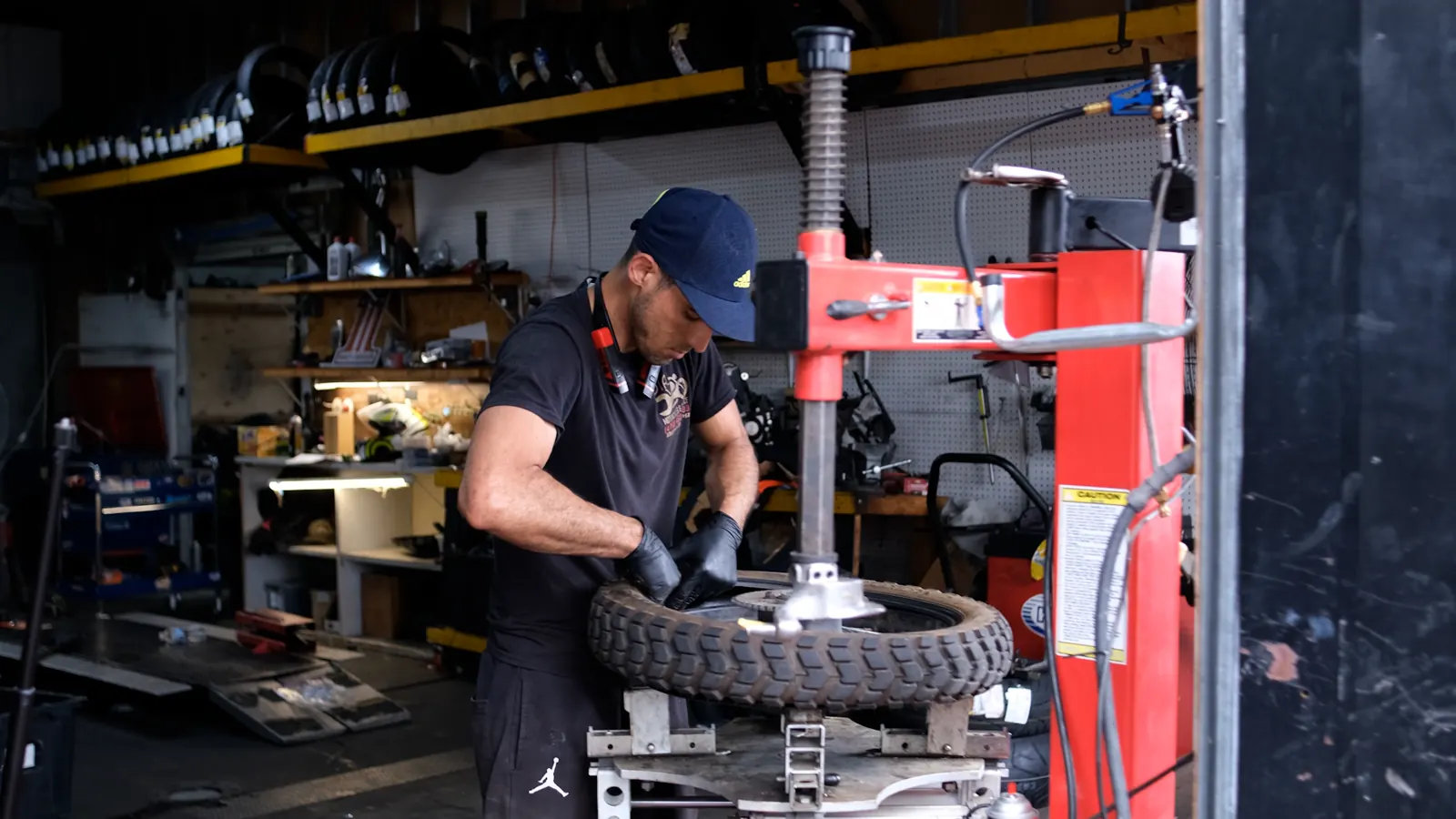
A packed lot only proves a shop has customers. It doesn’t prove the work is careful. These are the signals that actually separate the two, and they work on dealers and independents alike.
- They ask about how you ride before they quote anything. Two-up touring and short evening loops need different answers.
- They give you a timeline with a reason attached, not just a day.
- Plus, they show you the failed part instead of describing it.
- They tell you what can wait. A shop that says everything is urgent is selling, not diagnosing.
- They know tire compounds and date codes cold. Rubber ages even on a bike that barely moves, which is why storage-queen bikes often need tires long before the tread runs out.
- They write things down, so next year’s visit starts where this one ended.
If you want to get sharper on the tire piece specifically, Michelin’s motorcycle tire resources explain compound and construction in plain terms, and RevZilla’s Common Tread is a solid place to read about maintenance without a sales pitch attached. Educated riders ask better questions, and better questions get better work. That’s true everywhere.
What this looks like around PTC
This town is its own animal, and any honest comparison has to account for that. There’s no verified dealership and no verified repair shop inside the city limits, so choosing a motorcycle shop Peachtree City riders can lean on always means leaving town anyway. The we’re-closer argument barely exists. That changes the math, because if you’re driving either way, the only thing left to compare is who does the better job.
It also changes what people ride. Between the cart paths and the ten thousand-plus cart-owning households, short local trips get handled without a motorcycle at all. Nothing in this town needs a two-wheeled commuter. So the bike in the garage is a hobby object, kept indoors, covered, on a tender, and often two- or three-car-garage protected. That’s why we see so many low-mileage, appearance-forward bikes from here, and why restoration, custom paint and detailing come up in conversation more often than a broken commuter ever would.
Riders here orient by village, too. A bike from Aberdeen carries different history than one from Wilksmoor out on the west side toward Coweta, simply because the original-era villages hold more long-owned machines while the newest one skews newer everything. Over in Glenloch, near the recreation complex, we hear about bikes that mostly run to events and back. Plenty of those trips end at the Frederick Brown Jr. Amphitheater, where twenty-five hundred seats and a covered stage that runs seventy-three feet by thirty-six make it the city’s premier venue, and a bike parked there is a bike that gets looked at.
Then there’s the road network itself. Crosstown Drive, Robinson Road, Kedron Drive, Log Cabin Road, Rockaway Road, Planterra Way, Wisdom Road and Dividend Drive are smooth, well maintained and pleasantly curvy, which is lovely right up until the tree canopy hides a patch of wet leaves in a shadow. Add deer along the greenbelt and cart path crossings at odd angles, and low-speed traction stops being a boring topic. A loop out past Lake McIntosh, the newest of the three lakes, on the way to GA-74 south toward Senoia and the Coweta line is the standard ride out of town, and it’s exactly the kind of ride that punishes tired tires.
TRANSPORT, NOT AN APOLOGY
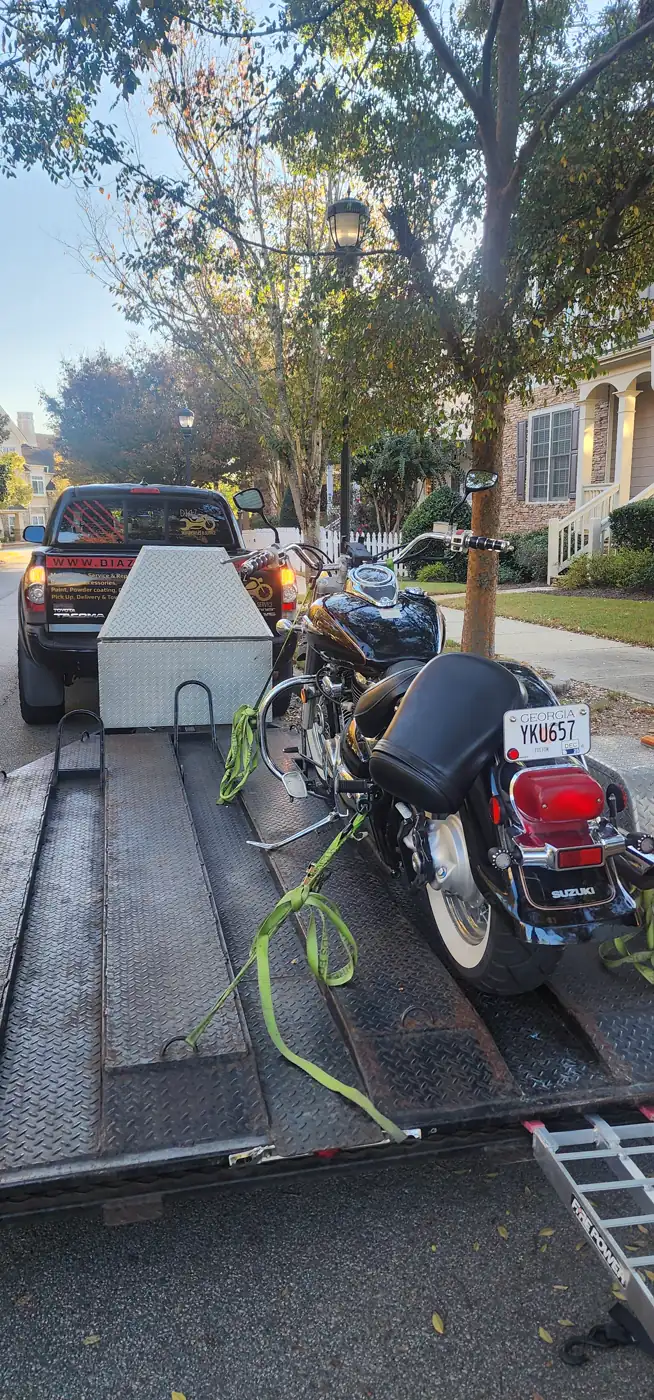
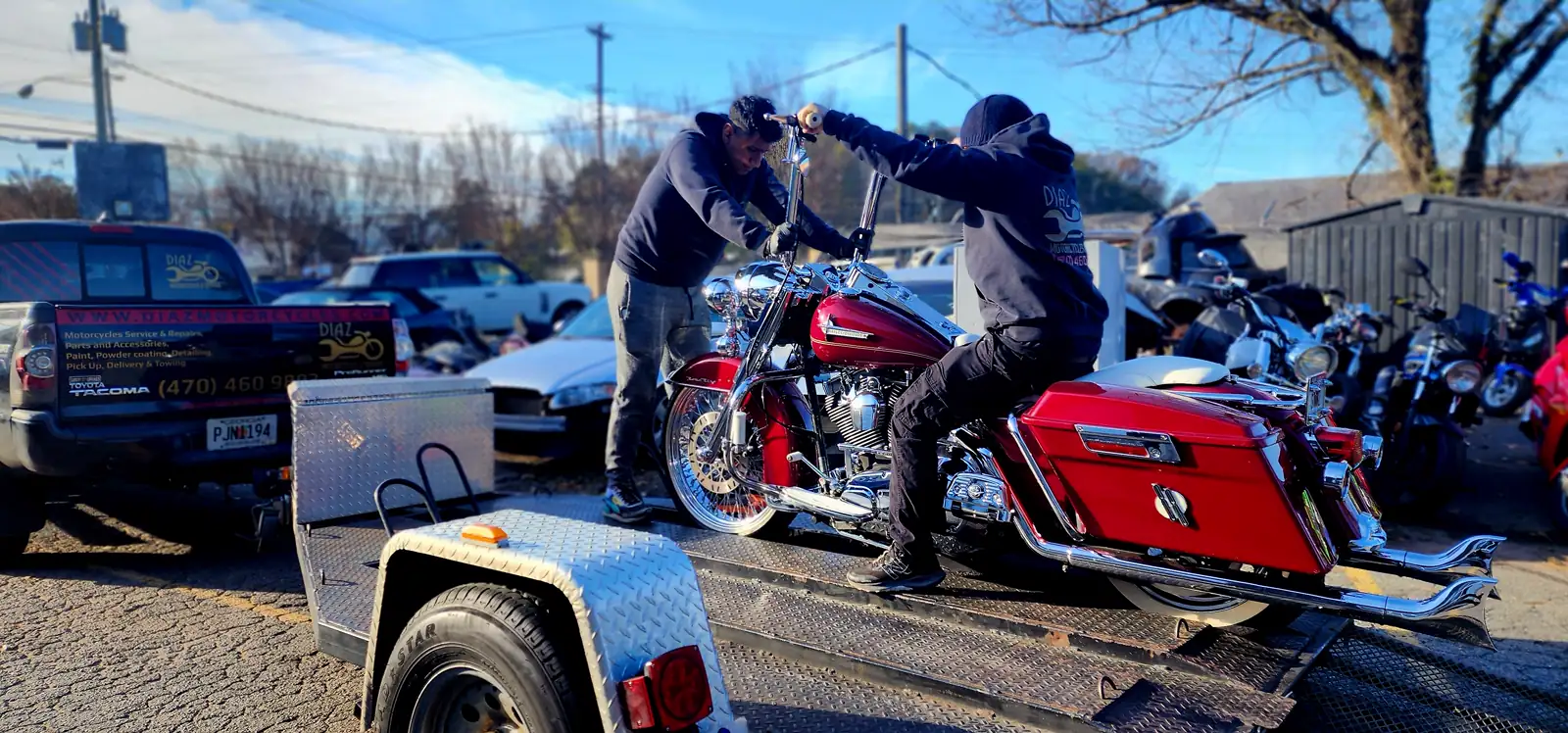
From PTC to our door in East Cobb runs roughly 48 to 56 miles, or about 60 to 85 minutes, estimated from road geography via GA-74 north to I-85, I-285 west and I-75 north. Nothing routes you toward Cobb County naturally, so we treat pickup and delivery as a normal part of the job rather than something you have to solve.
A bike came in from Aberdeen with exactly this. Long-owned cruiser, spotless paint, barely any miles, and a front tire with plenty of tread and a date code from another era. The owner had been told twice that the tread was fine, which was true and beside the point. Rubber hardens whether you ride it or not. Problem named, fix simple: fresh tires, fluids that hadn’t been touched since storage started, a brake service and a real test ride. He got back a bike that felt planted again on those shaded curves, and he was genuinely surprised how much of the wobble he’d learned to ignore.
So which one do we actually recommend?
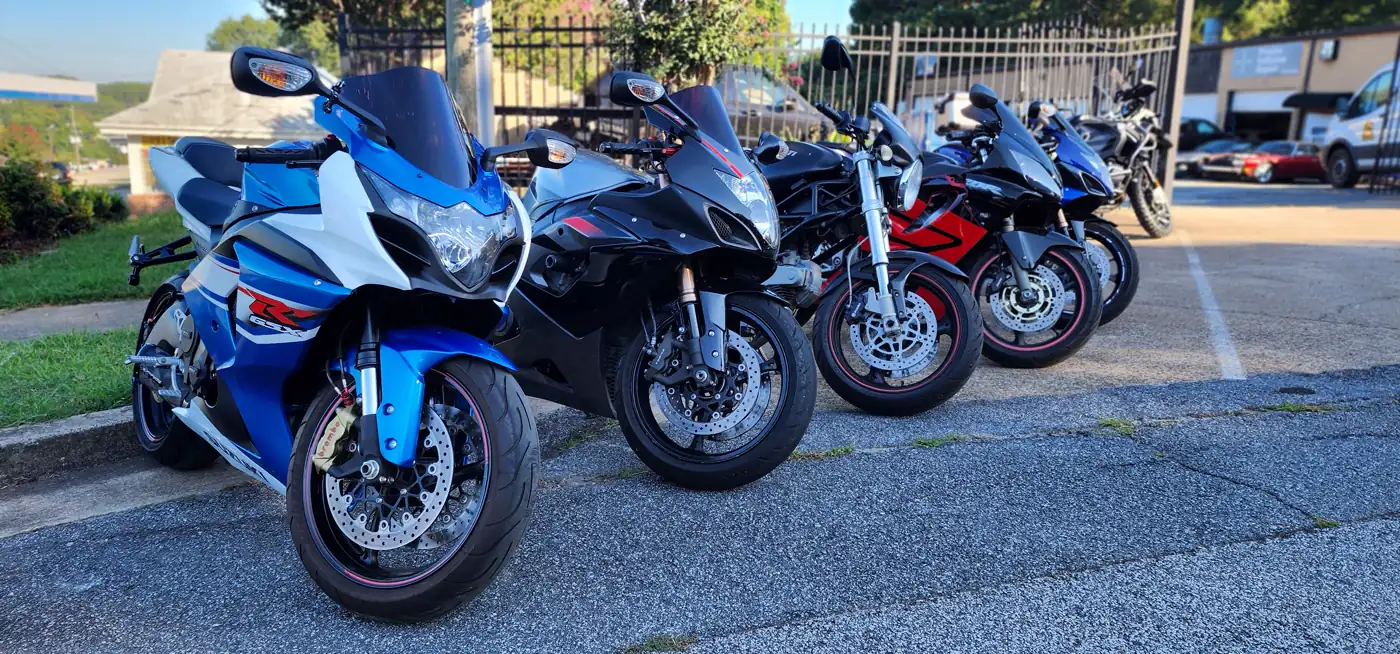
For a bike you’ve owned a long time and plan to keep, go independent. That’s our real pick, not a polite hedge. Once the coverage is gone, the dealer’s biggest structural advantage goes with it, and what’s left is continuity, breadth and craft. A shop that keeps notes on your bike, remembers what it sounded like last fall, and can do paint, restoration and detailing under the same roof is worth more to a hobby bike than a brand badge on the building.
The reasoning is simple. Long-owned bikes fail in patterns that cross brands: aged rubber, tired fluids, corroded connectors, brittle vacuum lines, batteries that got lazy on a tender. Those are experience problems, not software problems. Meanwhile, the specialty work that actually moves the needle on a garage-kept machine, meaning tuning, paint and full restoration, isn’t something you’ll find advertised anywhere in Fayette County. Here’s what we take care of here if you want the full list.
When the dealer wins instead
There’s a clear case, and we’ll say it plainly. If your bike is still under factory coverage, or there’s an open recall, or the fault is a brand-specific electronic gremlin that needs proprietary software to even see, take it to the authorized dealer. That’s not us being generous. That’s the correct answer, and Great South Harley-Davidson in Newnan is a reasonable trip for a Harley owner in that situation. Paying an independent for work the factory owes you would be a strange hobby.
You can also move between them, and most long-term owners do. Dealer for the covered years and the recalls, independent for the decade after. Nothing gets burned. We see the same pattern play out on the Acworth side of things, just with a shorter drive attached.
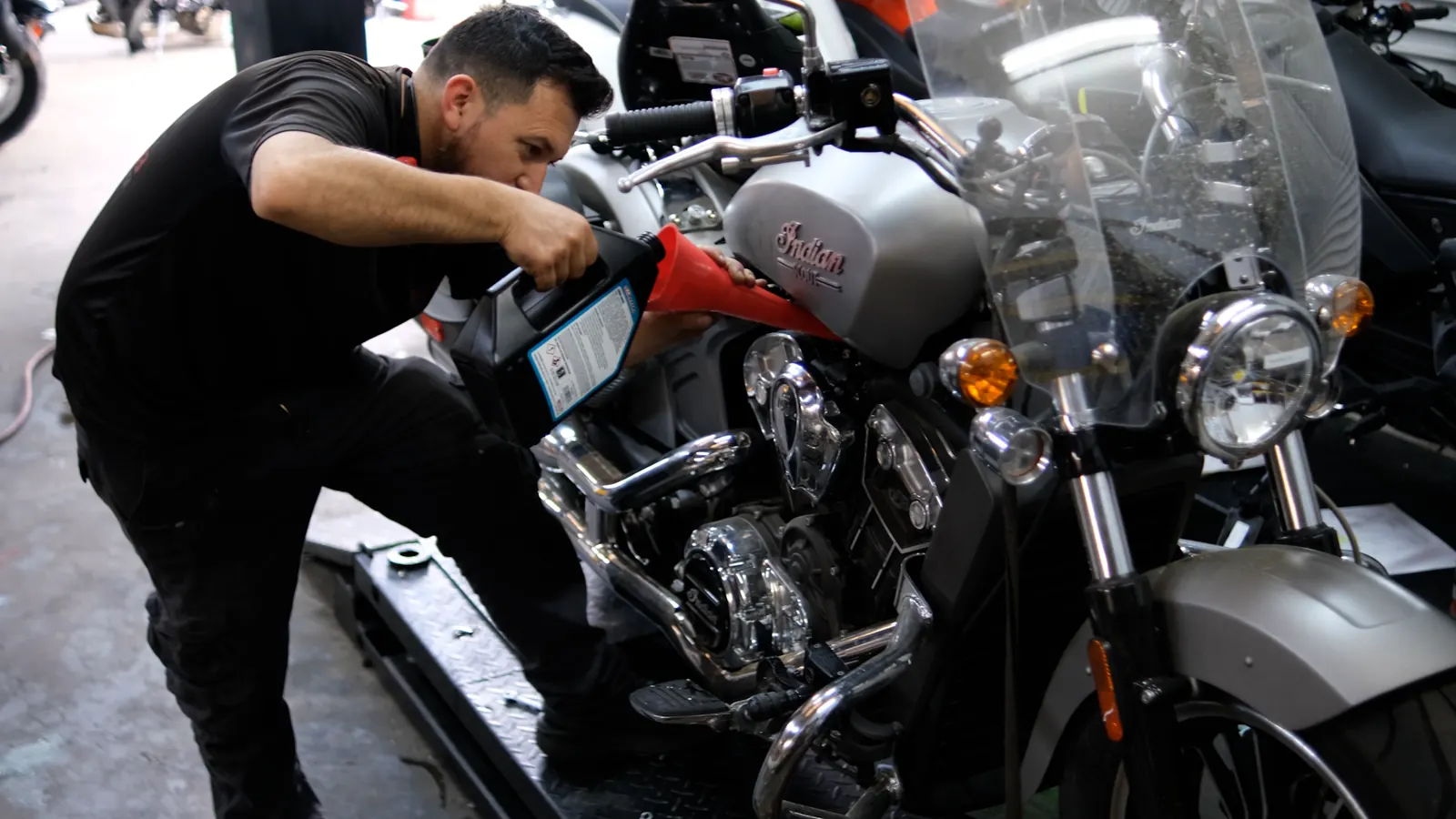
The outcome you're actually buying
What you want at the end of this isn’t a receipt. It’s the feeling of rolling the bike out on a cool October morning, hitting the starter, and knowing nothing on that machine is quietly overdue. That’s the whole point of picking well once instead of guessing every year.
Pick the dealer while the factory owes you something. Pick an independent for the long haul, and pick one that treats your bike like the object you’ve kept it as. Do that, and the next ten years look a lot like the last eleven, only with better tires.
Questions Peachtree City riders ask us
What's the real difference between a dealer and an independent shop?
A dealer is built around one brand, with factory software, factory training and a parts counter stocked for the models they sell. An independent is built around breadth and continuity, working across brands and keeping the same hands on your bike year after year. Both do real work. They’re just built for different stages of a bike’s life.
Which one keeps a bike on the road longer?
For a bike past its warranty years, the independent route usually wins on longevity, because long-owned bikes fail in patterns that cross brands. Aged rubber, tired fluids and corroded connectors are experience problems, not software problems. A shop that sees them weekly across many machines catches them earlier.
Which is right for the way I ride?
If you ride a newer bike hard and lean on factory coverage, stay with the dealer for now. If your bike is garage-kept, low-mileage and mostly out for weekend loops toward Senoia, an independent fits better. Tell us how you actually ride and we’ll tell you honestly which door to use.
Can I switch later, or am I locked in?
You can switch any time, and most long-term owners do. Dealer for the covered years and any recalls, independent for the decade after. Nothing gets burned and no record disappears, especially if you keep your service notes.
Does outside service void my warranty?
No. Federal rules mean a manufacturer can’t void coverage simply because someone outside the network did the maintenance, as long as the work and parts are correct. Actual warranty repairs still have to go through the brand’s network, so that’s the piece worth protecting.
Which one do you recommend for a bike I've owned a long time?
Independent, and we’ll say it without hedging. Once coverage ends, continuity and craft matter more than the badge on the building, and restoration, paint and detailing simply aren’t offered at most dealer counters. The exception is an open recall or a brand-specific electronic fault, and then the dealer is the right call.
We take care of riders all around the south metro and out to Marietta, including Fayetteville and Tyrone just up the road, Newnan and Sharpsburg to the west, Senoia at the end of the GA-74 run, and the smaller pockets around Brooks and Woolsey where the roads get quiet fast. Riders come to us from Union City, Fairburn and Palmetto as well, plus Jonesboro and Riverdale over on the east side of the county line. If you’re anywhere in that stretch and the drive north sounds like a hassle, just ask about transport and we’ll sort it out.
TELL US ABOUT YOUR BIKE
If you’re in Peachtree City and you’ve been sitting on a decision about where your bike goes next, text us a couple of photos and tell us how long you’ve had it. We’ll tell you straight whether the dealer or our bench is the better call, and if it’s ours, we’ll work out pickup so the drive never becomes your problem.
470-460-9883Diaz Motorcycles and Service, LLC · 847 Barnes Mill Road, Marietta, GA 30062