Dyno vs Stock East Cobb — How to Choose
A straight answer about when a tune is worth it, when your factory settings are already fine, and how to tell the difference.
After that, most shops will tell you every bike needs a tune. We won’t. What’s more, Plenty of the machines that roll through our door run honestly well the way the factory built them, and we’ll say so before you ever hand over the keys. So and Better yet, that’s a strange thing for a shop with a Dynojet in the back room to admit out loud. Still, it’s true, and it’s the only fair place to begin. Still, the dyno vs stock East Cobb question lands in our lobby just about every Saturday morning, and it deserves a real answer instead of a sales pitch.
What you're really asking
When somebody asks us about tuning, they’re almost never asking about numbers on a printout. They’re asking something simpler. Will my bike feel better? That’s the question underneath it, and it’s a good one. After that, so and Better yet, what’s more, After that, that said, Meanwhile, so and Better yet, what’s more, After that, that said, Meanwhile, so and Better yet, what’s more, After that, that said, Meanwhile, a rider from Indian Hills came by last spring with a big twin he’d owned for four years, and he opened with, “It just feels flat leaving a stop sign.” He never once said the word horsepower.
So we’ll answer the real question instead of the marketing one. Also Stock means the fuel and spark settings the factory loaded at the plant, written for an average bike in an average place. Instead Tuned means we measure your specific bike and rewrite those settings to match what it’s actually doing. Both are legitimate choices. Besides one of them asks nothing of you at all, and the other buys you something specific. Actually the trick is knowing which one your bike is asking for.
The honest answer
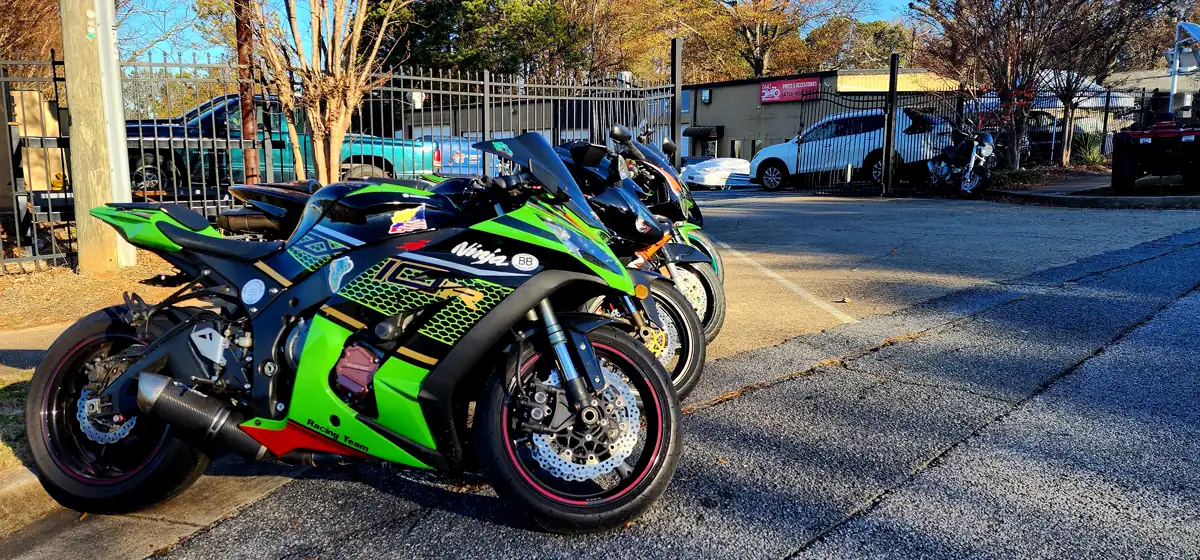
Here it is. If your bike is bone stock, still wearing its original exhaust and airbox, and it pulls cleanly from idle to redline, you probably don’t need a dyno tune. Factory calibrations are far better than they were twenty years ago. That’s why Manufacturers put real engineering hours into them. We’re not going to pretend otherwise just because we happen to own the equipment.
Either way the moment you change how the engine breathes, though, all of that shifts. In short a slip-on exhaust, a full system, a high-flow filter, different gearing, even a big swing in temperature or elevation from where the map was written — any one of those pulls the engine away from what the factory assumed. At the same time that’s the point where stock stops being neutral and quietly becomes a compromise.
A factory map is a very good guess about a bike that no longer exists. Yours changed.
So the short version is this. Stock wins when nothing has changed. Tuning wins the moment something has. As a result most riders live somewhere in the middle, which is exactly why a five-minute conversation beats a blanket recommendation from anybody.
What a dyno actually measures
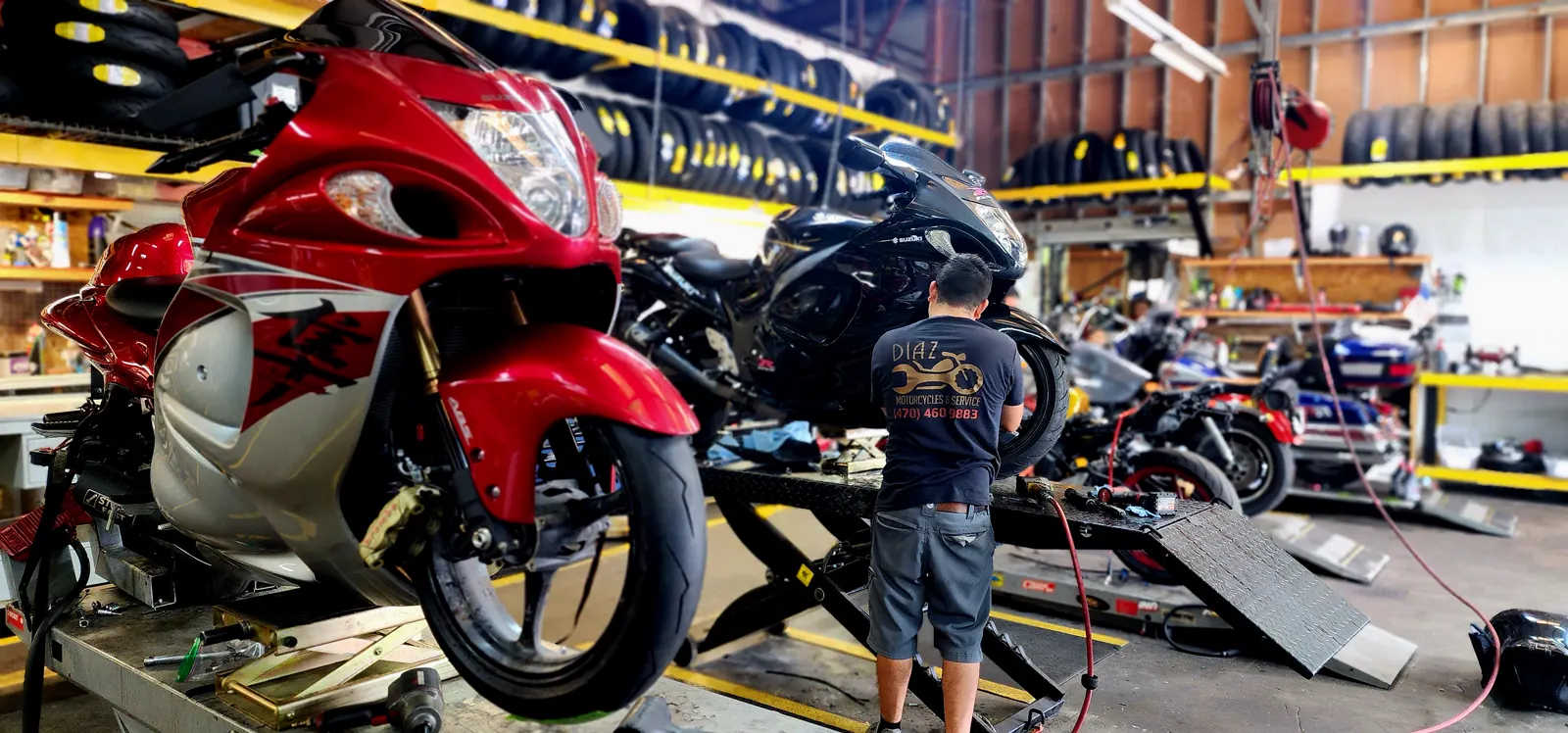
A dyno is a heavy roller set into the floor. We strap your bike down, spin the rear wheel against that roller, and the machine measures how hard your engine can turn it. That’s the whole idea. No magic involved. The roller weighs a known amount, so how quickly your bike gets it moving tells us how much twist the engine makes at every single point in the rev range.
Meanwhile, a probe in the exhaust reads what’s coming out the back, which tells us the air-to-fuel mix at each of those same points. Together they paint a picture of your engine’s real behavior instead of a factory average. It’s less a scoreboard and more a full physical.
- How much pull the engine makes at every rpm, not just at peak
- Whether the fuel mix is thin, heavy, or right where it belongs
- Where the flat spots and hesitations actually live
- Whether the engine is running hotter than it should under load
- Whether a part you already paid for is doing anything at all
That last one settles the dyno vs stock East Cobb debate faster than anything. A friend we helped had bolted on an exhaust and a filter and felt almost no difference. The dyno showed why in minutes: his fueling was fighting the new hardware. He hadn’t wasted anything — he just hadn’t finished the job yet.
Lean, rich, and what those words mean for you
Lean means too much air and not enough fuel. A lean bike may surge at steady throttle, pop on decel, run hot, and feel snatchy when you crack the throttle open. Rich is the opposite problem — too much fuel for the air available. That one feels lazy and heavy, smells strong, fouls plugs, and can wash oil off the cylinder walls over time. Neither is a catastrophe, and both are completely fixable. If you want the longer explanation of the lean side, we already wrote up what usually causes it.
Here’s the part that actually matters to you in the saddle. A tune doesn’t only add power at the top. Mostly it cleans up the middle — the part you truly use pulling out of a neighborhood onto Roswell Road, or rolling on in third gear. Smoother pickup. Less snatch on and off the throttle. Less heat between your knees at a long light. Friends we’ve helped usually tell us the bike feels new well before they mention it feels fast.
Now, the part nobody mentions until you’re already paying for it.
Not every “tune” is the same work. Some shops load a canned file — a generic map written for a bike like yours, not for your bike. It’s quick, and it’s better than nothing at all. But it’s still a guess, just a more educated one. A genuine custom tune means your machine on the rollers, with your parts, your fuel and today’s air, with runs and adjustments repeated until the numbers stop moving. Those two very different jobs get sold under the same word, and that catches people off guard.
What changes the answer
A handful of things flip our recommendation one way or the other, and most of them you can check standing in your own garage tonight.
| Your situation | What we'd tell you |
|---|---|
| Fully stock and running clean | Stay stock. There's nothing to gain yet. |
| Slip-on or full exhaust added | Tune it. The factory map no longer fits the bike. |
| Air filter or intake changed | Tune it, or at minimum get it measured. |
| Surging, popping, or hot at idle | Get it on the dyno before you buy any parts. |
| Sat all winter and feels off | Sort fuel and basic service first, then decide. |
| Chasing a feel, not a number | Tune it. This is what tuning does best. |
Notice that half of those rows point away from doing anything at all. That’s on purpose. A dyno is a measuring tool first and a performance tool second.
Who should genuinely stay stock
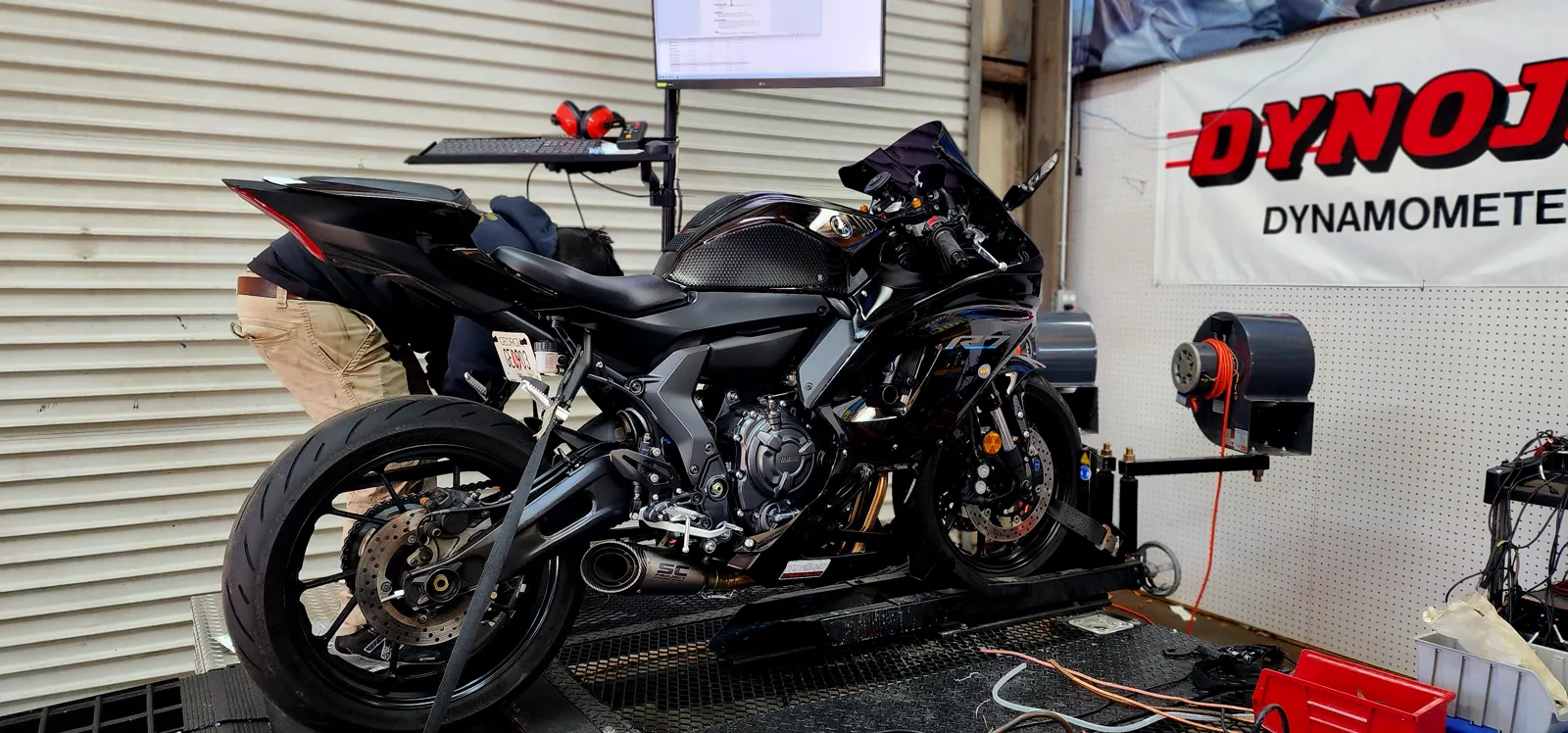
More riders than you’d expect. If your bike is fairly new, untouched, under warranty, and it pulls cleanly through the whole range, stock is the right call and we’ll tell you so. Same goes if your riding is mostly short Saturday loops and a run out to dinner. There’s no trophy for owning a tuned bike you can’t feel.
A neighbor over in Highland Pointe, in the Lassiter district, brought us a low-mileage sport-tourer convinced it needed help. It didn’t. We checked it over, handed the keys back, and told him to go enjoy the afternoon. That’s a good day at the shop.
Who should absolutely get it tuned
If you’ve added an exhaust, changed the intake, moved your gearing, or you’re fighting a flat spot you can feel through your wrist, tuning is the answer and waiting just means more months of riding around the problem. The same goes for a hungry engine — a big twin bagger, a liter sportbike, a European ADV that somebody already flashed once before you owned it. Those bikes reward real measurement.
It matters even more on bikes that sit. East Cobb garages are full of beautiful, low-mileage machines, and stale fuel plus a map that was never right for the current setup makes for a grumpy first ride of the season. Riders an hour north run into the very same thing, and we covered what Cartersville riders run into if you’d like the comparison.
How we handle it here
Our approach is deliberately boring. Baseline runs happen first, so there’s a record of what the bike did before anyone touched it. Then we read the mixture across the full range, make changes, and run it again. On modern fuel-injected bikes we flash the ECU directly. On others we fit a Power Commander or similar piggyback where the factory won’t let us in. Carbureted machines get jetting and needle work, measured the same way.
We’ll also tell you when the honest fix isn’t a tune at all. A stretched chain, a clogged filter, a tired battery or a dragging brake will make any bike feel gutless, and no map on earth fixes those. Here’s what we take care of here, and here’s what the work covers if you’d like the full walkthrough before committing to anything.
Every session ends with a printout and a plain explanation of what we saw and what we changed. This crowd reads, asks which parts we’re using, and wants the reasoning behind the work. Honestly, that makes our job easier.
QUICK CHECK
Changed the exhaust, intake or gearing? Tune it. Everything factory and running clean? Go ride it. Not sure which camp you’re in? Bring it by and we’ll measure before anyone commits to anything.
The East Cobb part of this
There’s no motorcycle dealership inside East Cobb. Every one of them sits out on Cobb Parkway or South Cobb Drive, and several close Sunday and Monday — which, of course, is precisely when a weekend rider discovers something’s wrong. The nearest independent to most of the community is The Motor Cycle Shop LLC on Shallowford Road, roughly five miles out. We’re actually inside East Cobb, on Barnes Mill Road off Roswell Road, so for most folks it’s a short hop: under fifteen minutes from nearly anywhere, about ten from the Johnson Ferry and Lower Roswell hub.
Local pavement plays into this more than people think. East Piedmont Road has been on Cobb DOT’s list for resurfacing work, and plenty of older subdivision streets around Holly Springs Crossing, in the Murdock Elementary district, still carry patched sections and sunken utility cuts. Add a heavy tree canopy that holds wet leaves and pine straw long after the rest of the county has dried out, and you get bikes living in low-gear, low-speed conditions their factory maps never assumed. That’s a genuine reason mid-range manners matter more around here than peak numbers ever will.
The good riding sits close, too. Units of the Chattahoochee River National Recreation Area are minutes from most driveways — fifteen park units spread along forty-eight miles of river, protected since 1978. An hour north, the run past Red Top Mountain and Lake Allatoona toward Canton gives you about fifty-three miles of sweepers, twisties and honest elevation change. That’s the ride where a properly fueled bike stops feeling like a chore. Marietta Square, roughly ten minutes west, is where most people end up for dinner afterward.
It’s worth saying that the Indian Hills side of East Cobb tells the story well. It’s a master-planned golf community of about 1,680 homes on large wooded lots, with home values running well above the Cobb County average and an optional private club membership. Bikes there are second and third vehicles, garage-kept, low mileage, ridden on purpose rather than out of necessity. A bike like that doesn’t need more power. It needs to behave beautifully the four or five times a month it gets used.
And then there’s the part that’s just about riding again.
Numbers are fun. Feel is better. The riders who are happiest a month later are rarely the ones chasing a bigger figure — they’re the ones who stopped fighting their own throttle. Steady cruising that doesn’t hunt. A clean pull out of a corner with no stumble. Less heat at a July stoplight. You notice all of that on the third ride, not the first.
So what do we actually recommend?
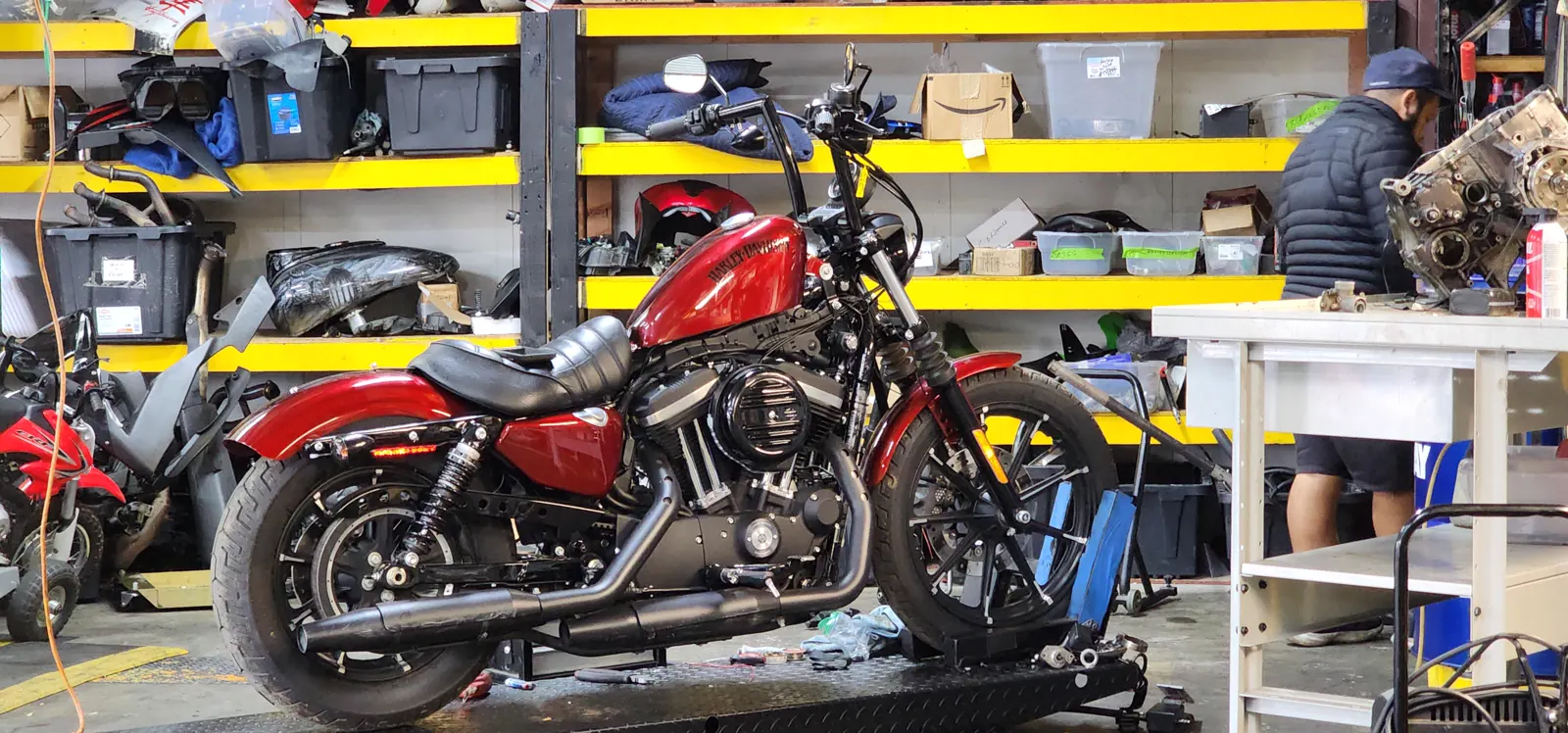
Compressed to one line, the whole dyno vs stock East Cobb decision is this: leave it stock until something changes, then tune it properly the first time. Half-measures tend to cost more in the long run, because a canned map on modified hardware can hand you fresh problems and no data to explain them. Measure first. Change second. Ride third.
And the one situation where stock clearly wins? A clean, unmodified, well-serviced bike ridden gently on weekends. That rider should skip the dyno entirely and put their attention into tires, suspension setup and seat time instead. Dunlop’s technical resources are a solid starting point on the tire side, and the Georgia Motorcycle Safety Program is worth a look if it’s been a few seasons since your last class. Georgia doesn’t allow lane splitting either, so smooth low-speed control in traffic is a skill worth more than any map.
Whichever way you land, you should walk out of that conversation clear-headed rather than upsold. That’s the whole point of having the equipment in the building. We can just show you what your bike is doing, and then the choice belongs to you.
Questions East Cobb riders ask us
Is a dyno tune actually worth it if my bike already runs fine?
If it’s fully stock and pulls cleanly everywhere, probably not yet. Factory maps on modern bikes are genuinely good. The value shows up once you’ve changed the exhaust, the intake or the gearing, or once the bike develops a flat spot you can feel. We’d rather measure and tell you it’s fine than sell you work you don’t need.
Which should I pick — stock or a custom tune?
Stock if nothing on the engine has been altered and it runs clean. Custom tune the moment something has been altered, or if the bike surges, pops on decel or runs hot. If you’re genuinely unsure, a baseline dyno run answers it in one afternoon, and there’s no obligation to change anything afterward.
What's the real difference between a canned map and a custom tune?
A canned map is a file written for a bike like yours by somebody who never met your bike. A custom tune is your machine on the rollers with your parts, your fuel and today’s air, adjusted and re-run until the readings settle. Both get called tuning. Only one is measured on your specific engine.
Does tuning shorten engine life?
A good tune usually does the opposite. Running lean makes an engine hot and stressed, and correcting the mixture takes that stress away. What shortens engine life is a bad map applied blind with no measurement behind it. That’s exactly why we baseline first and verify afterward.
Which choice is right for my kind of riding?
Around East Cobb, most riding is weekend loops, north Georgia trips and a run to dinner. That means mid-range smoothness matters far more than a peak figure. If your bike is stock and polite, enjoy it. If it’s modified or grumpy at low speed, a tune will change how every one of those rides feels.
Can a tune be undone if I change my mind?
In most cases, yes. We save the original settings before we touch anything, so a flashed ECU can generally be returned to where it started, and a piggyback unit can simply come off. Ask about your specific model when you bring it in and we’ll confirm before any work begins.
We’re based right inside East Cobb and we take care of riders all over the north metro. Folks come to us from Marietta and Roswell, from Sandy Springs and Dunwoody, and from Kennesaw, Acworth and Woodstock up the northwest side. We see plenty of bikes from Smyrna and Vinings on the south end, along with riders coming down from Canton or over from Alpharetta for tuning work. Atlanta riders make the trip too, usually because there’s nowhere closer doing real custom mapping in-house.
LET'S MEASURE IT FIRST
If you’re weighing a tune against leaving your bike stock, bring it to us here in East Cobb and let the dyno settle the argument. We’ll run a baseline, walk you through exactly what your engine is doing, and tell you honestly whether there’s anything worth changing. Text or call us and we’ll find you a spot — most riders are here and back home the same day.
470-460-9883Diaz Motorcycles and Service, LLC · 847 Barnes Mill Road, Marietta, GA 30062