Dyno Tuning Cost in Dallas, GA — What Actually Moves the Number
What a dyno measures, why bikes run lean or rich, and what really sets the price — no guesswork, no invented horsepower.
You roll out of the neighborhood on a cool Saturday morning, headed for the quiet two-lanes on the west side of Paulding, and everything feels great until you crack the throttle coming out of a slow corner. The bike hesitates. Just for a beat. Like it took a breath before it decided to go. Maybe it pops on the way back down through the gears, or the low end feels flat while the top still pulls hard, or it runs hot sitting at a light. That little stumble is what sends most riders searching for dyno tuning cost Dallas shops can give them, and honestly, it’s a smarter question than it first looks.
Here’s the good news right up front. That hesitation almost always has a fix, and the fix usually makes the bike feel better than it did the day you bought it. But the price of that fix depends on your bike, not on a number somebody typed into a search bar last week. So let’s walk through why, in plain words, so you know exactly what you’re paying for before you ever drop the kickstand at our shop over in Marietta.
What a dyno actually measures
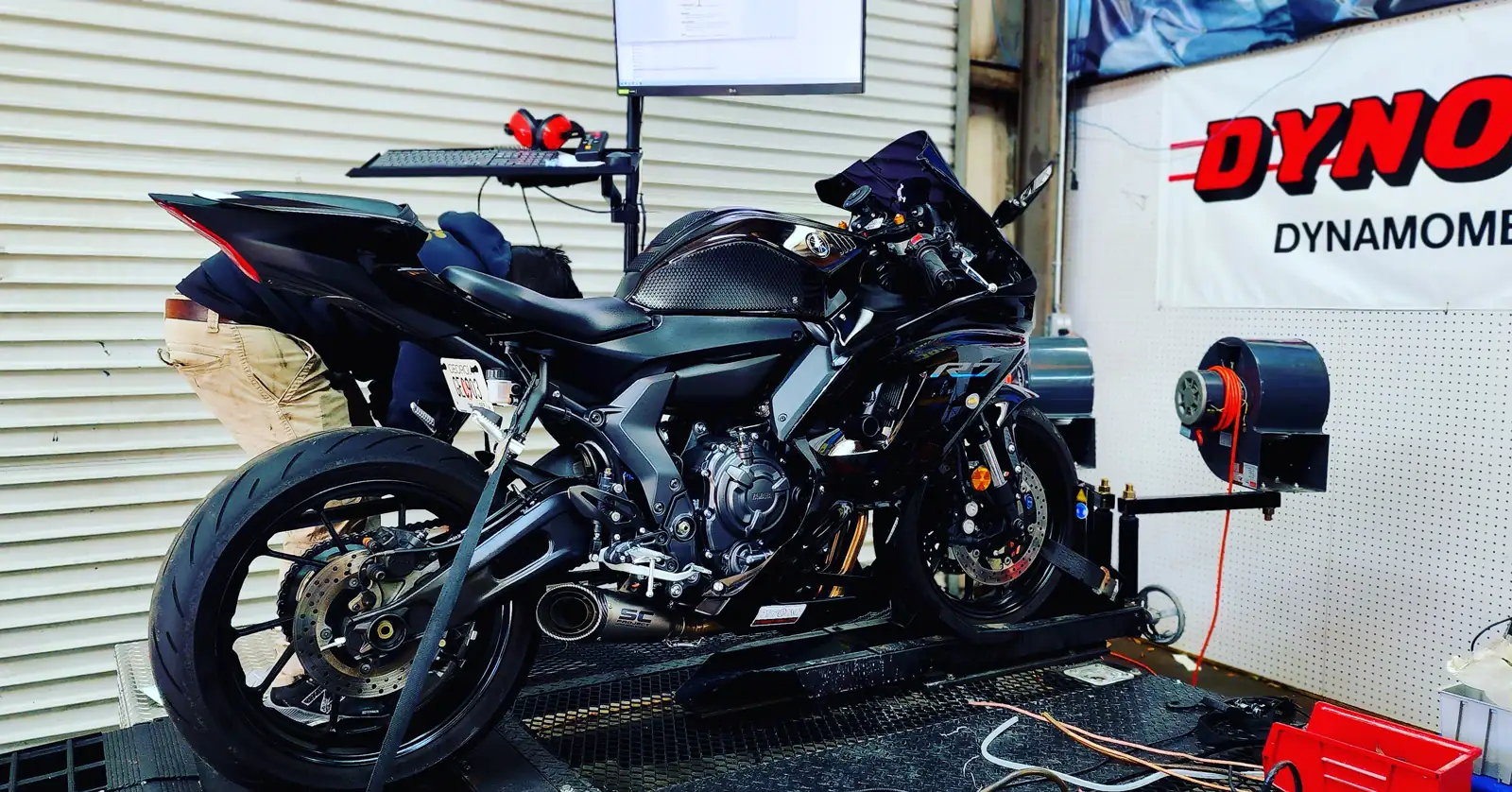
A dyno is a big steel drum that your rear tire spins against. We strap the bike down tight, get the wheel sitting on the roller, and run the engine up through the gears the same way you would out on the road. Sensors read how much force that spinning wheel puts out at every point in the rev range. At the same time, a probe in the exhaust reads the air-fuel mix coming out the back. So the dyno isn’t guessing, and neither are we. It’s watching your engine work in real time and writing down exactly what it sees, moment by moment.
That air-fuel reading is the heart of the whole thing. Every engine wants a certain balance of air and gas to burn clean and make power. When the mix has too much gas for the air moving through, we call that running rich. When it has too little gas, we call that running lean. Both feel wrong in their own way, and both leave power and smoothness sitting right there on the table.
Lean, rich, and why your bike feels the way it does
So why would a bike run lean or rich in the first place? Sometimes it comes from the factory that way. Bikes are built to pass strict emissions and noise rules, so plenty of them leave the line running lean and choked down on purpose. That protects the maker, but it can leave you with a flat spot, a snatchy throttle, or extra heat cooking your right leg in stop-and-go traffic.
Other times you changed something. A new exhaust, a high-flow air filter, a different sprocket, even a fresh set of pipes changes how much air moves through the engine. Now the old fuel settings don’t match the new airflow. The bike is trying to cook a recipe that no longer fits the ingredients. That mismatch is exactly what you feel as a stumble or a surge.
And it’s worth saying plainly: neither lean nor rich means your engine is broken. It just means the instructions it’s following don’t match the air it’s actually breathing. A lean bike often feels snappy but stumbles and runs hot. A rich bike feels lazy, fouls plugs, and can smell heavy at a stop. Most bikes live somewhere in between — a little off in a few narrow spots rather than way off everywhere. That’s normal, and it’s the kind of thing a dyno sorts out fast.
We're done when your bike is right, not when a timer says so.
The internet will tell you one thing. The bikes tell us another. Search around and you’ll find folks swearing every bike of a certain model needs the exact same tune, or that a tune is just a number you buy off a shelf and bolt on. Then a real bike rolls onto our roller and shows us its own story — its own airflow, its own wear, its own quirks — and that story is never quite the same twice.
How we figure out what your bike needs
This is where the dyno really earns its keep. First we listen to you. You know your bike better than anybody, so we ask what it’s doing and when — cold or warm, low revs or high, steady cruise or hard pull. Then we look it over. We check the plugs, the air filter, the exhaust, and any parts that got swapped along the way. A bike that’s bone stock tells us one thing. A bike with pipes, a filter, and an old map already loaded on it tells us something else entirely.
Then we strap it down and make a baseline run. That first pull shows us the truth about where the fuel mix sits across the whole rev range. We can see the exact spot where it goes lean and makes you stumble, or where it dumps too much fuel and washes out. We’re not throwing parts at it and hoping something sticks. Instead, we’re reading the actual numbers your engine is making, right now, in our bay.
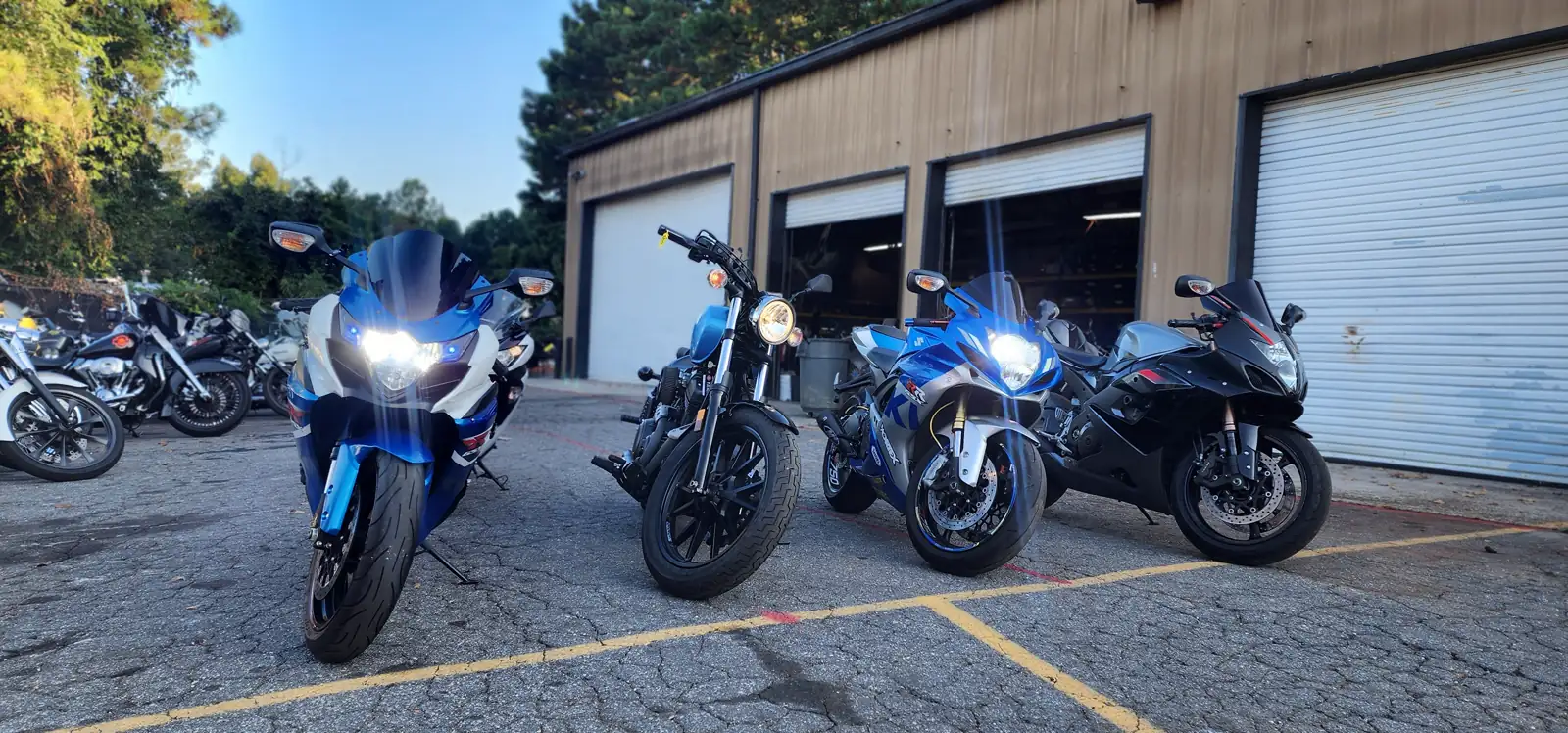
If you want the deeper version of this, we broke down what that service actually involves in its own guide. But the short version is simple. The dyno turns a vague complaint into a clear picture. Once we can see the problem on the screen, we know what to change and why.
What the tune actually changes
A tune doesn’t rebuild your engine. It changes the instructions your engine follows. Every modern bike has a small computer, the ECU, that decides how much fuel to add and when to fire the spark. A tune rewrites those instructions to match your exact bike. On many bikes we do that by flashing the ECU directly. On others we add a piggyback unit like a Power Commander that adjusts the signals on the fly. Either way, the goal stays the same: feed the engine the right mix everywhere in the rev range, not just in one lucky spot.
Here’s what that feels like from the seat. The flat spot fills in. The throttle stops snatching and starts rolling on smooth and clean. Heat off the engine usually drops, because it’s no longer running lean and hot. The bike pulls the way it always should have, from just off idle all the way up top. We won’t promise you a magic figure, and we’ll never quote you horsepower we haven’t earned on the roller — but the bike that leaves feels honest, strong, and easy to live with.
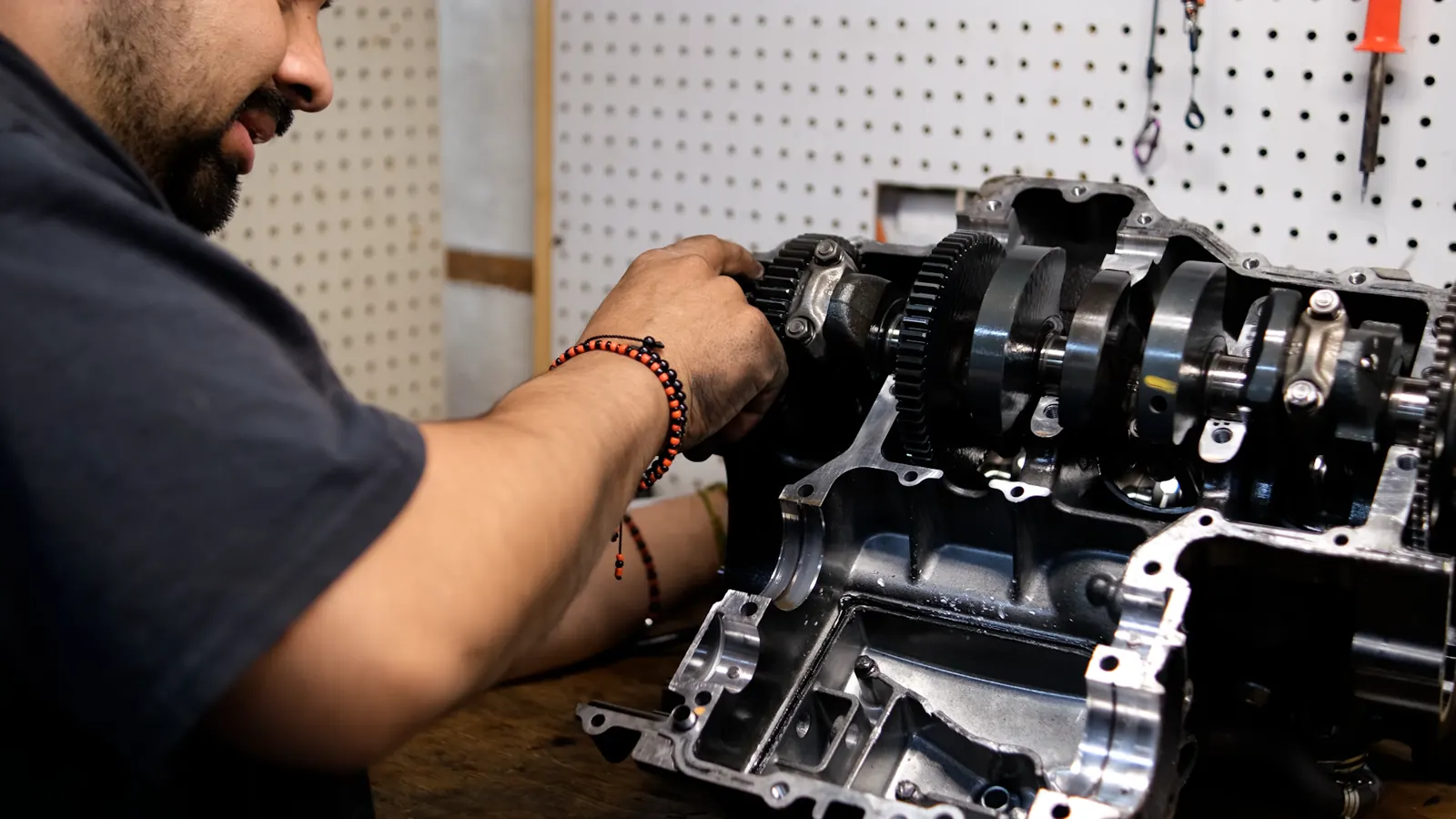
Not every bike needs the same tools, which is a big reason two jobs on the same street can look nothing alike. A stock cruiser getting a mild clean-up map is a different afternoon than a built sportbike with a full exhaust and a fresh cam. If you’re curious about what happens in our bays step by step, we lay the whole process out. And if you enjoy the technical side, here’s the full rundown on it too.
Why one job is bigger than another
So let’s talk about what makes one job cost more than the next. The real dyno tuning cost Dallas riders face comes down to two things, and I won’t pretend I can name a number for a bike I’ve never seen: parts and labor. Parts are the physical pieces — a Power Commander, an exhaust, a filter, spark plugs, whatever your bike actually needs. Labor is our time on the clock: the diagnosis, the dyno runs, the tuning passes, and the road check after.
Access is the quiet part that surprises people. On some bikes the ECU is easy to reach and flash in minutes. On others, the tank and bodywork have to come off just to get to it, and a bike loaded with fairings and accessories takes far longer to open up than a bare naked bike. More time to reach the parts means more labor, even when the tune itself is identical. None of that is a rip-off. It’s simply how long the bike in front of us takes to work on.
Number of dyno pulls matters too. A simple map might come together in a handful of runs. Meanwhile, a heavily modified bike, or one fighting a stubborn flat spot, needs pull after pull as we chase the mix into every corner of the rev range. That’s exactly why we tune to the bike in front of us instead of a stopwatch. We’re finished when it’s right, not when a timer decides it’s time to stop.
WHY WE WON'T QUOTE IT BLIND
An honest shop can’t price a tune sight-unseen, because the price lives in your bike — its parts, its access, and how many pulls it takes to get the mix right. Anyone quoting you a flat number over the phone is guessing, and you’d be paying for their guess.
A quick story, because it makes this concrete. A rider out near Oakleigh Pointe, one of the newer East Paulding neighborhoods built over the last few years, brought us a bike that stumbled every single time he rolled on out of a slow corner. He’d read online that his exact model always needs one specific tune, so he expected a fast, cheap fix. On the roller, though, his bike told a different story. His pipe and filter combo had pushed it lean in one narrow band, right where he felt the hiccup. It wasn’t the map the internet promised. It took a few extra pulls to nail that one spot, and when he rode off, that stumble was simply gone. Same bike, much better morning.
The Dallas, GA piece nobody tells you
Here’s where being in Paulding County actually works in your favor. Dallas, GA doesn’t have its own full-line motorcycle shop with a dyno, so a lot of local riders assume real custom tuning means a long haul. The closest big-name option, Atlanta Harley-Davidson over at 501 Thornton Rd in Lithia Springs, sits about thirty-five to forty-five minutes south. Our shop, on the other hand, is roughly twenty-four to twenty-eight miles east — call it forty to fifty minutes — straight down GA-120, the Charles Hardy Parkway, onto Dallas Highway through West Cobb and into Marietta.
And here’s the kicker for a commuter county. Most of Paulding already drives east into Cobb every single morning. If you’re heading that way for work anyway, dropping the bike off is basically on your route. Whether you’re rolling out of Seven Hills up north, with its big amenity park and rows of tennis courts, or coming from Edenwood over on the east side near the Cobb County line, you’re already pointed the right direction.
We tune bikes from all over the metro, too, not just the west side of town. The same lean flat-spot story shows up everywhere, and riders over in Lawrenceville ask us the very same questions you’re asking right now. A stumble is a stumble, wherever your garage happens to sit.
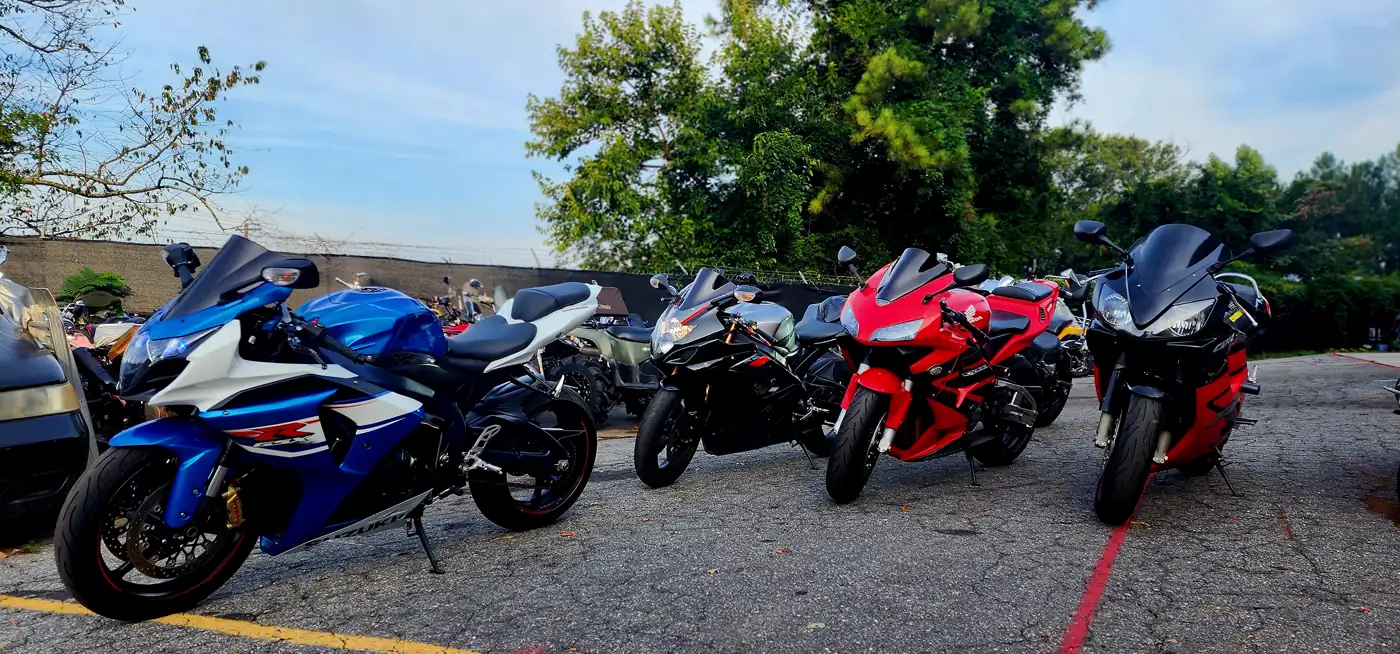
Once your bike is dialed in, Paulding hands you some of the best roads in the metro to feel it. The rural two-lanes out west toward Yorkville, Braswell, and the Polk County line stay low on traffic, rolling, and full of real curves — exactly the kind of road where a clean tune shines. Point it northeast on GA-381, the Dallas-Acworth Highway, toward Acworth and I-75, and you’ve got an easy pull with room to stretch. Even a lap past Burnt Hickory Park, a stop on the Quad County Figure Eight route, feels different when the throttle rolls on smooth.
Plenty of our friends split their weekends between two wheels and none. The Silver Comet Trail Dallas Trailhead runs twenty miles of paved path through Hiram, Dallas, and the Paulding WMA, so the same driveway can launch a ride or a bike ride. If you want to go deeper on the riding-community side, groups like the American Motorcyclist Association are a great place to plug in.
The bottom line, and the relief
So the honest answer about dyno tuning cost Dallas shops should give you is this: it depends on your bike, and that’s actually a good thing. It means you pay for what your bike truly needs, not for a one-size number that fits nobody. When you drop off a bike with a stumble and pick it up running clean, the relief is real. That nagging little hiccup you’d started to just live with? Gone. And you didn’t overpay for somebody else’s guess along the way.
One last practical note before you head out. If your bike’s paperwork or plates need sorting while it’s off the road, the Georgia Department of Revenue handles registration, so you’re covered on that front too. After that, it’s just you, a fresh tune, and a west Paulding morning with the throttle finally doing what you ask.
Questions Dallas riders ask us
What makes one dyno tuning job bigger than another?
Two things drive it: parts and labor. A stock cruiser getting a mild clean-up map is a quick afternoon, while a modified sportbike with a full exhaust needs more parts, more time to reach the ECU, and more dyno pulls to get the mix right. Your bike sets the size of the job, not a generic estimate.
Why can't you just quote me over the phone?
Because we haven’t seen your bike yet. The price lives in what parts it needs, how hard the ECU is to reach, and how many pulls it takes to dial in the fuel mix. Any shop that gives you a flat number sight-unseen is guessing, and you’d end up paying for that guess.
What's included in a dyno tune?
We listen to what your bike is doing, look it over, then strap it down and make a baseline run to read the air-fuel mix. From there we adjust the ECU or a Power Commander across the rev range and re-run it until it’s clean. A road check afterward makes sure it feels right where you actually ride.
How long does a tune take?
It depends on the bike. A simple map can come together in a handful of pulls, while a heavily modified bike fighting a stubborn flat spot takes more passes. We tune until it’s right rather than to a stopwatch, so we’ll give you a realistic window once we’ve looked it over.
Is most of the cost parts or labor?
That varies bike to bike. Some tunes are mostly labor — our time on the diagnosis, the dyno runs, and the tuning passes. Others lean more on parts, like a Power Commander or an exhaust your bike needs first. We’ll break it down clearly so you know what’s going toward each.
My bike is stock — do I even need a tune?
Maybe. A lot of bikes leave the factory running lean to pass emissions, which can cause a flat spot or extra heat. A dyno run shows us whether yours is one of them. If it’s already happy, we’ll tell you straight and won’t sell you work you don’t need.
We tune and service bikes for riders all across the western arc of metro Atlanta. That means folks coming from Hiram and Powder Springs, up through Acworth and Kennesaw, and over from Douglasville, Villa Rica, and Cartersville. We also see plenty of riders from Rockmart and Taylorsville, the rural stretch out toward Braswell and Yorkville, and of course right here around Marietta. Wherever your garage sits, if your bike’s got a stumble, we’re a straight shot away.
READY WHEN YOU ARE
If your bike’s got a stumble, a flat spot, or you just want it to feel right again, we’re a straight shot east from Dallas, GA. Text or call Diaz Motorcycles in Marietta and tell us what your bike’s doing out on the road. We’ll get it on the dyno and tell you exactly what it needs — no guesswork, and no invented horsepower.
470-460-9883Diaz Motorcycles and Service, LLC · 847 Barnes Mill Road, Marietta, GA 30062