Dyno Tune vs Stock Douglasville — The Real Answer
What a dyno really measures, why your bike runs lean or rich, and how to pick between leaving it stock and getting it mapped.
Either way you washed the bike Friday night and set the alarm early. In short Saturday’s plan was simple — coffee first, then a run out toward the good curves before the July heat rolled in. At the same time you thumbed the starter, rolled to the end of the street, and the bike coughed, surged, then started running hot at the very first red light. So much for the ride. As a result that little stumble is the exact moment the dyno tune vs stock Douglasville question stops being something you read about and starts being your ruined Saturday.
On the other hand here’s the good news, right up front. A bike that runs rough at a stoplight is not a bike that’s broken for good. Most of the time it’s just breathing the wrong mix of fuel and air. That’s a fixable thing, and it’s fixable in a way that makes the bike feel brand new under you. So let’s walk through it together — no jargon, no pressure. Just what’s happening, and what your two honest choices really are.
What lean and rich actually feel like
Every engine wants a certain blend of fuel and air. Too little fuel for the air coming in, and we call that lean. Too much fuel, and that’s rich. You don’t need a chart to feel either one. A lean bike runs hot, snaps and pops on deceleration, and sometimes surges at a steady throttle like it can’t decide what it wants. A rich bike feels lazy and soft, fouls plugs, and smells like a gas can when you shut it off.
Neither one is the end of the world. But both steal the thing you actually paid for — a smooth, willing bike that pulls clean when you crack the throttle. And when a bike surges at part throttle, that first mile out of the neighborhood turns into a chore instead of the fun part. That’s the whole reason your Saturday fell apart before it started.

Why your bike runs lean or rich in the first place
Bikes leave the factory with one map meant to fit every rider in every place. That map has to pass strict emissions rules, so most stock bikes ship a touch lean from the start. It’s a safe, one-size-fits-most guess. The trouble is, your bike doesn’t live in a lab. It lives here, in Douglas County heat and pollen and stop-and-go traffic.
Then you change things, sometimes without even meaning to. A new exhaust lets the engine breathe out easier. A fresh air filter lets it breathe in harder. Even a clogged filter after pollen season shifts the balance the other way. Elevation, temperature, and humidity all nudge it too. So the map that felt okay when the bike was new slowly drifts off, and the engine ends up guessing. When the guess is wrong, you feel it as heat, surge, or that flat spot right off idle.
None of that means you did anything wrong. It just means your bike is asking for a recipe that matches how it’s built right now, not how it left the crate two owners ago. That’s a good problem to have, because it’s the easy kind to fix.
THE SHORT VERSION
Lean runs hot and surges. Rich runs soft and fouls plugs. Both come from the factory map no longer matching your bike, your mods, and our west-metro weather.
What a dyno actually measures
A dyno is basically a treadmill for your motorcycle. We strap the bike down on a roller, and you or one of our techs runs it through the gears while it stays right there in the shop. The roller reads how hard the engine is really working. At the same time, a sniffer sits in the tailpipe and reads the exhaust, so we can see the fuel-and-air mix at every single point — idle, cruise, and full pull.
That’s the part most people miss. A dyno isn’t just about a big number to brag about. Its real job is to show us the truth about how your engine behaves at the exact throttle spots you use every day. The part-throttle cruise where the bike surged on you? We can see it plain as day on the screen, and we can see whether it’s lean, rich, or right.
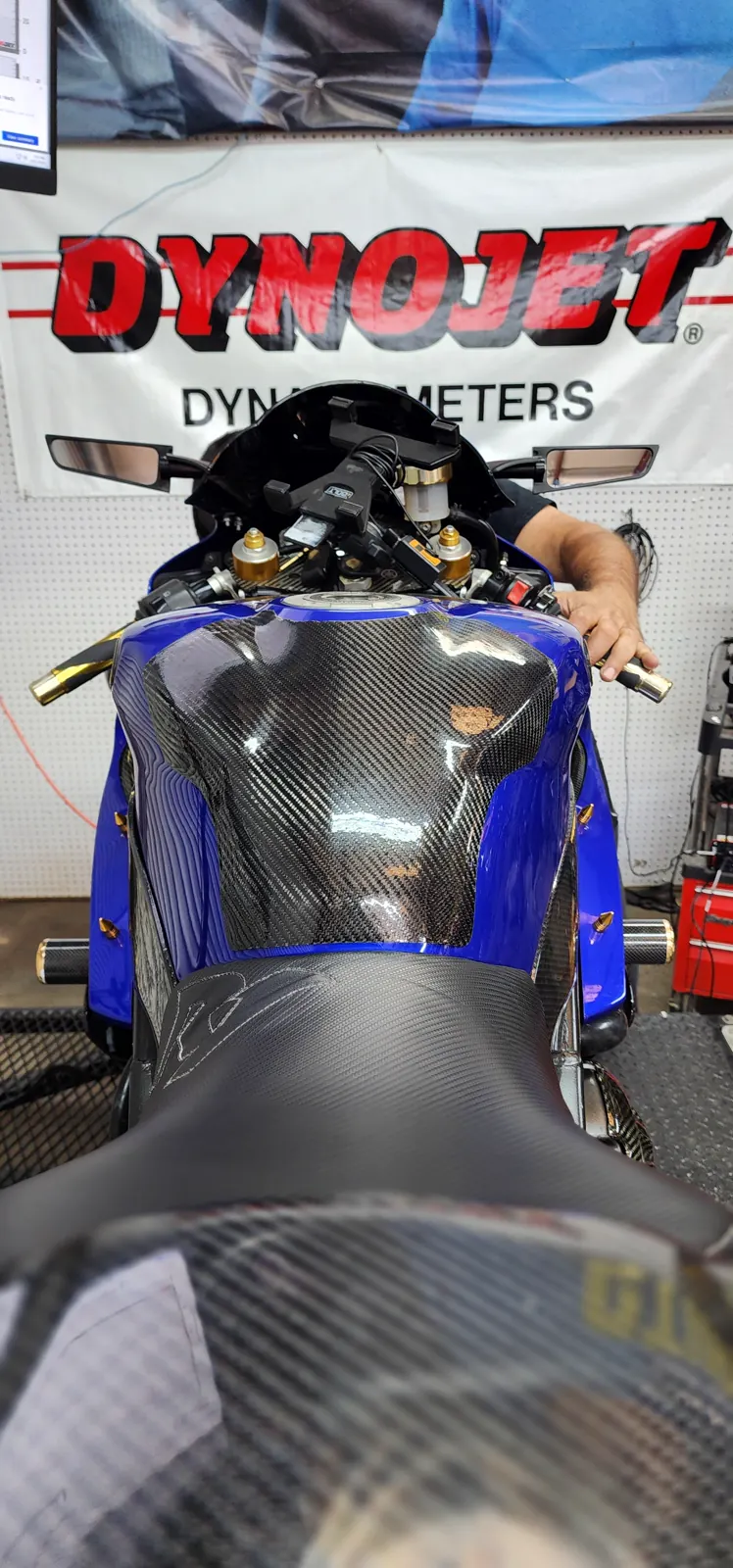
Here’s where a lot of shops fall short, and it matters for your choice. Reading the exhaust and then hand-building a custom map for your specific bike is real work that takes a real dyno and someone who lives on it. Plenty of the multi-line dealers around Cobb Parkway don’t do that in-house at all — they’ll bolt on a part, load a generic file, and call it a tune. That’s not the same thing, and your throttle hand can tell the difference. Most people stop reading here. That’s the expensive mistake.
Because the difference between a canned file and a custom map is the difference between a bike that’s close and a bike that’s dialed. A canned file is someone else’s average. A custom map is yours, built from your bike’s own exhaust readings, on our floor, one pull at a time. If you want to see everything we cover, it all starts on that roller.
What the tune actually changes in how the bike feels
When we tune, we’re editing the instructions your engine follows. On a fuel-injected bike, that means an ECU flash or a piggyback like a Power Commander that fine-tunes the fuel and timing. On older carbed bikes, it’s jetting and needles doing the same job the old-fashioned way. Either path, the goal is identical: give the engine the right amount of fuel for the air it’s actually pulling, everywhere in the rev range.
So what does that feel like from the saddle? The surge at a steady cruise smooths out. That’s why the snatchy on-off throttle gets gentle and predictable. The bike runs cooler at a light, which your left leg will thank you for in August. And that flat spot down low fills in, so the bike pulls clean from the moment you roll on. Riders always say the same thing — it feels like the bike they thought they bought.
We’re not chasing invented numbers here, and we’d never promise you a made-up horsepower figure. What we chase is rideability — the bike being smooth, cool, and willing exactly where your right wrist lives most of the day. If you’re curious how the work adds up on a real bike, we lay that out in how the work adds up, no surprises.
Stock vs tuned — who each one is genuinely right for
Now the honest part, since you came here for a real answer and not a fence-sit. Both choices are legitimate. Leaving your bike stock is the right call when the bike is bone-stock with no bolt-ons, runs smooth already, and you ride mostly gentle around town. If nothing’s changed and nothing feels wrong, a factory map that’s slightly lean but running fine is a perfectly good place to be. Save your energy for tires and chain lube.
A tune becomes the clear winner the moment any of a few things are true. You’ve added an exhaust, an intake, or both. The bike surges, pops, or runs hot. Or you simply want the smooth, cool, willing feel that a matched map gives you. In those cases, stock isn’t saving you anything — it’s just leaving performance and comfort on the table. Here’s the plain recommendation: if you’ve modified the bike or it feels rough, tune it; if it’s stock and happy, ride it.
| Leave it stock when… | Tune it when… |
|---|---|
| Bike is completely stock | You added exhaust or intake |
| It runs smooth and cool | It surges, pops, or runs hot |
| You ride gentle around town | You want a cooler, smoother feel |
| You're on a tight timeline | You ride the twisties hard |
And to name the situation where stock honestly wins: if your bike has zero mods, runs clean, and you’re saving up for something else this season, don’t let anyone talk you into a tune you don’t need yet. A dyno tune vs stock Douglasville decision should follow your actual bike, not a sales pitch. We’ll tell you to keep your money and ride if that’s the truth of it.
What this looks like for a Douglasville rider
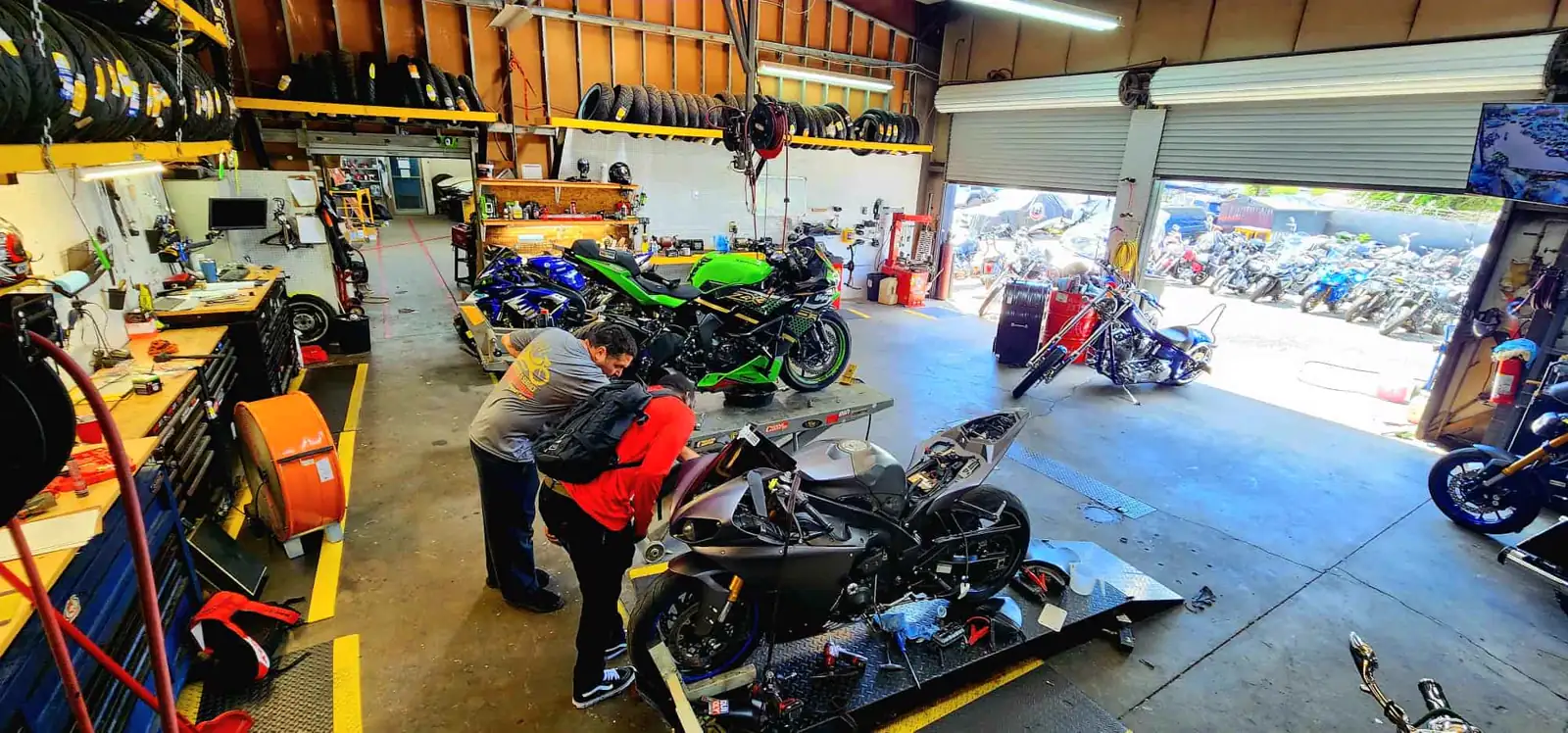
Douglasville sits right in the heart of metro Atlanta’s west-side riding scene, and honestly it’s about as bike-heavy as this side of town gets. The shops around here are real, too. Down at 6401 Spring St, Southeast Motorcycle carries franchise lines like Aprilia, Moto Guzzi, CFMOTO, and Vespa, plus a wide pre-owned floor, and it pulls riders from five states. It’s a genuine destination. What it isn’t, though, is a home for the Japanese sportbike crowd looking for real in-house custom mapping.
That’s the gap we fill. Whether you keep it close to home on the 6.61 winding miles of GA-166 southeast toward the Chattahoochee — the best twisty run in Douglas County — or you’re carving out on Bill Arp where GA-5 crosses I-20 down at Exit 34, a bike that pulls clean makes every one of those miles better. A surging engine ruins a good road faster than anything.
The riders we help here come from every corner of the county. A neighbor in Brookmont, where the newer contemporary homes come with pools and a fitness center, might roll a fresh sportbike over. Somebody from established Anneewakee, tucked in among the woodlands and creek beds, might bring a bagger that’s due for some love. And plenty of folks first meet us after a bike night or a show weekend down by O’Neal Plaza, downtown’s outdoor event spot, where a rough-running bike stands out for all the wrong reasons.
Getting to us is easier than the map makes it look. Skip the I-20 east to I-285 north headache — that interchange is one of Georgia’s worst for traffic, and you’ll sit in it. Instead, take Thornton Road, which is GA-6, north to the East-West Connector straight into Marietta. It’s roughly 28 to 32 miles and usually 40 to 60 minutes, and it’s a far calmer ride than the interstate slog. The last piece is the one people underestimate.
The part riders forget: your bike changes the answer
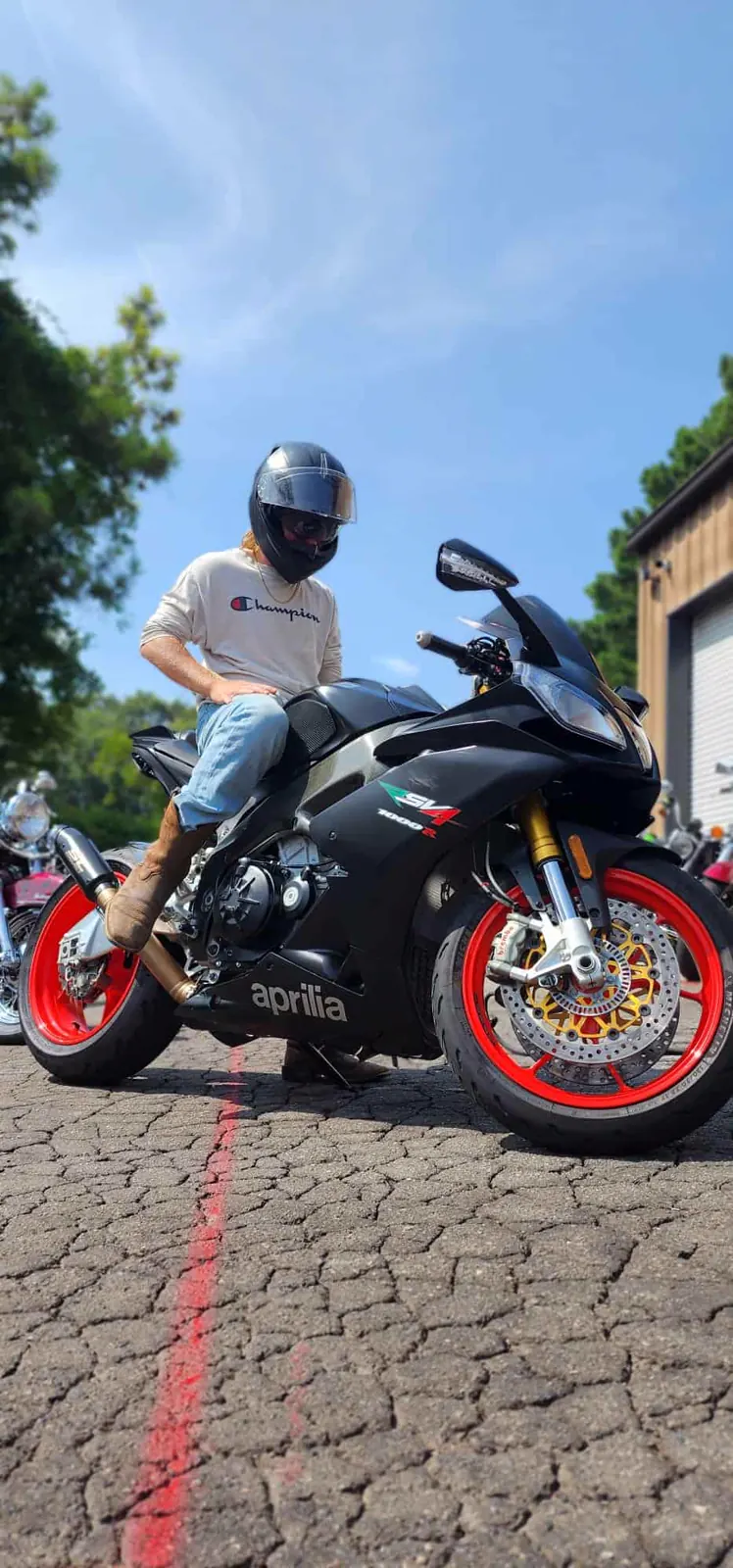
That last piece is this — the kind of bike you ride shifts the whole decision. A high-revving Japanese sportbike, like an R6 or a Hayabusa, lives up top where a lean stock map hurts the most, so it usually gains the clearest, most obvious benefit from a real tune. There’s a reason we wrote a whole piece on what that service actually involves for those platforms.
A big V-twin bagger is a different story. It spends its life in the low and middle range, so a tune there is more about smoothing out throttle manners and cooling things down than chasing the top end. Both are worth doing when the bike needs it — they just win in different ways. A metric cruiser sits somewhere in between. So when someone asks us flat-out which they should pick, our first question back is always: what are you riding, and what did you change on it?
For a wider look at how weather, wear, and worn tires all play together, RevZilla’s Common Tread is a solid read, and Michelin’s motorcycle tire resources are worth a look since fresh rubber and a clean-running engine are what actually make a road like GA-166 sing. And if you ride the other side of the metro, here’s how this plays out in Smyrna — same idea, different town.
Stock is a factory guess. A tune is your bike's own recipe, read off its own exhaust.
So here’s where you land. If your bike is stock and running happy, ride it and enjoy it. If you’ve added parts, or it surges and runs hot, a tune is the honest fix, and it’ll give you back the smooth, cool, willing bike you wanted all along. Either way, you now know exactly what a dyno reads and why your engine acts the way it does — which means the next time someone brings up a dyno tune vs stock, you’ll already have the real answer in your pocket.
That ruined Saturday? It doesn’t have to happen twice. A bike that’s matched to how it’s built right now starts clean, pulls clean, and turns the ride back into the reason you own the thing. That’s a good feeling, and it’s a whole lot closer than it looks from your driveway.
Questions Douglasville riders ask us
Which lasts longer, a stock map or a custom tune?
Both last a long time when nothing on the bike changes. A stock map holds until you add parts or the weather and wear shift things. A custom tune holds just as well and stays accurate to your exact setup, which is the whole point. If you swap an exhaust or intake later, we’d revisit either one.
Which is right for my kind of riding?
If you ride gentle around town on a stock bike that feels smooth, stock is fine. If you ride the twisties hard, or the bike surges and runs hot, a tune fits better. The honest test is how the bike feels at cruise and low throttle. Rough there means it’s time; smooth there means you can wait.
Can I switch from stock to a tune later, or is it now or never?
You can switch anytime, no rush at all. Plenty of the friends we’ve helped rode stock for a season, added an exhaust, then came in for a matched map once the bike started feeling off. A tune builds on whatever the bike is today, so there’s no penalty for waiting until you actually need it.
Which do you actually recommend?
Plain and simple: if the bike is stock and running happy, ride it. If you’ve modified it or it surges, pops, or runs hot, tune it. We won’t sell you a tune your bike doesn’t need. When it does need one, a custom map on our dyno is worth every mile of the drive.
Does the kind of bike I ride change the answer?
It does, more than most people expect. A high-revving sportbike like an R6 or Hayabusa gains the clearest benefit because a lean stock map hurts most up top. A big V-twin bagger gains more in smooth manners and cooler running down low. Tell us your bike and your mods, and we’ll point you the right way.
Is the drive from Douglasville to your shop worth it?
For real in-house mapping, we think so, since the west-side dealers don’t offer it. Skip the I-20 to I-285 mess and take Thornton Road, GA-6, north to the East-West Connector into Marietta. It’s roughly 28 to 32 miles and about 40 to 60 minutes, and it’s a far calmer route than the interstate.
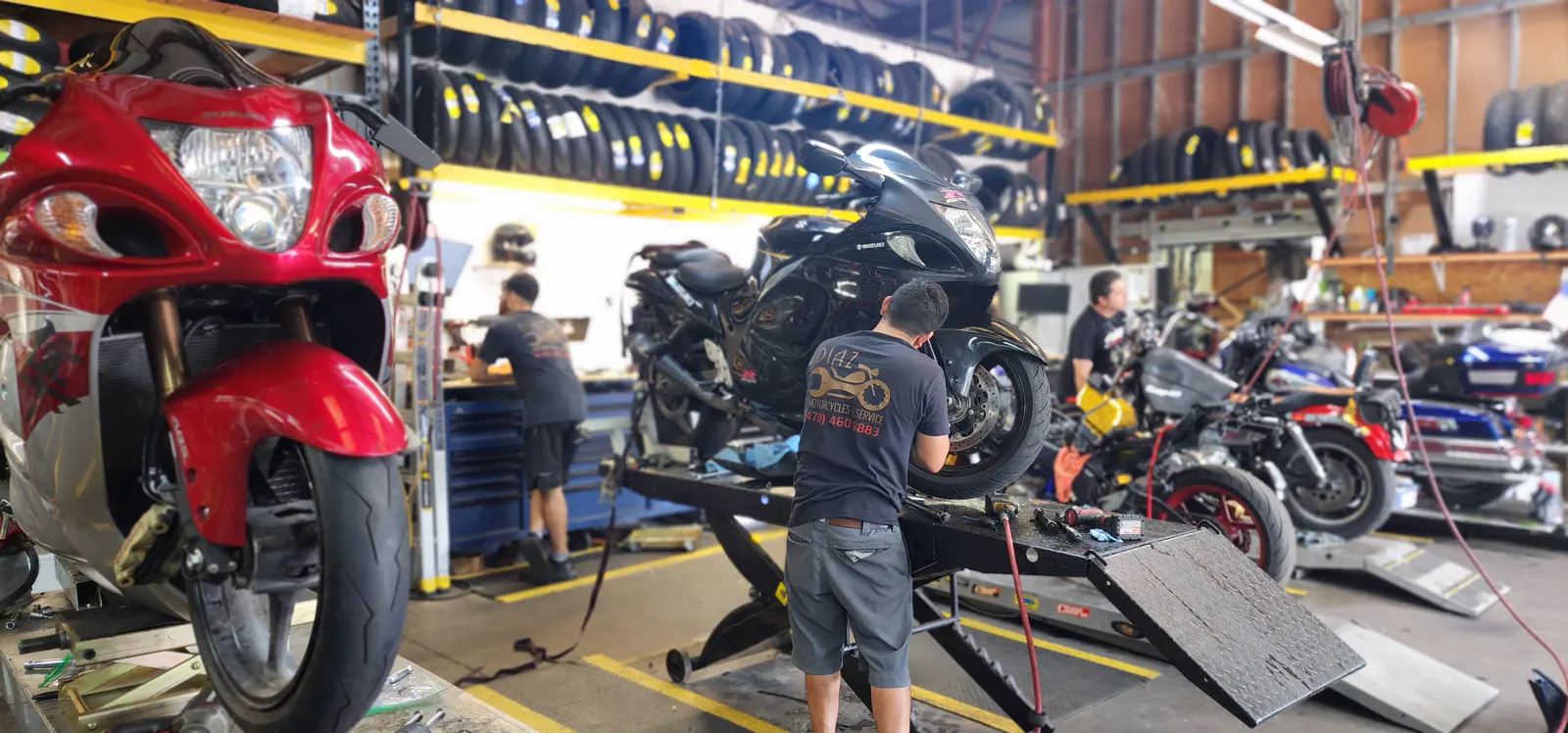
We tune and wrench for riders all across Atlanta’s west metro, so the drive to our Marietta shop is an easy one no matter where you park the bike. We regularly help friends from Lithia Springs, Villa Rica, and Austell, plus Hiram, Powder Springs, and Mableton just up the road. Riders roll in from Dallas, Winston, and Temple too, along with Smyrna, Fairplay, and Douglasville itself. If you’re anywhere in Douglas County or the west side, you’re close enough for a dialed-in bike.
READY FOR A BIKE THAT PULLS CLEAN?
If you’re a Douglasville rider stuck between leaving it stock and getting it tuned, don’t guess — just tell us your bike and what you’ve changed on it. Text us and we’ll give you the straight answer, even if that answer is to keep your money and ride. When a tune is the right call, we’ll build a custom map on our own dyno so your next Saturday starts clean.
470-460-9883Diaz Motorcycles and Service, LLC · 847 Barnes Mill Road, Marietta, GA 30062