Dyno Tune vs Stock Cartersville — What's Right for Your Bike
How a dyno reads your bike, why it runs lean, and the honest call between leaving it stock and dialing it in.
You know the feeling. Plus, you roll on the throttle leaving a light on 41, and right in the middle of the rev range the bike hesitates, like it grabbed a quick breath before it pulled. Meanwhile, Maybe you hear a soft pop and crackle when you snap the throttle shut. Of course, Maybe your right leg runs hotter than it should on a slow crawl through downtown. In fact, those little tells are your engine talking, and it is telling you the fuel mix is off. And that is the exact question behind dyno tune vs stock Cartersville riders keep bringing us: leave the bike the way it left the factory, or strap it to the dyno and dial it in?
The short answer, first
Let’s not bury it. If your bike is bone stock — factory pipe, factory air box, no add-on tuner — and it runs clean, then stock is doing its job. Ride it and be happy. For example, the moment you change how the engine breathes, though, the math changes. Even so, a slip-on, a full exhaust, a free-flowing air filter, a big-bore kit — any of those lets in more air, and the factory fuel map was never written for it. That is the moment a tune starts earning its keep.
So the honest split behind dyno tune vs stock Cartersville is not tune against stock in some empty room. It is whether you have changed anything, and whether the way it runs now bugs you. What’s more, our take for most Bartow riders is short. After that, Left the bike alone and it feels good? Ride it. Added parts, or the fueling feels lean and jumpy? Tune it. There is one case where stock genuinely wins, and we will get to it, because we are not going to pretend otherwise.
QUICK RULE
Changed how your engine breathes? Tune it. Bone stock and running clean? Ride it. The dyno settles the gray area in between with real numbers, not guesses.
What a dyno actually measures
Picture a treadmill built for a motorcycle. We strap the bike down, line the rear tire up on a big steel drum, and let you run it up through the gears while it stays put. The drum spins, sensors read it, and a screen fills in the picture. That, in plain words, is a dyno. It measures how much the engine is really making at the rear wheel across the whole rev range — not on paper, but for real, on your bike, on that day. If you want the full rundown of what you get when you bring it in, we spelled it out on the service page.
Here is the part that surprises people. Most multi-line dealers around here do not do real custom mapping in-house. They will bolt on a part and load a canned file, but a dyno with a tech reading live numbers is a different animal. Some riders even drive south for it. Atlanta Harley-Davidson over at 501 Thornton Rd in Lithia Springs, about 45 to 55 minutes down the road, has the name for it. We just think you should not have to leave Bartow to get it done right.
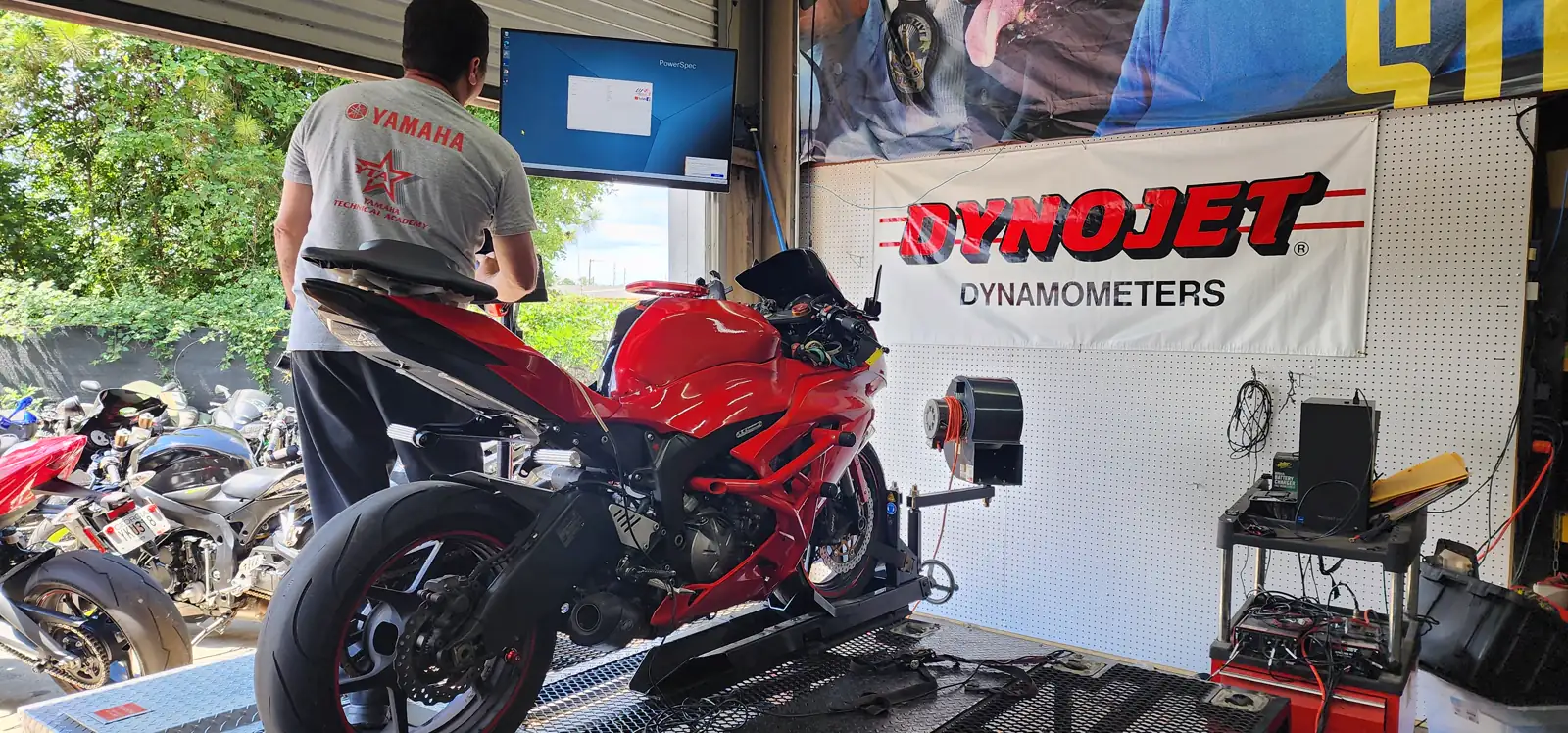
On the screen you get a line that climbs and dips. Flat spots show up as dips. A lean stumble shows up as a hollow where power should be smooth. We are not chasing a bragging number for the internet. Instead, we are chasing a clean, even pull from the bottom to the top, so the bike does exactly what your wrist asks the instant you ask it.
Why a bike runs lean or rich
Every engine wants a certain mix of air and fuel. Too little fuel for the air coming in, and it runs lean. Too much fuel, and it runs rich. Lean is the one that pops and crackles on a closed throttle, runs hot, and can feel snatchy off idle. Rich is the one that smells like raw gas, fouls plugs, and feels lazy and soft. Your nose and your right leg catch both long before any gauge does.
So why does a stock bike drift lean in the first place? Factories tune for rules, not for your ride. They set the map to pass emissions and to stay safe for every bike on every road in every climate. That usually means a little lean here and a rich patch there. Add a louder pipe and a better filter, and the lean spots get worse, because now even more air is showing up with the same factory fuel.
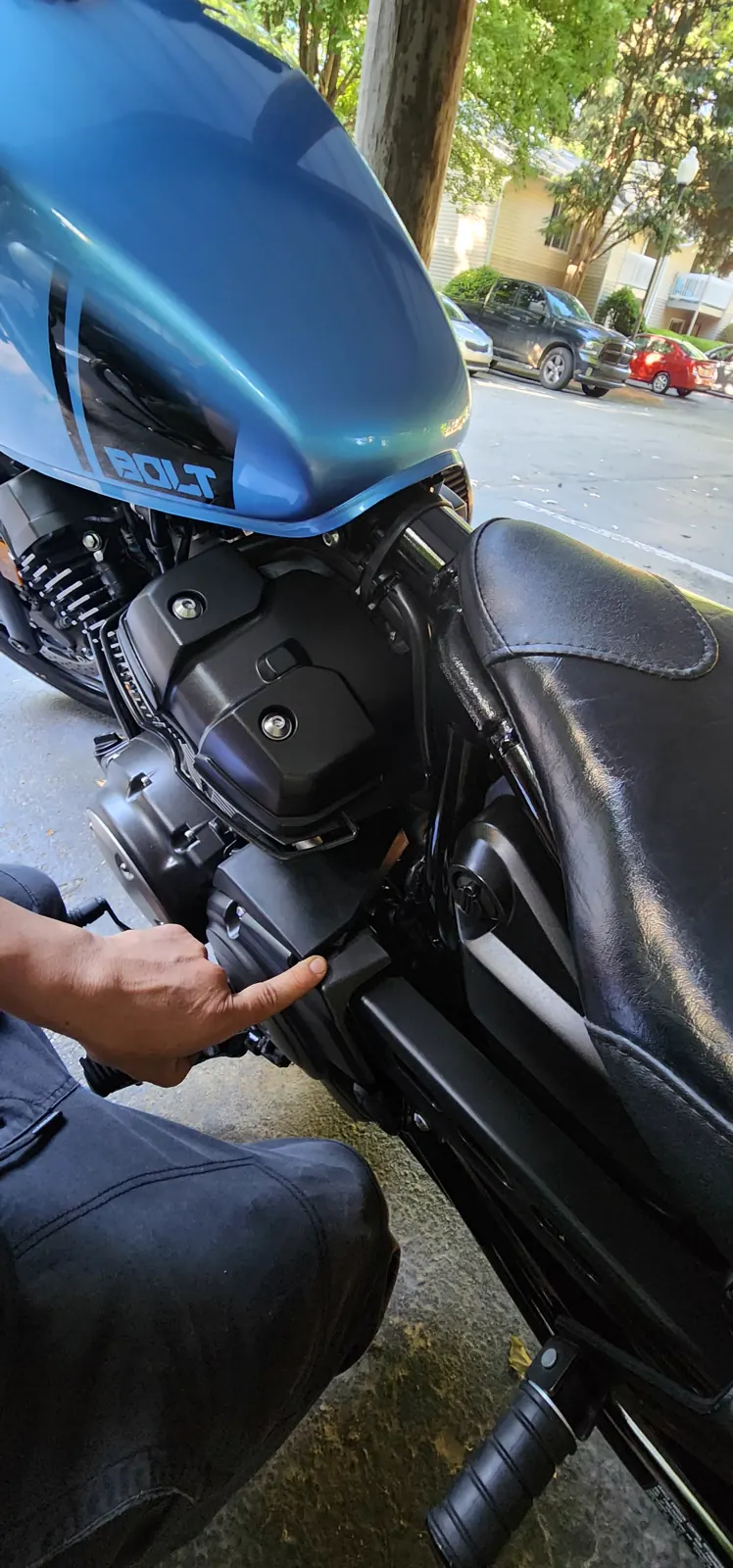
The timing on this matters more than the fix does. Here is what we mean. The best moment to tune is right after you change parts, before you have put a season of hard miles on a lean setup. A lean engine runs hotter, and heat is what wears an engine out early. Tune it when the parts go on, and you protect the motor from day one. Wait a couple of summers, and you have already paid for it in extra heat you cannot get back. So the fix is the same either way — the clock is the difference.
What we check on the dyno
When your bike is on the drum, we are reading the air-fuel ratio at every point you actually ride. Idle. Cruise. The roll-on in the middle. On the other hand the top of each gear. We watch it live and adjust the map until the fuel matches the air the whole way through. Two tools do most of that work, and they are not the same, so let us split them apart.
ECU flash
A flash rewrites the fuel and timing tables inside the bike’s own brain — the ECU. Nothing hangs off the harness. It is clean, it is hidden, and on a lot of bikes it is the better long-term answer because there is no extra box to fail. Harley riders can even read the factory’s own Harley-Davidson service information to see how deep those tables really go.
Power Commander
A Power Commander is a small piggyback box that sits between the sensors and the ECU and trims the fuel on the fly. It is easy to add, easy to move to your next bike, and easy to tweak later if you swap a part. Some riders love that flexibility. Others want nothing extra wired in. There is no wrong pick here — only the one that fits how you own a bike.
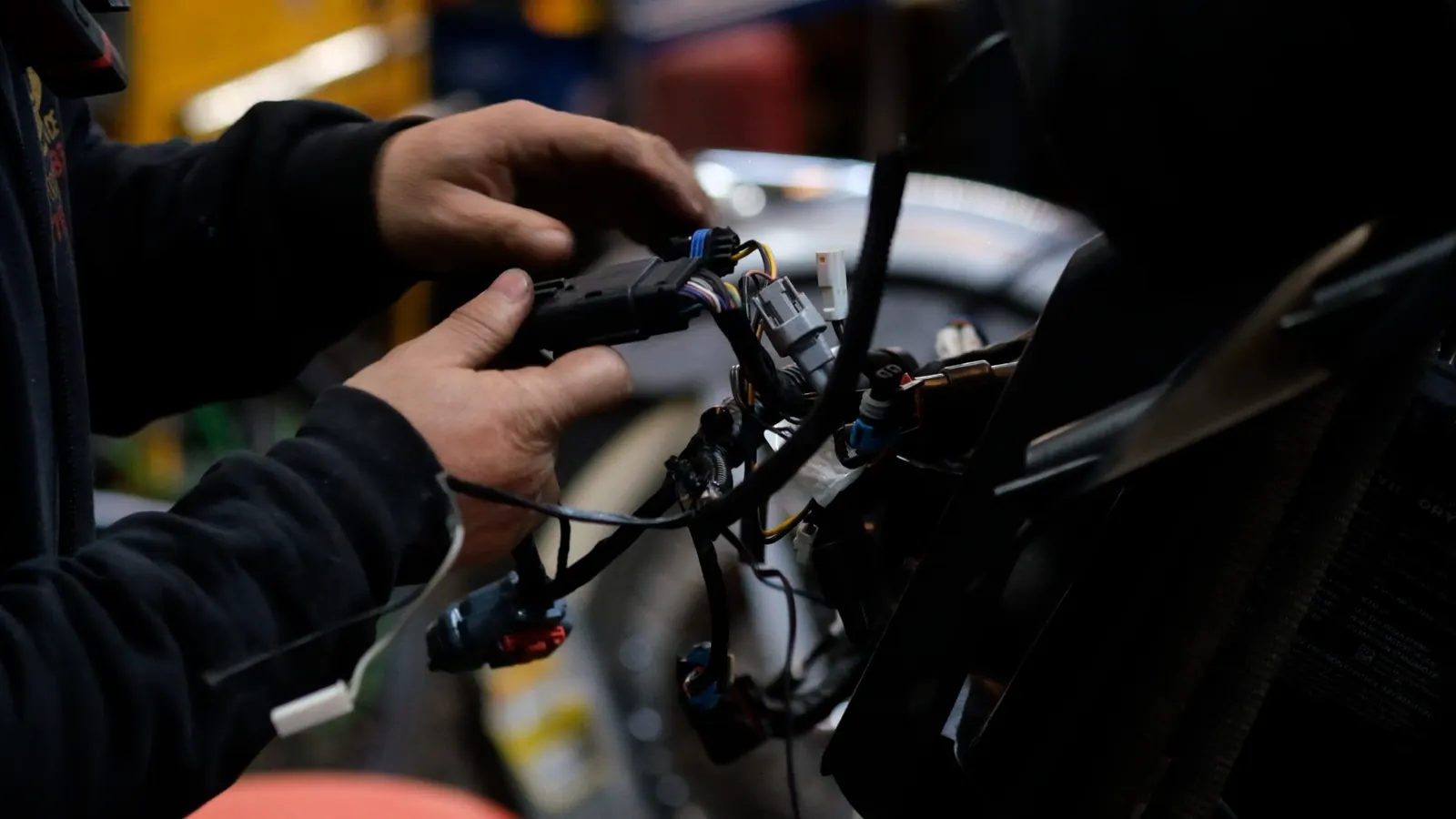
So what does a tune actually change in how the bike feels? The stumble in the midrange goes away. So the throttle gets crisp — you ask, and it answers. Heat comes down. The popping on decel calms. And the bike pulls in one smooth line instead of surging and flattening out. None of that is magic. It is just fuel that finally matches the air.
Where stock still wins
We promised we would name it, so here it is. If your bike is brand new, fully stock, and still under factory warranty, then stock is the smart call for now. You have not changed the breathing, so the factory map still fits, and you keep the warranty clean. The same goes if you plan to sell to a purist buyer who wants everything untouched. And if you only ever putt to coffee and back, a stock bike that runs fine owes you nothing. There is no shame in leaving a good thing alone.
That is the fair version of the other side. Stock is not a failure. Rather, it is the right answer for a stock, healthy, warrantied bike that gets ridden gently. The case for tuning shows up when you add parts, chase a symptom, or want the engine to feel like it finally woke up. Both can be the right call. It just depends on your bike and your miles.
Mistakes we help riders avoid
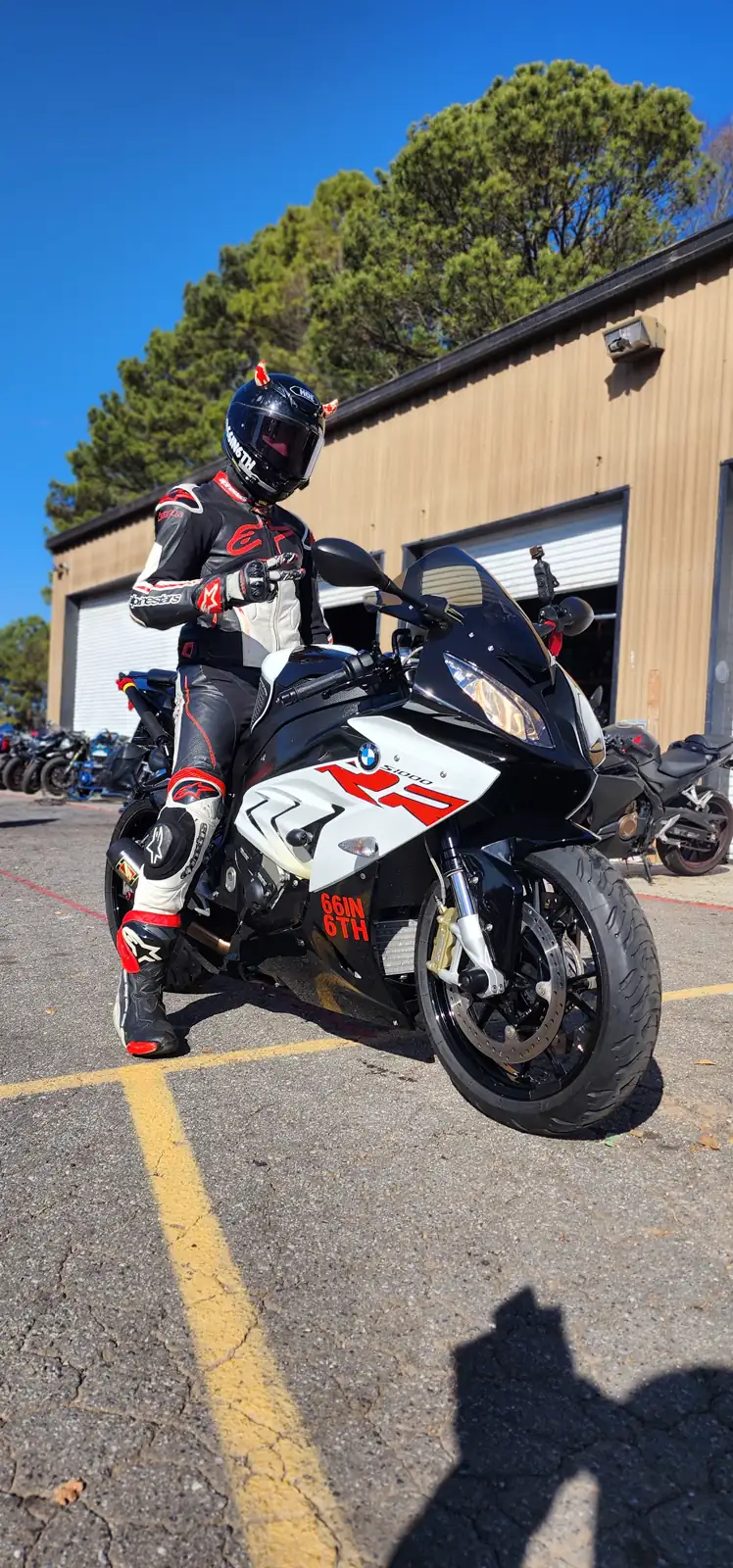
We see the same few slip-ups over and over, and every one is easy to dodge. The big one is bolting on a loud pipe and a filter, then riding a whole season lean because it ‘sounds great.’ It might sound great and still be cooking itself. A quick look at what separates a good shop will tell you why a real dyno session beats a guessed-at map every time.
- Adding an exhaust and air filter but skipping the tune, so the bike runs lean all summer.
- Loading a generic map off the internet that was built for someone else’s bike, weather, and altitude.
- Chasing a big peak number instead of a smooth, usable pull you can feel on the street.
- Waiting until the engine already feels tired, when a tune at parts-install would have saved the heat.
- Letting a shop tune without showing you the before-and-after graph — you paid for numbers, so you should see them.
Bartow is a show-me county through and through. Folks here fix things for a living, and they judge a shop the way they judge a machine — by what it can prove. So we do not hand you adjectives. Instead, we hand you the graph, the air-fuel line, and the plain story of what we changed and why. When people see the before and after sitting side by side, the whole dyno tune vs stock Cartersville question usually answers itself. Numbers are honest in a way a sales pitch never is, and honest is what this town runs on.
A bike came in from Downtown Business District with exactly this. Nice cruiser, fresh slip-on, a crackle on every closed throttle, and a hot right leg the owner could not ignore on the slow roll past the old square. He had ridden it lean for a season without knowing. On the dyno the line showed a clear hollow right where he felt the stumble. We flashed the fuel to match the new pipe, the hollow filled in, the popping quit, and the heat dropped. He rode it home past the Bartow History Museum grinning like it was a new bike. It sort of was.
Cartersville bikes, Cartersville roads
This town rides. Downtown still has the world’s first outdoor painted wall sign for Coca-Cola on the south side of the square, and on a good weekend you will see more chrome parked under it than you would guess for a county this size. Bikes here live in garages, pole barns, and detached sheds — great for project builds, but rough on fuel systems that sit through humid Georgia summers. A lot of the machines we tune are cruisers and baggers, with a healthy stack of touring rigs and barn-find projects mixed in. Every one of them wants fuel that matches its air.
Where you ride shapes the tune, too. A bike that lives on 41 — Joe Frank to most folks — doing stop-and-go past the shops wants crisp low-end fueling more than a screaming top end. A bike built for GA-20, the Knox Bridge Highway causeway that runs east across Lake Allatoona toward Canton, wants a smooth midrange for those long open sweepers. So we ask how you actually ride before we touch the map. A friend out in Carter Grove rides very differently than a shift worker dodging traffic at odd hours, and the tune should respect that.
We tune bikes for riders all over the area, from the old homes near the North Wall Street Historic District to folks passing through on their way to the mountains. If you are weighing the same choice one county over, we broke down the Canton side of things in its own post, and Acworth riders can see how we handle that job as well. The symptoms travel; only the roads change.
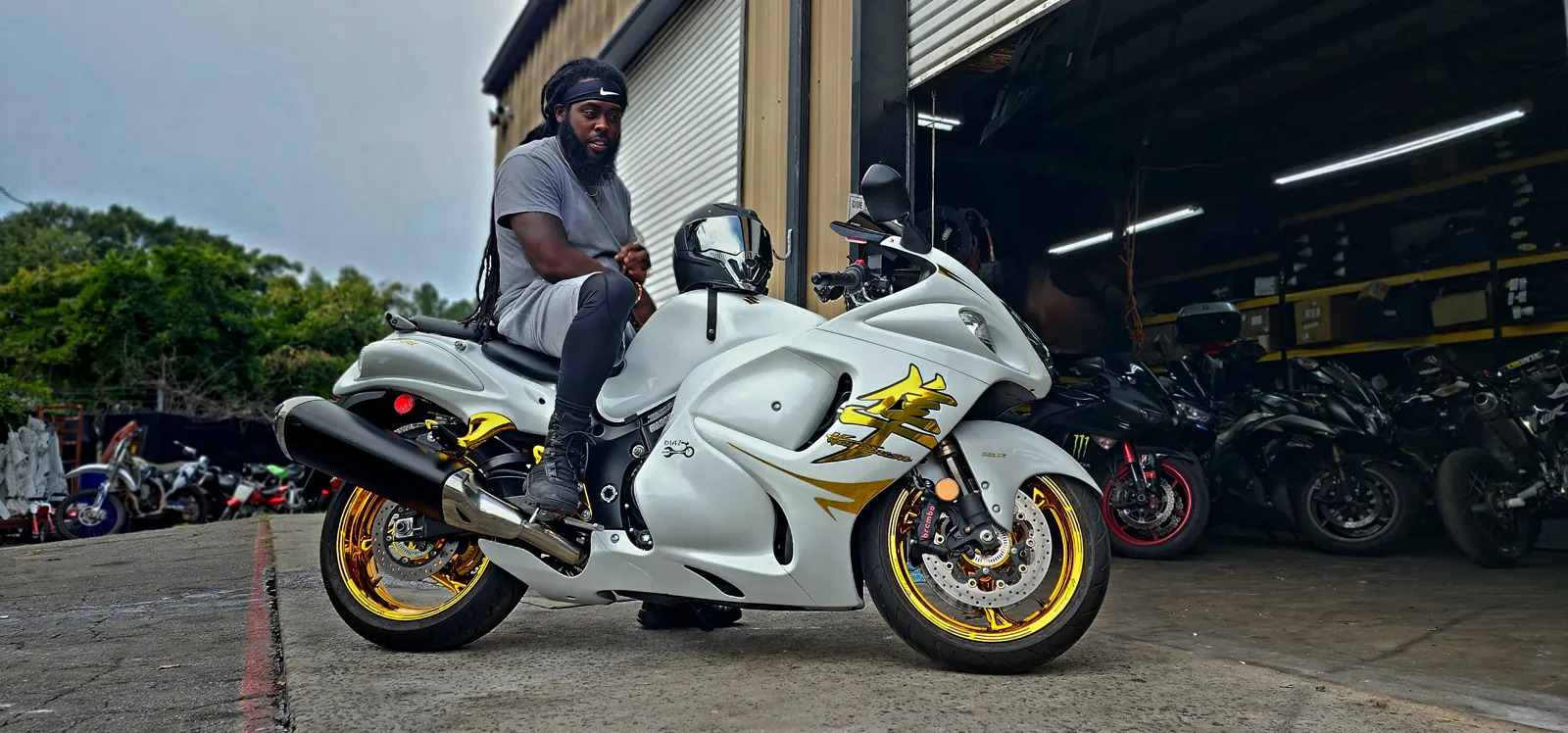
One more thing worth saying. A tune is not a license to ride over your head. It just makes the bike honest. If you want to get more out of that honesty, a rider course through the MSF rider courses will do more for your riding than any part on the shelf. Good fuel and good habits make a great pair.
What you feel after
Here is the outcome, and it is the reason we love this work. You leave a light and the bike just goes — no breath, no stumble, no guessing. The throttle feels wired straight to your hand. Still, the engine runs cooler, so it lasts longer. The decel popping is gone, and the whole pull is one clean line from bottom to top. Whether we flashed the ECU or wired in a Power Commander, the result is a bike that finally feels like the one you thought you bought.
A good tune does not make your bike loud. It makes it honest.
So back to the real question. Dyno tune, or stock? If your bike is untouched and happy, then ride it proud. If you have added parts, or the fueling has been nagging at you, put it on the drum and let the numbers show you what your right leg already knew. Either way, you ride out of here confident you made the right call — and that feeling is the whole point.
Questions Cartersville riders ask us
What's the real difference between a dyno tune and stock?
Stock is the one map the factory writes for every bike on every road, so it plays it safe and often runs a little lean. A dyno tune is fuel dialed in for your exact bike, your parts, and how you ride, read live on the drum. Stock is a guess that fits everyone; a tune fits only you.
Which one lasts longer?
A proper tune can actually help the engine last longer, because it stops the lean, hot running that wears a motor out early. Stock lasts just fine too, as long as the bike is unmodified and the factory map still matches the air. The problems start when parts get added and the stock fuel never gets corrected.
Which is right for my riding?
If your bike is bone stock and runs clean, stock is right for you. If you have added an exhaust, a filter, or a tuner, or if the fueling feels lean and jumpy, a dyno tune is the better fit. We ask how and where you ride before we decide, since a commuter and a weekend cruiser want different maps.
Can I switch later?
Yes, and plenty of riders do. You can start out stock and tune the bike any time down the road. A flash can be updated later, and a Power Commander can be added, adjusted, or removed if you change your mind or sell the bike. Nothing about starting stock locks you out of tuning later.
Which do you recommend?
For an untouched, healthy bike under warranty, we say leave it stock and ride. The moment you change how it breathes or a symptom shows up, we recommend the dyno. That way the fuel matches the parts and you protect the engine from the first mile instead of chasing heat later.
Do I need a tune if I only added a slip-on?
A single slip-on is the borderline case. Sometimes it is fine, and sometimes it opens a lean spot you can feel. The honest answer is that the dyno tells us in one session, so we would rather read it than guess. Add a filter on top of that slip-on and a tune moves from maybe to yes.
We tune and wrench for riders all across northwest Georgia, not just inside the Cartersville line. Folks roll in from Acworth, Kennesaw, and Woodstock down the interstate, and from Emerson and White just up the road. We see plenty of bikes out of Adairsville, Kingston, and Rydal to the north, along with Euharlee and Taylorsville to the west. Canton riders come across GA-20, and Dallas riders head up from the south. Wherever you keep your bike, the dyno reads the same honest numbers.
READY TO SETTLE IT ON THE DYNO?
Text us and tell us what your bike is doing — the popping, the flat spot, the hot leg, or the new pipe you just bolted on. We will tell you straight whether stock is fine or whether a tune is worth it, and we do the whole thing in-house right here for Cartersville riders. No guessing, just the graph and a plan you can feel on the road.
470-460-9883Diaz Motorcycles and Service, LLC · 847 Barnes Mill Road, Marietta, GA 30062