Motorcycle Dyno Tuning Lawrenceville — What You're Actually Paying For
A quote that didn't sit right, explained in plain words — plus how we check your bike before we ever name a price.
A rider called us last spring, pretty steamed. Even so, He’d taken his Yamaha to a multi-line dealer up near 316, asked for a real tune after bolting on a new exhaust, and walked out with a number scribbled on paper and no idea what it paid for. No dyno pull. No questions about his bike. Just a price and a shrug. That story is the most common one we hear, and it’s exactly why honest motorcycle dyno tuning Lawrenceville riders can actually trust is worth going out of your way to find. You should know what you’re buying before you ever hand over the keys.
So let’s start simple. Let’s clear up what a dyno even is, because the word gets tossed around like everybody already knows. A dyno is a machine with a big steel roller built into the floor. We strap your bike down, your rear wheel spins that roller, and sensors read exactly what the engine is doing while it works. Think of it like a treadmill for your motorcycle, except this treadmill takes notes the whole time. Because we watch real numbers under load, we’re never guessing what your engine wants.
What a dyno actually measures
Here’s the plain version. A dyno reads how much power your engine makes, and — just as important — how it makes that power across the whole rev range. But the piece that really matters is a little probe we slip into your exhaust. It’s called a wideband sensor. That probe reads your air-fuel ratio, which is just a fancy way of saying how much fuel your engine burns for the air it pulls in. Get that ratio right and the bike feels alive under you. Get it wrong and you’ll fight the thing all day long.
So what do ‘lean’ and ‘rich’ even mean? Picture your engine as a campfire. Too much air and not enough fuel, and it burns lean — hot, sharp, and cranky. Too much fuel and not enough air, and it runs rich — sluggish, sooty, and thirsty at the pump. Neither spot is where you want to live. A good tune walks that ratio into the sweet middle so every firing is clean and steady. That’s the whole game, honestly, and it’s not magic once somebody shows you.
IN PLAIN WORDS
A dyno measures power and the air-fuel ratio while your bike runs under load. Lean means too little fuel. Rich means too much. A tune finds the balance so the bike pulls clean everywhere.
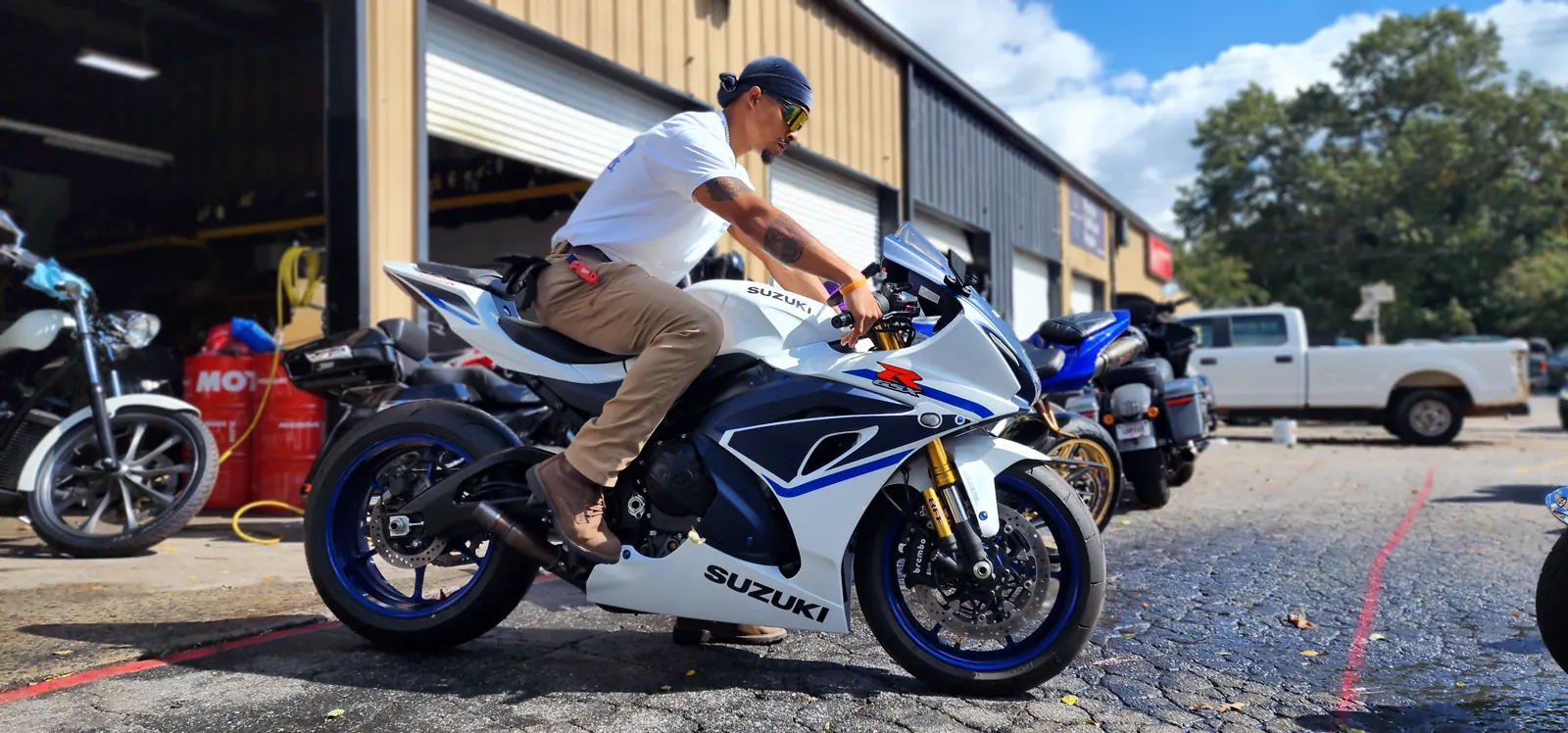
Now, why do so many bikes need this in the first place? Most of the time it’s because somebody made the bike better and the computer never got the memo. You put a slip-on or a full exhaust on. You dropped in a high-flow air filter. Maybe you changed the gearing or pulled the fender eliminator. Every one of those changes shifts how much air moves through the engine. Meanwhile the bike’s factory brain is still feeding fuel like nothing changed, which usually leaves it running lean. Great modifications, no follow-through — that’s the trap.
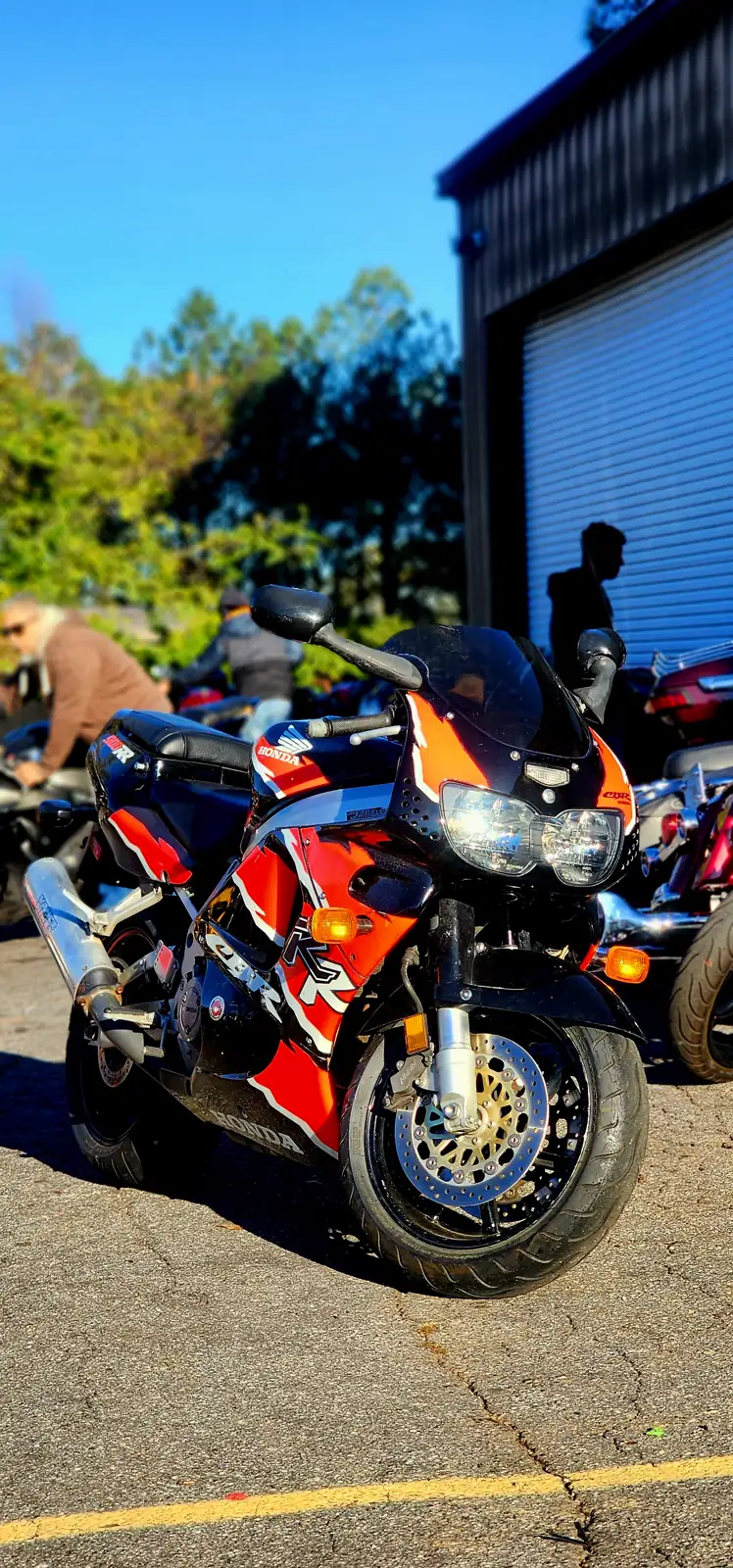
Here’s where it gets interesting — and where most advice online falls apart. Gwinnett is the densest sportbike scene of any city we serve, by a wide margin. Drive around Georgia Gwinnett College on a warm evening and you’ll see R-series Yamahas, GSX-Rs, Ninjas and CBRs everywhere, plus a healthy count of Ducatis and Aprilias mixed in. A ton of those bikes wear aftermarket exhausts and filters. And here’s the catch nobody says out loud: almost nobody local can actually map them. Riders here modify hard, then have nowhere close to make those mods behave. That gap is the whole reason folks reach out to us.
Why so many local bikes run lean
A lean bike doesn’t just feel a little off — it tells on itself if you know the signs. It pops and burbles on decel. For example, it surges at steady throttle, like it can’t decide how fast it wants to go. It gets hot faster than it should in stop-and-go traffic, and around here that’s every commute. Because lane splitting isn’t legal in Georgia, you’re sitting in that heat at every red light on 316. A lean tune bakes the engine and wears you out. The bike isn’t broken. It’s just hungry, and it’s asking for the right meal.
We walk through the general idea in our post on what that service actually involves, but the short answer for your bike is this: the factory map was written for a stock machine, and yours isn’t stock anymore. If you want to see how a tuned setup stacks up against a bone-stock one, we broke down the tradeoffs between them in a separate read. Spoiler: it’s less about big scary numbers and more about how the bike behaves in your right hand.
How we diagnose before we ever quote
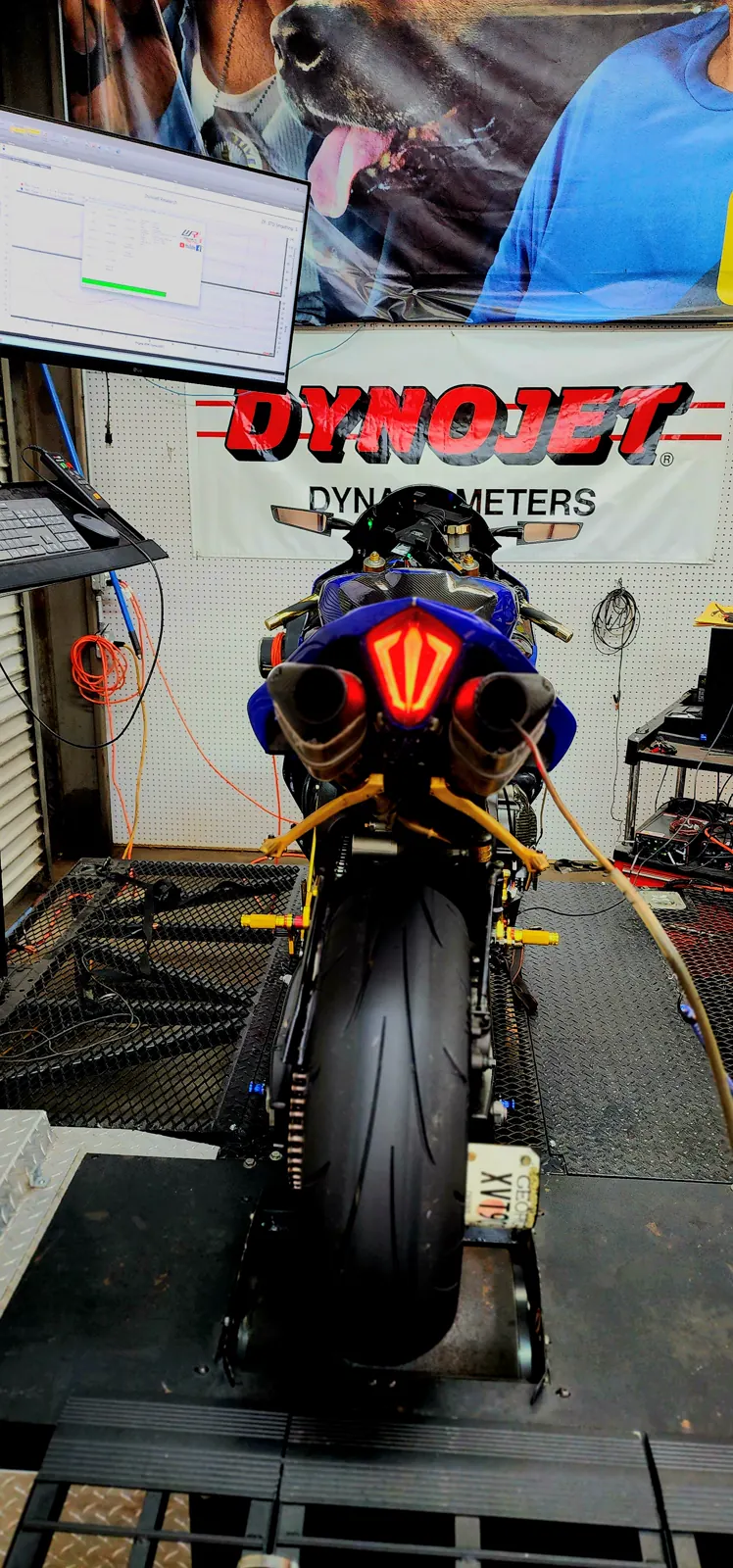
This is the part the sticky-note shop skipped, and it’s the part that matters most. We don’t name a price until we understand your bike. First, we talk. What did you change? What does it feel like now — flat spot down low, surge in the middle, a stumble off idle? Then we put it on the dyno for a baseline pull. That first pull is the honest photo of where your bike stands today. It shows us the lean spots, the rich spots, and where the power comes on or falls flat. Only then do we talk about what a tune involves and what it’ll take.
We’d rather over-explain than surprise you. So before any real work starts, you’ll know what we found and what we plan to do about it. If the dyno shows your bike is close to right, we’ll tell you that too, even when it means a smaller job. Diagnosing first is how you avoid paying for a fix your bike doesn’t need. If you’re curious about the nuts and bolts of a session, here’s what happens in our bays from strap-down to final printout.
When your bike is on the drum, here’s the short list of what we’re actually reading:
- The air-fuel ratio at every point in the rev range, from a lazy roll-on to a hard pull
- Where power builds smoothly and where it stumbles or flatlines
- Whether the bike runs lean, rich, or hot enough to worry about
- How your specific mods — exhaust, filter, gearing — changed the picture
- What the factory map got wrong once your parts went on
What the fix actually involves
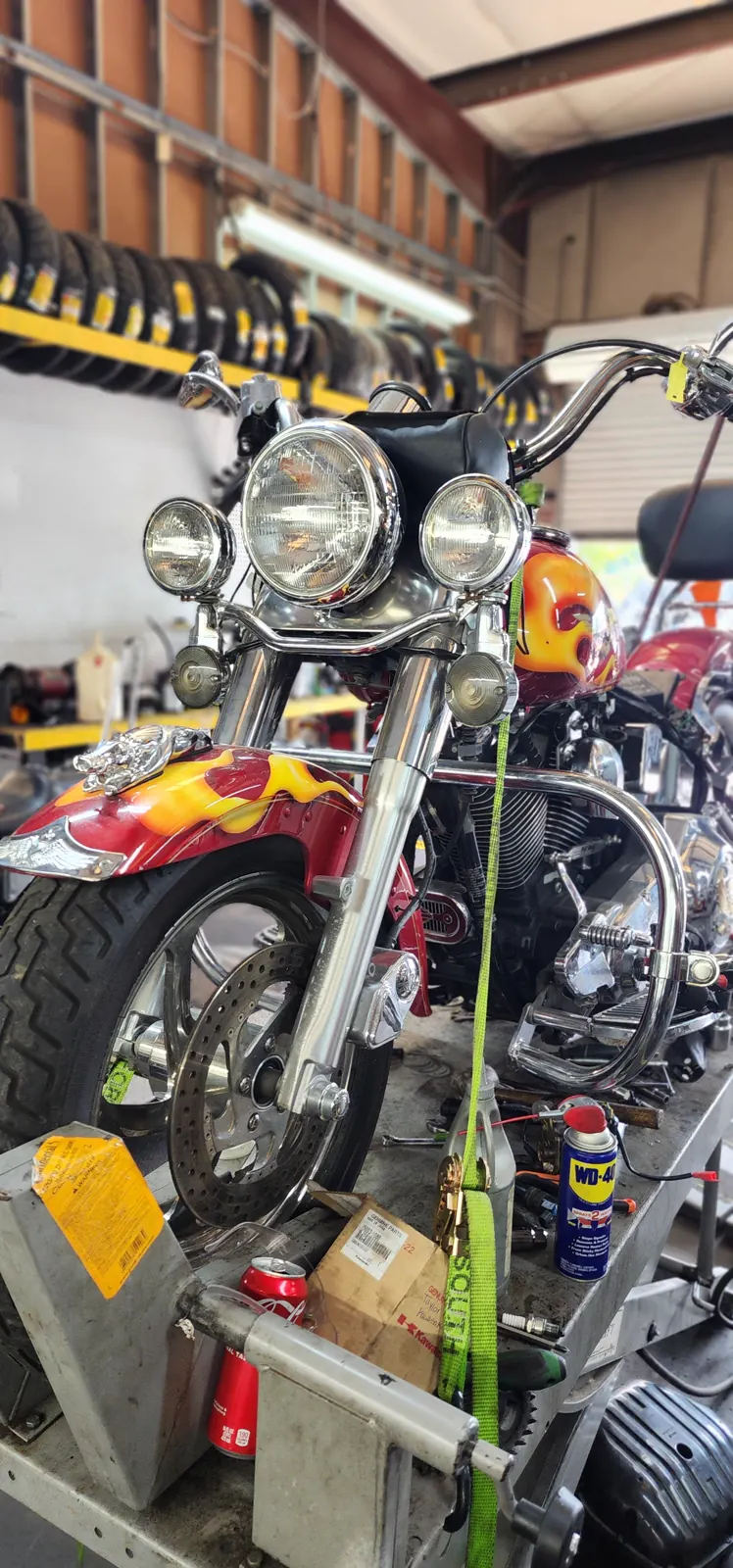
Once we know what your bike wants, there are two main ways we give it to it, and the right one depends on your machine. The first is an ECU flash. Your bike’s factory computer, the ECU, already runs the fuel and timing. We rewrite that built-in map with corrected numbers, so the brain your bike was born with just gets smarter. No extra box, no clutter. The second is a Power Commander, which is a small add-on unit that plugs in and trims the fuel and, on some setups, the timing. Both fix the same problem. We pick whichever suits your bike and your parts best.
Whichever route we take, we don’t set it and pray. We make a change, do another pull, read the graph, and adjust — over and over — until that air-fuel line sits where it belongs across the whole range. That back-and-forth on the dyno is custom mapping, and it’s the difference between a real tune and a canned file somebody emailed you. Your bike, your mods, your final map. Nobody else’s numbers stamped onto your machine.
A real tune is a conversation with your bike, not a file someone emailed you.
Yes, we know it's a drive — so we come to you
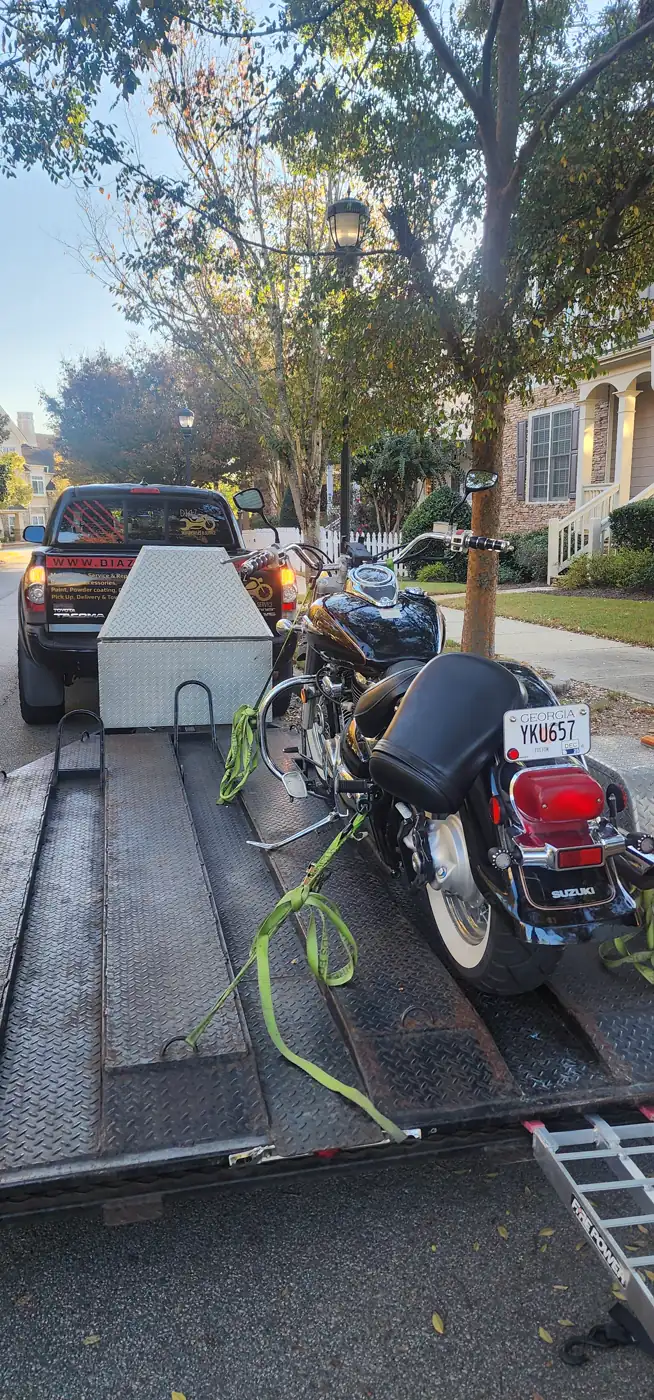
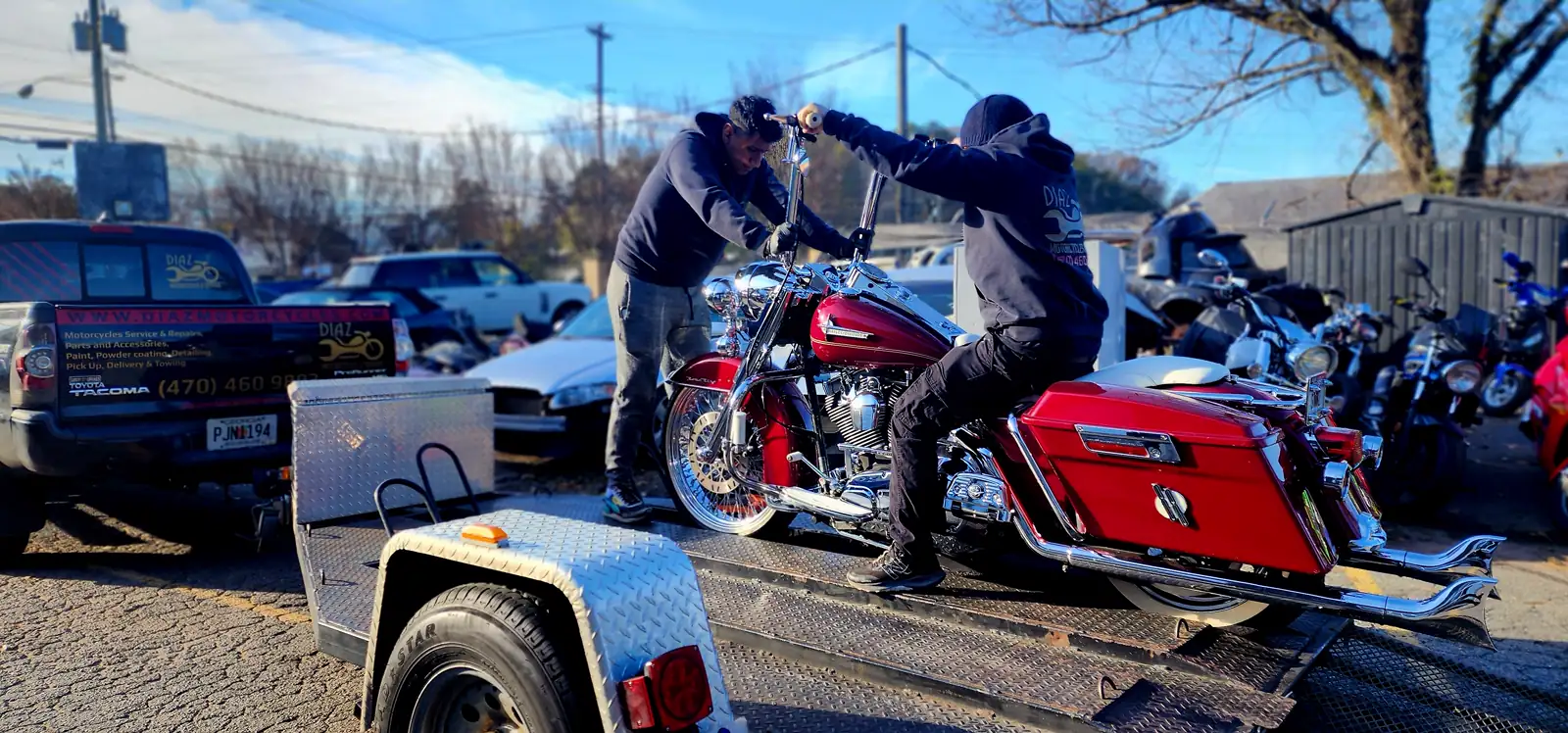
Let’s be real about geography. We’re over in Marietta, and you’re out in Gwinnett, firmly OTP. Depending on which way you point the car, you’re looking at roughly 33 to 38 miles and somewhere around 45 to 70 minutes, either GA-120 west through Duluth and Roswell with no interstate, or the freeway shuffle down I-85 and around. That’s not a quick errand, and we’d never pretend it is. So here’s the good news: you don’t have to make that drive at all. We’ll come get your bike and bring it back. No riding it across metro traffic on a bad map, no borrowing a truck, no hassle.
We love this side of town, honestly. A rider from Coopers Pond and a rider from over in Collins Hill Heights can both text us the same afternoon, and we’ll swing through for both. Folks in the bigger-lot communities like the Estates at Great Oaks and Great Oaks Landing usually have the garage space to store a nice bike right, which is great for the machine and great for us when it rolls in clean. Whether you park near Rhodes Jordan Park or somewhere quieter, the pickup works the same. You point us to the driveway, we handle the rest.
And this crowd rides hard. Plenty of you take GA-20 north out toward Buford, chase Lake Lanier, and keep going up to Cumming for the good curves. A well-tuned bike makes that whole run smoother and less tiring. Track folks, we see you too — Michelin Raceway Road Atlanta up in Braselton is only about 30 to 35 minutes from Lawrenceville, and their motorcycle track days are exactly where a lean, ragged map shows its ugly side. A bike that’s mapped right is a bike you can trust when you finally open it up. If you want, here’s how this plays out in Cartersville, another town where riders drive to us for the same reason.
What changes once it's dialed in
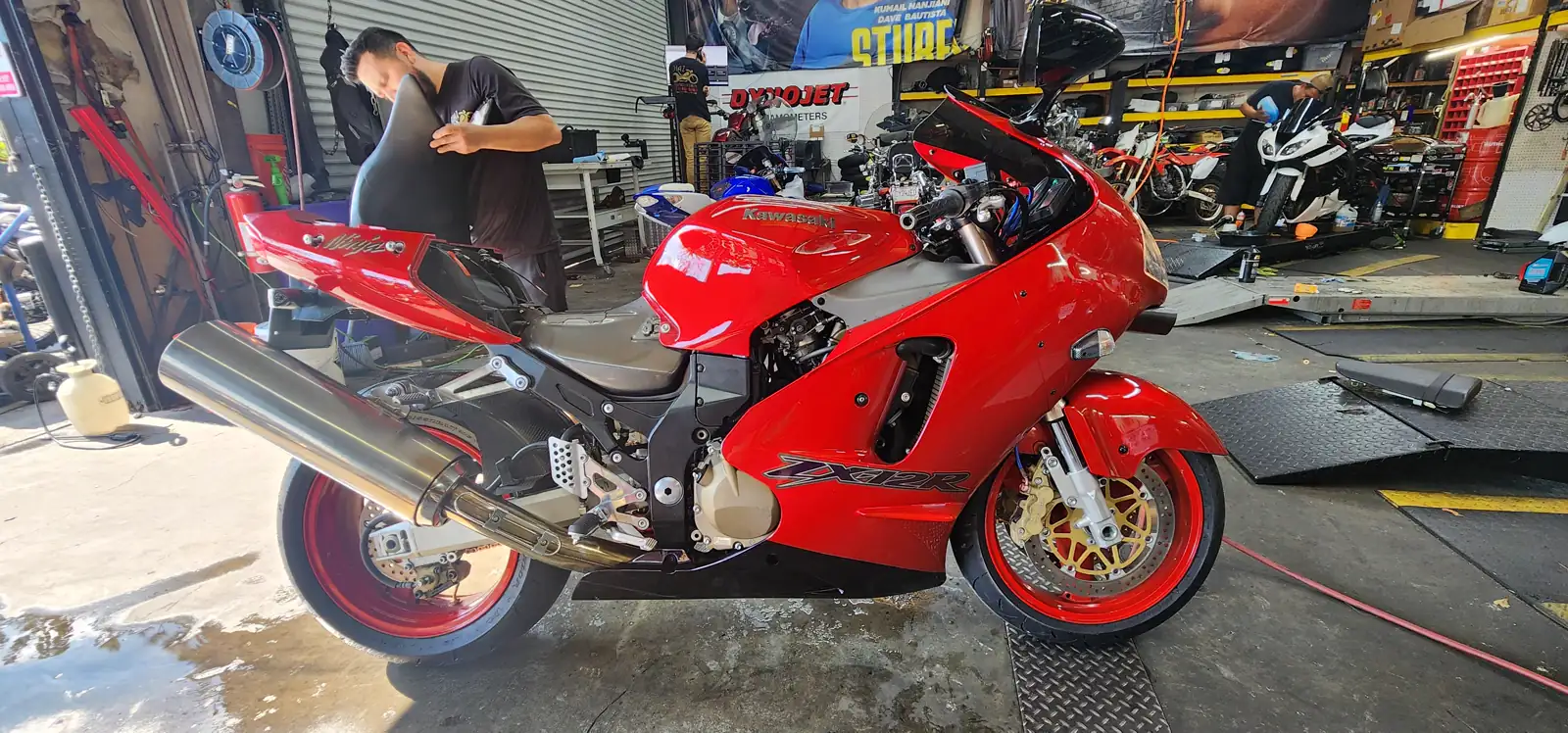
Here’s what changes once it’s actually sorted. The surging stops. That flat spot down low where the bike used to hesitate just smooths out, so rolling on the throttle feels like one clean pull instead of a shove and a stumble. The engine runs cooler in traffic, which your legs will thank you for at every light on 316. Fuel goes a little further because the bike isn’t dumping extra gas it can’t use. And the throttle finally does what your wrist tells it — no lag, no guessing, no wrestling. It’s the same bike you already loved, minus the annoying stuff.
Best of all, it feels like your bike again — the one you pictured when you bought those parts. That’s the feeling we’re really selling. Not a bragging number, but a machine that finally matches the mods you paid for. New riders getting their Georgia Class M licensing sorted out often ask us whether a tune is worth it early on, and the answer is simple: if you’ve changed how the bike breathes, it’s worth making sure it runs right. A right-running bike is a safer, calmer, more fun bike, plain and simple.
So if that quote you got somewhere else didn’t sit right, trust that gut feeling. You weren’t being difficult — you just wanted to know what you were paying for, and that’s fair every single time. Real, honest motorcycle dyno tuning Lawrenceville riders keep coming back for starts with a straight answer and a baseline pull, not a mystery price. Send us a text, tell us what you changed, and we’ll take it from there. We’ll even come get the bike.
Questions Lawrenceville riders ask us
Do you work on older bikes?
Absolutely. Older bikes tune up beautifully, and a lot of them wake right up once the fueling is dialed in. We’ll put yours on the dyno for a baseline pull first, then tell you honestly what it needs. Age isn’t a problem — a bad map is.
What if my bike needs more than expected?
You’ll hear it from us before we do a thing. That’s the whole point of diagnosing first. If the dyno turns up something bigger, we stop, explain what we found in plain words, and let you decide. No surprise work, ever.
What does a dyno tuning service include?
A baseline pull to see where your bike stands, custom mapping through an ECU flash or a Power Commander, and repeated dyno pulls until the air-fuel ratio sits right across the whole rev range. You get a bike that pulls clean and a printout that shows the work.
How long does it take?
Most tunes are a same-day or next-day job once the bike is on the dyno, depending on how much your setup needs. Since we offer pickup and delivery to Lawrenceville, you don’t have to sit and wait. We grab the bike, do the work, and bring it back sorted.
Do you work on my brand?
Very likely yes. We tune the sportbikes Gwinnett is full of — Yamaha, Suzuki, Kawasaki and Honda — plus European bikes like Ducati and Aprilia, and cruisers and touring bikes too. Text us your make and model and we’ll confirm before anything gets scheduled.
Is it really worth the drive from Lawrenceville?
You won’t make the drive — we come to you. There’s no verified shop right in Lawrenceville doing real in-house custom mapping, so instead of riding a badly mapped bike across metro traffic, you text us and we handle transport both ways.
We come get bikes all over Gwinnett and the east side, so the miles never fall on you. That means riders in Duluth, Suwanee and Norcross to the west, Snellville, Grayson and Loganville down south, and Dacula, Buford and Sugar Hill up north are all an easy pickup for us. We roll through Lilburn and Tucker regularly too, and we’re happy to swing out toward Stone Mountain when a bike there needs a proper map. Wherever you park it, we’ll bring it in, tune it right, and drop it back home.
TEXT US — WE'LL COME GET IT
Got a modified bike in Lawrenceville that never got a proper tune? Don’t ride it across town on a bad map, and don’t settle for a price scribbled on paper. Text us what you changed and what it feels like, and we’ll set up free pickup, a real baseline pull, and honest custom mapping. You’ll know exactly what you’re paying for before we start.
470-460-9883Diaz Motorcycles and Service, LLC · 847 Barnes Mill Road, Marietta, GA 30062