Best Motorcycle Service Marietta — What to Look For
Every shop in town says the same three things. Here's how to tell which one means them.
Here’s something most shops would rather not say out loud: on a routine service, nobody is doing anything magical. Oil comes out. A filter comes off. In fact, the chain gets cleaned, adjusted and lubed. Pads get measured. Tires get looked at. For example, Any competent tech in this county can do all of that. So when you go hunting for the best motorcycle service Marietta has and get back a screen full of places that all promise the same three things, the real question was never who knows how to change oil. Even so, it’s who tells you the truth about what they found.
What you're really asking
What’s more, Marietta is not short on places to hand over a key. After that, Five significant dealers sit within about four miles of each other on Cobb Parkway. Also Hellbender Harley-Davidson holds down South Cobb Drive. Instead Independents are scattered around town too, like The Motor Cycle Shop LLC over at 2041 Shallowford Rd on the northeast side. That density isn’t random. This is where northwest metro Atlanta buys bikes, so this is where the shops ended up. Great news, right up until you have to choose one.
So the search isn’t about oil. It’s about trust. You want to know whether the voice on the phone will tell you your pads still have plenty of life, or quietly sell you a fresh set anyway. Every shop’s website says “honest.” We have yet to see one put we guess sometimes on the sign out front. The word itself tells you nothing, so you judge the behavior instead.
The honest answer: what a service actually is
A routine service is a checklist, not a mystery. Oil and filter get replaced. The chain gets cleaned, adjusted and lubed, or the belt or final drive gets checked if that’s what your bike runs. Brake pads get measured against their wear line. Brake and clutch fluid get eyeballed for level and color. Tires get checked for tread depth, pressure, cracking and age. The air filter comes out for a look, along with coolant, battery voltage, lights, switches, cables, fasteners, steering head play and suspension movement. Then somebody writes down what they saw.
That last step is the whole ballgame. A service you can trust hands the bike back with a record, not a shrug. Here’s what should come home with you:
- A list of what was done, in words you can read without a dictionary
- A list of what was checked and found fine — this matters as much as the problems
- Anything worn but still usable, with a rough idea of how much life is left
- Anything that needs attention now, and why now instead of later
- The old parts, or at least an offer to show them to you
- A straight answer about what your next visit should cover
Notice what isn’t on that list: a mileage number somebody invented. Your service interval comes from your owner’s manual, not from a shop’s wall chart. Manufacturers spell out what gets touched and when, and those schedules differ wildly between a big touring bagger and a high-strung sportbike. Any shop that quotes you an interval without asking what you ride is guessing, and a guess is a strange thing to pay for.
How to judge a shop in one phone call
You don’t need a building tour or forty reviews. Five questions will sort most shops in about four minutes, because good ones answer plainly and rushed ones get vague. Listen less to the answers than to how comfortable the person is giving them.
- “What’s actually included in a routine service on my bike?” A real shop rattles it off. A vague one says “the usual.”
- “Who decides what gets replaced — you, or me?” You want the answer where they call you first.
- “Will I get a written list of what you checked and found fine?” This one separates shops fast.
- “Have you worked on this model before, and what usually turns up on them?” Experience shows up instantly here.
- “If something extra comes up mid-job, what happens?” The right answer is a phone call before a wrench moves.
Now, the part nobody mentions until you’re already paying for it. Small things are cheap and easy. Big things are neither, and almost every big thing on a motorcycle started life as a small thing somebody put off. A chain that goes dry and tight eats its sprockets, so you’re buying three parts instead of a can of lube. Pads worn past their backing chew into the rotor, and rotors are a different conversation entirely. A weeping fork seal doesn’t stay a weep — it drips onto the brake, and now your front end is a two-problem front end. If your bike has already drifted past its schedule, don’t panic; it helps to know what usually causes it so the next stretch goes differently.
A shop that tells you what can wait is telling you the truth about everything else, too.
What changes the answer for you
Two identical bikes with identical mileage can need very different things, and Marietta riding is a big reason why. Georgia doesn’t permit lane splitting, so when I-75 turns into a parking lot, you sit in it exactly like the cars do. That’s brutal on a clutch, hard on brakes, and rough on cooling in a way highway miles never show. Surface streets are their own grind. Roswell Road, Cobb Parkway, Canton Road and South Cobb Drive run stoplight to stoplight, which wears chains, sprockets and pads fast and cooks an air-cooled engine in July. Your odometer says one thing. Your bike has lived another.
Where the bike sleeps matters just as much. Plenty of Marietta homes have a garage or a carport, but this city also has a very large apartment and townhome population along Franklin Gateway, Delk Road, Powers Ferry and Roswell Road, where bikes live outdoors under a cover. Those bikes arrive with different stories: batteries that gave up, fuel systems gummed after sitting, corrosion in places a garage bike never sees. None of it is dramatic, and a battery tender solves more of it than people expect.
Then there’s the pavement itself. Cobb DOT grades roads on an Overall Condition Index and is building a six-year resurfacing plan funded largely by 2022 SPLOST revenue, which is genuinely good news. Even so, older Marietta arterials still go long stretches between passes. Pothole and expansion-joint hits are a leading cause of bent rims, blown fork seals and knocked-out wheel alignment here, and the railroad crossings through the Square district add their own jolt. When a rider says the bike “feels off,” wheels and forks are the first place we look.
Seasons pile on too. Tree pollen runs from late February into May, with March and April counts often climbing above 1,500 grains per cubic meter, and that yellow film doesn’t just sit on the tank. It packs into air filters. A filter check in early May is one of the cheapest wins on the calendar. Riders an hour north see a slightly different pattern, and it’s interesting to compare notes on what Gainesville riders run into on the same services.
How we approach it
We work on all makes, and we mean all of them. The Marietta mix is genuinely broad: V-twin baggers rolling out Dallas Highway, student sportbikes, European sport-touring and adventure bikes from BMW and KTM, and a real vintage Japanese restoration crowd that keeps forty-year-old machines on the road. A shop that only sees one of those categories develops one set of instincts. Seeing all four keeps you honest, because the bike in front of you stops fitting a template. That range is a big piece of what makes the best motorcycle service Marietta riders find feel different from a single-brand bay. Here’s how our crew approaches it from the first inspection forward.
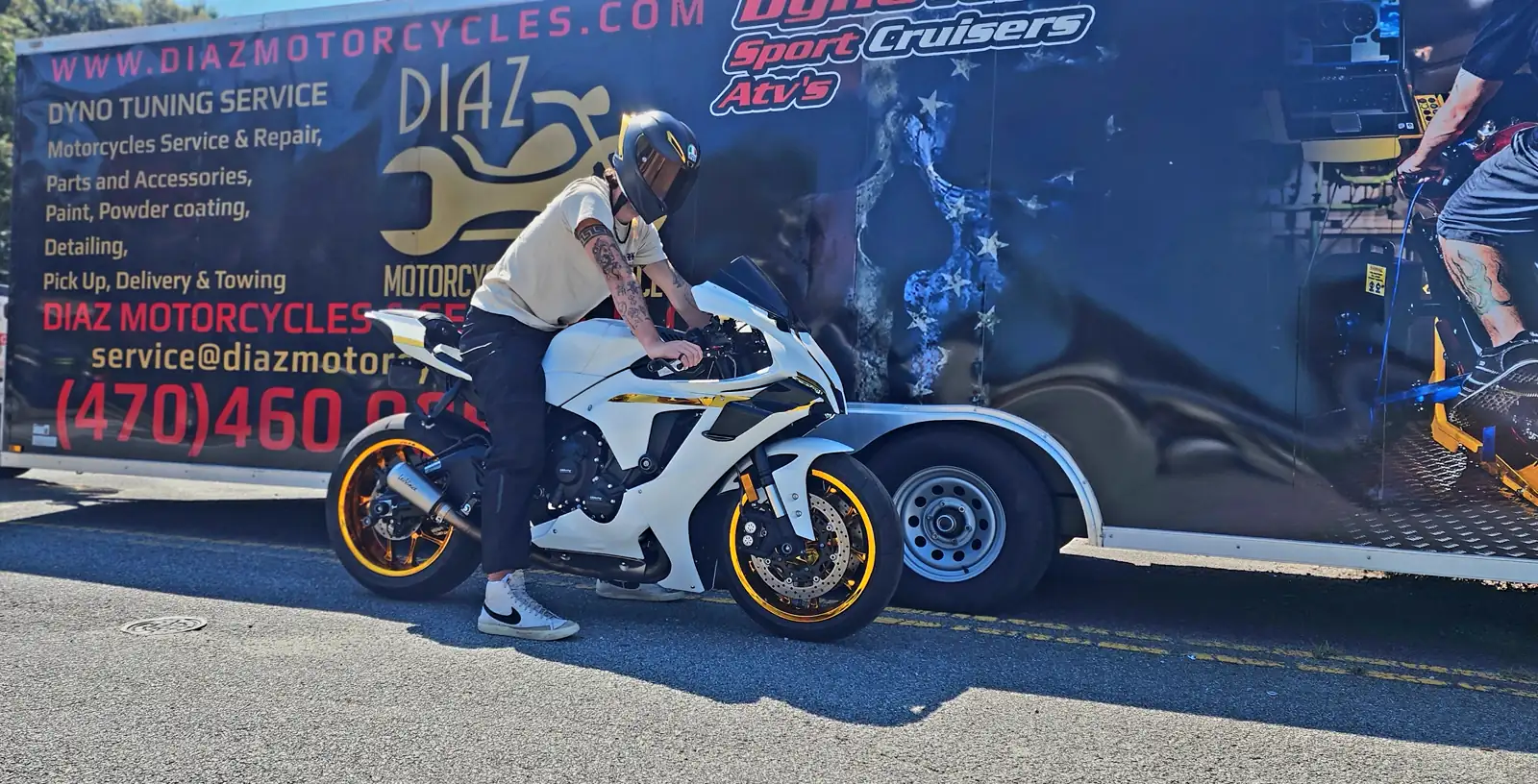
We also do work most multi-line dealers don’t keep in-house or can’t turn around quickly: dyno tuning, ECU flashing and Power Commander setup. That matters more than it sounds. Once you’ve added an exhaust or opened up the intake, your fueling isn’t what the factory shipped, and a lean bike gets hot and cranky. A dyno pull shows what’s really happening instead of what should be — Dynojet’s dyno center explains the equipment side well. If you’re curious about scope before you commit, here’s what the work covers.
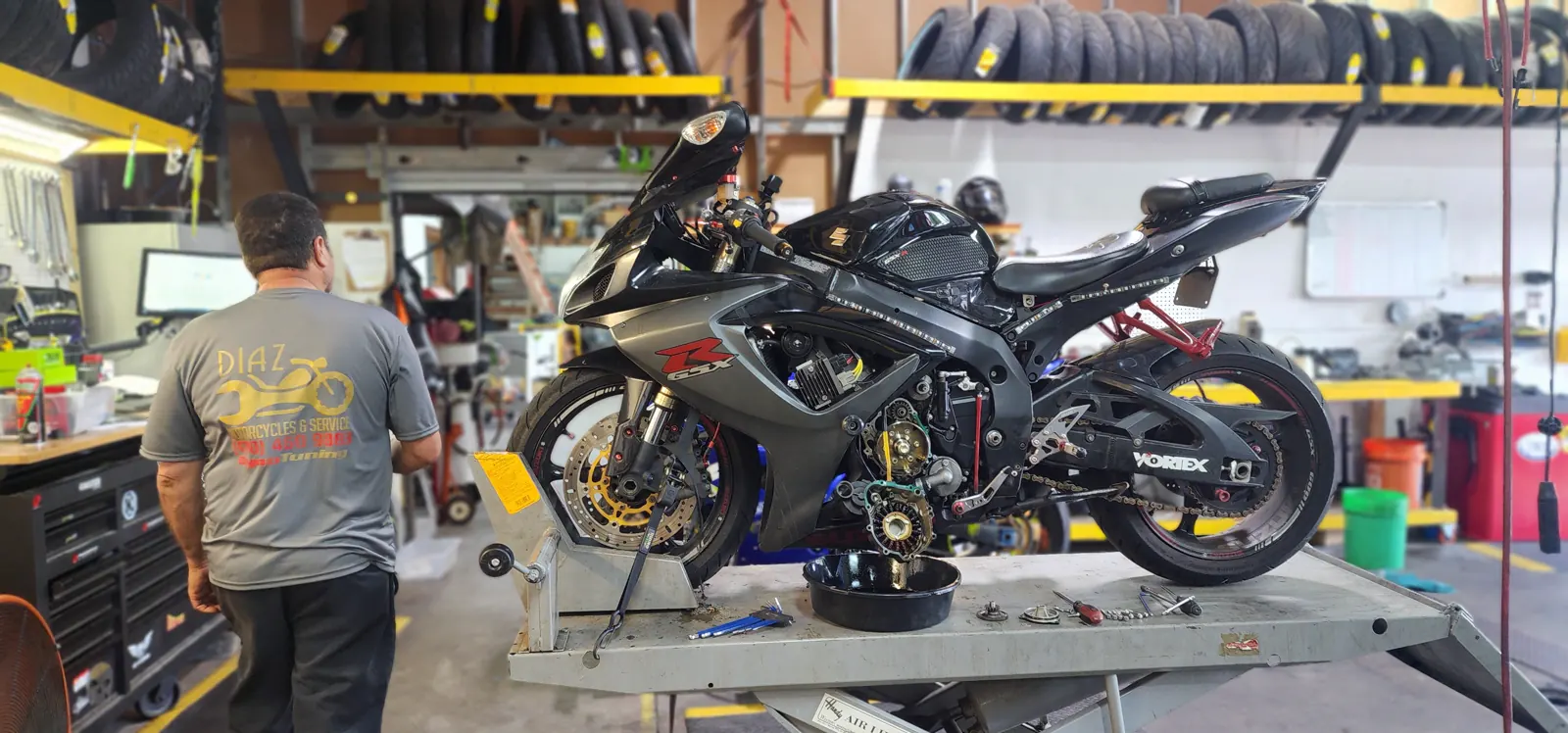
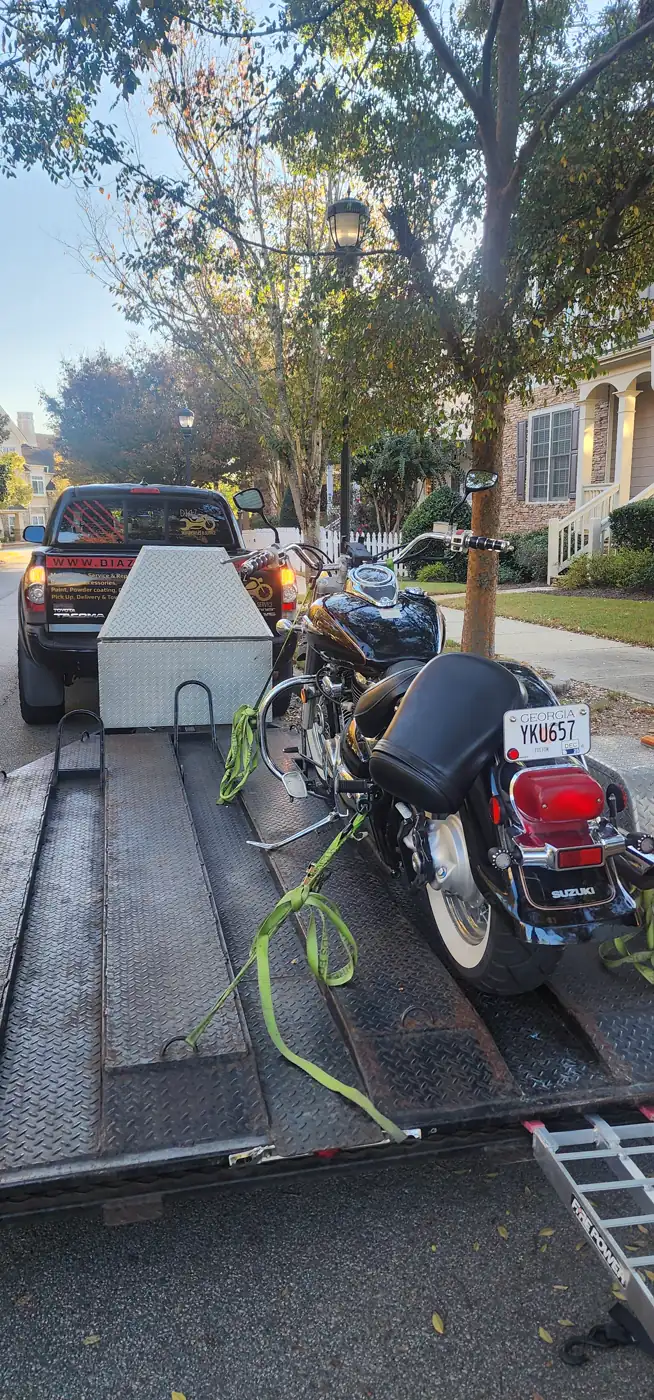
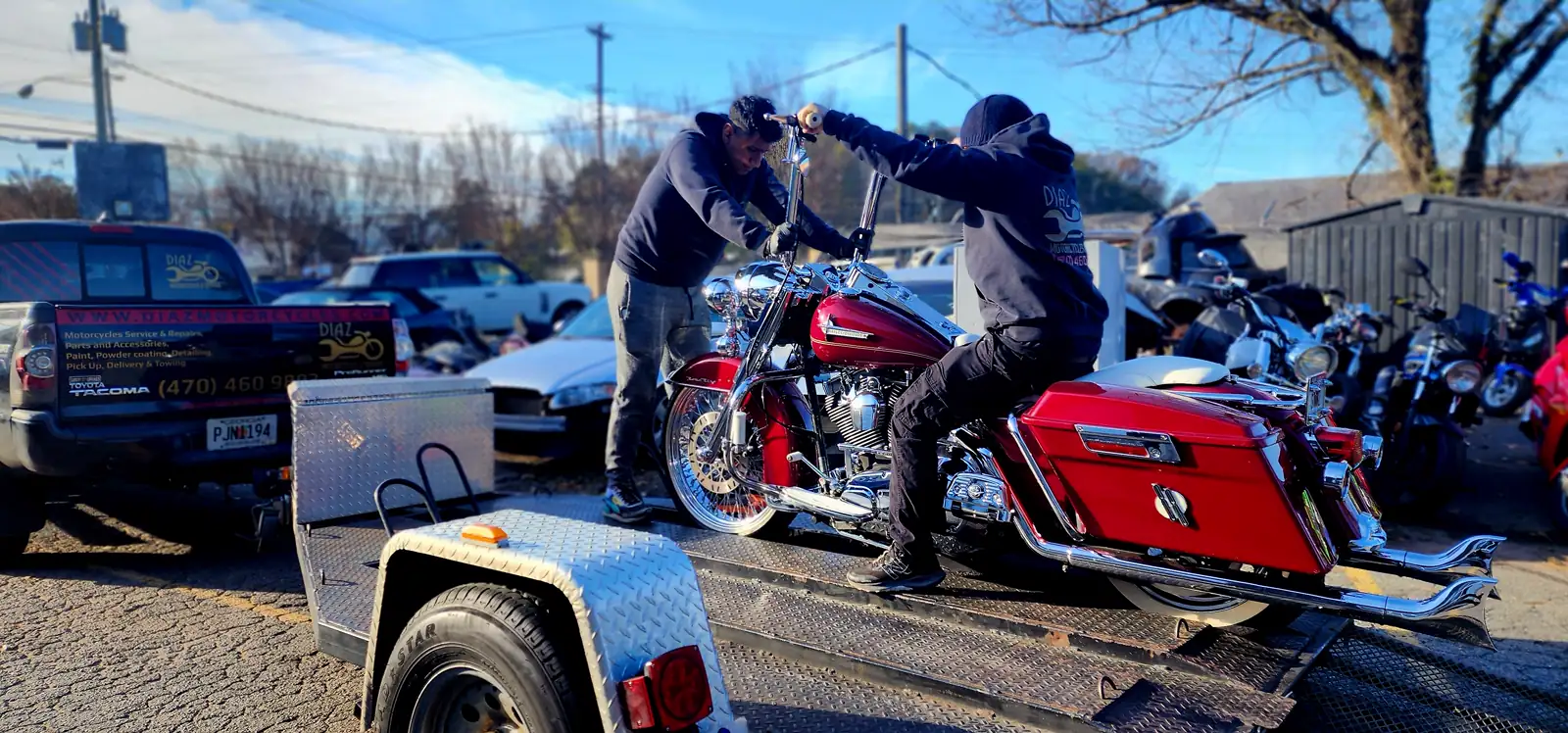
Paint happens here too, along with restoration work and transport when a bike can’t ride itself in. Having all of that under one roof isn’t bragging, it’s just fewer handoffs. Every time a bike moves between buildings, something gets lost in translation. Here, the person who found the problem is standing near the person fixing it.
Dealer or independent?
Honestly, this isn’t a fight, and anyone telling you one option is always right is selling something. Dealers are excellent at what dealers are built for. Warranty and recall work has to happen there, factory tooling lives there, and common parts for the brands they carry are usually on a shelf a few steps away. Independents tend to shine somewhere else: older bikes, mixed garages, unusual requests, and direct conversation with the person actually holding the wrench. The common frustration we hear about dealer service departments is a flat book rate and a wait measured in weeks. That’s not a character flaw, it’s a volume model, and it simply isn’t a great fit for every job.
| Where a dealer usually shines | Where an independent usually shines |
|---|---|
| Warranty, recall and campaign work | Bikes outside warranty, and older machines |
| Brand-specific tooling and software | Multi-brand garages under one ticket |
| Common parts already in stock | Aftermarket parts, tuning and custom work |
| Structured, repeatable process | Talking directly to the tech on your bike |
QUICK GUT CHECK
If a shop can explain a repair to you in plain words, tell you what can safely wait, and point at your owner’s manual instead of a made-up number, you’ve found a good one. That’s most of the test right there.
Marietta, specifically
We’re about three miles from Marietta Square, roughly eight to twelve minutes out Roswell Road, which is GA-120 and the same road Barnes Mill Road comes off of. Practically speaking, no point inside the city limits is more than about twenty minutes away. Riders in Historic Marietta, the Square-adjacent core, are basically next door. Folks over in Whitlock, the small neighborhood tucked between downtown and the conference center, are a short hop. Even Barrett Preserve, out on the newer Barrett Parkway side, is an easy morning run. And yes, if directions help: we’re on the Roswell Road side of things, not far past the Big Chicken.
That 56-foot steel chicken with the moving beak and rolling eyes has been standing at Cobb Parkway and Roswell Road since 1963, and locals still give directions by it, so we might as well too. Head the other way and you hit Truist Park and The Battery Atlanta at the Cobb and I-285 interchange, just south of the city. We also work around real schedules. Lockheed Martin runs shifts, Wellstar nurses pull twelve-hour days, and Dobbins keeps its own clock. If your window is odd, say so when you call.
And then there’s the part that’s just about riding again. Most of this work exists so you can point the bike north on a clear Saturday. The Georgia Triangle, sometimes called the Suches Loop, sits about two hours up: SR-60 into Suches, Wolf Pen Gap Road — that’s GA-180 — over toward Vogel State Park, then US-19 back down, with Two Wheels of Suches sitting right in the middle of it. That road asks real things of a motorcycle: tires that grip, brakes with bite, a chain that stays put, and an engine that pulls cleanly out of a corner instead of stumbling.
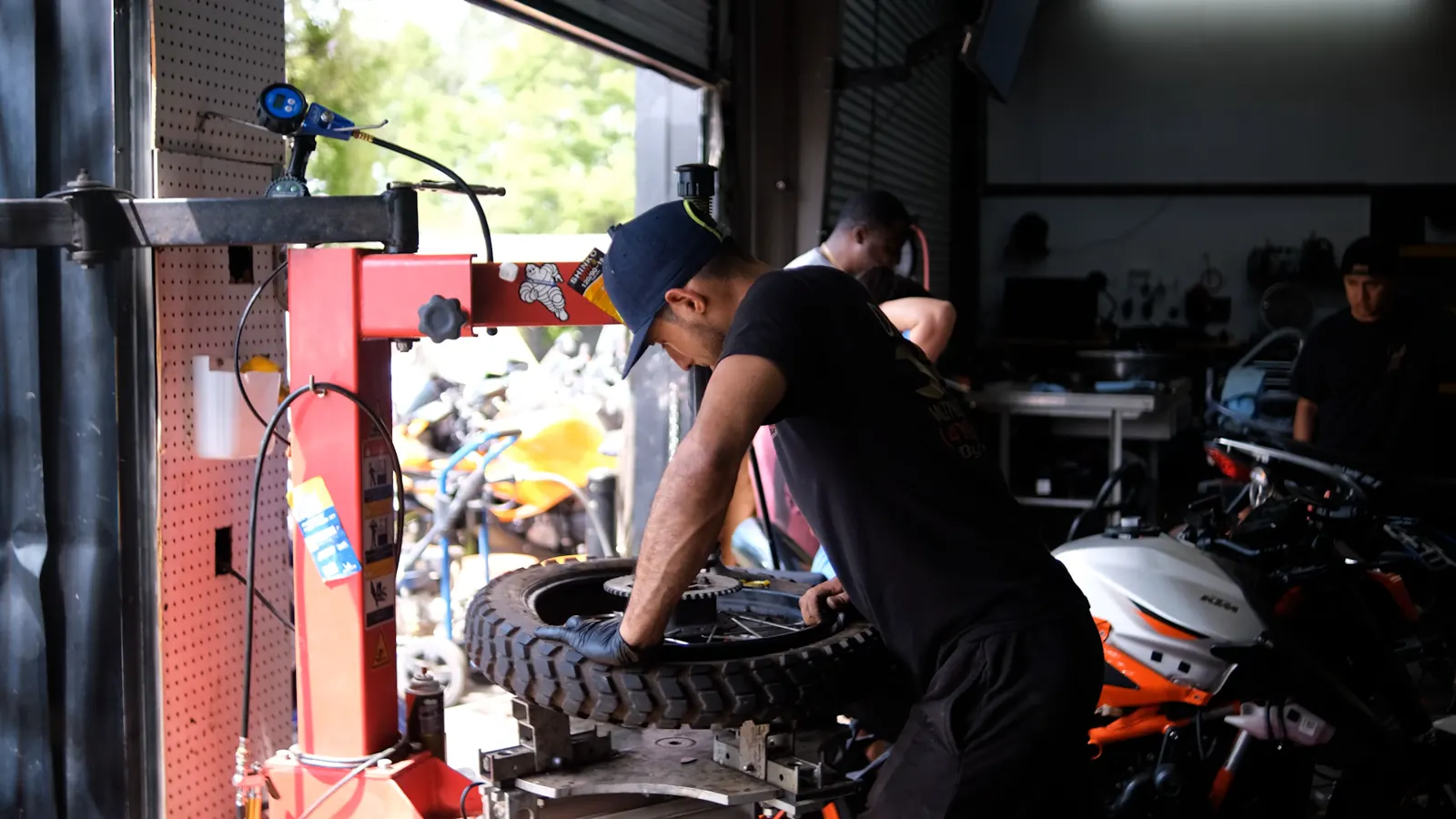
Tires and brakes deserve that attention. They’re the first things you feel and the last things you want surprising you, which is why they lead every inspection we do — and why groups like IIHS motorcycle research keep circling back to rider control. Catching a tire that’s aging out or pads that are close is a five-minute conversation in the shop. Finding out on Wolf Pen Gap is a different kind of day entirely, and not the fun kind.
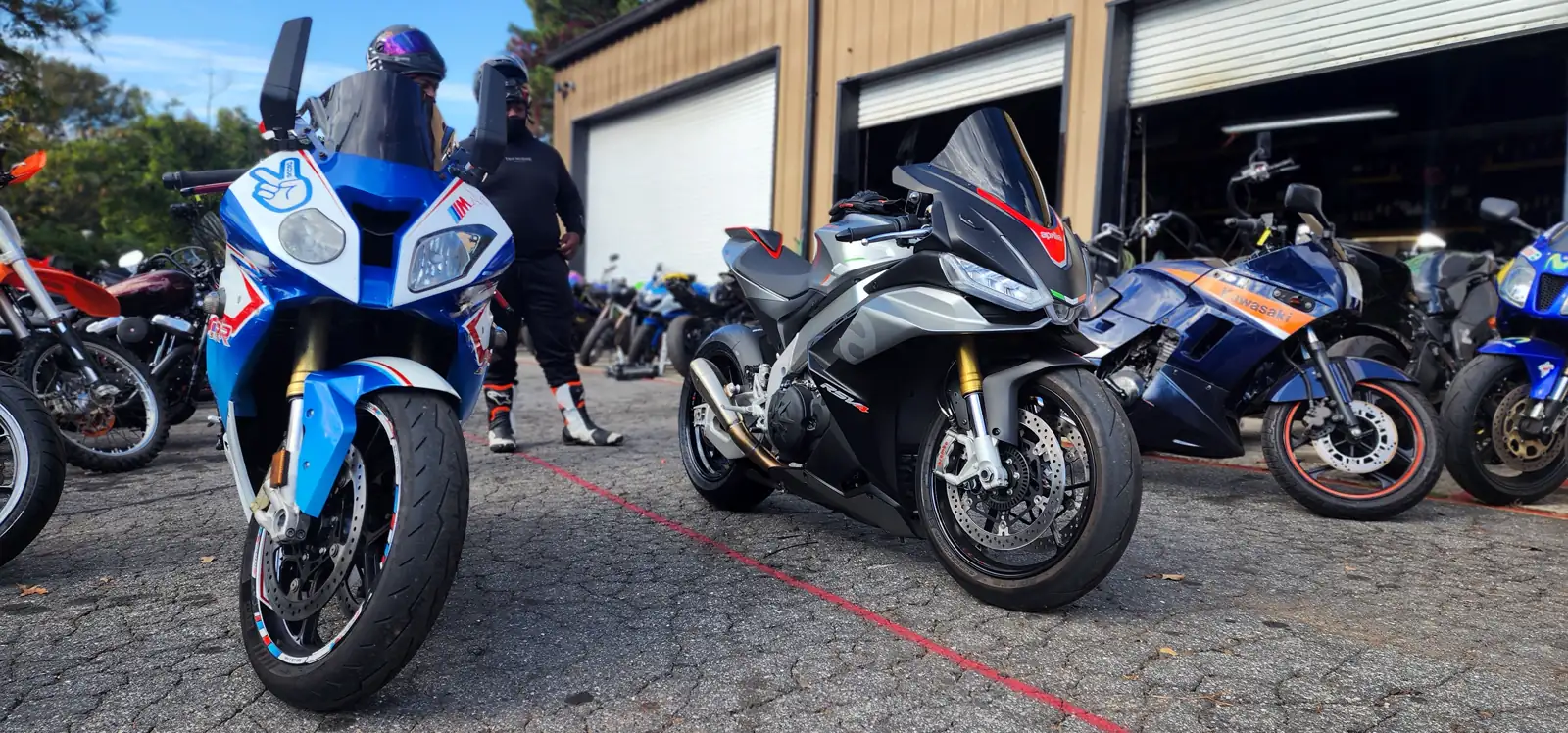
So here’s where all of this lands. You’re not looking for a shop that says the right words. You’re looking for one that writes things down, shows you the worn part, tells you when something can wait, and treats your owner’s manual as the authority on intervals. The best motorcycle service Marietta can give you is simply the shop that does those four things every single time. Ask the five questions, notice who answers easily, and go with that one. You’ll ride away knowing exactly what was done and what’s coming.
Questions Marietta riders ask us
What actually makes you different from the other shops?
Mostly range. We handle all-makes service, dyno tuning, ECU flashing, in-house paint, restoration and transport under one roof, so a bike doesn’t get passed between buildings. The practical result is fewer handoffs and one crew that knows the whole story of your bike. We also write down what we checked and found fine, not just what we replaced.
How do I pick a good shop if I've never used one?
Call and ask what a routine service includes on your specific model. A good shop lists it out without hesitating and asks what you ride before answering. Then ask whether you’ll get a written record of everything checked. Shops that hand you a real list are almost always the ones being straight with you.
Should I go to a dealer or an independent shop?
It depends on the job. Warranty and recall work belongs at a dealer, and dealers usually stock common parts for the brands they carry. Independents tend to be a better fit for older bikes, mixed-brand garages, aftermarket parts and tuning work. Neither is automatically better — they’re built for different things.
What should I ask before I hand over my key?
Ask who decides what gets replaced, and make sure the answer is you. Ask what happens if something unexpected shows up mid-job; the right answer is a phone call before any extra work starts. Ask to see the old parts. Any shop comfortable with all three is a shop you can relax about.
Do you work on all brands?
Yes. Cruisers and big touring baggers, sportbikes and naked bikes, European sport-touring and adventure bikes like BMW and KTM, and vintage or older Japanese project bikes all come through here. Seeing that whole mix keeps our instincts sharp, because no bike gets treated as a template.
How often does my bike really need service?
Your owner’s manual sets the interval, and we won’t invent a number that contradicts it. What we will do is adjust for how you actually ride. Stop-and-go commuting on I-75 and Cobb surface streets is harder on a bike than the same miles on open highway, so some items come due sooner than the odometer suggests.
We ride and wrench for the whole northwest side of metro Atlanta. Along with Marietta, we regularly see riders from East Cobb, Kennesaw, Smyrna and Acworth, plus Powder Springs, Mableton and Austell out west. Vinings riders are a quick run down toward the Battery, and Woodstock riders drop in on their way back from the north. We also see plenty of bikes from Roswell and Sandy Springs across the river, and from Dallas out past the Paulding line. If you’re within a reasonable ride of Cobb County, you’re in our neighborhood.
BRING IT BY. WE'LL BE STRAIGHT WITH YOU.
If you’re comparing shops in Marietta and just want a clear answer about where your bike stands, send us a text or give us a call. Tell us what you ride, how you ride it, and what’s been nagging at you. We’ll tell you what needs doing now, what can wait, and what we’d leave alone — before anybody touches a wrench.
470-460-9883Diaz Motorcycles and Service, LLC · 847 Barnes Mill Road, Marietta, GA 30062