Motorcycle Service in East Cobb, Explained in Plain Words
The small stuff is cheap. The same small stuff, ignored for one more month, is not. Here's how we catch it early.
The bike starts. That’s the part that fools everybody. For example, it fires up in the garage on a bright Saturday, idles rough for ten seconds, then smooths out enough that you swing a leg over and go. Thirty days later the soft brake lever is a stuck caliper, the chain that only wanted lube has filed the sprocket teeth into little hooks, and one easy afternoon has become three separate jobs. Even so, that gap between a bike that runs and a bike that’s right is the whole reason motorcycle service East Cobb riders keep coming back for is worth finding early. We’d rather catch a thing while it’s small and boring.
Your bike has been talking. Here's what it's saying.
Bikes almost never go silent before they go wrong. They get chatty. What’s more, the trouble is that the first signals are quiet ones, and quiet is easy to shrug off while the thing still rolls out of the garage and still makes the right noise at the end of the street. So let’s start with the list. If two or three of these sound like your bike, you’re not in trouble. After that, you’re early, and early is the best seat in the house.
- Also the brake lever feels soft, or pulls back farther than it did last year.
- Instead the chain has a tight spot as you roll the wheel, or squeaks after a wet ride.
- Besides it cranks slow on the first push of the button, then catches and runs fine.
- Actually the idle hunts up and down at a red light instead of sitting steady.
- The front end shakes when you squeeze the brakes at speed.
- That’s why there’s a shine on one fork tube, or a damp ring in the dust below it.
- The tires look fine, but the rubber feels hard and slick under your thumb.
- Either way a new tick or rattle shows up hot and hides when the engine is cold.
In short every one of those is a small job today. Most are a much larger job in sixty days. That isn’t a scare story, it’s just how metal, rubber and gasoline behave when nobody is looking. Your bike isn’t being dramatic. It’s being honest, which is more than we can say for most dashboard lights.
What each of those signals actually means
A soft lever usually means one of two things. Either the brake fluid has pulled moisture out of the air and gone spongy, or a caliper piston is dragging in its bore instead of sliding clean. Brake fluid is thirsty by design. It takes on water a little at a time, and water boils long before brake fluid does. The fix is a flush and a caliper clean, and the difference lands in your hand the second you ride out of the lot.
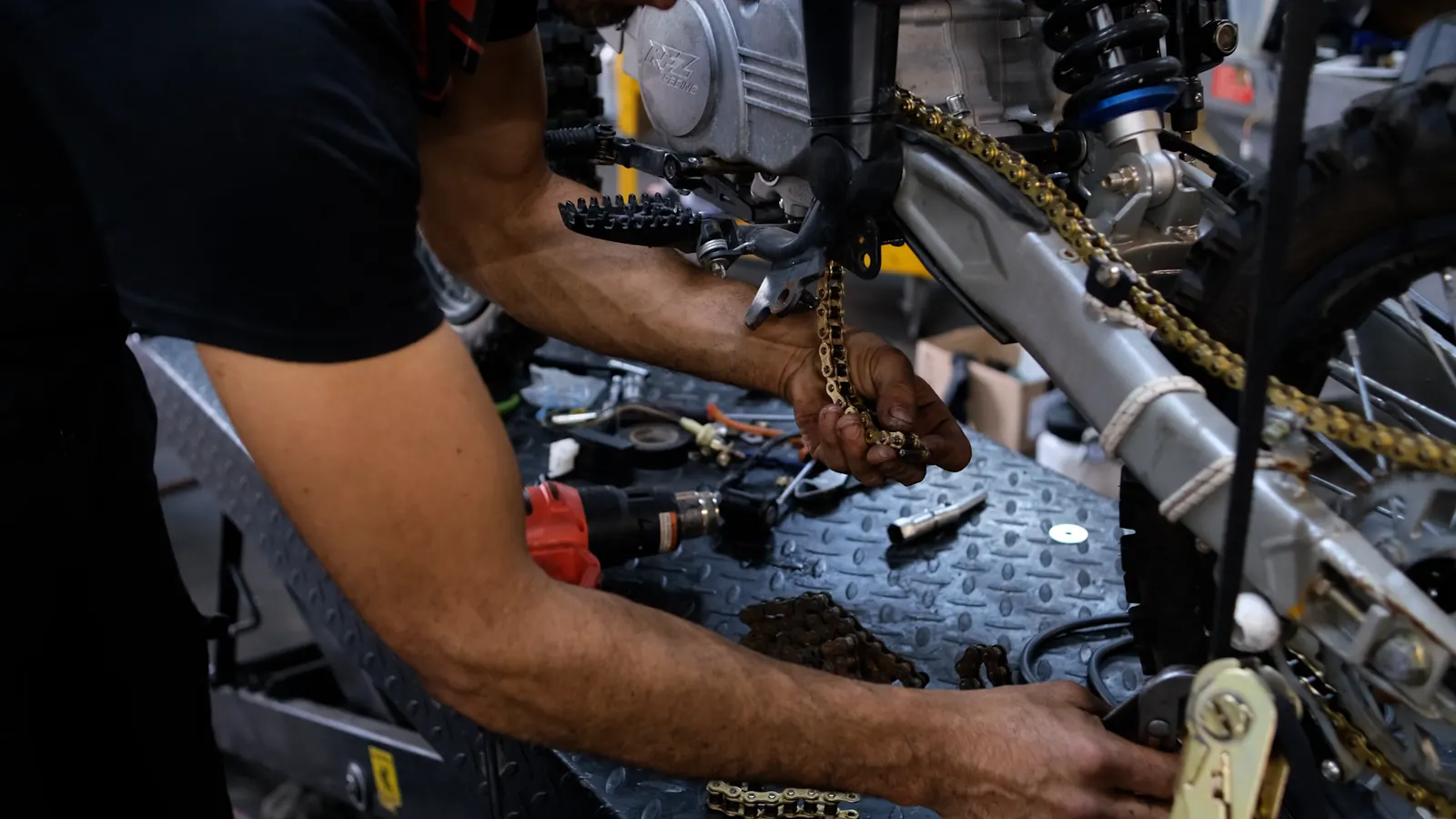
A tight spot in the chain means the links stopped wearing evenly, and uneven wear carves sprocket teeth into little shark fins. Catch it while it’s only a chain and you replace a chain. Let it run, and you’re buying sprockets too, plus the labor to take the back of the bike apart. Chain care is deeply boring work. Boring is cheap, and cheap looks good on a maintenance bill.
Slow cranking is hardly ever just cold weather. It’s a battery that’s been sitting, or a charging system that isn’t putting back what the bike pulls out. Garage-kept bikes hide this one well, because a battery on its way out still has enough punch to fool you on a short Saturday ride. A load test takes minutes and ends the guessing.
A hunting idle and a thirstier tank both point at the fuel side. Think varnish in the injectors or jets, a tired air filter, or a vacuum leak letting extra air sneak in behind your back. Gas that sits turns into a sticky glaze inside passages narrower than a pencil lead. All of that cleans up nicely, and it cleans up easier before the bike sits another season.
Shine on a fork tube is oil that belongs inside the fork, and it will eventually find your front tire. A shake under braking might be a warped rotor, a loose steering head bearing, or a tire cupped from straight-line miles. All three feel identical from the seat, which is why guessing is an expensive way to buy parts.
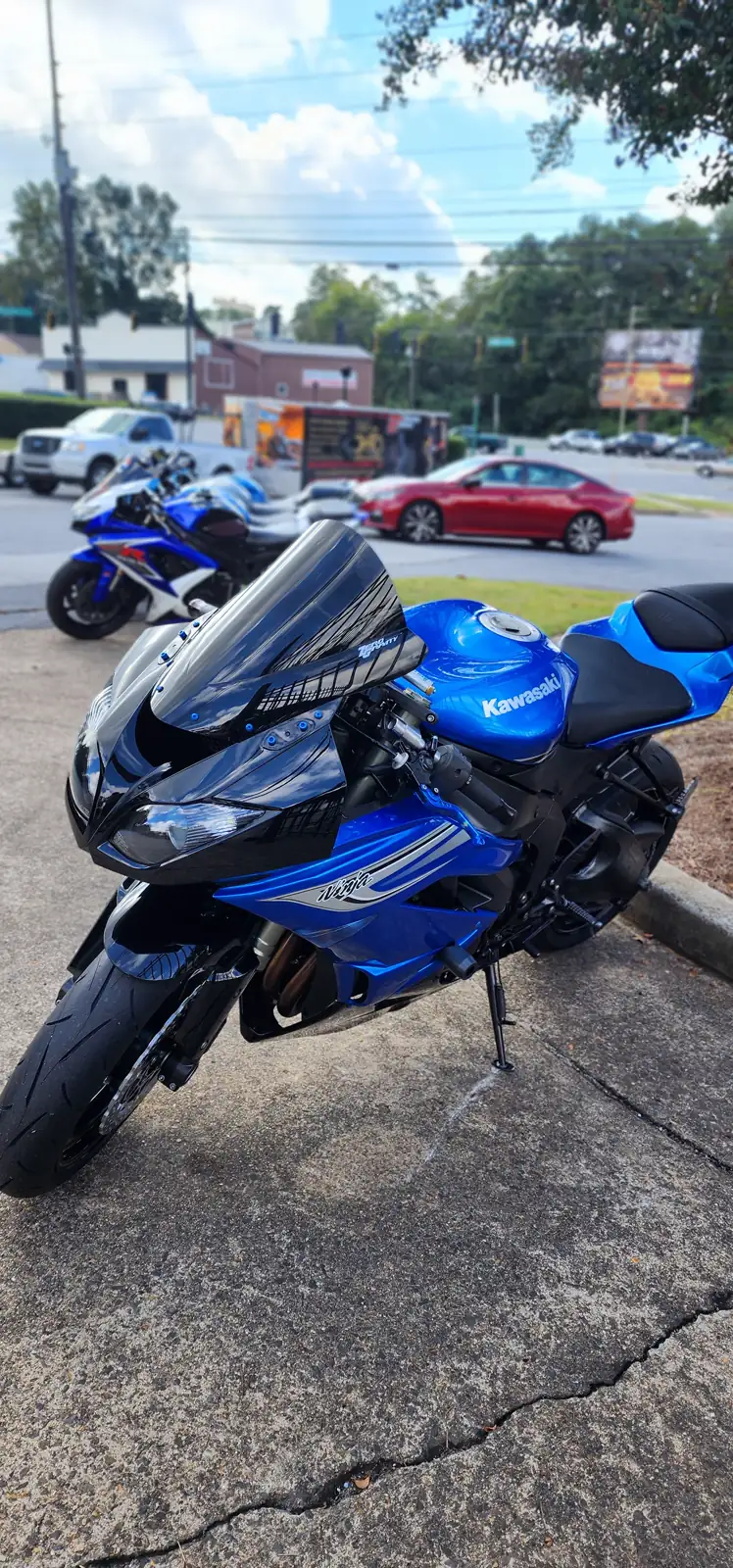
What actually happens when you bring it in
Nothing gets quoted off a phone call and a hunch. A symptom is a clue, not a diagnosis, and the honest answer to “what’ll it run me” is always “let us look first.” So here’s the sequence, start to finish, with no mystery in it.
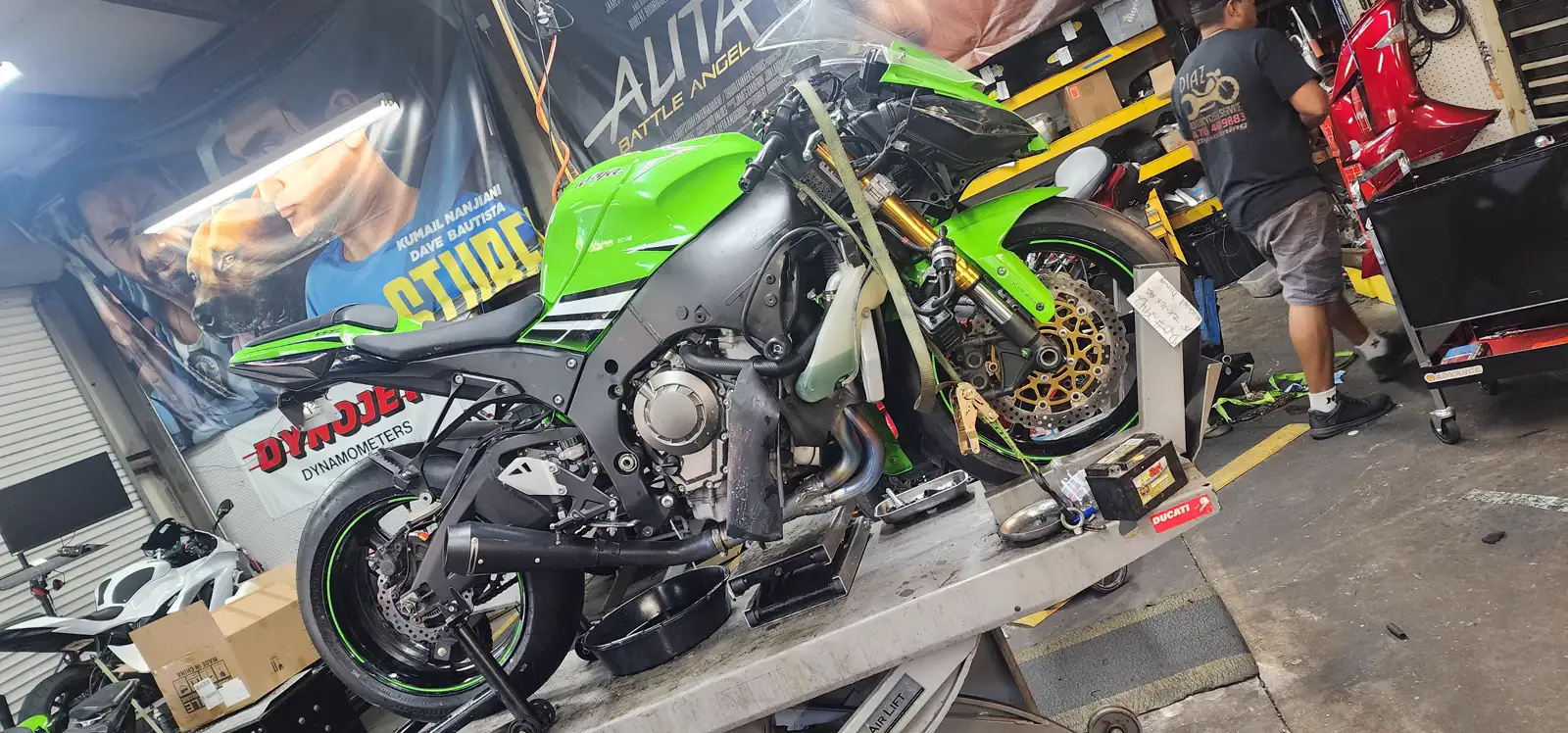
First we talk. When did it start, what does it do, does it happen cold or hot, wet or dry, first mile or twentieth. Riders describe their own bikes better than they think, and five minutes of that saves an hour on the lift. Then the bike goes up for a real look: fluids checked, brake pads measured, rotors gauged, chain and sprockets inspected together, tires read for date and wear pattern, battery load tested, and codes pulled if it has a computer to ask.
Most people stop reading here. That's the expensive mistake.
Then you get a call, in plain words, sorted into three piles. Here’s what has to happen for the bike to be safe and right. Then what we’d do if it were ours, and why. Here’s what can wait until next time, so it isn’t a surprise later. You pick. Nothing gets touched that you didn’t approve, and if you want to hold the worn part in your hand first, we’ll set it aside. That’s the promise behind what you get when you bring it in.
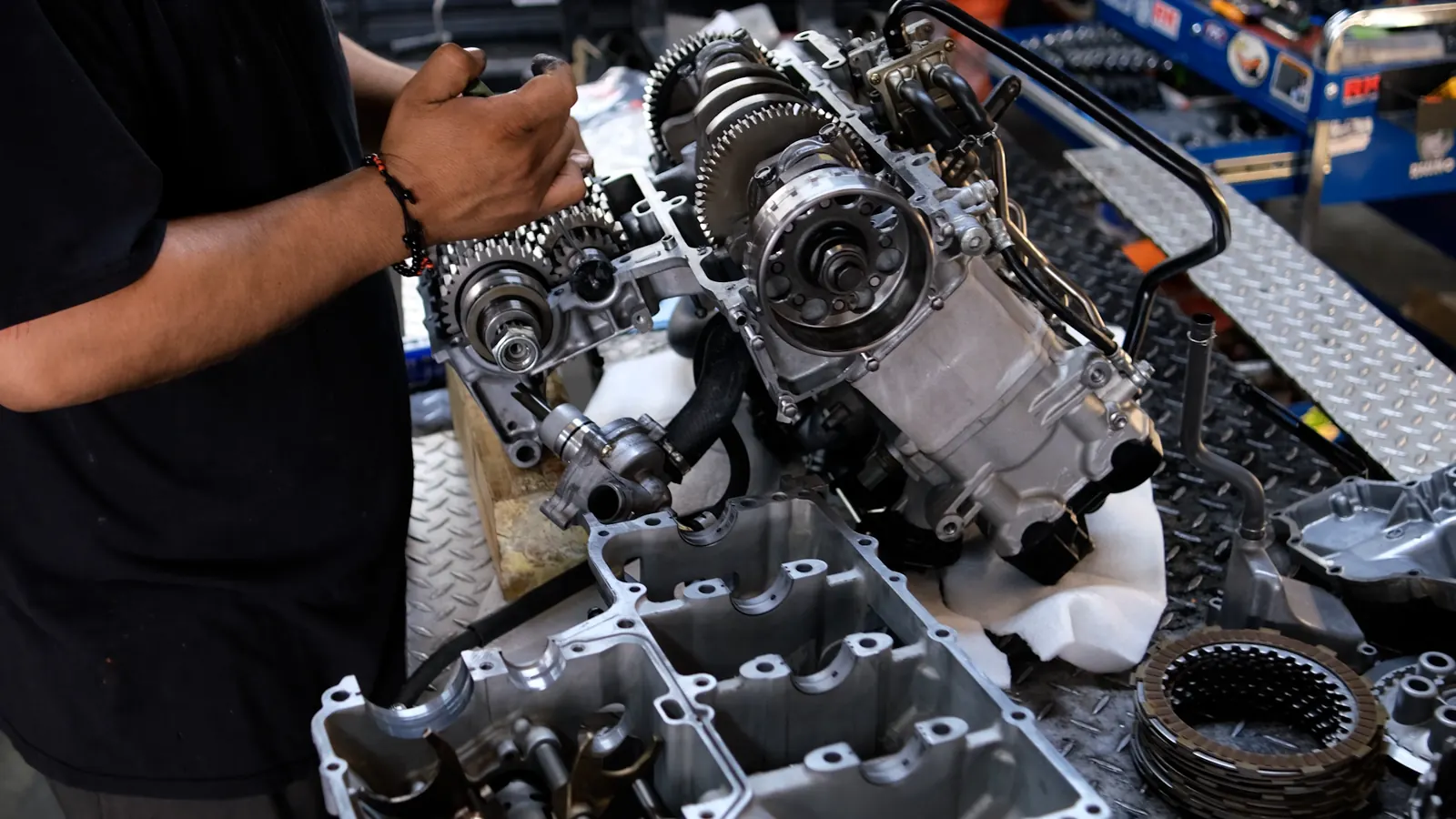
East Cobb riders ask better questions than most, and we like it. Which brand of pad. OEM or aftermarket, and what’s the real difference. Why that oil weight. Ask all of it. If a job turns out bigger than the first look suggested, you hear about it before the wrench moves, not after. For deep teardown work, here’s how we handle that job from the first bolt to the road test.
So how often is often enough?
Your owner’s manual sets the intervals. Not us, not a shop chalkboard, not a guy at a gas station. Every manufacturer publishes its own schedule for oil, filters, valve checks, brake fluid, coolant and final drive, and those numbers differ a lot between a big touring twin, a liquid-cooled sportbike and a thirty-year-old air-cooled machine. If you can’t find your manual, bring the bike and we’ll look it up with you.
Here’s the wrinkle that catches good owners off guard. Most schedules are written as miles or months, whichever lands first. Bikes that live in a clean garage and go out a dozen Saturdays a year hit the months side long before the miles side. Fluid ages on the calendar. Rubber ages on the calendar. Fuel absolutely ages on the calendar. Groups like the Motorcycle Industry Council track how little the average bike actually gets ridden in a year, and that number surprises people.
Riding habits change the math too, which is why how this plays out in Lawrenceville looks different from how it plays out here. Commuter-heavy areas eat chains and brakes fast and rarely see varnish. Weekend-toy areas are the reverse. Same bikes, same manuals, different first thing to check.
Why East Cobb bikes wear the way they do
This is a garage market, and that’s mostly a gift. Two- and three-car garages came standard on the lots built through the seventies, eighties and nineties, so bikes here stay dry and out of the weather. A bike in Indian Hills sits on a big wooded lot inside a golf community of about 1,680 homes, ten minutes from a tee time at Indian Hills Country Club. A bike over in Windsor Oaks belongs to a family that says “we’re in Lassiter” before they mention a street name. Over in Canton Hills, in the Murdock Elementary district, same story, different bus route.
The flip side of a life indoors is that sitting is its own kind of mileage. Batteries drain, fuel varnishes, tires develop flat spots, pads bond lightly to rotors, rubber dries out, and now and then a mouse decides an airbox is a fine place to raise a family. None of that means anything is wrong with your bike or with you. A garage queen simply needs a different checklist than a bike grinding out miles every day.
Then there’s the pavement. Cobb County keeps working through its resurfacing plan, but older subdivision streets and creek-crossing arterials still hand out a beating. Sewell Mill Road is the one riders mention most, with patched sections and steep dips at the creek bottoms that load suspension hard and fast. The heavy tree canopy also holds wet leaves, acorns, pine straw and shade moisture long after the rest of the county has dried out.
When you do point the bike at a good morning, the run out Sandy Plains Road onto Post Oak Tritt and Trickum Road is the easiest way northeast out of the suburbs toward Woodstock, past the ground near Atlanta Country Club and its top-hundred golf course. Summer adds its own tax. June through August brings heat, humidity near seventy percent on average, and near-daily afternoon storms that cook cooling systems and rinse chain lube off in minutes.
Location matters more than riders expect. Hellbender Harley-Davidson at 993 S Cobb Dr in Marietta has been a motorcycle destination on that site since 1986, and it’s a fine place, but it’s roughly 22 to 28 minutes from the East Cobb core with a county-crossing slog in the middle. We sit at 847 Barnes Mill Road off Roswell Road, inside the community, under fifteen minutes from most of it. Weighing a dealer bay against an independent shop? We wrote out the tradeoffs between them without spin.
The last piece is the one people underestimate.
Rubber ages even when the odometer doesn't
Tires are the part nearly everyone judges by tread depth alone, and tread depth is half the story. Every tire carries a date code on the sidewall, and a tire with plenty of tread can still be old enough that the compound has gone hard and stopped gripping. On a low-mileage bike, that’s the normal outcome rather than the rare one. Good news: it’s easy to read, and we’ll show you exactly where the code is so you can check it yourself forever after.
The same clock runs on everything made of rubber. Brake lines swell and soften with age, which is part of why a lever can feel mushy even after a fresh flush. Fuel lines get brittle. Fork seals dry out and weep. Coolant hoses harden where they clamp. Writers at RevZilla’s Common Tread have beaten this drum for years, and they’re right. Age matters as much as mileage, and none of it is hard to stay ahead of.
So when a bike arrives that’s been parked a while, motorcycle service East Cobb style starts with the boring things: battery health, fuel condition, tire dates and pressures, brake drag, and whether anything built a nest somewhere warm. Nine times out of ten that’s the whole problem, and the bike leaves feeling ten years younger.
What good service actually buys you
Confidence, mostly. The bike starts on the first button push. For example, the brakes bite where your hand expects. The chain runs quiet. You stop taking that little mental inventory at every stop sign about whether today is the day something acts up. That’s the real product, and catching things small keeps them small.
It also protects what you own. Bikes here tend to be well-chosen machines, from baggers and Gold Wing class tourers to BMW GS and RT sport-tourers, Ducatis, KTMs, vintage air-cooled classics and sportbikes kept at low miles on purpose. Records and steady upkeep keep those bikes worth what they should be worth.
And the next step is genuinely easy. Text us. Tell us what the bike is, what it’s doing, and roughly when you’d like it back. We’ll tell you what we think it is, what we need to see to be sure, and how the day would go. If getting it here is the hard part because you’re stuck in Perimeter or Buckhead until six, say so, and we’ll come get it instead. You keep your Saturday.
THE SHORT VERSION
Small signals are cheap to fix and quick to check. Your manual sets the intervals, the calendar counts as much as the odometer, and nothing gets quoted before it gets inspected. Text us and we’ll take it from there.
Questions East Cobb riders ask us
Do you work on my brand?
Almost certainly. We handle Harley, Indian, Honda, Yamaha, Kawasaki, Suzuki, BMW, Ducati, KTM, Triumph and plenty beyond that list. If your bike is unusual enough that we’d need to order something special, we’ll say so up front instead of finding out halfway through. Text us the year, make and model and you’ll have a straight answer fast.
Do I need an appointment?
An appointment helps, mainly because it means your bike goes on a lift instead of in a line. That said, if something feels wrong today, don’t sit at home waiting for a slot. Reach out and we’ll find the soonest sensible time to get eyes on it.
Can you pick up my bike?
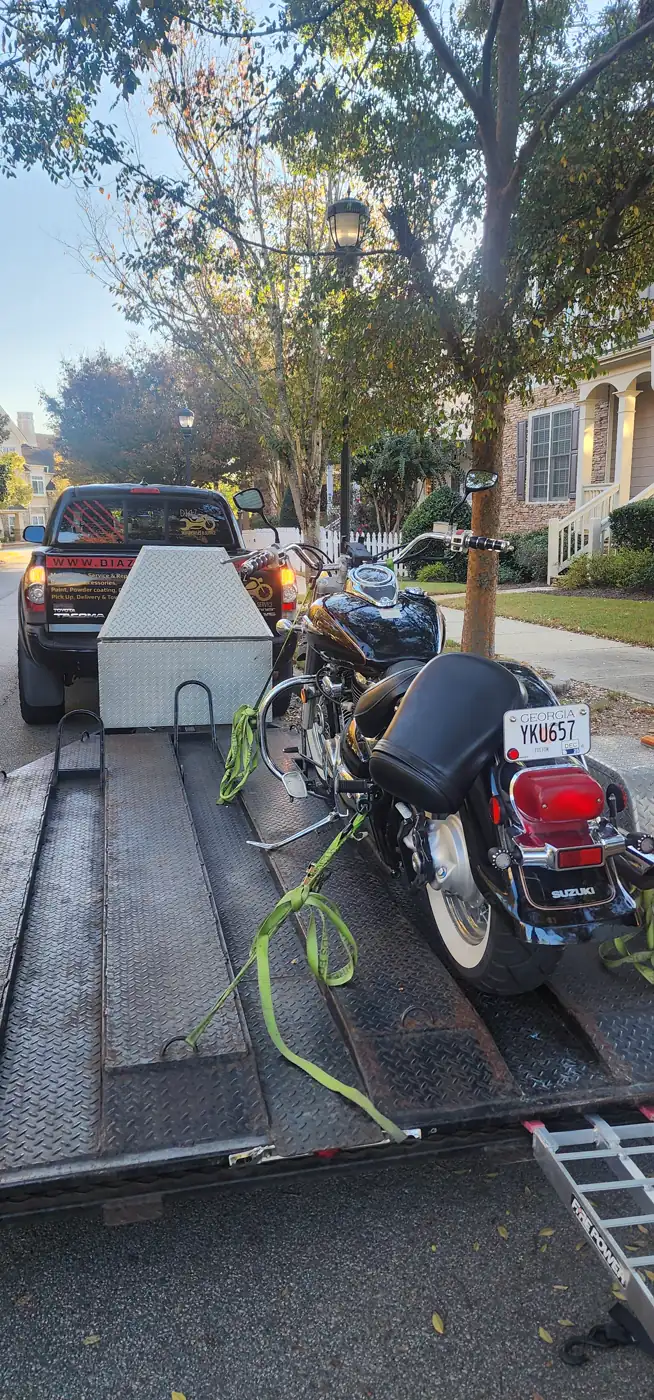
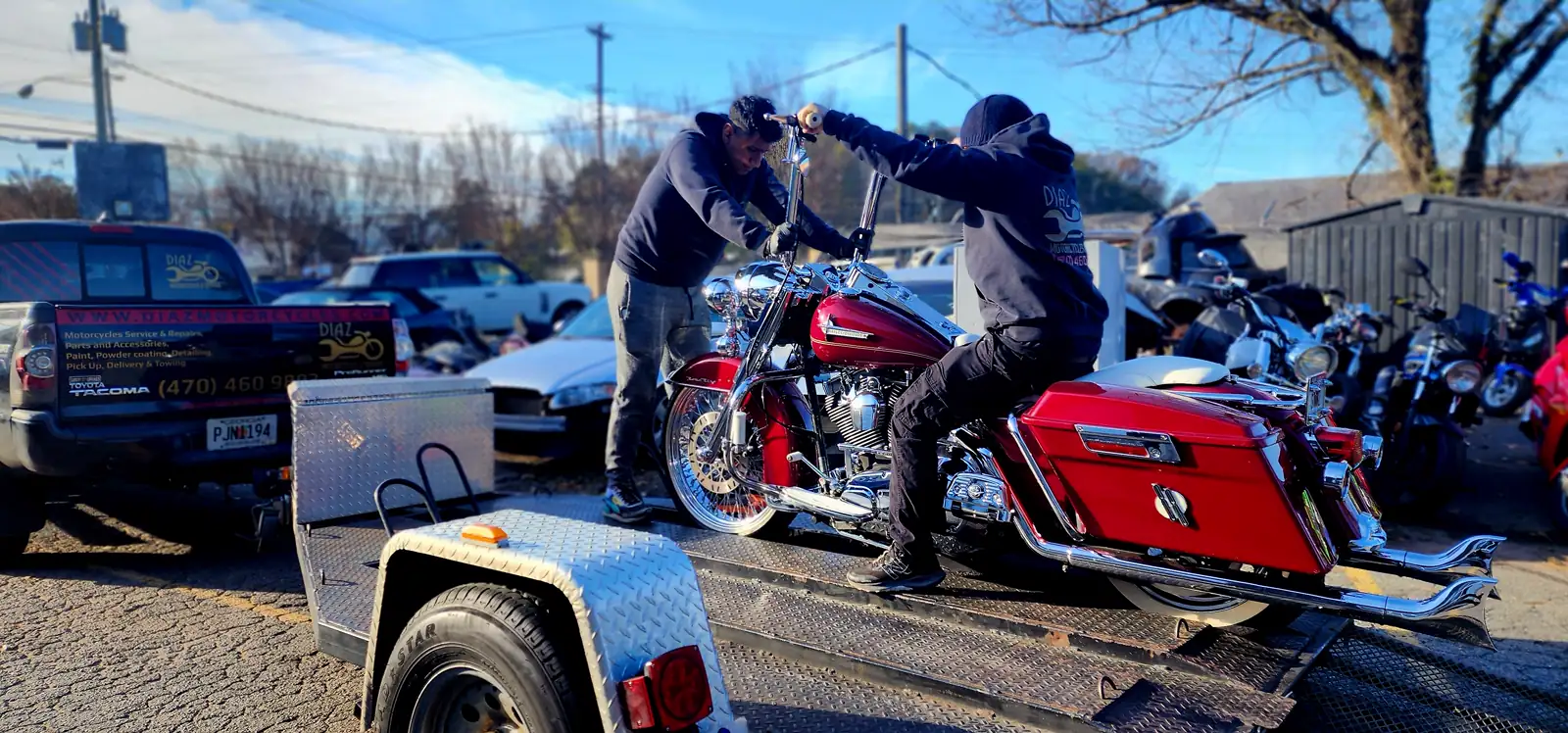
Yes, and it’s the service East Cobb riders use most. If you’re working in Perimeter, Sandy Springs, Cumberland or Buckhead all week, arranging a drop-off is the hardest part of the whole repair. We’ll come get it, do the work, and bring it back. Just tell us where it lives and when someone can open the garage.
How do I get a quote?
We inspect first, then quote. One symptom can have three or four different causes, and quoting before we look would mean guessing with your money. Once the bike is on the lift, you get a call that separates what’s necessary, what we’d recommend, and what can wait. Nothing happens without your okay.
Do you work on older bikes?
Gladly. Vintage Japanese, British and air-cooled machines are some of our favorite work, and East Cobb garages are full of them. Older bikes often need patience more than parts, especially around fuel systems, wiring and rubber that’s aged out. We’ll be honest about what’s realistic before we start.
My bike sat all winter. Where do you start?
With the boring stuff, because that’s usually the whole answer. Battery health, fuel condition, tire dates and pressures, brake drag from pads resting on rotors, and a look for anything that nested somewhere warm. Most sitting problems clear up in one visit, and the bike comes back feeling like itself again.
We’re based in East Cobb at 847 Barnes Mill Road, off Roswell Road, and nothing in the community is more than about twenty minutes away. Beyond that, we take care of riders across Marietta, Roswell, Sandy Springs, Kennesaw, Smyrna and Vinings, and we regularly see bikes come down from Woodstock, Canton and Acworth or over from Alpharetta and Dunwoody. Plenty of our work also comes from riders inside Atlanta who’d rather hand the bike to a shop that answers the phone than fight a dealer schedule. If you’re anywhere on that map, text us and we’ll sort out the easiest way to get your bike here, including coming to get it ourselves.
TEXT US AND WE'LL TAKE IT FROM HERE
If your bike in East Cobb is doing one of those small things you’ve been meaning to deal with, today’s the cheap day to deal with it. Text us the year, make and model plus what it’s doing, and we’ll tell you what we think, what we need to see, and how the day would go. We can pick it up if the drop-off is the hard part. No guessing, no surprises, and no work done that you didn’t approve first.
470-460-9883Diaz Motorcycles and Service, LLC · 847 Barnes Mill Road, Marietta, GA 30062