Service Cost Powder Springs: What Actually Drives the Number
A plain-words walk through what a motorcycle service really includes, and why the honest number shows up after the bike does.
Also he stood at a parts counter for eleven minutes while the guy behind it finished a conversation with somebody else. When the answer finally came, it came with a small sigh, the kind that means you should already know this. Instead he rode home with no number, no plan, and no idea what anyone had actually looked at. That is how a lot of folks end up thinking about service cost Powder Springs shops quote: like a locked box somebody else holds the key to. It isn’t. Besides a service is a short list of small, checkable things, and every one of them has a plain reason sitting behind it.
So let’s open the box. Actually By the end of this you’ll know what a shop is doing when it says it depends, what makes one bike’s service bigger than the next one’s, and why the truthful answer to “what’ll it run me” almost never arrives before the bike does. No mystery. No sighing.
Why a good shop won't quote your bike sight-unseen
That’s why call around and ask what a service runs. Either way You’ll hear five different answers, and the most honest one will sound like the least helpful: we’d need to see it. That isn’t a dodge, and it isn’t a setup. In short it’s the only true thing anyone can say about a machine they haven’t put hands on yet.
Picture two Road Kings, same year, same badge on the tank. One lives in a two-car garage in Amberton and comes out on clear Saturdays for a loop and a coffee. The other spent three winters under a tarp behind the house and got woken up in a hurry each spring. Same bike on paper, wildly different afternoon in the shop. The first wants oil, a filter, and a careful set of eyes. What’s more, the second wants all that plus a battery, a fuel system that forgot what fresh gas tastes like, and brake fluid the color of sweet tea.
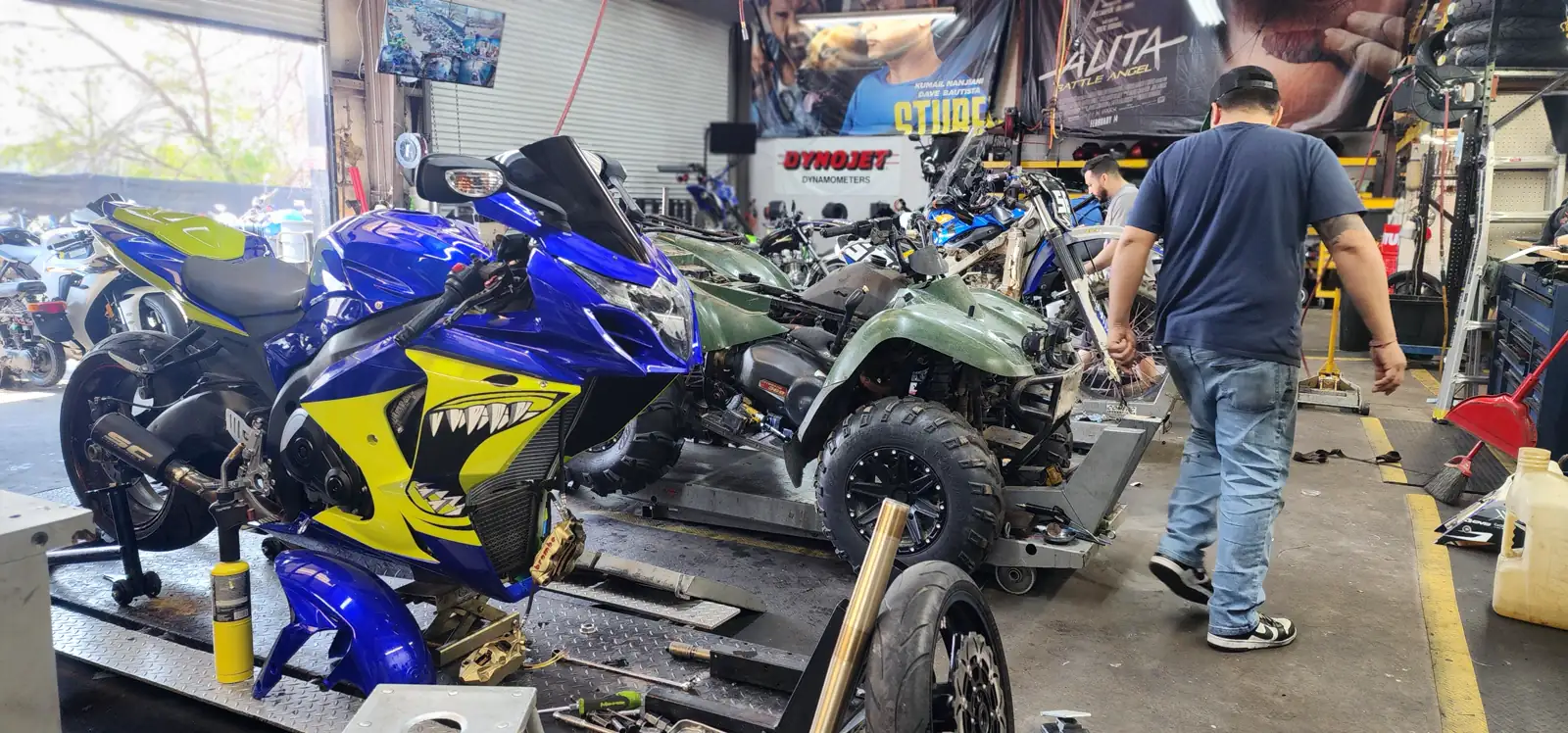
“It depends” is really shorthand for two things nobody can know from a phone call: how many hours your bike will take, and which parts it will want while it’s up there. Everything else is arithmetic. So when someone hands you a service cost Powder Springs number before asking a single question about your bike, they’re either guessing or quoting the thinnest possible version of the job.
Parts, labor, and the one nobody mentions: access
Parts are the easy half to understand. Oil, a filter, plugs, pads, a chain and sprocket set, a battery, a tire. Those have a price the shop doesn’t invent, and a good shop shows you the list line by line. Where riders get caught off guard is that parts differ a lot by machine. A big touring bike drinks more oil than a little single, and a liter sportbike wears premium rubber because that’s what it was built around. None of that is anybody being fancy. It’s just what the bike takes.
Labor is time. A tech’s hands on your motorcycle, counted in hours. Part of that time is the work itself: draining, filling, adjusting, bleeding, torquing, testing. And part of it is the thing almost nobody thinks about.
Access is the work you have to do before you can do the work. On some bikes the oil filter sits right out in the open and you’re finished in minutes. On others you’re pulling fairings, dropping a belly pan, unbolting an exhaust, or lifting a tank to reach one bolt. A valve check on a big V-twin and a valve check on an inline four are not the same day, even though the words on the invoice look identical. That one idea explains most of the gap between two quotes for the same job, and it’s why we walk people through everything we cover before a single wrench comes out.
ACCESS
Two bikes can need the same fluid and the same part and still take twice the time apart. Bodywork, exhaust routing, and wherever the factory buried the filter decide that. Not the shop.
Before we go further, one thing worth clearing up. There is no universal service mileage, and anybody who throws a magic number at you before asking what you ride is guessing. Your owner’s manual sets the interval for your exact model, and it’s the only source that counts. We read it, you read it, and the plan comes from there. If your manual disappeared three owners ago, no problem at all, we’ll help you find the right one. Riders who like the wider view of ownership can also spend a happy hour with the American Motorcyclist Association.
How we figure it out, step by step
Here is the actual sequence when a bike rolls through our door. Nothing in it is secret and none of it happens behind a curtain.
- We ask what you ride, how you ride it, and how long it’s been since anything was done. Honest answers save you time and money, and nobody is grading you.
- We pull the maintenance schedule the manufacturer publishes for your exact model, so the plan comes from your manual instead of a hunch.
- The bike goes on the lift for a walkaround: fluids, chain or belt, pads, rotors, tires and date codes, lights, levers, cables, leaks, chafed lines.
- We split what we found into three lists, not one. Due now. Coming soon. Fine for a while.
- We call you with what each item involves before any of it starts.
- You say yes, no, or not yet. Then we work.
Step five is the one that matters most. You should never find out what a shop did by reading the invoice. If something turns up mid-job, a seized bolt, a pad worn past the backing, a tire with a date code older than the rider’s phone, the bike stops right where it is and the phone rings.
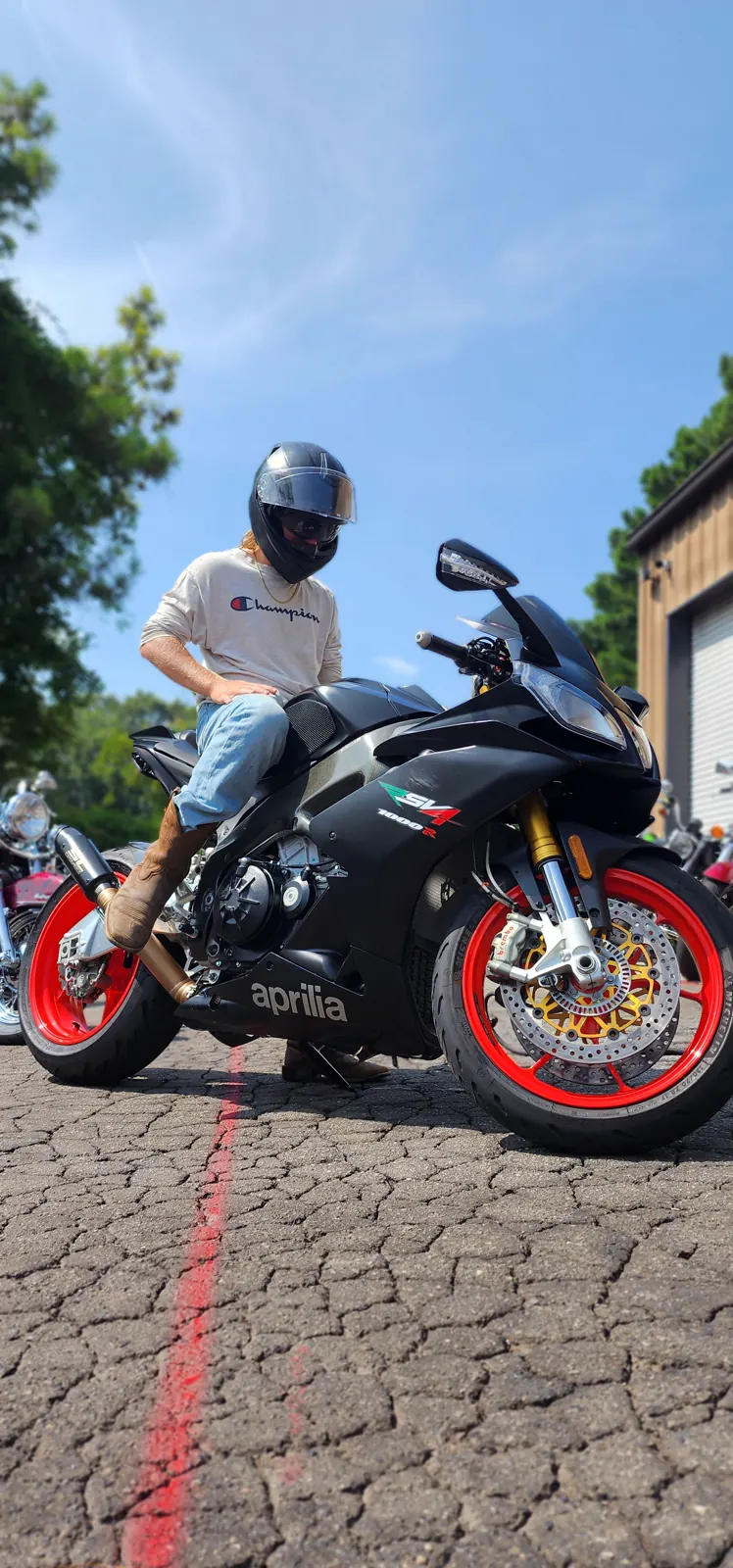
That written estimate is also how you dodge the worst kind of surprise. Item by item, with parts and hours kept separate, is what you want to see. Ask for one anywhere you go, not just here.
What a routine service actually includes
Strip the jargon out and a service is a handful of small chores done properly, in order, by someone who has done them a thousand times. Here’s the honest list.
- Engine oil and filter, with the drain plug and its washer treated like they matter, because they do
- Chain, belt or shaft drive, cleaned, adjusted to spec, lubed, and checked for hooked teeth and tight spots
- Brakes front and rear: pad thickness, rotor condition, fluid color, and a check for a spongy lever
- Tires: tread depth, pressure, cupping, cracking, and the date stamped into the sidewall
- Fluids, including coolant, brake and clutch fluid, and final drive on the bikes that have one
- Battery and charging system, terminals cleaned and state of charge measured rather than guessed
- Air filter, plugs, cables, levers and lights, plus a torque check on the fasteners that like to walk
- Steering head, wheel bearings, fork seals and shock condition, meaning anything that changes how the bike behaves in a corner
The drive chain is a perfect example of small things staying small. A chain that gets cleaned and set right just keeps going. A dry, loose one saws away at the sprockets, and now you’re buying three parts instead of one, plus the time to fit them.
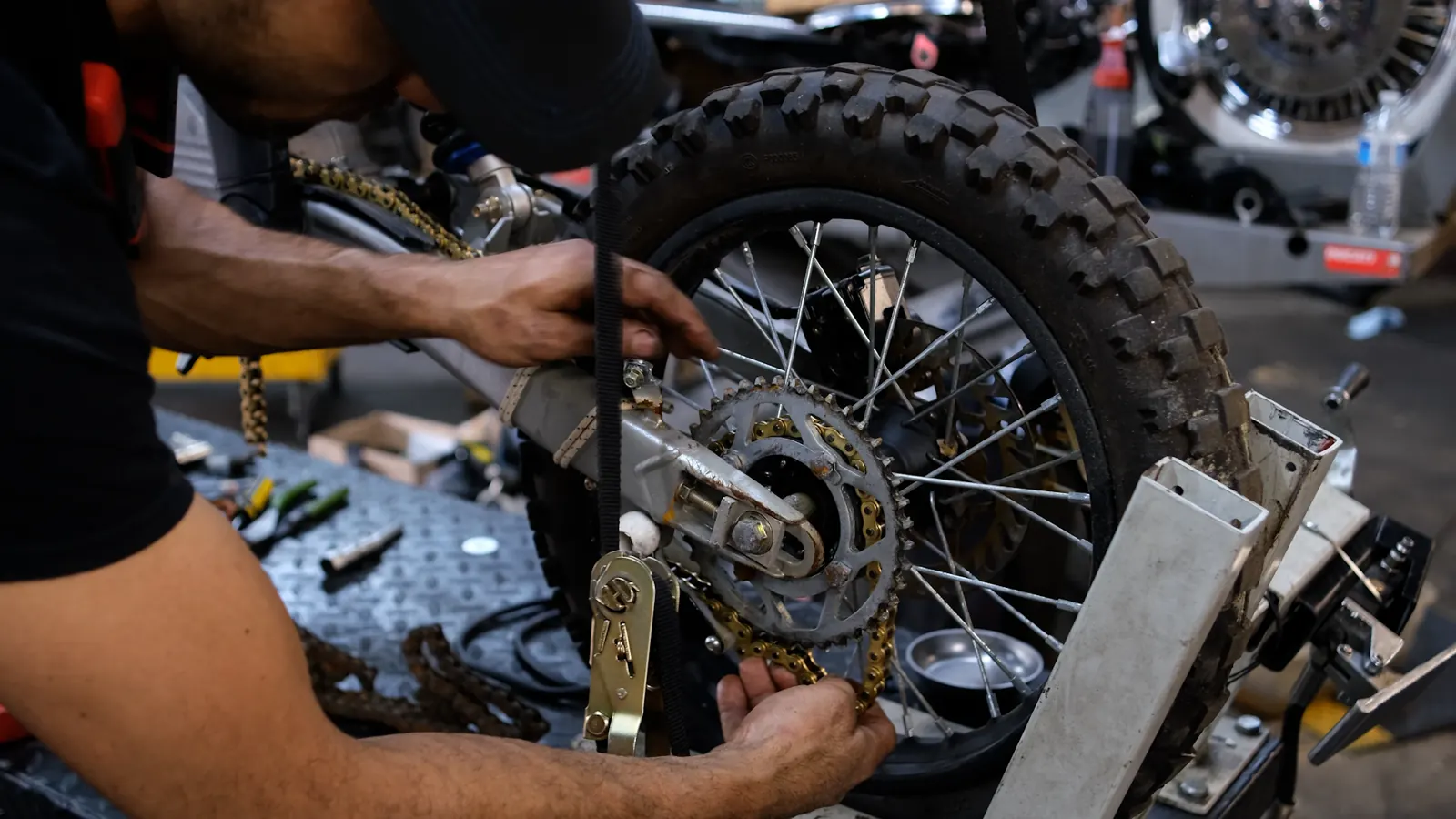
Brakes behave the same way. Pads are a quick swap while there’s still material left on them. Run them down to the backing plate and now you’re into rotors, and rotors turn a short job into a real one. Same fix, very different day, decided months earlier by whether anyone looked.
Tires and suspension get a hard life out this way. The arterials carrying west Cobb traffic, Macland and Florence and Hopkins and Brownsville, take a beating from construction trucks and school runs, so you’ll find edge break, patched utility cuts and gravel washed into intersections after a storm. Cobb County DOT works pothole repairs reactively, and residents can flag a bad spot through SeeClickFix or the Maintenance Work Desk at (770) 528-1600. Until a patch shows up, your fork seals and tires absorb all of it.
Small things stay small when somebody actually looks at them. That's the entire trick.
There’s a reason we bring this up on nearly every intake. Riders aren’t afraid of the work. They’re afraid of the phone call nobody warned them about, so we take that off the table. If we open something up and find more than we quoted, the bike stops where it stands and you get a call with options instead of a lecture. You’re allowed to say do the brakes now and the fork seals in the fall. Friends we’ve helped do exactly that all the time.
What riding in west Cobb does to a bike
Powder Springs is garage country. Homeownership runs high, the housing stock is single-family, and most bikes here live indoors next to the truck rather than out at the curb. That’s wonderful for paint and rough on batteries. A bike that sits from Thanksgiving to March comes back with a dead battery, fuel gone stale, and tires wearing a flat spot where they rested. Spring wake-up service is the most common thing we do for riders out that way, and it’s cheerful, easy work with a happy ending.
The season runs March through November, peaks in April through June and again in September and October, and every mild fifty-five degree January afternoon still pulls a few bikes out anyway. Weekend riders point toward GA 61 heading for Dallas and Villa Rica, a rural two-lane run that forms part of the Quad County Figure 8. Families spend the same morning at Powder Springs Park with its pavilions and paved paths, or on the Wildhorse Trail, the mile-and-a-half foot-and-bicycle connector from Wild Horse Creek Park over to the Silver Comet. None of that is riding, but it’s a fair picture of how the town spends a Saturday.
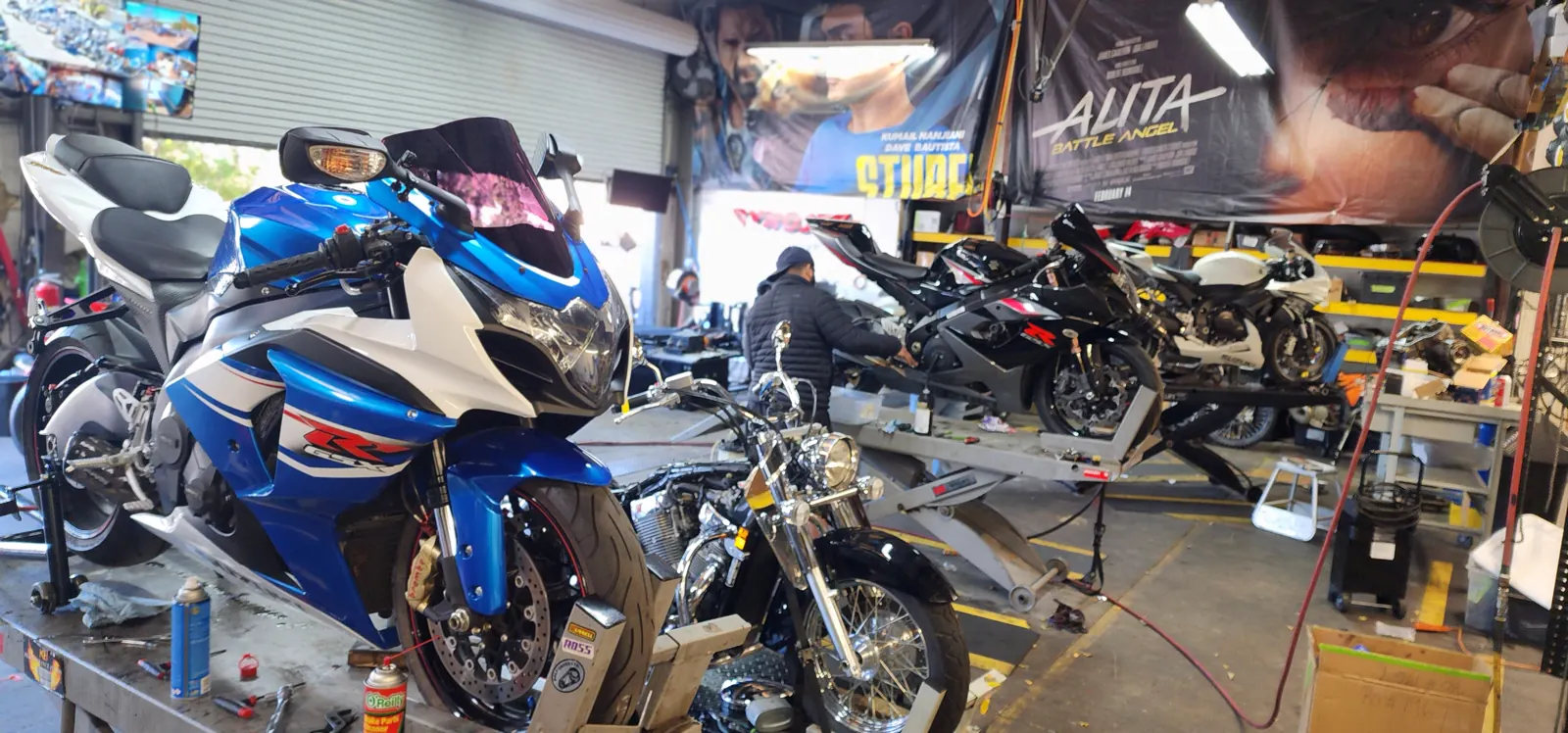
There’s no full-service motorcycle shop inside the city limits, so the real question was never whether to drive. It’s where. Some folks run about twelve to fifteen miles south to Atlanta Harley-Davidson on Thornton Road in Lithia Springs, which posts a bike night schedule each season. Others head northeast up Powder Springs Road or Macland Road, GA 360, the main west Cobb connector toward Marietta and Dallas Highway, then east on Roswell Road to Barnes Mill Road. Call it fifteen to eighteen miles and about half an hour. It’s the same trip riders over in Marietta make from the other direction.
Georgia doesn’t allow lane splitting or filtering, so a bike stuck on U.S. 278, the C.H. James Parkway spine everybody names, sits in the same jam as the minivan beside it. Almost nobody commutes on two wheels here as a result. Mileage piles up in bursts across good weekends and the bike naps in between, which is its own quiet kind of wear. If that sounds like your riding, here’s how we handle that job for machines on a seasonal rhythm.
What makes one job bigger than another
| What we find | Why it changes the work |
|---|---|
| The bike sat all winter | A battery, stale fuel and flat-spotted tires get added to what started as an oil change |
| Buried filters or heavy bodywork | Hours go into reaching the part before any actual work begins |
| A few seasons of skipped maintenance | Small items stacked up, and one or two already grew into bigger ones |
| Aftermarket exhaust, bars or fairings | Extra removal and refit time, and sometimes extra checks once it's back together |
| Big touring bike versus a small single | More fluid, bigger tires, more fasteners, simply more machine to inspect |
| Something seized or stripped | Removal turns into careful surgery instead of one turn of a wrench |
Notice what isn’t on that list. The badge on your tank, your street, and whether you look like somebody who owns a torque wrench change nothing about the work, and nothing about how you get treated at our counter.
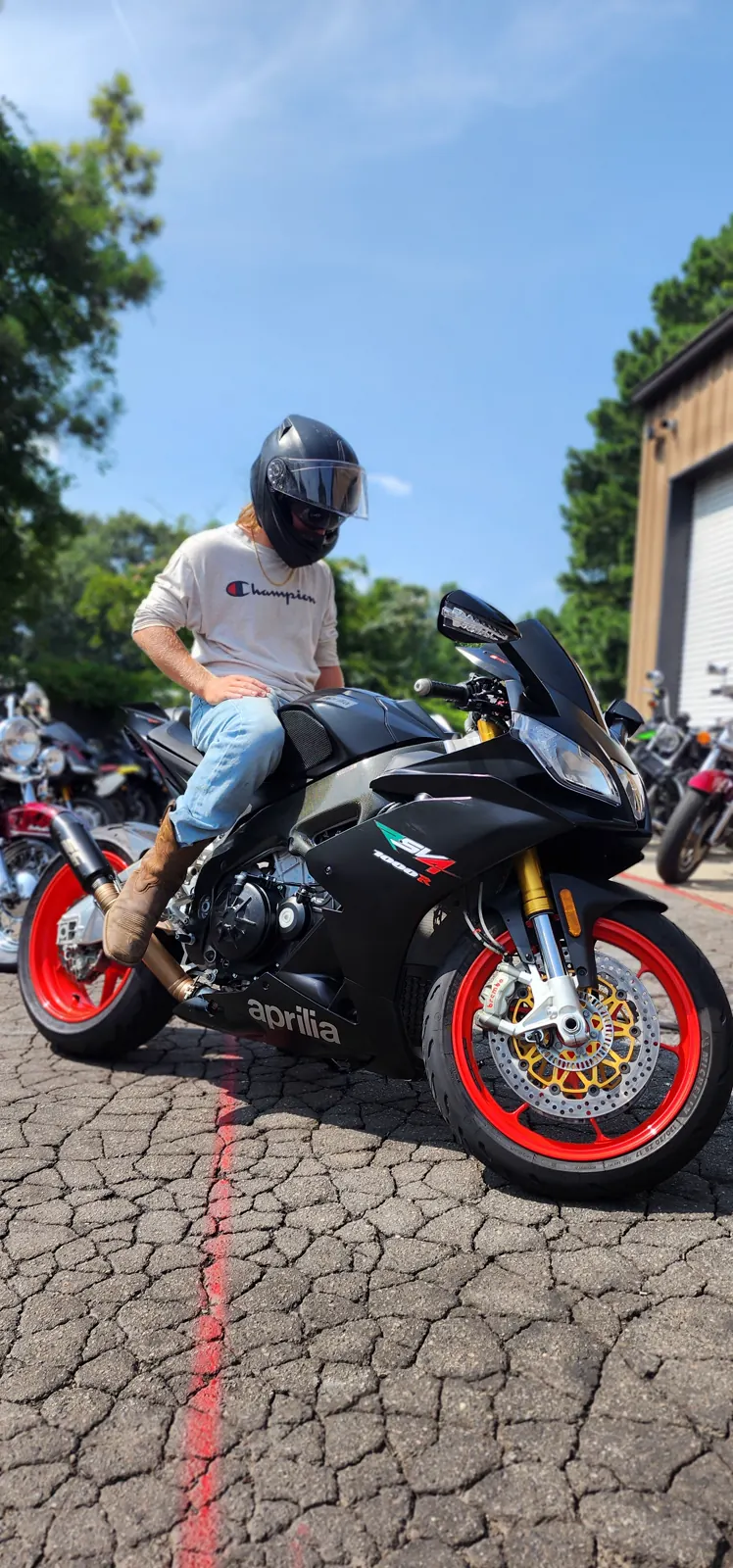
One practical note while we’re on housekeeping. Get your registration squared away before a big riding weekend, since the Georgia Department of Revenue handles motor vehicle records for the state. Five quiet minutes now beats a roadside conversation later.
What you walk out with
Here’s the outcome we’re after every single time. You leave knowing what got done, what didn’t, and what’s waiting on deck for next season. The chain is set. After that, the brakes are honest. The tires got checked and the fluids got measured. Nothing on your bike is a question mark anymore. A real service cost Powder Springs riders can plan around is simply one that arrives with an explanation attached to it.
Riders in Amberton, over in Worthington Oaks, and in the newer townhomes at Village at West Cobb all ask us the same thing in different words: am I being told the truth? So we tell it, plainly, every time. If you’re weighing where to take your bike, the full rundown on it is worth a few minutes before you hand anybody your keys. Then bring the bike up and let’s make it boring again, because boring is the goal.
Questions Powder Springs riders ask us
What's the difference between parts and labor on a service?
Parts are the physical items your bike consumes, like oil, a filter, pads, a chain or a battery. Labor is the time a tech spends with hands on the machine, counted in hours. We keep them separate on the estimate so you can see exactly what you’re getting. That way nothing hides inside one vague line.
Does the type of bike really change the work?
Quite a bit, yes. A big touring bagger holds more fluid and wears bigger tires than a small single, so there’s simply more machine to service. Bodywork matters even more than size, because a bike with fairings and a buried filter takes real time to open up before the work starts. Same job on paper, different day in the shop.
What happens if you find something else once you're in there?
The bike stops and we call you. You’ll hear what we found, what it takes to fix, and what happens if it waits. Then you decide what gets done today and what gets scheduled later. We never add work to a bike without a yes from the owner first.
How do I avoid surprises at pickup?
Ask for a written estimate with parts and hours listed separately, and ask what the shop does if it finds something extra. Those two questions sort out most shops in about a minute. We hand that estimate over before we start, every time, without anyone having to ask.
How often should my bike be serviced?
Your owner’s manual sets the interval for your exact model, and that’s the source we work from rather than a rule of thumb. How you ride matters too, since a bike that sits all winter has different needs than one that runs every weekend. Bring us the manual, or just the model and year, and we’ll pull up the schedule together.
Why won't you quote my service over the phone?
Because the truthful answer depends on what’s on your bike right now, not what’s typical for that model. We’d rather see it, write it up, and tell you exactly what we found than toss out a figure and revise it later. Getting the bike on a lift takes very little time and it makes the answer real.
Powder Springs riders make the trip to us regularly, and so do folks from Marietta, Austell, Hiram, Dallas, Mableton, Douglasville, Kennesaw, Smyrna, Lithia Springs, Villa Rica, Clarkdale and Fair Oaks. Most of west Cobb reaches us in well under an hour, whether you come up Macland Road or cut across from the south end. If you’re somewhere nearby that isn’t on this list, give us a shout anyway, because chances are we already see bikes from your street.
BRING IT IN, WE'LL TELL YOU STRAIGHT
If your bike has been sitting through the winter in a Powder Springs garage, or it’s just been a while since anyone gave it a proper look, roll it up to the shop in Marietta. We’ll put it on a lift, walk it end to end, and call you with three simple lists before we touch a thing. No sighing at the counter, no mystery invoice, and no pressure to say yes to any of it. Text or call us and we’ll find you a slot.
470-460-9883Diaz Motorcycles and Service, LLC · 847 Barnes Mill Road, Marietta, GA 30062