Motorcycle Maintenance Woodstock Riders Can Actually Plan For
Why an honest shop won't quote your service over the phone, and what we look at instead.
Still, call around and ask what a service costs, and the honest shops all tell you some version of the same thing. Bring it by. Let us look at it. Plus, that can sound like a dodge, and we understand why. It isn’t one. Meanwhile, here’s the part nobody says out loud about motorcycle maintenance Woodstock riders go shopping for: the bike sets the number, not the person holding the phone.
Of course, two identical bikes can walk through the same door on the same morning and need completely different work. In fact, one of them lived in a Towne Lake garage on a trickle charger and got ridden most clear Saturdays. For example, the other sat behind a lawn mower through two winters while life happened. Same model. In short Same year. Same paint. Nothing alike underneath. So when we ask to see it first, that’s us protecting you from a made-up number rather than hiding a real one.
Start with what your bike is already telling you
Bikes are chatty. They just don’t use words. Before anything expensive ever happens, there’s almost always a small signal first, and riders usually notice that signal weeks before they call anybody. Even so, here’s the short list we hear most often.
- What’s more, the chain looks dry, or it makes a light slapping sound when you roll off the throttle.
- At the same time the front brake lever pulls closer to the grip than it used to.
- After that, Oil on the dipstick has gone dark and thin, or it smells sharp.
- Also Cold starts take a beat longer than they did last season.
- Instead the bike feels vague in a corner, like it’s arriving half a second late.
- As a result the rear tire is squared off flat down the middle.
- Besides Something is dripping or weeping where nothing ever did before.
None of that is a disaster. Actually every single item on that list is small, cheap and quick while it’s still small, and it only turns into a big one if you keep riding past it for a season. That’s why that’s the entire idea behind maintenance, honestly. Catch it while it’s still boring.
What each of those signs usually means
The chain
Either way a dry chain is the most common thing we see, and it’s also the easiest one to fix. In short Chains stretch as they wear, and a stretched chain starts chewing on the sprocket teeth. At the same time Wait long enough and you’re replacing three parts instead of cleaning one. As a result Catch it early and it’s a clean, lube and adjust while you get a coffee.
The brakes
A lever that travels farther than it used to is telling you one of two stories. Either the pads are getting thin, which is normal and expected, or the fluid has been in there long enough to pull moisture out of the air. Brake fluid does that. It’s not a defect, it’s just chemistry, and it’s why fluid gets changed on a schedule instead of when something goes wrong. If you want the longer version of why that problem shows up, we wrote it out separately.
The oil
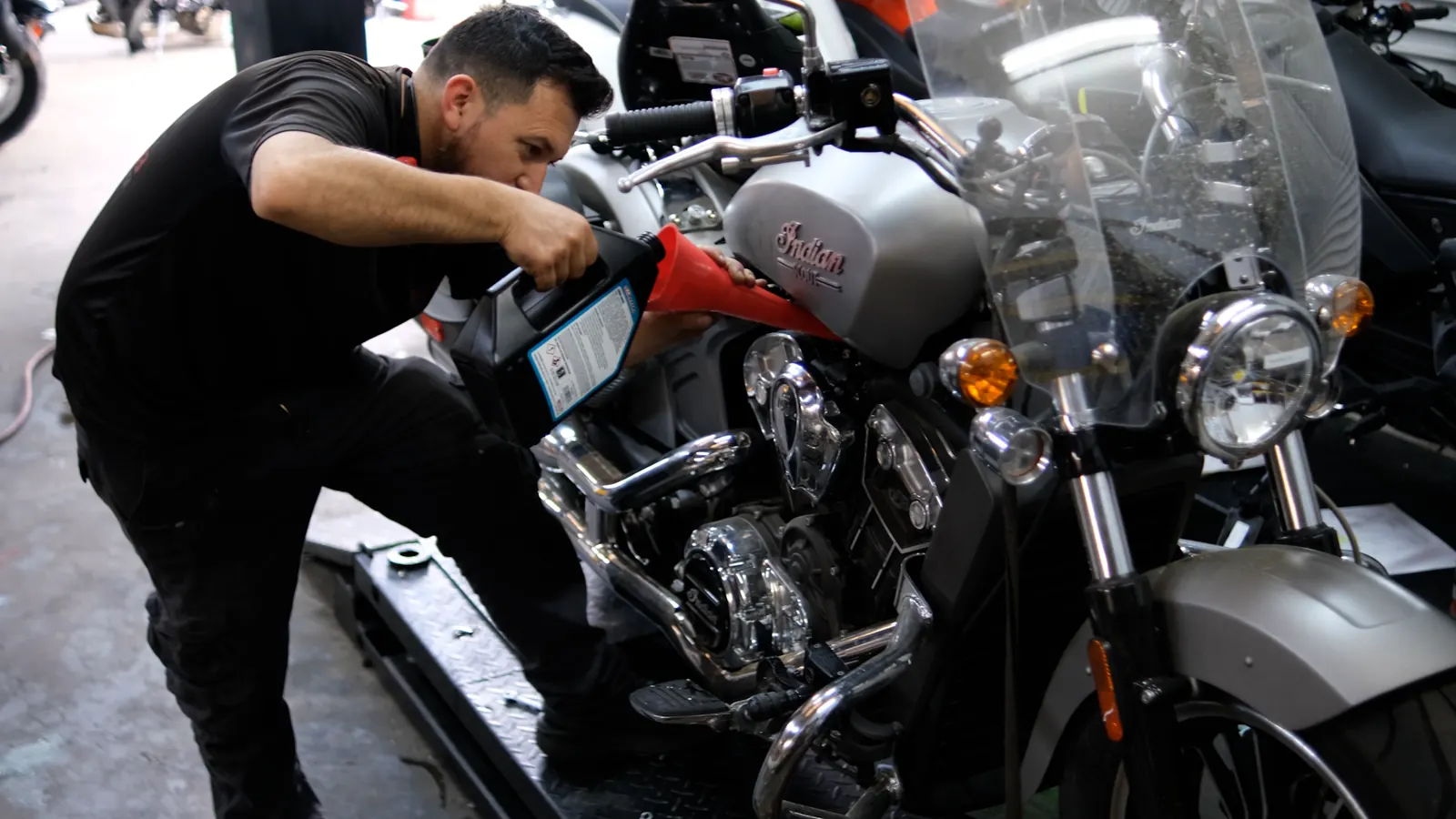
Fresh oil is clear and slippery. Old oil is dark, thin and carrying metal it picked up along the way. On a bike, that same oil is often lubricating the transmission and the clutch too, so it works harder than car oil ever does. We will never invent an interval for you. Your owner’s manual sets that number, and every manufacturer sets it differently based on the engine, the oil type and how you ride. Bring the manual or the model, and we’ll go by what the people who built it said.
The tires
A rear tire squared off flat down the center is a slab-miles tire. Lots of straight highway, not much lean. That flat strip makes the bike feel lazy turning in and quick to stand up mid-corner, which is exactly that vague, arriving-late feeling riders describe. Tires also age out on time, not just on tread depth, so a bike that sat for a couple of years can have plenty of rubber left and still ride like it’s on a wet floor.
The slow starts
Long cranking usually means a tired battery, stale fuel, or an air filter packed with the fine red dust that gets everywhere around here. All three are small. All three are cheap while they’re small. And all three like to show up in a gravel lot on a perfect Saturday rather than at a Tuesday appointment.
What actually happens when you drop it off
This is the part most people have never seen, so here’s the whole thing in order. No mystery, no back room.
- You tell us what the bike is doing, in your words. “It feels weird under braking” is a perfectly good description, and we’d rather have that than a guess at the cause.
- We ride it or run it, if it’s safe to. A lot of complaints only show up under load.
- We put it on the lift and go through it top to bottom. Fluids, filters, chain, sprockets, brake pads, brake fluid, tires, cables, bearings, lights, fasteners, leaks.
- We write down everything we find and split it into two piles: needs doing now, and can wait a season.
- We call or text you with both piles and a real number before we touch anything.
- You decide. We do that and nothing else.
Step four is the one that matters. We split the safety items from the nice-to-have items and tell you honestly which is which. If we open something up and find more than the inspection showed, you get another call before another wrench moves. That’s the deal, every time, on the work we do in house.
You never pay for a repair you didn't say yes to first.
Now flip it around and look at it from the bike's side
We spend a lot of time asking what the rider wants. Try the other seat for a second. What does the machine need? Clean oil, so metal never touches metal. A chain with a little slack, so nothing yanks on the output shaft. Fluid that hasn’t gone soft. Air it can breathe through. That’s the same short list on a forty-year-old carbureted twin as it is on a new adventure bike with three ride modes.
Here’s what the bike can’t do, though. It can’t tell you how long it’s been. It has no memory of the last owner, the shed it sat in, or the shop that promised to flush the brakes. That’s what an inspection is for. We read the bike’s history off the bike itself, because it’s the only witness that never exaggerates.
Timing: when to come in
There are two clocks running on any motorcycle. One is miles. The other is time, and time keeps ticking whether you ride or not. Rubber ages. Fluid absorbs moisture. Fuel goes stale. A bike that covered barely any distance last year still aged a full year, which surprises a lot of people.
THE INTERVAL IS IN YOUR MANUAL
We won’t quote you a mileage number here, because the right one depends on your exact bike. Your owner’s manual sets the service interval. Bring it in, or tell us the year and model and we’ll look it up with you. Riding style, oil type and how the bike is stored all shift where you land inside that window.
The practical version most riders land on is simple. Get a real look before a big trip, and another one when the bike wakes up after sitting. Fall is our busy window, since September through November is the biggest riding stretch of the year in Cherokee County.
Why Woodstock bikes wear the way they do
Woodstock is Cherokee County, and it might be the most motorcycle-serious town in our whole radius. That’s not flattery, it’s the mileage pattern. I-575 is a straight on-ramp to the mountains, and GA 515, the Appalachian Highway, runs north past Canton as the standard route into north Georgia. A rider here can be in real elevation inside of ninety minutes.
That creates a specific wear pattern. Bikes here sit idle for stretches, then get ridden hard in concentrated bursts. Georgia has a universal helmet law and no legal lane splitting, so commuting by bike into southbound traffic isn’t appealing. Riding here is recreational. The result is a lot of machines that look barely used and are due for everything at once.
On the other hand the roads add their own bill. Bells Ferry, Wiley Bridge, Trickum and Arnold Mill are rolling, wooded and low-traffic, which is exactly why riders love them, but they carry country-road geometry. Blind crests, off-camber curves and gravel driveways feeding straight onto pavement. Growth means constant construction too, so grit gets tracked out onto Ridgewalk, Towne Lake Parkway and the SR 92 corridor. That grit is hard on chains, brake pads and fork seals.
Storage helps more than you’d think. Towne Lake alone is close to 5,700 homes, and those 1990s master-planned streets came with two- and three-car garages as standard, which is the best storage profile anywhere near us. Woodstock Knoll, with its traditional and European-style homes and its Overlook section, follows the same pattern. Down at South on Main, walkable and downtown-adjacent, garage space is tighter and bikes live closer to the weather. Garage-kept bikes on a trickle charger show up in noticeably better shape, and plenty of owners here handle their own basics and hire out the specialist work. We like those customers a lot.
Technical literacy runs high here, and Traxxion Dynamics deserves credit for a chunk of that. They’re headquartered at 261 Rope Mill Pkwy, a nationally known suspension manufacturer for motorcycles and mountain bikes, and having them in town raises the bar for every rider nearby. That’s the chassis side of the house. We handle the engine side, including dyno tuning, and we put the full rundown on it in its own post. Kotic Kustoms over at 6479 Bells Ferry Rd does in-city Harley custom work and keeps weekend hours. Plenty of good people in this town.
Right down that same road sits Olde Rope Mill Park, where the mill ruins still stand on the Little River. It ran as a grist mill in the 1840s and a rope mill from the 1870s, and now it’s hiking and mountain-bike trails. That’s a fair picture of maintenance itself. What got looked after is still standing.
There's a detail in all this that changes how you'll ride out of here
Most riders think a service is about parts. It mostly isn’t. It’s about clearances, tension and pressure, which are just measurements that drifted a little at a time while you weren’t watching. Chain slack. Pad thickness. Tire pressure. Valve clearance. Cable free play. Every one of those drifts so slowly that you adapt to it without noticing, and you get used to riding a bike that’s a little off.
That’s why the ride home after a real service surprises people. The brakes bite where you expect them to. So the throttle picks up clean. The bike turns in when you ask instead of a half-beat later. Nothing dramatic got replaced. Things just got set back to where the factory put them. Riders in Woodstock notice it immediately, and so do the riders over in Roswell who make the same drive to us.
You don’t have to take our word for how much of this is standard practice, either. Groups like the Motorcycle Industry Council track the industry side of ownership, and the write-ups at RevZilla’s Common Tread cover the same basics we’re describing. Good maintenance isn’t a secret. It’s just work somebody has to actually do.
What you get back
Reliable motorcycle maintenance Woodstock riders can plan around comes down to three things. You know what’s due. You know what it costs before it happens. And you get the bike back doing what it did when it was new. That’s it. No drama, no upsell, no lecture about what the last shop did.
The drive down is easy, too. From most of Woodstock it’s roughly 15 to 19 miles, call it 25 to 35 minutes, taking I-575 south to I-75 south, then east on Roswell Road to Barnes Mill Road. If the interstate is having one of its moods, Bells Ferry Road south into north Cobb gets you here on surface streets. Either way, text us a photo of the bike and what it’s doing, and we’ll tell you what we think before you ever load it up.
Questions Woodstock riders ask us
Can you pick up my bike?
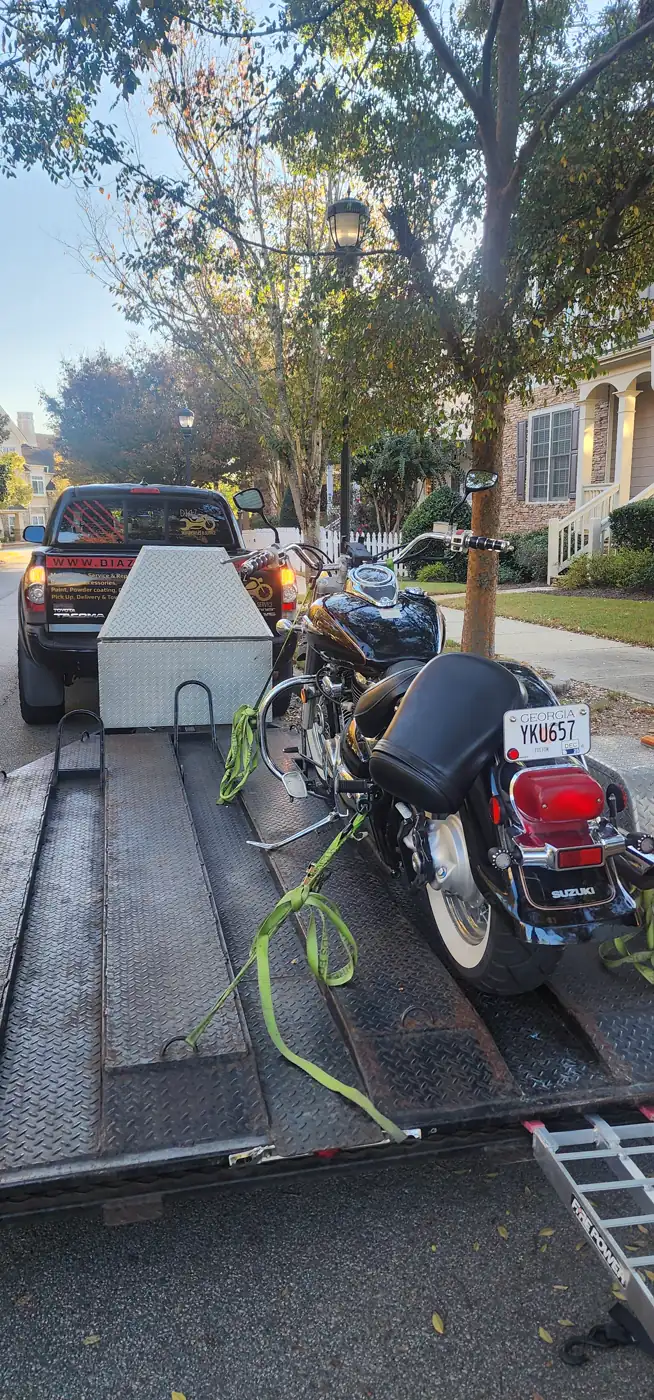
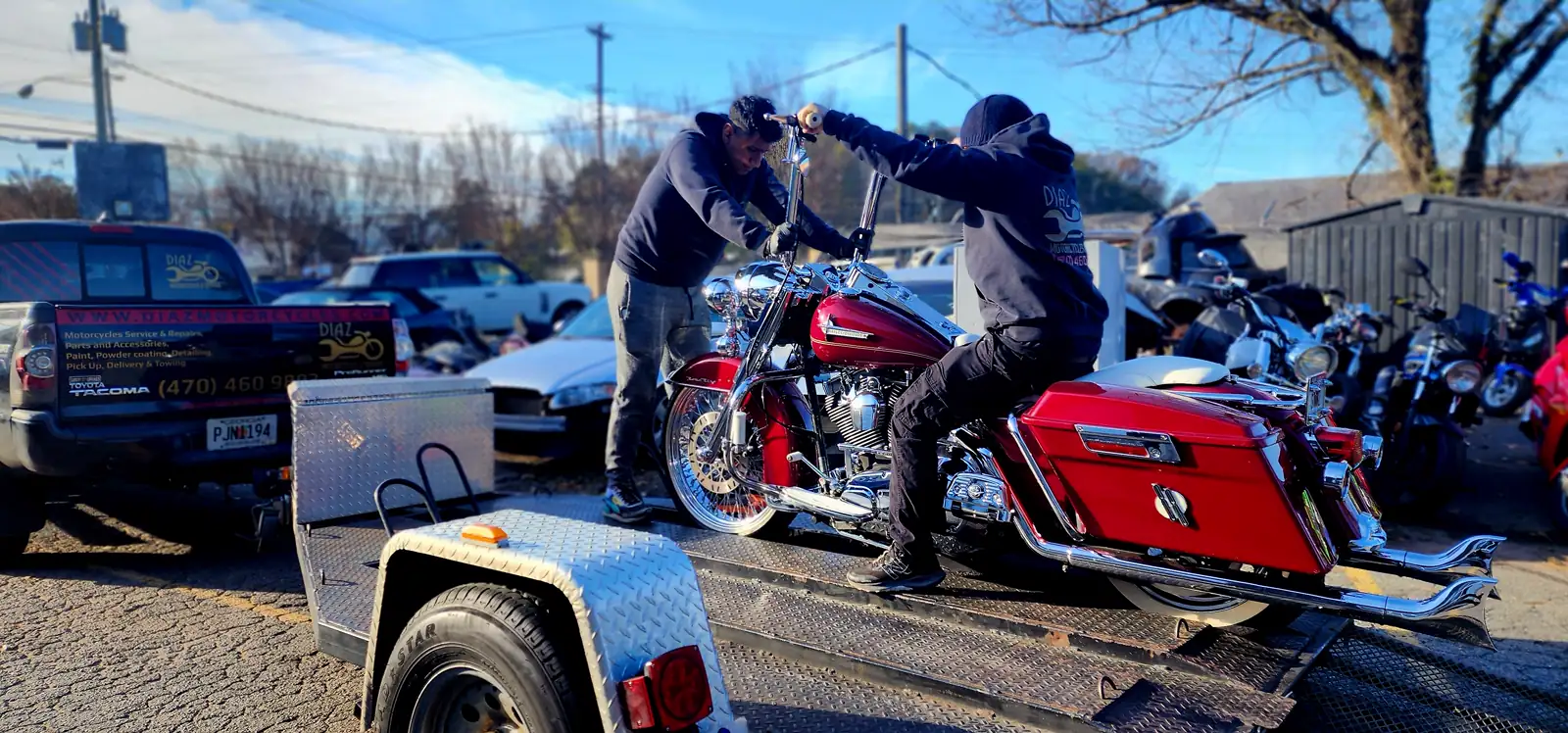
Yes, we can arrange pickup for Woodstock and the rest of Cherokee County. Text us your address and we’ll sort out a time that works. It’s especially handy if the bike won’t start or hasn’t been ridden in a while, since nobody wants to trailer a project bike on a Saturday morning.
How do I get a quote?
Text us the year, make and model, plus a short description of what it’s doing. We’ll give you an honest range of what it’s likely to be. Then we confirm the real number after we’ve had it on the lift and gone through it, because that’s the only point where the number is actually true.
Do you work on older bikes?
We do, and we like them. All brands, all ages, carbureted or fuel injected. Older bikes take more patience and sometimes more hunting for parts, and we’ll tell you upfront if something is going to be hard to source rather than letting it sit for weeks with no update.
What if it needs more than expected?
You get a call or a text before anything else happens. We tell you what we found, what it means, and whether it’s a now item or a later item. Nothing extra gets done without your yes. Surprises at pickup are a good way to lose a friend, so we don’t do them.
What does a service actually include?
A full look at fluids, filters, chain and sprockets, brake pads and fluid, tires, cables, bearings, lights and fasteners, plus a check for leaks. We also confirm your bike’s service interval against the owner’s manual instead of guessing. You get a written list of what’s due now and what can wait.
How long will you have my bike?
Routine service is usually a same-day or next-day job. Bigger work depends on parts, and we’ll give you a real timeline as soon as we know one. If it’s going to sit waiting on a part, you’ll hear it from us rather than wondering.
We ride out to riders all over the north metro from our Marietta shop. That means Woodstock and Towne Lake first, plus Canton, Holly Springs and Ball Ground up the I-575 corridor, and Acworth, Kennesaw and Cartersville out to the west. We also see plenty of bikes from Marietta and East Cobb right around us, and from Roswell, Alpharetta and Milton on the other side of the river. If you’re somewhere in that ring and not sure whether we cover you, just ask.
TEXT US A PHOTO OF THE BIKE
The fastest way to start is a text. Send us a photo of your bike, the year and model, and a sentence about what it’s doing, and we’ll tell you what we’re thinking before you load anything up. Woodstock riders can drop off, or we can arrange pickup. Either way, you’ll know what’s due and what it costs before a single wrench moves.
470-460-9883Diaz Motorcycles and Service, LLC · 847 Barnes Mill Road, Marietta, GA 30062