Motorcycle Service Cost Canton — What You Pay
Why the same service takes two hours on one bike and most of a day on another — and what a real shop looks at before saying a word about it.
Some bikes get traded. Yours didn’t. For example, You’ve had it long enough to know how it sounds cold, which bolt likes to back itself out, and exactly where the seat has worn smooth under your right leg. Even so, Ten years in, the goal quietly changes. What’s more, it stops being about upgrades and starts being about keeping the thing alive. After that, that’s usually the moment a rider starts asking what upkeep really runs, and here’s the honest version of motorcycle service cost Canton owners rarely get: it isn’t one number, and anybody who hands you one over the phone is guessing.
The myth: a service is one job with one price
Also ask around and you’ll hear service talked about like a menu item. Oil change. Tune-up. Full service. The words sound tidy. Instead they make it feel like every bike gets the same treatment for the same effort, the way a car wash does. Besides that’s the myth, and honestly, it’s a comfortable one.
Bikes don’t work that way. Actually two riders can walk in the same morning, ask for the same thing, and end up with two very different jobs. That’s why On one bike the oil filter sits right out in the open — a two-minute reach. Either way On the other it hides behind a lower fairing, an exhaust header and a bracket that all have to come off first. Same task on paper. Wildly different amount of hands.
None of that is a shop being cagey. It’s just how bikes get built. In short Makers design around packaging, weight and looks, and the technician who has to reach that part later doesn’t get a vote. So a service is a range, not a sticker.
The reality: you're paying for access, not just parts
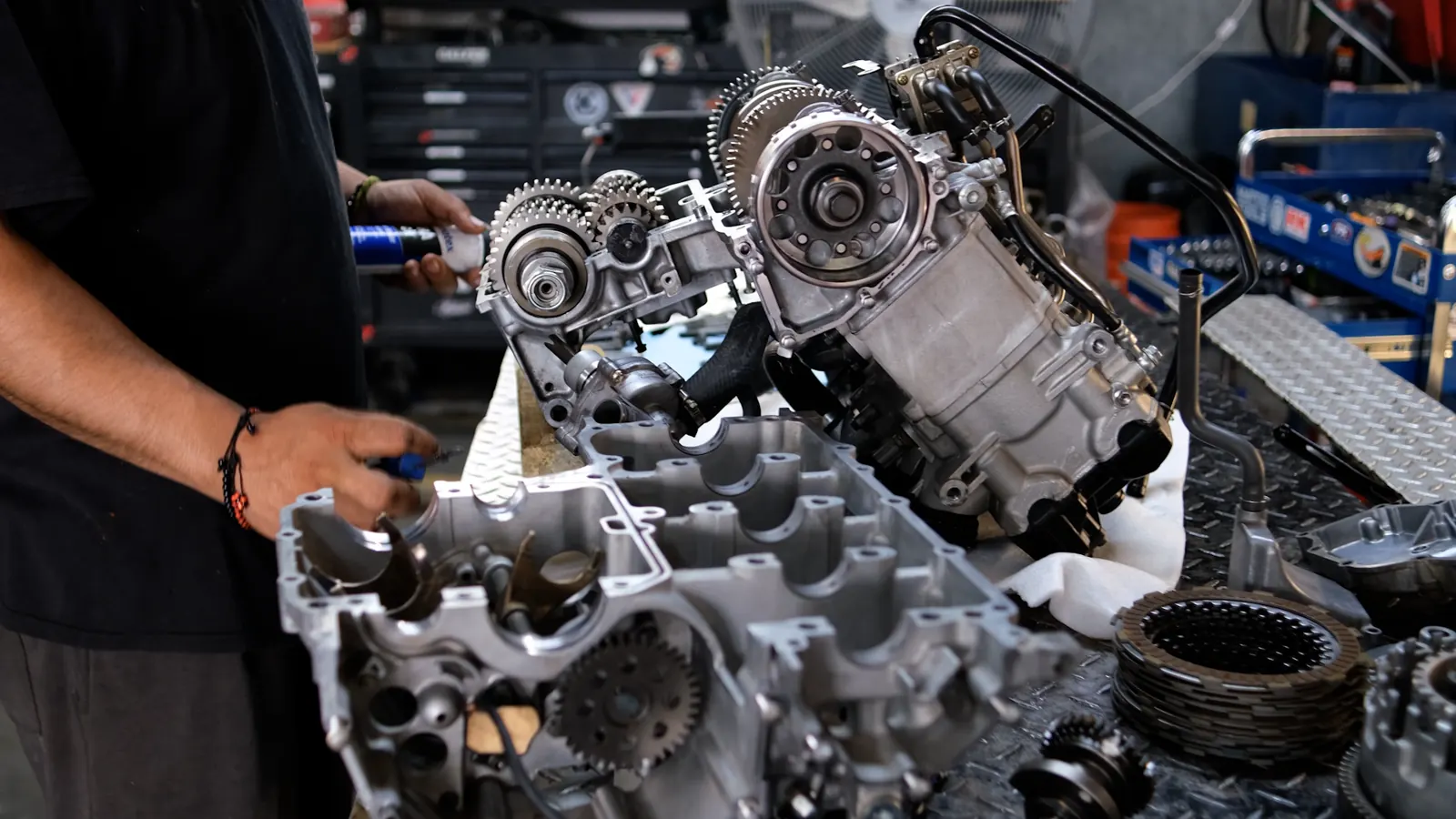
At the same time here’s the split that clears up almost everything. As a result every job has parts, and every job has labor. On the other hand Parts are the physical items — a filter, oil, brake pads, plugs, a chain, a set of tires. So those are what they are, and a good shop will show you the box they came out of.
Labor is time. Still, and on a motorcycle, time is mostly access. It’s how much has to come off before a technician can even see the part, and how much goes back on afterward without a rattle. On a naked standard, the engine sits right there. On a full-dress bagger, bodywork, bags and a saddle are in the way first.
That’s why two jobs with an identical parts list can take completely different amounts of shop time. It’s also why parts are often the smaller half of the story. When you’re planning ahead, think in hours the bike asks for, not just items on a shelf. You can look through what we take care of here and get a decent feel for which jobs are quick and which ones eat a morning.
Fluids follow the exact same logic. Engine oil is usually simple. Brake fluid, coolant and fork oil take more setup, more bleeding and a lot more cleanup, which is why they get skipped so often — we broke down how we handle that job if you want the long version.
One more thing moves the work, and it’s the big one: where your bike sits in its own maintenance schedule. Some visits are light. Others land on a bigger checkpoint where valves get checked or a fluid comes due. We don’t invent those numbers and neither should anyone else. Your owner’s manual sets the intervals for your exact model, and it’s the only source that actually knows your bike.
Riding style stacks on top of all of it. A bike that lives on the highway wears differently than one spending Saturdays on gravel-dusted two-lanes. Chains, tires and air filters feel that difference first. Same model, same year, same odometer reading — two totally different conditions on the lift.
The timing on this matters more than the fix does.
Catching a chain while it’s only dry is a clean, quick job. Waiting until it’s stretched and hooking the sprockets turns one part into three. Brake pads work the same way. Pads by themselves are simple. Pads worn down to the backing plate can score a rotor, and now a small item became a big one. None of this is scary. It just grows the longer it waits, and shrinks the sooner somebody looks.
That’s the whole trick. Most of what keeps a bike healthy for decades is small, boring and easy. Ten minutes with a light and a rag beats a surprise in April.
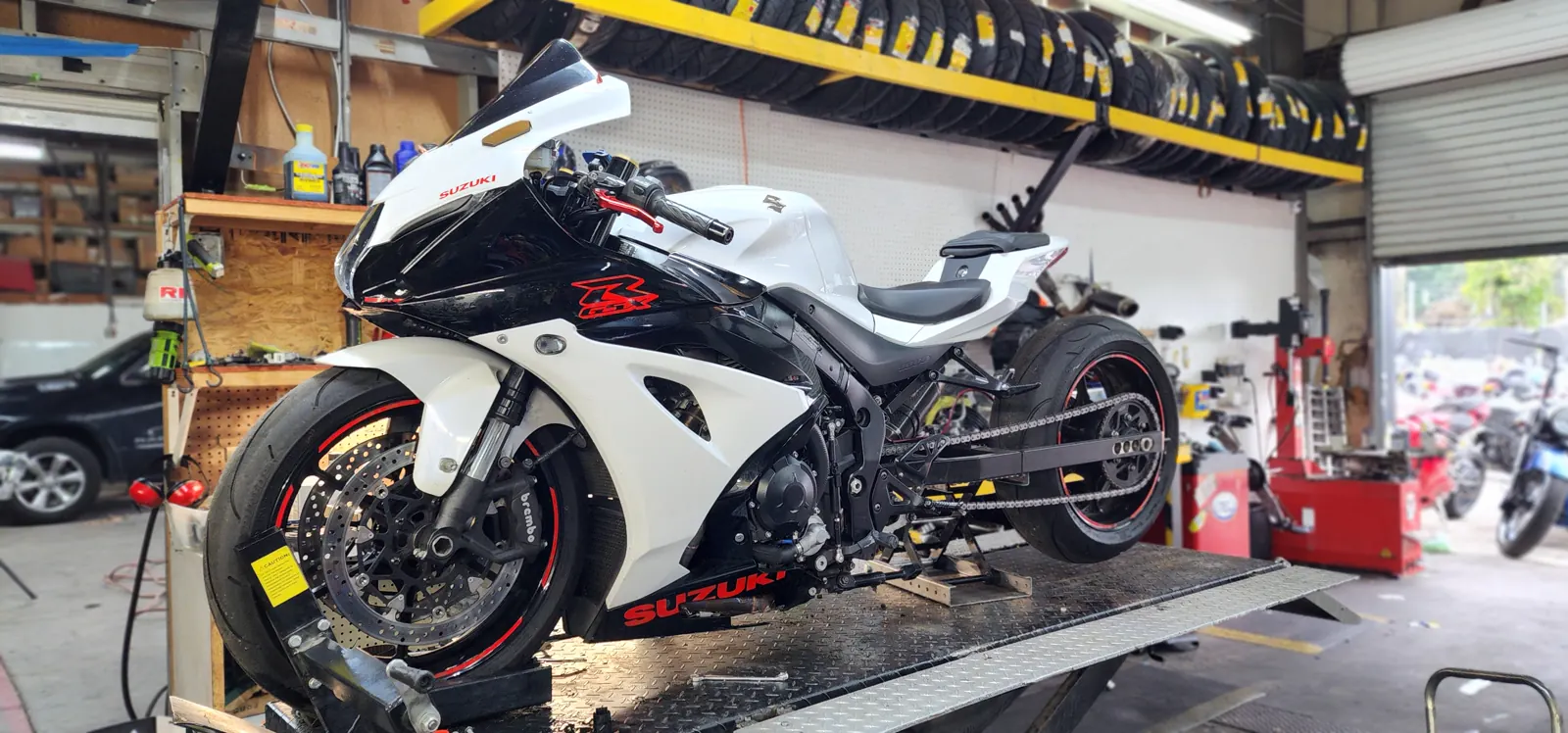
What a service actually includes, start to finish
“Service” is a vague word, so let’s make it plain. Here’s what a real routine visit looks like from the moment the bike rolls in until you get the key back.
- We talk first. What you’ve noticed, what it does cold, what changed. You know the bike better than any checklist does.
- The bike goes on the lift and gets looked over cold — leaks, weeps, wet spots, anything crusty that shouldn’t be.
- Oil and filter come out, and we look at what drains. Color, feel and anything glittering in it tell a story.
- Chain or belt gets checked for slack, wear and dry spots, then cleaned, lubed and set to spec.
- Brakes come apart enough to measure pad thickness and check rotors, calipers and the fluid’s color.
- Tires get pressure, tread depth and a sidewall check for age cracks and flat spots from sitting.
- Air filter, plugs, cables, levers and controls get inspected and cleaned or replaced as needed.
- Battery, charging output and every light and switch get tested before anything goes back together.
- The bike gets ridden, not just started. Some things only show up at speed under load.
- You get told what we found, what we did, and what’s coming up next — before any of it becomes urgent.
Steps four through eight are where the range lives. On one bike, that’s a wrench and twenty minutes. On another, panels come off, the exhaust drops, and the airbox needs to move before anybody sees the filter. Nothing went wrong. It’s just more bike in the way.
THE SHORT VERSION
Parts are predictable. Access isn’t. The bigger the fairing, the bags and the bodywork, the more hands it takes to reach the same small part.
Why an honest shop won't quote it sight-unseen
This one frustrates people, and we get it. You call, you ask a fair question, and you’d like a straight answer. So here’s why a straight answer sometimes means “let me see it first.”
A number given over the phone is built on assumptions. It assumes the last person who touched your bike used the right fastener. Meanwhile, it assumes nothing’s seized, stripped or previously overtightened. It assumes the pads are worn but the rotor is fine. Some of those assumptions hold. When one doesn’t, the shop is stuck choosing between eating the difference or calling you with news you didn’t sign up for.
We’d rather look, then tell you. Ten minutes on a lift replaces an hour of guessing, and it means the plan we give you is the plan you actually get. That’s a big part of what separates a good shop from one that quotes fast and adjusts later.
Signs you're in the right place
- They ask about your riding before they talk about the work.
- Of course, they put the bike on a lift before committing to a plan.
- They separate parts from labor when they explain it, in plain words.
- In fact, they show you the old part instead of describing it.
- They tell you what can wait, not just what can’t.
- They point at your owner’s manual for intervals rather than making up a number.
That last one is bigger than it sounds. Any shop that recites a mileage figure for your specific model without checking is telling you something about how they operate. Groups like the American Motorcyclist Association have said the same thing for decades — the book that came with your bike is the authority, and everything else is opinion.
A bike came in from BridgeMill with exactly this. The owner had it since new, kept it in the garage, and rode it hard in spring and fall and barely at all in between. He called ahead wanting a number for a chain and a set of pads. We asked him to bring it by instead.
Good call, as it turned out. The chain was dry but fine, and the pads had life left. What actually needed help was brake fluid gone dark from too many winters and a rear tire with flat spots from months on the same patch of concrete. He came in expecting one job and left with a smaller list and a clear picture of what to watch. Looking first buys you less work, not more.
What this looks like for riders around Canton
The local pattern is pretty specific, and once you see it, it’s hard to miss. Most bikes up here live in garages, which is great for paint and rough on everything that likes to move. A machine that sits from November to March comes out with a tired battery, fuel that’s gone stale, tires with flat spots and brake fluid that’s quietly aged out. Every year, right around the first warm weekend, that same list walks through the door.
Where you ride shapes it too. Runs west on GA-20, the Knox Bridge Highway side toward Lake Allatoona and Cartersville, are easy miles. Head the other way on Cumming Highway and it’s more of the same. The wear shows up on the fun stuff — the Henderson Mountain Loop out on GA-140 and GA-108, then Sam Nelson Road, Little Refuge Road past Lake Arrowhead and back over Henderson Mountain Road. Those two-lanes throw chip-seal grit and shoulder gravel at your chain and air filter all day long. The road out to Lake Arrowhead is a rider favorite for a reason, and your drivetrain pays a small tax for every mile of it.
We see the same split between neighborhoods. Riders over in Governors Preserve tend to run garage-kept cruisers a few thousand miles a year, so their bikes need wake-up work more than wear work. Somebody in Fox Hollow riding to work most weeks is the opposite — chains, pads and tires move faster, and the fluids matter more. Both are easy to stay ahead of. They just need different attention.
Even the water tells on us. Bikes that spend summer evenings out near Hickory Log Creek Reservoir, along the edge of Great Sky, pick up more moisture and pollen in the airbox than anyone expects. Nothing dramatic — just one more reason a filter check earns its spot on the list.
For routine work, RideNow Powersports Canton on Riverstone Parkway is the dominant local option and does plenty of volume. Riders tend to call us when they want the same hands on the bike every time, or when the job leans toward performance, restoration or a machine that’s been in the family too long. And since half the county already heads down 575 toward Cobb, the run to us is a detour, not a trip — I-575 south to Barrett Parkway or GA-92, then east through East Cobb. If you’re comparing markets, the Gainesville side of things follows the same logic on different roads.
One boring note worth keeping straight: your tag and title stay your job, and the Georgia Department of Revenue handles all of that. Service is ours. Paperwork is yours. We’d trade if we could.
What you actually walk away with
You don’t need to become a mechanic to stay ahead of this. You need two things. First, a rough sense of which jobs are quick on your bike and which ones ask for real time. Second, a shop that looks before it talks.
Do that, and the whole thing gets calm. Small stuff gets caught while it’s still small. Nothing turns into a rescue mission in the middle of a good riding weekend. And a bike you’ve owned for a decade keeps being a bike you’ll own for another one, which was the point the entire time.
That’s really the answer on motorcycle service cost Canton riders are looking for. Not a number on a wall — a clear picture of your bike, in front of you, before anybody picks up a wrench.
Questions Canton riders ask us
Why won't you quote a service over the phone?
Because a phone quote is built on guesses about a bike nobody has seen yet. We can’t know if a fastener was overtightened by the last shop, whether a rotor is scored under those pads, or how much has to come off to reach the filter. Ten minutes on the lift replaces all of that guessing. Then the plan we hand you is the plan you actually get.
What's actually included in a routine service?
Oil and filter, a chain or belt check with cleaning and adjustment, brake pad and rotor inspection, fluid condition checks, tires for pressure, tread and age, plus air filter, plugs, controls, battery and lights. We also ride the bike, not just start it, because some things only show themselves under load. You get told what we found and what’s coming up later.
How long does a service take?
It depends almost entirely on how much bodywork stands between the technician and the parts. A naked bike with open access can be a short visit. A full-dress bagger with bags, panels and a saddle to remove and reinstall takes considerably longer for the exact same tasks. We’ll tell you which one yours is after we look.
Am I paying more for parts or for labor?
On most routine work, labor is the larger half, and that surprises people. Parts like a filter, oil or pads are fairly predictable from bike to bike. The time to reach them is not. That’s why access, not the parts list, is what makes one job bigger than another.
Does the type of bike change the work?
It changes it a lot. Sportbikes often need the tank lifted or fairings removed for jobs that take minutes on a standard. Cruisers and baggers hide things behind bodywork and bags. ADV bikes see more grit and need filters and chains looked at more often. Same checklist, very different day depending on the machine.
How do I know when my bike is due?
Your owner’s manual sets the intervals for your exact model, and it’s the only source that truly knows your bike. We won’t invent a mileage number, and we’d be careful with any shop that does. Bring the manual or the model info, and we’ll build the plan around what the maker asks for.
We take care of riders all over the north metro, and plenty of them make the run down from Canton without thinking twice about it. Folks come to us from Woodstock, Holly Springs and Ball Ground, along with Free Home, Waleska and Nelson out in the quieter parts of the county. We also see regulars from Acworth, Kennesaw and Cartersville on the west side, riders heading down from Jasper before they point north for the day, and owners from Alpharetta and right here around Marietta. If you’re already driving this direction, the shop is an easy stop on the way.
BRING IT BY, WE'LL LOOK FIRST
If you’ve had your bike long enough to want to keep it a while longer, that’s exactly the kind of owner we like working with. Text or call us, tell us what you’ve noticed, and bring it down from Canton whenever it suits your schedule. We’ll put it on the lift, look it over, and give you a straight plan with no surprises attached.
470-460-9883Diaz Motorcycles and Service, LLC · 847 Barnes Mill Road, Marietta, GA 30062