Overdue Service Sandy Springs — Why It Happens
The symptoms riders notice first, the causes behind them, and how to tell when a bike is still safe to ride.
As a result a black Yamaha R1 rolled into the bay on a Tuesday morning, and the chain told us the whole story before the owner said a word. Dry links. A faint orange bloom of rust. On the other hand Enough slack to slap the swingarm over a seam. So the rider hadn’t done a single thing wrong, either. Still, He’d just been busy, the way everybody around here is busy. That is what overdue service Sandy Springs riders bring us usually looks like — no smoke, no breakdown, no drama on the shoulder. Plus, Just a good bike that quietly stopped feeling like the one they bought.
So let’s put the direct answer up front. Meanwhile, an overdue bike is almost never one big broken part. It’s four or five small things drifting at the same time. Oil gone thin and dark. Of course, a chain that lost its lube and stretched. Brake fluid that pulled in moisture. Tires aging out under a carport. In fact, Any one of those alone is minor. For example, Together they change how the bike steers, stops and sounds, and that combined change is what you noticed on your last ride. Even so, here’s the upside: this is the easiest work we do, because nothing has actually failed yet. What’s more, you’re paying to prevent, not to repair.
We’ll also be straight with you about intervals. After that, we won’t invent a mileage number for your bike, because we don’t know it and neither does anyone quoting one off the top of their head. Also your owner’s manual sets that schedule, and it shifts by model, by oil type and by how you ride. Instead a liter bike crawling up Roswell Road in stop-and-go heat wears differently than the same bike doing easy weekend miles. When you want the money side broken down honestly, we covered what changes the total in its own post.
What overdue feels like from the saddle
You usually feel it before you ever see it. The starter spins a beat longer on a cold morning. At the same time the chain makes a dry rasp at parking-lot speed, more sandpaper than whir. The front lever travels further before it bites. Second into third feels notchy instead of clean. At a light, the idle hunts up and down instead of sitting flat. None of that will strand you tomorrow. All of it is your bike politely raising its hand.
Friends we’ve helped describe it in nearly identical words. “It just doesn’t feel tight anymore.” That’s a real diagnosis, honestly. Tight is exactly what a maintained bike feels like: crisp throttle pickup, a chain that pulls without slop, brakes that grab in the first third of the lever. When all of that softens together, nothing has broken. The bike is simply tired, and tired is fixable in an afternoon.
The likely causes, most common first
- Tired oil. Oil carries heat away and holds metal particles in suspension. Old oil does both jobs poorly, and hot traffic here cooks it faster than highway miles do.
- A dry, stretched chain. Chains stretch as rollers and pins wear. A loose chain snatches on and off the throttle and chews sprocket teeth into hooks.
- Moisture in the brake fluid. Fluid absorbs water out of the air over time. That water lowers the boiling point and makes the lever feel spongy.
- Aging tires. Rubber hardens with age and sunlight whether you ride or not. A hard tire slides where a fresh one grips, especially on a damp painted line.
- A dying battery. Batteries hate sitting on a hot lot with no tender. Slow cranking is the first warning, and it shows up on the first warm weekend.
- A clogged air filter. Dust and pollen choke airflow. The bike runs rich, gets thirsty and loses its snap off the bottom.
- Stale ethanol fuel. Pump gas separates and gums up small passages after months of sitting. That’s your rough idle after storage.
Notice how ordinary that list is. No exotic failure, no rare part on backorder overseas. Nearly every case of overdue service Sandy Springs riders bring in lands somewhere on those seven lines, which means we’ve done it hundreds of times and can price it honestly before we touch a bolt.
There’s a second failure that hides behind the first one. That’s the part riders don’t expect, and it’s why we look past the obvious symptom. A stretched chain doesn’t just wear itself out — it grinds the sprockets down with it, so a new chain on worn teeth starts the clock over immediately. A weak battery can be a bad battery, or a charging system that’s been slowly cooking it. Low oil isn’t just low oil if it’s low because it’s going somewhere. Thin pads are simple, but thin pads on one side only usually means a sticky caliper pin.
So the real skill in this work isn’t turning wrenches. It’s asking why the first thing failed. We’d rather spend twenty extra minutes finding the cause than hand back a bike that repeats itself in six weeks.
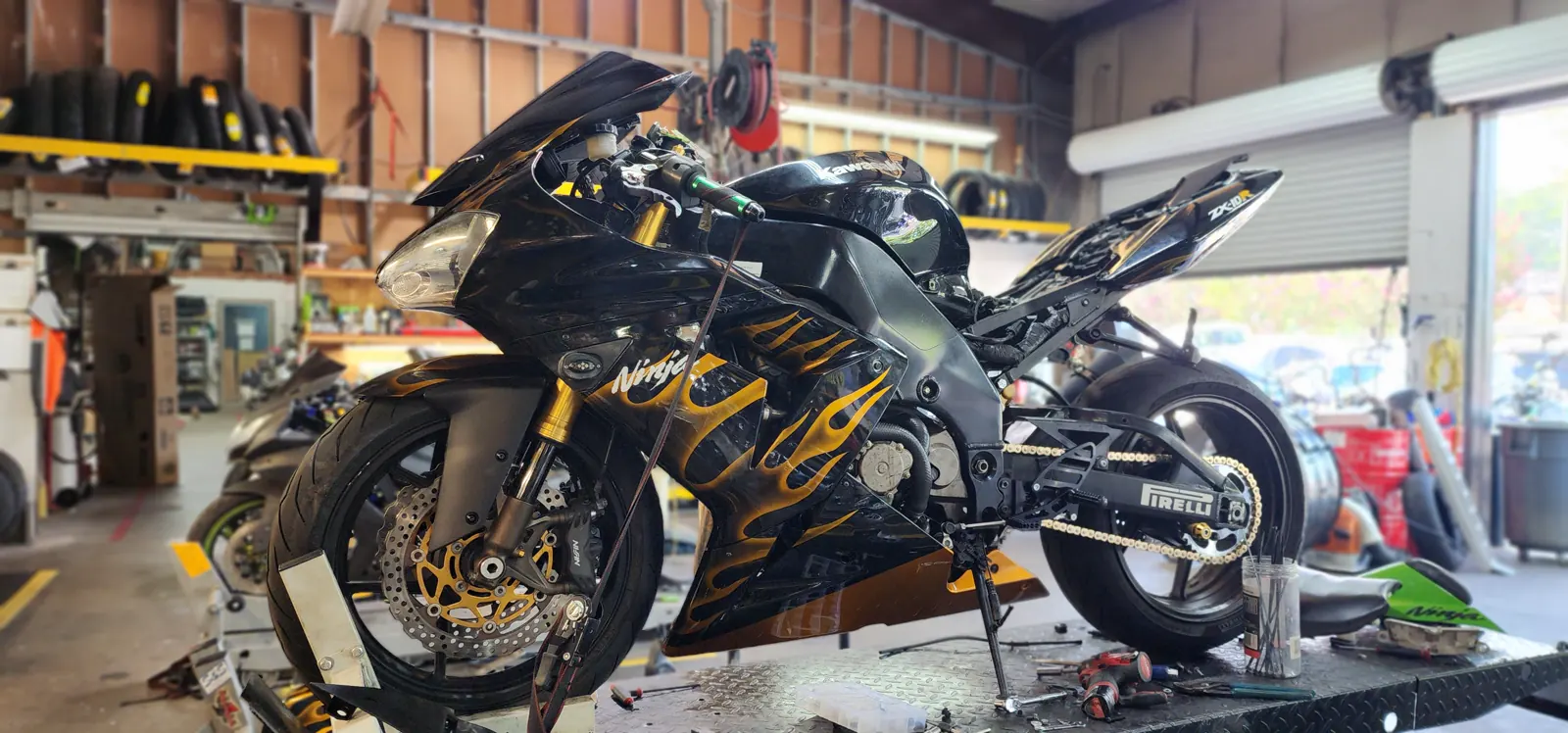
What we actually check when an overdue bike hits the lift
A service isn’t a mystery ritual. It’s a checklist, and you deserve to know what’s on it. Here’s the plain-language version of what happens once your bike is in the air.
- Oil and filter, with a look at what came out. Color, smell and grit all tell us something.
- Chain slack, chain stretch and sprocket tooth shape, measured rather than eyeballed.
- Brake pad thickness front and rear, rotor condition, fluid color and lever feel.
- Tire tread depth, date code, pressure and any cupping, flat-spotting or sidewall cracking.
- Battery voltage at rest and while running, which separates a bad battery from a charging fault.
- Air filter, spark plugs and coolant level, plus a hunt for leaks and weeping seals.
- Wheel bearings, steering head, fork seals and every fastener that likes to walk loose.
- A short road test, because some faults only appear with weight and heat on the bike.
Then you get a written quote before we do anything beyond the basics. Not a verbal number in a noisy service lane, and not a surprise at pickup. Written, itemized, sent to your phone. To see everything we cover in one place, here’s the full list of what we do.
NO INVENTED INTERVALS
We won’t quote you a mileage number your manufacturer never published. Your owner’s manual sets the schedule for your model. We work to that, plus what we actually find on the bike.
When it's safe to ride, and when it isn't
This is the question riders really want answered, so we’ll be blunt. Plenty of overdue bikes are perfectly fine to ride over to us. Some are not, and those we’d rather come get.
Ride it in if the bike starts normally, holds a steady idle, shifts through every gear, and the brakes feel firm at the lever. Dark oil, a dry chain, a fussy cold start or a pollen-packed air filter are annoyances rather than hazards. Take surface streets instead of a highway blast, keep the speeds sane, and you’ll be fine.
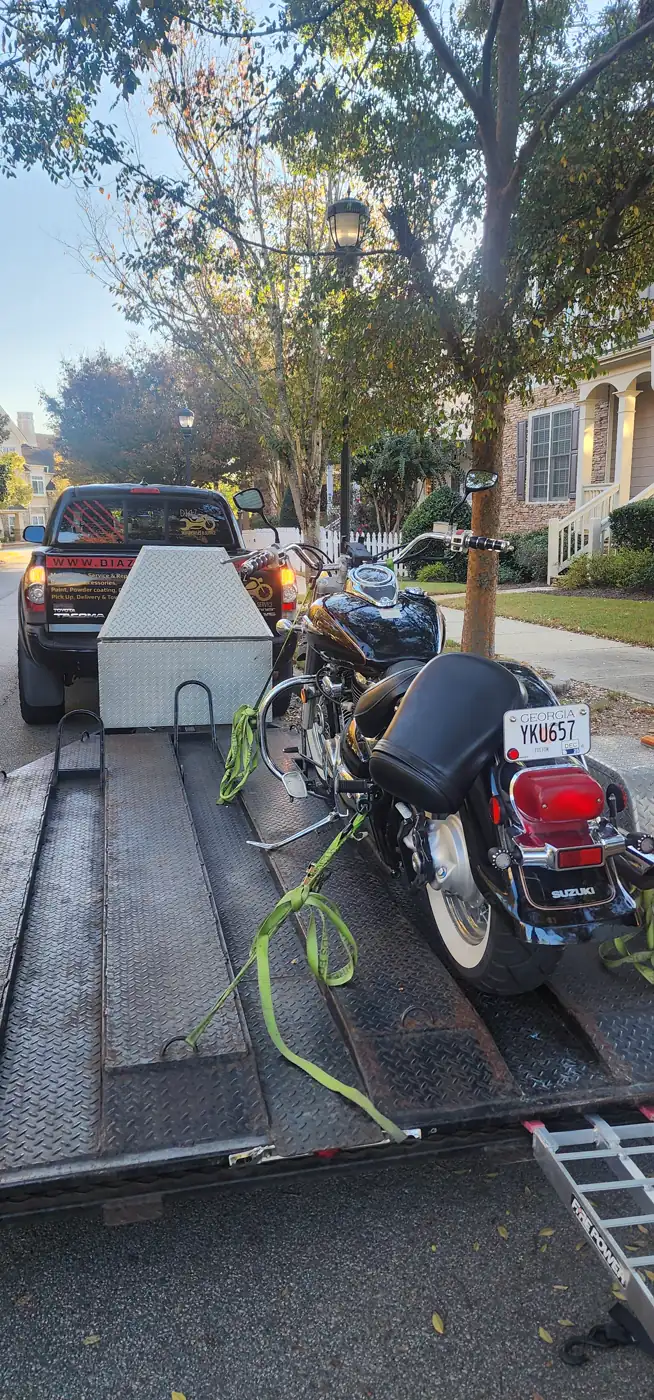
Don’t ride it if the lever pulls to the bar or feels spongy, if the chain has a tight spot or a kinked link, if a tire is cracked, cupped or losing pressure overnight, if fluid is dripping anywhere, or if the bike stumbles under load. Those earn a trailer, and there’s no shame in that. Tires especially reward a careful look, and Dunlop’s technical resources explain what wear patterns and date codes actually mean.
Overdue almost always means common. Common means we've seen it, and we can price it honestly before we start.
Mistakes we'd love you to skip
- Topping off oil forever instead of changing it. Fresh oil added to old oil is still old oil.
- Replacing a stretched chain without checking sprockets. Worn teeth eat the new chain fast.
- Judging tires by tread alone. A tire can look fine and still be too old and too hard to trust.
- Chasing a dead battery with jump starts. If charging is the problem, the next battery dies too.
- Waiting for the first perfect Saturday to discover the bike won’t start.
That last one matters more than people think. December through February is the natural window to hand us a bike, since you’re barely riding it anyway and it comes back ready for the first warm weekend. Winter is also when we take on restorations, paint and full teardowns. Riders one city north face the same timing squeeze, and we wrote up what Alpharetta riders run into if you want the comparison.
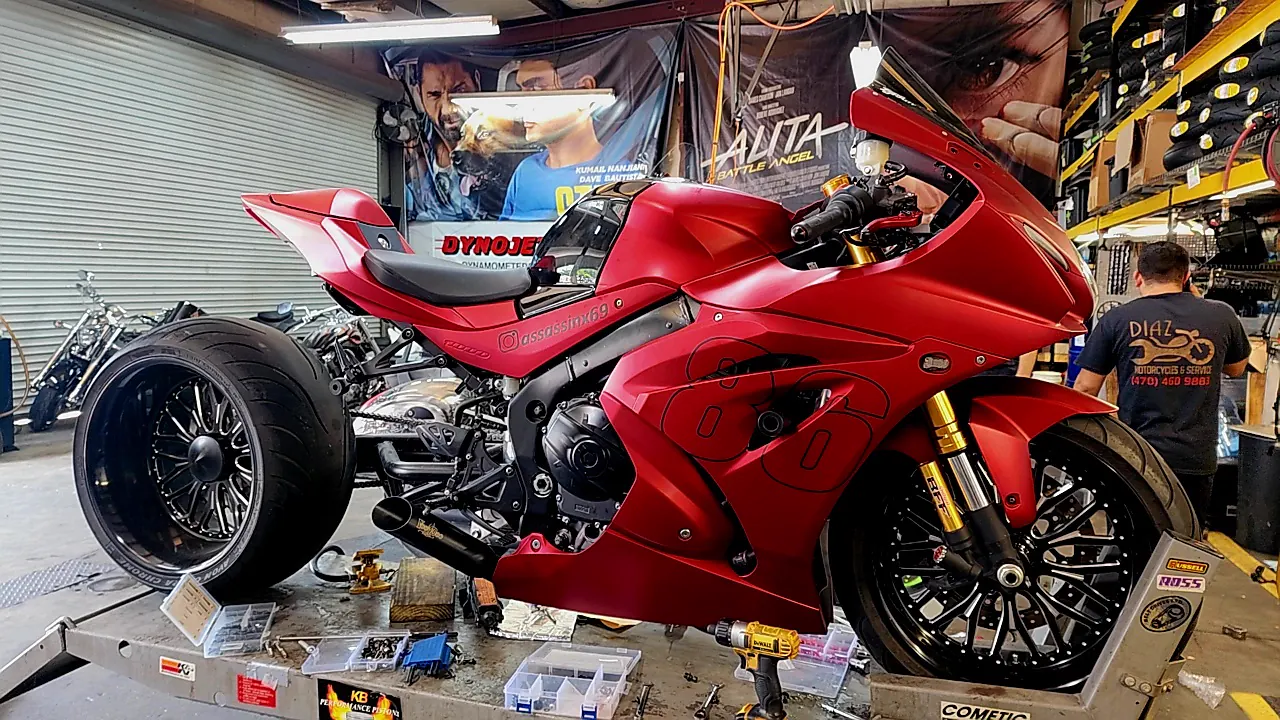
Picture the version of this where you caught it early. You never hear the chain rasp, because it got lubed before it dried out. The lever stays firm all season. You roll out on a clear Saturday, thumb the starter, and the bike catches on the first turn like it’s glad to see you. No trailer, no rescheduled ride, no standing in a hot lot texting your buddies to go on without you. That version isn’t luck. It’s one appointment a year, sometimes two, plus five minutes of chain care now and then. Riders who own that habit tend to be quietly proud of their bikes, and they’ve earned it.
Why this keeps happening in Sandy Springs
There’s a structural reason overdue bikes are common in this city, and it isn’t rider laziness. Sandy Springs has no motorcycle dealership and no established dedicated repair shop inside its city limits, so every rider here is already driving somewhere for service. Meanwhile GA-400 runs north to south through town and ends at I-285 at one of the worst interchanges in the Southeast, and Georgia allows no lane splitting or filtering, so your bike gains nothing sitting in it. Reaching us skips that entirely: roughly eight to eleven miles, about eighteen to twenty-eight minutes on Johnson Ferry Road west across the Chattahoochee into East Cobb. From the Riverside and Powers Ferry side it’s often under fifteen minutes, and closer to half an hour from Perimeter Center.
Storage is the other half of the story. More than half the housing stock here is rental, spread across dozens of apartment communities, many built decades ago with surface lots, carports and no outlet near where the bikes sit. You can’t run a battery tender to a parking space. You can’t do brake work in an HOA-managed deck. That single fact produces a wave of dead batteries and gummy fuel every spring, which is exactly why we run pickup and delivery instead of treating it as a favor. We come get the bike. You keep your Saturday.
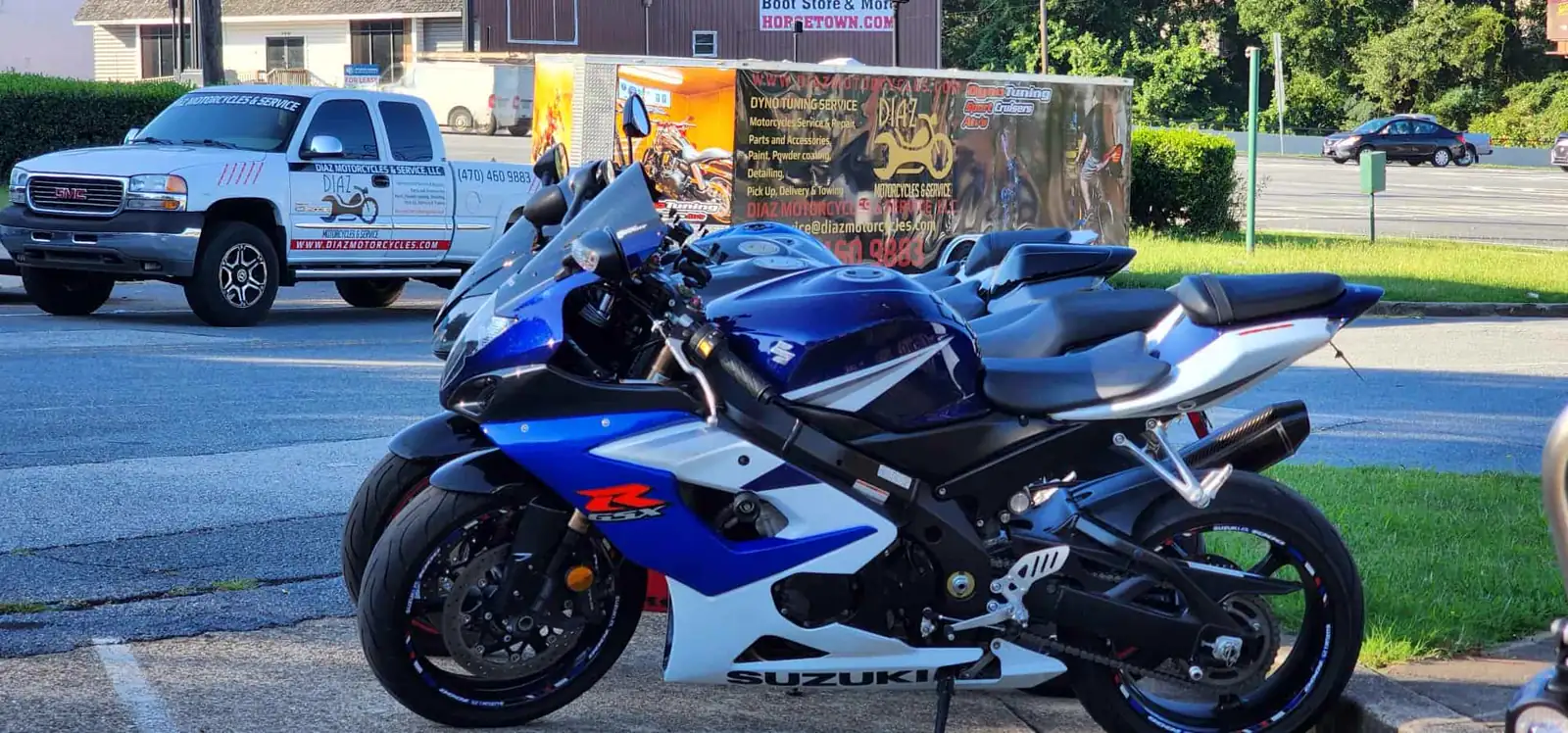
Neighborhoods split along those same lines. Families over in Riverside near the river run commuters and mid-size machines that pile up miles fast. The wooded lots in Lost Forest and the riverfront homes in River Shore Estates hold garage-kept baggers, Gold Wings and BMW tourers that sit more than they ride, which brings its own problems. Both groups do the same warm-up loop along Riverside Drive and Powers Ferry Road, passing Powers Island and East Palisades, two of the three national recreation area units inside the city. Both also hit the utility cuts and steel plates on Roswell Road and Hammond Drive that knock wheels out of true. The franchise dealer hosting the area bike night sits well out on the south and east side of the metro, a fun evening but a long haul for a Tuesday oil change.
What you get on the other side
A caught-up bike feels like a different motorcycle, and that isn’t a sales line, it’s physics. The throttle answers immediately. The chain pulls smooth and silent. Brakes bite where you expect instead of somewhere vague and late. You stop unconsciously managing the bike’s quirks and go back to just riding. Newer riders sometimes mistake a tired bike for their own lack of skill, which is why a refresher like the MSF Basic RiderCourse pairs so well with a proper service.
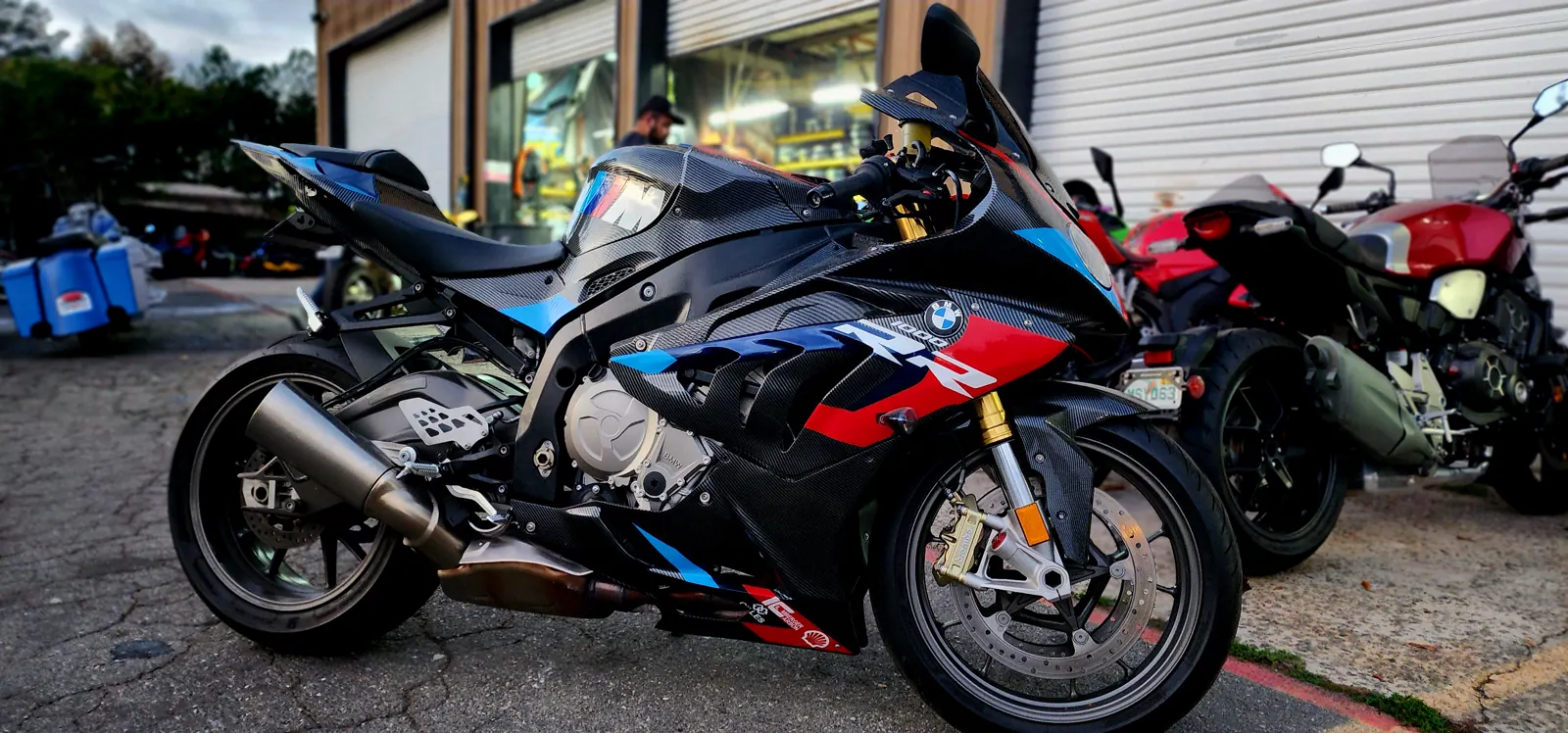
We’ll also keep answering your texts while the bike is here, which sounds small until you’ve spent a week wondering what a service department is doing with your motorcycle. Written quotes, real photos, plain answers. Beyond routine work we handle performance tuning, bodywork and paint, restorations and transport under one roof, which matters if yours is a Ducati, a KTM, an S1000RR or a 1970s Honda waiting patiently in a garage. If you’re deciding what a proper service should include before booking anywhere, what the work covers lays it out step by step. Bring us the tired bike. We’ll hand back the one you remember.
Questions Sandy Springs riders ask us
Will it get worse if I keep riding it?
Usually yes, and usually slowly. A dry chain wears the sprockets, thin pads start scoring rotors, and old oil stops protecting the engine under heat. Nothing on that list is dramatic in a week, but each one turns a small job into a bigger one over a season. Catching it now keeps the repair simple.
How urgent is this really?
It depends which symptom you have. Dark oil, a rough cold start or a dusty air filter can wait a couple of weeks without drama. A spongy brake lever, a kinked chain link or a tire losing pressure overnight should be handled before your next ride. Text us what you’re feeling and we’ll tell you honestly which bucket you’re in.
What happens if I just ignore it?
The bike keeps running until one of the small things becomes the big thing. Most often that’s a chain and sprocket set failing together, brakes fading on a hot downhill, or a battery that finally won’t crank on the one morning you needed it. It rarely happens at a convenient time. That’s the honest reason we push people not to wait.
How do you find the actual cause?
We start with what you tell us, then verify it on the lift instead of guessing. Chain stretch and pad thickness get measured, voltage gets tested at rest and while running, tire date codes get read, and a short road test puts weight and heat on the bike. Then you get a written quote before we go further.
Could my symptom be something else entirely?
Often, yes, and that’s exactly why we look past the obvious. Slow cranking can be a battery or a charging system. A soft lever can be fluid or a sticking caliper. Uneven tire wear can be alignment or a wheel knocked out of true by a pothole. We chase the cause, not just the symptom.
Do I have to ride it over to Marietta?
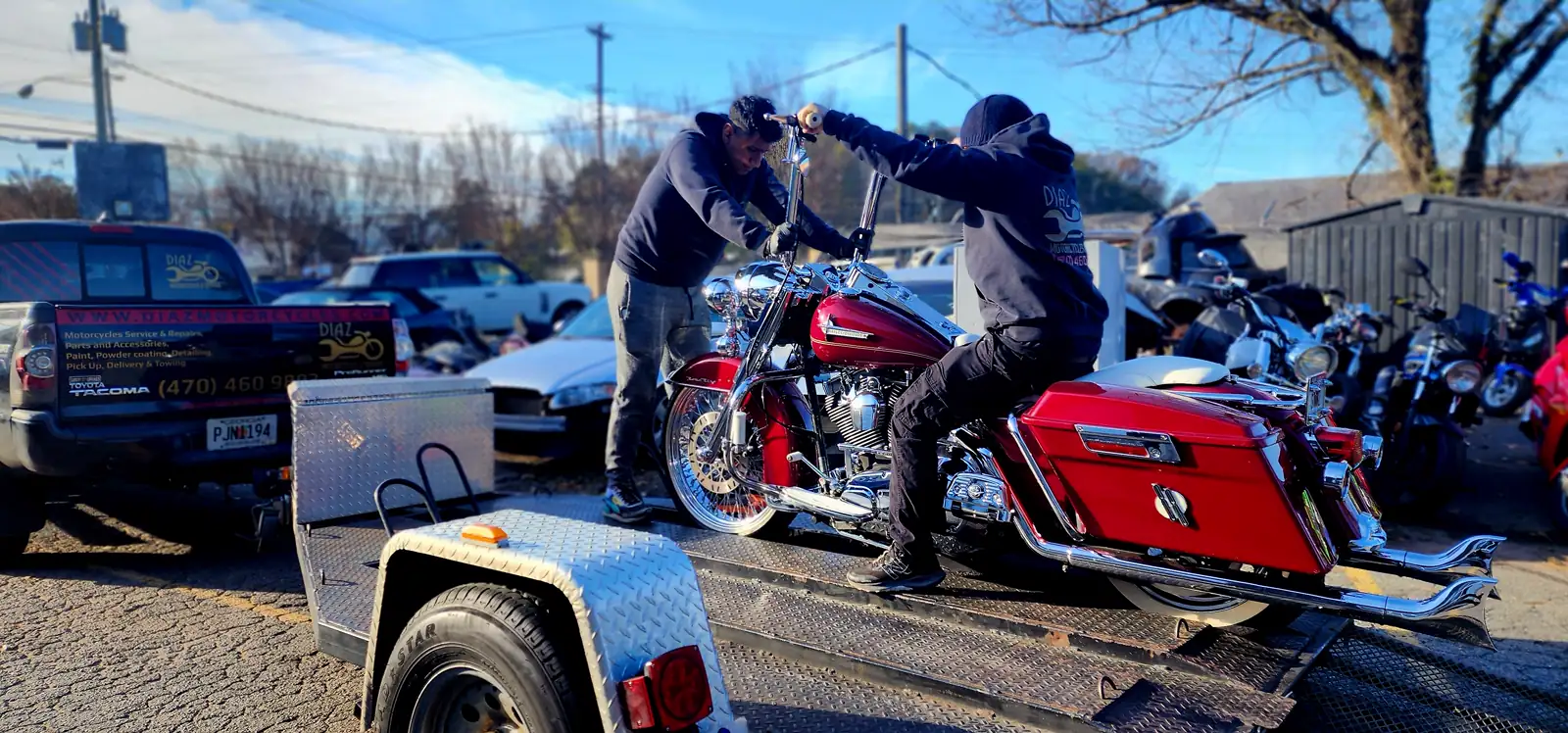
No. We run pickup and delivery specifically because so many riders in the city park in apartment lots, carports and condo decks with no outlet and no room to work. We come get the bike, service it here, and bring it back. Plenty of riders also batch several jobs into one visit so the bike only leaves once.
We take care of riders all over the north metro, starting with Sandy Springs and the neighborhoods along the river, then out to Roswell, Dunwoody and Alpharetta on the north side. Plenty of our regulars ride in from Atlanta and Buckhead, or come across the Chattahoochee from East Cobb, Vinings and Marietta. We also see steady work from Brookhaven, Chamblee, Smyrna and Doraville, and our truck and trailer cover all of it when a bike can’t make the trip on its own wheels.
TEXT US A PHOTO OF THE BIKE
If your bike stopped feeling tight, tell us what you’re noticing and we’ll tell you what it probably is. Send a text with a photo of the chain, the tires, or whatever’s bugging you, and we’ll come back with a plain answer and a written quote before anything gets touched. Sandy Springs riders are about eighteen to twenty-eight minutes out on Johnson Ferry Road, and if that’s still a hassle, we’ll bring the truck to you.
470-460-9883Diaz Motorcycles and Service, LLC · 847 Barnes Mill Road, Marietta, GA 30062