Overdue Motorcycle Service Lawrenceville Riders Can Still Catch Early
The symptoms, the likely causes, and the honest line between ride it to us and don't ride it at all.
You’re on GA-316 before the coffee has cooled all the way down, because in Gwinnett a bike genuinely beats a car on some mornings. So you ride it. After that, every day, through pollen season, through the steel plates, through whatever the county is widening this month. Then one morning the chain sounds dry, the front brake feels a half-inch longer than it did, and you can’t remember the last time anybody touched any of it. Also that’s what overdue motorcycle service Lawrenceville riders run into actually feels like from the saddle. Not a breakdown. A slow drift.
The short answer, before anything else
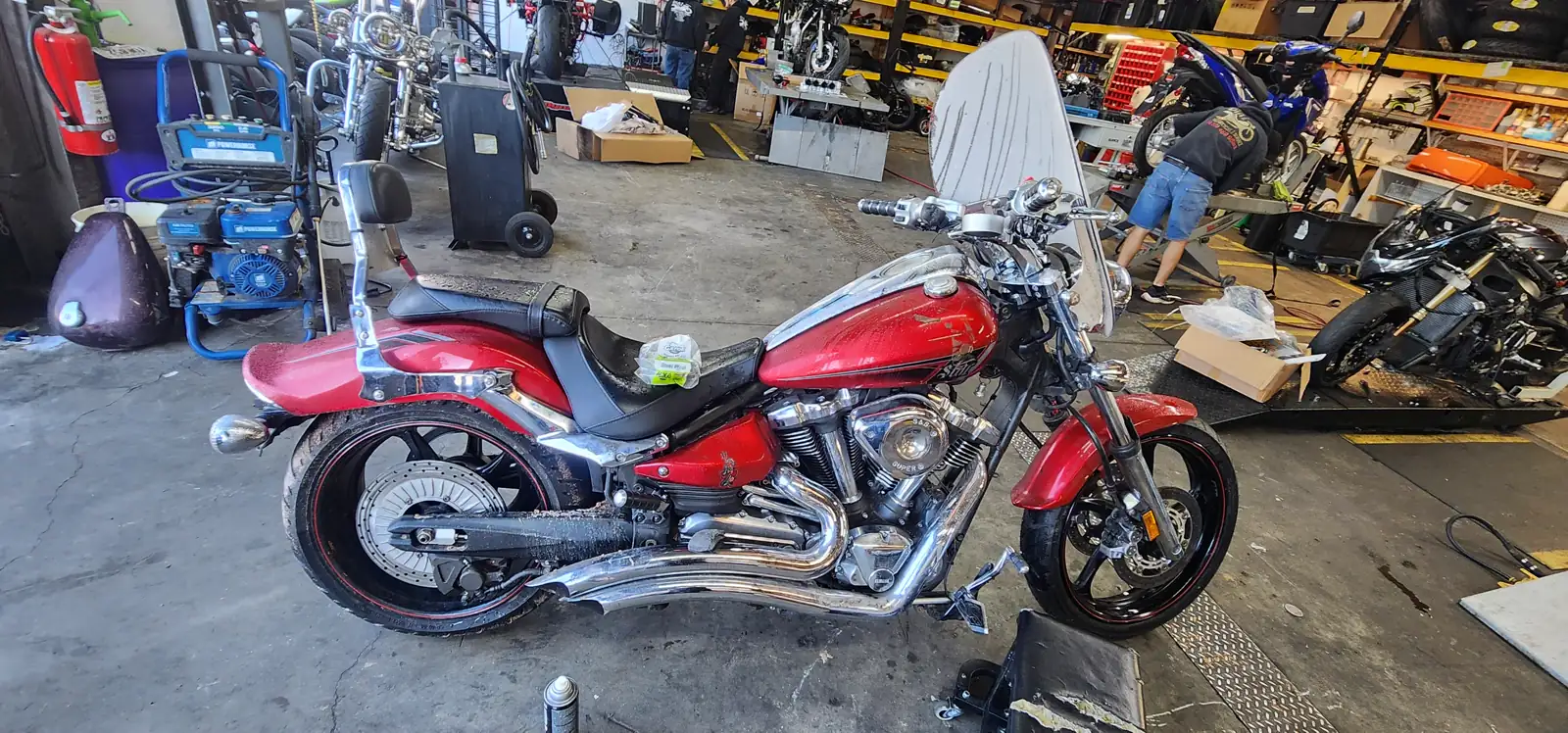
When a service is late, almost everything you’re feeling is consumables doing exactly what consumables do. Instead Chain, oil, brake pads, tires, filters, fluid. Besides None of that stuff fails in one dramatic moment. It fades. A chain goes loose and grabby. Oil turns thin and dark. Pads glaze over and get lazy. A rear tire squares off flat in the middle from all those straight, fast highway miles. The bike still starts, still pulls, still gets you to work — which is the whole trap. It never gives you a reason to stop.
So here’s the honest version. Catching a symptom early usually costs you an afternoon. Ignoring the same symptom costs you a part, and often the part sitting right next to it. A chain that’s run dry long enough doesn’t have the decency to die alone. It takes the sprockets with it. That isn’t a scare story, it’s just metal being metal, and it’s also the good news. The earlier you look, the smaller the job stays. Most overdue motorcycle service Lawrenceville riders bring us is still sitting comfortably inside that window.
RIDE IT OR TRAILER IT
Noise, roughness and a bike that feels a little tired are usually ride-it-to-us problems. Anything you feel through the brakes, the steering or the front tire is a don’t-ride-it problem. Same goes for a chain with a tight spot you can see moving. When you’re not sure, call first and swing a leg over second.
What drives the work out here
Gwinnett bikes get used harder than most people assume. GA-316 and I-85 back up so reliably that a lot of riders here commute on purpose rather than for fun, and commuting piles on annual miles fast. Higher miles means chains stretch sooner, tires cup sooner, oil sees more heat cycles, and brake pads get worked in stop-and-go instead of coasting down open road. Lane splitting isn’t legal in Georgia either, so you’re sitting in that traffic with the engine idling and the fan running, which is its own kind of wear.
Then there’s the pavement. GA-20 runs the whole north-south spine of Lawrenceville — Buford Drive heading up toward the Mall of Georgia and Buford, Grayson Highway heading down toward Grayson and Loganville — and some stretch of it always seems to be under a cone. Steel plates, milled surfaces, temporary lane shifts, gravel dragged out of construction entrances. Add the pavement seams and potholes on the older 1980s subdivision streets and county connectors, and your suspension, wheel bearings and fasteners take a beating that a garage-queen bike never sees.
Neighborhood matters more than you’d think. Collins Hill Heights sits in the part of town everybody names by the park, the schools and the aquatic center, and it’s stacked with attached two-car garages — great for keeping a bike dry, and great for keeping paint alive. Out at the Estates at Great Oaks and Great Oaks Landing the lots get bigger and so do the garages, and those bikes often sit for weeks between good weekends, which is a different kind of overdue: old fuel, a soft battery, flat-spotted tires. On the east side toward the Alcovy River, the newer streets around Alcovy Falls, Alcovy Reserve, Alcovy Springs and Alcovy Landing are smooth as glass, but the connectors that get you out to them are not.
Georgia Gwinnett College adds one more wrinkle on that same east side. A four-year campus means a lot of short, cold-start hops, and short trips are rough on a battery and rough on a chain that never gets warm enough to sling lube where it belongs. If you want the longer version of how we sort a shop from a parts-swapper, we wrote about what separates a good shop in a separate post.
Something changes once you know what to look for
Most riders describe a late service as one vague feeling: it’s just not right. Break that feeling into pieces and it stops being scary almost immediately, because each piece has a name and a fix. Here’s the order we work through it, most common first.
- Chain and sprockets. A dry chain rasps, a loose chain clunks on throttle changes, and a tight spot means it’s worn unevenly. Sprocket teeth that have gone hooked or pointy tell us the whole set is done.
- Tires. Squared-off in the center, cracked in the grooves, or slow to turn in — all classic high-mileage highway wear. Pressure gets checked cold, every single time, because low pressure fakes almost every handling complaint there is.
- Brakes. Pad thickness, disc wear, and the feel of the lever. A lever that pulls closer to the bar than it used to usually means old fluid, air, or pads near the end.
- Oil and filter. We look at what comes out as much as what goes in. Color, smell and anything glittery in it say a lot about how the engine’s been living.
- Air filter and coolant. A choked filter makes a bike feel flat and thirsty. Coolant that’s gone brown is a heat problem waiting for a traffic jam.
- Battery and charging. Short commutes and long parked stretches both punish batteries, so we load-test rather than guess.
- Fasteners, bearings and controls. Axle and caliper hardware to spec, wheel and steering-head bearings checked by hand, cables and levers actually operated instead of eyeballed.
- Lights and everything electrical you rely on in traffic. Brake light, signals, horn. Cheap to fix, expensive to be without on GA-316.
One thing we won’t do is invent a mileage number for you. Your owner’s manual sets the service intervals for your specific bike, and manufacturers write those numbers for a reason. What we can tell you is that a commuter bike living in Gwinnett heat and traffic is on the hard end of whatever your manual assumes, not the easy end. If you’re past due and can’t find the manual, bring the bike and we’ll work from condition. Here’s what you get when you bring it in, spelled out plainly.
Tires deserve one extra note, since they’re the part most people postpone. Age and heat cycles matter as much as tread depth, and a tire can look fine and still behave badly. If you like reading the technical side yourself, Dunlop’s technical resources cover pressure, wear patterns and construction in more detail than any blog post should.
Mistakes we'd love you to skip
- Topping off instead of changing. Adding oil fixes the level, not the oil. Old oil that’s been heat-cycled all summer isn’t protecting much anymore.
- Lubing a filthy chain. Lube on top of road grit makes grinding paste. Clean it first, then lube it warm, then wipe the excess.
- Chasing a handling complaint with parts. Nine times out of ten it’s tire pressure, tire age or a loose bearing — not a suspension purchase.
- Ignoring a new noise because it went away. Noises that come and go with temperature are still noises. They’re just polite about it.
- Bolting on an exhaust and calling it done. A slip-on or a full system changes how the bike breathes, and a bike running lean runs hot and cranky.
That last one comes up constantly around here, because Gwinnett is a modified-bike county. Exhausts, air filters, gearing changes, fender eliminators — the fleet is full of them, and a lot of those bikes have never been mapped to match. The symptoms get blamed on a late service when the real story is fueling. When it turns out to be a genuine repair instead of upkeep, here’s how we handle that job from drop-off to hand-back.
Small things caught early are chores. The same things caught late are projects.
Now for the part that has nothing to do with parts at all
We’re in Marietta. You’re in Lawrenceville. Based on how the roads actually run, that’s roughly 33 to 38 miles and somewhere around 45 to 70 minutes depending on which way you go and what time you leave — that’s our estimate from the map, not a stopwatch. Nobody is making that drive twice for an oil change, and we’d never pretend otherwise. Routine maintenance is well covered across Gwinnett, and if all you need is fluid and a filter, a shop near GA-20 will do you fine.
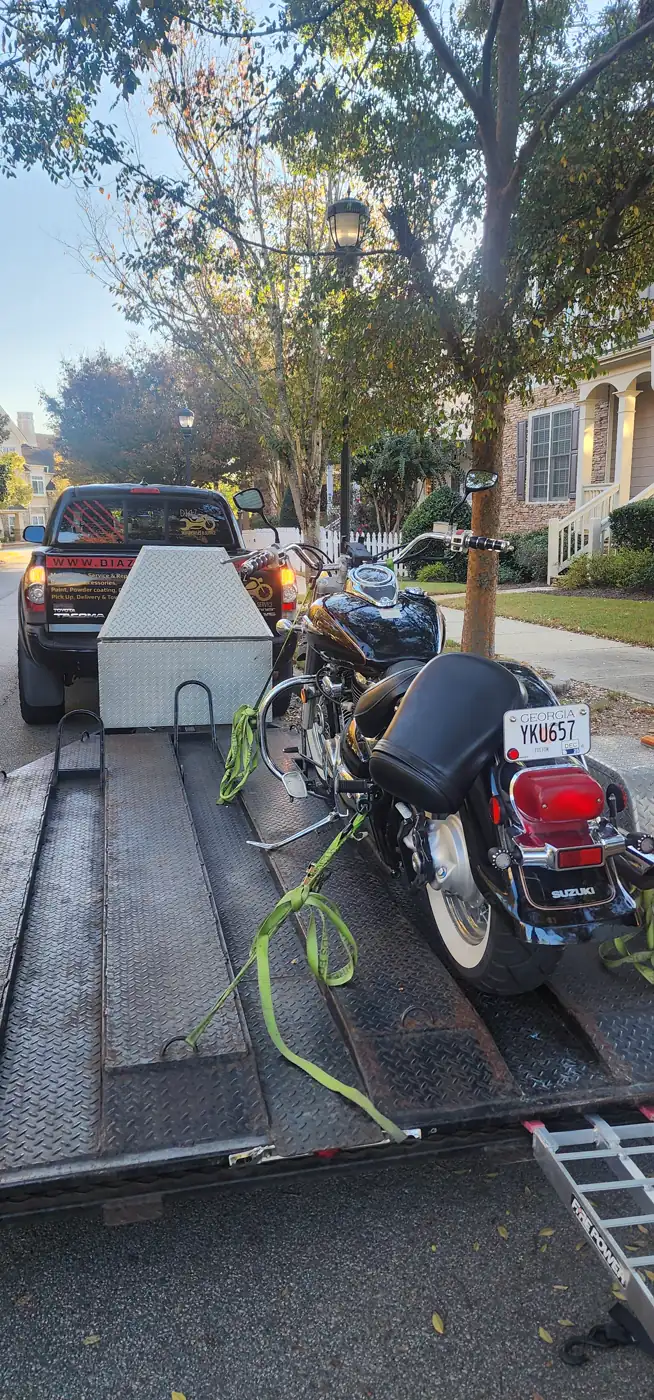
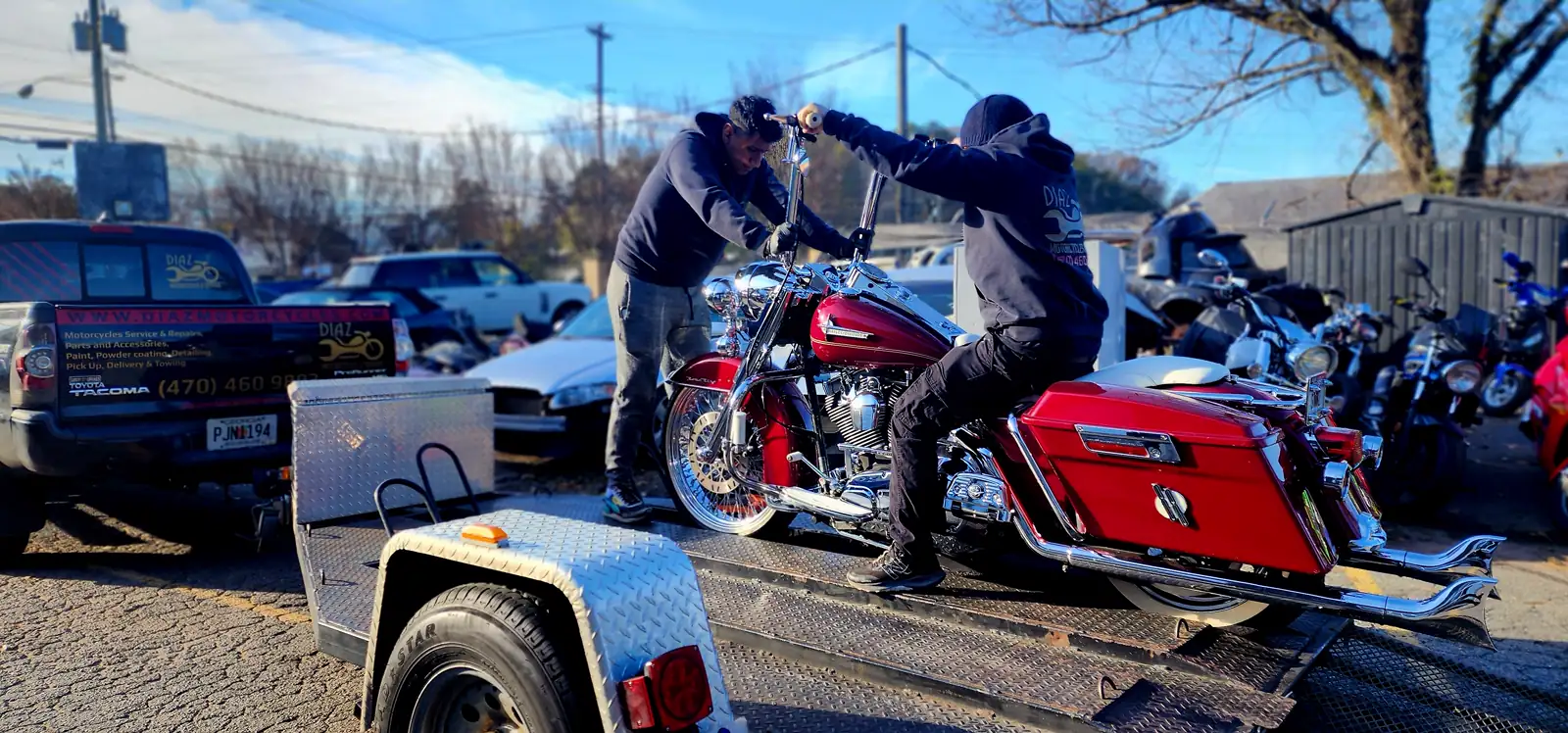
So here’s the version that actually works. We come get the bike. You’re not sitting on 285, you’re not burning a Saturday, and you’re not riding something with a question mark in the front end across the metro to find out what it is. Pickup and delivery is the whole answer to the distance problem, and it’s why the trip stops being a trip at all. The second half of the answer is batching: if the bike is overdue, do all of it in one visit. Service, tires, brake fluid, that noise you’ve been living with, the fueling that’s been off since the exhaust went on. One trailer ride handles an entire overdue motorcycle service Lawrenceville traffic has been quietly making worse all year.
And that fueling piece is the real reason Gwinnett riders end up on our lift. Riders here modify heavily and then have nowhere close to make the modifications actually work — dyno tuning and ECU flashing simply aren’t on the menu at the shops nearby. Michelin Raceway Road Atlanta is only about 30 to 35 minutes up in Braselton running motorcycle track days, so there’s a real population of riders here who need a bike that’s sorted, not just serviced. That’s work worth putting on a trailer for. An oil change isn’t, and we’ll say so.
Lawrenceville also happens to hold a federal facility most locals have never heard of — the CDC/ATSDR Specimen Packaging, Inventory and Repository, where more than 6.5 million samples are kept straight by a tracking system that never, ever guesses. We think about service records the same way. Every job gets written down, so the next time your bike comes through, nobody’s guessing what was done or when. If you’ve got friends on the other side of the metro, the Kennesaw side of things works exactly the same way.
What it feels like when you get it back
A caught-up bike is quiet in the way you forgot bikes could be quiet. The chain hums instead of rasping. Even so, the brake lever stops in the same place every time. The throttle response is clean off idle instead of hesitant, and the bike holds a line instead of wandering. That’s not a performance upgrade — that’s just the machine doing what it was built to do, with nothing dragging on it. Most riders get about two miles down the road before they start grinning about it.
You also get something better than a smooth ride, which is knowing. What’s more, you know what was checked. You know what’s near the end and roughly when to plan for it. You know which noise is normal for your bike and which one means call us. That’s control, and it’s the whole point of a service. If you want to sharpen the rider side of the equation too, the MSF Basic RiderCourse is worth a weekend even for riders who’ve been at it for years.
Then go use it. Point the bike east on US-78 and GA-316 toward Athens, where it goes flat and fast and opens up into the back roads past town, and pay attention to how little you’re thinking about the bike. That’s the feeling we’re after. Not a machine you’re monitoring. A machine you trust, so your head is free for the road, the weather and whoever’s turning left up ahead.
Questions Lawrenceville riders ask us
What actually happens if I keep ignoring it?
Usually the cheap part takes the expensive part with it. A worn chain chews sprockets, thin oil makes the engine work harder, and pads worn past the friction material start scoring discs. None of that happens overnight, which is exactly why it sneaks up. Catch it while it’s still one part and it stays a short, boring job.
How do you find the cause instead of guessing?
We start with the cheapest and most common things and work outward — tire pressure, chain condition, fluid condition, pad thickness, fastener torque. Then we ride it or run it under load and try to reproduce what you described. If the symptom only shows up warm or only in traffic, we recreate that. Guessing costs you money, so we don’t.
Could it be something other than a late service?
Absolutely, and around Gwinnett it often is. A slip-on or full exhaust without a matching map will make a bike feel flat, hot and surge-y, and that gets blamed on maintenance all the time. Wheel bearings, a sticky caliper and an old battery all wear service-shaped disguises too. That’s why we check before we recommend.
Is it safe to ride to you like this?
It depends where you feel it. A noisy chain, a tired-feeling engine or an old filter will generally get you here fine. Anything you feel in the brakes, the steering, the front tire or a chain with a visible tight spot is a stop-riding situation. Call us and we’ll bring the trailer instead — that’s what pickup and delivery is for.
How do I know what my service interval even is?
Your owner’s manual sets it, and it’s specific to your model — we won’t make up a mileage number for you. If the manual is long gone, bring the bike and we’ll assess by condition instead. Keep in mind that a bike commuting in Gwinnett heat and stop-and-go traffic is living on the severe end of whatever the manual assumes.
Is the drive from Lawrenceville really worth it?
For an oil change, honestly, no — and we’ll tell you that on the phone. For a modified bike that needs to be tuned and made right, or a batch of overdue work knocked out in one visit, yes. Either way we come get the bike, so the drive is on us and not on your Saturday.
We pick up and deliver across Gwinnett and the surrounding OTP cities, so Lawrenceville is an easy one for us. That includes riders in Duluth and Norcross on the west side, Suwanee, Buford and Sugar Hill up north toward the GA-20 corridor, Dacula out east, and Snellville, Grayson, Loganville and Lilburn heading south. We also run out to Tucker and Stone Mountain regularly. If you’re somewhere in between those, just ask — odds are good we’re already coming your way this week.
TELL US WHAT IT'S DOING
Text us what your bike is doing and roughly when you last had it serviced, and we’ll tell you straight whether it’s a ride-it-in job, a trailer job, or something that can wait a couple of weeks. Lawrenceville pickups are routine for us, so you don’t have to cross the metro to get a real answer. One message, and you’ll know where you stand.
470-460-9883Diaz Motorcycles and Service, LLC · 847 Barnes Mill Road, Marietta, GA 30062