Enclosed vs Open Transport Alpharetta — The Real Answer
Two honest ways to move a bike, one clear recommendation, and the reason distance is exactly why we come to you.
A friend called us last spring with a quote in his hand and a bad feeling in his gut. He’d bought a clean bike two states away, needed it home to his garage off McGinnis Ferry Road, and a hauler had tossed him a number over the phone that felt both too high and too vague at the same time. In short what he really wanted was a straight answer on enclosed vs open transport Alpharetta riders can actually trust, and nobody had bothered to give him one. So we walked him through the whole thing, start to finish, the same way we’ll walk you through it right now.
Why That Phone Quote Felt Off
At the same time here’s the thing about a lot of transport quotes. They come fast, they sound confident, and they skip the one part that matters most to you: what actually happens to your bike between pickup and drop-off. A number by itself tells you almost nothing. Two haulers can quote the same job and mean two completely different things, because one is picturing your motorcycle strapped to an open trailer out in the breeze and the other is picturing it sealed inside a box. Same word, same price bracket, wildly different day for your bike.
That gap is where the bad feeling comes from. You’re not confused because you’re new to this. You’re confused because the person quoting you left out the choice that changes everything. Open and enclosed aren’t fancy upgrades or sales tricks. They’re two honest ways to move a bike, each one right for a different rider, and once you see the difference clearly the whole enclosed vs open transport Alpharetta decision gets easy.
Open Transport, Plain and Simple
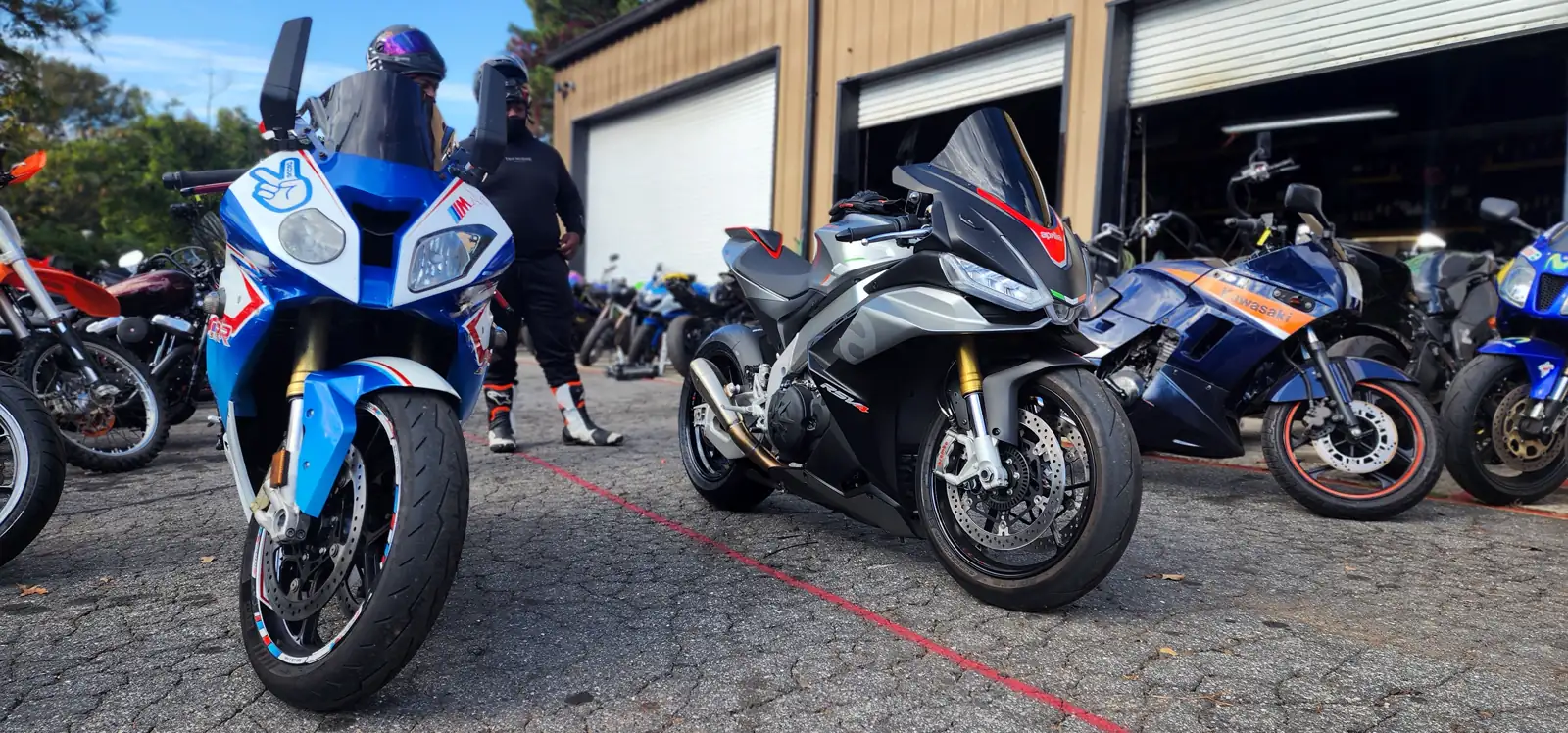
Open transport is exactly what it sounds like. Your bike rides on a trailer that’s out in the fresh air, tied down tight, cruising down the road for everyone to see. It’s the same setup you’ve watched roll past you a hundred times on the highway. Nothing hides the bike from wind, sun, or a passing rain shower, and that’s the whole trade-off in one honest sentence.
For most bikes and most trips, open is more than enough. A modern cruiser or sportbike is built to sit outside in weather every single day, so a few hours on an open trailer won’t hurt it any more than a ride to work would. Open trailers are lighter, they’re easier to load, and there are simply more of them on the road, which usually keeps the price friendlier and the scheduling quicker. If your bike is a solid rider and you’re moving it a reasonable distance, this is often the smart, no-drama pick. Plenty of the bikes we haul never need anything more than this. Think of it like your bike’s daily reality, just parked on wheels for a few hours instead of the kickstand. It rides, it arrives, and you’re back on the road.
Open and enclosed aren't upgrades and downgrades. They're two right answers to two different questions.
Enclosed Transport, Plain and Simple
Enclosed transport puts your bike inside a fully closed trailer, walls and roof and doors, shut away from the world for the entire trip. No wind. That’s why No road grime. No curious eyes at the gas station. Your motorcycle travels in its own private room and comes out the other end looking exactly like it went in.
That protection is the whole point, and it costs a little more for good reason. Enclosed trailers are heavier, there are fewer of them around, and each one carries fewer bikes, so you’re paying for space and shelter. There’s a version of this that’s cheap and a version that isn’t, and enclosed sits firmly on the isn’t side. But for the right bike, every bit of that is worth it, and we’ll tell you in a minute exactly which bikes those are.
How a Bike Gets Tied Down Without a Scratch
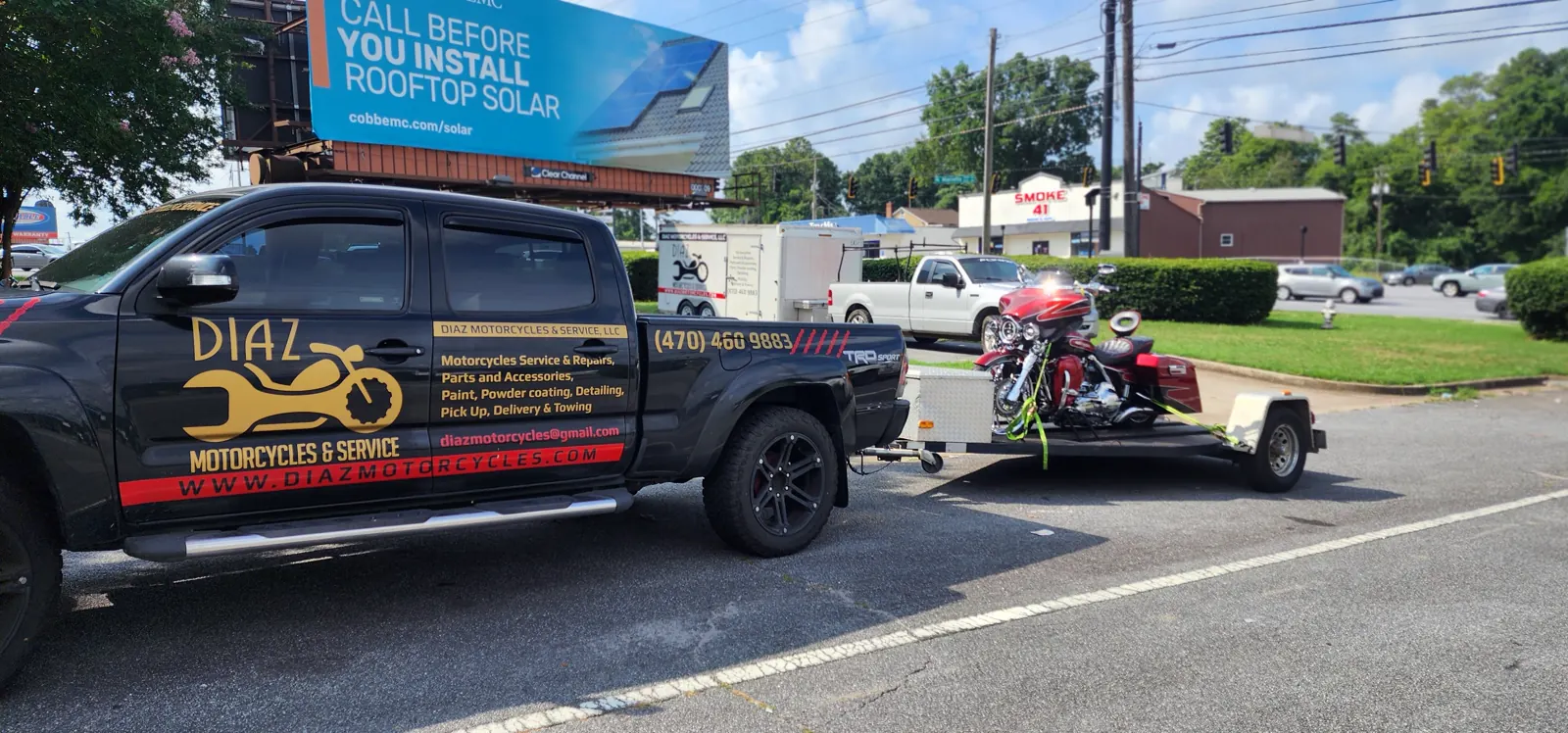
Whichever trailer your bike rides on, the tie-down is where a move is won or lost. We roll the bike up the ramp and set the front wheel into a chock, which is a cradle that grips the tire and holds the front end dead straight. From there the bike gets strapped at multiple points, snug enough to compress the suspension a touch so it can’t bounce, but never so hard that anything bends or rubs. Soft loops go around solid parts of the frame or bars, never around a brake line or a plastic fairing.
Good tie-down work is slow, boring, and completely worth it. We pad every contact point, double-check each strap, and give the bike a firm shake before the wheels ever turn. A bike that’s tied down right doesn’t wobble, doesn’t lean, and doesn’t move an inch for the whole trip. If you want to nerd out on gear and technique, sites like RevZilla’s Common Tread go deep on this stuff, and it lines up almost exactly with how we do it in your driveway.
- Front wheel locked into a chock so it can’t turn or drop
- Soft straps looped around solid frame and bar points, never brake lines or fairings
- Suspension gently compressed so the bike can’t bounce on bumps
- Every contact point padded, then a firm shake-test before we pull out
BEFORE YOU BOOK
Ask three questions of anyone: open or enclosed, how does it get strapped, and is there cargo coverage. A shop that moves bikes for a living answers all three without blinking.
The Paperwork That Actually Protects You
Here’s the part nobody talks about at the coffee shop, and it matters as much as the straps. Before your bike ever leaves, we write down its condition. Every existing scratch, chip, and scuff gets noted, and photos go right along with it. That’s called a condition report, and it’s your proof of exactly how the bike looked at pickup. If anything ever came up, you’re not arguing from memory. You’re pointing at a dated photo.
You’ll also want to know the mover carries real cargo coverage for your bike while it’s on the trailer, so ask and get it in plain language. A shop that hauls bikes for a living has all of this ready before you even bring it up, because it protects us too. When you see how the work adds up, the documentation is a quiet part of it, and it’s the part that lets you sleep the night your bike is out on the road.
So Which One Should You Pick?
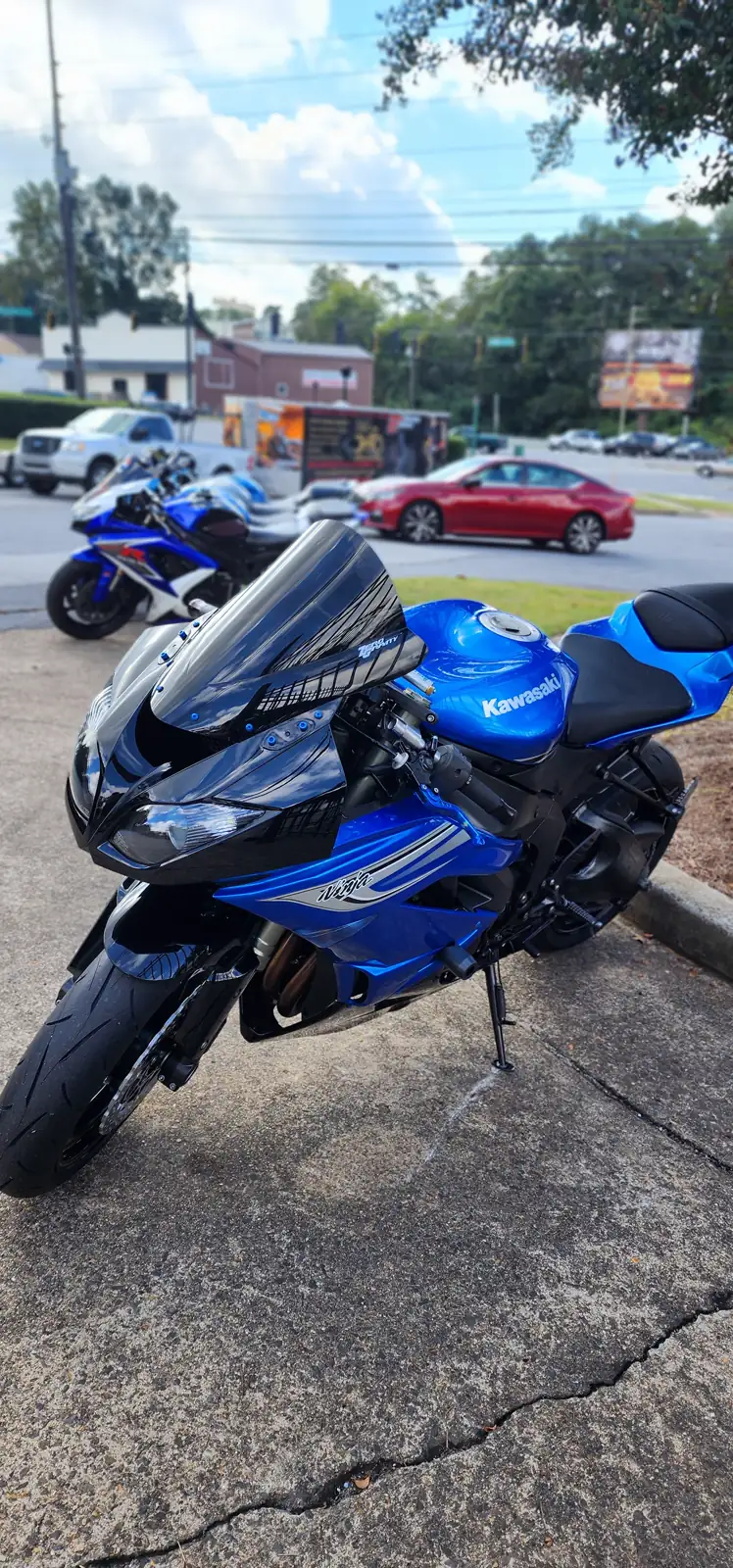
When it comes to enclosed vs open transport Alpharetta riders keep asking us to just pick, so here’s our real answer, no fence-sitting. For most people moving a normal, well-loved bike a reasonable distance, open transport is the right call. It’s proven, it’s practical, and your bike will show up ready to ride. Paying extra to box up a daily cruiser that lives outside anyway doesn’t add much you’ll ever notice. Save that money for gas and a fresh set of tires.
Now here’s where the other choice wins, and it isn’t close. If your bike is rare, freshly restored, show-polished, hard to replace, or heading across the country instead of across town, go enclosed and don’t look back. A vintage restoration with wet paint, a collector piece, or a long haul through changing weather is exactly what enclosed was built for. The longer the trip and the harder the bike is to replace, the more that sealed trailer earns its keep. Bike matters, distance matters, and honestly your own peace of mind matters too.
This same logic holds no matter where you live, and if you’re curious how this plays out in Dallas, the trade-offs land in almost the same place with a few regional twists. The choice is always about the bike and the miles, never about which word sounds fancier. And if you want the full picture of everything we cover, we lay the whole process out there in plain English.
Something worth knowing before you book anywhere: the cheapest quote and the safest move are rarely the same phone call, and the difference is almost always hiding in the details nobody mentioned. Ask what trailer it rides on. Either way ask how it gets strapped. Ask what happens if it rains. The answers tell you everything you need to know about who you’re dealing with.
Why 'We Come Get It' Is the Whole Point Around Here
Now let’s talk about why any of this matters for an Alpharetta garage in the first place. You’re not exactly next door to us. From a driveway in Windward, the 3,400-acre spread built around Lake Windward, you’re looking at a real drive to reach the shop, and no freeway connects us cleanly. Most folks end up taking Old Milton and Rucker over to GA 9, south through Roswell, then GA 120 west into East Cobb. That’s roughly eighteen to twenty-two miles, and a bad afternoon can stretch it toward an hour. On a running bike, that’s a nice morning. On a bike that won’t start, it’s an impossible one.
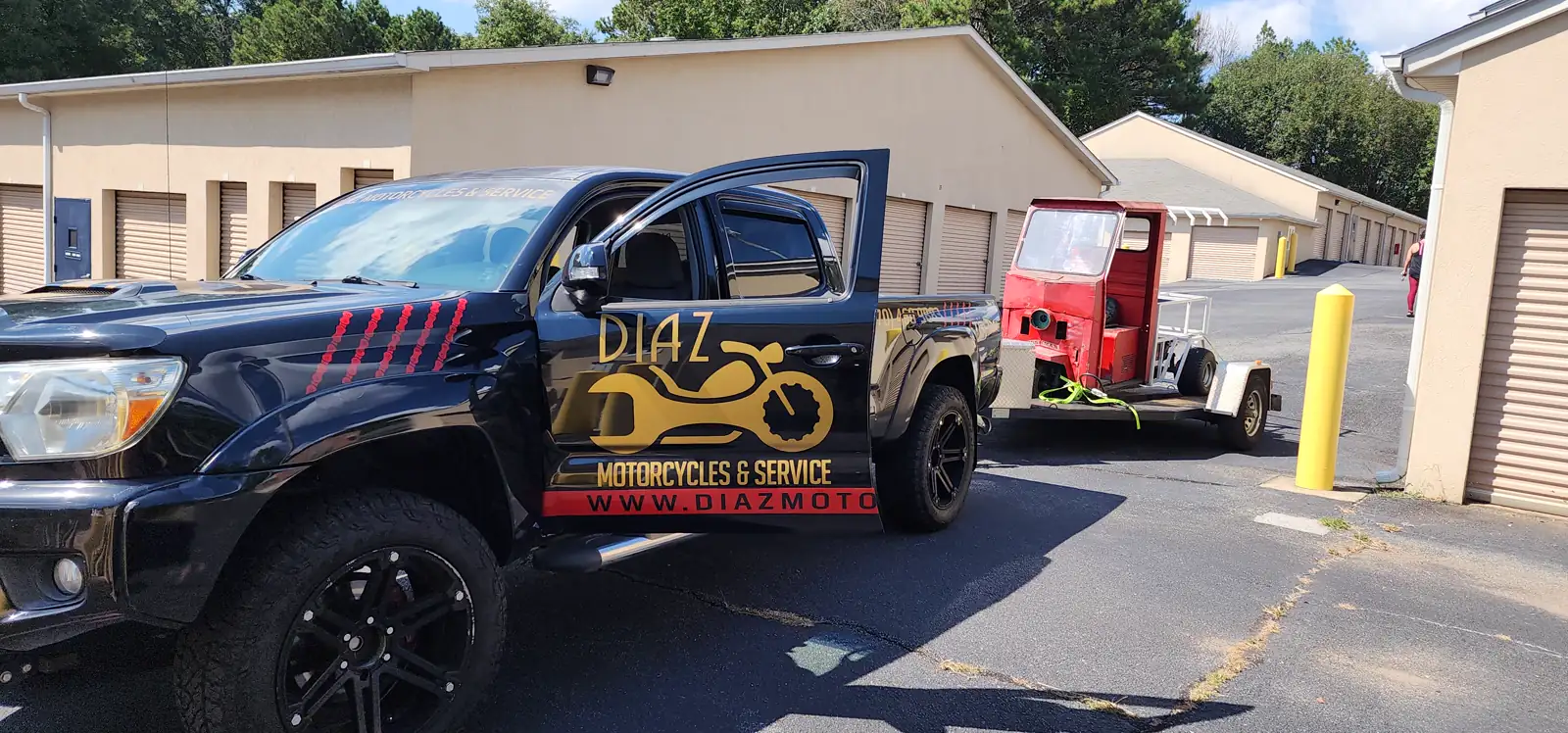
That’s the whole pitch, plain as day. We come get it. Whether your bike is parked in a swim-and-tennis pocket like Deer Lake, tucked in one of the couple hundred homes over in Dunmoor near the old North Point Mall area, or just sitting quiet after a long winter, we hitch up the trailer and roll to you. A dead battery, a project that hasn’t run in years, a fresh out-of-state buy, a bike you inherited from family, or a seasonal move, it’s all the same to us. You don’t have to solve the getting-here problem, because getting there is our job.
The dealers up here can only take you so far. Killer Creek Harley-Davidson over on Alpharetta Highway in Roswell is a solid shop fifteen or twenty minutes out, but it’s brand-limited, and a garage that holds a tourer, a sportbike, and something vintage needs someone who works on all of it. We’ll pick up from a photo stop near the Silos in Crabapple, from a driveway off McGinnis Ferry Road on the Forsyth line, or from a lot near Ameris Bank Amphitheatre on a show night when the last thing you want is to thread a bike through concert traffic. And when your restored ride is finally ready to chase the Suches Loop, that US 19, GA 60, and GA 180 triangle out of Dahlonega past Neel’s Gap and Blood Mountain, we’d rather deliver it perfect than watch you sweat a two-hour trailer job. Fresh rubber helps on a run like that too, and Michelin’s motorcycle tire resources are a good place to read up before you go.
What You Walk Away With
Our friend with the out-of-state buy went with open transport, and his bike showed up in his garage clean, straight, and ready to ride the next weekend. No drama, no surprise line items, no bad feeling. He got a real answer, a fair number he actually understood, and a bike delivered by people who ride. If you also want to know what that service actually involves once the bike is home, we keep that just as clear. Because that’s the outcome we’re after every single time: you understood, your bike safe, and the whole thing simpler than the quote that scared you off in the first place. That’s really the point of picking the right trailer. It isn’t about spending more or spending less. It’s about matching the move to the bike so nothing gets left to chance, and then getting out of your way so you can enjoy the ride you were after all along.
Questions Alpharetta riders ask us
Does the kind of bike I own change which one I need?
It absolutely does. A daily cruiser or sportbike that already lives outside is perfectly happy on an open trailer. A rare, freshly restored, or hard-to-replace bike leans toward enclosed. The bike is half the answer, and the miles are the other half.
Is paying for enclosed actually worth it?
For the right bike, yes, and it’s not a close call. If your motorcycle is a collector piece, freshly painted, or heading a long way through changing weather, that sealed trailer earns every bit of what it costs. For an everyday rider going a short hop, it’s usually more than you need.
If you had to pick one for me, which is it?
For most riders moving a normal bike a reasonable distance, we recommend open transport without hesitation. It’s proven, practical, and your bike shows up ready to ride. We only steer you to enclosed when the bike or the distance genuinely calls for it, and we’ll tell you plainly when that’s the case.
What's the real difference between open and enclosed?
Open means your bike rides on a trailer out in the fresh air, tied down tight. Enclosed means it travels inside a fully closed trailer, sealed away from wind, weather, and road grime. Both use the same careful tie-down. The only difference is whether there’s a roof and walls around the bike.
Which one is safer for a long trip?
Both are safe when the bike is strapped right, but enclosed adds a real edge over long distances because it shields the finish from weeks of weather and road spray. The longer the haul, the more that shelter matters. For short local moves, open holds up just fine.
Do you really come pick the bike up in Alpharetta?
We do, and it’s the whole point. From Windward to Deer Lake to a driveway off McGinnis Ferry Road, we hitch up the trailer and roll to you. Dead battery, long-parked project, or fresh out-of-state buy, you never have to solve the getting-here problem yourself.
We bring pickup and delivery to riders all around North Fulton and beyond, so the drive to us never has to be your problem. Along with Alpharetta, we regularly come get bikes in Roswell, Milton, Johns Creek, and Sandy Springs, then loop up toward Cumming, Suwanee, and Duluth. Head the other direction and we’re just as at home in East Cobb, Woodstock, Dunwoody, the crossroads of Crabapple, and back to our own shop in Marietta. Wherever your garage sits, the trailer can reach it.
LET US COME GET IT
Stop wrestling with a vague quote and a bike that won’t cooperate. If you’re in Alpharetta and need it moved, text or call Diaz Motorcycles and we’ll tell you straight whether open or enclosed fits your bike, then bring the trailer to your door. You get a real answer, a fair number you understand, and your motorcycle handled by people who ride.
470-460-9883Diaz Motorcycles and Service, LLC · 847 Barnes Mill Road, Marietta, GA 30062