Stranded Motorcycle Pickup Douglasville — Causes & Fixes
Your bike quit on you. Here's what usually causes it, when it's safe to ride, and how we come get it.
You pushed your bike the last few feet through the door, sweat running down your back, and the guy behind the counter barely looked up. He asked what you did to it. Not what happened — what you did, like the engine dying on the side of the road was somehow your fault. You walked out feeling smaller than when you walked in, and the bike still didn’t run. If that sounds familiar, take a breath. A good stranded motorcycle pickup Douglasville riders can actually trust doesn’t work like that at all. We come to you, we load it up, and nobody makes you feel dumb for asking why it quit.
What being stranded actually feels like
You’d been carving Chapel Hill Road, the GA-166 run that drops southeast toward the Chattahoochee — about six and a half twisty miles that make living out here worth it. On the way back toward town, though, the engine coughs. Then it coughs again. Then it just goes quiet under you, and suddenly you’re coasting toward a shoulder you didn’t plan on, thumbing the starter and getting nothing but a sad little click.
Maybe it happened differently for you. Maybe the bike fired up fine all week and then died at a red light on Bill Arp, right in front of everybody. Or maybe it never woke up at all — you walked out to the driveway, hit the button, and got silence. However it went down, the feeling is the same. One minute you’re a rider, and the next you’re stuck on the side of the road doing math on how you’re going to get home.
Here’s the part that matters, and we mean it: a bike that quits is almost never a rider who failed. It’s a machine telling you something. Once you know what it’s saying, the whole thing gets a lot less scary.
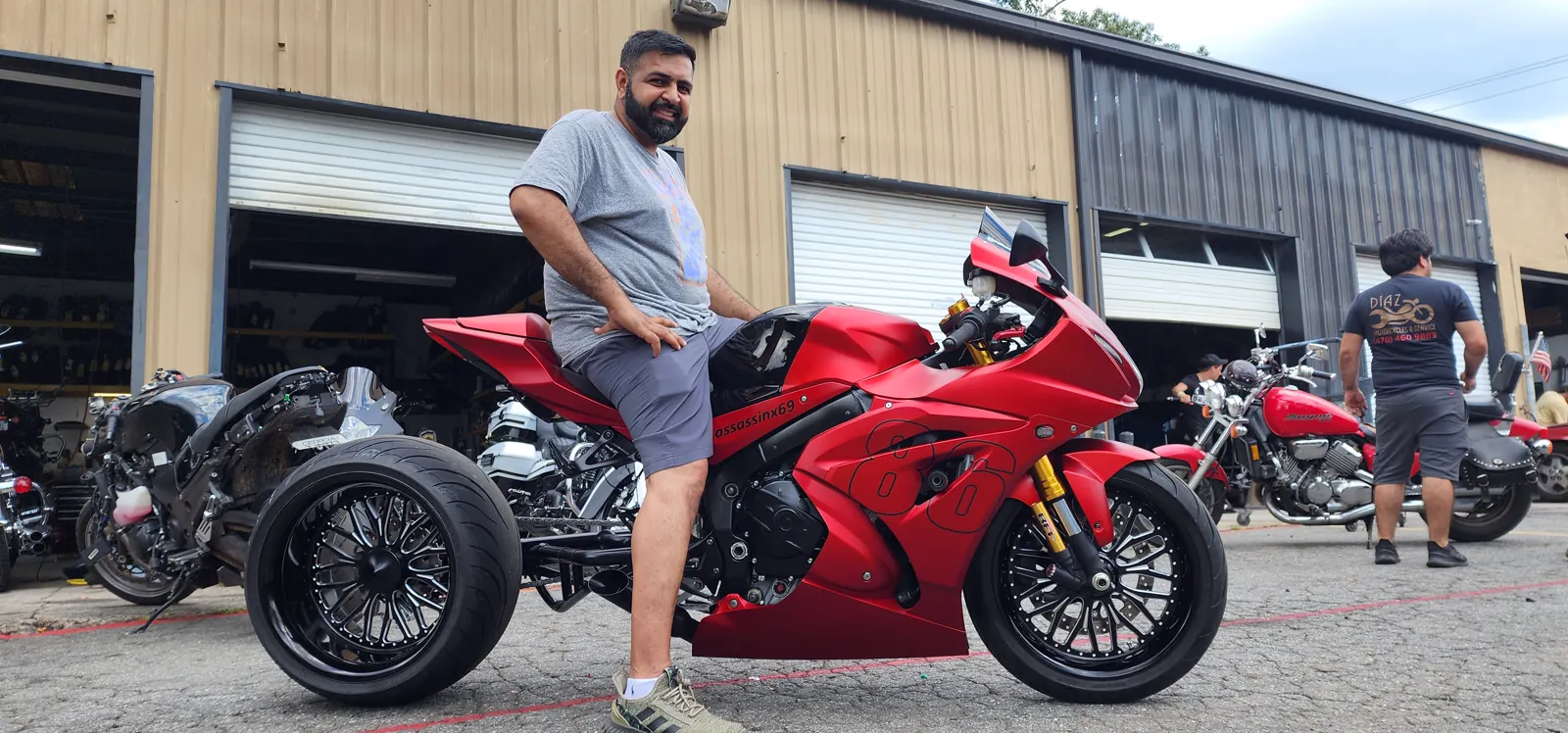
Why bikes quit — the usual suspects
Let’s walk through the common causes in plain words, most likely first. You don’t need a wrench in your hand to follow along. You just need to know that most of these are small, and almost all of them are fixable.
- Dead or dying battery. This is the number-one reason bikes won’t start. That sad little click when you hit the button? Nine times out of ten it’s the battery, especially after a bike has sat through a cold snap or gone a few weeks without a ride.
- Bad or stale fuel. Gas goes off. If your bike sat over the winter with old fuel in the tank, it can gum up the works and make the engine sputter, stall, or refuse to catch at all.
- Spark trouble. Fouled plugs, a tired coil, or a loose connector can cut the spark the engine needs. The bike cranks, but it just won’t fire, or it runs rough and dies.
- A blown fuse or loose wire. One little fuse can shut down the whole show. Vibration from our rough west-metro pavement works connectors loose over time, and a single bad ground can leave you dead in the driveway.
- Overheating. On a stop-and-go crawl in July, an air-cooled engine can get hot enough to stumble or shut down until it cools off.
- Clutch or drivetrain. Less common, but a slipping clutch or a chain problem can leave you stuck even when the engine’s running fine.
Notice a pattern? None of those are the end of the world. A battery is a battery. Stale fuel gets drained and replaced. A fouled plug costs about ten minutes of a mechanic’s time. The scary feeling of being stranded rarely matches how big the actual problem is, and that gap is the whole reason we wrote this.
Before we go further, one thing worth clearing up. You do not have to figure out the cause yourself before you call us. Some folks think they need a diagnosis in hand — a name for the problem — before they’re allowed to ask for help. Not here. “It won’t start” is a complete sentence. “It died and I don’t know why” is enough for us to load the trailer and roll out. Guessing is our job, not yours.
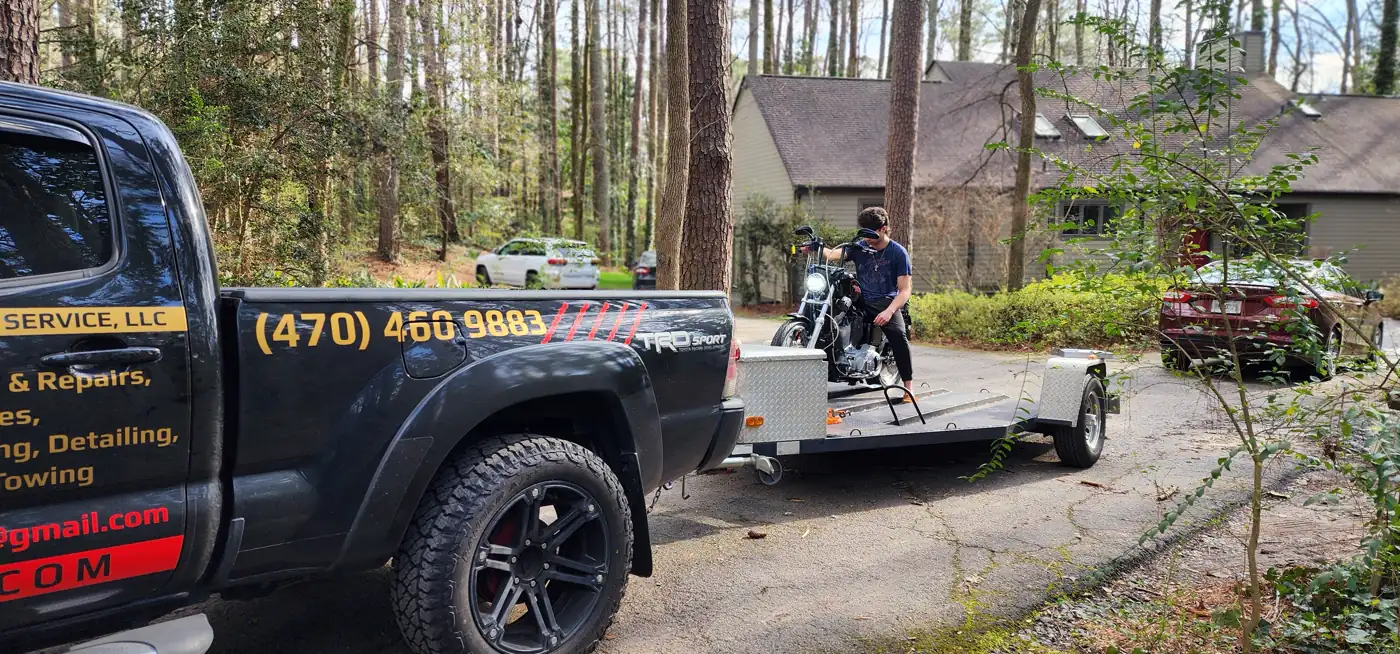
How we actually figure out what's wrong
Once your bike is back at the shop, we don’t guess and swap parts until something works. That’s how you end up paying for a battery you didn’t need. Instead, we start at the cheapest, most common causes and work outward, one honest test at a time.
First we check the battery under load, because a battery can read fine sitting still and still fail the second the starter pulls on it. Then we look at fuel — is it fresh, is it getting where it needs to go? After that comes spark: we pull a plug, check the color, and confirm the coil and connectors are doing their job. From there we trace the electrical system, fuse by fuse and ground by ground, until the culprit shows itself.
If the trouble turns out to be a running or power issue rather than a no-start, that’s where a dyno earns its keep. A dyno lets us watch the engine work under real load and read exactly where it’s stumbling — the same principle behind Dynojet’s dyno center. The point of all of it is simple: find the real cause, tell you straight, and fix that one thing. If you want to go deeper on how to pick a shop that works this way, we broke down the full rundown on it in another post.
A bike that quit on you isn't a bike you failed. It's a puzzle with an answer.
When it's safe to ride — and when it really isn't
This is the part every rider wants a straight answer on, so here it is. Sometimes a bike that acted up is perfectly fine to ride once it starts again. Other times, riding it is how a small problem becomes a scary one. The difference matters, so let’s draw the line clearly.
DON'T RIDE IT IF
It’s stalling in traffic, the lights or brake lights cut out, you smell or see fuel leaking, it’s overheating, or the front end feels loose or wobbly. Any of those, leave it parked and let us come get it. A stall on I-20 westbound at rush hour is not the place to test your luck.
On the flip side, if the bike died once, restarted, and now runs clean with every light working and no leaks, a short careful ride straight to a shop is usually okay. When you’re not sure, though, don’t split the difference. The safe move is always the boring one: park it, and let the trailer do the work. Nobody has ever regretted being too careful with their own bike.
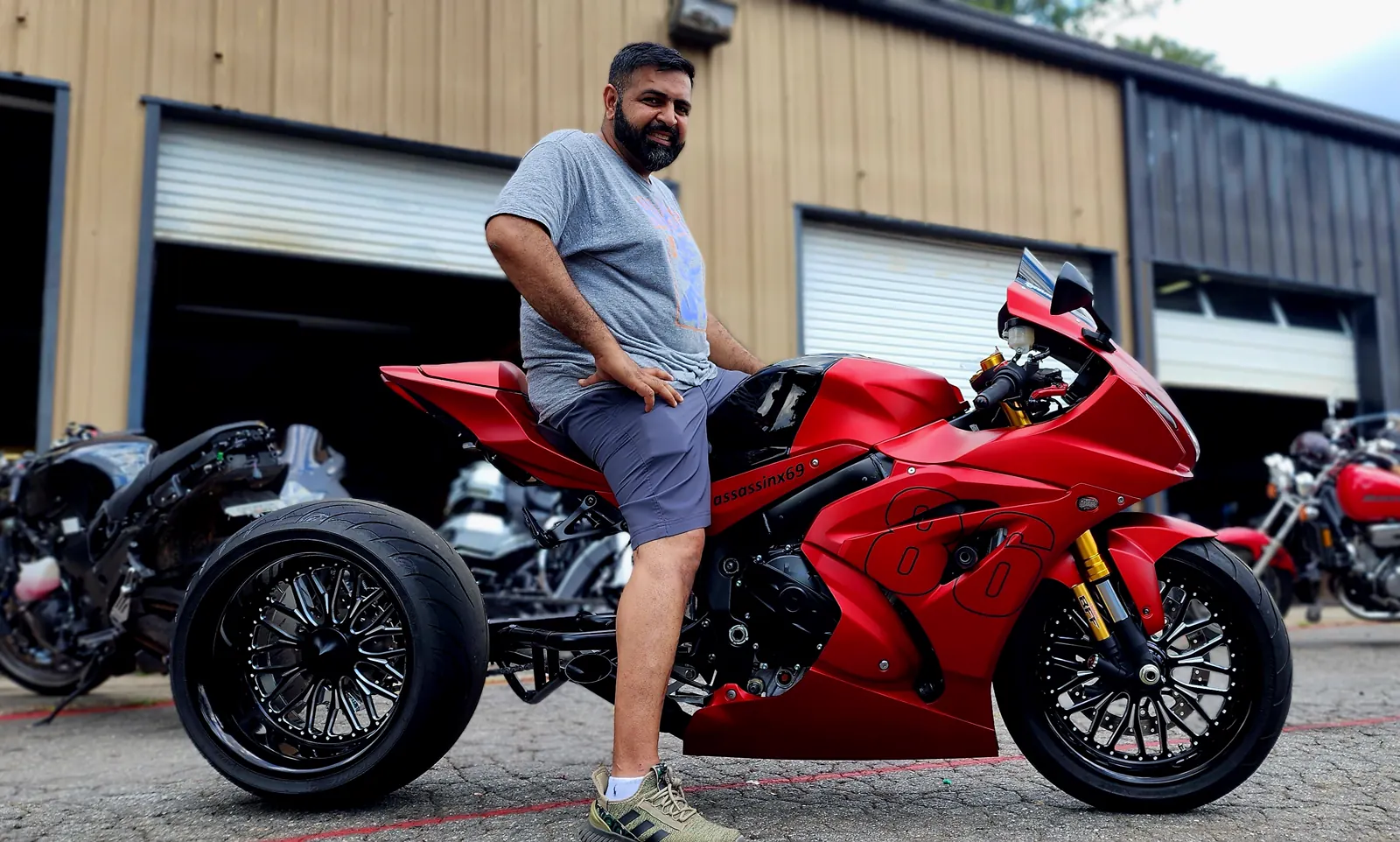
What the pickup actually looks like
So you call, and now what? Here’s exactly how it goes. We show up with an open trailer, roll your bike up the ramp, and lock the front wheel into a chock so it can’t move. Then we tie it down properly — soft straps up front to protect your bars and controls, ratchet straps compressing the front suspension a touch so the bike sits solid, and points at the rear so nothing shifts on the highway. It’s the same careful process whether it’s a bagger, a sportbike, or a scooter, and you can read about what that service actually involves in plain detail.
For most local jobs an open trailer is exactly right — it’s quick, it’s safe, and your bike gets tied down the same secure way either way. For a long-haul move, a bike bought out of state, or a rare build you want fully shielded from weather and road grit, an enclosed trailer is the call. We’ll tell you honestly which one your situation needs. And before we ever roll, we note the bike’s condition together, so there’s a clear record protecting you and us. That paperwork isn’t red tape — it’s peace of mind. You can see everything we cover on the service page, from a bike that won’t run to an inherited machine that’s sat for years.
There’s a reason we bring this up on nearly every intake. The biggest worry we hear isn’t the repair — it’s “how do I even get it to you?” That question stops a lot of good riders from calling at all. They picture renting a truck, wrangling a ramp alone, and hurting their back or their bike. So they let it sit. Don’t let it sit. The getting-it-there part is the part we own completely, and it’s the whole reason pickup exists in the first place.
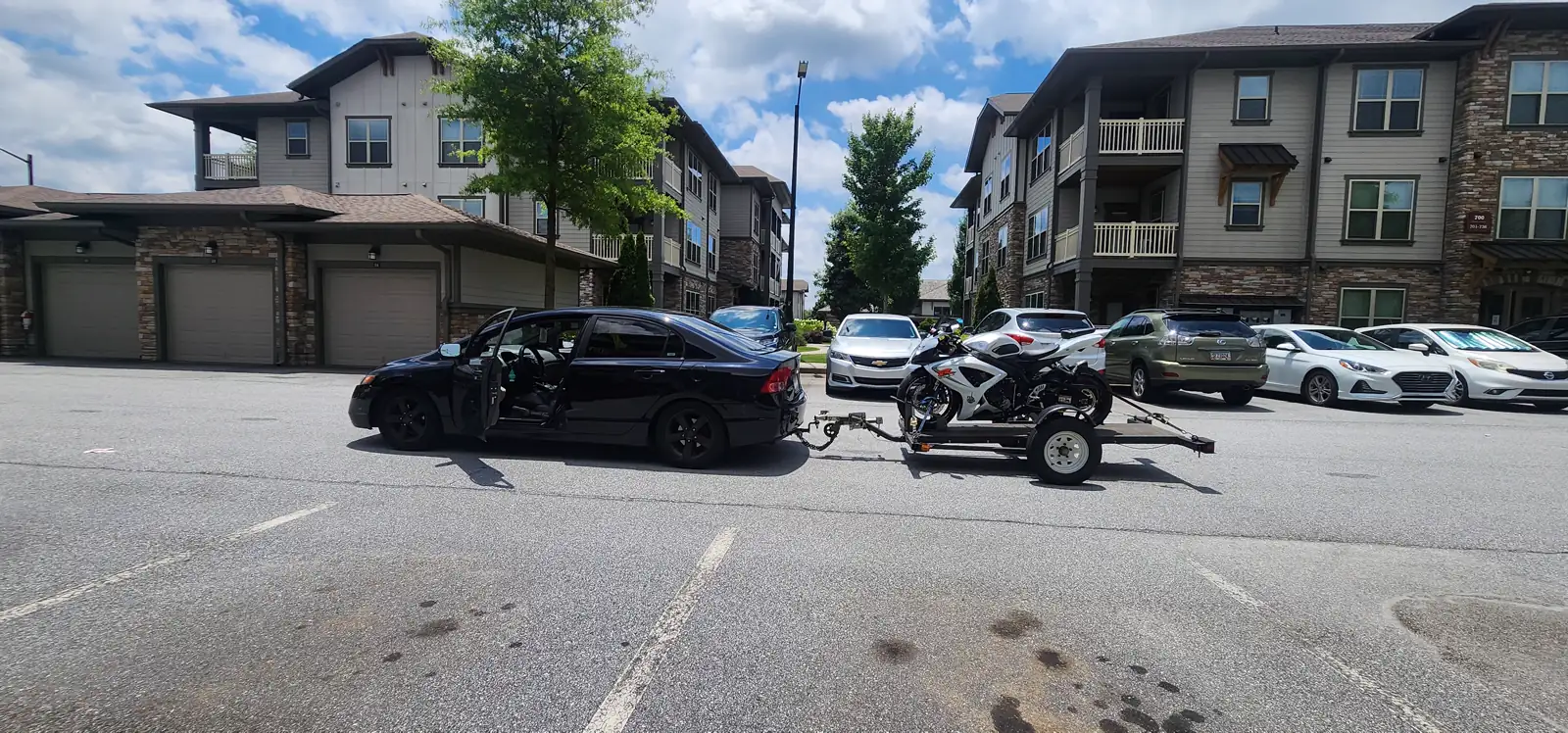
The honest part: you're a drive from us, and that's the point
Let’s be real about geography. Our shop sits at 847 Barnes Mill Road in Marietta, and from Douglasville that’s roughly 28 to 32 miles — usually 40 to 60 minutes depending on the day. We won’t pretend it’s around the corner. We’d rather send you Thornton Road and GA-6 north to the East-West Connector than push you onto I-20 east toward the I-285 interchange, which is one of the worst knots of traffic in the whole state. Either way, it’s a haul, and that’s exactly why we come to you instead.
You’ve already got real options close to home, and we’re not going to pretend otherwise. Southeast Motorcycle over on Spring Street is a genuine regional destination, drawing riders from several states. What neither that dealer nor anyone else in town advertises, though, is coming to your driveway to load a bike that won’t start. That’s the gap we fill. Whether you’re out in Tributary at New Manchester with its trails running toward Sweetwater Creek State Park, in a newer home over in Brookmont, or settled in Anneewakee Trails, the pickup erases the drive entirely. You never have to solve the transport puzzle — we handle it.
We cover the west side because we ride it too. Sunday loops through the Sweetwater Creek area, a summer evening at O’Neal Plaza downtown, the run out on Bill Arp — this is home turf. If you’re the kind of rider who wants to build better road skills between wrenching sessions, the MSF rider courses are worth a look. And we help folks well past Douglas County too — the same door-to-door pickup that serves your street also takes care of riders over in Sandy Springs on the other side of the metro.
How the day actually ends
Picture the good version now. You text us that the bike quit and you’re not sure why. We roll out, load it up nice and safe, and haul it back to the bays. We find the real cause — battery, fuel, spark, whatever it turns out to be — we tell you straight, and we fix that one thing. Then your bike comes home running, and the whole ordeal shrinks down to a story you tell at bike night. No lecture, no guilt, no feeling small at a counter. Just your bike, fixed, and you back on Chapel Hill Road where you belong.
Questions Douglasville riders ask us
My bike died but it starts sometimes. How fast do I need to deal with it?
Sooner is better, but it’s rarely an emergency. An intermittent problem usually means something is on its way out — a weak battery, a loose connector, a tired plug. Catch it now and it stays small. Wait, and you risk it dying somewhere less convenient, like the middle of I-20.
What happens if I just keep riding it like this?
It depends on the cause, but riding a bike that’s already acting up tends to turn a quick fix into a bigger one. A weak battery can strand you again. A stalling engine in traffic is a real hazard. The good news is that a proper look now almost always keeps the repair simple.
How do you figure out why it quit?
We start with the cheapest, most common causes and test our way out — battery under load first, then fuel, then spark, then the electrical system fuse by fuse. We don’t swap parts and hope. We find the actual cause and only fix what’s broken.
Could it be something simple instead of a big repair?
Very often, yes. Dead batteries, stale fuel, and fouled plugs cause most no-starts, and all three are quick, everyday fixes. The panicked feeling of being stranded almost never matches how small the real problem turns out to be.
Is it safe to ride it to you instead of getting picked up?
Sometimes. If it restarted, runs clean, and every light works with no leaks, a short careful ride to a shop is usually fine. But if it stalls, leaks fuel, overheats, or the lights cut out, leave it parked and let us come get it. When in doubt, the trailer is always the safe call.
Do you pick up bikes that won't start or roll at all?
Absolutely — that’s the whole point of the service. We show up with a trailer, get it loaded and strapped down safely, and haul it back. A bike that won’t move is exactly the kind of bike pickup exists for.
We come to riders all across the west metro and beyond, and Douglasville is right in the middle of our regular runs. That includes Lithia Springs and Villa Rica out west, Austell, Powder Springs, and Hiram just to the north, and Mableton, Smyrna, and Marietta as you head back toward the shop. We also cover Dallas, Winston, Temple, and Fairplay, so wherever your bike decided to quit, there’s a good chance we already pass through your part of town.
STUCK IN DOUGLASVILLE? WE'LL COME GET IT.
If your bike quit on you anywhere in Douglasville, you don’t have to solve the how-do-I-move-it problem alone. Text us, tell us it won’t start — that’s all we need — and we’ll roll out with the trailer, get it loaded safely, and figure out the real cause back at the shop. No lecture, no guilt, just your bike fixed and back on the road.
470-460-9883Diaz Motorcycles and Service, LLC · 847 Barnes Mill Road, Marietta, GA 30062