Enclosed vs Open Transport Douglasville: The Real Answer for Your Bike
We come to you, strap it down like it's ours, and get your bike home safe — open trailer or enclosed.
The bike has been sitting for a month now. Maybe it’s the Sportster you bought two states away, still parked in a stranger’s garage. Maybe it’s the project that quit running last fall and never came back. Either way, every week it waits, the battery drains a little more, the fork seals dry out, and the seller’s patience gets thinner. That’s the real reason people finally look up enclosed vs open transport Douglasville and start weighing which trailer their bike deserves.
Good news: none of that has to be your problem to solve alone. We come get it. That’s the whole pitch out here, and it’s a fair one. Your bike lives somewhere in Douglas County, our bench sits about 28 to 32 miles up the road, and a truck and trailer close that gap while you keep your Saturday. The only real fork in the road is the trailer itself — and by the end of this, you’ll know exactly which one your bike wants.
Open or enclosed — start with why you're moving it
Before we compare trailers, look hard at what put you here. The transport question almost always starts with one of a few familiar situations, and naming yours makes the right answer a lot clearer. So run down this short list and find the one that stings a little.
- A bike that won’t start — dead battery, bad fuel, or a project that quit running and never came back.
- That’s why a bike you bought out of state, sitting in a stranger’s garage while you figure out how to get it home.
- A bike that went down in a spill, and you’d rather not ride the one that’s a little bent.
- Either way a bike you inherited — a parent’s or grandparent’s machine that means everything and hasn’t turned over in years.
- A seasonal move, a new apartment along the I-20 corridor, or storage that changed on you overnight.
Every one of those is a bike worth moving right. Notice something, though — some of these are everyday runners, and some are irreplaceable. That single difference is the real hinge between open and enclosed, far more than any spec sheet or brochure. And the longer you wait, the smaller your good options get: dead batteries go fully flat, fuel turns to varnish, and a seller who was patient in June is a lot less patient by August. So let’s break down what each trailer actually is before another month slips by.
What open transport actually is
Open transport is the flatbed or open trailer you’ve seen rolling down US-78 / GA-5 west toward Villa Rica, Carrollton and the Alabama line. Your bike rides out in the fresh air, standing upright, wheels chocked, out where everyone can see it. It’s the workhorse of the whole industry, and for good reason. There’s more room, loading is quick, and it’s the friendlier option on your wallet. If you’re curious how the work adds up, we broke how the work adds up down in plain terms.
The trade-off is exposure. Rain, road grime, pollen, and the odd pebble kicked up from truck traffic all get to touch the bike. For a daily rider or a metric cruiser that already lives outside under a cover, that’s nothing a good wash won’t fix. For a museum-grade paint job or a bike that never sees weather, though, it’s a longer conversation. Most bikes shrug it off; a precious few really shouldn’t.
What enclosed transport actually is
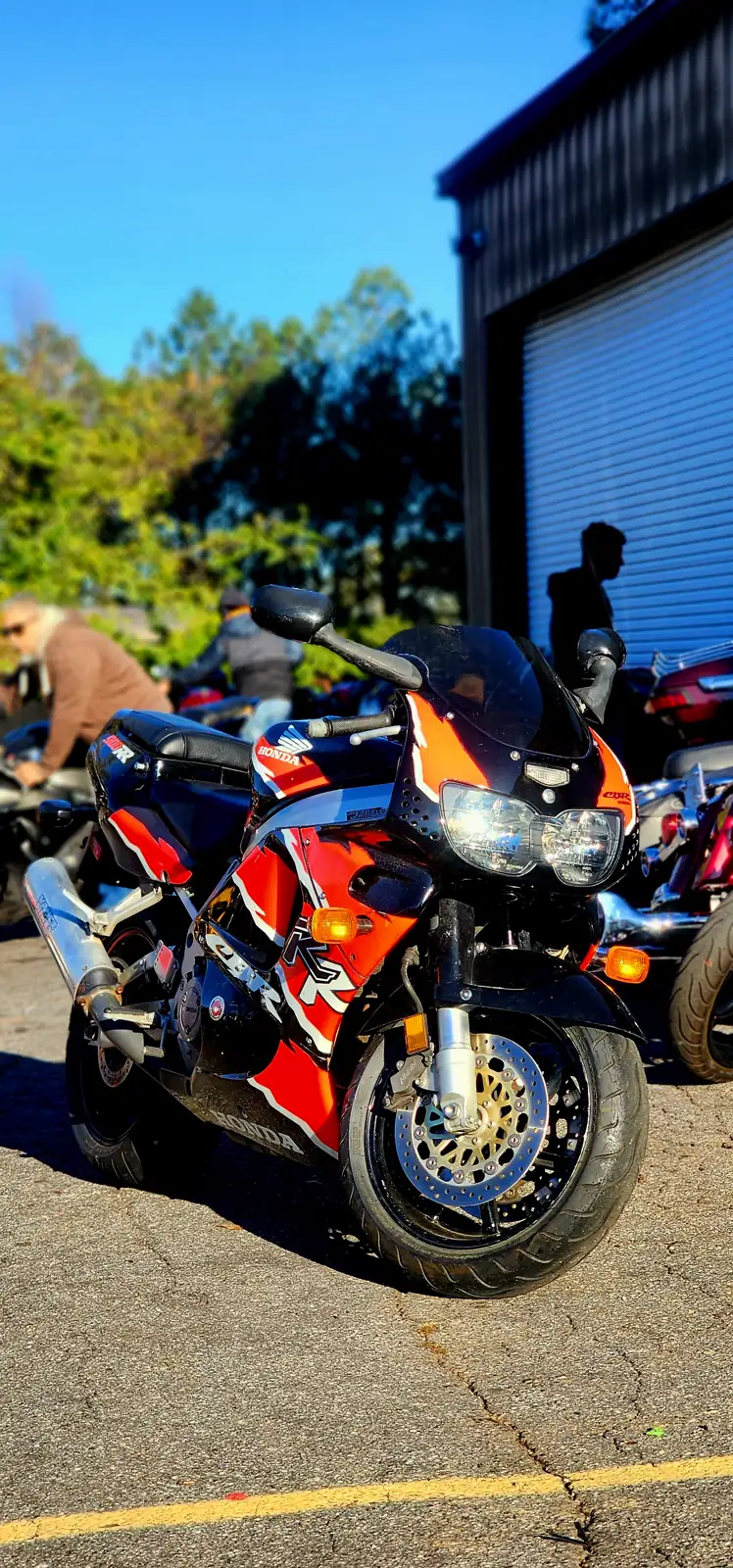
Enclosed transport is a box. Your bike rides inside a fully covered trailer, out of the weather and out of sight. Nothing touches it but the tie-downs and the ramp. That privacy matters more than folks expect, too — a covered trailer doesn’t advertise what’s inside, which is its own quiet kind of protection when a bike is worth protecting.
Enclosed costs a bit more, and it books up faster, especially in peak season. But for a restored classic, a fresh custom paint job, or that inherited bike you’ll never replace, the extra care earns its keep every single mile. When the cargo is truly irreplaceable, enclosed almost always wins — no fence-sitting about it.
There’s a comfort factor, too, that’s hard to put a number on. With enclosed, you stop checking the weather app the night before a move. You stop worrying about a gravel truck three cars ahead. The bike is sealed away, and your only job is to be home when it arrives. For a lot of folks moving something that took years to build, that quiet is worth every extra mile the trailer carries.
| What you care about | Open trailer | Enclosed trailer |
|---|---|---|
| Everyday runner | Great fit | A little much |
| Weather & road grime | Exposed | Fully protected |
| Custom or show paint | Risky | Best choice |
| Privacy on the road | Out in view | Out of sight |
| Booking in peak season | Easier | Fills up fast |
How your bike actually gets strapped down
Here’s what a good shop checks that a rushed one skips. Loading a motorcycle looks simple from the curb, but the difference between a bike that arrives perfect and one that arrives scuffed is all in the little details. A rushed crew slaps two straps on and rolls out. We do it the boring, careful way, every single time — and boring is exactly what you want when it’s your paint on the line.
- Walk the bike up the ramp with a spotter, never solo, so it never gets the chance to tip.
- Chock the front wheel first, so the bike stands on its own before a single strap goes on.
- Compress the front fork gently with soft-loop straps at the triple tree — not around the bars or levers, where they’d bend.
- Pull the rear down with even tension so the suspension is loaded and the bike can’t bounce loose over expansion joints.
- Pad every contact point — no bare hooks against paint, chrome, or fairings.
- Re-check every strap after the first few miles, because straps settle and tension changes as the road works on them.
Before the wheels ever turn, we write the bike down. Every scratch, every dent, every mile on the odometer gets noted, and we photograph all of it. That condition report is your paper trail. If anything looks different at drop-off, there’s a before-picture to compare it to. Paperwork isn’t the fun part of owning a bike, but it’s the part that protects you — and it costs you nothing but two minutes of standing there. If your ride is a Harley that hasn’t run in a while, we can pull the right Harley-Davidson service information before it ever loads, so the plan to wake it back up starts the day it lands.
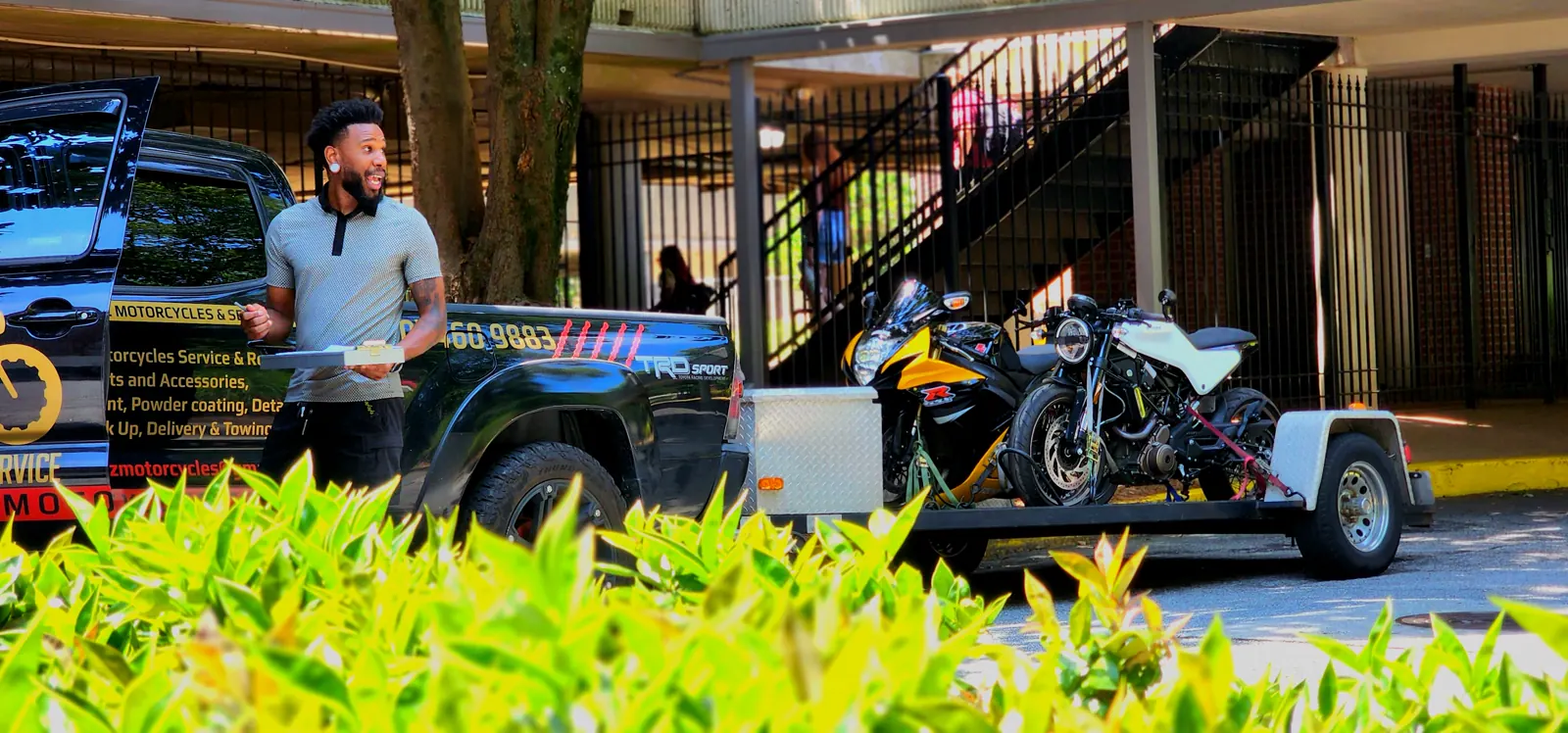
Pickup and delivery is just one piece of a bigger menu, of course. Once your bike is on our bench, the full list of what we do covers the wrenching that usually follows a transport call — the diagnosis, the tune, the paint, whatever the bike came in needing. Transport is how it gets to us; the fix is why you called.
When to book it
Timing matters more than most folks think. September and October are the best riding of the whole year around here — northwest Georgia fall color, runs up to Helen and Dahlonega, and peak rally and charity-ride season stacked back to back. That’s also exactly when trailers get busy, because everyone wants their bike ready at once. If you’re eyeing an enclosed trailer for a show bike in the fall, call early. Open trailers stay more flexible, but even those good weekends still fill up fast.
Distance shapes your timing, too. Plenty of west-metro riders will just haul a bike themselves — Xtreme Cycles of Dallas sits about 30 to 40 minutes north for folks who’d rather borrow a trailer and do their own tie-downs. That’s a real, honest option, and we won’t pretend otherwise. But a non-runner can’t ride to anyone, and a rented trailer means a stranger’s straps and your fingers crossed. If you want to see how this plays out in Dallas, we walked through the very same choice for riders up that way.
The Douglasville piece
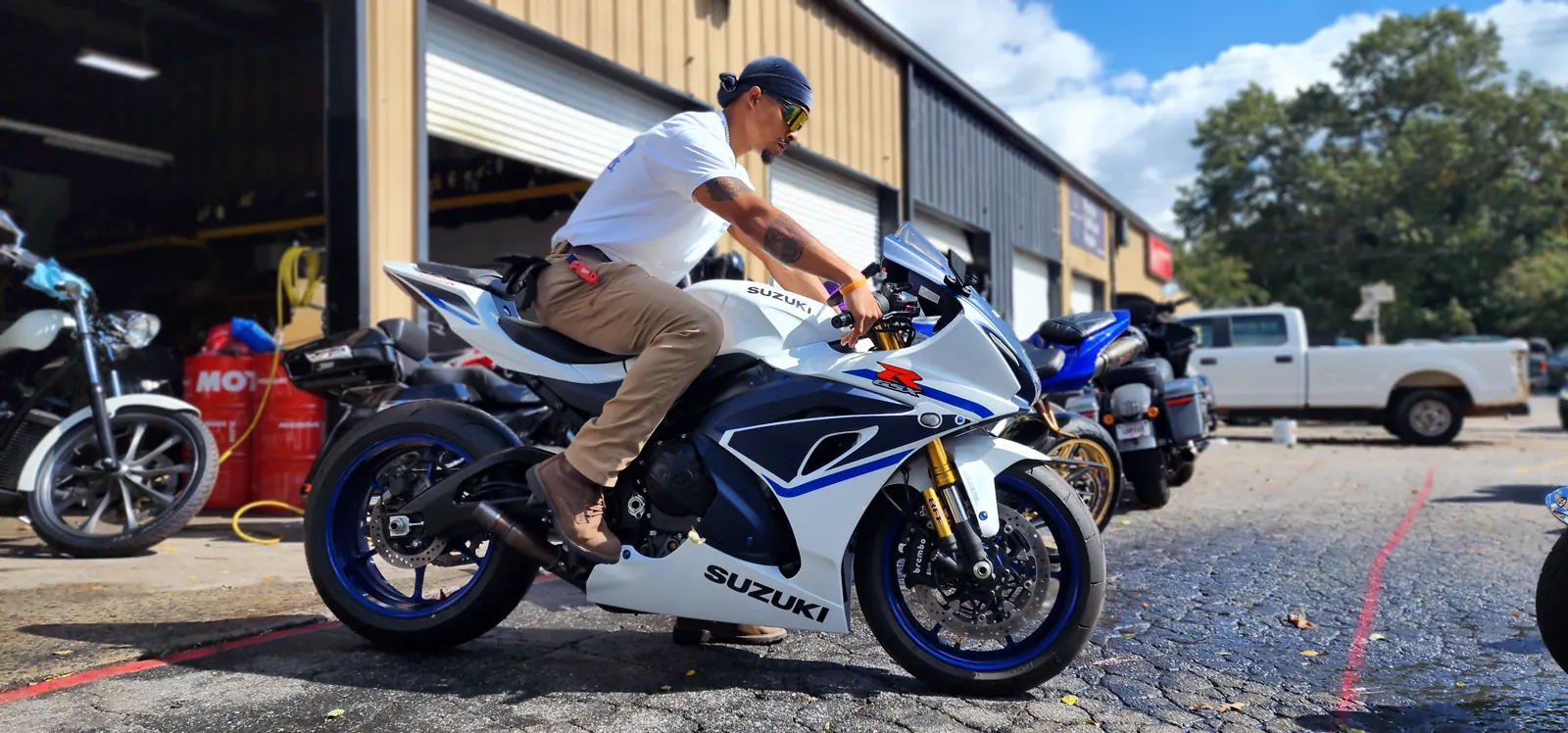
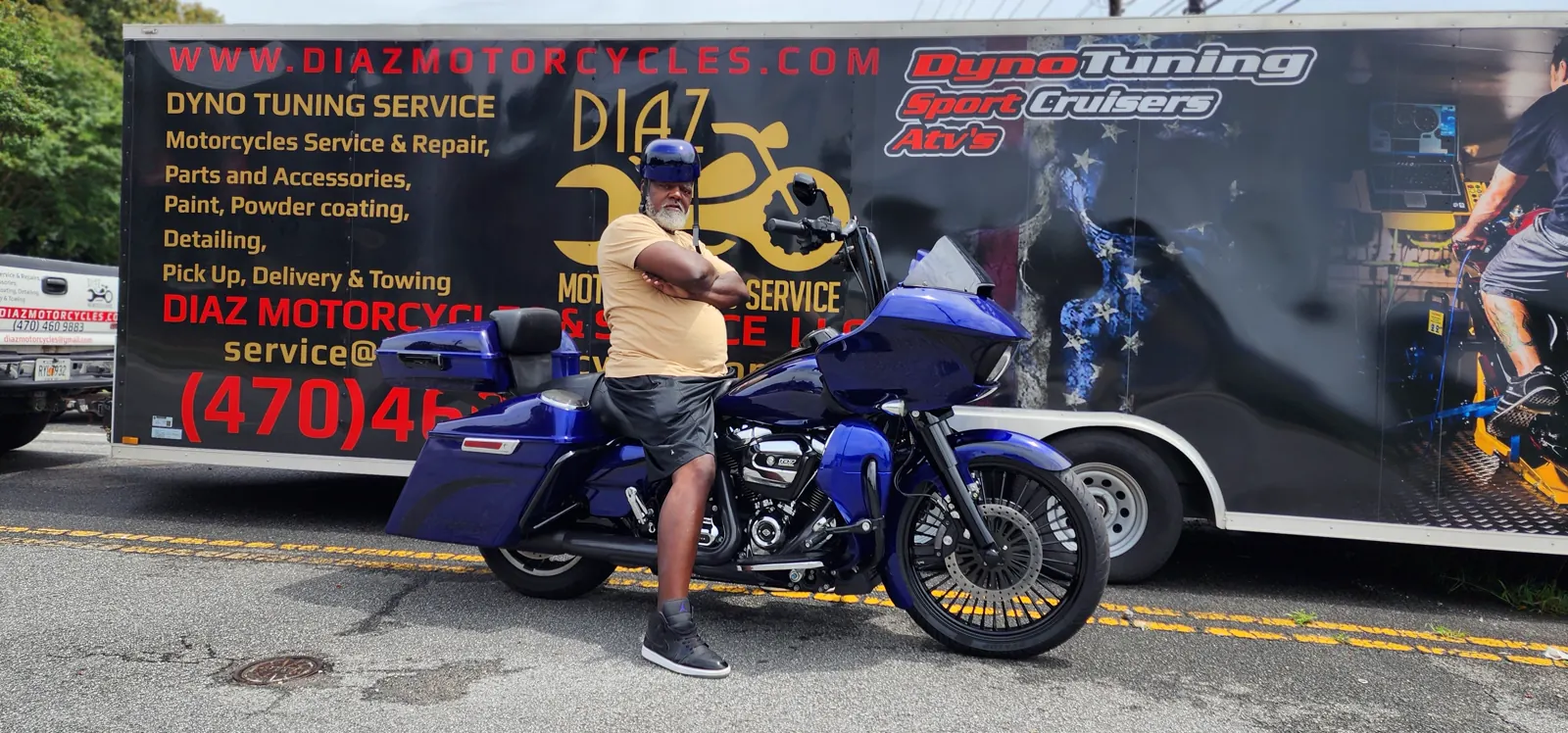
Here’s how this played out for someone over by Arbor Place Mall. He’d bought a Road Glide out of Alabama, drove west past Villa Rica and Carrollton to look at it, and fell for it hard. The problem was getting it that last leg home. He didn’t want to put break-in miles on it solo, and he sure didn’t want it riding open through pollen season. So we ran an enclosed trailer out, wrote the bike down right there in the seller’s driveway, and had it sitting in his garage the next day.
That kind of trip is normal out here. Douglasville riders live everywhere — from the walking trails of Tributary at New Manchester, the master-planned community whose paths tie right into Sweetwater Creek State Park, to the wooded, lakefront lots and creek beds around Anneewakee, to the brick storefronts of Downtown Douglasville along its National Register Main Street. Wherever your bike sleeps, the pickup works the same. We find the address, you point at the machine, and we handle the rest. Some of the bikes we’ve moved for friends out here came from cramped apartment lots with no garage at all, and some came from three-car garages in the newer subdivisions. The trailer doesn’t care where it parks.
There’s a practical reason to trailer instead of ride, too. The signalized retail corridors around Arbor Place, Bill Arp and Fairburn Road run polished, slick pavement with heavy painted markings — genuinely greasy in rain or pollen. Rolling a fresh-off-the-truck bike, an unfamiliar one, or a barely-running one through all that isn’t the smart move. Let it ride on the trailer for that stretch and save your first real miles for a clean, dry road.
From your place to our shop in Marietta is roughly 28 to 32 miles, usually 40 to 60 minutes. We run it up Thornton Road and GA-6 to the East-West Connector rather than fighting I-20 east to I-285 north, because that interchange is one of Georgia’s genuine headaches. You don’t have to think about any of that, though — that’s our drive, not yours. Once the bike’s with us, what that service actually involves is the same careful attention whether you rode in or got picked up. And when it’s ready, brushing up with an MSF rider course before that first big westbound run never hurt a soul.
So — which should you pick?
Here’s the straight answer, no waffling. For most bikes and most moves, open transport is the right call. It’s quicker to book, easier on your schedule, and your everyday runner does not care one bit about a little fresh air. That’s our default recommendation, and we’ll say it to your face. That’s the honest version of the enclosed vs open transport Douglasville debate: pick the workhorse unless you’ve got a reason not to.
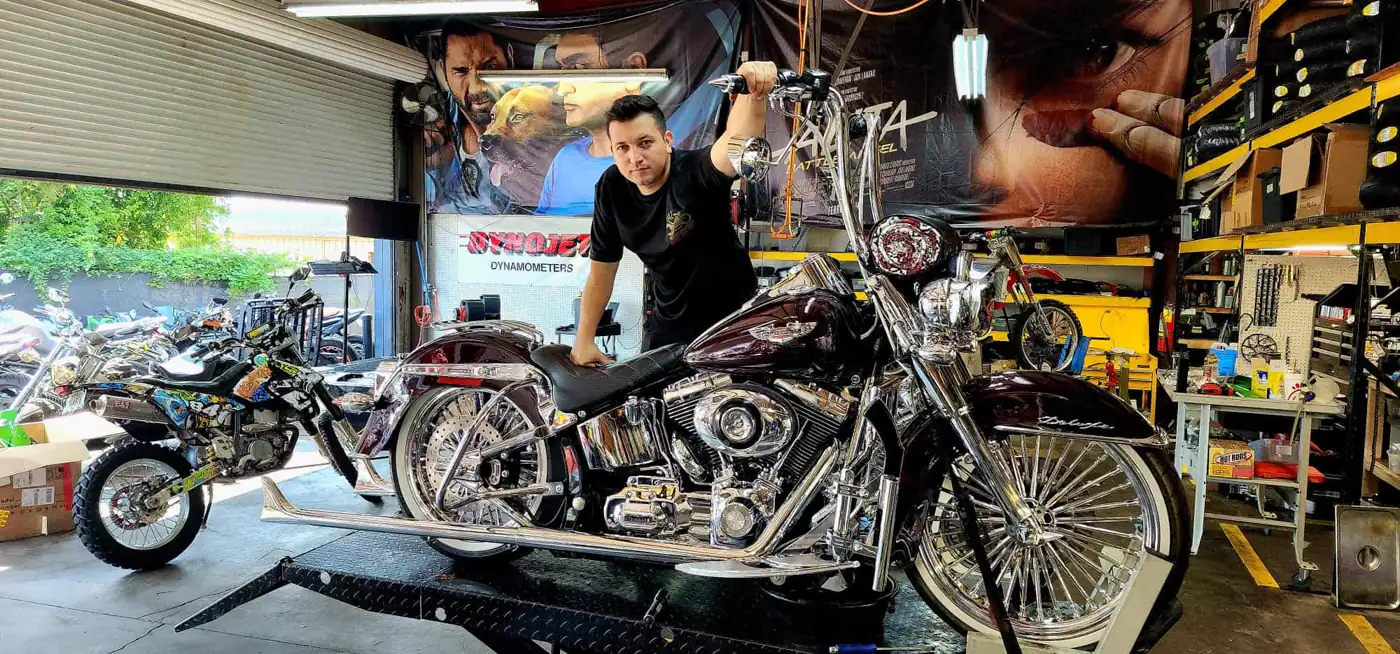
Enclosed wins in exactly the situations you already feel in your gut. A show-quality custom, a fresh paint job, a fully restored classic, or the inherited bike you’d move heaven and earth to protect — those ride in the box, full stop. When the machine is irreplaceable or the finish is the entire point, pay the difference in care and then never think about it again. That peace of mind is the whole product.
Open for the runner, enclosed for the irreplaceable. That's the whole decision in one line.
That’s really all there is to it. You know your bike, you know which of those two sentences it fits, and now you know exactly what happens on the trailer once you say go. So pick the trailer that matches the machine, and let us handle the miles. Whether it’s a Sportster that won’t start or a bagger you found three states over, your bike gets home safe — and you get to skip the hard part entirely.
Questions Douglasville riders ask us
Which protects the bike better on a long-distance move, open or enclosed?
Over a long haul, enclosed protects better because the bike is fully shielded from weather, road grime, and prying eyes the whole way. Open transport is perfectly safe structurally — the same careful tie-downs hold either way — but the bike is exposed to the elements. For a daily rider that’s fine; for a show bike crossing several states, enclosed is the safer bet.
Which one is right for my kind of bike?
Match the trailer to how much the finish matters. An everyday sportbike, a metric cruiser, or a bike that already lives outside is a natural fit for open. A custom, a fresh paint job, or a restored classic belongs in enclosed. When you’re not sure, just tell us the bike and how it’s stored, and we’ll steer you straight.
Can I switch from open to enclosed later?
Yes, as long as we know before the truck rolls out. Enclosed trailers book up faster, so the earlier you call, the easier it is to lock one in. If your plans change last minute, we’ll do our best to swap you, but peak fall weekends fill quickly. A quick text saves the headache.
Which do you actually recommend?
For most bikes and most moves, we recommend open — it’s faster to book and easier on your schedule, and your runner won’t mind the fresh air. We only push enclosed when the bike is irreplaceable or the paint is the whole point. We’d rather tell you the truth than upsell you a box you don’t need.
Does the kind of bike I own change the answer?
It changes everything. A non-runner or a bike that went down can’t ride to anyone, so transport is the only real option regardless of trailer. A pristine custom leans enclosed, while a hardy commuter leans open. Tell us the make, the condition, and where it sleeps, and the answer gets obvious fast.
Do you really come all the way out to Douglasville?
We do, and it’s the whole point of the service. Your bike is roughly 28 to 32 miles from our Marietta shop, usually 40 to 60 minutes up Thornton Road and the East-West Connector. You point at the bike, we load it, write it down, and haul it back. That’s our drive to make, not yours.
We roll out across the whole west side of metro Atlanta, so a pickup in Douglasville is an easy call. That includes riders in Lithia Springs and Villa Rica, out toward Temple and Fairplay, and up through Winston, Hiram, and Dallas. We also run trailers to Powder Springs, Austell, Mableton, and Smyrna, and everything lands back at the bench in Marietta. If your bike sits anywhere in that stretch, we can come get it.
LET'S GET YOUR BIKE HOME
Stop letting that bike sit another month. Whether it’s parked in a Douglasville garage, stranded out of state, or waiting on a friend’s driveway, we’ll come get it — open trailer or enclosed, your call. Text Diaz Motorcycles with the bike, the address, and where it sleeps, and we’ll tell you exactly which trailer it wants and when we can roll out.
470-460-9883Diaz Motorcycles and Service, LLC · 847 Barnes Mill Road, Marietta, GA 30062