Faded Motorcycle Paint Marietta — How to Fix It
A chalky tank isn't the end of your bike. Here's what's really going on, and how we bring the gloss back.
Plus, he set the quote on the counter and slid it toward us like it might bite. Meanwhile, a shop across town had priced out his gas tank, but the paper said one word — “refinish.” No plan. No steps. Nothing about why the color had gone chalky in the first place. That’s the exact moment a lot of riders hit when they go searching faded motorcycle paint Marietta and start collecting numbers: a price with no story behind it. We think you deserve the story first, and the price second.
So let’s walk through it together, buddy to buddy. What you’re seeing on your bike, why it happened, how we figure out the real cause, and what an honest fix looks like. No mystery, no runaround. By the end you’ll know more about your own paint than the guy who handed you that quote, and that’s a pretty good feeling to ride away with.
First, what faded paint actually looks like
Fading almost never shows up overnight. It creeps in slowly. One month your tank throws back a sharp, wet-looking shine. A season later that same tank looks flat and a little cloudy, like a thin fog is sitting on top of the color. Reds are the worst offenders, because a deep candy red can drift toward a dull pink or even a chalky orange when it bakes in the sun.
Most riders describe it in feel, not in paint terms. You’ll say the bike looks “tired.” Or the black doesn’t look black anymore, more of a washed-out grey. Sometimes one side is worse than the other, and it’s always the side that faced the driveway sun. Run a finger across the tank and you might feel a fine grit that won’t wipe away.
- A dull, foggy haze sitting on top of what used to be glossy color
- Chalky residue that rubs off on a rag but keeps coming back
- One side of the bike noticeably lighter than the other
- Fine cracks or spider-webbing in the clear coat when you look close
- Bare spots or the first orange freckles of rust on a steel tank
None of that means your bike is junk. It means the top layer is doing its job and taking the hit so the metal underneath doesn’t have to. Honestly, that’s good news, and it’s the whole reason paint gets built in layers in the first place.
Why paint fades in the first place
Here’s the part most quotes skip. Paint on a motorcycle isn’t one coat — it’s a stack. There’s primer down low, then your base color, and on top a clear coat that carries all the gloss and does the sunscreen duty. When a bike fades, nine times out of ten the clear coat is the layer breaking down, not the color itself.
And the causes line up in a pretty predictable order. Most common first:
- Sun. Georgia UV is brutal, and a bike parked outside all summer loses clear coat far faster than one that lives in a garage.
- Time and heat cycles. Paint swells and shrinks a little every time the bike warms up and cools down, and after years those tiny movements wear the clear coat out.
- Harsh washing. Dish soap, gritty rags and drive-through car washes strip protection and leave micro-scratches that scatter light and read as haze.
- Cheap paint history. If a bike was resprayed once with thin budget clear, it was always going to fade early, and no wash routine can rescue an under-built job.
- Chemistry. Bird droppings, tree sap, road grime and hard-water spots will etch the clear coat if they sit.
Notice that four of those five have nothing to do with you doing anything wrong. Paint is a wear item, the same as a chain or a set of pads. It’s supposed to protect the bike, and eventually it wears out doing exactly that. So you can let go of the guilt right now.
There’s a version of this that’s cheap and a version that isn’t. The cheap version is a quick scuff and a coat of clear sprayed over whatever’s already there. It’ll shine in the parking lot and start lifting by the next riding season. The version that lasts starts way earlier than paint, and that difference is the whole ballgame.
How we figure out what's really going on
Every case of faded motorcycle paint Marietta riders bring us starts the same way: we read the bike before we mix a single color. Fading is a symptom, and like any symptom it can point to a few different things. So the first thing we do is get the panel clean and study it in good light from a low angle.
That low-angle look tells us most of the story. If the haze polishes away and the gloss comes back, you might not need paint at all, and a good machine polish could bring it home. If the clear coat is cracking or flaking, polishing won’t touch it and the panel needs to be refinished. And if we spot bare metal or rust starting, the plan changes again, because now we’re protecting the tank, not just prettying it up.
We also check whether the bike has ever been repainted. A factory finish and a backyard respray behave very differently under the sander, and knowing which one we’ve got keeps us from chasing a problem into a layer that was never going to cooperate. If you’re the type who likes to understand what that service actually involves before you commit, we’re happy to walk you through every step.
What a real fix involves
Here’s the honest truth that one-word quote left out: prep matters more than paint. Way more. A gorgeous color sprayed over bad prep will fail, every single time. The color everyone brags about is maybe the last quarter of the work, while the first three-quarters is boring, careful, and completely invisible once it’s done.
A full refinish in our booth runs roughly like this:
- Strip and clean. We take the panel down, pull the hardware, and get it chemically clean so nothing gets trapped under the new finish.
- Bodywork. Dents, chips and old bad repairs get sorted now. This is where the shape gets right, and it’s the step people rush and later regret.
- Primer and block. We prime, then block-sand it dead flat. Any wave you leave here shows up doubled once the gloss goes on top.
- Base coat. Now the color goes down in even passes. Candy and metallic finishes get built in layers, because the depth comes from light traveling through the coats, not one thick hit.
- Clear coat. Several coats of clear seal and protect the color and carry all that wet, deep gloss.
- Cure, sand and buff. The finish cures, then we wet-sand and machine-polish until it snaps back a clean reflection.
That’s why a real custom job can’t be rushed. Each layer needs to flash and cure on its own clock, and heat and humidity get a vote too. When someone promises your bike back fast no matter what, they’re quietly skipping steps you can’t see, and those are the exact steps you paid for. How long the whole thing takes really does depend on the work in front of us.
The color is the last quarter of the job. The prep is the part you're really paying for.
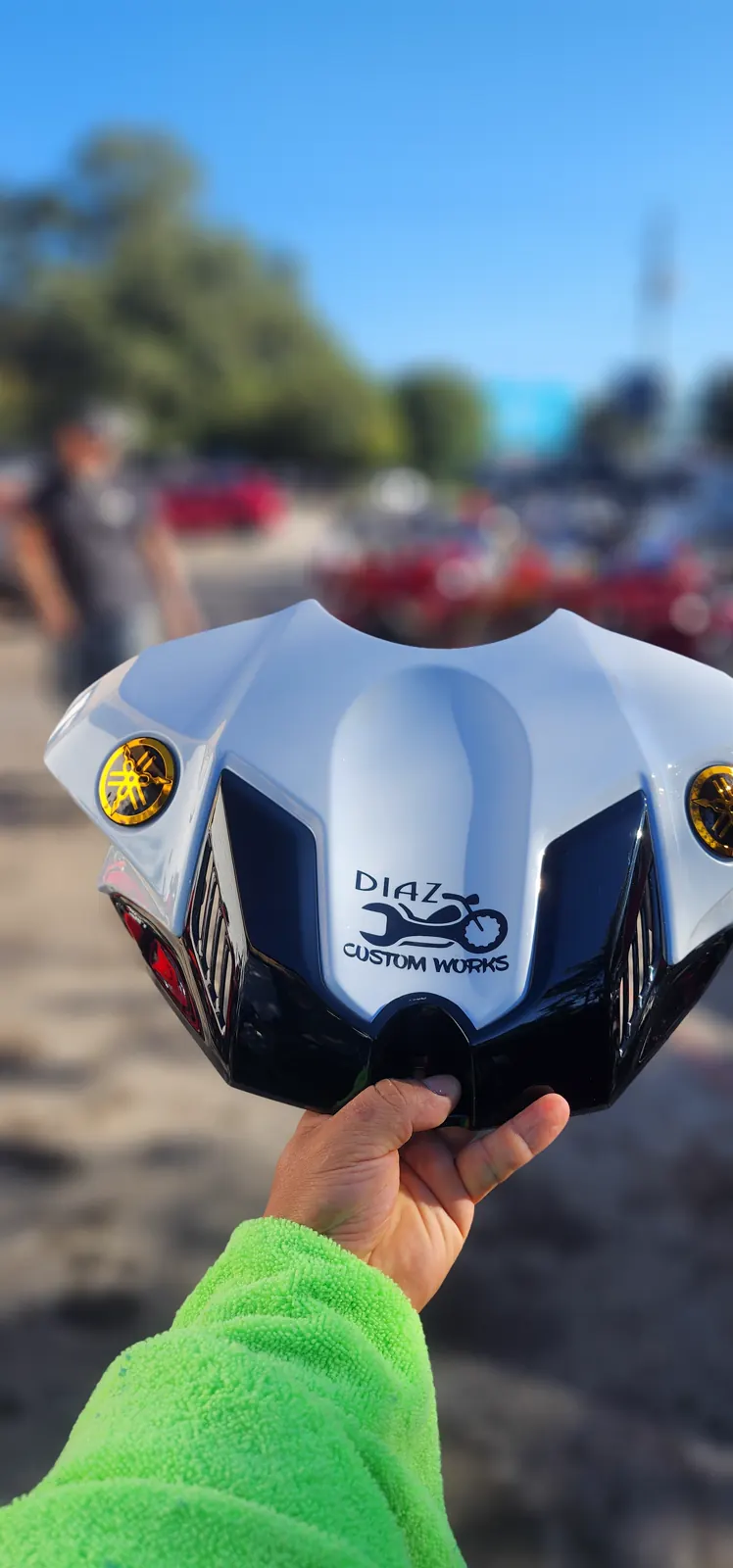
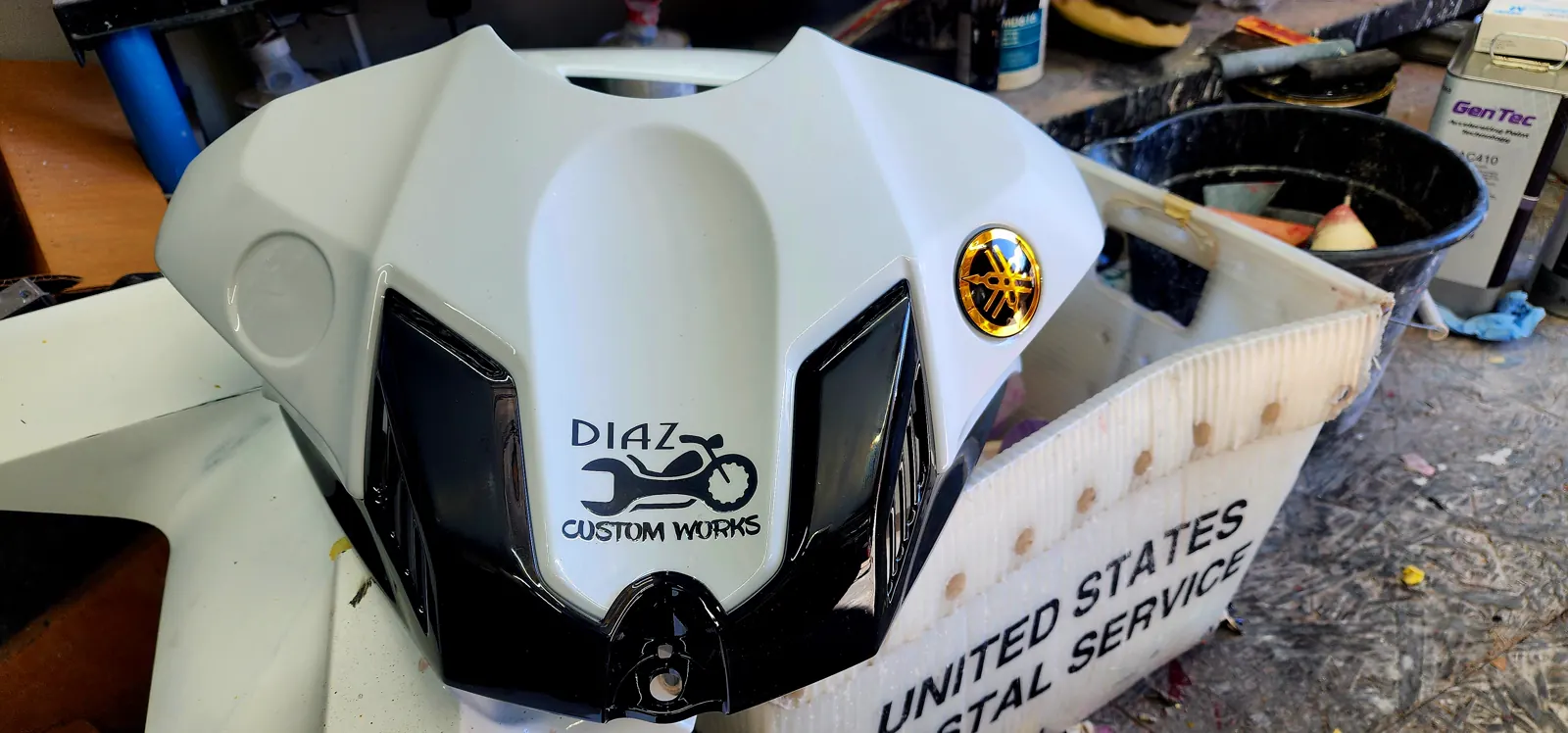
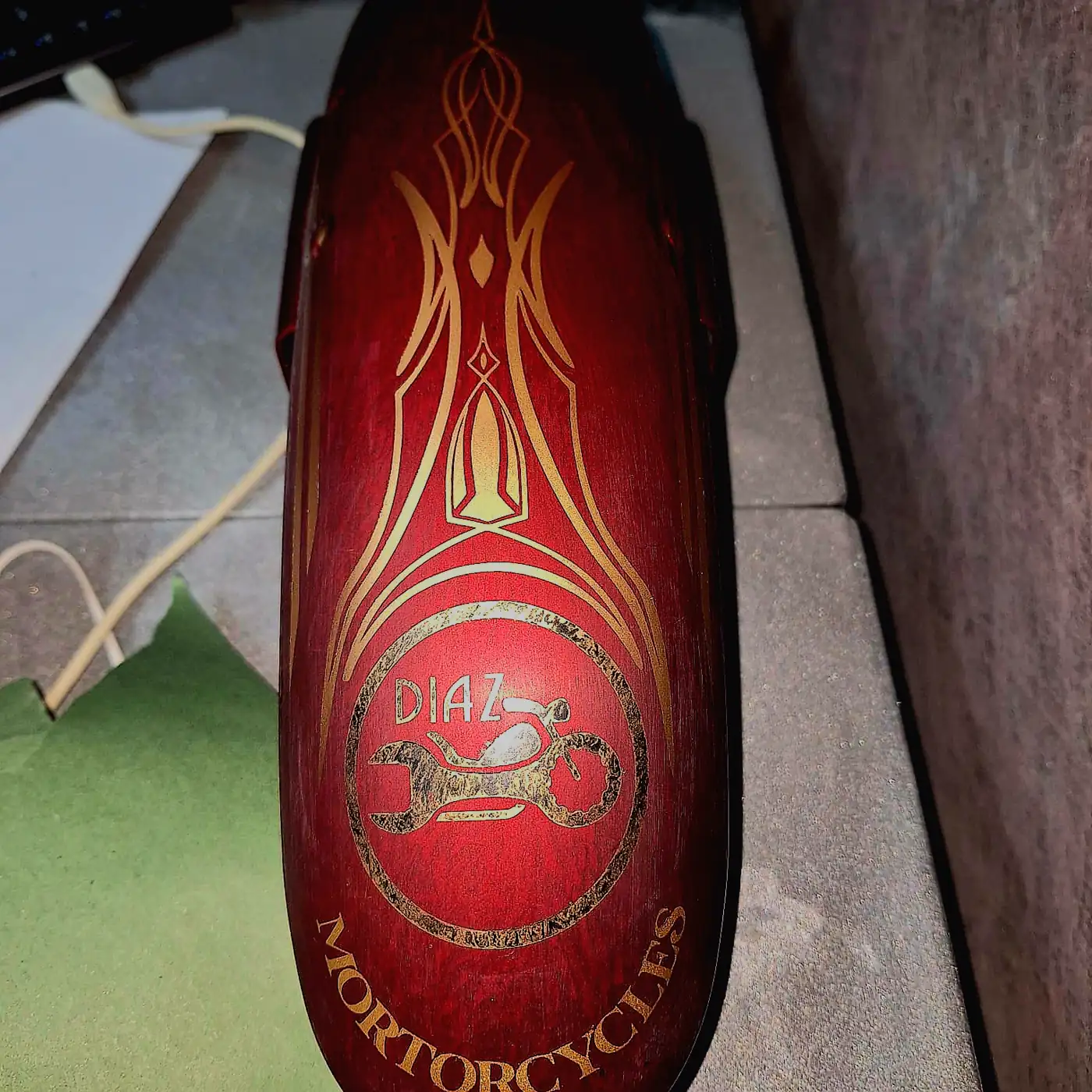
This is also where doing it in-house changes everything. Because we run our own booth branded Diaz Custom Works, your tank never gets boxed up and shipped to a vendor two states away. We can match a repair to your existing paint, change your color completely, lay in airbrushed graphics or a mural, build a candy or metallic finish, add hand pinstriping, or refinish a scuffed fairing — all in the same building where your bike gets serviced. If you’re weighing a fresh look, it’s worth understanding matte, gloss, and the tradeoffs between them before you pick.
The Marietta picture
Marietta is packed with bikes, and that’s no accident. Five dealers sit within a few miles of each other on Cobb Parkway, plus Hellbender Harley-Davidson over on South Cobb Drive, because this is where northwest metro Atlanta buys its motorcycles. You’ll see everything out here — big V-twin baggers headed west, student sportbikes buzzing around the Square, and a real crowd of vintage Japanese project bikes getting brought back to life.
That density is exactly why paint help is thin on the ground. Dealers sell bikes; almost nobody around here does real custom paint in their own building. Riders come to us for faded motorcycle paint Marietta help from the historic Whitlock area between downtown and the conference center, from Burnt Hickory Hills out on the west side, and from the newer townhomes at Marietta Walk near the Square. From most of the city we’re only about three miles from the Square, eight to twelve minutes down Roswell Road, and no corner of Marietta sits much more than twenty minutes out.
Something worth knowing before you book anywhere: a custom paint job is the most personal thing most riders ever do to a bike. It’s your signature in color. Get it right and you’ll grin every time you open the garage; get it rushed and you’ll spot the flaw on every single ride. That’s exactly why it pays to slow down and ask who is actually holding the spray gun.
We know this town’s roads because they’re ours too. The stop-and-go crawl on I-75 along the east side bakes a bike in the sun on the very days you don’t want it to. A clean weekend loop out Dallas Highway toward Paulding County is where a lot of our friends actually enjoy their machines. And plenty of folks first place the shop by the same landmarks everyone uses for directions — near the Marietta History Center in the old Kennesaw House on the Square, or over by Life University on Barclay Circle with the big holiday light display it puts on each winter.
There are good independents here for the mechanical side. A shop like CayloR-Made Motorsports over on Rosewood Circle does solid dyno tuning, and if you’re chasing horsepower, you can dig into how a modern rig like Dynojet’s dyno center measures it. Paint, though, is a different craft, and it’s the one we built a booth for. And if you want to see how this plays out in Acworth, riders just up the road run into the very same sun-faded story.
Is it safe to ride faded paint?
Good news up front: faded paint is almost always a cosmetic thing, and a faded bike is a safe bike to ride. Your tank looking tired doesn’t change how it stops or steers. So if all you’ve got is haze and a dull shine, go ride it, enjoy it, and fix the finish whenever the timing is right for you.
There’s one exception, and it’s an easy one to watch for. Once the clear coat cracks all the way through and you see bare metal or the first specks of rust on a steel tank, that’s the point to stop waiting. Rust doesn’t fade — it spreads, and a small brown freckle you handle today is a much smaller job than a pitted tank next year. That’s the one time faded paint stops being purely cosmetic. Everything up to that point, you can ride and plan around at your own pace.
WHEN TO STOP WAITING
Ride it if it’s just haze or dull gloss. Come see us the moment you spot bare metal, cracking clear coat, or the first orange specks of rust on a steel tank — that’s the point where waiting costs you more than acting.
How you'll feel when it's done
Here’s the outcome we care about. You come back, the light hits the tank, and the color has that deep, wet look again — the kind where you can almost fall into a candy red and watch the flake move as you walk past. Metallic finishes throw tiny sparks in the sun. A pinstripe you helped choose runs clean along the edge. The bike stops looking tired and starts looking like yours again.
That feeling is behind every panel that goes through our booth, and it’s why we’d rather explain the whole process than hand you a one-word quote. If you’d like to see what happens in our bays, come by, and while you’re planning your riding season, a refresher through some MSF rider courses never hurts either. Your bike should look as good as it rides, and around here, it absolutely can.
Questions Marietta riders ask us
What actually causes motorcycle paint to fade?
It’s almost always the clear coat wearing out, not the color underneath. Sun is the biggest culprit here in Georgia, followed by years of heat cycles, harsh washing, and any cheap respray in the bike’s past. Chemistry like bird droppings and tree sap can etch the clear too if it sits.
How do you find the real cause on my bike?
We clean the panel and study it in good light from a low angle. If a polish brings the gloss back, you may not need paint at all. If the clear is cracking or we see bare metal, that tells us the panel needs refinishing, and it points us to the right plan before we mix a color.
Could it be something other than fading?
Yes, and that’s worth checking. What looks like fading is sometimes just oxidation, hard-water spots, or fine scratches that scatter light. Those can polish out. True clear-coat failure won’t, so the test in good light saves you from paying for paint you might not need.
Is it safe to ride with faded paint?
Almost always, yes. Faded paint is cosmetic, so it doesn’t change how the bike stops or handles. The one time to stop waiting is when the clear cracks through to bare metal or rust starts on a steel tank, because rust spreads and a small spot now beats a pitted tank later.
Can I fix faded motorcycle paint myself?
Light haze will sometimes come back with a careful machine polish and good products, so that’s worth a try. But once the clear coat is cracking or the color itself has gone chalky, no wax or polish will save it. That needs stripping, prep and fresh coats in a real booth to hold up.
How long does a custom paint job take?
It depends on the work in front of us. Each layer has to flash and cure on its own clock, and bodywork, color changes and candy or metallic finishes all add steps. Anyone promising a fast turnaround no matter what is skipping steps you can’t see, so we’d rather do it right.
We paint and refinish for riders well beyond the Square. Friends roll in from East Cobb, Kennesaw, Smyrna and Acworth, and we see plenty of bikes from Powder Springs, Mableton, Austell and Vinings too. Riders come down from Woodstock, over from Roswell and Sandy Springs, and out from Dallas when they want real custom paint done in-house instead of shipped away.
LET'S BRING THAT GLOSS BACK
If your Marietta bike is looking tired, bring it by and we’ll read the paint with you before we ever talk plans. Our in-house Diaz Custom Works booth handles color matches, full custom work, pinstriping and refinishing, all under the same roof where your bike gets serviced. Text or call and let’s make it look as good as it rides.
470-460-9883Diaz Motorcycles and Service, LLC · 847 Barnes Mill Road, Marietta, GA 30062