Matte vs Gloss Paint Marietta — Which Is Right for Your Bike
A straight, no-hype breakdown of two finishes, who each one is really for, and what we'd tell you if you rolled into the shop today.
Of course, call around town and ask what a paint job runs, and most shops will hand you a number before they’ve laid eyes on your bike. In fact, that number is a guess, and usually a low one meant to get you in the door. For example, the truth is that no honest painter can quote a finish over the phone, because the finish is only half of it. Which brings us to the question we hear almost daily: the matte vs gloss paint Marietta debate, where a rider already loves their bike and just can’t decide how it should shine. Or not shine. Let’s clear it up for good.
Here’s why nobody quotes it straight over the phone. Matte and gloss aren’t two prices on a menu. They’re two different jobs, with different prep, different clear coats, and different care down the road. The look you want changes what happens under the surface, and that’s the part you can’t see in a photo. So before you commit to one, it helps to know what you’re actually choosing between. Good news: it’s simpler than it sounds, and there’s no wrong answer here, only a right one for you.
Most folks come to us leaning one way already. They just want a gut-check. So start by finding yourself in this quick list of what riders tend to say when they’re torn:
- “I want it to look mean and blacked-out, not flashy.” — you’re leaning matte.
- “I want deep color you can fall into, like glass.” — you’re leaning gloss.
- Or: “I hate wiping water spots and fingerprints all the time.” — matte forgives more, up to a point.
- “I plan to buff out swirls and keep it mirror-clean forever.” — gloss is your friend.
- “My bike sits outside under a cover most nights.” — that changes things, and we’ll get to it.
- “I honestly can’t tell, I just know I want it to look custom.” — that’s the most common one, and it’s easy to solve.
If you saw yourself two or three times up there, welcome to the club. Nearly everyone does. The point of this post is to make the choice feel obvious by the end, not to sell you the fancier option. So let’s break down what each finish really is, then walk through what happens when a bike lands in our booth.
What matte and gloss actually are
Both finishes start the same way. There’s color underneath, called the base coat, and there’s a protective layer on top, called the clear coat. That clear is what you’re really touching, washing, and looking at. The difference between matte and gloss lives almost entirely in that top layer. Gloss clear dries smooth and reflective. Matte clear has a flattening agent mixed in that scatters light instead of bouncing it back, so it reads soft and low-sheen. Same color can go either way. The base doesn’t care. The clear decides the mood.
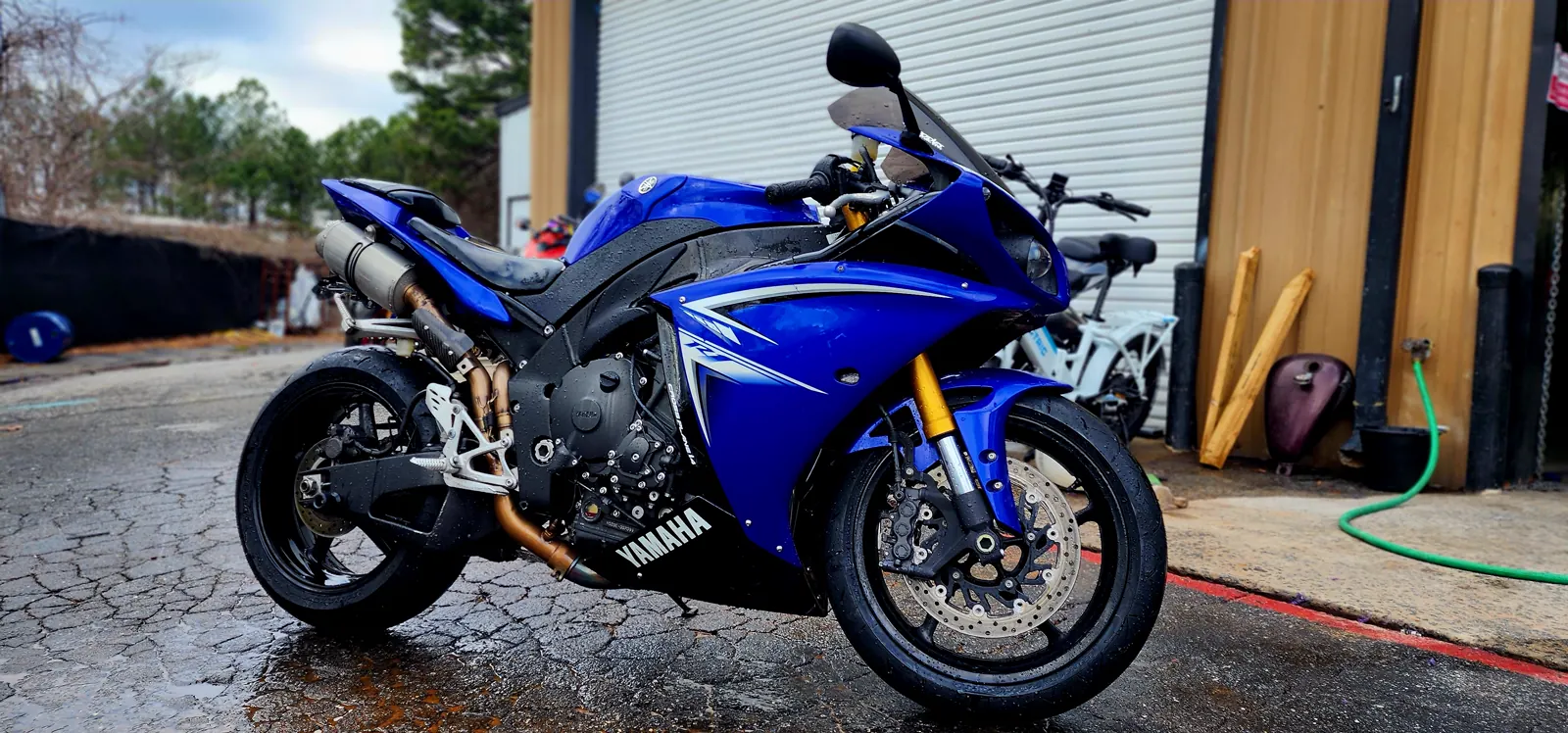
That’s the whole secret, and it’s why the two finishes behave so differently once they’re on the bike and out in the world. Let’s take them one at a time so you can feel which one is talking to you.
Matte: quiet, moody, and modern
Matte kills the shine on purpose. Instead of a mirror, you get a flat, velvety surface that soaks up light. On a blacked-out cruiser or a stealthy naked bike, it looks tough and expensive without trying. The trade-off is care. You can’t buff a matte finish. If it gets a scratch or a stubborn mark, you don’t polish it out the way you would on gloss, because polishing adds shine and creates a shiny spot. Matte also shows greasy fingerprints and fuel splashes more than people expect, and those need a gentle wipe, not a scrub. It’s a beautiful look that asks you to treat it a certain way.
Gloss: deep, classic, and repairable
Gloss is the finish most people picture when they think custom paint. It’s that wet, liquid depth where the color seems to have layers you could sink into. Candy reds, metallics, and flake all come alive under gloss, because the shine is what lets the light dive in and light up the sparkle. Gloss is also the more forgiving one long-term. Swirls, light scratches, and water spots can usually be polished back out, so a gloss bike can be brought back to showroom shine years later. That repairability is a real advantage if you ride a lot and rack up the little marks that come with real miles.
Before we go further, one thing worth clearing up. There’s no such thing as a “better” finish here, and anyone who tells you matte is cheaper or gloss is fussier is skipping the part that matters. A rushed matte job and a rushed gloss job both look bad. A patient version of either looks incredible. The finish you pick sets the vibe. The prep under it decides whether it lasts. That’s the honest answer, and it’s the same one we’d give you standing in the shop.
So let’s talk about that prep, because it’s where the real work hides, and it’s the reason a good custom paint job can’t be rushed no matter which finish you choose.
What actually happens when your bike hits our booth
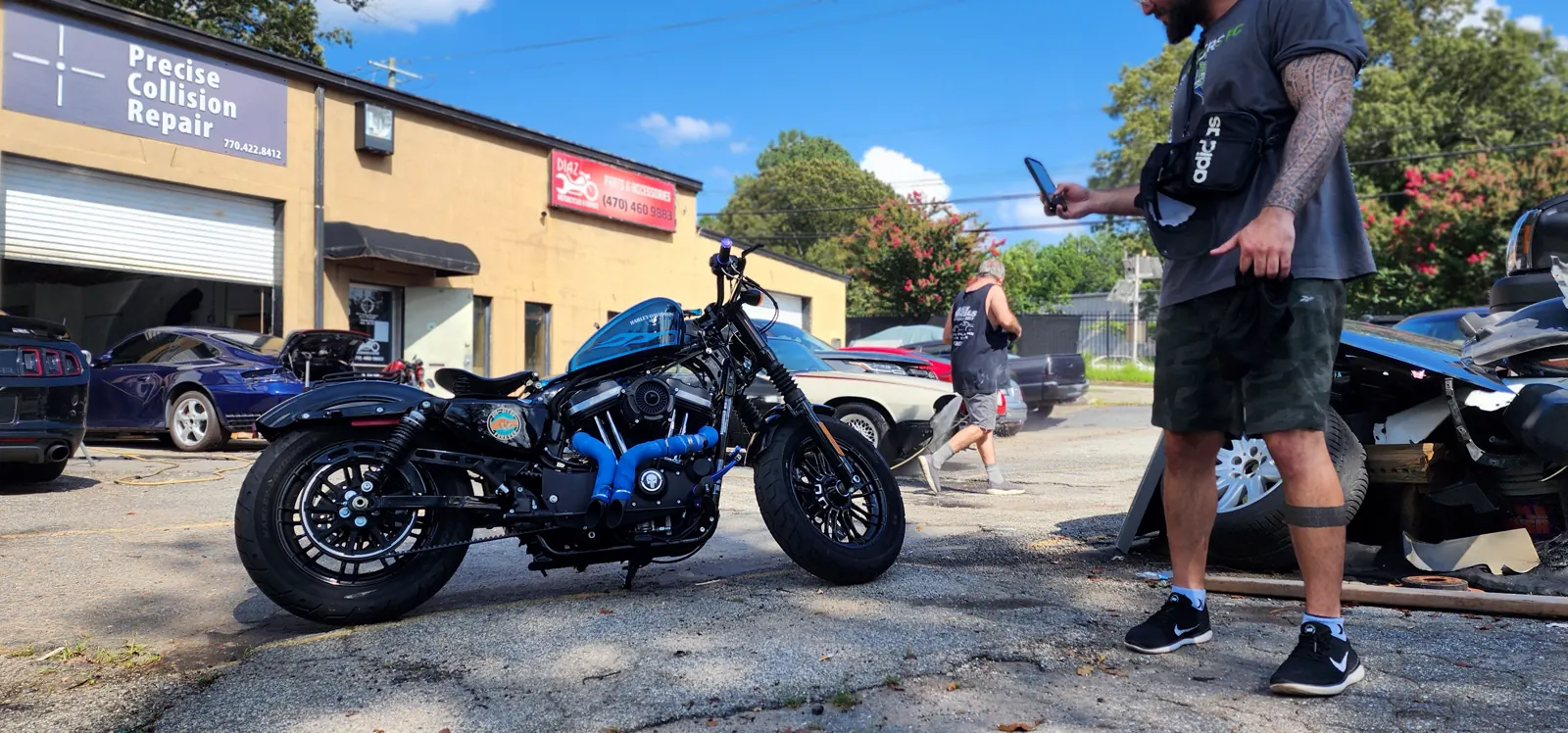
Paint is the last step, not the first. When a tank or fairing comes in, most of the hours go into the part you’ll never see once it’s done. We strip the old finish, chase down every chip, dent, and stress crack, and get the panel dead flat. Bodywork on a curved fuel tank is patient, hands-on work, because your eye will catch a wave in the surface the moment gloss goes over it. Skip the prep and the shine will actually make flaws worse, not hide them. This is exactly why we can’t honestly quote a job cold. We’re painting your bike’s condition as much as its shape, and that’s a huge part of a custom paint job and why we do it in house instead of shipping it out. If you want the deeper version, our full write-up on custom paint walks through what that service actually involves from strip to final buff.
Here’s the rough order of a real job, matte or gloss:
- Strip and inspect. The old paint comes off and every flaw gets marked.
- Bodywork and filler. Dents, cracks, and low spots get worked flat and true.
- Primer and block sanding. This builds the smooth foundation everything else sits on.
- Base coat. Your color goes down, along with any airbrushed graphics, murals, or pinstriping.
- Clear coat. This is where matte or gloss is decided by the clear we spray.
- Cure and finish. The clear hardens fully, then gets color-sanded and buffed to the look you chose.
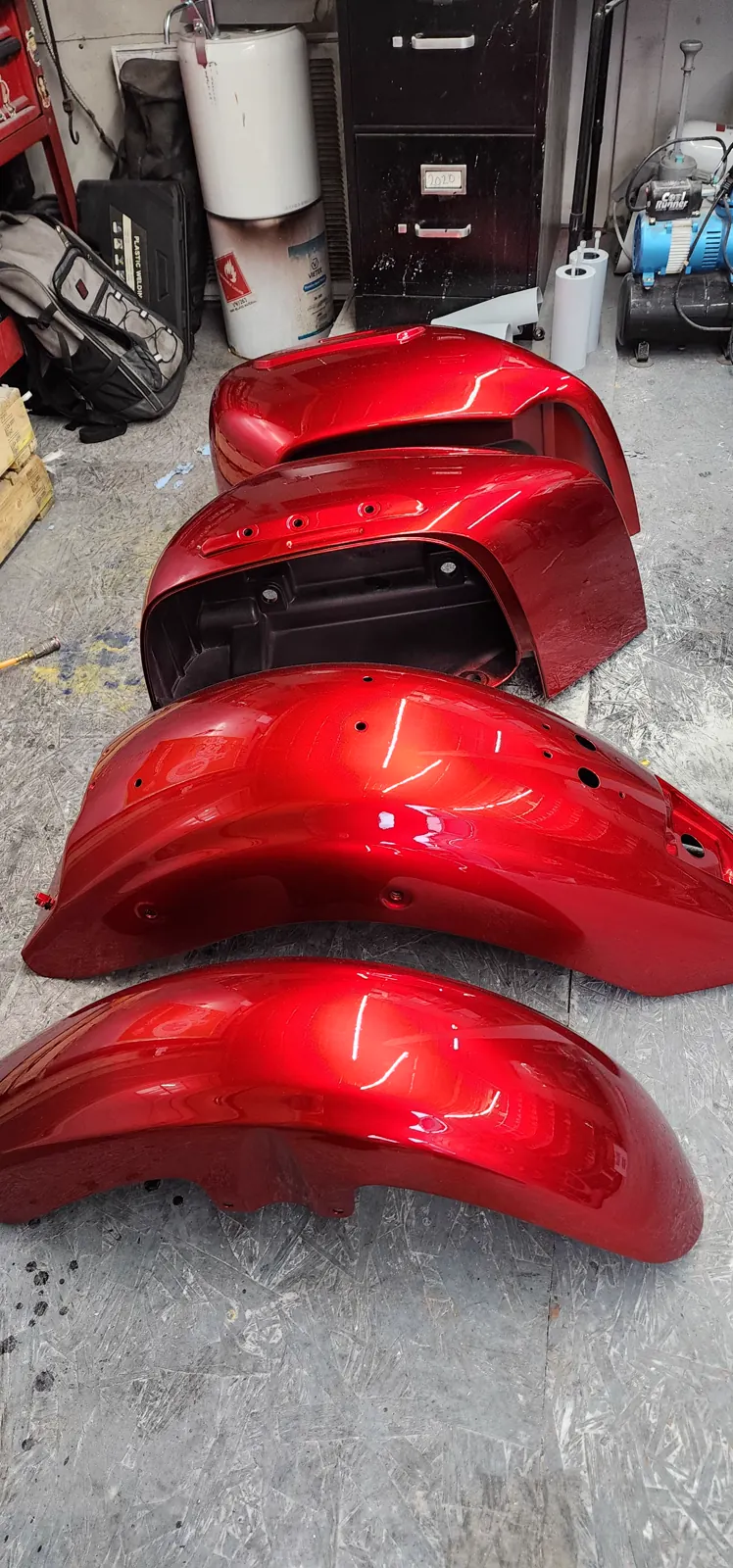
Notice that matte and gloss share almost every one of those steps. The finish only splits at the clear. That’s why the honest way to think about it is simple: pick the mood you want first, and let us handle the surface so it holds up. A color change, a repair matched to your existing paint, a full mural, candy over flake — the process underneath is the same careful build every time.
How long does it take, and can you rush it
Short answer: it depends on the work, and no, you really can’t rush good paint. Clear coat needs time to cure hard before it can be sanded and buffed, and that clock doesn’t speed up because you’re excited to ride. A simple color change on clean bodywork moves faster than a scratch-built mural over repaired panels. Rather than promise you a magic date, we’ll look at your actual bike, tell you what it needs, and give you a real timeline for that job. A finish you’ll stare at for years is worth a few extra days in the booth. That’s the trade, and it’s an easy one.
THE HONEST RULE OF THUMB
Choose your finish for the look and the feel. Choose your painter for the prep. The shine is your call. Making it last is ours.
The Marietta angle, because your bike lives here
Where and how your bike lives in town actually nudges the matte-versus-gloss call. Plenty of riders here keep their bikes in a garage in neighborhoods like Whitlock, that pocket between the Square and the conference center, or out in a newer build over on the Barrett Preserve side. Those bikes get pampered, and either finish thrives. But if you’re in an established subdivision like Milford Chase with the bike parked under a cover, or you deal with grime coming off a busy artery like South Cobb Drive, gloss gives you an edge, because you can polish out the marks that outdoor life leaves behind. A matte bike in the same spot still looks great, it just asks for a gentler routine and a little more patience with fingerprints and dust.
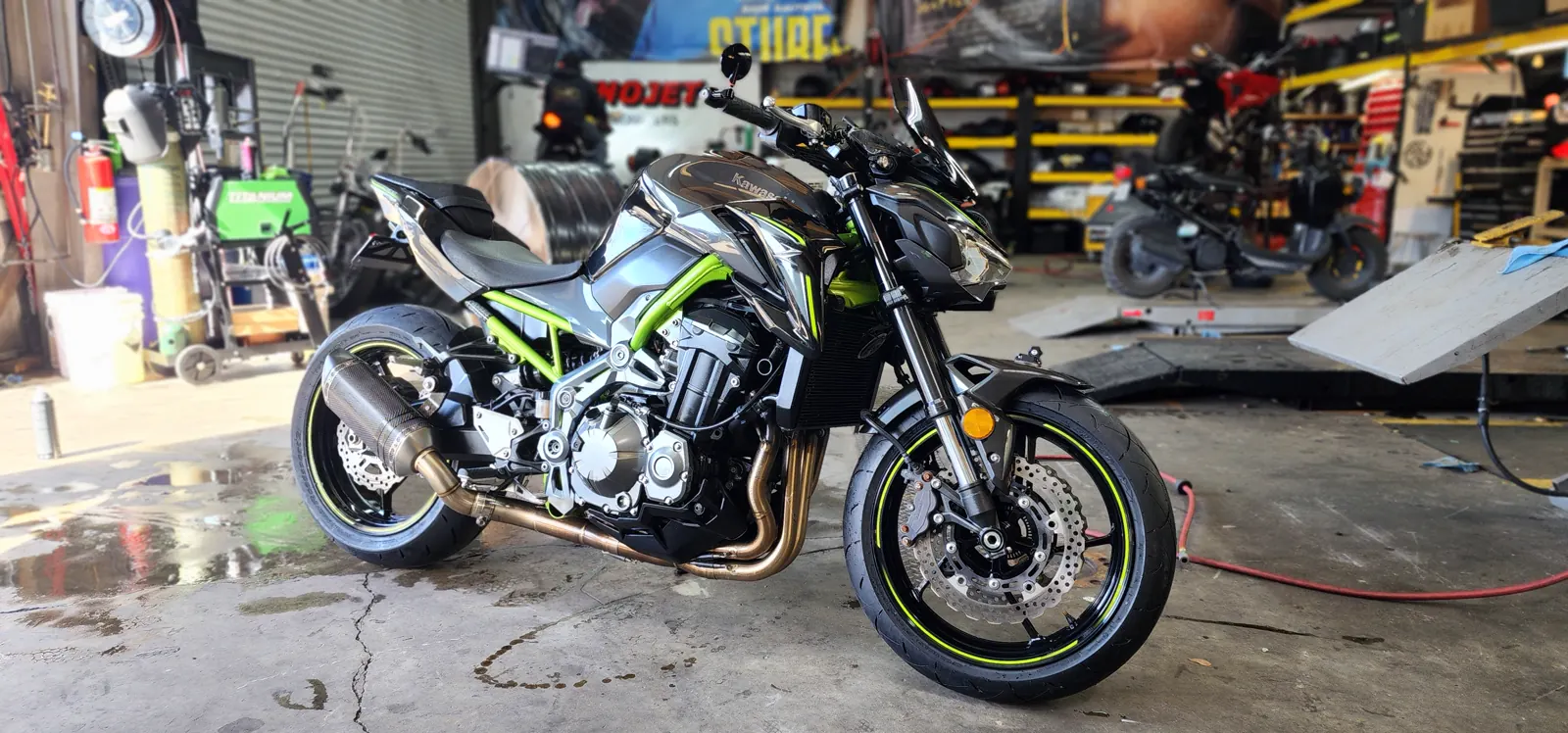
There’s a fun side to it too. This is a town that shows its bikes off. Ride down to The Battery Atlanta near Truist Park on a game night, or park near the Marietta/Cobb Museum of Art on a Square weekend, and your finish will get looked at. Matte turns heads for being unexpected. Gloss turns heads for being flawless. And if you’re the type who trailers a show bike to events, keeping fresh paint pristine on the road is its own skill — our transport guide has the full rundown on it, so you can get there without risking a chip.
This exact question isn’t unique to us, either. The riders over in the next town wrestle with the same call, and we wrote it up for riders over in Mableton too, because the finish math changes a little with how and where you keep the bike. Same craft, slightly different lifestyle.
There’s a reason we bring this up on nearly every intake. Most people walk in certain they want one finish, and about a third of them switch once they see real panels side by side under the light. A photo on a phone can’t show you how matte eats a reflection or how gloss opens up a metallic. So we’d rather you decide with your own eyes than commit to a guess. That’s the whole reason we don’t push a finish over the phone. We want you to love it in five years, not just at pickup.
If you want to see what a full job includes before you decide anything, our service page lays out what you get when you bring it in, from graphics and candy to matching a repair to your existing color. And for the technical folks who like factory detail, Harley riders can cross-reference finishes and part numbers through Harley-Davidson service information before they come see us.
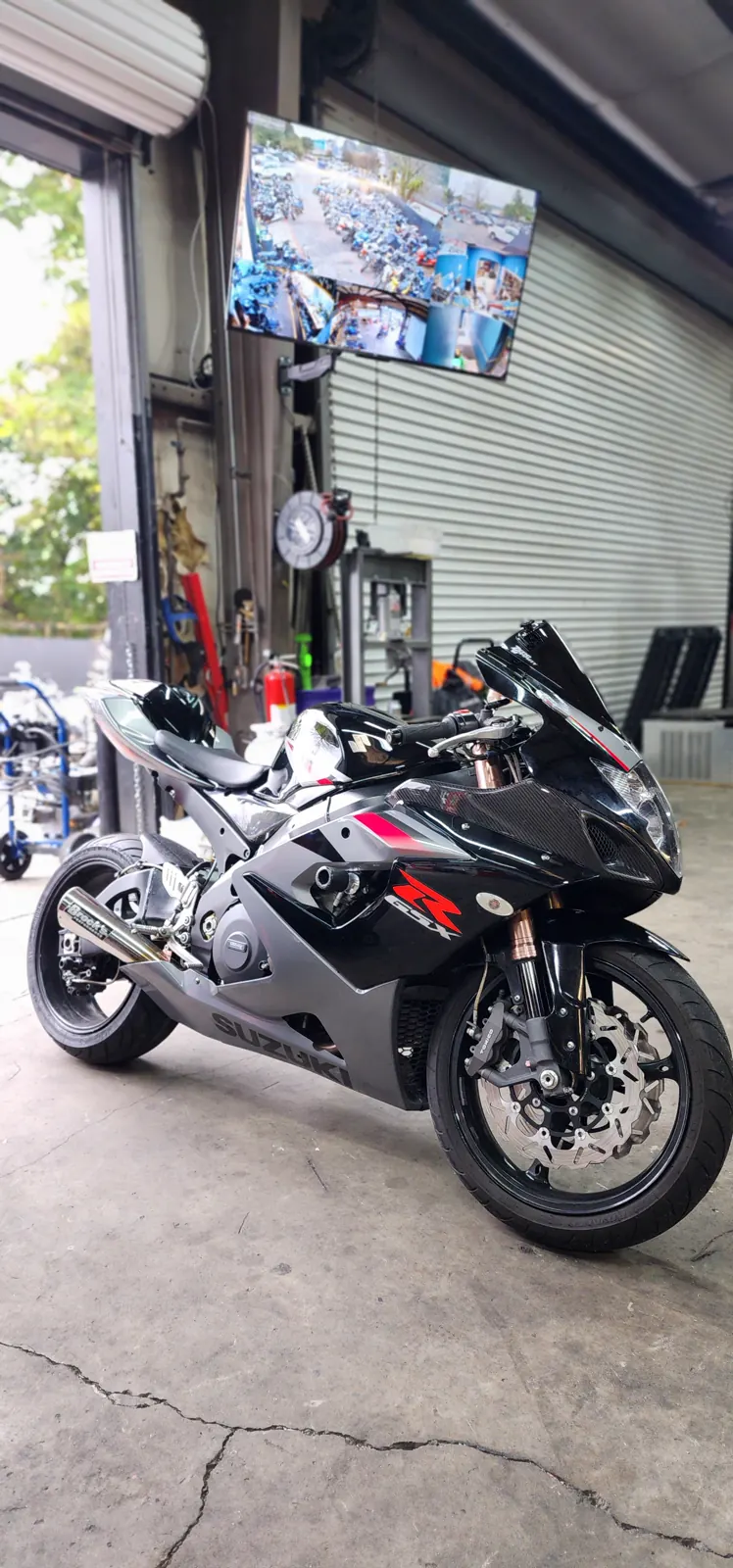
So which one should you get? Here's our real pick
If you made us choose one to recommend for most riders, it’s gloss. Here’s the reasoning, plain and simple. Gloss shows off color and flake the way custom paint is meant to be seen, and it’s repairable, so it ages with you instead of against you. For a bike you’ll actually ride and rack up honest miles on, that repairability is worth a lot. Years from now, a good buff brings a gloss bike right back to life. That’s the safe, satisfying pick for the person who isn’t sure.
But matte wins clearly in one situation, and it’s a big one: when the whole point of the build is a stealth, blacked-out, no-shine attitude. If you want a bike that looks like a shadow, gloss can’t give you that no matter how nice it is. For a murdered-out cruiser or a mean naked bike, matte is the right answer, full stop, as long as you’re happy to wipe it gently instead of buffing it hard. And if you’re brand new to bikes altogether, spend a weekend getting comfortable in the saddle through MSF rider courses first — then come dream up paint. The bike will still be there.
Pick gloss if you're unsure. Pick matte if the whole vibe is stealth. Either way, the prep is what makes it last.
The reassuring heart of the matte vs gloss paint Marietta question is that you can’t really lose. Both finishes look stunning when the bodywork under them is done right. The choice is about your personality and how you keep a bike, not about one being good and one being bad. Send us a few photos and tell us the feeling you’re after, and we’ll tell you honestly which finish gets you there.
A custom paint job is the most personal thing you’ll ever do to your bike. It’s your name on it, in a way. We treat it like that every single time, and we do it in our own booth right here, not shipped off to a stranger three states away. That’s the difference, and it’s the whole reason we love this part of the job.
Questions Marietta riders ask us
Can I switch from matte to gloss later, or the other way?
Yes, you can. Switching finishes means re-clearing the panels, and sometimes touching up the base underneath, so it’s a real job rather than a quick wipe. Because it depends on the bodywork condition when it comes in, we’ll look at your bike and tell you exactly what the swap needs. Nothing is permanent if you change your mind down the road.
Which finish do you actually recommend?
For most riders, gloss. It shows color and flake beautifully and it’s repairable, so it stays fresh for years with a good buff. Matte is our pick when the whole build is going for a stealth, blacked-out look that gloss simply can’t deliver. Tell us the vibe you want and we’ll point you to the right one.
Does the kind of bike I ride change the answer?
It can nudge it. Cruisers and naked bikes often look meaner in matte, while sportbikes with sharp lines and metallics really pop in gloss. How you store and clean the bike matters too. There’s no strict rule, though, so we always match the finish to your bike and your habits, not a chart.
Is upgrading to a full custom finish worth it over a basic respray?
If you love the bike and plan to keep it, most riders feel it’s very worth it. Real prep, quality base and clear, and in-house work give you a finish that lasts and can be maintained. A rushed budget respray tends to show its shortcuts fast. We’d rather do it once, right, so you’re not repainting in a year.
How do I decide which one to pick if I still can't tell?
Come see real panels under the light. A phone photo can’t show how matte eats a reflection or how gloss opens up depth. About a third of folks switch their pick the moment they see samples side by side. There’s no wrong choice here, so we’ll help you land on the one you’ll love.
How long will my paint job take?
It depends on the work. A simple color change on clean bodywork moves faster than a full mural over repaired panels, and clear coat needs real time to cure before it’s sanded and buffed. We won’t promise a random date. We’ll look at your bike, tell you what it needs, and give you a real timeline for that job.
We paint bikes for riders all over the northwest metro, not just inside the Marietta city limits. That includes friends over in East Cobb, Kennesaw, Smyrna, and Acworth, plus folks rolling in from Powder Springs, Mableton, Austell, and Vinings. We also take care of riders coming down from Woodstock, over from Roswell and Sandy Springs, and out from Dallas. Wherever you keep your bike, getting it to us is easy, and we’ll treat your paint like it’s our own.
STILL TORN? SEND US A PIC
The fastest way to settle the matte vs gloss question is to text us a few photos of your bike here in Marietta and tell us the look you’re after. We’ll give you a straight recommendation, no phone-quote games, and you can come see real panels under the light before you decide anything. Let’s make your bike yours.
470-460-9883Diaz Motorcycles and Service, LLC · 847 Barnes Mill Road, Marietta, GA 30062