Faded Motorcycle Paint Canton — How to Fix It
That chalky, washed-out tank has a cause and a fix — here's how we sort it out.
The bike was still new to you last spring. Plus, Maybe you picked up a cruiser from a neighbor over in Great Sky, or you found a bagger with a For Sale sign taped to the tank in a River Green garage. Either way, you’re still learning its habits — the way it idles cold, the way it leans, the way it catches light in the sun. Then one bright morning, you notice the tank looks tired. Dull. A little chalky. Meanwhile, that washed-out look already has a name riders use, and faded motorcycle paint Canton owners bring us every summer turns out to be more common than most folks think. Of course, it has a cause, and it has a fix.
First, take a breath. The faded motorcycle paint Canton riders fret over is rarely as bad as it looks, and a faded tank is not a broken bike. It’s a surface problem, not an engine problem, and surface problems are the friendly kind. Your motor doesn’t care what color it is. Still, you care, because paint is the first thing anybody sees when you pull up. So let’s walk through what’s really happening, in plain words, the way we’d explain it if you rolled the bike onto the lift.
We hear this story a lot. A rider gets their first big cruiser or bagger, rides it hard through one Georgia summer, and by August the finish that looked deep and glossy at purchase has gone flat. They didn’t do anything wrong. They just met the sun. And around here, the sun means business from July through August, when 90-degree heat, thick humidity, and near-daily afternoon storms all take turns on your paint.
What faded paint actually is
Paint on a motorcycle isn’t one layer. Think of it like a stack. Down low sits the primer, which grips the metal. On top of that goes the base coat, which carries the color. And over everything sits the clear coat, a see-through top layer that gives the finish its depth and shine. That clear coat is the hero here. It takes all the abuse so the color underneath stays safe.
When paint fades, the clear coat is usually the part that’s dying. Sun does it. Ultraviolet light breaks down that top layer a little more each ride, so the clear stops reflecting light cleanly. Instead of a mirror, you get a haze — and that haze is the chalky look you’re seeing. In bad cases the clear coat starts to peel or flake, and once that happens, the color coat underneath gets exposed and fades fast.
Heat makes it worse, which is why summer storage matters. A bike that bakes in an unheated garage or sits in a driveway near Boling Park all afternoon takes more UV than one kept in the shade. Cherokee County is a garage county, with plenty of two- and three-car garages in the master-planned belt, so the fix often starts with where the bike lives.
Here’s a quick gut check you can do in your own garage. Run a clean, damp microfiber cloth over the faded spot. If the shine comes back while it’s wet and vanishes as it dries, your clear coat is oxidized but probably still there — that’s the good-news case. If it stays dull even when wet, or you feel roughness, the clear coat may be gone in that spot, and that’s a bigger job.
Here’s where it gets interesting — and where most advice online falls apart. Type your symptom into a search bar and you’ll get a hundred videos promising a miracle in one afternoon. Some of that advice is fine. A lot of it will cost you your paint. The reason is simple: not all fade is the same, and the fix that saves one tank will ruin another.
The real causes, most common first
So let’s line up the usual suspects. We’ll start with what we see most and work down. Your bike probably has one of these going on, and sometimes two at once.
- Sun oxidation. The number one cause by far. UV light chalks the clear coat over time, and dark colors and reds show it first because they run hotter and the pigment breaks down faster.
- Neglected washing. Bug guts, tree sap, and road grime left on the tank eat into clear coat. Bird droppings are surprisingly rough on paint and can leave a permanent etch if they sit.
- Cheap or wrong products. Household cleaners, dish soap, and harsh polishes strip protection and speed up fade. A tank waxed with the wrong stuff can look worse in a month.
- Age and thin factory clear. Some bikes just left the factory with a thin clear coat, and older tanks or vintage restorations often have paint that’s simply worn out its lifespan.
- Storage and weather. Sitting outside, freeze-thaw winters, and heat cycling all stress the finish. A bike parked out through a Canton winter and summer ages faster than one kept inside.
Notice that most of these are things time did to your bike, not things you did wrong. Even the washing one is easy to forgive — life gets busy, the bike sits, the grime bakes on. What matters is that each cause points to a different fix, so naming the cause first saves you money and saves your paint.
Your options once it's faded
The good news is there’s a whole ladder of fixes, and you don’t always need the big one. We climb it one rung at a time, starting light, because the lightest fix that solves your problem is the right fix.
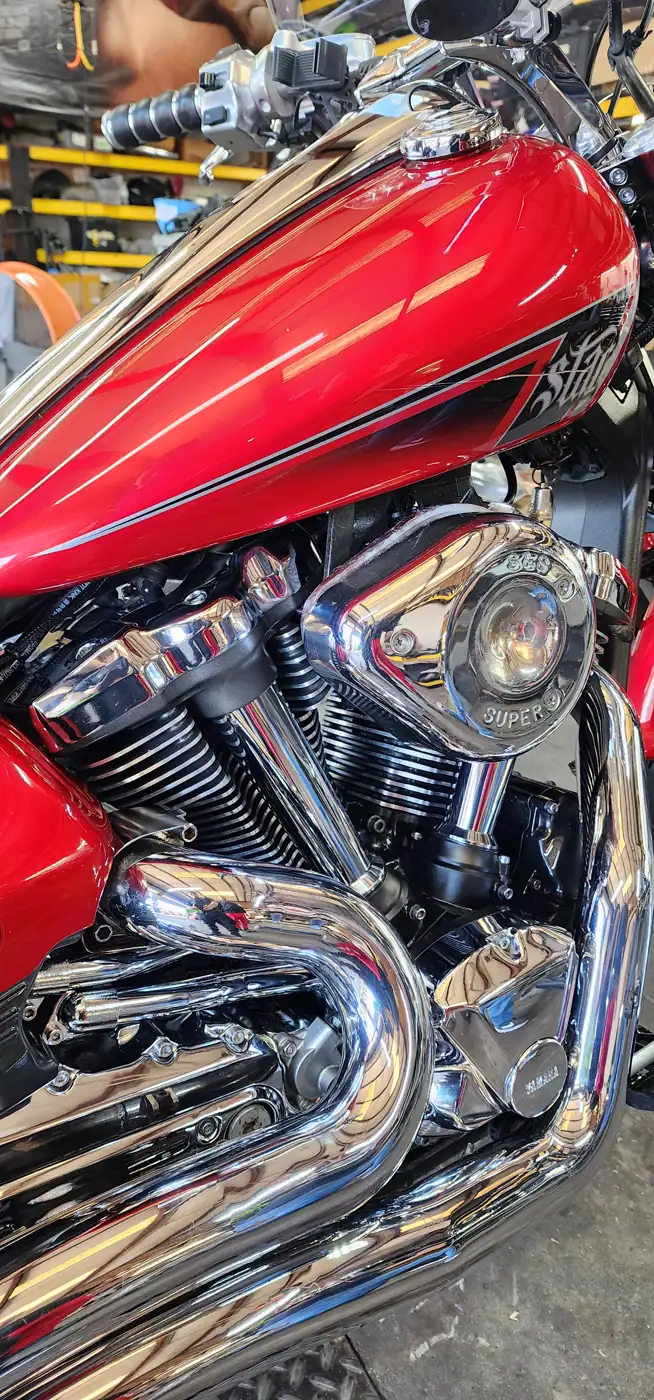
If the clear coat is oxidized but still there, a proper machine polish can bring back a shocking amount of shine. We cut through the dead, hazy top of the clear, expose the good clear underneath, then seal it — and that alone rescues a lot of tanks. When the clear is thin or spotty, we may recommend a fresh clear coat over the existing color. And when the color itself is gone, cracked, or you simply want a change, that’s when a full repaint comes in. That’s the fun part, because now you get to choose. You can even weigh a matte finish against a glossy one; there’s a real difference in look and upkeep, and we walk friends through the tradeoffs between them all the time.
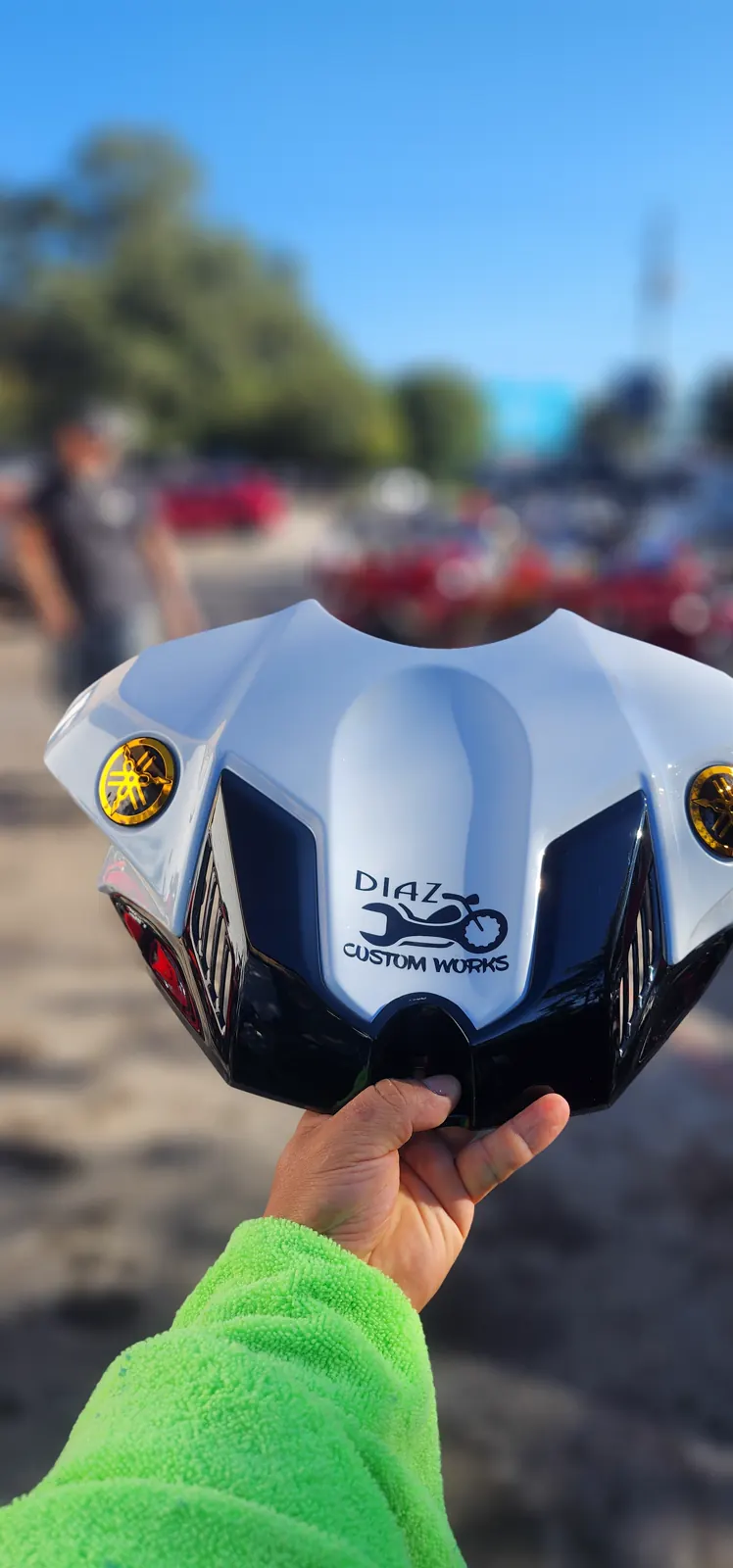
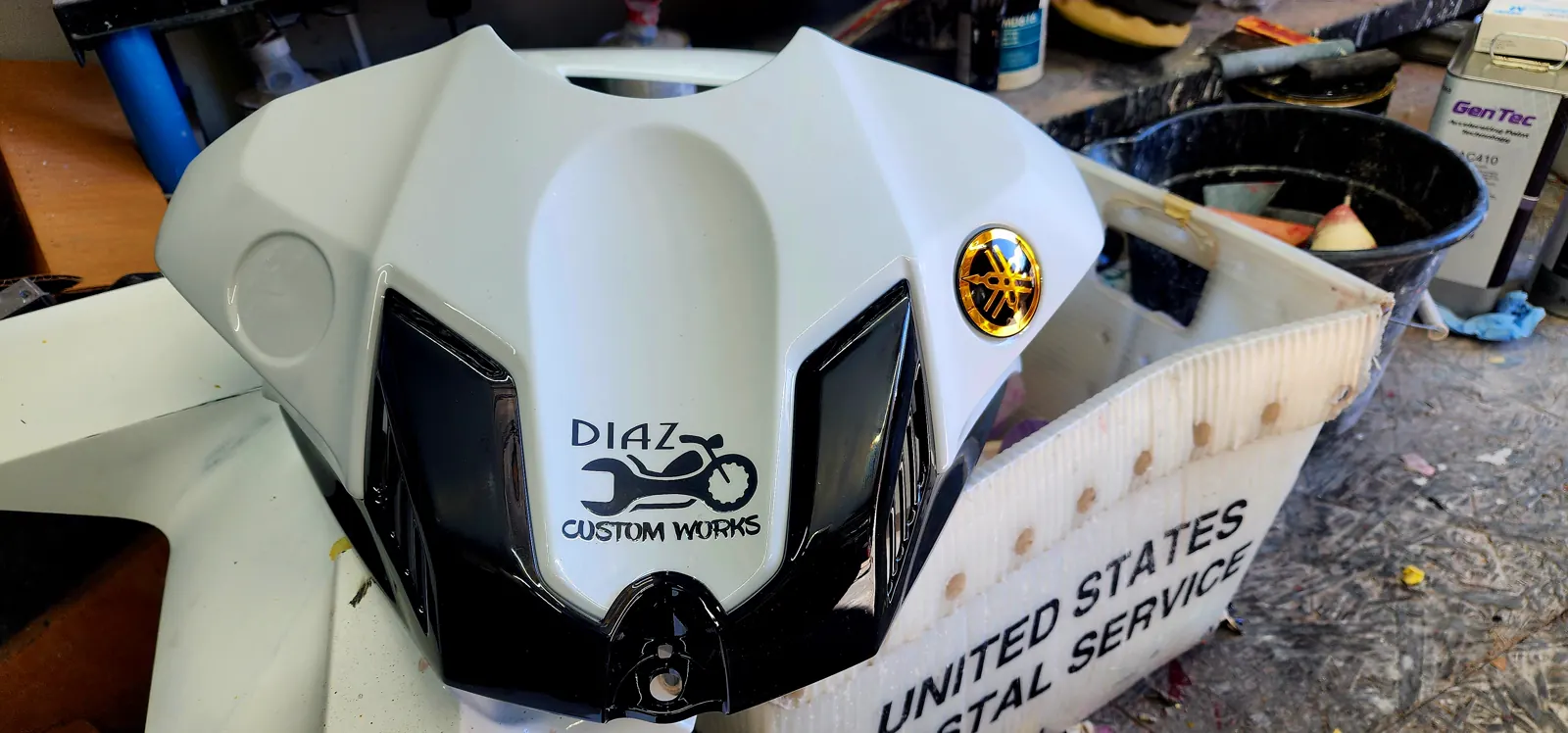
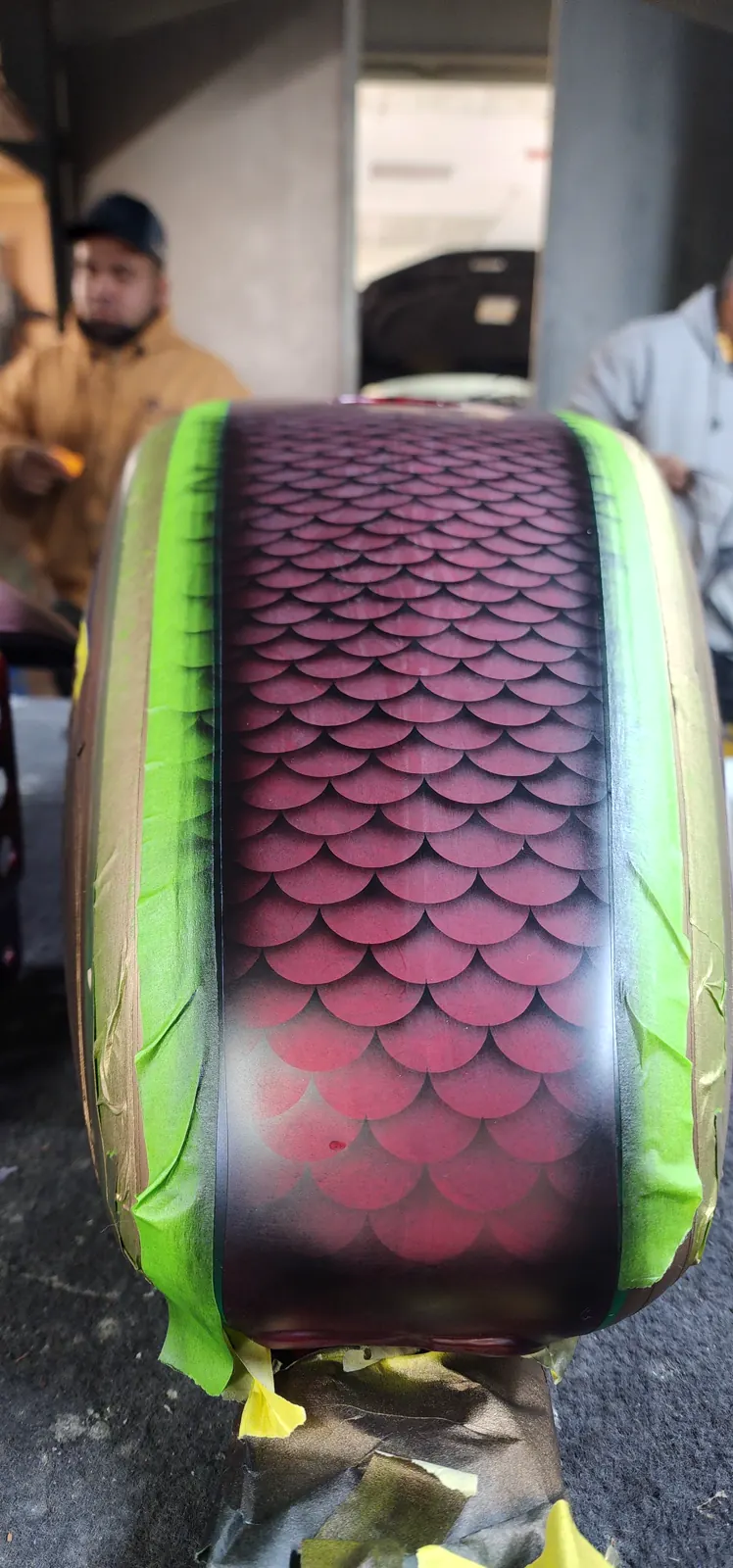
A repaint is also where the pride comes in. It’s the most personal thing a rider does to a bike. Custom color, candy over a metallic base for depth, flake that lights up in the sun, airbrushed graphics, hand-laid pinstriping — a good painter can put your personality right on the tank. That kind of work is a big part of what we take care of here, and most volume shops around the county don’t offer it at all.
How we decide what your bike needs
Here’s how a visit actually goes, so nothing feels like a mystery. First we look at the paint in good light and feel it with a clean hand. We check whether the shine returns when it’s wet. We look for flaking, cracking, or spots where the color has gone thin. Then we ask you a few questions — how the bike is stored, how it’s washed, how old the paint is, and what you want it to look like when you ride away.
From there we tell you straight which rung of the ladder your bike is on. Sometimes the answer is happy and small: a polish and a good sealant, back on the road the same visit. Sometimes it’s a clear coat or a panel repaint. And sometimes the paint is fine and the real culprit is something else entirely — which brings up a fair question.
Because fade rarely travels alone. A bike that’s been sitting long enough to lose its shine has often been sitting long enough to grow other gremlins — a weak battery, varnished fuel, flat-spotted tires that are worth a look against Michelin’s motorcycle tire resources if yours have been parked a while. When we’ve got your bike on the lift anyway, we give it a once-over. If it needs more than paint, we’ll tell you what that service actually involves before we touch a thing, so there are no surprises.
Matching a repair to your existing paint is its own skill, too. Say you dropped the bike and scuffed one panel. You don’t always need to repaint the whole machine. A good painter can blend a repair into the surrounding finish so you’d never know, matching color, metallic flake, and clear until the fixed panel disappears. That saves you a full repaint and keeps the bike looking original. If your fade is more everyday than dramatic, it’s much like how this plays out in Powder Springs, where sun and storage do the same slow work on a garage-kept cruiser.
Here’s what changes once it’s actually sorted. The difference between a faded tank and a fresh one isn’t small, and it isn’t only about looks.
What it feels like after
Picture the bike back in your garage, tank glowing under the light. You walk past it and it stops you. The color has depth again — you can almost look into it, like water. Flake catches the sun and shifts as you move by. That gloss makes the whole bike look newer, cleaner, cared for. Friends we’ve helped tell us the same thing over and over: they find reasons to go ride just to be seen on it.
And it holds. A properly sealed or freshly painted finish sheds water, resists the next round of UV, and cleans up in minutes instead of fighting you. The bike that used to look tired after a run out on the Henderson Mountain Loop now comes home and wipes down easy. You spend less time babying it and more time riding, which is the whole point.
A custom paint job is the most personal thing a rider does to a bike — and the first thing everyone else sees.
Is it safe to ride with faded paint?
Let’s answer the question straight, because it’s the one riders actually worry about. Faded paint by itself is a cosmetic problem, not a safety problem. A dull tank won’t stall you on I-575 or let go in a corner. You can ride a faded bike all day and be perfectly safe. So if all you’ve got is a chalky finish, ride it and enjoy it while you plan the fix.
There’s one line to watch, though. If the clear coat is peeling and lifting in sheets, water can slip under it and reach bare metal, and bare metal near a fuel tank can start to rust. Rust is where cosmetic turns into structural. It’s still not an emergency, but it’s the point where waiting starts to cost you more than fixing. If you see bare metal or bubbling, don’t put it off.
QUICK RULE
Chalky and dull? Ride and enjoy it, fix it when you can. Peeling clear coat with bare metal showing? Get it looked at before rust sets in. When in doubt, a two-minute look tells us which camp you’re in.
Getting your bike to us from Canton
Now the practical part. Our shop sits down in Marietta, a straight shot from Canton — figure a half hour or so, roughly 22 to 26 miles down I-575 to Barrett Parkway or GA-92 and east through East Cobb. Heads up that the road can rough up your finish on the way; Georgia DOT keeps I-575 busy with repaving that throws gravel and tar snakes at your paint. For a lot of folks up here the drive is nothing anyway. And because paint work doesn’t need the whole bike right away, you often only have to bring the tank and the panels.
Plenty of good routine service exists closer to home — RideNow Powersports over on Riverstone Parkway handles a ton of the county’s oil changes and tires, and they earn their reviews. But real in-house custom paint is a different animal, and it’s thin on the ground out here. That’s the gap we fill. Whether you’re a nurse coming off a shift at Northside Hospital Cherokee on Bluffs Parkway, a weekend rider in a Franklin Park at River Green townhome with a garage-kept cruiser, or somebody who just wants their bike to turn heads along GA-5, the drive is worth it for paint you can’t get down the street. Roll in with a plan, and we’ll handle the rest.
Questions Canton riders ask us
How do you figure out what caused my fade?
We look at the paint in good light, feel it with a clean hand, and check whether the shine comes back when it’s wet. Then we ask how the bike is stored, how it’s washed, and how old the paint is. Those answers point straight to the cause, so we’re not guessing.
Could it be something other than the sun?
Yes. Bird droppings, tree sap, harsh household cleaners, and a thin factory clear coat all fade paint too. Sometimes it’s a mix of a few things. That’s exactly why we name the real cause before we pick a fix.
Is it safe to ride with faded paint?
On its own, faded paint is only cosmetic, so ride and enjoy it while you plan the repair. The one exception is peeling clear coat that exposes bare metal, since that can lead to rust over time. If you spot bare metal, get it looked at before it spreads.
What actually causes motorcycle paint to fade?
Mostly UV light from the sun breaking down the clear coat over time. Heat, neglected washing, and cheap products all speed it up. Dark colors and reds usually go dull first because they run hotter in the sun.
Can I fix faded paint myself?
Sometimes. A gentle machine polish can revive oxidized clear coat if you know what you’re doing. But wrong products or too much cutting can ruin thin clear for good, so when in doubt, let us take a look first and tell you whether it’s a safe DIY or a shop job.
We bring bikes back to life for riders all over the north metro. Beyond Canton, we help friends in Woodstock, Holly Springs, and Ball Ground, out to Waleska, Free Home, and Nelson, and up toward Jasper where the mountains start. We also see plenty of riders roll in from Acworth, Kennesaw, Cartersville, Marietta, and Alpharetta who make the easy run for paint they can’t get closer to home.
READY TO BRING BACK THE SHINE?
If your tank’s gone dull, let’s fix it. Bring the whole bike down from Canton, or just drop off the tank and panels — either way, we’ll tell you straight which fix your paint needs, from a quick polish to a full custom job. Reach out to Diaz Motorcycles and let’s get your bike looking like the day you first fell for it.
470-460-9883Diaz Motorcycles and Service, LLC · 847 Barnes Mill Road, Marietta, GA 30062