Custom Paint Cost Canton — What You Actually Pay For
Why a real custom job takes the time it takes, and what makes one bike bigger work than the next.
Meanwhile, you can feel a bad paint job before you ever see it. Of course, run a thumb across the tank and the clear coat grabs like a fingernail on a screen door. In fact, Hold that same tank up in the sun and the flake looks flat, like the color is sitting on top of the metal instead of glowing from inside it. For example, that little catch under your thumb is the sound of a job that got rushed. So when a rider asks us about custom paint cost Canton, the very first thing we talk about isn’t a number. Even so, it’s what that finish is going to feel like a year from now, rolling down GA-5 in the morning light.
The honest answer, up front
Let’s get right to it. What’s more, there is no flat price for a custom job, and any shop that fires a number at you over the phone is guessing. After that, the real cost comes down to three things: how much of the bike has to come apart, how much bodywork the panels need before color ever touches them, and how detailed the art is on top. Also a single color change on a clean tank is one kind of job. Instead a full candy fade with airbrushed murals across the tank, the fenders, and the fairing is a whole different animal. Same booth, same painter, same care. Very different number of hours.
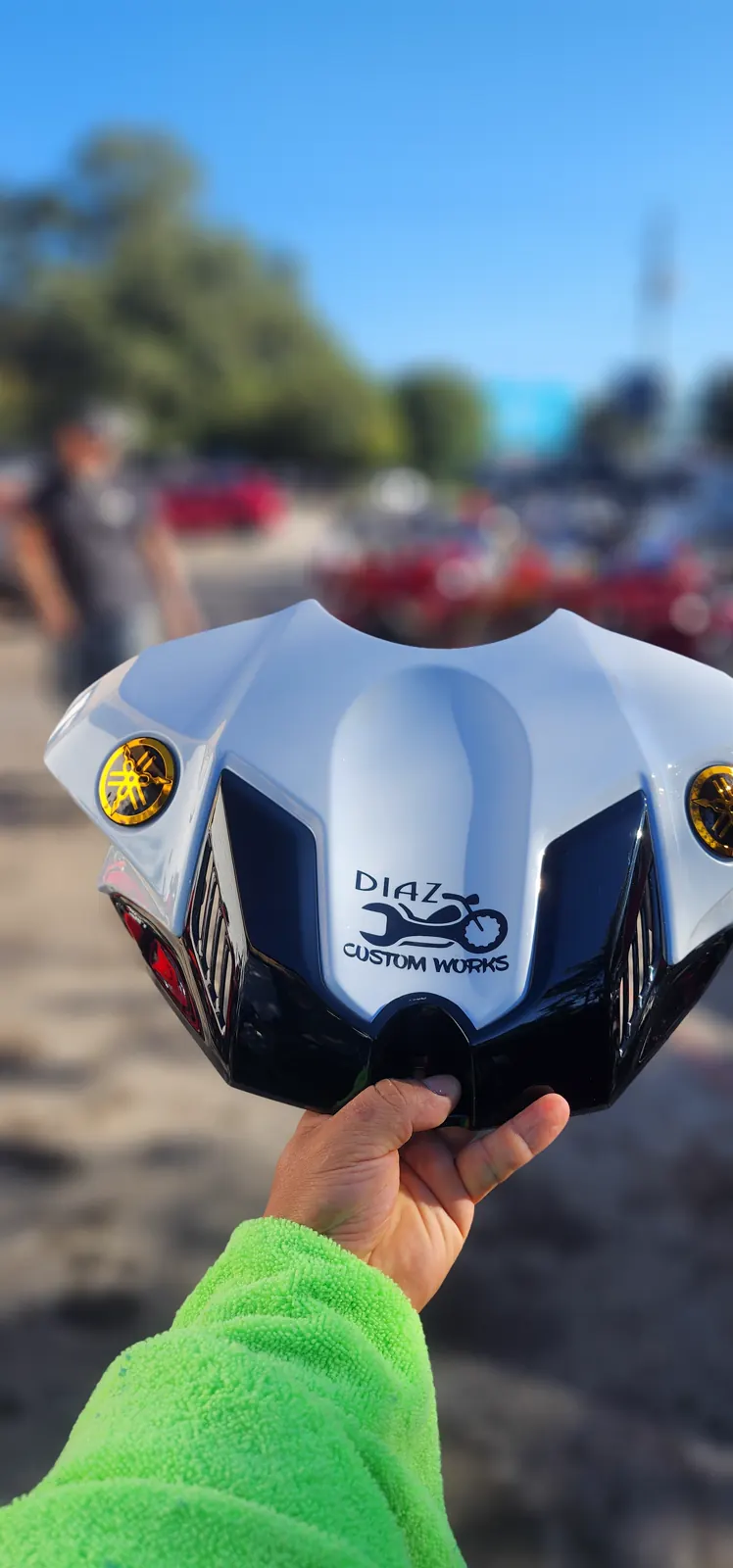
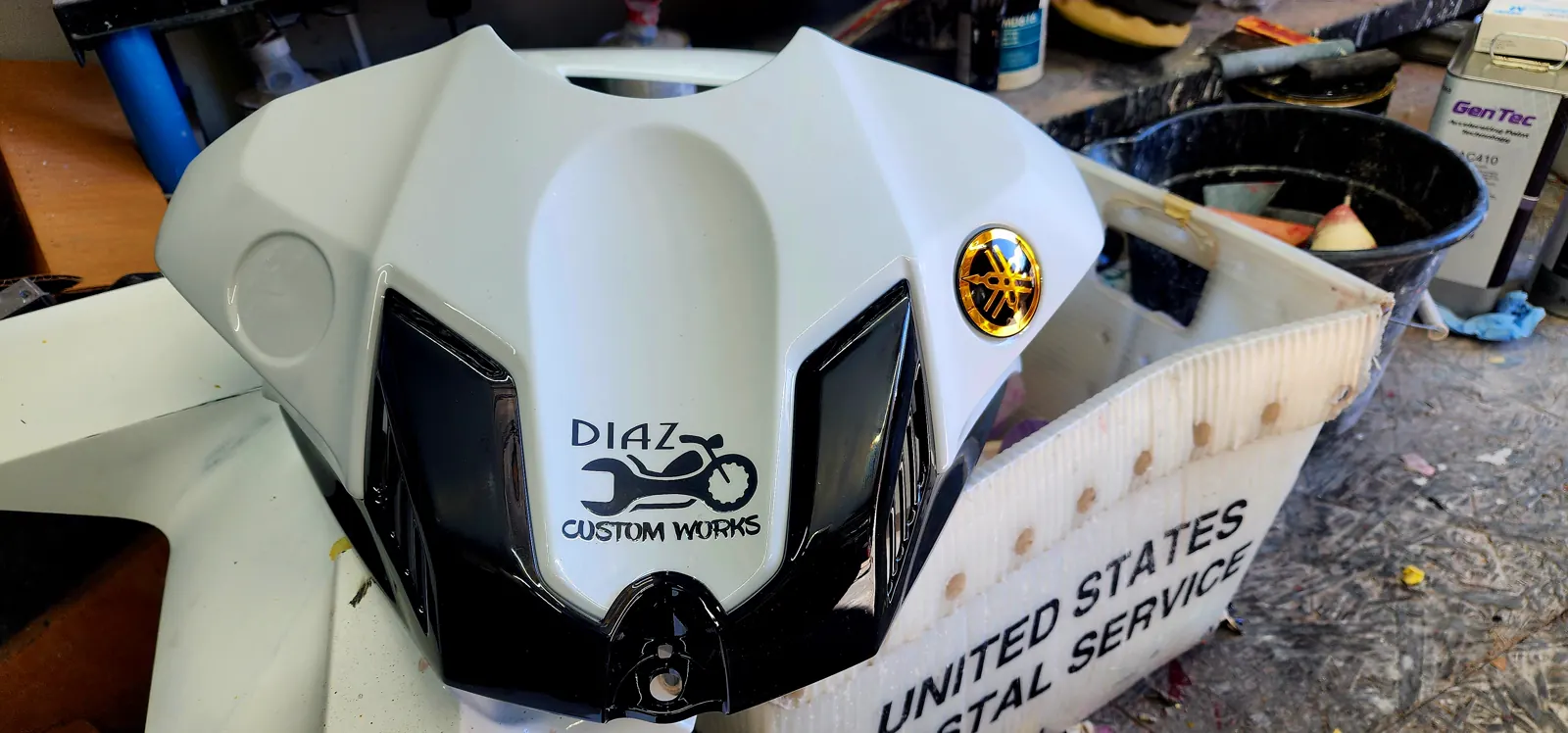
Besides here’s the part most folks don’t expect. Actually On a custom job, the paint itself is a small slice of the work. That’s why the heavy weight is labor and access. Either way Getting a panel down to a sound surface, blocking every low spot dead flat, taping off clean lines, laying base, laying clear, then wet-sanding and buffing the whole thing to a wet-glass shine. That’s where the hours live. Materials matter too, of course. But two riders can buy the exact same candy red and walk away with wildly different work, because one bike needed a weekend of prep and the other needed a full teardown. If you want to see the range of what rolls through our booth, take a look at the work we do in house.
What actually drives the work
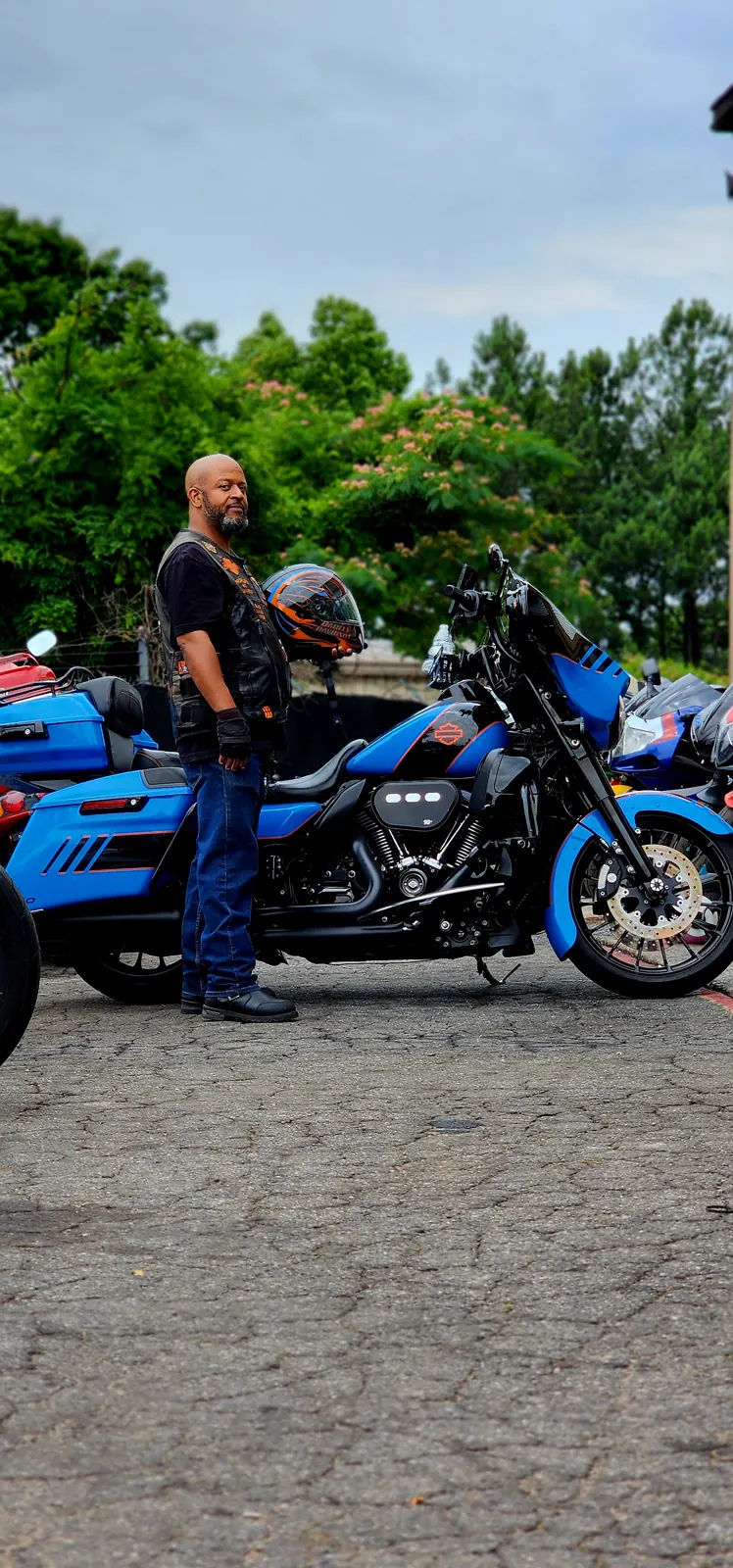
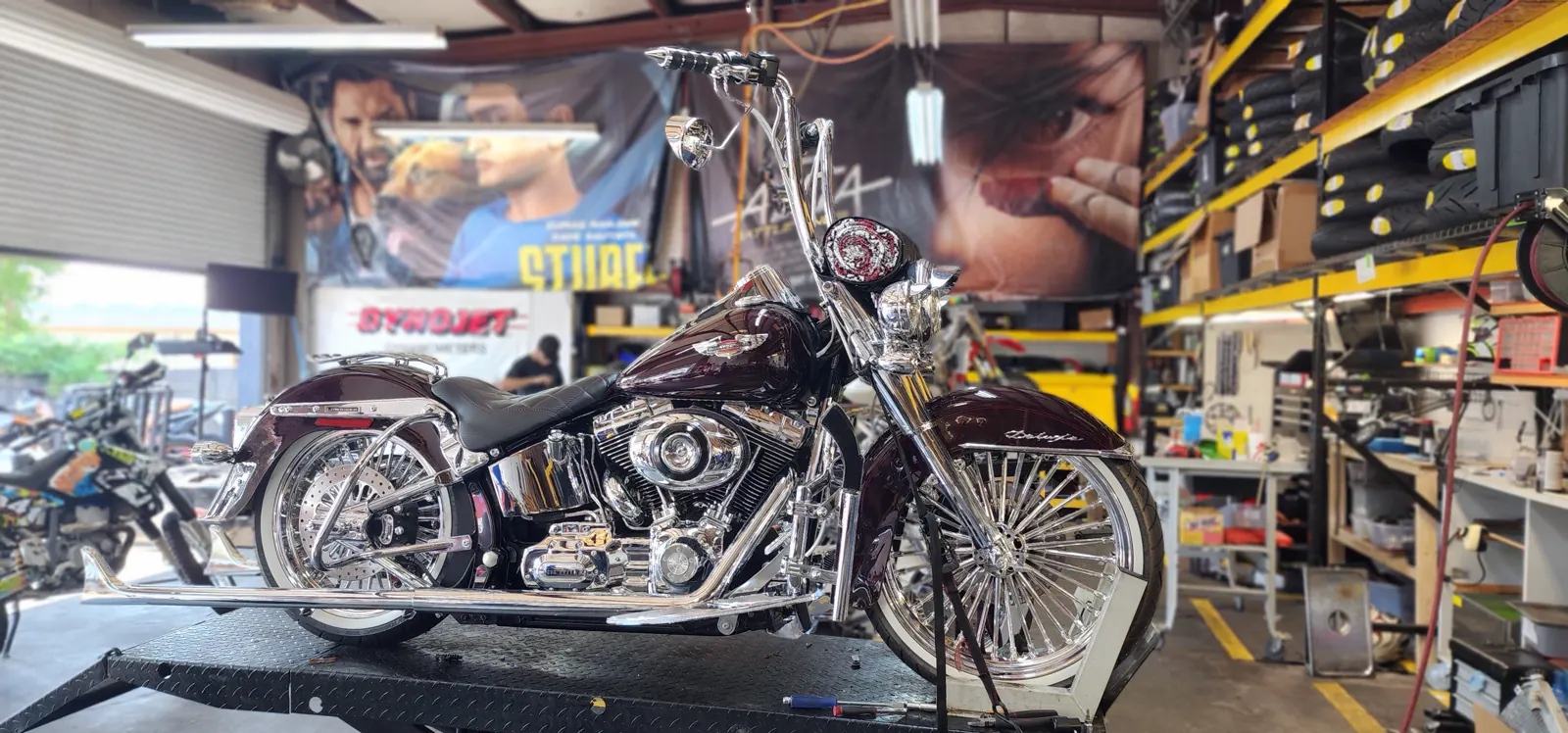
When a bike rolls in, the size of the job is set by the machine more than the color you picked. In short a stripped-down tank you carried in on the seat is quick to handle. At the same time a full bagger with hard bags, a batwing fairing, and side covers is a lot more surface and a lot more masking. As a result every seam, every badge, every mounting point is a spot where paint can lift if it gets rushed. So more parts means more careful hours, plain and simple.
On the other hand the condition underneath is the other big driver. Bare factory paint is a friendly starting point. An old repaint with orange-peel and overspray is not, because we have to strip that mess off before we can build something good on top. Filler from a past drop has to be found and flattened. A little rust bloom under the chrome has to be chased out, or it will creep back through the new color and ruin the whole thing. None of that shows up on the outside, which is why the tank that looks worst can sometimes be the easy one, and the tank that looks clean can hide a weekend of prep.
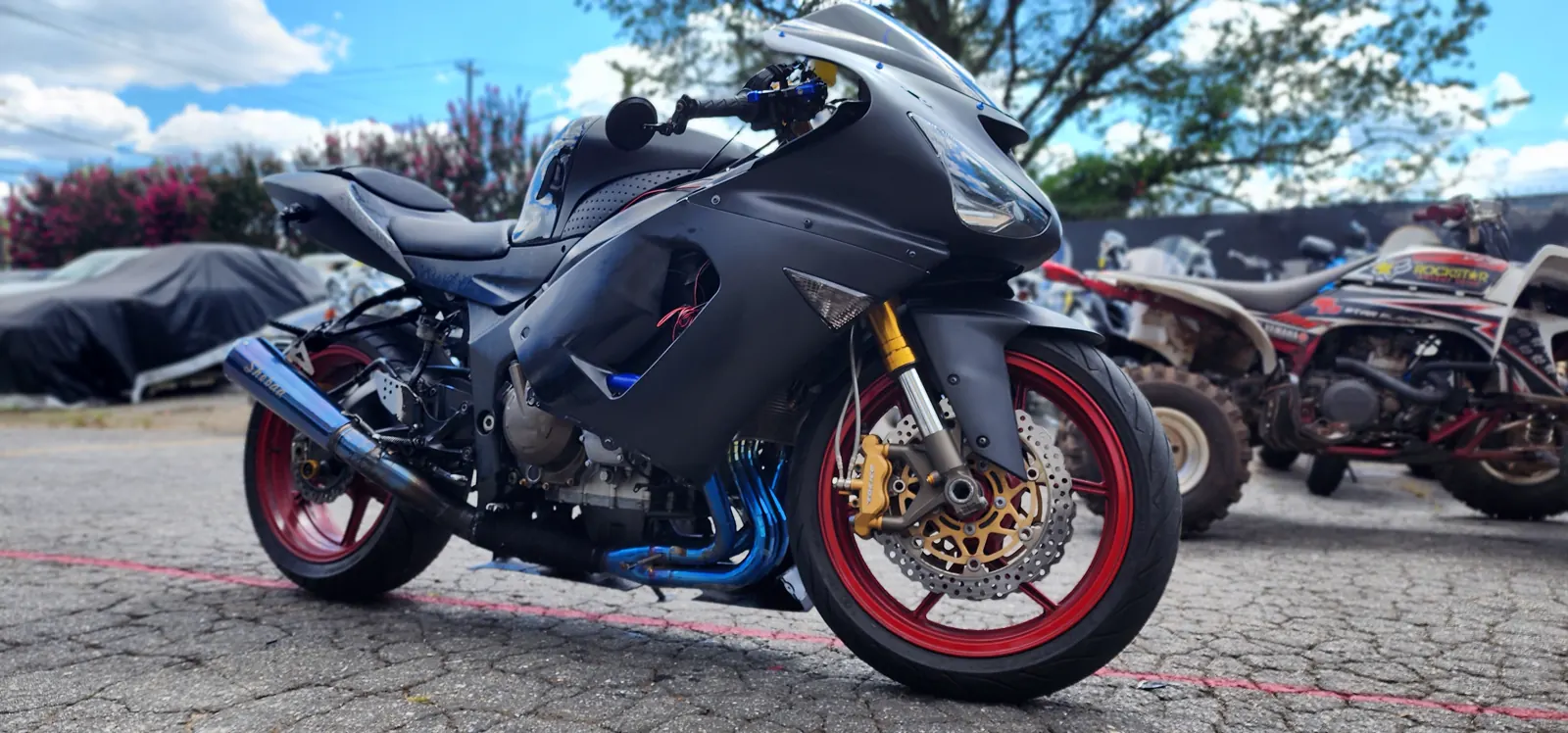
Then there’s the art. A clean color change reads simple and goes fast. Candy and metallic finishes take more coats and a steadier hand, because every pass has to be even or the depth turns blotchy. Airbrushed graphics, murals, and pinstriping add real hours on top, since each line gets laid, checked, and then buried under clear so you can’t feel an edge when you run your hand over it. That buried-smooth feel is the whole point of doing it right.
Here’s the question we’d ask if you were standing in the shop, tank in hand: what do you want this bike to look like when it’s done, and how much of what’s on it now do we have to undo first? A rider chasing a quiet color match to fix a scratched fender needs one thing. A rider who wants his cruiser to turn heads in the Woodmont Golf and Country Club cul-de-sac wants another. We can’t answer either one honestly until we’ve had the panels in our hands and under good light.
The process, start to finish
People picture custom paint as one big spray session. It isn’t. It’s a stack of small steps, and prep is most of them. Here’s how a real job moves through the booth.
- Teardown and access. We pull the panels off the bike, or you bring us just the tank and covers. Fewer parts on the bench means less can go wrong.
- Strip and repair. We take each panel down to a sound surface, fix any dents, chase out rust, and cut out old filler that’s hiding trouble.
- Prime and block. Primer goes on, then we block-sand it flat by hand until the reflection in the panel runs straight with no waves.
- Base coat. The color goes down — solid, candy, metallic, or flake — built in even passes so the depth is the same everywhere.
- Graphics and lines. Airbrush work, murals, and pinstriping get laid and checked while the base is fresh.
- Clear coat. Several coats of clear go over everything, thick enough to bury the art so you can’t feel a single edge.
- Cut and buff. We wet-sand the cured clear and buff it up until it reads like wet glass under the shop lights.
- Reassembly and cure. Panels go back on, and the finish gets real time to harden before the bike sees the road.
Skip any one of those steps and you can usually feel it later. That’s the whole reason a good job can’t be rushed. Clear needs time to cure, block sanding can’t be hurried, and a candy coat laid too fast turns cloudy in the sun. When someone tells you their custom paint cost Canton dropped because a shop knocked it out in a couple of days, ask them how the clear feels a summer later.
What we check before we ever quote
An honest shop won’t price a custom job sight-unseen, and this is the list of why. Every one of these can swing the hours up or down, and none of them are visible over the phone.
- How many panels are coming in, and whether they’re on the bike or already off.
- What’s under the current finish — factory paint, a past repaint, filler, or rust.
- Whether it’s a match to existing paint or a full color change across the whole bike.
- How detailed the art is — a clean color, a candy fade, or airbrushed graphics and pinstriping.
- Whether badges, trim, and hardware need to come off, get masked, or get replaced.
- How the panel needs to line up with the parts we aren’t painting, so nothing clashes.
Matching a repair to existing paint is its own skill, by the way. Say you dropped the bike and cracked one side cover. Nobody wants a bright new panel next to five faded ones. We tint and blend so the fix disappears into the rest of the bike, and that blending is part of the same craft as a full custom. It’s also the kind of thing worth pairing with a proper once-over — here’s how we handle that job when a bike comes in for more than just color.
Mistakes riders make with custom paint
Most paint regret traces back to a few simple traps, and they’re easy to dodge once you know them. Chasing the lowest number is the big one. Paint is the most personal thing you’ll ever do to a bike, and it’s the last place to shop on price alone. A booth that quotes cheap usually gets there by cutting prep, and prep is exactly the part you can’t see and can’t fix later without redoing the whole thing.
The second trap is not asking what’s actually included. “Custom paint” can mean a quick color or a full show finish, so pin down the coats, the sanding, and whether the clear gets cut and buffed. That’s a lot of what separates a good shop from a fast one. A brighter color has a nice side benefit too, since a bike that’s easy to spot is a bike drivers actually see — the same idea behind years of IIHS motorcycle research on how much conspicuity matters out on the road.
The third trap is rushing the rider more than the painter. Good paint has a rhythm, and pushing a shop to hand the bike back early is how you end up with soft clear and a finish that scratches if you look at it wrong. How long a job takes really does depend on the work in front of us. A color match on one panel and a full airbrushed teardown are not the same clock, so we’d rather tell you honestly than promise a day we can’t keep.
Paint is the most personal thing you'll ever do to a bike. It's the last place to shop on price alone.
This is where Canton is genuinely different from other towns. You sit right at the gateway to the North Georgia mountains, the last real services stop before I-575 turns into GA-515 toward Jasper, Ellijay, and Blue Ridge. On a good Saturday in fall, GA-5 north is a parade of bikes. That means a lot of you ride hard and store proud — cruisers and baggers tucked into two- and three-car garages out in River Green along the Etowah River, over in Governors Preserve, and all through the master-planned belt. A custom finish out here isn’t showing off. It’s the way a rider marks a bike as theirs before it ever leaves the driveway.
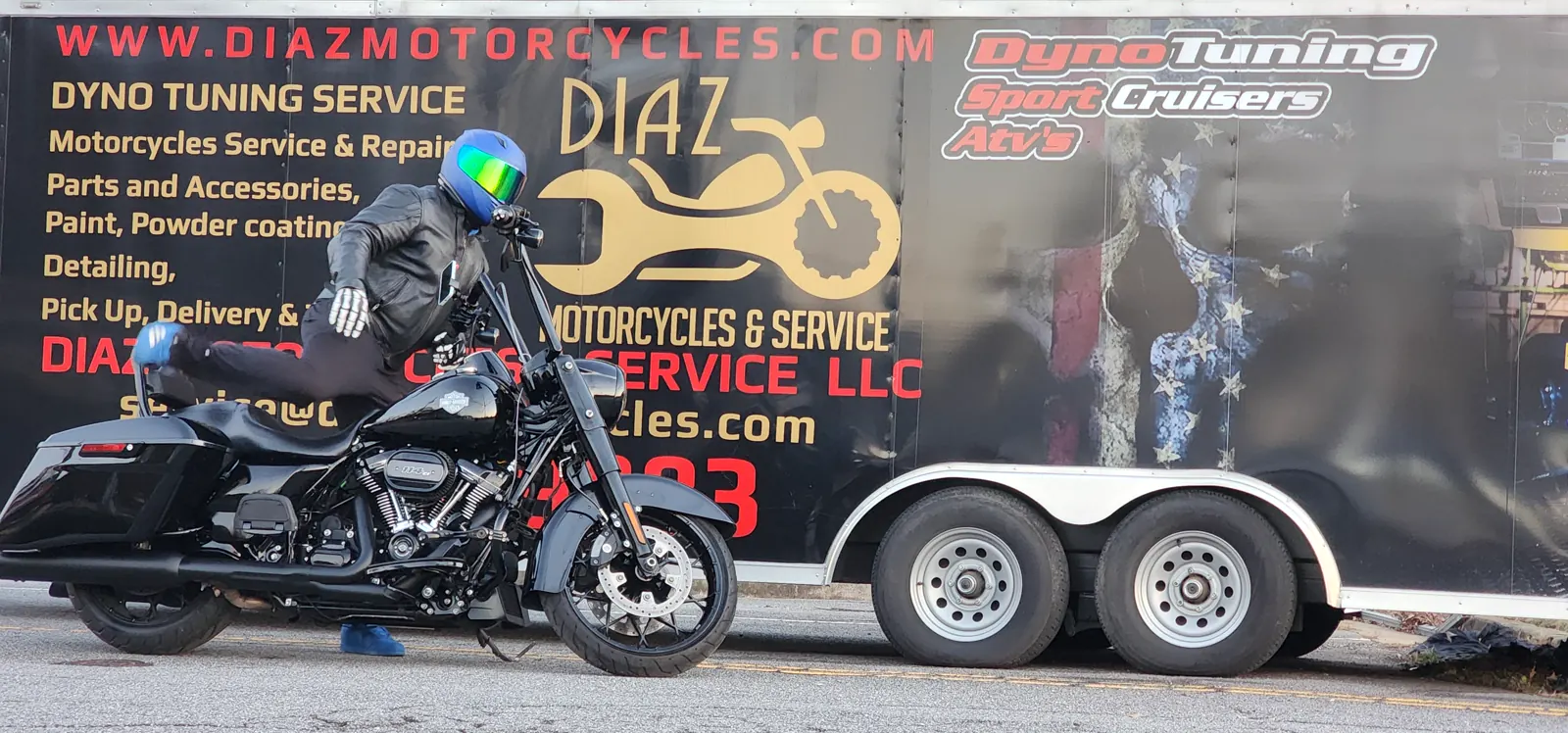
The catch is the drive. You’re a solid ride from the shop — figure roughly 22 to 26 miles, usually thirty to forty minutes down I-575 to Barrett Parkway or GA-92 and east through East Cobb. Nobody wants to make that trip four times for one paint job. So we handle transport. We’ll pick up the whole bike on the enclosed trailer, or, if you’d rather keep riding while the color is out, you pull just the tank and panels and we take those. For folks off GA-108, the road locals call Fincher Road that runs north past Lake Arrowhead into Waleska, or anyone up near Boling Park with its trails down to the Etowah, that pickup is the difference between getting it done and putting it off another season.
There’s a real gap here worth naming. Cherokee County has a big, well-heeled rider population and not many independents doing paint and restoration — the volume dealership up the road doesn’t prioritize it. About thirty minutes west in Cartersville you’ve got Southern Devil Harley-Davidson, which runs a busy events calendar with the Frosty Bells Toy Run and the Turkey Bowl, and it’s a great place to gather. But a full custom booth doing candy, flake, and airbrush in house is a different offering, and there’s simply more demand out here than there are shops filling it.
You already drive for everything anyway. Canton folks run to Woodstock, Kennesaw, and Alpharetta without a second thought, and plenty of you have earned that Georgia Class M licensing just to spend more weekends on two wheels. A run out to Lake Allatoona west of town on GA-20 Knox Bridge Highway, with that scenic causeway stretch, or the long loop up US-411 to Fairmount, over GA-53 to Jasper, and back down GA-5 and I-575 — those are the rides your bike gets seen on. Making it look the way you picture it is the whole reason the paint matters.
WHY NO PHONE QUOTE
It’s not a runaround. The hours on a custom job hide under the current finish — old repaints, filler, and rust don’t show over the phone. Ten minutes with the panels in good light tells us more than any guess ever could.
What you walk away with
When it’s done right, you’ll know by feel first. Your hand runs the length of the tank and finds no edge where the graphics live, just smooth, buried-deep gloss. Tip it in the sun and the flake lights up from inside the color instead of sitting flat on the surface. That’s the difference between paint that was sprayed and paint that was built. It’s the same reason a rider in Mableton asks the same questions you’re asking — you can read the Mableton side of things if you want to see how it lines up. The craft travels; only the drive changes.
So walk into this confident. You don’t need to know a number to start. You need to know what you want the bike to look like, and you need a shop that’ll tell you the truth about what it takes to get there. Bring us the bike, or bring us the tank and panels, and we’ll show you exactly what drives the work before anything gets sprayed. That’s the whole deal.
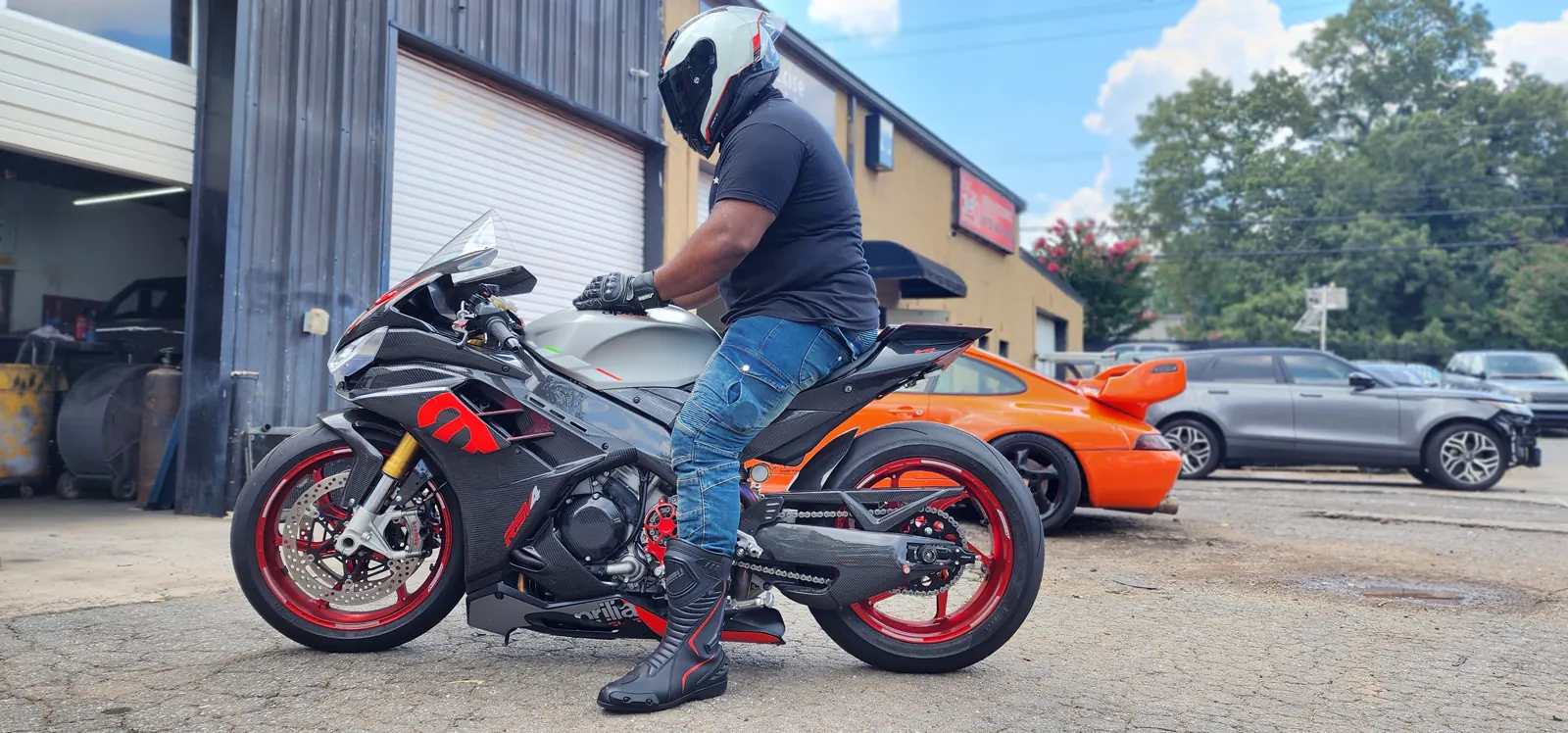
One last thought. A custom job is one of the few things you do to a bike that’s purely for you. It doesn’t add horsepower or shave a lap time. It just makes the machine feel like yours the second you throw a leg over it. That’s worth doing once and doing right, which is exactly why we won’t cut the corners that make it cheap and make it fail.
Questions Canton riders ask us
Why can't you just quote custom paint over the phone?
Because the hours hide where the phone can’t see. Old repaints, filler from a past drop, and rust under the chrome all change the work, and none of it shows on the outside. We’d rather see the panels in good light for ten minutes than guess and get it wrong. An honest number needs honest information first.
What's included in a custom paint job?
It depends on what you’re after, so we spell it out before we start. A basic color change is base and clear. A show finish adds candy or metallic coats, airbrushed graphics or pinstriping, then several clears cut and buffed to a glass shine. We’ll walk you through exactly which steps your bike gets so there are no surprises.
How long does custom paint take?
It honestly depends on the work in front of us. A single-panel color match moves fast. A full teardown with airbrush art and multiple clears needs real time, because clear has to cure and block sanding can’t be rushed. We’ll give you a straight timeline once we’ve seen the bike, and we won’t promise a day we can’t keep.
Is most of the cost the paint or the labor?
Labor, by a wide margin. The paint itself is a small slice. The weight is in the prep and access — stripping, blocking flat, masking clean lines, then sanding and buffing the clear. Two bikes can use the same color and land in different places purely because one needed more hours under the surface.
Does the type of bike change the work?
A lot. A bare tank you carry in is quick. A full bagger with bags, fairing, and covers is far more surface and masking, and every seam is a spot to get right. The condition underneath matters too, so a clean-looking bike can hide more prep than a beat-up one. The machine sets the size of the job as much as the art does.
Do I have to ride the bike all the way to the shop?
Not at all. We’ll pick up the whole bike on the enclosed trailer, or you can pull just the tank and panels and we’ll take those so you keep riding. Since Canton sits a solid drive from us, that transport is a big part of why folks out here finally get the paint done instead of putting it off.
We paint for riders all across Cherokee County and the northwest metro, not just Canton. That includes friends in Woodstock, Holly Springs, and Ball Ground, out to Free Home and Nelson, and up the mountain side of things toward Jasper and Waleska. West of town we help riders in Acworth, Kennesaw, and Cartersville, and we run south into Marietta and up to Alpharetta all the time. Wherever you are, the enclosed trailer makes the distance a non-issue.
LET'S TALK ABOUT YOUR BIKE
Ready to give your bike the finish you keep picturing? Text us a few photos of the tank and panels, tell us what you’re after, and we’ll walk you through what drives the work before anything gets sprayed. We pick up all over Canton and haul the whole bike — or just the tank and covers — so the drive never becomes the reason you wait. No guesswork, no phone-quote games, just a straight answer and paint built to last.
470-460-9883Diaz Motorcycles and Service, LLC · 847 Barnes Mill Road, Marietta, GA 30062