Custom Paint Cost Atlanta — What You Really Pay For
The honest breakdown of what drives the price of a custom motorcycle paint job, in plain words.
It’s a Tuesday night, almost nine. Meanwhile, you’re on the couch, phone in hand, and you finally type the question that’s been rattling around your head for a month. Of course, what does a custom paint cost Atlanta riders can actually plan for? In fact, you hit search, and forty answers come back, and not one of them matches the next. If that’s you right now, take a breath. For example, we’re going to walk through the whole thing in plain words, and by the end you’ll know exactly what you’re looking at.
Even so, here’s the thing nobody tells you up front. What’s more, that question doesn’t have one clean answer, and any shop that fires back a hard number in the first ten seconds is guessing. Not because they’re shady. It’s because paint is a job you have to see before you can price it. Stick with us, though, and you’ll understand why that’s actually good news for you and your bike.
What You're Really Asking
When you search that phrase late at night, you’re not only asking for a single price tag. You’re asking whether this dream is even in reach. You’re asking if the shop will treat you straight. After that, and you’re asking what makes one paint job simple while the next one turns into a two-month labor of love. Those are all great questions, so let’s take them one at a time.
Also a paint job is nothing like buying a tire. A tire is a part with a sticker on it, and the sticker is the sticker. Paint is mostly hands and hours. The materials matter, of course, but the real cost lives in the prep, the time, and the skill of the person holding the gun. Once that idea clicks into place, the whole picture starts to get a lot clearer.
The Honest Answer
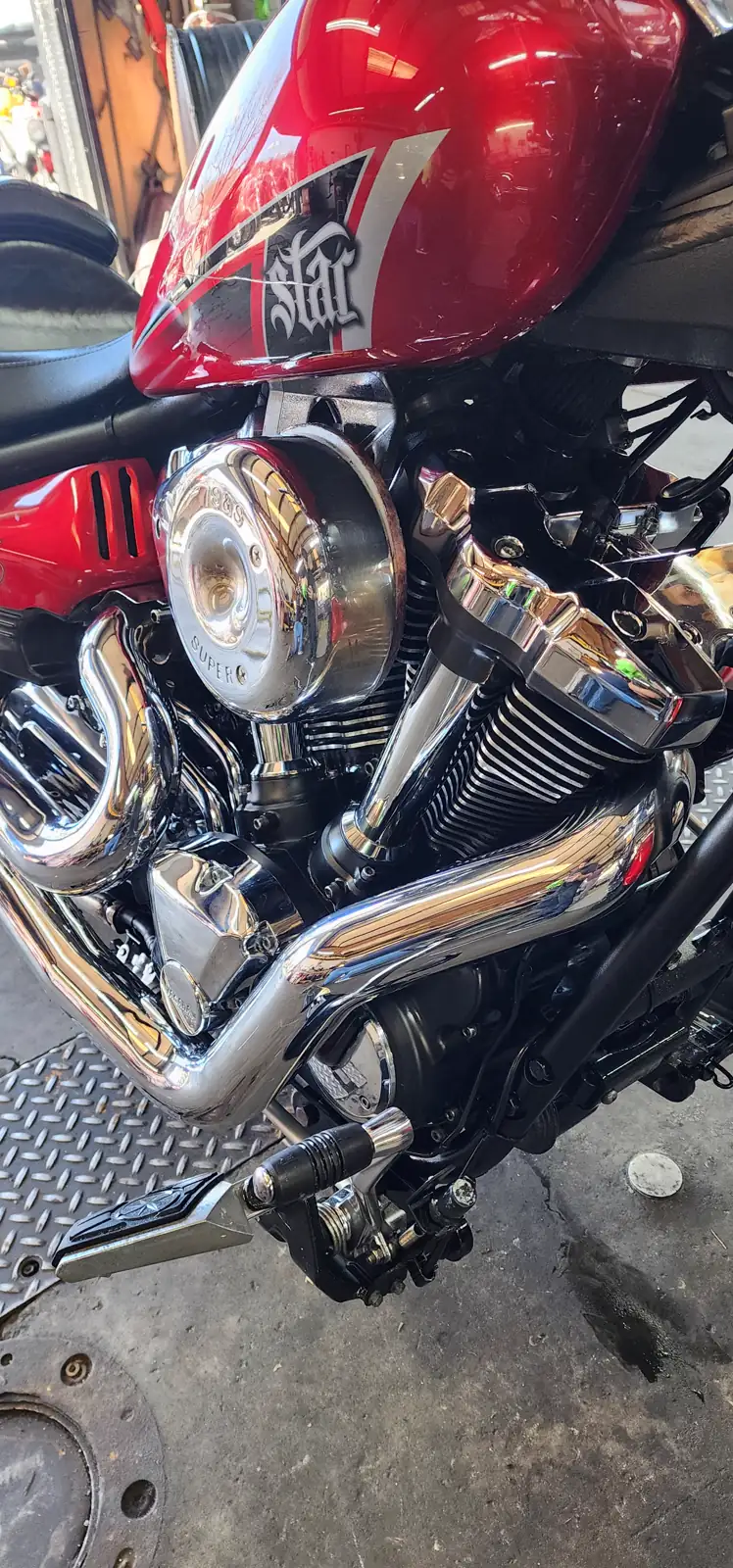
So here’s the straight talk. The biggest driver of a paint job isn’t the color you pick. It’s the labor. Think of it like this: a plain color change on a clean tank is one thing, and a full airbrushed mural with candy layers and flake buried under the clear is a completely different animal. Same booth, same painter, wildly different amount of work.
Parts play a smaller role than most folks expect. A quart of good clear is a quart of good clear. What eats the hours is everything that happens before and after the color goes down. Sanding. Filling. Blocking. Masking. Layer after patient layer, with drying time in between that you simply can’t skip. That’s why an honest shop measures a job in effort, not in the price of a can.
There’s also the matter of access. On some bikes the tank and panels pop off in a few minutes. On others you’re pulling gauges, wiring, and trim just to free the piece that needs paint. More stuff in the way means more careful hands-on time, and that time is the thing you’re paying for. If you ever want to see the full range of work a booth like ours takes on, here’s what our team handles day to day.
Walking The Actual Process
Let’s pull back the curtain, because once you see the steps, the price stops feeling mysterious. A real custom paint job moves through the same honest stages every single time, and skipping any of them is how a cheap job ends up peeling in a year.
- Teardown. We remove the tank, fairings, fenders, or whatever pieces are getting painted, and set aside all the hardware so nothing walks off.
- Strip and repair. Old paint comes off, dents and cracks get fixed, and any bodywork gets straightened. This is the boring part, and it matters more than everything else combined.
- Prep and prime. We block-sand the piece dead flat, then lay primer so the color has something clean and even to grab.
- Base coat. The color goes down in thin, even passes. Candy and metallic finishes get built up gradually, because depth comes from patience, not from one heavy coat.
- Art and graphics. Airbrushed murals, pinstriping, and layered graphics happen here, by hand, one element at a time.
- Clear coat. Several coats of clear lock everything in and give the finish its gloss and its armor.
- Cut and buff. We wet-sand the clear and polish it until the surface reads like glass, then reassemble the bike.
Read that list again and notice where the hours pile up. It’s the front half. Prep and bodywork are where a lasting paint job is won or lost, and they’re invisible once the color goes on. That’s exactly why two tanks that look identical in a photo can carry very different amounts of work underneath.
Depth comes from patience, not from one heavy coat.
Something changes once you know what to look for. Now when a shop quotes you fast and cheap, you’ll wonder what step they’re planning to skip. And when a good painter takes a beat before answering, you’ll recognize it for what it is: respect for the work. If you want a deeper read on that, here’s what separates a good shop from one that just sprays and prays.
What Makes One Job Bigger Than Another
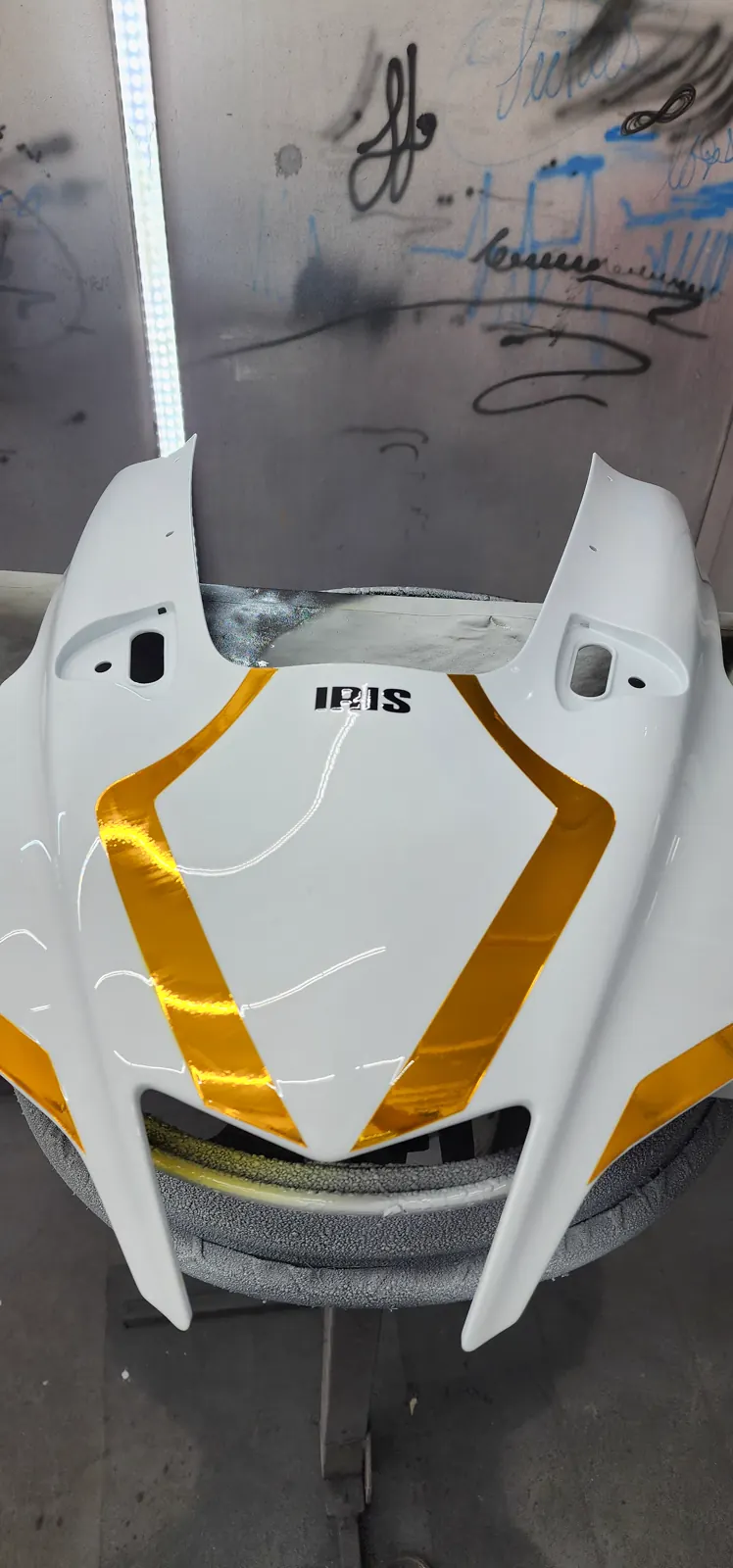
Here’s where you take back control of the whole conversation. A handful of clear factors decide whether your job is a quick weekend or a long, careful build. None of them are secret, and none of them require a dollar figure to understand.
- How many pieces. A tank alone is simple. A tank plus fairings, fenders, and side covers multiplies the surface and the masking.
- The finish you want. A solid color is straightforward. Candy, pearl, metallic, and flake finishes each add layers and drying time.
- Art and detail. Pinstriping, airbrushed murals, and fine graphics are slow, skilled handwork that no machine can rush.
- Bodywork needed. A clean, straight panel saves hours. Dents, rust, or old crash repair add real prep time.
- Access on your bike. Some models give up their panels easily, and some fight you the whole way.
- Matching existing paint. Blending a repair into a finish that’s already on the bike is one of the trickiest jobs there is.
That last one deserves a word. Matching a repair to your current color, especially a faded factory finish that’s spent a few summers in the Georgia sun, is a real art. The painter has to read the color as it is today, not as it left the factory, and blend the new work so the seam disappears. It’s slow, it’s finicky, and it’s worth every minute when you can’t tell where the fix ends.
Our Approach, And Why We Won't Quote It Blind
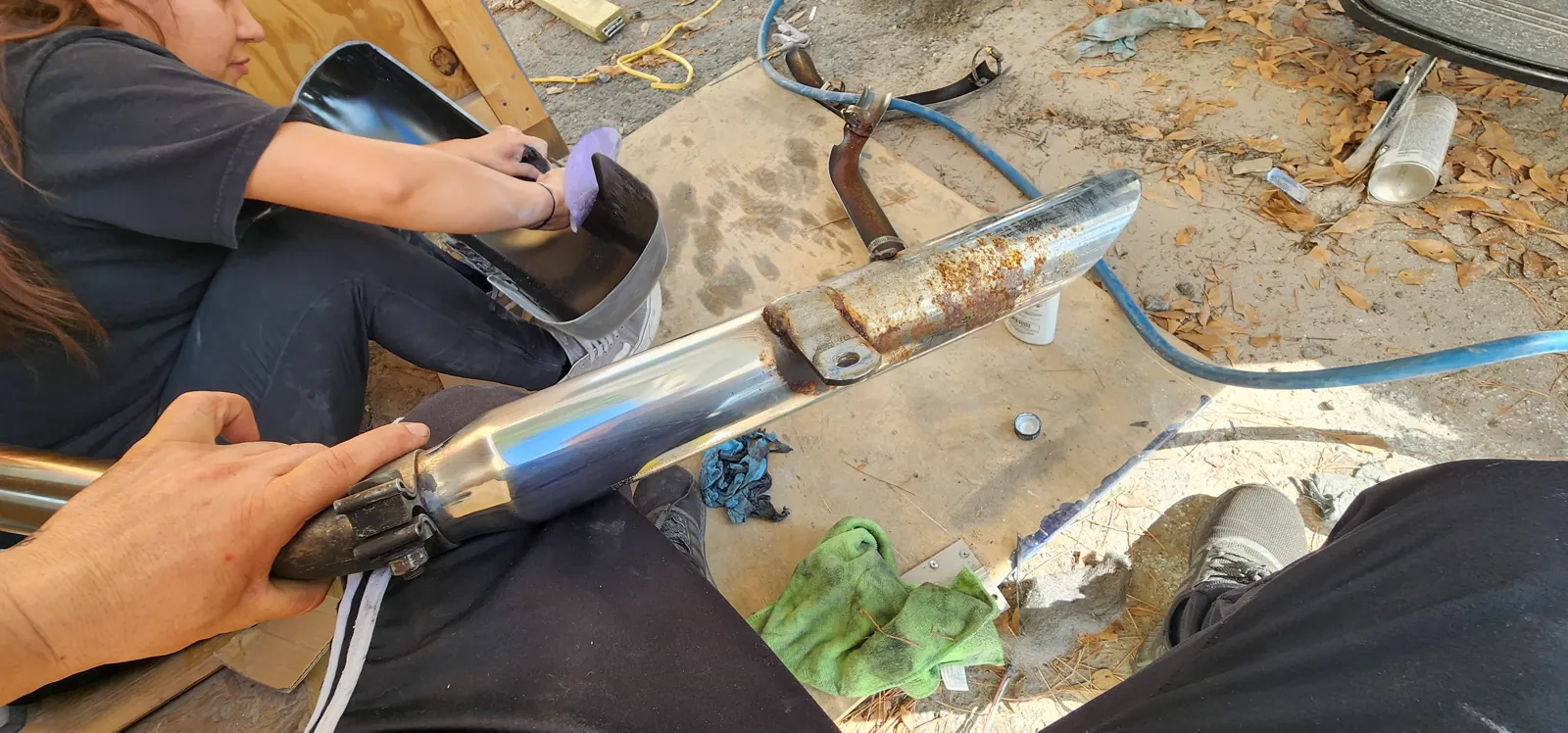
Now you know why we ask you to bring the bike in, or at least the tank and panels, before we talk numbers. It’s not a runaround. It’s the only honest way to price something that’s built out of hours. We’d rather look at your actual pieces, see what’s under the old paint, and tell you the truth than throw out a guess over the phone and surprise you later.
Guessing sight-unseen helps nobody. Quote too low and someone eats the difference, which usually means corners get cut on your bike. Quote too high and you walk away from a job we’d have loved to do. So we skip the guessing game entirely. You bring the parts, we look together, and you leave knowing the real scope. That’s how you stay in the driver’s seat.
For riders coming from farther out, we make the visit easy. We can pick up the whole bike, or you can just drop off the tank and panels, whichever fits your week. That flexibility is a big deal when your ride is your daily transportation and you can’t leave it parked for long. If you’re weighing a quieter, farther-out option, here’s the Woodstock side of things for a different corner of the metro.
The Part That Has Nothing To Do With Parts
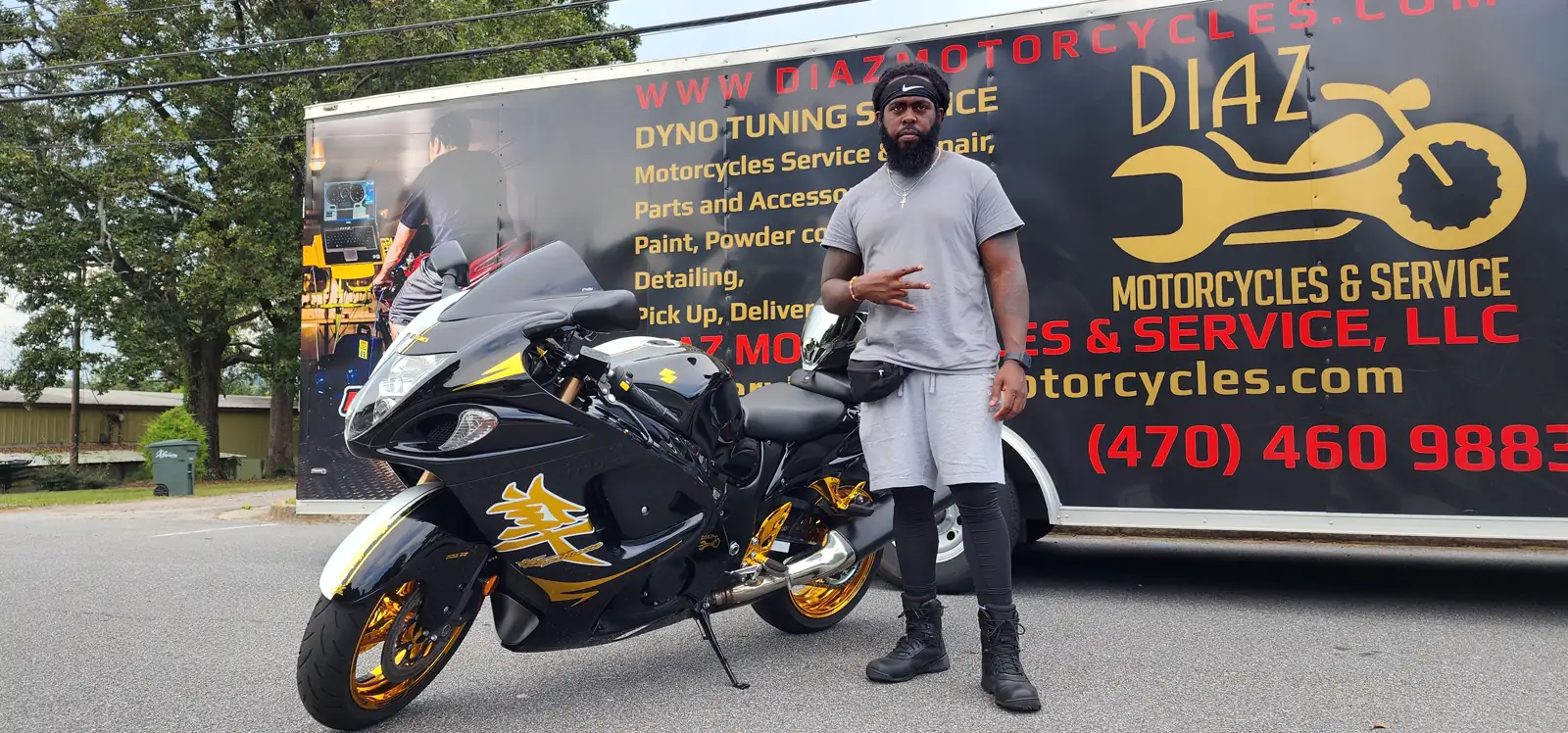
Now for the part that has nothing to do with parts at all. A custom paint job is the most personal thing you can do to a bike. An exhaust makes it louder and a tune makes it faster, but paint makes it yours. It’s the thing people see from across the parking lot before they ever hear the engine. It’s you, told in color.
We’ve watched friends we’ve helped stand in the doorway when their bike comes back, and the look on their face is the same every time. Quiet at first. Then a slow grin. They walk around it once, twice, tilting their head to catch the flake as it flashes in the light. That moment is why we do this. You can’t put a sticker on that feeling, and honestly, we wouldn’t want to try.
There’s a whole community out there that gets it. The folks over at the Motorcycle Industry Council track just how many riders keep joining the fold every year, and a big part of the pull is exactly this: a motorcycle is a machine you get to make personal. Paint is the loudest way to do it without making a sound.
Atlanta Riders, Atlanta Reality
In-town riding shapes what people bring us, and the city’s neighborhoods each have their own flavor. Over in West Midtown, the cafe racer and vintage-build crowd wants finishes that look like they rolled out of another decade. Buckhead’s cruiser and touring riders, up around the estates of Tuxedo Park near the Governor’s Mansion, tend to want deep, rich, showroom-clean color. It’s a fun range to work across.
The east side runs different. Around Old Fourth Ward, north of Freedom Parkway and east of Boulevard, from the MLK birth home district up to Ponce City Market, and over in Inman Park with its Victorian streets, you’ll see more small-displacement bikes and sportbikes because the tight grid rewards them. A rider grabbing coffee at Krog Street Market, the old 1920s warehouse food hall off the Eastside Trail, might roll up on something nimble with a fresh custom tank. Down by Georgia Tech, straddling North Avenue, the scooters and little bikes get personalized too.
Getting to us is easy from any of it. From Buckhead you’re looking at roughly 13 miles and 20 to 30 minutes, and from Old Fourth Ward it’s closer to 18 miles and 30 to 45, with peak traffic adding a chunk on top. A rider might drop panels off, then make the reverse commute up I-75 to East Cobb mid-morning, running against the inbound wave and beating the worst of it. Or you cruise Moreland Avenue, the US 23 artery threading Little Five Points, Reynoldstown, and East Atlanta, and just meet us here. Either way, the parts come to the booth.
Plenty of riders assume their only options are the big dealers, like Atlanta Harley-Davidson out on Thornton Road in Lithia Springs, with its rider academy and group rides. Those are great for a lot of things. Real in-house custom paint, done under one roof by the same crew, is a rarer bird, and it’s exactly the corner we’ve built our name on. If you’d rather read how a full job comes together step by step, here’s how we handle that job from start to finish.
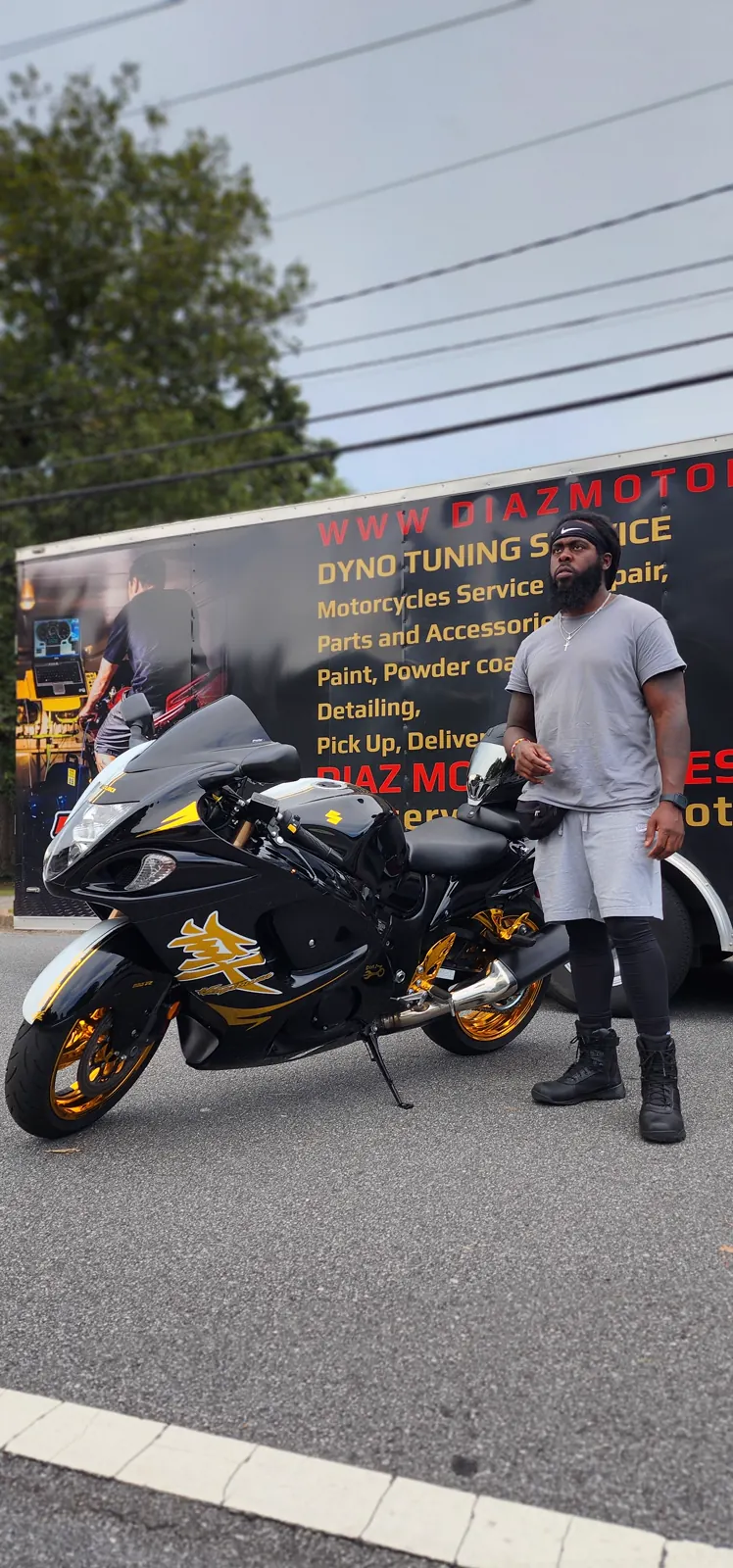
Walking Away In Control
So the next time you’re on the couch at nine at night, typing that question into your phone, you’ll read the search results differently. You’ll know the price is built out of hours, not cans. You’ll know prep is where the real work hides. And you’ll know that a shop asking to see the bike first is doing right by you, not dodging you.
That’s the whole point of understanding the custom paint cost Atlanta shops charge: you stop feeling at the mercy of a mystery number and start making a clear, confident call about your own machine. When you’re ready to talk it through with real people who love this stuff, we’re right here, and we’ll give it to you straight.
BRING THE PARTS, GET THE TRUTH
Drop off your tank and panels or let us grab the whole bike. We’ll look together, tell you the real scope, and you’ll leave knowing exactly what you’re getting. No blind guesses, ever.
Questions Atlanta riders ask us
Does the type of bike change the work?
Yes, more than you’d think. Some bikes give up their tank and panels in minutes, while others need gauges, trim, and wiring pulled just to reach the piece. More stuff in the way means more careful hands-on time, and that time is the biggest part of any paint job.
What if you find something else once the old paint is off?
It happens, and it’s actually why we strip before we finalize anything. Hidden dents, rust, or an old crash repair can hide under paint. We’ll always call you and talk it through before we do a bit of extra work, so nothing is ever a surprise.
How do I avoid surprises on the final price?
Bring the bike or the parts in so we can see them in person. When we look at the actual pieces and check what’s under the old finish, we can tell you the real scope up front. Surprises almost always come from someone quoting blind over the phone.
What makes one paint job bigger than another?
A few clear things: how many pieces are getting painted, whether you want a solid color or candy and metallic layers, how much airbrush art or pinstriping is involved, and how much bodywork the panels need first. Matching a repair to existing paint is one of the trickiest jobs of all.
Why can't you just quote it over the phone?
Because paint is built out of hours, not out of parts, and we can’t count the hours without seeing the work. Quoting blind either shortchanges the job or overcharges you, and neither is fair. Looking at your bike in person is the only honest way to price it.
I live pretty far out. Do I have to ride it over?
Not at all. We can pick up the whole bike, or you can simply drop off the tank and panels, whichever fits your schedule better. That way your daily ride isn’t stuck in a booth for longer than it needs to be.
We paint for riders all over the metro, from Buckhead and Midtown down through Decatur and East Point, and out to Sandy Springs, Brookhaven, and Chamblee on the north side. Folks roll in from Smyrna, Vinings, and Mableton just west of us, and from Tucker over on the east side too. And of course we’re right here in Marietta, so wherever you park your bike, the booth isn’t far.
LET'S TALK ABOUT YOUR BIKE
If you’re an Atlanta rider who’s been dreaming about a fresh custom finish, stop guessing at the number and let’s look at it together. Text us a photo of your bike and what you’ve got in mind, and we’ll walk you through the real scope, plus pickup if you’re farther out. No pressure, just straight answers from people who love this work.
470-460-9883Diaz Motorcycles and Service, LLC · 847 Barnes Mill Road, Marietta, GA 30062