Custom Paint Cost Dallas — What Really Drives It
A straight, no-runaround look at what a real custom paint job takes, and why an honest shop won't hand you a number before it sees the bike.
What’s more, you walked into a shop, pointed at your tank, and asked one simple question. After that, what came back was not an answer. It was a look. Also Maybe a sigh, maybe a number tossed out so fast it felt like the guy just wanted you out the door. If you have ever tried to nail down custom paint cost Dallas riders can actually trust, you know that feeling in your gut. Here is the good news. Instead a real answer exists, and it is not some big secret. Besides it just takes someone willing to slow down and walk you through it.
Actually we are Diaz Motorcycles, and we paint bikes in our own booth over in Marietta. Not a partner down the street. That’s why not a car body shop that squeezes in a tank on the side. Either way our booth, our hands, start to finish. So when a rider from Dallas in Paulding County asks us what a job runs, we do not brush it off. We explain it. That is the whole point of this post, and by the end you should feel a lot calmer about the question you were made to feel silly for asking.
First, let's name why that shop made you feel small
Here is the honest reason a shop answers a paint question with a shrug. Most shops do not paint. They send it out to someone else. So your question makes them a little uncomfortable, because they truly do not know the answer. They are the middleman, and the middleman hates being asked how the work actually gets done. It is not you. It is them.
Paulding County makes this worse than most places. There is no full-line motorcycle dealer in the whole county, and no in-house paint booth anywhere near you. So riders in Bentwater and out by Edenwood near the Cobb line have gotten used to being told “we’ll have to send it off” and then handed a guess. When nobody local does the real work, nobody local can explain the real price. That gap is exactly why we lead with paint. Instead of a mystery number, you are about to learn what makes one job small and another job big, and once you see it, no shop can talk down to you again.
What actually drives the price of a paint job
Think of a paint job as two buckets. One bucket is parts. The other is labor. The parts bucket is the smaller one, and it is the part people fixate on. Paint, primer, clear, tape, sandpaper, filler. That stuff matters, but it is rarely what makes your bill move. The bucket that moves the needle is labor, and labor means time, and time means access.
Access is the word that shop never said to you. Access means how much has to come apart to reach the surface. A bare tank on a bench is easy. That same tank still bolted to a full bagger, wrapped in trim, cables, and a seat, is a different story. Somebody has to pull it, mask it, and put it all back without a rattle. That is time, and time is where a paint job grows or shrinks.
Prep is the other giant. Most riders think spraying color is the job. It is not. Prep is the job: sanding, straightening, filling a ding, feathering an old chip so it disappears under new color. A finish is only as good as what is under it. Rush the prep and you will see every flaw the day the sun hits it. Do it right and the paint looks like glass. For a deeper walk-through of the craft itself, this post on what that service actually involves lays it out step by step.
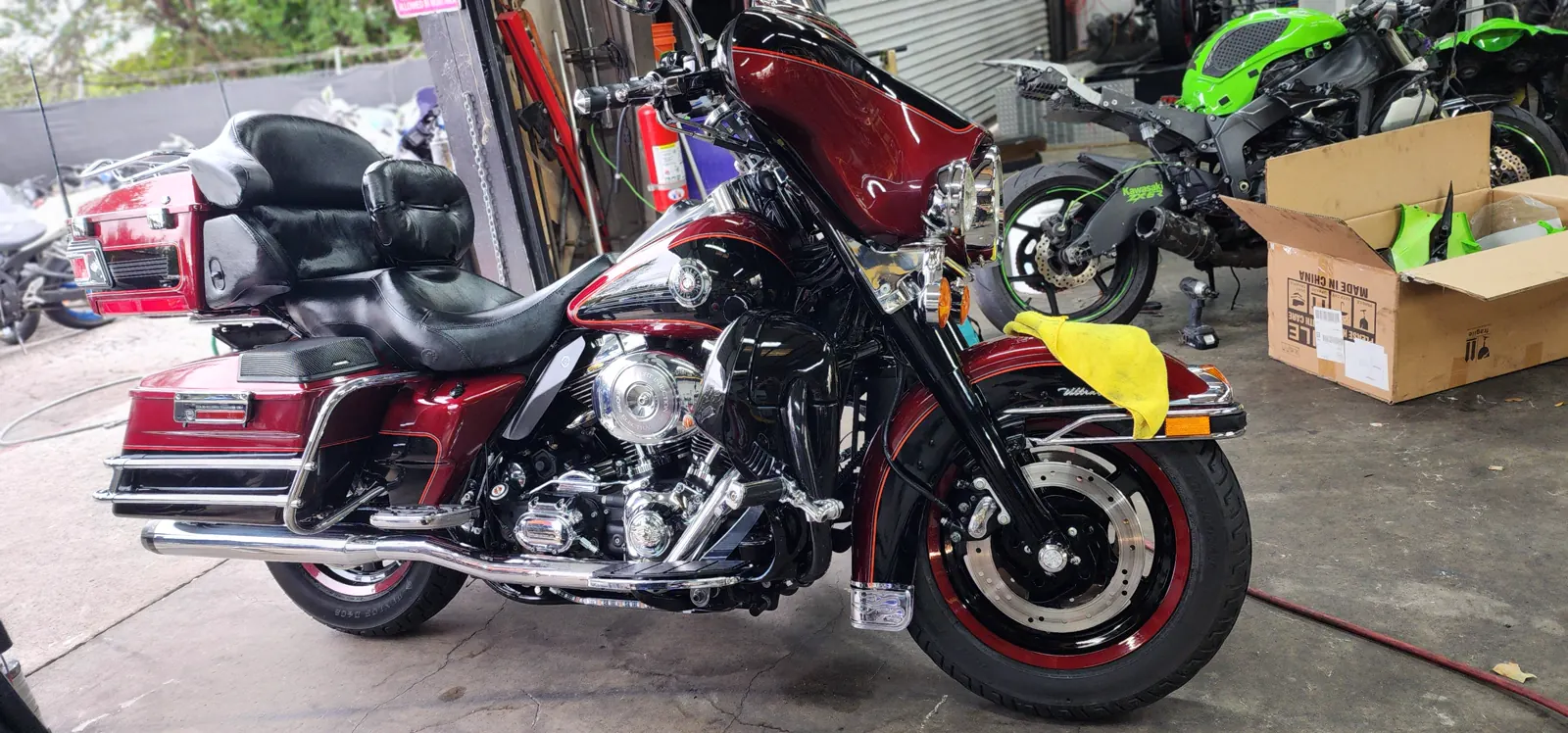
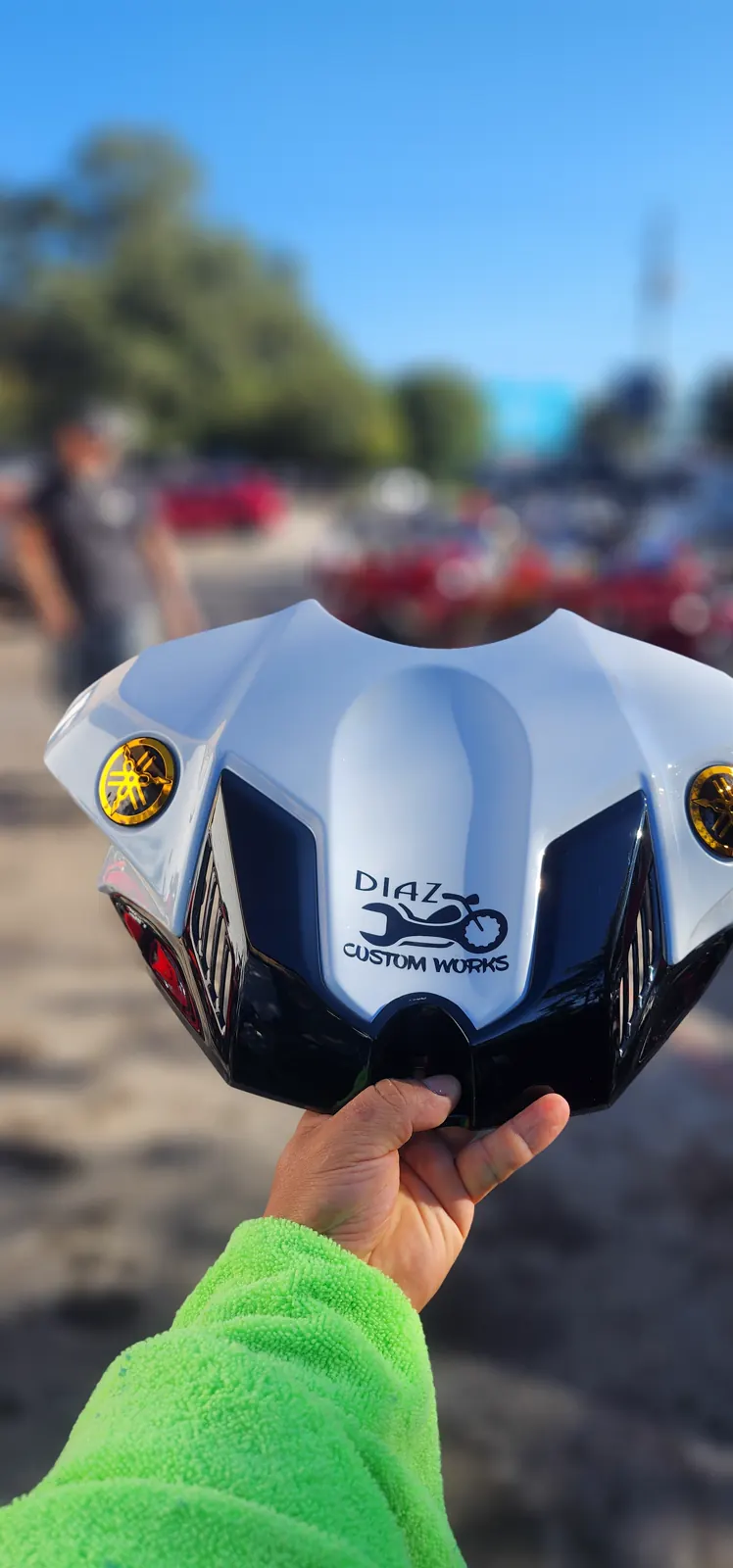
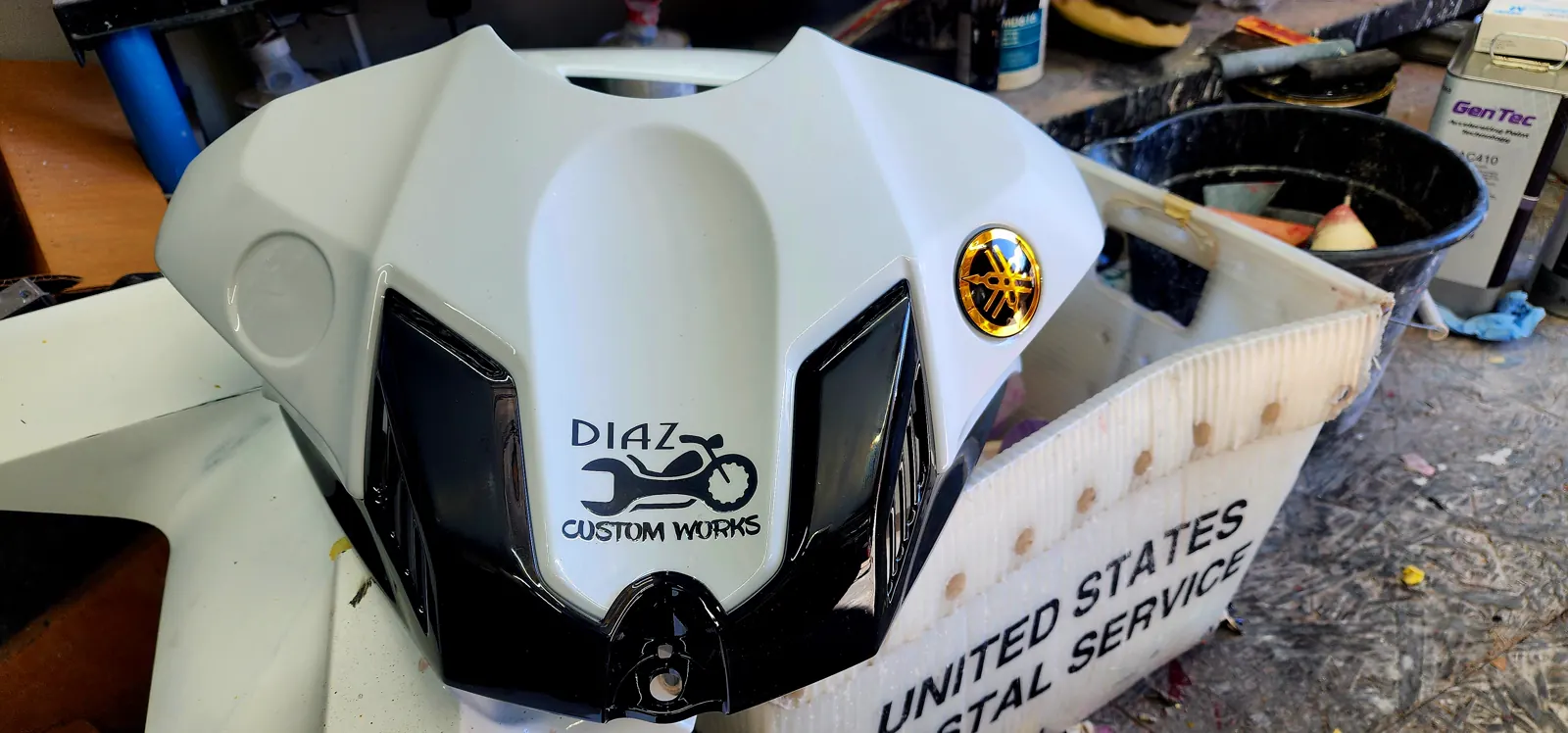
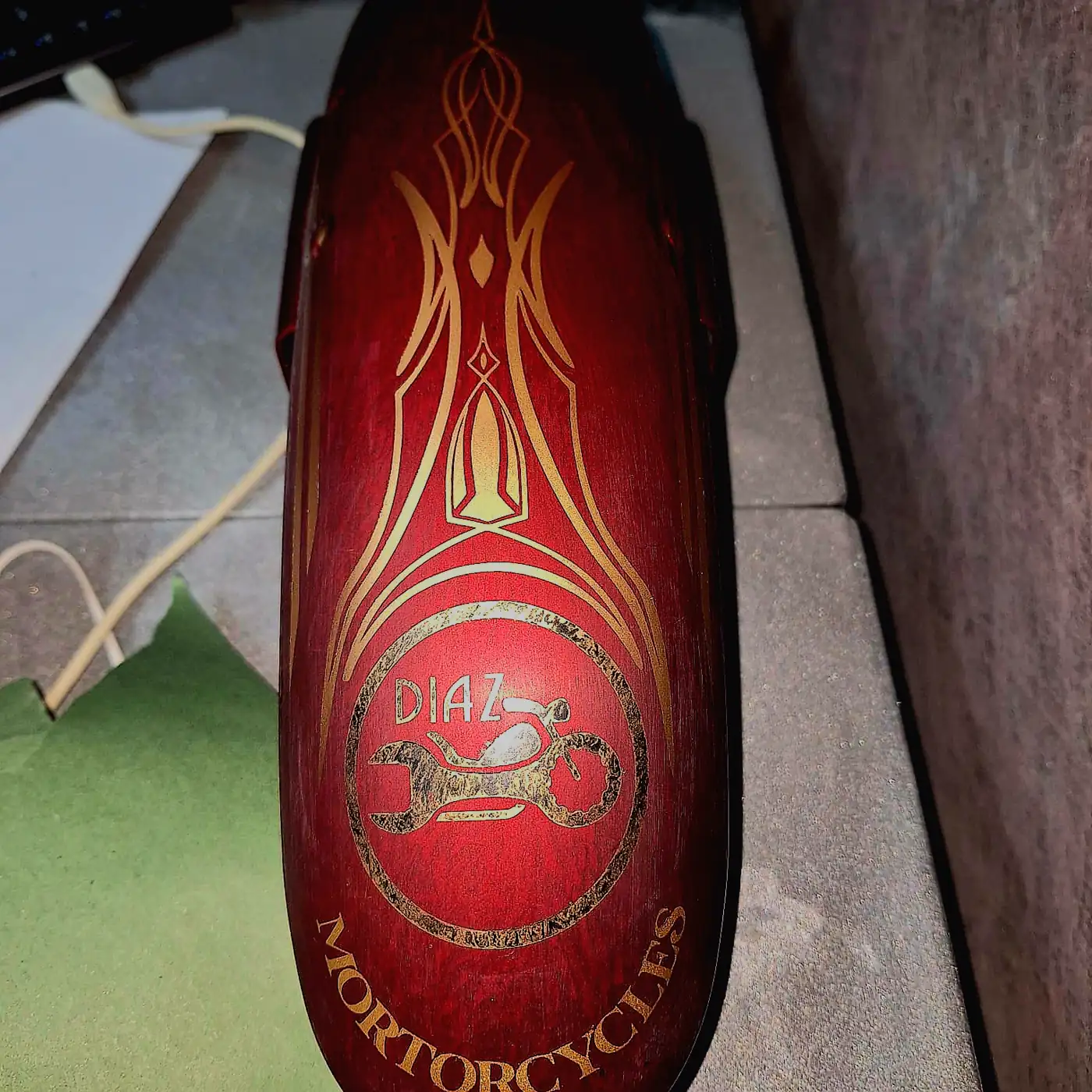
Now add the design itself. A single solid color change is one thing. A candy finish that glows red over a black base is another, because candy is layered, and every layer has to lay down clean before the next one goes on. Metallic flake catches light in a way flat color never will, but flake wants a steady hand and patience. Airbrushed graphics, a mural down the tank, gold pinstriping along an edge, all of that is hours of skilled handwork, not a can off a shelf. So the size of a job comes down to three things stacked together: how much has to come apart, how much the surface needs before color, and how detailed the design is. None of it is a mystery once someone shows it to you.
How we figure out your bike, not a bike like yours
When your bike rolls into the booth, we do not start spraying. We look. We run a hand over the tank and feel for waves and old repairs, then check the panels and fairings for cracks and stress spots. A round cruiser tank and a sharp sportbike fairing take color differently, and we plan for that before a single drop goes on.
Before we go further, one thing worth clearing up. A lot of folks think a good quote is a fast quote. It is the opposite. A fast number, tossed out before anyone touched the bike, is a guess dressed up to sound confident. A real number comes from someone actually looking at your metal. When we take a little time up front, we are not stalling. We are making sure the price we say is the price you pay, with no ugly surprise halfway through.
That look-over is also where we catch the stuff you cannot see. Filler from an old repair that reacts with new clear. A dent pushed out but never leveled. Finding that on day one is a gift. Finding it after color is on is a headache nobody wants.
The process, start to finish, in plain words
Here is what a real custom job looks like from the first bolt to the last buff. None of it is complicated to follow. It just cannot be rushed, and once you see the order, you will understand why time is the honest cost.
- Teardown. We pull the parts that need paint clear of cables, trim, and hardware so every surface is reachable.
- Bodywork and prep. We straighten, fill, and sand until the surface is dead-flat. This slow part decides how good the finish looks in a year.
- Base coat. Color goes down in even layers over primer. Candy and metallic finishes build here, one careful pass at a time.
- Graphics and stripes. Airbrushed art, murals, and pinstriping get laid in by hand while the base is ready.
- Clear coat. Several coats seal everything, give the paint its depth, and protect it from sun, weather, and road grime.
- Cure, sand, and buff. The clear cures, then we wet-sand and polish it to that wet, glass-like shine, and reassemble the bike.
Notice how much of that has nothing to do with spraying color. The teardown, the prep, the cure time, the final polish, that is where the hours live. A shop that skips steps can hand you a lower number and a finish that dulls by next summer. We would rather do it once and do it right. Your service page has more on exactly what we take care of here, from full color changes to matching a repair into your existing paint.
That last one, matching a repair, is its own skill. Say you cracked one fairing. Blending fresh color into old, sun-faded paint so the fix disappears is actually harder than painting the whole bike one color, because paint fades as it ages and we have to tint and blend to meet what is already there. It is fussy work that separates a shop that paints from a shop that sends it off.
Why we won't quote it blind, and why that's good for you
There’s a reason we bring this up on nearly every intake. A rider will call and ask for a number over the phone, sight unseen, and we have to gently say no. Not because we are hiding anything, but the exact opposite. A blind number is how people get burned. This is the honest truth behind custom paint cost Dallas riders keep getting mixed answers about: give someone a phone quote and one of two bad things happens. Either you pad it high to cover the unknowns, which is unfair, or you lowball it and come back later with bad news. Neither one is honest.
So when we say “bring it by or send us photos and let us see it,” that is us protecting you, not dodging you. The riders we have helped who were burned before almost always got burned by a fast number that grew later. We would rather show you the bike, point at the spots that add work, and let you decide what you want and what you can skip. You stay in control the whole way.
You are welcome to shop this around, and you should. The the American Motorcyclist Association has good general guidance on caring for and customizing your bike. Just watch for the tell we started with. If a shop gives you a firm price before it looks at your bike, ask yourself how it can possibly know. And riders over in Atlanta run into the same thing, so this is not a Paulding-only problem.
Getting your bike here from Dallas, GA
Now for the part that makes Paulding riders hesitate, the drive. We get it. You are out west of the metro, and Marietta feels like a haul. Here is the reassuring truth. It is a straight shot. Most of the ride from Dallas, GA to our shop runs about 24 to 28 miles, roughly 40 to 50 minutes, out GA-120 and Charles Hardy Parkway onto Dallas Highway east through West Cobb. In a driving county where the average commute already runs close to 40 minutes, that is not a long trip.
And you may not need to bring the whole bike at all. For a lot of jobs, all we really need is the tank and the panels. You can pull those in an afternoon and drop them off, or we can arrange pickup and delivery of the parts or the whole bike. For riders in Creekside Golf and Country Club and the newer streets toward the Cobb line, that turns a supposed hassle into a non-event. You keep riding your local roads while your paint gets done right.
Speaking of local roads, that is really where a fresh paint job earns its keep. The rural west-side two-lanes toward Yorkville, Braswell, and the Polk line are some of the best low-traffic, curvy riding in the metro, and there is nothing like carving them early on a bike that turns heads at the next stop. You could ride out past Pickett’s Mill Battlefield State Historic Site, one of the best-preserved Civil War battlefields in the country, or point it up toward Allatoona Pass Battlefield on the Bartow side and make a morning of it.
If comparing your options matters to you, and it should, know what is actually near you. Atlanta Harley-Davidson down on Thornton Road in Lithia Springs is about 35 to 45 minutes south if you want a dealer point of reference. But for real in-house custom paint, there is simply nothing local, which is the honest reason Paulding riders end up pointing the bike toward Marietta in the first place.
What you walk away with
When the job is done, you get your bike back with a finish that looks the way you pictured it and holds up. Depth you can see into. Flake that wakes up in the sun. Stripes and edges that are crisp because a person laid them, not a machine. And you get it from someone who told you the truth about the price from the start, which honestly might be the best part.
THE ONE THING TO REMEMBER
A firm quote before anyone looks at your bike is a red flag, not a favor. A fair price comes from a shop that puts eyes and hands on your metal first. That is not stalling. That is respect.
A custom paint job is the most personal thing you can do to a bike. Nobody else on GA-92 has your exact color, your exact lines, your exact bike. It is worth doing with someone who treats your question like it deserves a real answer, because it does.
You were never asking a dumb question. You were just asking the wrong shop.
So if you left another shop feeling brushed off, let that go. You know now what drives the price, how the work really flows, and why a straight answer takes a look at the bike. The riders who read the full rundown on it in Acworth tend to walk in already knowing what they want. One quick note on the boring stuff too: if a color change is dramatic enough, keep your registration paperwork with the Georgia Department of Revenue in mind, since your bike may simply look like a different machine.
Questions Dallas riders ask us
Is a paint job mostly the cost of the paint itself?
No, and that surprises a lot of folks. The paint and supplies are the smaller piece. The bigger piece is labor, which means the time to take parts off, prep the surface, lay the color, clear it, cure it, and buff it. Prep alone can be the longest step, because it decides how good the finish looks a year later.
Does the type of bike change the work?
It does. A bike with a lot of bodywork, like a full bagger wrapped in trim and cables, takes more time to reach and reassemble than a stripped-down standard. Sportbike fairings and round cruiser tanks also take color a little differently, so we plan for the shape you have. More parts to remove and refit usually means more labor.
What if you find something once you start?
That is exactly why we look the bike over before we quote. We catch old filler, hidden dents, or a past repaint up front, on day one, so there are no surprises later. If something does turn up mid-job, we stop and talk to you before we spend a dime of your money. You stay in control of every decision.
How do I avoid getting hit with surprise charges?
Simple. Do not accept a firm price from anyone who has not seen your bike. A blind phone quote is a guess, and guesses grow. When we put eyes and hands on your metal first, the number we give you is the number you pay. Bring the bike by, or send us clear photos, and let us actually look.
What makes one paint job bigger than another?
Three things stacked together. How much has to come apart to reach the surface, how much straightening and prep the surface needs, and how detailed the design is. A solid color change is on the small end. Layered candy, metallic flake, airbrushed murals, and hand pinstriping all add skilled hours. The look you want tells us most of the story.
Do I have to bring the whole bike from Dallas, GA?
Often, no. For many jobs we only need the tank and panels, which you can pull in an afternoon and drop off. We can also arrange pickup and delivery of just the parts or the whole bike. The ride from Dallas in Paulding County is a straight shot to Marietta, and it depends on the work how long we keep it, so we will tell you up front.
We paint bikes for riders all across the western arc of metro Atlanta. That means Dallas and Hiram in Paulding County, plus Powder Springs, Acworth, and Kennesaw to the east, Douglasville and Villa Rica to the south, and Cartersville, Rockmart, Taylorsville, Braswell, and Yorkville out toward the Polk line. Marietta is home base, and it sits a straight shot east of Dallas, so wherever you ride from, getting your tank and panels to our booth is easier than it looks.
STRAIGHT ANSWERS, NO RUNAROUND
If a shop ever made you feel small for asking about paint, come see how it should go. Text us a few photos of your bike from Dallas, GA and tell us the look you want. We will walk you through what drives the price, honestly, and we can even grab the tank and panels so you barely lose a riding weekend. No blind quotes, no attitude, just a real answer from the shop that paints in its own booth.
470-460-9883Diaz Motorcycles and Service, LLC · 847 Barnes Mill Road, Marietta, GA 30062