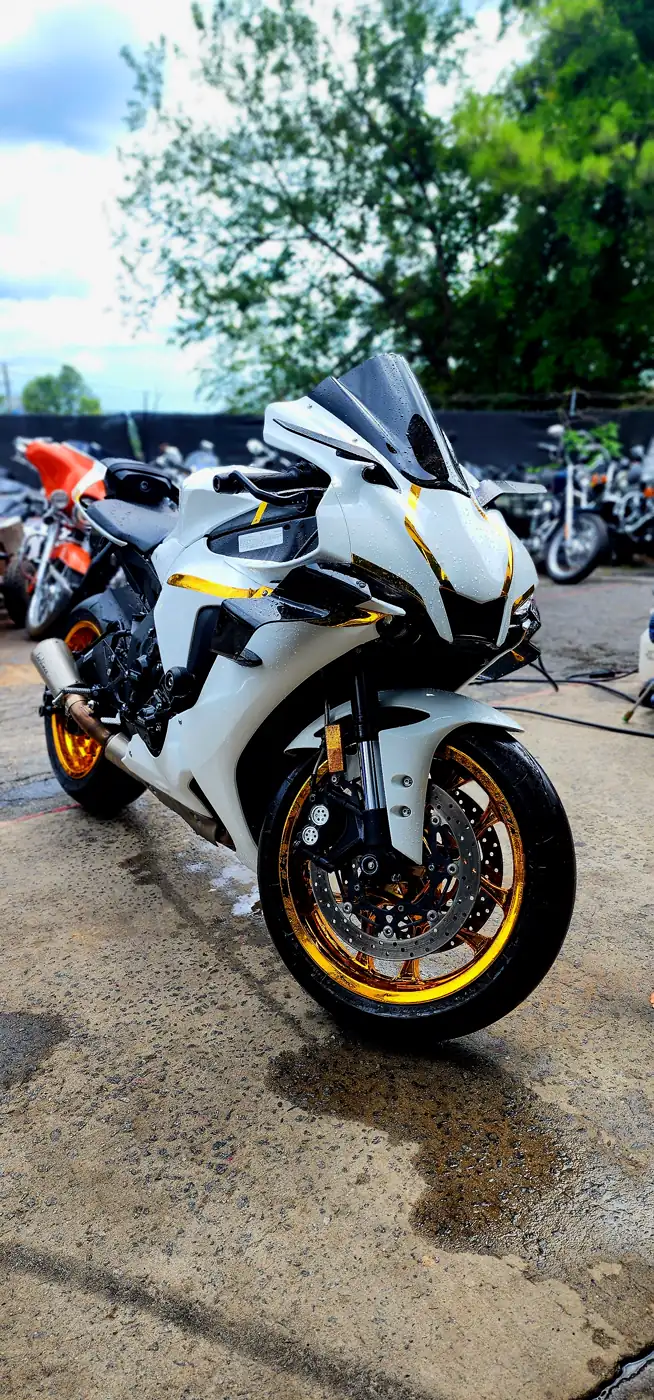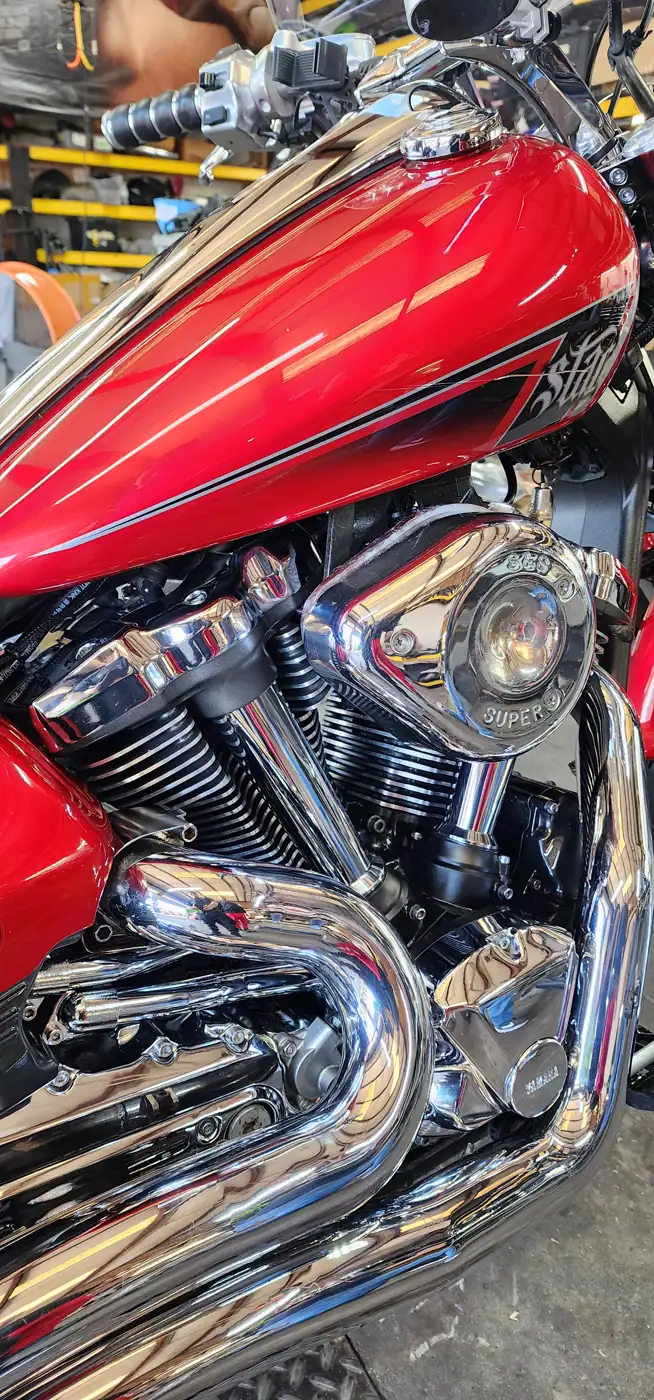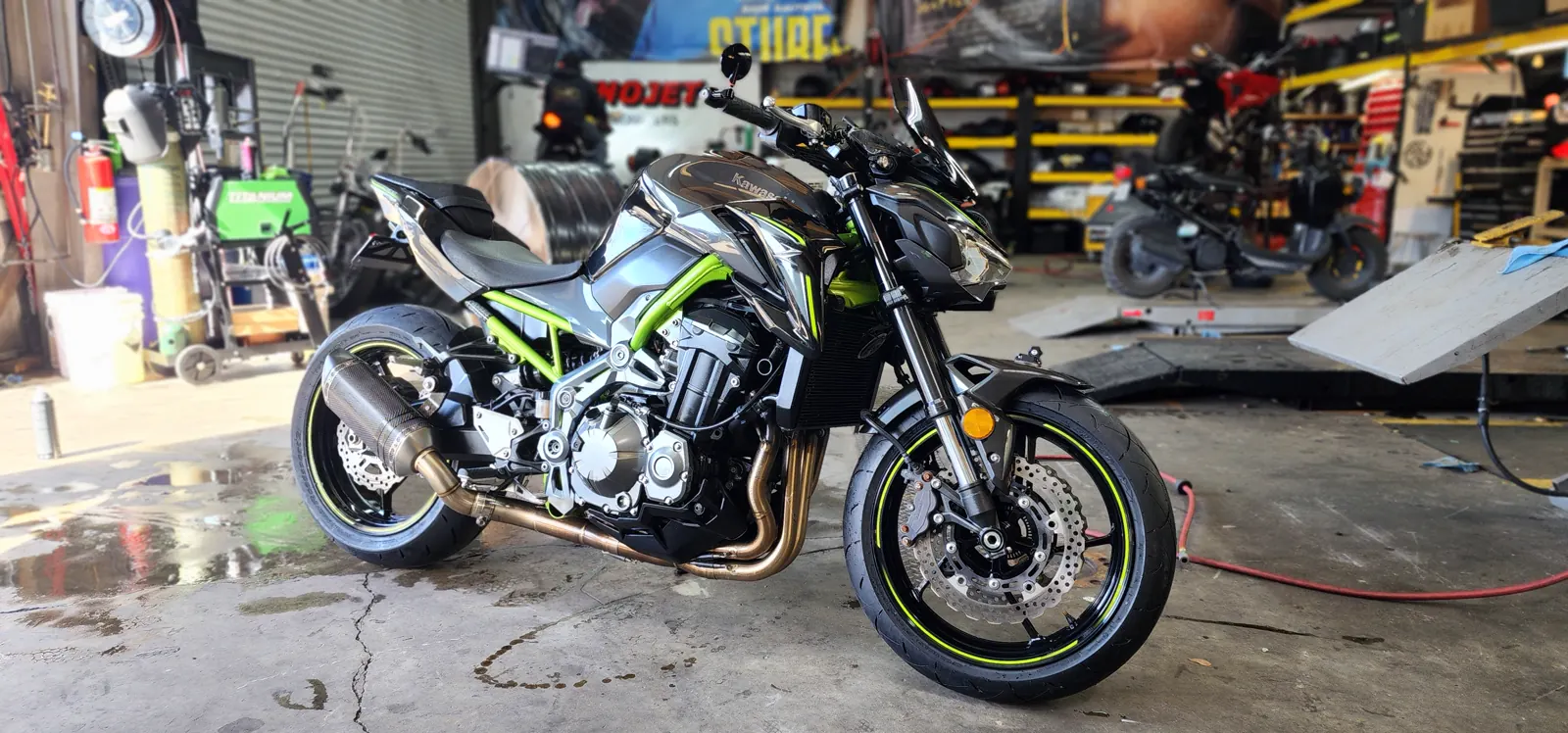
Motorcycle Detailing Cost in Woodstock: What Really Drives the Price
A wash gets the dirt off. A real detail is a different animal — here's what shapes the work, and why we never guess a number sight-unseen.
On the other hand the first time you swing a leg over a big adventure bike, it starts teaching you its habits. It picks up bugs on the highway like a magnet. Water spots show up after every rinse, and road grime hides in places you didn’t know a bike had. A rider new to this kind of machine learns fast that keeping it looking sharp is a whole different sport. That’s usually the moment folks start typing “motorcycle detailing cost Woodstock” into their phones — and the honest answer is that it depends on the bike in front of us.
Maybe you traded up from something smaller. Maybe this is your first proper touring machine, or your first adventure bike bought to chase the mountains. Either way, the bike has habits you’re still learning, and one of them is that a beautiful finish takes real work to keep. A quick garden-hose rinse in the driveway feels like plenty, yet a week later the tank looks dull and the wheels wear a gray film. So the good news? None of that is your fault, and all of it is fixable.
We hear from a lot of riders in Towne Lake Hills and Bradshaw Farm who keep their bikes in clean two- and three-car garages, do their own oil changes, and still can’t get the paint to pop the way it did on the showroom floor. That’s normal. There’s a real gap between washing a bike and detailing one, and understanding that gap is the key to understanding the price.
A wash and a real detail are not the same job
A wash gets the loose dirt off, and that’s about it. Soap, water, rinse, dry — you’re clean for the ride to Downtown Woodstock and back. A real detail is a different animal. We’re pulling grime out of every seam, correcting the paint, polishing the chrome until you can read a license plate in it, then sealing the whole thing so it stays that way. One takes a few minutes. Still, the other can take the better part of a day, and that time is most of what you’re paying for.
Here’s the part that trips people up. Detailing is almost all labor. Unlike an engine repair, there are rarely parts to buy — no gaskets, no filters, no seals. Instead, what you’re paying for is skilled hands and hours, plus the materials that get used up along the way: clay, polish, pads, coatings, and a lot of elbow grease. So it’s also why any honest look at motorcycle detailing cost Woodstock has to start with your specific bike, not a generic chart. Plus, the real question underneath is simply how much labor the machine needs.
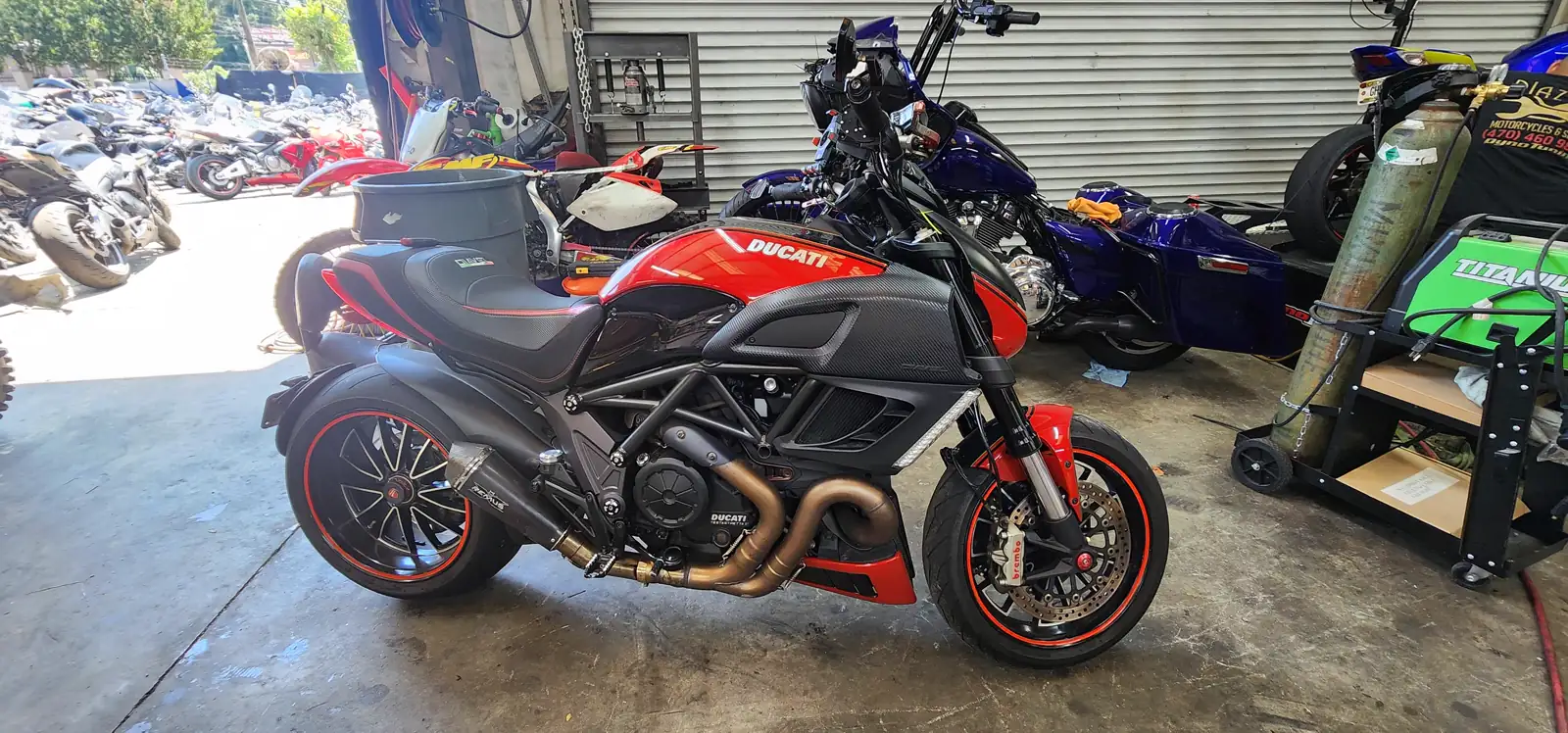
What Georgia does to a finish
Our weather is tough on paint, and it’s sneaky about it. Summer heat bakes bug guts onto the leading edges until they start eating into the clear coat. Humidity keeps everything damp, which is a good friend to corrosion. Spring pollen coats every surface in yellow grit that scratches when you wipe it wrong. On top of all that, our hard water leaves mineral spots a normal wash simply won’t touch.
Then there’s how folks ride around here. Woodstock sits right on the on-ramp to the good stuff — a weekend run up I-575 north to GA 515, the Appalachian Highway, and you’re carving real mountain roads within the hour. That’s the dream, and it’s also a bug buffet, a gravel shower, and a tar-snake gauntlet all at once. Bikes here rack up hard miles in bursts, then sit for a few weeks. Fun for you. Character-building for the paint.
None of this means your bike is doomed, though. It just means the finish needs more than a rinse to bounce back, and that’s exactly the work a detail is built to do. Meanwhile, the finish comes back, and so does that little grin you get looking at it.
The options, from a quick rinse to a full coating
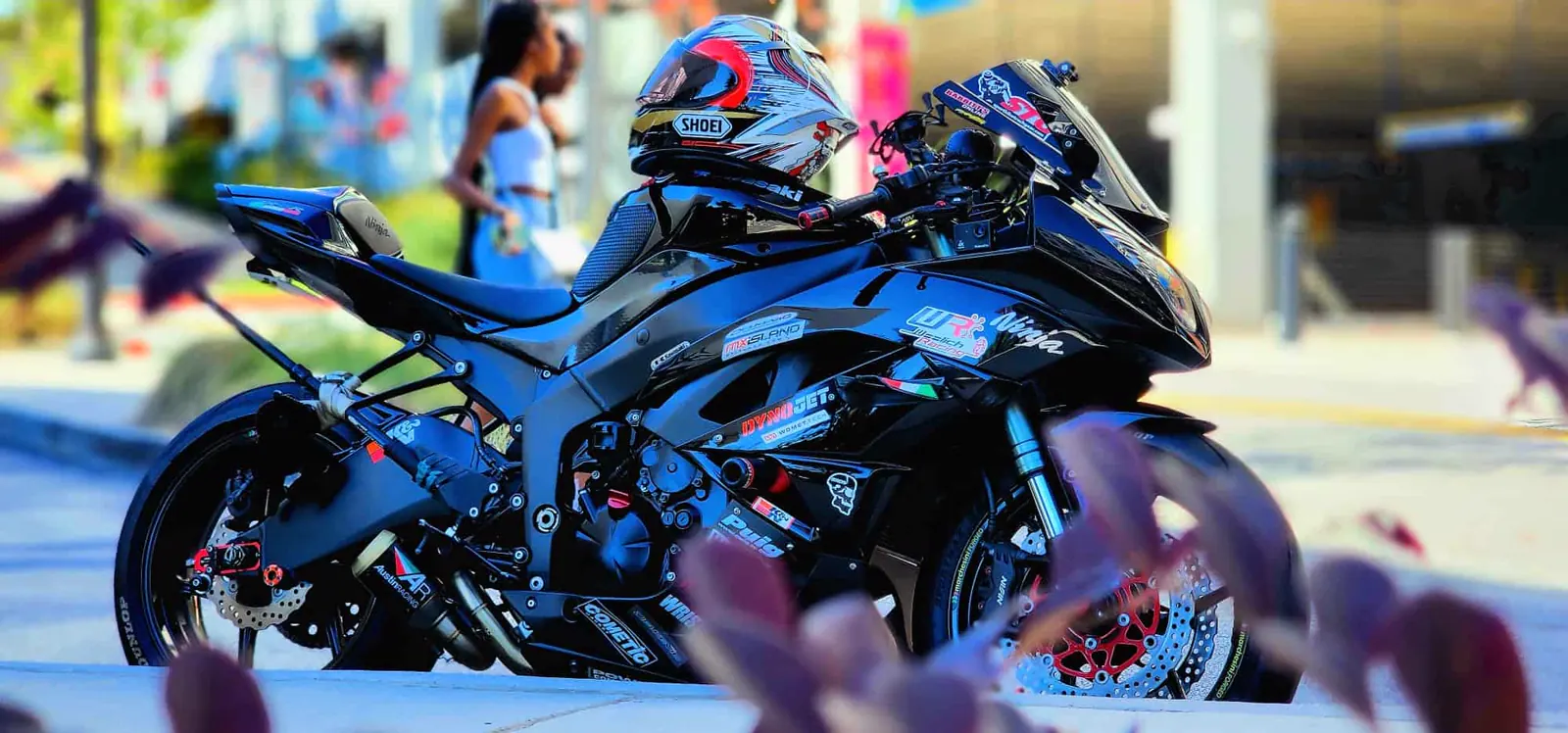
When your bike rolls in, we look at where it’s at and match the work to it. The menu runs from light to deep, and most riders land somewhere in the middle. A maintenance wash with a quick coat of protection is the light end — great for a bike that’s already in good shape and just needs the road knocked off. A full detail is the meat of it: deep cleaning, decontamination, a machine polish, and fresh protection. Paint correction is the deep end, where we chase out swirls and light scratches to bring back gloss and depth. A ceramic coating is the long-game add-on that locks in the shine and makes future cleaning easier.
Here’s where it gets interesting — and where most advice online falls apart. Two bikes can look about the same in a phone photo and still need wildly different work. One has light dust and needs an afternoon. The other has years of swirl marks from being wiped with a dry rag, faded trim, and hard-water spots baked in by the sun. Same model, totally different job. That’s why a number you found on a forum for someone’s bike three states away tells you almost nothing about yours.
What a full detail actually looks like, start to finish
- Pre-rinse and soak to lift the loose grit, so nothing gets dragged across the paint.
- Bug and tar removal on the leading edges, plus a wheel and engine-bay clean where the ugly stuff loves to hide.
- A proper hand wash with the right soap, then a careful dry to beat water spots before they set.
- Clay-bar decontamination to pull out bonded grime and mineral deposits you can feel but not see.
- Machine polishing — the paint-correction step — to cut swirls and light scratches and wake the gloss back up.
- Chrome and metal polishing until the reflections turn sharp enough to shave in.
- Leather and vinyl care for seats and bags, plus plastic and trim restoration so faded pieces look rich again.
- Protection last — a sealant, wax, or ceramic coating — to guard every hour of work underneath it.
- A final inspection in strong light, because the sun shows everything we might have missed.
Every one of those steps takes time, and some bikes need more of certain steps than others. A bagger loaded with chrome and hard bags is a lot more surface to cover than a stripped-down naked bike. Access matters too. The more bodywork we have to remove to reach hidden grime, the more hands-on hours the job takes — and labor time, not parts, is the thing that moves the number.
About ceramic coating — what it is and what it isn't
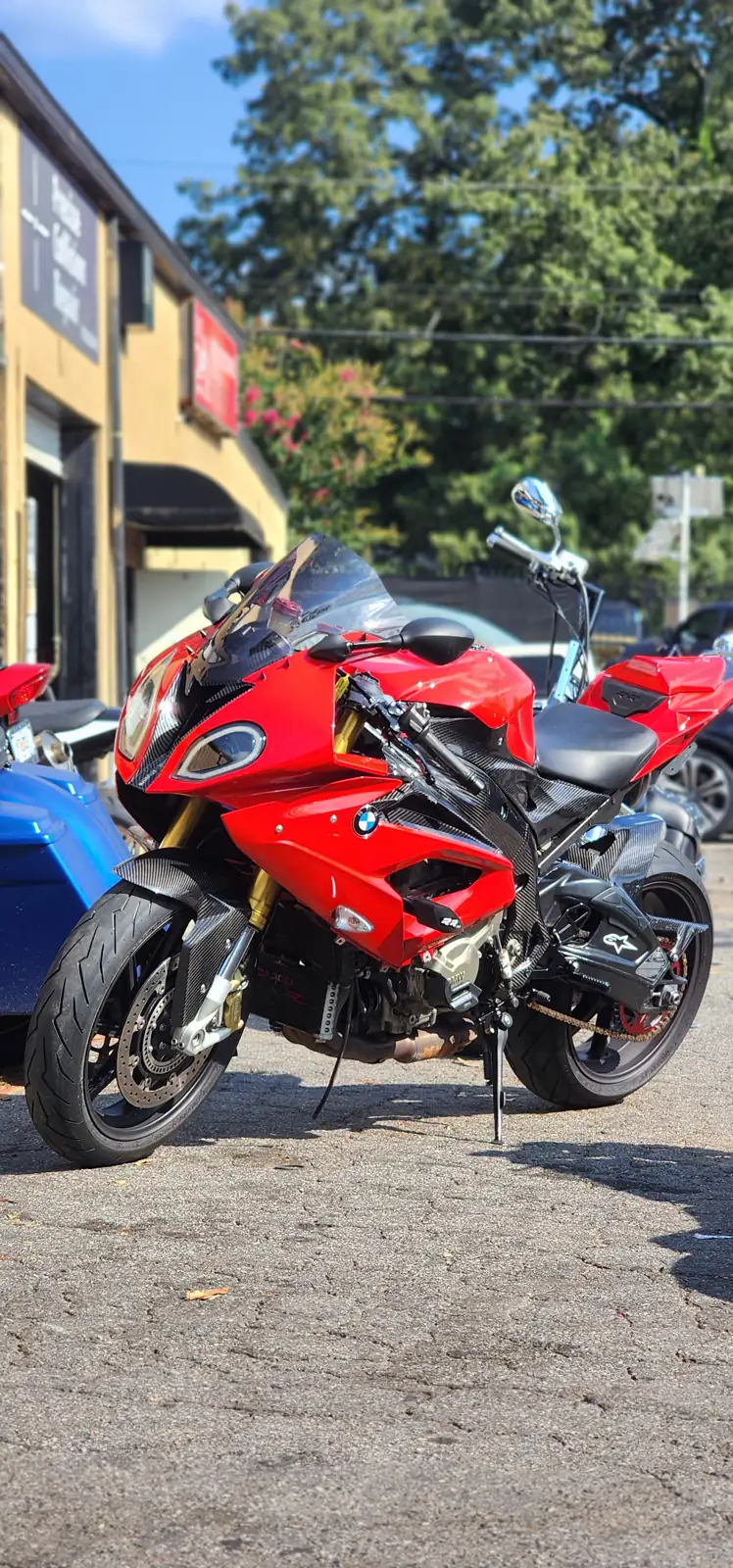
Ceramic coating gets talked up like magic, so let’s keep it honest. A coating bonds to the clear coat and adds a slick, glassy layer that beads water, shrugs off pollen, and makes washes faster. The tank feels like glass under your palm, and dirt has a hard time hanging on. That’s the real benefit, and it’s a good one for a bike that lives through Georgia summers.
What a coating is not is a force field. It won’t stop a rock chip, and it won’t make the bike scratch-proof — anyone who tells you different is selling something. A good coating lasts years, depending on care, but it still wants regular gentle washing to do its job. If you’re weighing a coating against a good wax or sealant, we broke down the tradeoffs between them so you can choose with clear eyes.
So why won't an honest shop just quote it over the phone?
Because we haven’t seen the bike yet, and guessing does you no favors. Swirl depth, oxidation, how the last owner cared for it, how much bodywork has to come off to reach the grime — none of that shows up over the phone. A shop that fires off a firm number sight-unseen is either padding it to stay safe or setting you up for a “well, actually” moment when you arrive. Neither is how we treat friends we’ve helped.
What we can do is talk through your bike, look at a few photos, and give you an honest range with a plan. Then we confirm it in person before any real work starts, so nobody’s surprised. If you want a feel for the steps and standards first, take a look at how our crew approaches it before you ever drop off the keys.
This isn’t unique to us, or to one town, by the way — it’s just how careful detailing works everywhere. If you like seeing the same idea in a different place, here’s how this plays out in Mableton with the same honest approach. And for a bike that needs more than a detail — a truly tired finish, or an older machine you want brought back — detailing shades into restoration. If that’s where you’re headed, here’s what that service actually involves.
If you enjoy digging into rider trends while you decide, the Motorcycle Industry Council is a solid rabbit hole. One thing every rider already knows, though, is simple: a bike you love is a bike you keep nice.
THE SHORT VERSION
Detailing is labor and access, not parts. Two identical models can be an afternoon or a full day apart. That, in a nutshell, is what shapes motorcycle detailing cost Woodstock riders ask about — the bike, its condition, and the hours it truly needs.
What changes once it's actually sorted
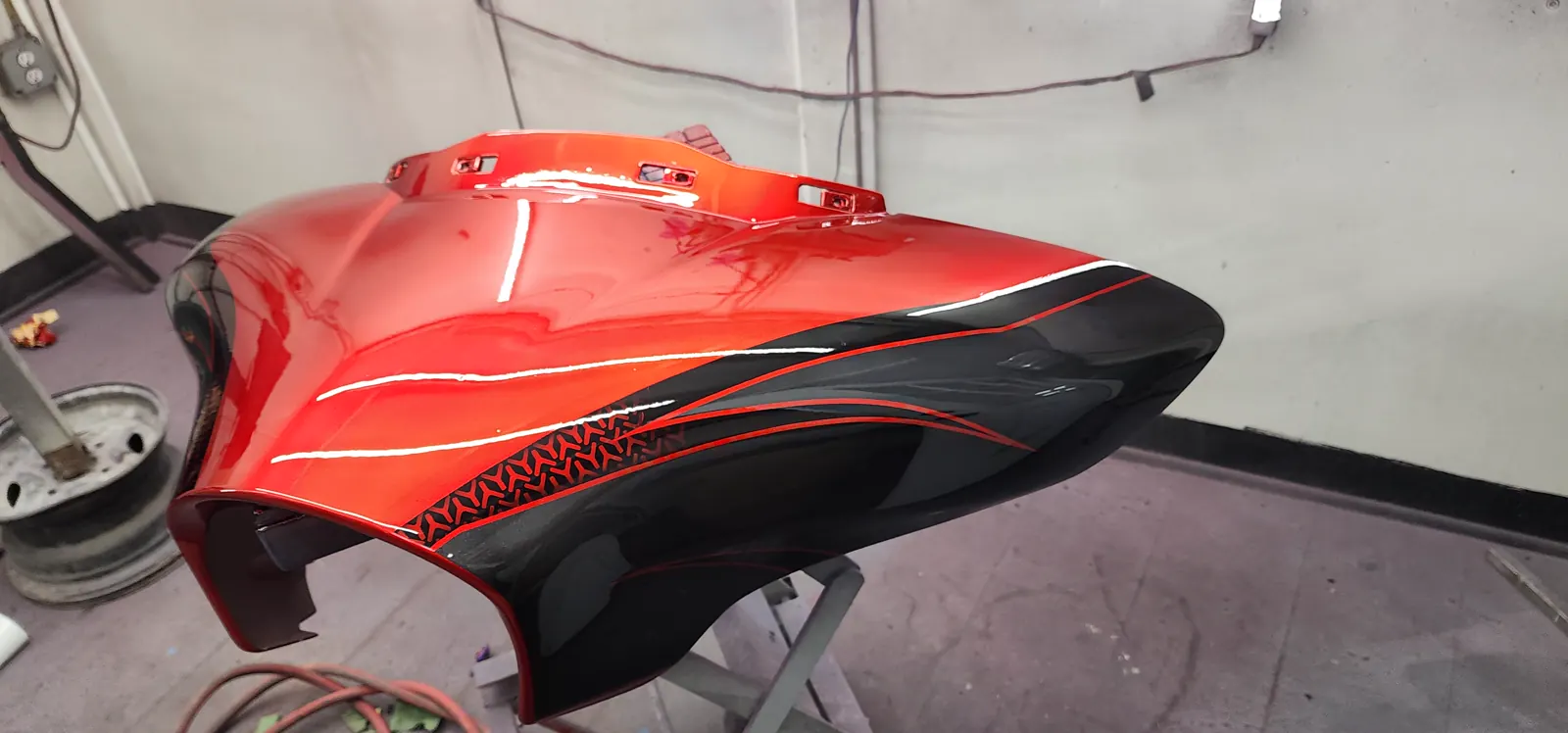
Here’s what changes once it’s actually sorted. You walk into the garage and the tank has real depth to it — not just shiny, but deep, like you could reach a hand into the color. The chrome throws sharp reflections. As a result the blacks look wet. Run your palm across a coated tank and it’s slick, almost frictionless. Better yet, the next time pollen dusts everything in Towne Lake, a quick rinse brings the bike right back instead of turning into a weekend chore.
That’s the feeling riders are really after. A machine parked on Main Street in the Downtown Woodstock core that turns heads. A finish that honestly looks better than the day it left the showroom, because a factory clear coat was never polished and protected the way a good detail does it. Pride, plain and simple — and a bike that shows this well tends to hold its resale value, too.
A properly detailed bike doesn't just look clean — it looks cared for, and everyone can tell.
Getting your bike to us from Woodstock
We’re down in Marietta, roughly 15 to 19 miles from most of Woodstock — call it 25 to 35 minutes down I-575 south to I-75, then east on Roswell Road to Barnes Mill Road. When traffic’s ugly, Bells Ferry Road south into north Cobb is the calmer surface route. Either way, it’s an easy trip along Towne Lake Parkway to the interstate.
But you don’t actually have to make that trip. Since these towns sit a bit farther out, we offer pickup and delivery, which means your bike can get the full treatment without you burning a Saturday hauling it around. Drop us the keys, run your errands near the Outlet Shoppes at Atlanta or take a walk at Olde Rope Mill Park, and get back a bike that looks brand new.
The nearest big volume dealership is RideNow Powersports Canton up on Riverstone Parkway, and they’re fine for plenty of things. Still, detailing every brand and every age of bike, with true paint correction and in-house paint work under one roof, isn’t the dealership model. That’s the gap we’re happy to fill, whatever you ride.
So the bottom line is this: you should finish reading and feel like the whole thing finally makes sense. No mystery, no phone-quote games, just a clear picture of what the work is and why it costs what it does. When you understand what’s really under the hours, the price stops feeling scary and starts feeling fair.
Questions Woodstock riders ask us
What's actually included in a full detail?
A full detail is deep cleaning, decontamination, machine polishing, chrome and metal polishing, leather or vinyl care, plastic and trim restoration, and a final layer of protection. It’s the whole bike, seams and all, not just the panels you see at a glance. A basic wash only removes loose dirt, which is why the two feel so different when you get the bike back.
Why can't you quote it over the phone?
Because we haven’t seen the bike, and a firm number over the phone would just be a guess. Swirl depth, oxidation, and how much bodywork has to come off to reach hidden grime all change the hours. We’d rather look at your bike or a few photos, give you an honest range, and confirm it in person than surprise you later.
What makes one detailing job bigger than another?
Condition and access, mostly. A bike that’s been wiped with dry rags for years has swirls that take real correction time, while a well-kept bike might just need a freshen-up. A chrome-heavy bagger is far more surface than a stripped naked bike, and the more panels we remove to reach grime, the more labor the job takes.
How do I avoid surprises on price?
Send us photos, tell us how the bike’s been cared for, and let us look it over before work starts. We’ll walk you through the plan and the range, then confirm it in person. Nothing big happens without a green light from you, so there’s no mystery invoice waiting at the end.
What if you find something else once you dig in?
We stop and call you. Sometimes a wash reveals a deeper scratch or a spot of corrosion that a photo hid. When that happens, we show you, explain the options, and let you decide — we never just add work and hand you a bill. You stay in charge of what gets done.
Does a ceramic coating make my bike scratch-proof?
No, and be careful with anyone who says it does. A coating adds a slick, protective layer that beads water, resists pollen, and makes cleaning easier, but it won’t stop a rock chip or a hard scratch. A good one lasts years, depending on care, as long as you keep up with gentle regular washing.
Diaz Motorcycles takes care of riders all across the northwest metro. Beyond Woodstock and Towne Lake, we regularly help friends in Canton, Holly Springs, and Ball Ground to the north, plus Acworth, Kennesaw, and Cartersville to the west. Closer in, we cover Marietta and East Cobb, and we head east for riders in Roswell, Alpharetta, and Milton. Wherever you are in that stretch, pickup and delivery keeps the whole thing easy.
LET'S MAKE YOUR BIKE LOOK BETTER THAN NEW
Ready to see what a real detail does for your machine? Text us a few photos and tell us how your bike’s been treated, and we’ll give you an honest plan and range — no phone-quote guessing games. We’ll pick your bike up right there in Woodstock, do the work, and bring it back with a finish deep enough to see your reflection in. Reach out today and let’s get it glowing.
470-460-9883Diaz Motorcycles and Service, LLC · 847 Barnes Mill Road, Marietta, GA 30062