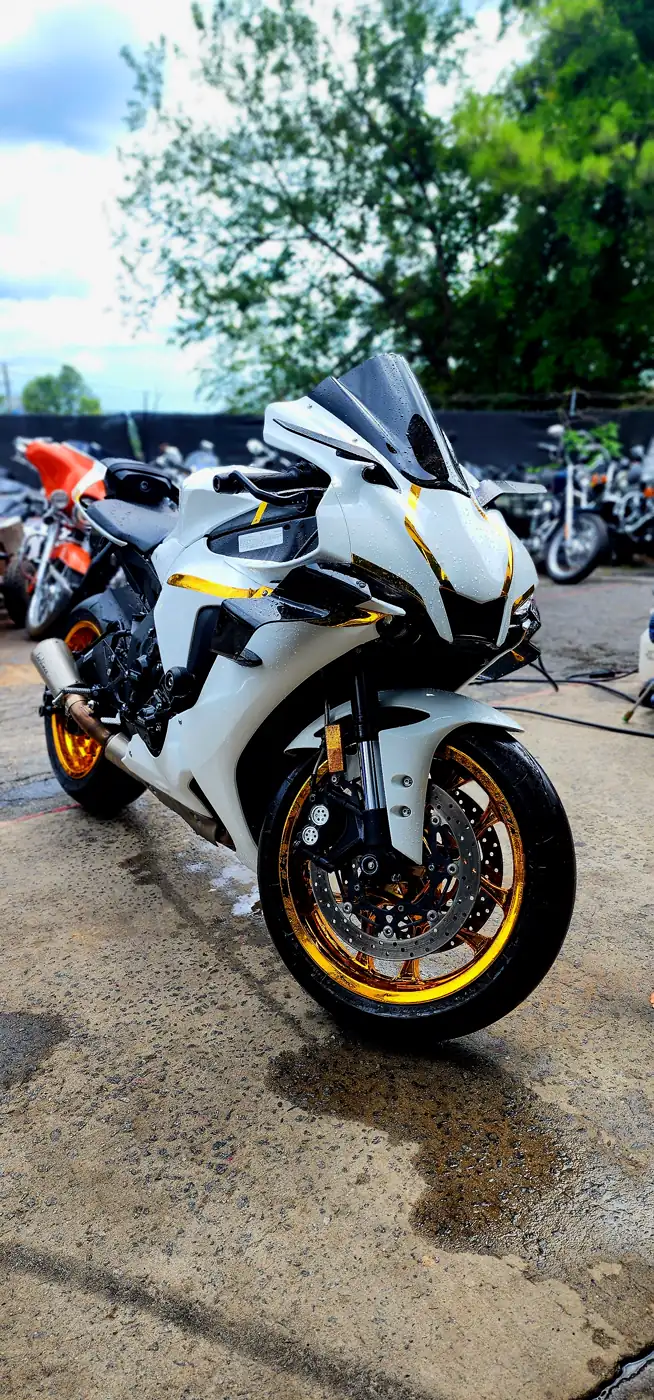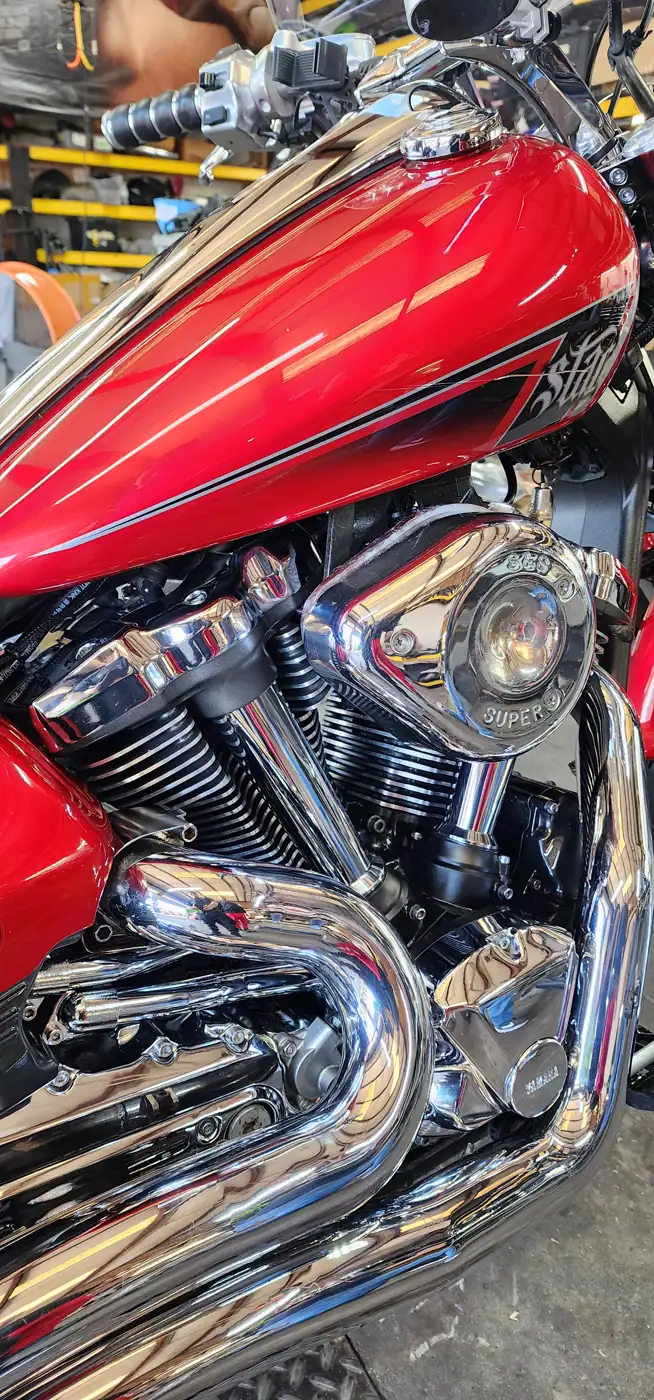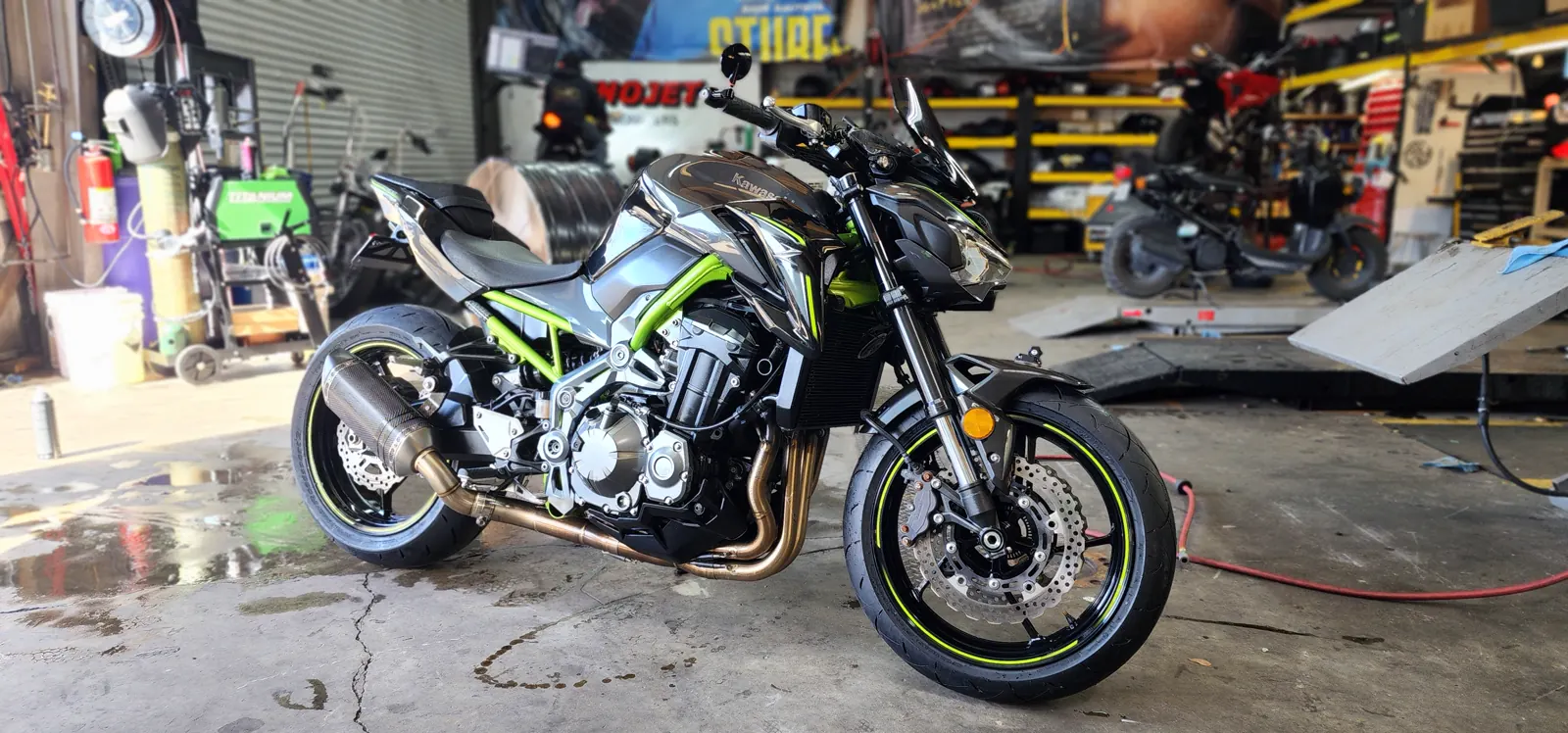
Motorcycle Detailing Cost Dallas: What Really Sets the Price
What really sets the price when you detail a bike in Paulding County, and why the honest answer starts with your bike, not a menu.
After that, here’s the straight answer most shops tiptoe around. The price of a real detail depends almost entirely on the shape your bike shows up in, not on some fixed number taped to the wall. That’s the honest starting point for the motorcycle detailing cost Dallas riders keep searching for, and once you see what drives it, the whole thing stops feeling like a mystery. So let’s pull it apart, piece by piece.
Two identical baggers can need wildly different work. One lives in a tidy garage in Bentwater and gets a careful wipe-down every Sunday. The other sat under a carport for three summers, wearing baked-on pollen and hard-water spots like a second coat of paint. Same model, same year, yet the second one is a much bigger job. That gap, right there, is what this whole post is about.
A Wash And A Real Detail Are Not The Same Thing
Let’s clear up the biggest mix-up first. A wash gets the loose dirt off. What’s more, a detail restores the finish. When we wash a bike, we’re rinsing away mud, bugs, and road film so it looks clean for the ride home. A detail goes deeper than the surface, working every painted panel, every chrome piece, and every hidden corner the hose never reaches. One is maintenance. The other is a reset button for the way your bike looks and feels under your hand.
A full detail usually touches a lot of areas at once, and this is one spot where an actual list beats a wall of sentences:
- Chrome polishing until the pipes throw back your reflection
- Paint correction to lift swirl marks and light scratches
- Machine polishing to bring back deep, wet-looking gloss
- Ceramic coating or sealant to protect the finish and shed water
- Wheel, spoke, and engine-bay cleaning where grime loves to hide
- Leather and vinyl care for seats and saddlebags
- Plastic and trim restoration to erase that faded gray look
- Bug, tar, water-spot, and pollen removal
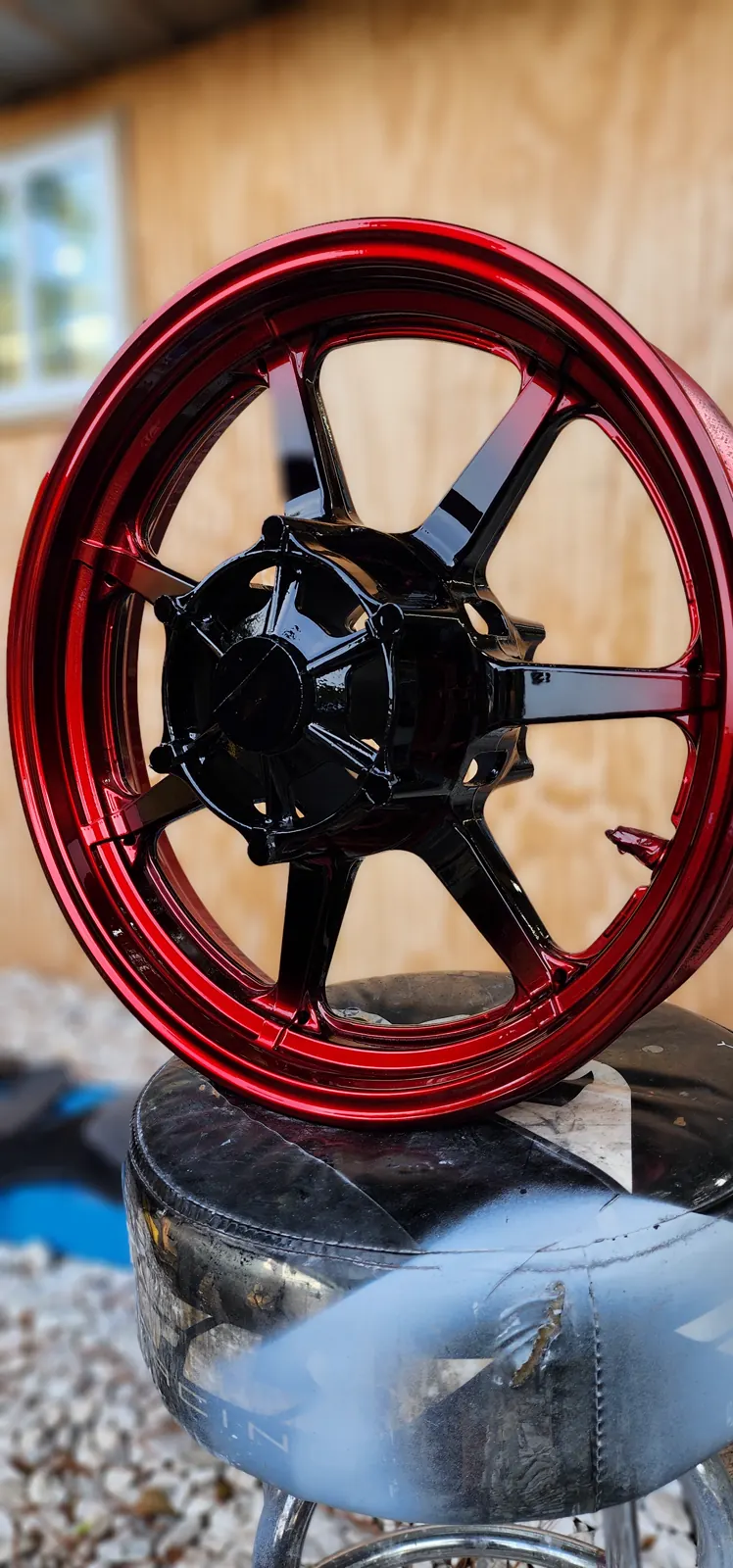
What Actually Makes One Job Bigger Than Another
Now for the heart of it. The size of a detail comes down to three things: condition, access, and how much correction the paint needs. Condition is simple, since a well-kept bike needs less work than a neglected one. Access is about how hard the good stuff is to reach. A stripped-down sportbike hides almost nothing, while a full dresser buries chrome and paint behind fairings, bags, and guards that all have to be worked around by hand.
Paint correction is the wild card. Light swirls come out fast. Deeper scratches and years of wash-induced spider-webbing take more passes with the machine, more product, and a good deal more patience. Because a detail is mostly hands-on time, the deeper the correction, the bigger the job. That’s the labor side, and on a detail, labor is nearly the whole story.
The internet will tell you one thing. The bikes tell us another.
Type your question into a search bar and you’ll get a tidy number, as if every bike were the same. But we’ve had two riders bring in the exact same model in the same week and need completely different work. The keyboard doesn’t know your bike sat out through pollen season, or that hard water etched the tank. Only the bike knows that, and the bike never lies to us.
Paint Correction, In Plain English
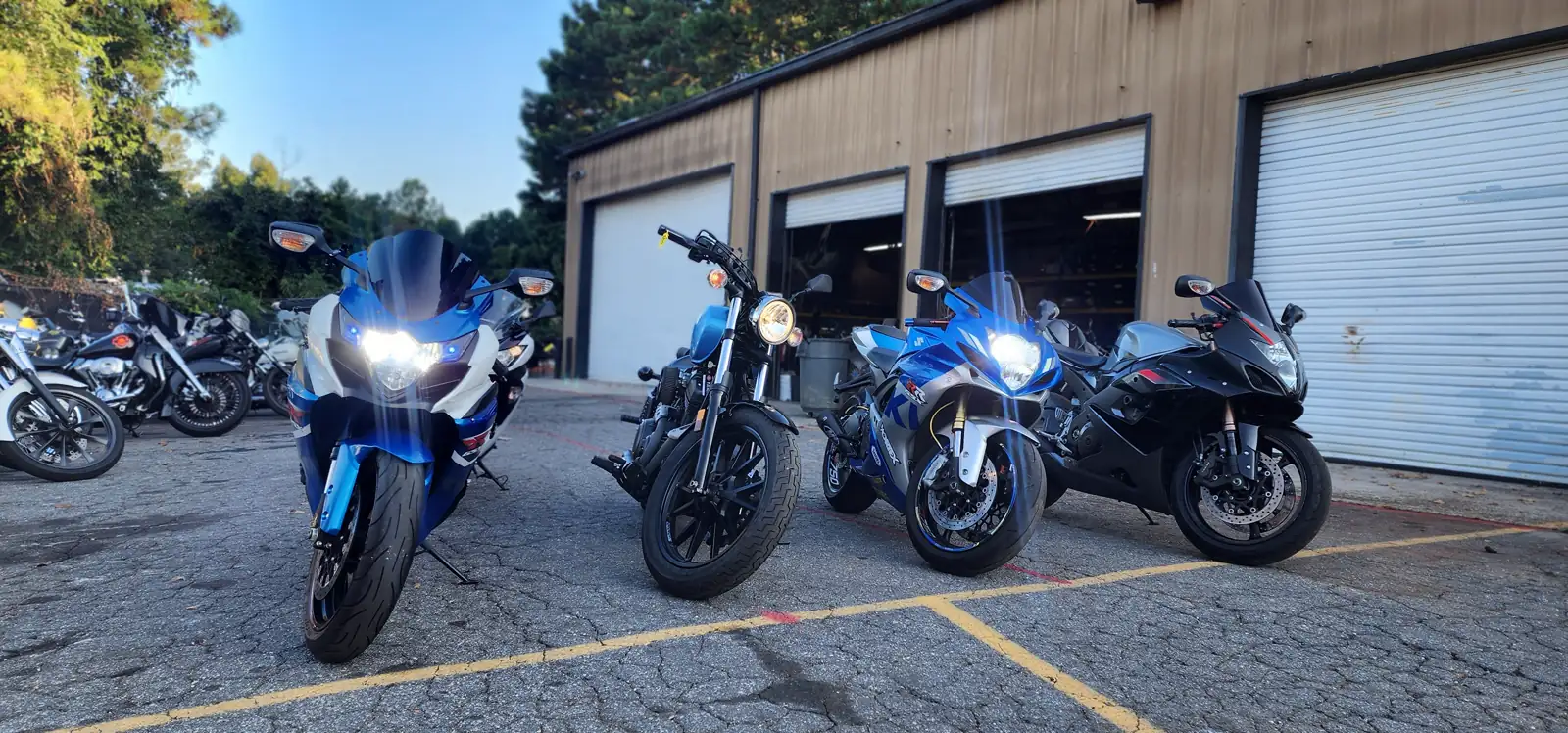
Paint correction sounds fancy, but the idea is easy. Over time, washing and riding leave tiny scratches all over your clear coat. In the sun, those show up as swirls and a dull haze. Paint correction gently levels that clear coat with a machine polisher, so light travels through it clean again instead of scattering. The payoff is depth. Your paint looks wet, glassy, and inches deep, like you could dip your hand right into it.
This is different from paint itself. If your tank has real damage, chips, or you want a color change, that’s a repaint, and we give you the full rundown on it separately. Correction works with the paint you already own. It doesn’t add material; instead, it refines what’s there until the shine comes roaring back.
Ceramic Coating: What It Is, And What It Isn't
THE HONEST TRUTH
Ceramic coating protects your finish and makes cleaning easy. It is not a force field. It won’t stop a rock chip or a dropped wrench, and any shop that says otherwise is selling you a fairy tale.
So here’s what ceramic coating actually does. It bonds a hard, slick layer on top of your paint and chrome. Water beads up and rolls off, taking dust and pollen with it. Bug guts and road grime then wipe away with far less scrubbing. On top of that, it holds its shine much longer than old-school wax. What it won’t do is make your bike scratch-proof or bulletproof, and we’ll never pretend otherwise.
If you want the deeper walkthrough on packages and finishes, take a look at what we take care of here on the detailing side. Some riders just want a one-time deep clean. Others want the coating so upkeep between rides is almost nothing. Both are fine, and neither one is wrong.
Georgia Weather Is Rough On A Finish
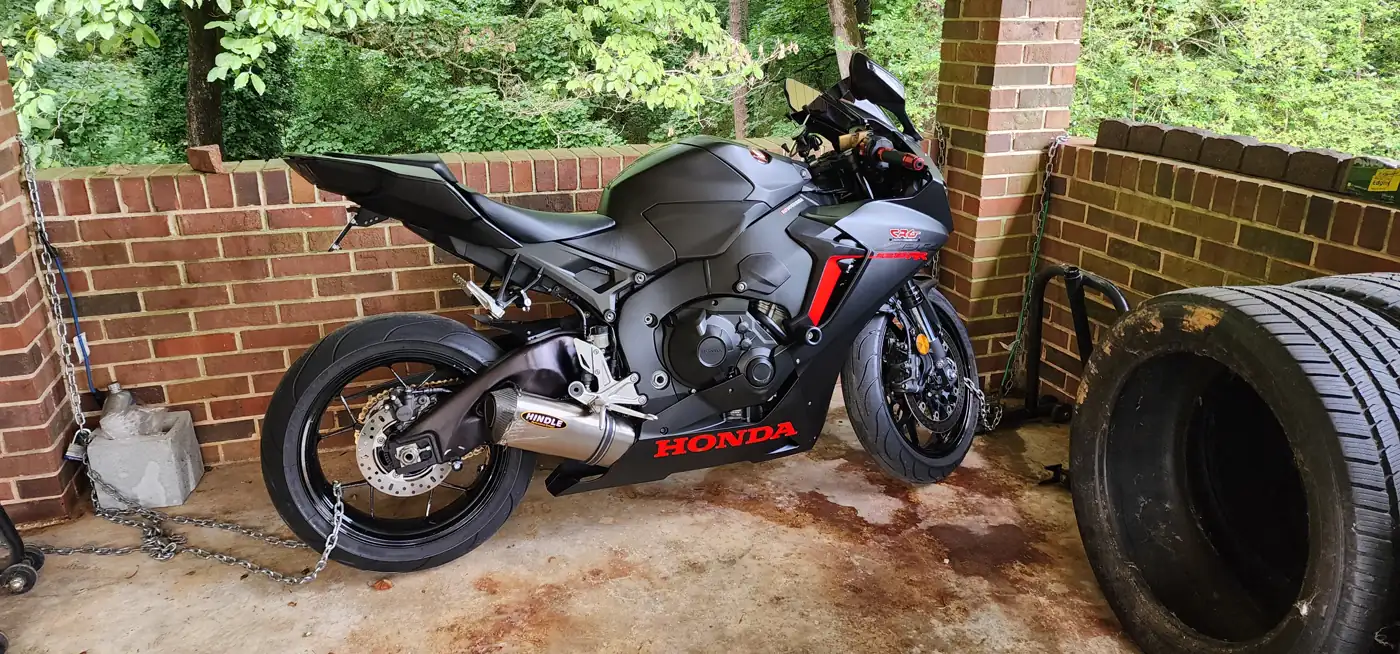
Our climate does real damage, and Paulding riders feel it more than most. Summer heat bakes contaminants into the clear coat until they bond like glue. Humidity keeps everything damp, so grime clings tight and mold gets a foothold in seat seams. Spring pollen coats every surface in that yellow film we all know too well, and it’s mildly acidic, so it eats at the shine the longer it sits. Hard water, meanwhile, leaves crusty mineral spots that etch right into the finish. Ride GA-61 up toward Cartersville on a Saturday and your bike comes home wearing all four at once.
The good backroads make it worse, in the best way. Run the Quad County Figure Eight past Burnt Hickory Park and out toward High Shoals Falls, and you’ll rack up bug spatter and chip-seal dust by the mile. Call it the tax on a great ride. A proper detail wipes the slate clean, and a coating means next Saturday’s grime rinses off instead of baking on.
How We Walk A Detail, Start To Finish
Folks ask what the process looks like, so here’s the real order we work in, top to bottom:
- Look the whole bike over in good light and note every problem area
- Pre-rinse and knock off loose dirt, bugs, and road film
- Deep-clean the wheels, spokes, and engine bay where grime hides
- Wash and dry the whole bike by hand, panel by panel
- Clay the paint and chrome to pull out bonded contaminants
- Machine-polish and correct the paint to lift swirls and scratches
- Polish the chrome until it mirrors
- Condition the leather and vinyl, then restore faded plastic and trim
- Lay down the ceramic coating or sealant and let it cure
- Run a final inspection under bright light before it heads home
Why We Won't Quote It Over The Phone
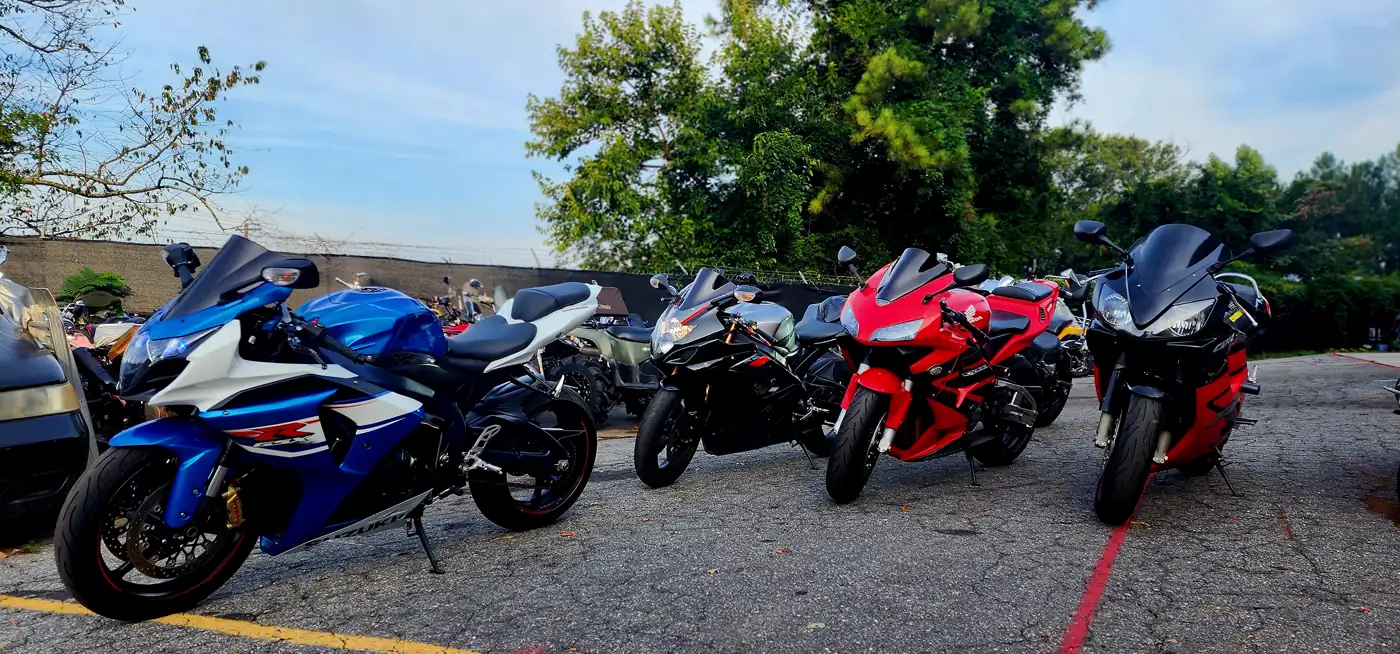
Now the question everyone asks. Why won’t we just give you a number over the phone? Because we’d be guessing, and a guess helps nobody. Until we see how deep the swirls go, how much chrome is on the bike, and how baked-on the grime is, any price we throw out is fiction. An honest shop quotes what’s actually in front of it. If you want to see what that service actually involves before you come in, that write-up lays it out plainly.
That uncertainty is the real driver behind the motorcycle detailing cost Dallas riders ask about, and it’s why we look before we talk numbers. We also know the drive matters. Paulding is a commuting county, and you’re already in the car plenty. Forty minutes to Marietta isn’t the problem; a wasted trip is. So we’d rather study your bike and tell you the truth than have you haul it out here on a figure we invented.
A quick story, because it makes this concrete.
A friend of ours over in Edenwood, near the Cobb County line, brought in a maroon dresser he was ready to trade away. Three summers under a carport had left it dull, spotted, and sad. He figured it was too far gone. We saw a bike that just needed correction, a coating, and some honest hours. When he came back and saw it, he stood there quiet for a second, then decided not to sell it after all.
That’s the part people don’t expect. A great detail doesn’t just clean a bike, it can change how you feel about owning it. Whether you’re in a new build over at Birchwood at Naturewalk or you’ve been in Bentwater for years, the pride of throwing a leg over a machine that gleams is real. And if you ever do sell, that finish pays you back at trade-in time. Riders keep their bikes longer than folks think, something the Motorcycle Industry Council follows closely.
What To Do Yourself, And What To Leave To Us
Paulding is a big-garage, roll-up-your-sleeves kind of place. Plenty of you have three-car garages and the tools to match, and we love that about the county. So here it is plainly: don’t pay anyone for what you can knock out on a Sunday. A good wash, a quick wipe-down, keeping bugs from baking on, you’ve got all of that handled. Where a shop earns its keep is the stuff that needs a machine polisher, real product knowledge, and the patience to correct paint without burning through the clear coat.
That line matters, because a botched correction is worse than no correction. Push a polisher too hard and you thin the clear coat, and now you’re staring at a real repaint. This is skill built over a whole lot of bikes. When you hand off the tricky part, you get the pro result without the risk, and you still keep your weekend.
Parts Or Labor? On A Detail, It's Mostly Hands
Here’s how the money splits, without naming numbers. A detail is nearly all labor. The “parts” are consumables like polish, clay, coating, sealant, and conditioners. So when a detail runs higher, it’s almost always because it took more careful hands-on time, not because we bolted on pricey pieces. That’s the opposite of a repair, where a part can lead the bill. Riders over in Newnan ask the same thing, and the answer holds true there too.
Pickup And Delivery Makes The Distance Disappear
One more thing, since Dallas sits a good ways out. You don’t have to ride or trailer the bike here yourself. We can arrange pickup and delivery, roughly a twenty-five-mile run to Marietta by way of Charles Hardy Parkway and Dallas Highway, then east through West Cobb. That means your Saturday stays yours instead of getting eaten by a round trip. Drop the keys, keep riding your weekend, and pick up a bike that looks like the day you first rolled it off the lot. For a lot of riders, that alone is the reason they finally book the detail they’d been putting off.
Plenty of Paulding riders otherwise drift down to Atlanta Harley-Davidson in Lithia Springs, a solid 35 to 45 minutes south, and that’s a fine spot. For detailing, though, a straight shot east into Marietta is closer and easier. And for a county with no full-line shop of its own, that convenience is really the whole point.
A clean bike isn't vanity. It's how you protect what you love to ride.
Questions Dallas riders ask us
What makes one detail bigger than another?
Three things, mostly: the bike’s condition, how hard the chrome and paint are to reach, and how much paint correction the finish needs. A clean sportbike is quick. A neglected dresser with deep swirls and years of grime is a much larger job. That’s why two identical models can need very different work.
Why can't you quote it over the phone?
Because a phone quote would just be a guess. We can’t see how deep the swirls run, how much chrome is on the bike, or how baked-on the grime is until it’s in front of us. An honest shop looks first, then gives you a real number. We’d rather be right than fast.
What's included in a full detail?
A real detail covers a hand wash, wheel and engine-bay cleaning, claying the paint and chrome, paint correction, machine polishing, chrome polishing, leather and vinyl care, plastic and trim restoration, and a protective coating or sealant. It’s a top-to-bottom reset, not just a rinse.
How long does a detail take?
It depends entirely on the bike’s condition and how much correction the paint needs. A light refresh moves fast, while a deep correction takes real time to do right. Once we see your bike in person, we’ll give you an honest timeline instead of a made-up one.
Is ceramic coating scratch-proof?
No, and don’t trust anyone who says it is. Ceramic coating protects the finish, makes water bead and roll off, and cuts your cleaning time way down. It also holds its shine much longer than wax. What it won’t do is stop a rock chip or a dropped tool.
Is a detail more parts or labor?
Almost all labor. The only “parts” are consumables like polish, clay, and coating. So when a detail costs more, it’s the careful hands-on time, not expensive components. That’s the flip side of a mechanical repair, where a single part can drive the price.
We take care of riders all across Paulding County and the western arc of metro Atlanta, so you’re covered whether you’re right in Dallas or just up the road in Hiram. Folks roll in from Powder Springs, Acworth, and Kennesaw to the east, and from Douglasville and Villa Rica to the south. Head north or west and we’ve got Cartersville, Rockmart, Taylorsville, Braswell, and Yorkville, while Marietta sits at the heart of it all. If your town isn’t on that list but you’re nearby, ask us anyway, because pickup and delivery usually makes the distance a non-issue.
KEEP YOUR RIDE LOOKING RIGHT
Ready to see your bike glossy, slick, and turning heads again? Whether you’re in Dallas or anywhere in Paulding County, text us a couple of photos and we’ll talk you through your options, then set up pickup so your Saturday stays yours. No guessing, no pressure, just honest work and a finish you’ll be proud of.
470-460-9883Diaz Motorcycles and Service, LLC · 847 Barnes Mill Road, Marietta, GA 30062