Best Motorcycle Detailing Dallas — A Rider's Guide to Choosing a Shop
How to tell a real detail from a quick wash, judge a shop honestly, and keep your finish alive through Georgia weather.
Instead a friend of ours rode his bagger over last spring with a folded printout tucked in his tank bag. Another place had quoted him for a ‘full detail,’ but the paper never actually said what that meant — just a price and a promise that his paint would come back ‘like glass’ and stay ‘scratch-proof’ for good. Besides Something about it didn’t sit right, so he came looking for a second read. If you’re weighing the best motorcycle detailing Dallas riders can get without crossing your fingers, that little gut-check is exactly the right instinct.
He was smart to pause. Actually a vague quote paired with a giant promise usually means the shop is selling a result nobody can fully control. That’s why Real detailing isn’t magic, and it isn’t a spray-and-pray Saturday afternoon. Instead, it’s a set of steps, done in a certain order, that you should be able to both see and feel when the bike rolls back to you. So let’s walk through what a real detail is, how to size up a shop out here in Paulding, and exactly where those flashy promises tend to fall apart.
A wash and a real detail aren't the same thing
Plenty of good riders say ‘detail’ when they really mean ‘wash,’ and that mix-up is where the confusion starts. A wash gets the dirt off the surface. Also a detail restores the finish underneath. Those are two different jobs with different tools, different hours, and wildly different results. So when somebody quotes a ‘detail’ for wash money, one of two things is going on. Either they mean a wash and are calling it something fancier, or they’re quietly skipping steps you’ll notice a month down the road when the shine flattens out.
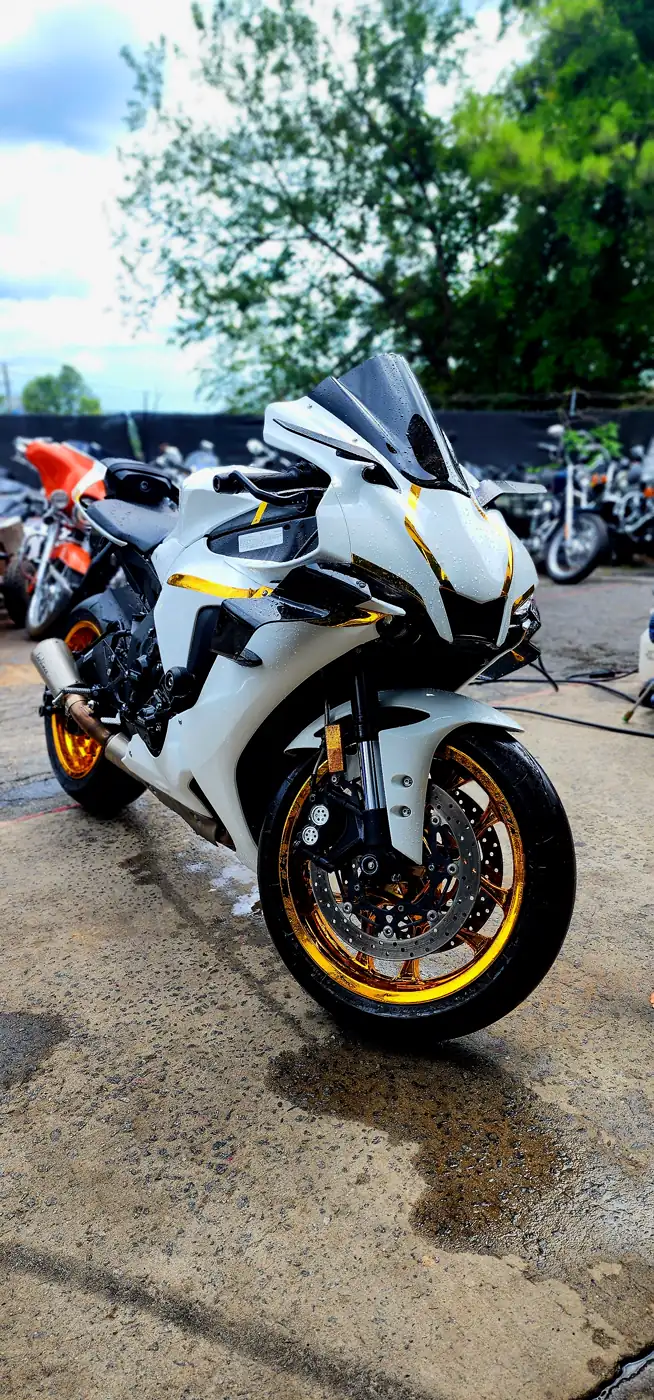
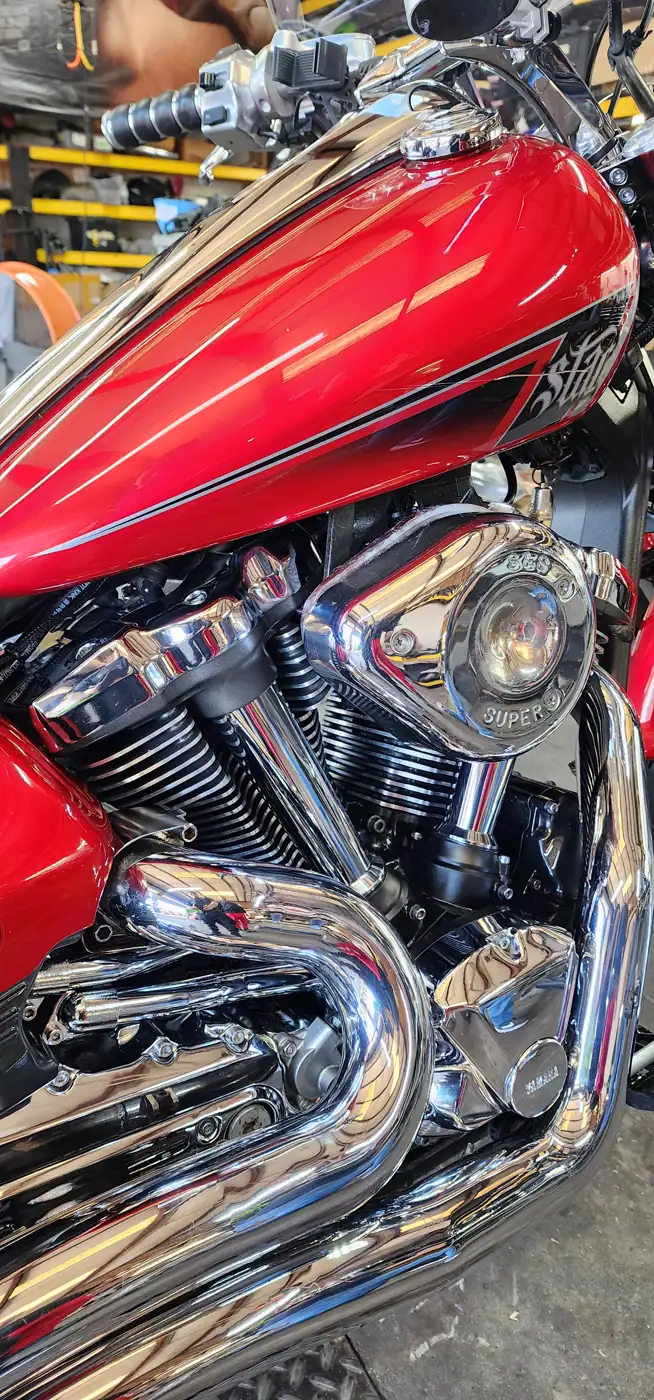
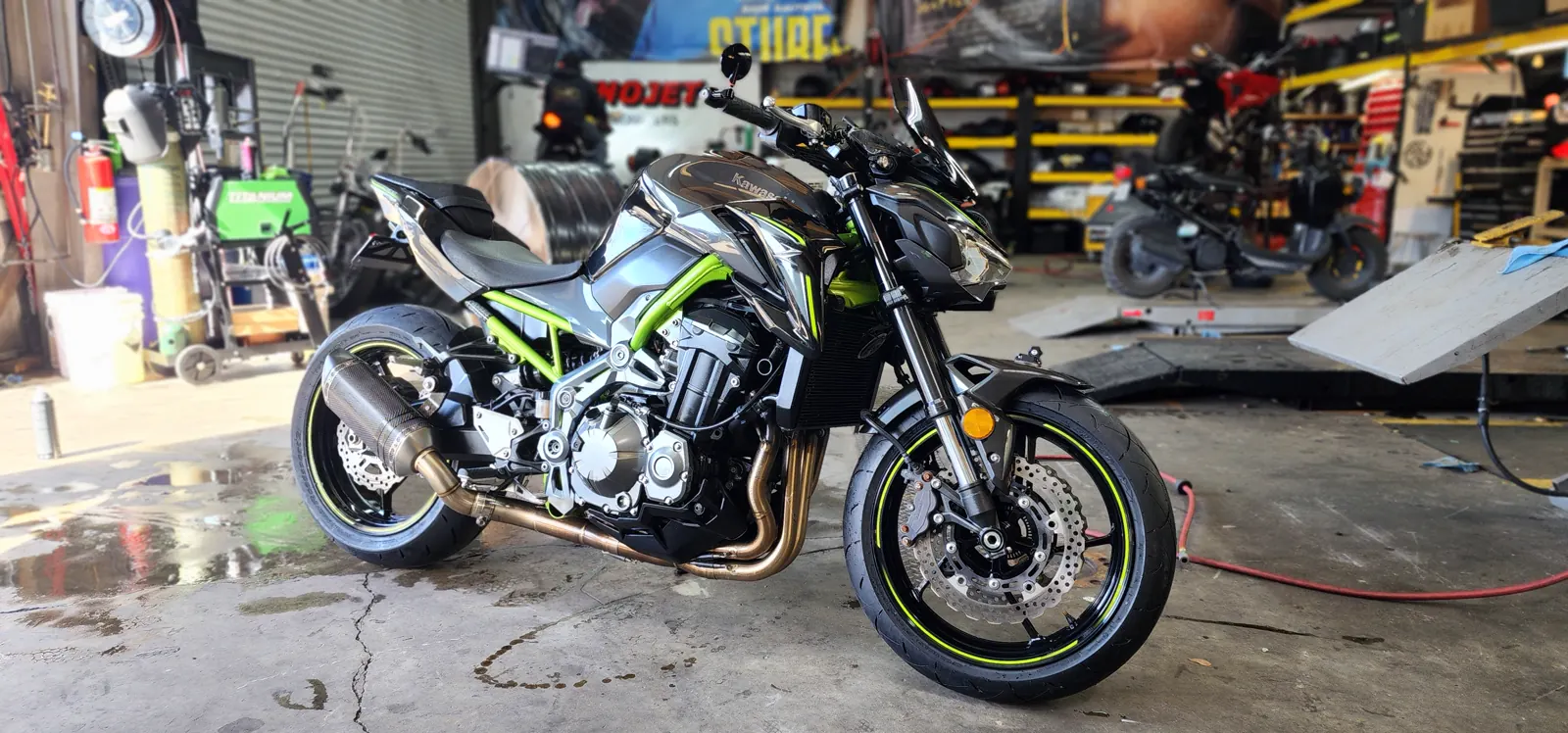
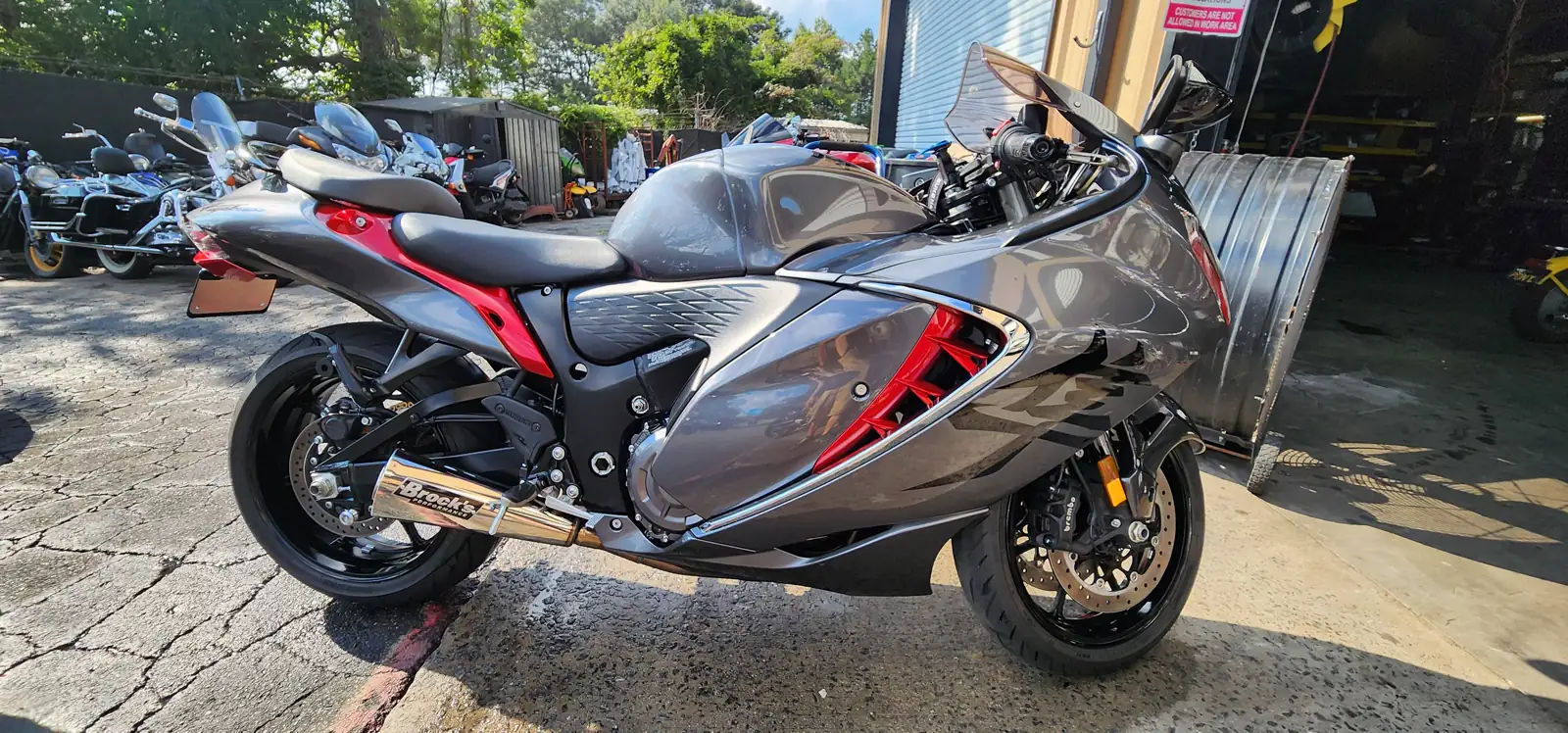
A true detail digs deep. It runs chrome polishing until you can practically read a plate in the reflection, machine polishing to pull gloss back out of tired paint, plus wheel and engine-bay cleaning where baked-on road grime likes to hide. Then comes careful attention to leather, vinyl, plastic and trim, followed by bug and tar removal and water-spot removal done gently enough to leave no new scratches behind. Handled right, the tank turns slick under your palm and the color takes on a depth you could almost fall into.
Here’s the piece most quick quotes skip entirely: your finish takes a genuine beating out here, and no product on earth stops all of it by itself. Georgia is rough on both paint and chrome. And if you don’t know what you’re actually up against, there’s no way to tell whether a shop is truly fixing the problem or just masking it long enough to get you out the door.
Why your finish fades out in Paulding
Late March rolls into April and the pollen arrives, coating everything in that yellow-green film. It’s slick on the pavement and brutal on paint, because those fine grains trap moisture right against the clear coat. Summer then piles on heat and humidity that bake water spots straight into the surface. Wash with hard water, let the bike air-dry in the sun, and you’ve just etched faint mineral rings that no rag will wipe off. Ride the tar snakes and rutting on US-278 / GA-6 as it cuts through Dallas and Hiram toward Austell and I-20, and hot asphalt keeps flinging fresh tar up onto your lowers all summer long.
- Pollen that traps moisture against the clear coat every spring
- Georgia heat and humidity that bake water spots into the surface
- Hard water that leaves mineral rings when a bike air-dries
- Bug splatter and highway tar that etch in if left too long
- UV that slowly dulls chrome and washes color out over the years
None of that is a reason to panic, though. Every bit of it is fixable, and most of it is preventable once the finish gets protected the right way. The real trick is figuring out which problem you actually have before anyone fires up a polisher. Guess wrong, and you either overwork good paint or leave real damage sitting there under a fresh coat of shine.
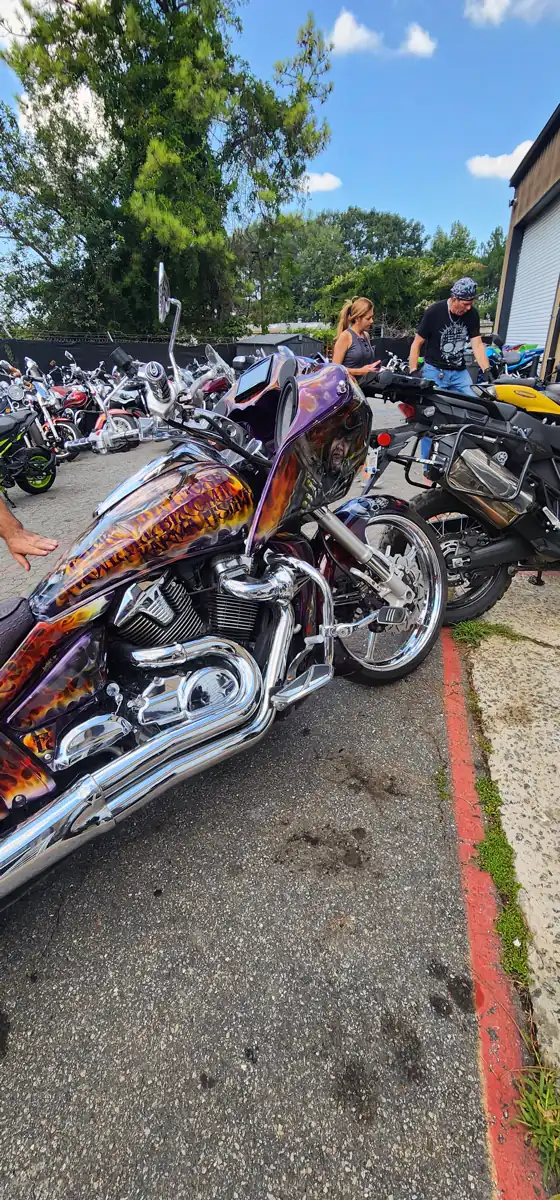
Here’s where it gets interesting — and where most advice online falls apart. A lot of guides tell you to pick a detailer by the package name or how long the service menu runs. That’s backwards. A good shop doesn’t start with a package at all. It starts by reading your finish, because the bike tells you what it needs long before any menu does.
How we read a finish before we touch it
Before a single pad touches your paint, we look the whole bike over in strong light. Swirls show up as fine spider-webbing the moment sun hits the tank at an angle. Oxidation reads chalky and flat, like the color went to sleep. Water spots sit as faint raised rings you can actually feel with a fingertip. Chrome gets its own check for pitting versus simple surface haze, since those two problems call for completely different care. Only after all that do we know whether your bike wants a light polish, true paint correction, or honestly just a deep clean and a fresh layer of protection.
That inspection is also where honesty earns its keep. Plenty of finishes don’t need correction at all, and a fair shop will say so out loud instead of upselling you anyway. Ever wondered why a dealer service counter and an independent shop sometimes make that call so differently? We dug into what that service actually involves in a separate post that’s worth a look before you book anywhere.
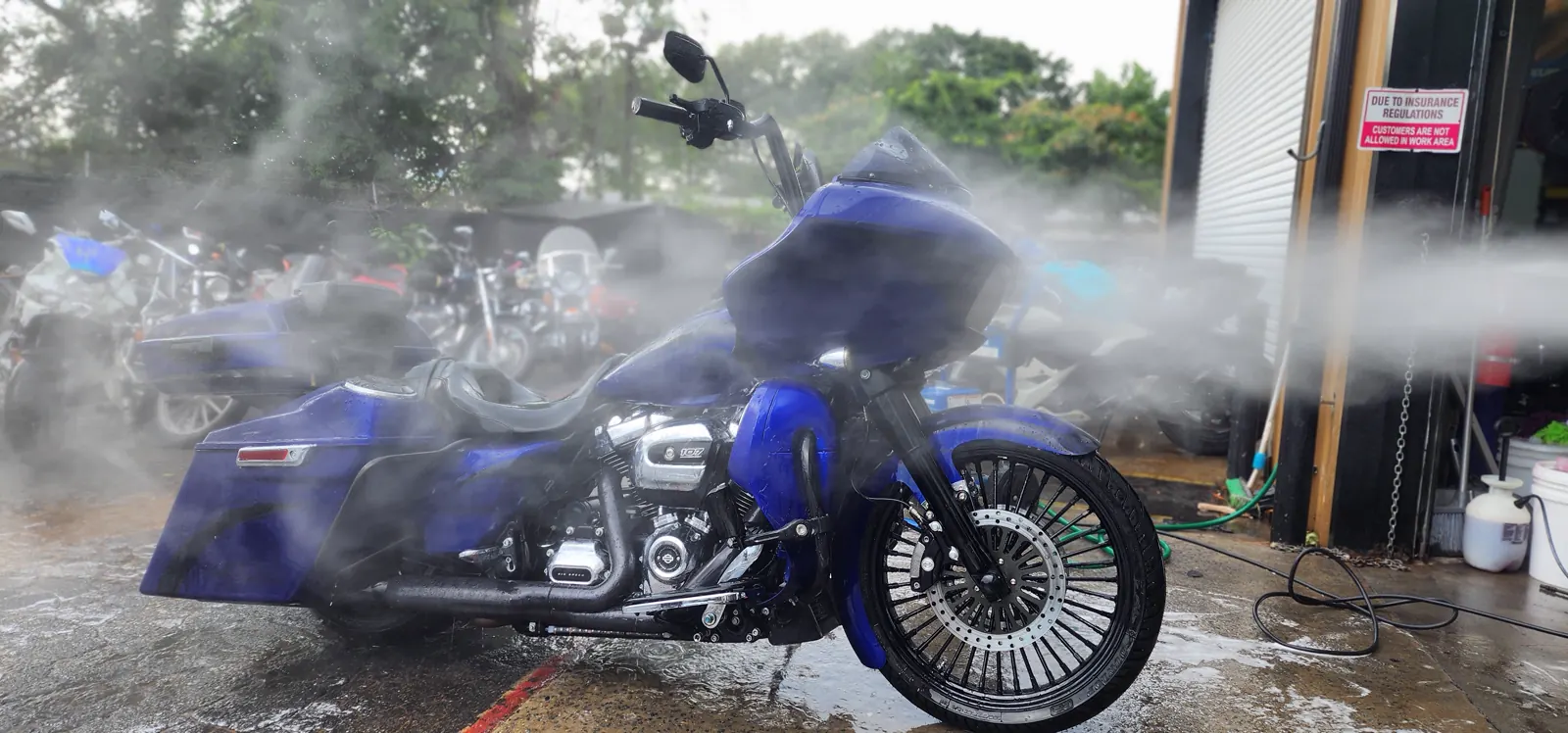
What paint correction actually does
Paint correction is the step everybody hears about and almost nobody has explained to them. In plain words, it uses a machine polisher and graded compounds to shave off a microscopically thin layer of clear coat — just enough to level the surface down to the bottom of the scratches and swirls sitting in it. Once that surface is flat again, light bounces straight back at you instead of scattering in a hundred directions, and that clean reflection is exactly what folks are describing when they say gloss and depth. It genuinely removes swirls and light scratches. What it can’t do is erase a deep gouge that’s already cut past the clear coat, and any shop swearing otherwise is overselling you.
What ceramic coating is — and what it isn't
Ceramic coating is the promise that gets stretched the furthest, so let’s be plain about it. A coating is a liquid that cures into a hard, clear layer bonded right onto your paint and chrome. It does two real things extremely well. First, it shields the finish from the stuff Georgia throws at it — pollen, bug acid, hard-water minerals and UV. Second, it makes cleaning dramatically easier, because grime can’t get a solid grip on such a slick surface. Water beads up and rolls off, and a quick rinse handles what used to take a full scrub. What a coating is not, however, is scratch-proof. Drop a buckle on the tank or blast it with grit and it can still mar. Anyone selling ‘scratch-proof’ is selling a feeling, not a fact.
THE HONEST VERSION
Ceramic coating protects your finish and makes it far easier to clean. It does not make your paint bulletproof. A shop that tells you otherwise is telling you what you want to hear.
Because all these steps stack on top of each other, the work adds up differently for every single bike. A newer, garage-kept cruiser needs far less than a sun-faded project that’s sat for years. If you’d rather see how the work adds up before you commit to anything, we laid the whole thing out in plain terms so nobody feels ambushed at pickup.
How to judge a shop out here
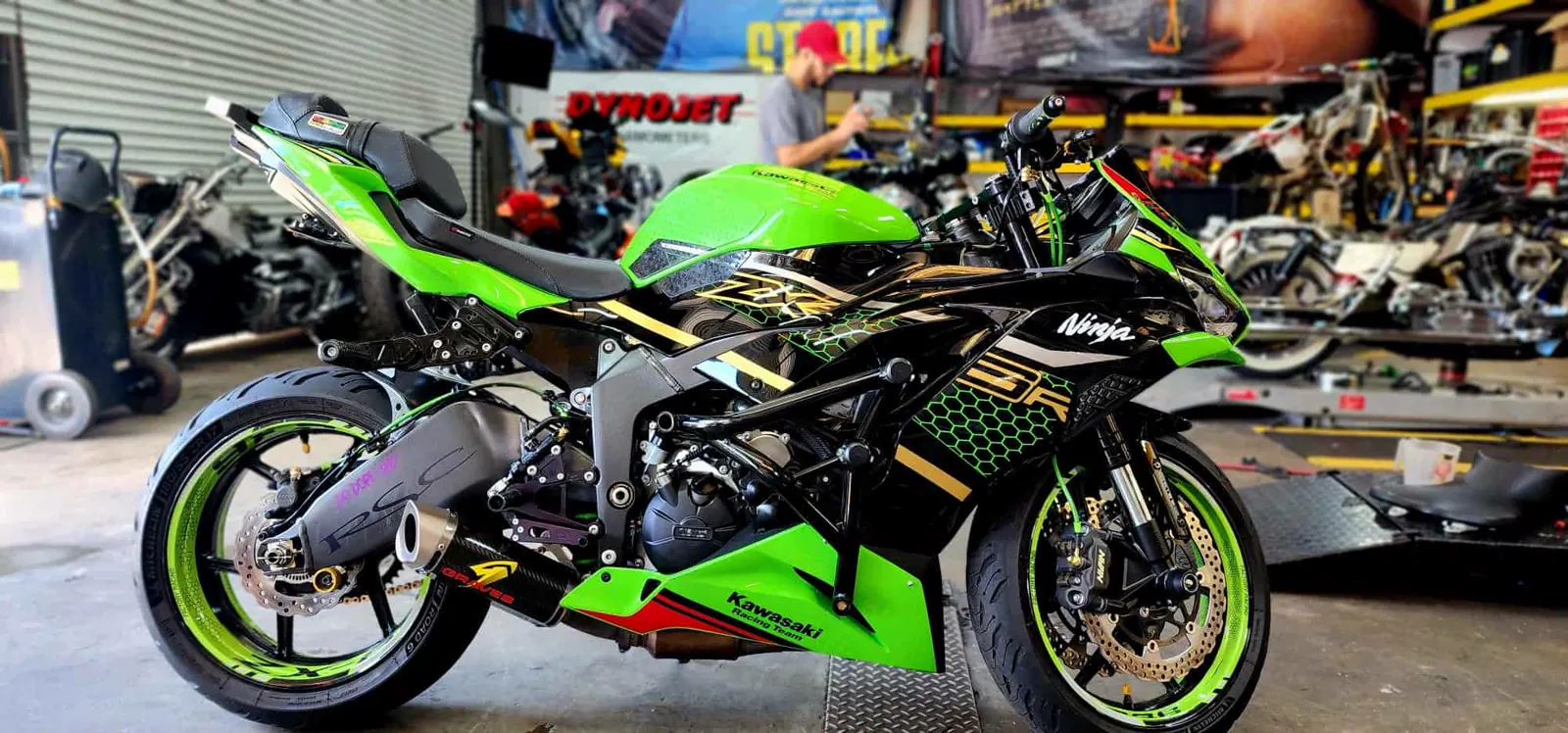
So how do you actually pick one? Good news: you don’t have to be a detailer yourself to spot a good one. You just need to recognize what a straight answer sounds like. When you call or text a shop, pay attention to whether they ask about your bike before they toss out a number. A shop that plans to read your finish will have real questions for you. That single habit tells you more about the best motorcycle detailing Dallas has to offer than any five-star badge ever could.
- They ask about your bike and its condition before quoting
- They can explain a wash, a correction and a coating in plain words
- They tell you what a coating won’t do, not just what it will
- They show you the finish under good light and point out what they’re fixing
- They never promise ‘scratch-proof’ or ‘like new forever’
Both dealers and independent shops can turn out excellent work, and neither one wins by default. Dealers know your brand inside and out. Strong independents live or die on word of mouth, which tends to keep them honest. Down in Douglasville, Southeast Motorcycle sits roughly thirty-five to forty minutes south of Dallas and has looked after riders in the area for years — good proof that trust travels a lot farther than a zip code. The question was never which sign hangs over the door. It’s whether the person quoting you can explain the actual work in words that make sense.
Our own approach stays simple on purpose. We read the bike, we tell you the truth about it, and we only sell you what your finish honestly needs. If you want the full rundown of everything we cover, from chrome polishing all the way through ceramic coating, it’s spelled out on our detailing page in the same plain language we’d use standing next to your bike.
A good detailer reads your bike before they quote it. A great one tells you what your paint doesn't need.
Here’s what changes once it’s actually sorted. A properly detailed and protected bike doesn’t just look sharper sitting in the driveway. It becomes genuinely easier to live with, week after week.
What it looks like once it's sorted
Paulding is a garage county through and through. Roll through Bentwater with its golf-course setting and resort-style amenities, or past the newer homes out in Riverwood on the west side with their pickleball courts and resort pool, and you’ll spot two- and three-car garages on nearly every lot. That’s wonderful for keeping a bike out of the weather. But garage-kept bikes carry a quiet problem of their own: they get ridden a little, wiped down rarely, and slowly collect a dust film and water spots nobody notices until the light catches them just right. A coated, cared-for finish simply shrugs all of that off.
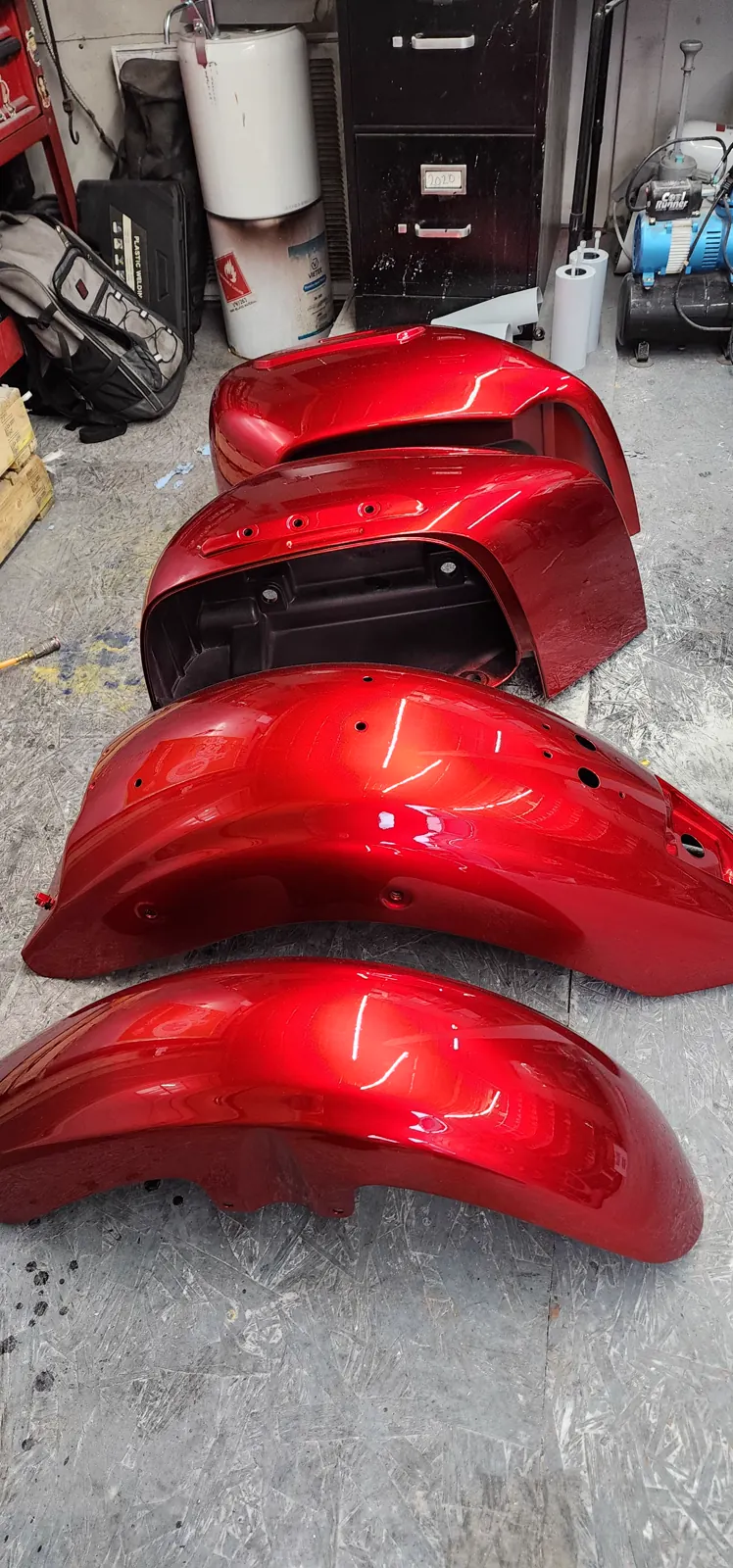
Then there’s the drive. We sit about twenty-four to twenty-eight miles east, roughly forty to fifty minutes out via GA-120 and Charles Hardy Parkway onto Dallas Highway, running through West Cobb and into Marietta. In a county where most folks already commute out every morning, forty minutes isn’t the objection — a wasted trip is. That’s exactly why we lean on text-based scheduling plus pickup and delivery. Snap a photo of the bike, we text you back with a straight read on the best motorcycle detailing Dallas can send your way, and for plenty of riders in an established Paulding County subdivision like Wild Timber, the bike never leaves the garage until we roll up to grab it.
Marietta riders wrestle with the very same pollen and hard water the rest of us fight, just a few exits to the east, and you can see how this plays out in Marietta in a companion guide. The finish problems barely change across the county line — really, only the length of the drive does.
And honestly, that’s the whole payoff. A clean, protected bike is a bike you’re proud to park anywhere — at the overlook near High Shoals Falls along the Quad County Figure Eight, or up at Allatoona Pass Battlefield on a cool fall ride. Point it north toward the seventy-two-mile run from Johns Mountain to Cloudland Canyon, with its tight hairpins and ridge-top views that peak in autumn, and you’ll want the bike looking every bit as good as the road feels. If those backroads are new to you, an MSF Basic RiderCourse is a smart first stop, and the NHTSA crash data is worth a look before you chase the twisties.
The pride part is real
There’s a feeling that comes with a properly finished bike that’s tough to put into words. You catch your reflection in the tank at a gas stop. Chrome throws the light back instead of soaking it up. Friends we’ve helped tell us the same thing over and over — they end up riding more, not less, once the bike looks the way it did the day they fell for it. And a protected finish holds that look through pollen season, through the summer heat, through every quick rinse in the driveway. Pride and resale turn out to be the same story told twice: a bike that’s clearly loved is a bike that keeps its value, and a bike that keeps its value is one you’ll always be glad you cared for.
Questions Dallas riders ask us
How do I know your diagnosis is right?
Ask us to show you the finish under strong light before any work starts. Swirls, oxidation and water spots each look different, and we’ll point out exactly what we see and what we plan to do about it. If a panel doesn’t need correcting, we’ll tell you that too.
What makes your detailing different?
We read the bike first and only recommend what your finish actually needs. You won’t get sold a full correction on paint that just wants a clean and a coat. On top of that, text scheduling plus pickup and delivery mean you barely have to leave your garage.
How do I pick a good detailing shop?
Listen for questions. A good shop asks about your bike and its condition before quoting anything. They can explain a wash, a correction and a coating in plain words, and they’ll tell you what a coating won’t do, not just what it will.
Should I go to a dealer or an independent shop?
Both can do great work, so it really comes down to the person quoting you, not the sign on the building. Dealers know your brand well, while strong independents live on word of mouth. Whoever can clearly explain the work in plain language is the one to trust.
What should I ask a shop before booking?
Ask what’s included in a ‘detail’ versus a wash, and get it spelled out step by step. Then ask what their coating protects against and what it won’t stop. Finally, ask to see the finish under good light so you know exactly what you’re getting.
Is ceramic coating worth it if my bike lives in the garage?
Often yes, because garage-kept bikes still gather dust film and water spots, and Georgia pollen finds its way everywhere. A coating makes those quick rinses actually work and keeps the finish looking fresh. Just remember it protects and eases cleaning — it isn’t scratch-proof.
We take care of riders all across the western arc of metro Atlanta. Beyond Dallas, that means neighbors in Hiram and Powder Springs, up through Acworth and Kennesaw, and over to Douglasville and Villa Rica. We also reach folks in Cartersville, Marietta, Rockmart, Taylorsville, Braswell and Yorkville, so wherever you keep your bike, a fresh finish is never really far away.
TEXT US ABOUT YOUR BIKE
Ready to see your finish come back to life? Send us a photo of your bike and a quick note, and we’ll text you a straight read — no pressure, no mystery packages. For riders in Dallas and across Paulding County, pickup and delivery means the bike barely has to leave your garage. Let’s get that paint looking like the day you fell for it.
470-460-9883Diaz Motorcycles and Service, LLC · 847 Barnes Mill Road, Marietta, GA 30062