Best Dyno Tuning Alpharetta — How to Pick a Shop You Trust
A plain-words guide to what a dyno measures, why bikes run lean or rich, and how to judge a shop before you hand over your keys.
You feel it before you can name it. In short you roll on the throttle out of a slow corner and the bike takes a half-second to wake up, like it caught its breath at the wrong time. At the same time Maybe it pops and snaps on the way down through the gears. As a result Maybe the pipe throws off more heat than it used to. On the other hand those little signals are your motorcycle talking to you. So it’s telling you the fuel and timing don’t match the way you ride. Fixing that is what the best dyno tuning Alpharetta riders can find is really about.
Start With the Plain Answer
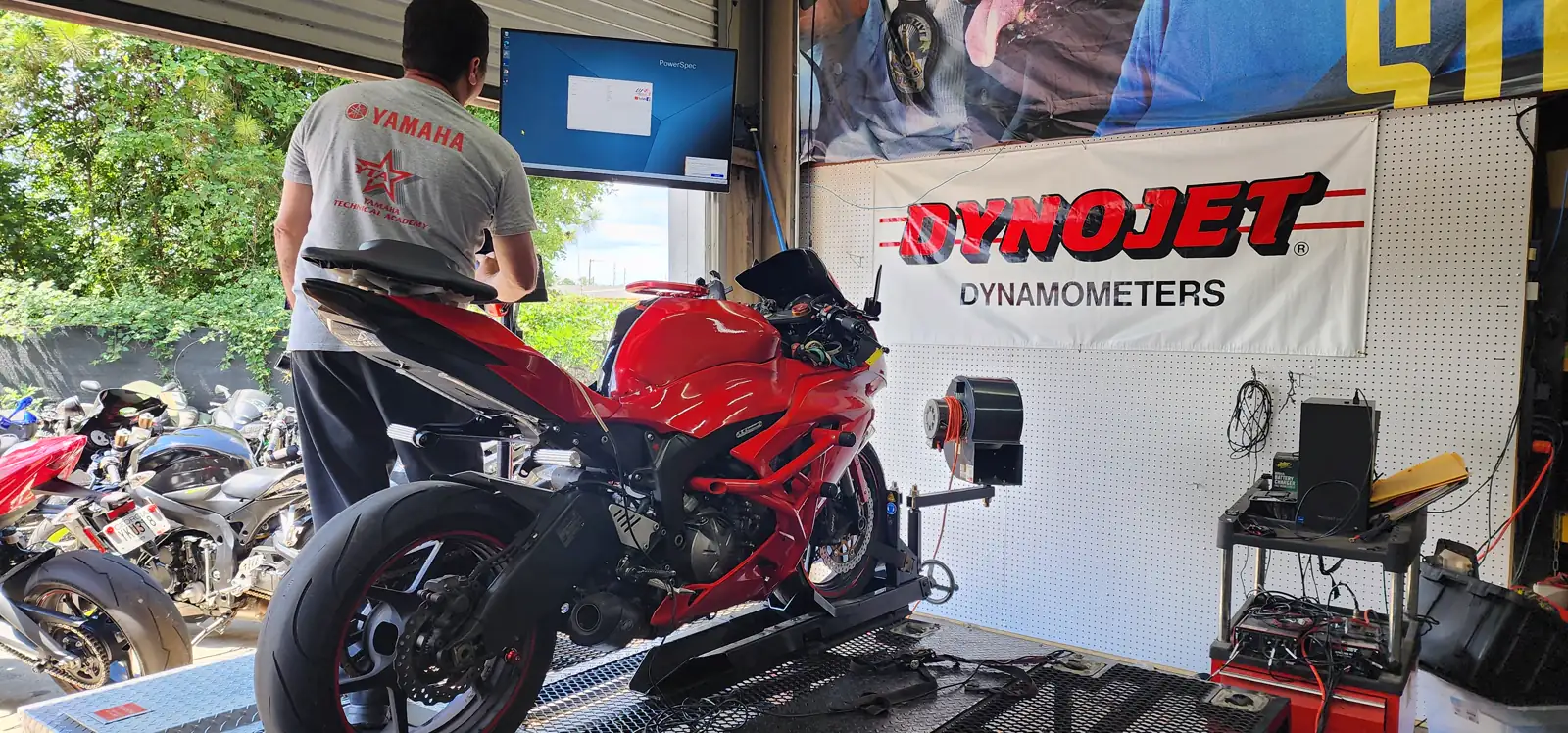
So let’s answer the real question first. Still, a dyno is a machine that measures what your engine actually does, not what a chart in a manual guesses it does. Plus, we strap the bike down, spin the rear wheel against a heavy drum, and read the power the motor makes across the whole rev range. At the same time, a sniffer in the exhaust reads the air-fuel mix. That’s the honest picture, with real numbers on a screen. No guessing, and no parking-lot debate.
Here’s the part most folks never get told. Every bike leaves the factory with a safe, one-size-fits-most tune. It has to run clean in cold weather and hot, at sea level and up in the mountains, on whatever gas people pour in. Safe means careful. Careful usually means a little rich down low and a little lean in the middle. Your bike runs fine. It just isn’t running its best.
Lean and rich are simpler than they sound. Rich means too much fuel for the air. The bike feels heavy, fouls plugs, and can run rough at idle. Lean means too little fuel for the air. The bike runs hot, surges, and pops on decel. That popping you hear? Often that’s lean. Neither one is a disaster, and both are fixable. A dyno lets us see the mix as real numbers instead of standing around arguing about a smell.
A dyno doesn't guess. It shows you the truth about your engine.
What Actually Drives the Work
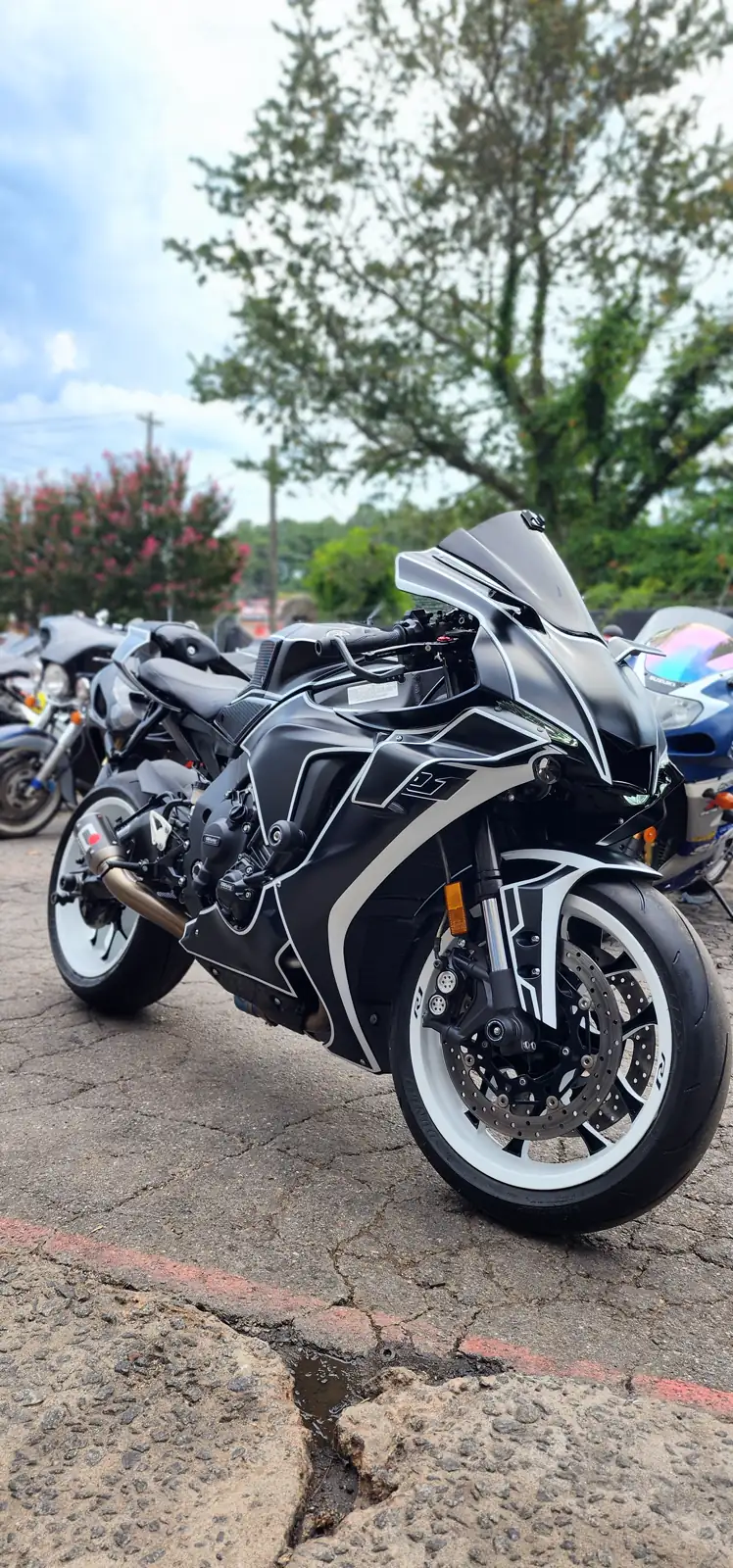
Two tools do most of the heavy lifting here, and it helps to know the names. The first is an ECU flash. Your bike’s computer runs a set of tables that tell it how much fuel to add and when to fire the spark. A flash rewrites those tables. The second is a Power Commander, which is a small box that rides between the sensors and the injectors and trims the fuel on the fly. Both change how the bike feels. Neither one adds magic.
Why do this at all? Because parts change the math. Put on a titanium slip-on and the engine breathes out easier. Swap the intake and it breathes in easier. Now the factory fuel tables are guessing wrong for your setup, and the bike might run lean where it used to be fine. A tune brings the fuel and timing back in line with the hardware you’ve bolted on. If you’ve added an exhaust and you’re wondering whether it’s worth it, we wrote up how to decide between them for that exact call.
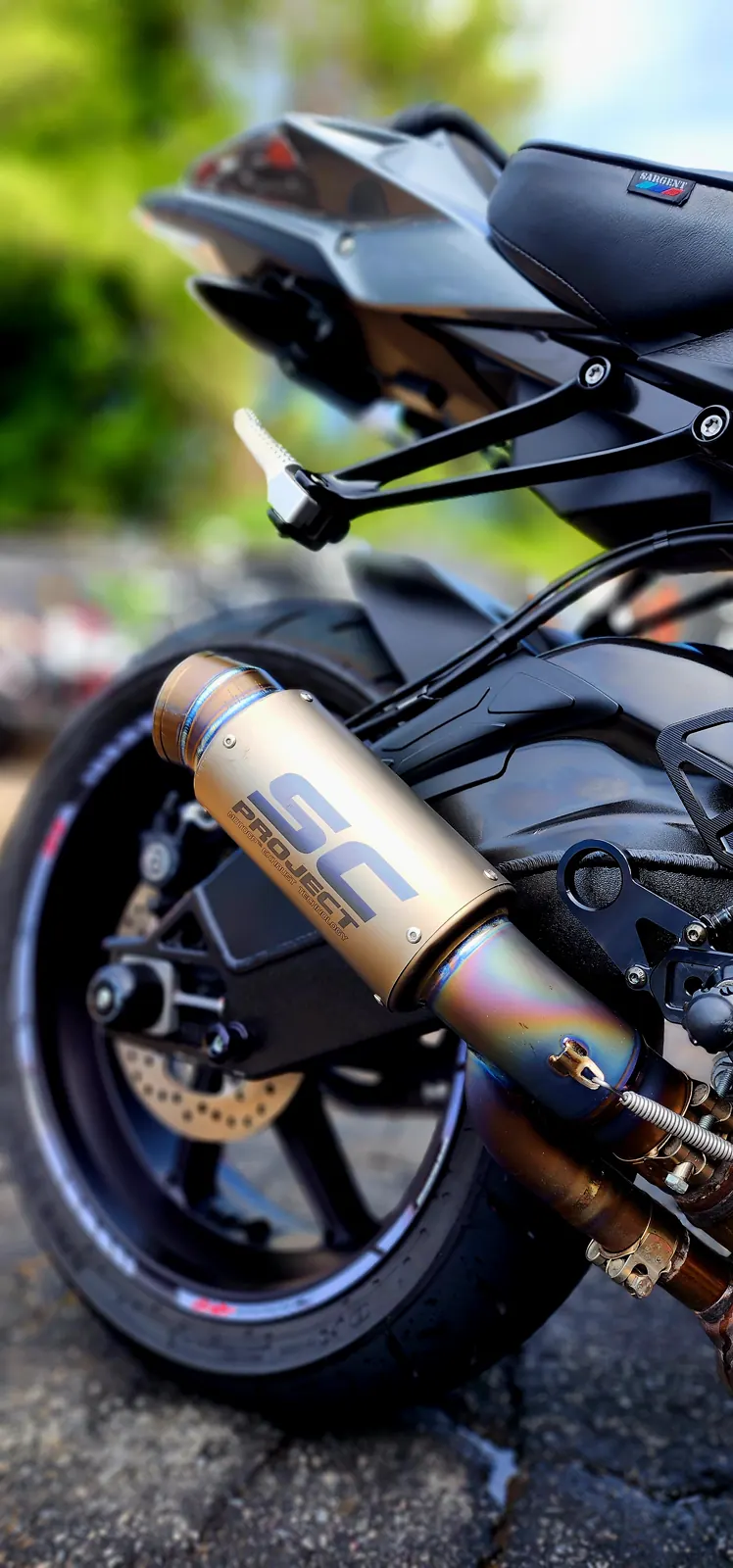
You don’t need bolt-ons to want a tune, though. Plenty of the friends we’ve helped ride bone-stock bikes and just want the hesitation gone. A stock bike with a clean custom map feels like the same motorcycle after a good night’s sleep. Smoother off idle. Steadier cruise. No surging at the speed you actually hold on the highway. That’s the whole point of the work we do in house — matching the tune to the rider, not to a spec sheet.
QUICK TIP
Before any tune, we check the basics first — fuel, battery, plugs, injectors. A healthy bike tunes clean. A tired one just hides its problems under a new map.
Here’s the question we’d ask if you were standing in the shop. Not how much power do you want. We’d ask where does the bike feel wrong to you? Down low pulling out of your neighborhood? In the middle where you spend most of your riding? Up top when you finally open it up? Your answer changes the whole map. A good tuner tunes for the rev range you live in, not the one that looks best on a printout you’ll show your friends.
What to Check Before You Trust a Shop
You’re comparing shops, so let’s make that easy. A dyno in the building is the first thing to look for. Some multi-line dealers send tuning out or skip it, and that’s fine for them, but it means nobody there is watching your bike make power in real time. When the tuning happens under the same roof as the wrenching, small problems get caught before they become big ones. That single detail separates the best dyno tuning Alpharetta riders talk about from the rest.
- Ask to see the dyno. A real shop will walk you back and show you the drum.
- Ask for a before-and-after pull. You should get a printout, not just a promise.
- Ask who does the tuning by name, and how long they’ve done it.
- Either way ask what happens if the map isn’t right on the first pass.
- Ask whether they tune for your riding or a generic target.
Notice none of those questions are about price. That’s on purpose. A number matters, but it’s the last thing, not the first. What you’re really buying is judgment — someone who can read the air-fuel numbers and the way you describe the bike and turn both into a map. If a shop can explain what it’s changing and why, in words you understand, that’s a very good sign. If a shop gets cagey, well, that’s your answer too.
Mistakes Riders Make When Picking
Now the flip side. The most common mistake is chasing a big number on a graph. A peak power figure looks great, but you don’t ride at peak. You ride in the middle. A map built to win a bragging contest can feel worse everywhere you actually spend time. We’d rather give you a smooth, strong pull through the range you use than one tall spike you’ll feel for half a second twice a year.
Another mistake is skipping the health check. A dyno tune can’t fix a tired engine. If a bike sat all winter — and around here a lot of them do — it might have stale fuel, a weak battery, or gummed-up injectors. Tuning on top of that is like tailoring a suit over three sweaters. So we look the bike over first. Sometimes the fix is a good service, and the bike wakes right up before we touch a single fuel table.
The third mistake is going in with no goals. “Make it faster” isn’t a plan. Do you want a calmer commute? A crisper throttle for canyon days? Better manners two-up with a passenger? Each one points to a different map. The clearer you are about how you ride, the better your tune fits. And if you’re not sure, that’s fine — a good tuner asks the right questions and helps you figure it out.
The Local Picture Around North Fulton
It helps to know what Alpharetta looks like from a shop’s chair. North Fulton is rich with dealers but thin on big independent performance shops. Two strong dealerships sit close together over in Roswell, and they do good work. But there isn’t a large, well-known independent inside Alpharetta itself that handles custom mapping, restoration, and paint under one roof. So riders spread out. Some cross county lines. Some drive a while for the right bench and the right person reading the numbers.
And these are riders who do their homework. Around Windward — the 3,400-acre master plan built around Lake Windward, the flagship community here — a single garage might hold a tourer, a sportbike, and something vintage all at once. Out in Blue Valley, the equestrian-themed gated streets, it’s the same story. Even in a mid-market pocket like Pennbrooke, with its couple hundred homes from the late 1990s, the bikes are cared for and kept in the garage. This is a market that reads reviews before it ever calls.
That care shows up on the dyno, too. A garage-kept bike that only comes out on weekends spends months sitting still. Fuel goes stale. Batteries fade. That’s why spring is our busy season — folks pull the cover off in April, right as pollen bakes onto every clear coat in town, and the bike doesn’t run the way they remembered. A quick check and a fresh map, and it does again.
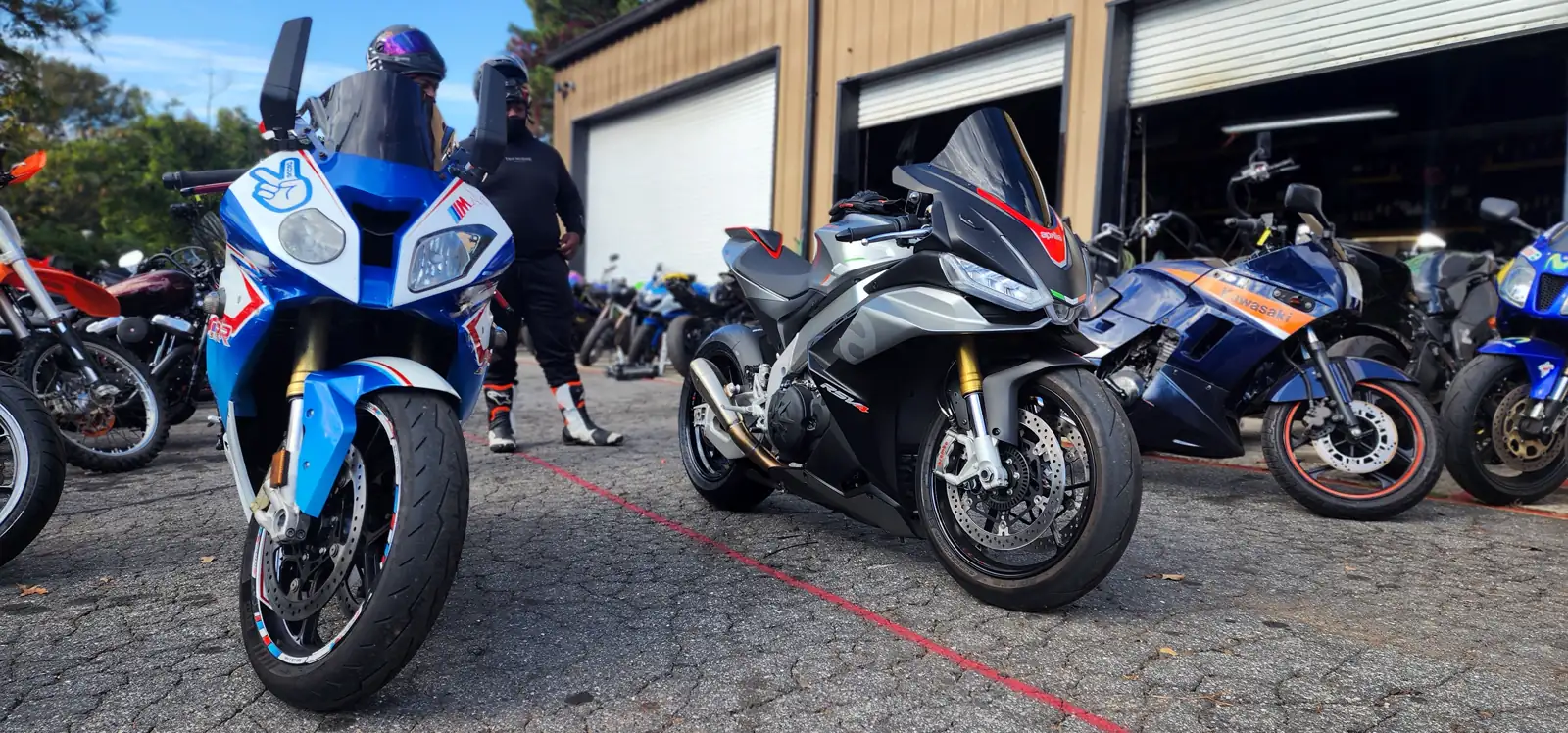
You see the culture in where people meet. Riders roll into Maddox Park, at 174 S Main St, where the fountain sits out front of the Welcome Center, and swap stories before a group run. Others drift up to the historic Crabapple crossroads — the Silos district Alpharetta shares with Milton — for coffee and a slow loop through the back roads. These aren’t commuters killing time. They’re enthusiasts, and enthusiasts notice the second a bike stops running right. If you’re newer to all of it, the American Motorcyclist Association is a friendly place to learn the ropes.
This is where Alpharetta is genuinely different from other towns. Most of these bikes weren’t bought to beat traffic. GA 400 stacks up southbound every morning and northbound at five, and a bike sitting near the Haynes Bridge Road exit — the Exit 9 connector, thick with apartments and townhomes — doesn’t really save you time, since Georgia doesn’t allow lane splitting. So folks here don’t commute on two wheels much. They ride for the joy of it. That one fact changes what a good tune should chase.
When the bike is your weekend escape, the tune is about feel, not the clock. You want crisp, predictable throttle for a real ride — say the run up to the Suches Loop, the US 19, GA 60, and GA 180 triangle out of Dahlonega that folks call Georgia’s Dragon, past Neel’s Gap and Blood Mountain. On roads like that, smooth power you can trust mid-corner beats a scary spike every single time. A tune built for a commute you don’t do would miss the whole point. And if construction has you rerouting, Georgia DOT keeps a running list of what’s torn up.
What You Actually Get Out of It
So here’s what a good tune leaves you with. The hesitation is gone. The throttle does what your wrist asks, right when you ask it. Cruise settles down and stops surging at highway speed. The bike runs cooler and cleaner where it used to run lean. None of that shows off at a stoplight. All of it shows up on a long ride, which is exactly when Alpharetta riders care. That’s the quiet kind of better that lasts.
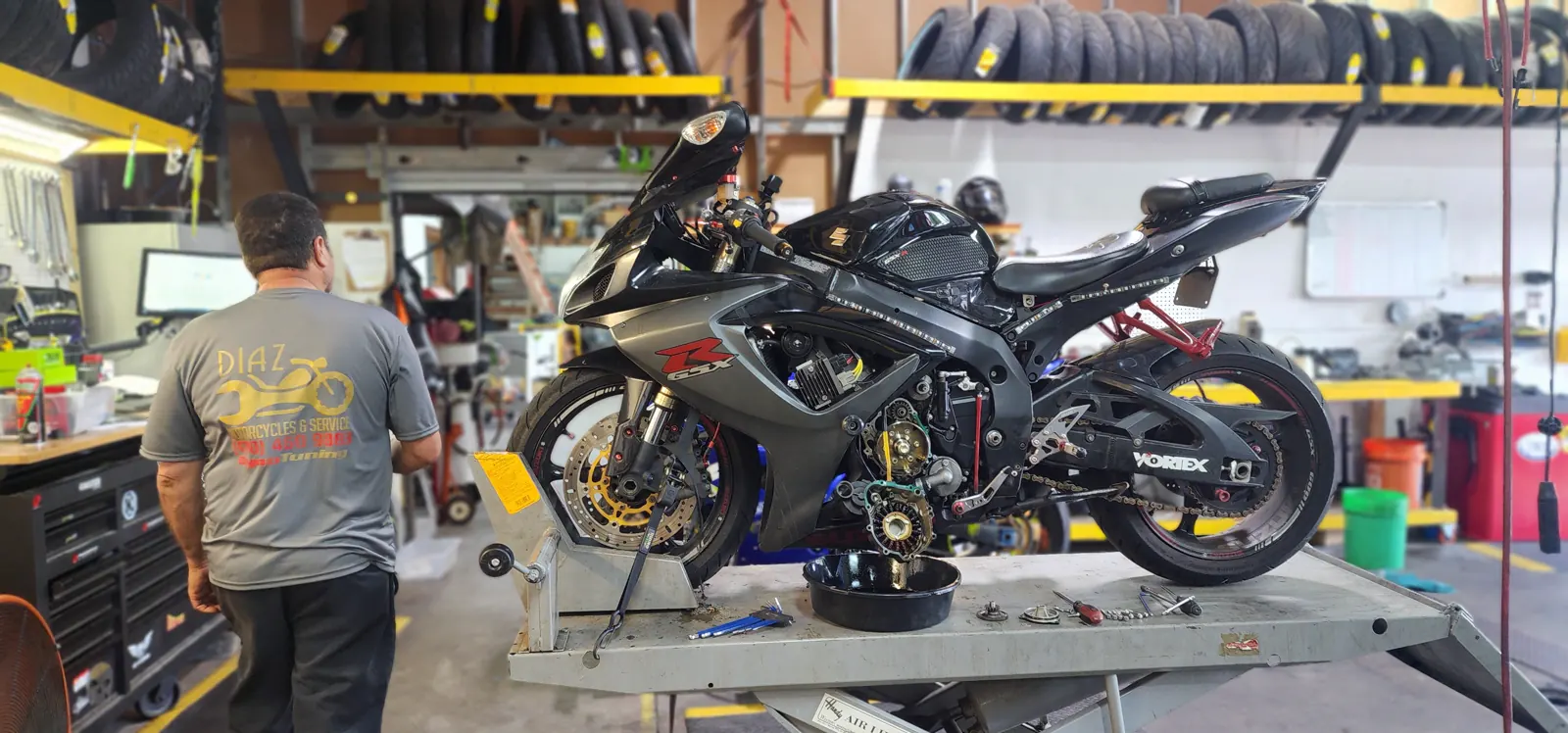
We’re in Marietta, not far off, and we make the trip easy. There’s no freeway that connects us straight, so most riders take Old Milton or Rucker to GA 9 south through Roswell, then GA 120 west into East Cobb. Figure eighteen to twenty-two miles, half an hour or so when traffic’s calm and closer to an hour at rush. If you’d rather not ride it over yourself, we can talk about how we handle that job and pick the bike up for you.
One more honest note. Some jobs belong somewhere else, and we’ll tell you so. If you’ve got a classic that needs a ground-up restoration, a specialist like Blue Moon Cycle over in Norcross — a Zero and Ural dealer known for classic-bike restoration, though they’re closed weekends — might be the better call. Knowing when to point you elsewhere is part of being the best dyno tuning Alpharetta has nearby. We’d rather earn your trust than book every last job.
Most of all, you should finish feeling sure. Not talked into anything. Not sold a number you’ll never use. Just confident that the person tuning your bike understood how you ride and built the map around it. That’s the feeling we’re after every single time a bike rolls off the dyno and points back toward home. And if you want to compare notes on nearby towns, here’s the Smyrna side of things.
Questions Alpharetta riders ask us
Should I use a dealer or an independent shop for tuning?
Both can do good work, so it comes down to who tunes in house. A dealer is great for warranty parts and factory service. An independent with its own dyno often has more room to build a custom map for your exact bike and riding. Ask each one who does the tuning and whether they watch the pulls in real time.
What should I ask a shop before I book a tune?
Ask to see the dyno, ask for a before-and-after printout, and ask who does the tuning by name. Then ask how they handle it if the first map isn’t right. A shop that answers plainly and shows you the bench has nothing to hide. Vague answers are your signal to keep looking.
Do you work on all brands of motorcycle?
Yes. We tune sportbikes, touring baggers, cruisers, and adventure bikes across the major brands. Whether it’s a Yamaha, Suzuki, BMW, Aprilia, or something else in your garage, we can read its air-fuel numbers and build a map for how you ride. If a job is truly outside our lane, we’ll say so and point you to the right specialist.
How far do you serve from the shop?
We’re in Marietta and we help riders across North Fulton and beyond, including Alpharetta, Roswell, Milton, and Johns Creek. Plenty of our friends make the ride from farther out because they want a custom map done in house. Distance isn’t the deciding thing — the right tune is.
Can you pick up my bike if I don't want to ride it over?
We can. There’s no straight freeway between Alpharetta and Marietta, so some riders would rather not sit in GA 400 and East Cobb traffic on two wheels. Talk to us about transport and we’ll sort out getting your bike to the dyno and back. You don’t have to make the trip yourself.
Is a tune worth it on a stock bike with no bolt-ons?
Often, yes. A factory map is built cautious for every rider everywhere, so a custom map on a stock bike can smooth out hesitation and surging. You keep the same parts and just get better manners across the range you actually ride. We’ll always check the bike’s health first so the tune sits on a solid base.
From our Marietta shop we help riders all across the north metro, starting close by in Roswell and Milton and running out to Johns Creek, Sandy Springs, and Cumming. Folks come to us from Duluth, Woodstock, and Suwanee too, along with East Cobb, Dunwoody, and the historic Crabapple crossroads. Wherever you keep your bike, if you can get it to the dyno, we can get it running the way you always hoped it would.
LET'S GET YOUR BIKE DIALED IN
If you’re an Alpharetta rider tired of that half-second hesitation or the pop on decel, let’s fix it for good. Text us about your bike, how you ride it, and what feels off, and we’ll walk you through what a real custom map can change. No pressure, no chasing a number you’ll never use — just an honest tune built around you.
470-460-9883Diaz Motorcycles and Service, LLC · 847 Barnes Mill Road, Marietta, GA 30062