Best Dyno Tuning Douglasville — How to Pick the Right Shop
A plain-words guide to what a dyno really measures, why your bike runs lean or rich, and how to choose a shop you can trust.
Still, you typed it into your phone one night, then deleted it, then typed it again. Plus, your bike feels a little flat pulling away from a light, or it runs hot in traffic, and you just want someone who actually knows what they’re doing. So here it is, straight and simple: the honest way to find the best dyno tuning Douglasville riders can trust, with no sales pitch and no jargon you need a dictionary for.
What you're actually asking at 9pm
Here’s a small secret. When you search for a tuner late at night, you’re not really asking about machines. You already know your bike feels off. What you’re really asking is, who can I hand my motorcycle to and not worry about it? That’s a trust question wearing a technical costume. And it deserves a real answer, not a wall of horsepower charts.
So let’s slow down and take it in order. First we’ll cover what a dyno actually does, in words your neighbor could follow. Then we’ll talk about lean and rich, which is really just why your bike feels the way it feels. After that, we’ll get into how to judge a shop, how we do the work, and what any of this has to do with riding out here on the west side of Atlanta. By the end, you’ll be the one holding the map.
The honest answer: what a dyno really measures
A dyno is not magic, and it’s not a scam either. Picture a heavy metal roller set into the floor. You strap the bike down, put the rear wheel on that roller, and run through the gears while the bike stays still. The roller pushes back against the wheel, and a computer reads how hard your engine can shove it across the whole rev range. That’s the power part everyone talks about.
But the number people brag about is only half the story. The more useful half is the sensor in the exhaust. At the same time it reads the mix of air and fuel your engine is burning at every point, from a lazy idle to a hard pull. That reading is the real gold. As a result it tells a good tuner exactly where your bike is starving and where it’s drowning, moment by moment, instead of guessing.
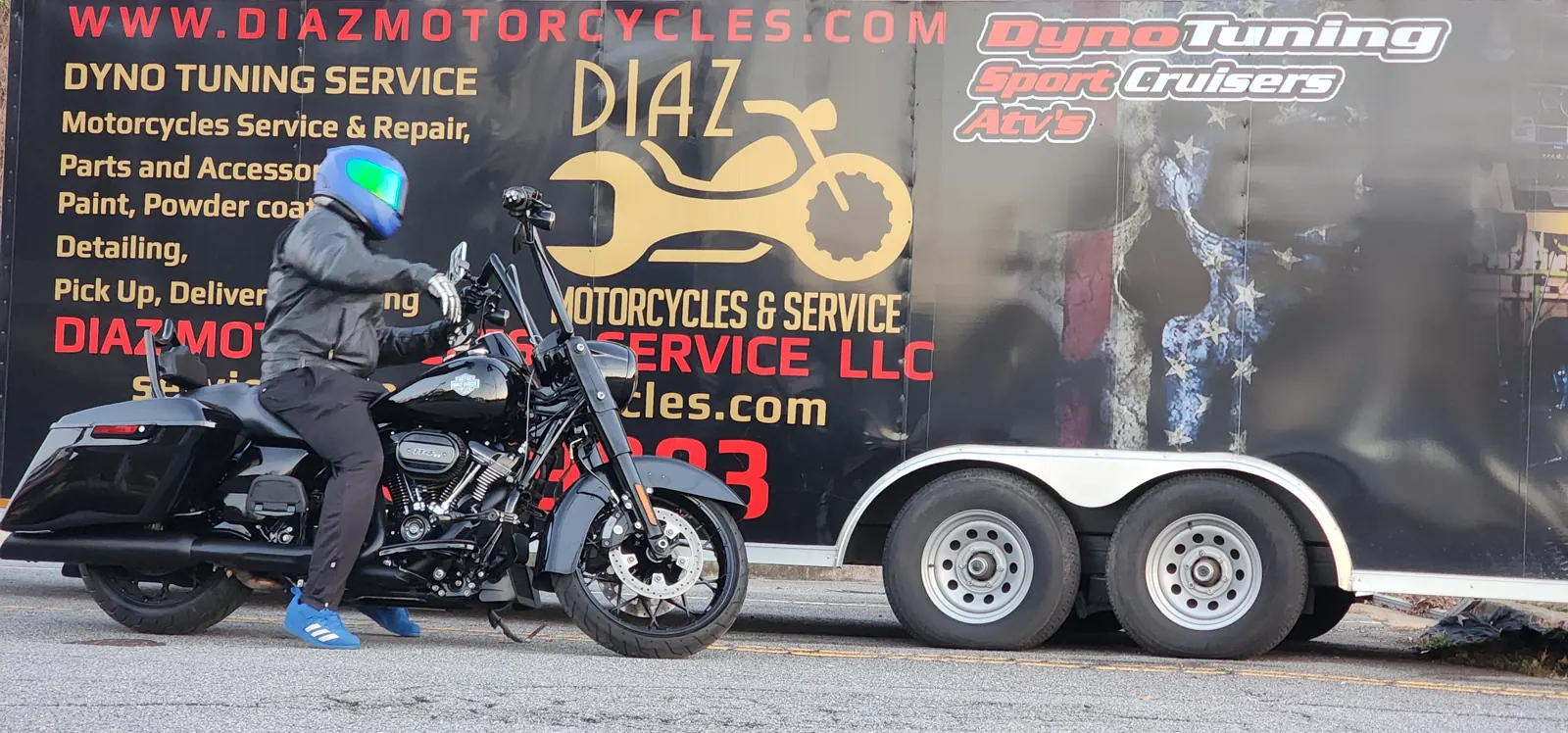
So think of the dyno as an honest witness. On the other hand it doesn’t care about brand loyalty or opinions. In short it watches your engine work under real load and writes down what it sees. A shop that uses that data to explain your bike back to you is doing it right. A shop that just points at a big number and shrugs is missing the whole point. That gap, honestly, is the difference between the best dyno tuning Douglasville has to offer and a quick job that leaves you right back where you started.
If you want the deeper mechanical detail, what our team handles is laid out on our tuning page. But you don’t need all of that to make a smart choice today. You just need to understand the two big words coming up next.
Lean, rich, and why your bike feels off
Every engine breathes air and drinks fuel. Get that recipe right and the bike feels alive. Get it wrong and you feel it in your right wrist. When people say a bike runs lean, they mean too much air and not enough fuel. When they say it runs rich, they mean too much fuel and not enough air. That’s the whole vocabulary, honestly.
A lean bike tends to run hot, pop and crackle when you roll off the throttle, and hesitate or surge at steady speeds. So it can feel jumpy and cranky, like it skipped breakfast. A rich bike feels the other way, kind of lazy and sluggish, sometimes with a fuel smell and a sooty spark plug. Neither one is a death sentence. Both are just a recipe that needs adjusting.
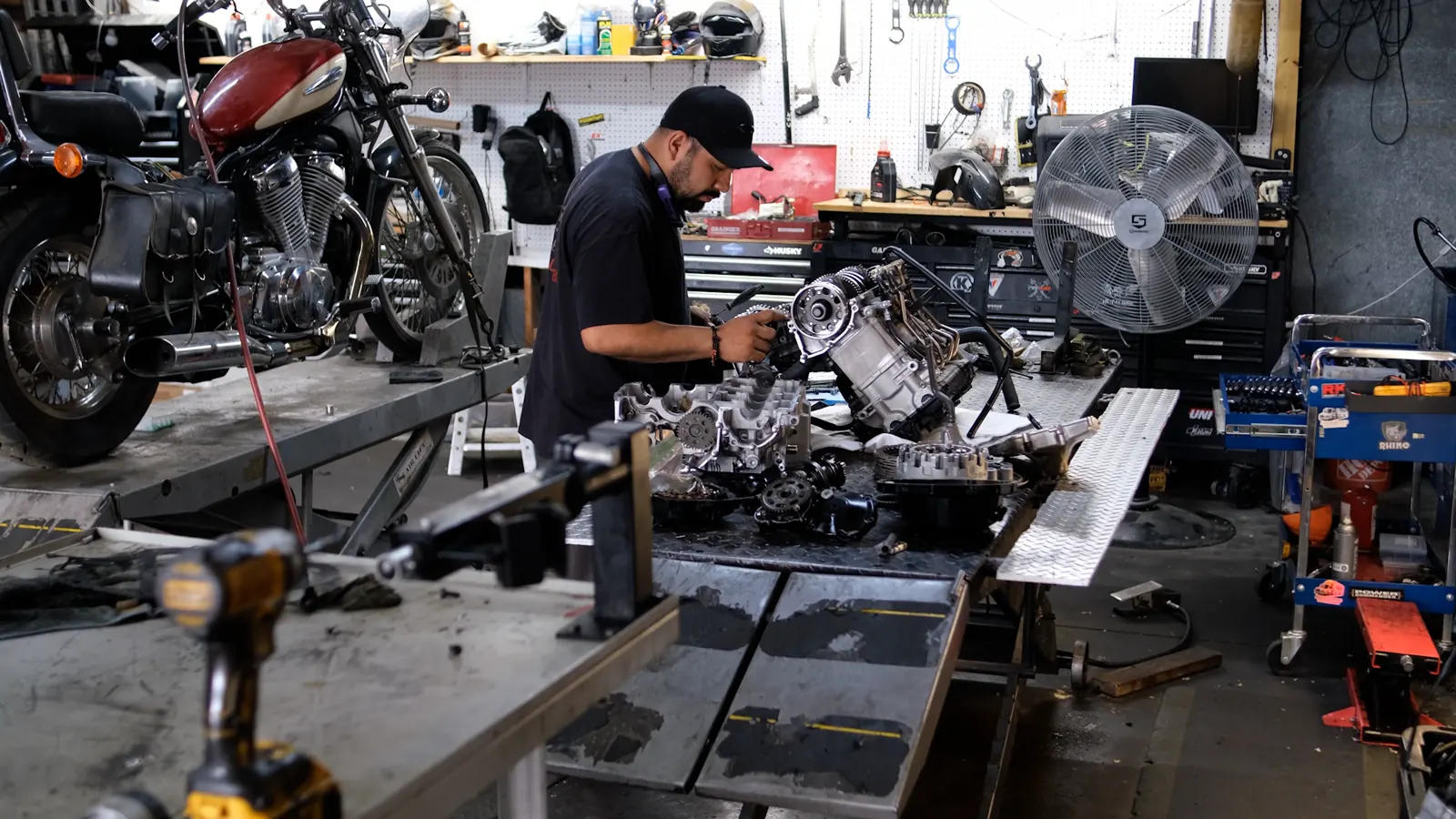
Why does a bike drift lean or rich in the first place? Sometimes it left the factory a little off on purpose, tuned to pass rules rather than to please you. Sometimes you added a new exhaust or an air filter, which changes how it breathes. Elevation, weather, and even our thick summer air out here all nudge the mix around. So the goal of a tune is simple: fix the recipe across the whole range so the bike does what your hand asks.
And this is the part that should take a little weight off your shoulders. A mix that’s off isn’t a broken bike. It’s a settings problem, and settings can be changed. That’s the whole reason a tune exists in the first place. Once someone reads your engine honestly and corrects the recipe, that flat spot or that surge you’ve been living with usually just goes away. The fix has been sitting there the whole time, waiting for the right eyes.
Something changes once you know what to look for. Suddenly a shop tour isn’t scary anymore, because you can ask real questions and hear whether the answers make sense. You don’t need to become a mechanic. You just need a short list of things a good tuner should be able to show you and say out loud without dodging.
What separates a good tune from a bad one
Not all tuning is equal, and price isn’t the tell. The tell is the process. A rushed tune is one WOT pull and a canned map copied off the internet. A real tune reads your actual bike, on the actual dyno, and adjusts fuel and timing across idle, cruise, and full throttle. Here’s what to listen for when you’re comparing shops:
- They tune in-house on their own dyno, not by shipping your ECU somewhere and mailing back a guess.
- Either way they read the air-fuel mix across the whole range, not just at wide-open throttle where the bragging number lives.
- They ask what you actually ride and how you ride it before touching a setting.
- They can show you the before and after and explain, in plain words, what they changed and why.
- They’re calm about the parts you already have, and won’t pressure you into a cart full of stuff you didn’t come for.
If you’re still torn on whether a tune is even worth it for your setup, we wrote a whole piece on how to decide between them. Stock is fine for plenty of riders. But if your bike already feels off, a proper tune usually fixes the exact thing that’s been bugging you.
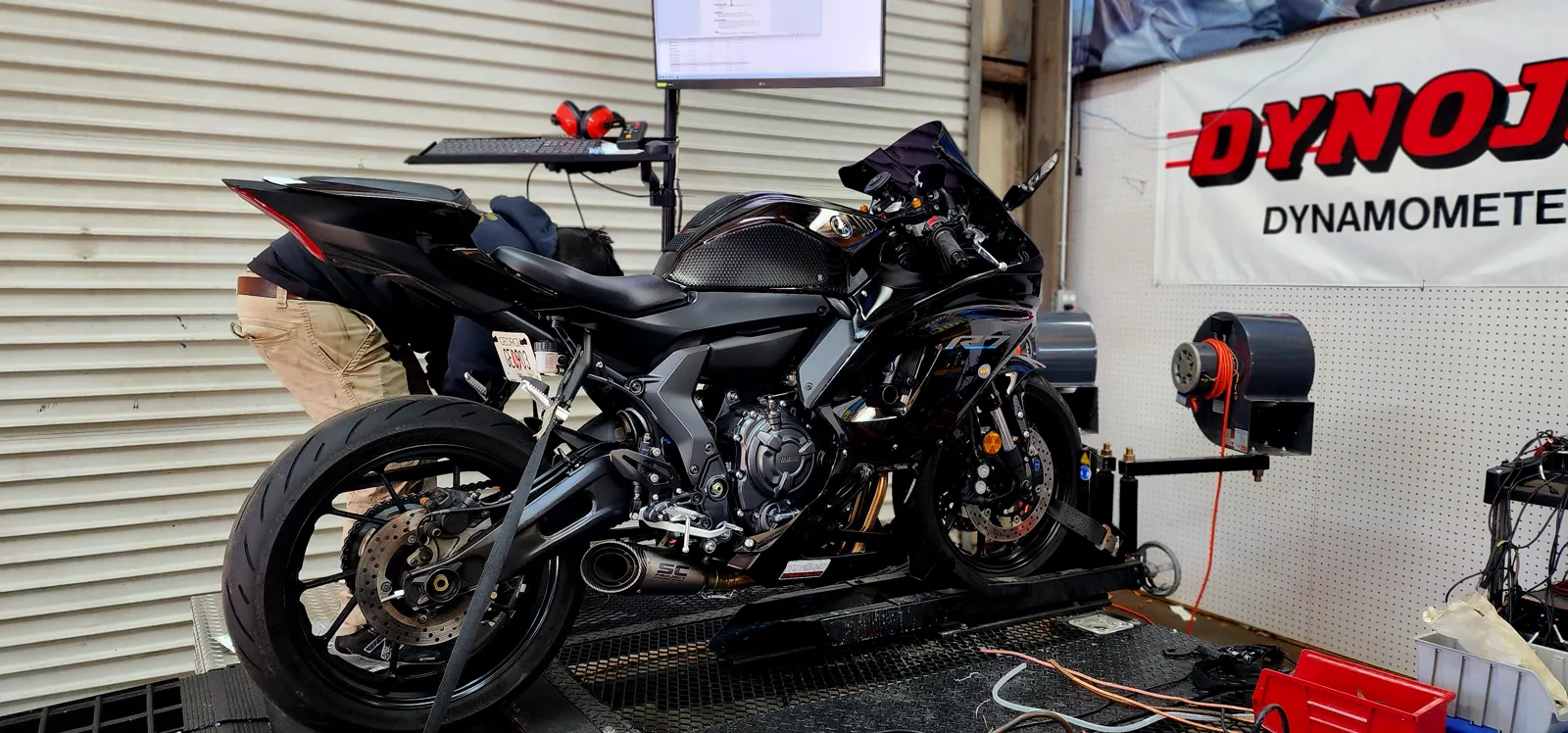
Notice that none of those green flags are about a bigger number. A great tune can even trade a hair of peak power for a bike that’s smoother everywhere you actually ride. Cleaner idle, less engine heat at a red light, a throttle that answers your hand instead of arguing with it. That’s the stuff you feel every single day, and it’s the stuff a good shop cares about most.
Keep that green-flag list in your back pocket when you’re comparing places, because it works no matter whose door you walk through. It’s the same short checklist we’d use ourselves. Frankly, the best dyno tuning Douglasville riders talk about isn’t the shop with the loudest claims. It’s the one that reads your bike carefully, tells you the truth, and only changes what your motorcycle actually needs changed.
How we approach the work
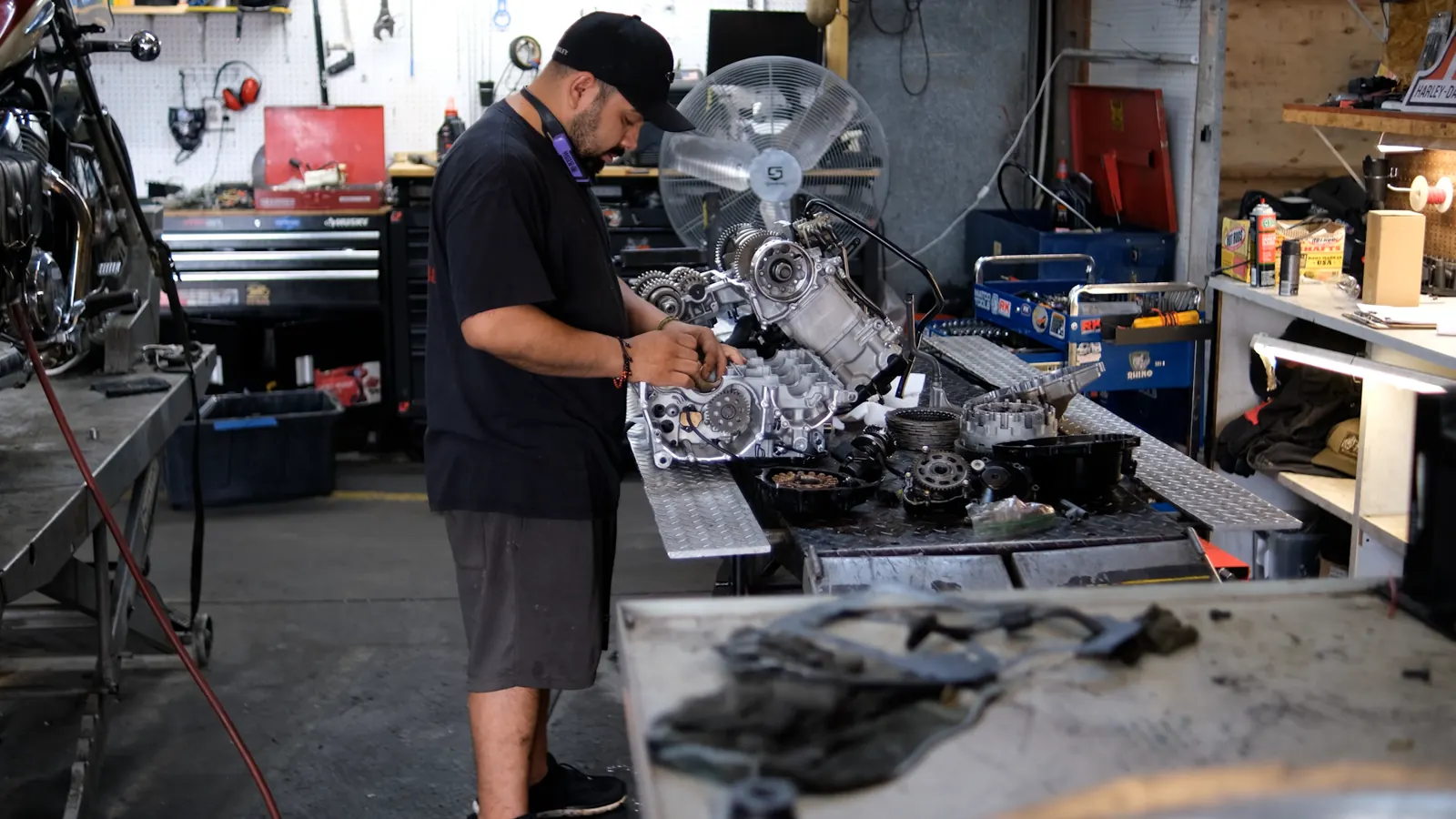
We keep it simple and we keep it honest. Your bike goes on our own Dynojet, gets read across the full range, and gets its fuel and timing dialed in through an ECU flash or a Power Commander, depending on what your bike takes. We tune for how you ride, not for a screenshot. If a bagger owner wants smooth low-end grunt and a sportbike rider wants crisp mid-range, those are two different maps, and we build both to fit the person.
We’ll also tell you the truth if a tune isn’t your answer. Sometimes a rough-running bike just needs a real fix first, like a tired plug or a hidden intake leak, and no map cures that. If you’re curious what a clean tune actually feels like once the fundamentals are right, we walked through how we handle that job and the changes riders notice most.
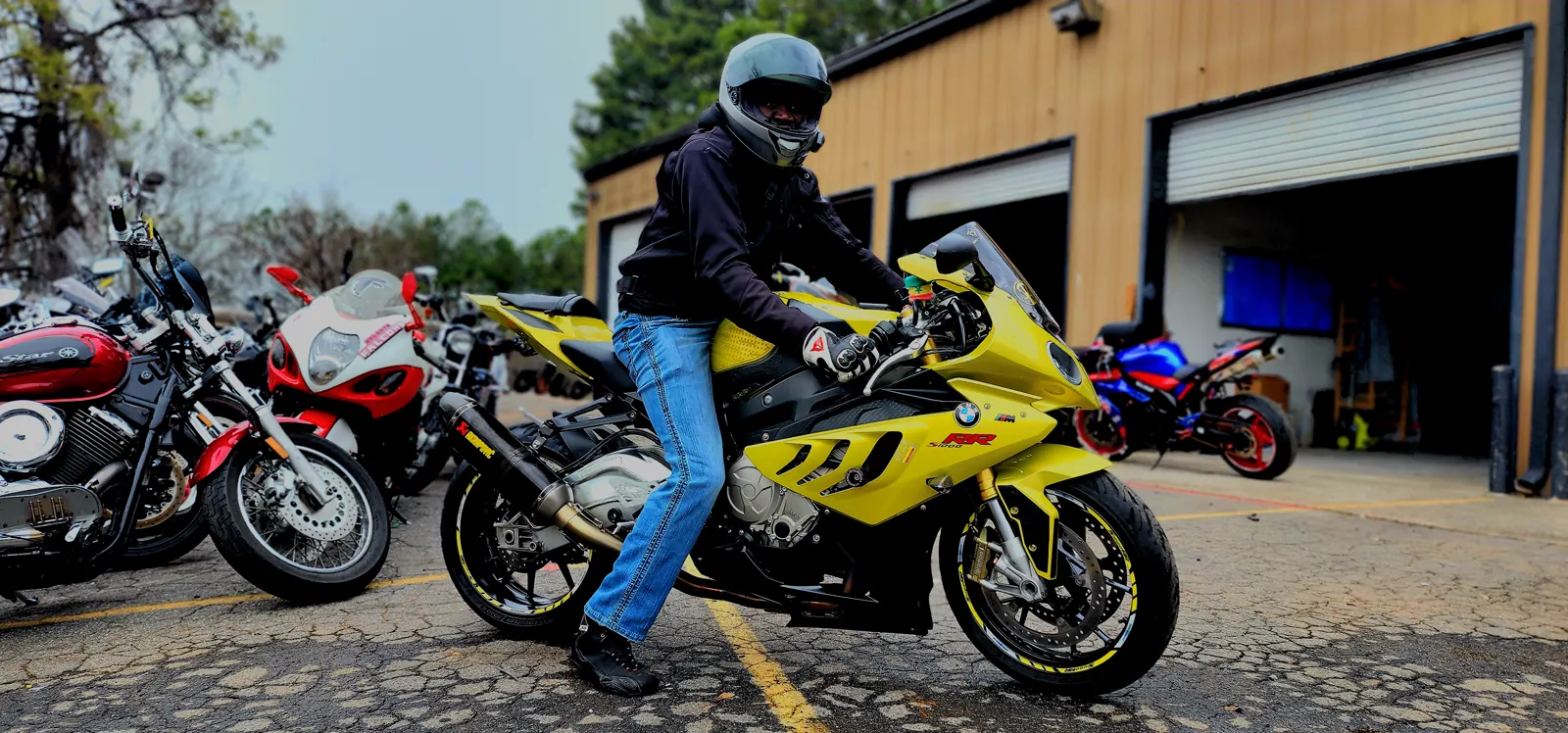
One more thing that matters more than it should: we explain what we did. You leave knowing what your bike was doing before and what it’s doing now, in normal English. No mystery, no shrug. That’s the whole promise, and it’s why the friends we’ve helped keep sending their riding buddies our way.
The part that has nothing to do with parts
Now for the part that has nothing to do with parts at all. Choosing a shop is really about your neighborhood and your gut. Douglasville sits right in the thick of metro Atlanta’s west-side riding scene, and you’ve got real options close by, which is a good thing. A busy market means you get to be picky, and picky riders end up happier.
Take Atlanta Harley-Davidson over on Thornton Road, only about ten or fifteen minutes east. They run the west metro’s Bike Night and their Harleys After Dark events, and they’re a genuine gathering spot for a lot of local riders. That’s a strength of the area, not a knock. Where an independent like us tends to shine is deep, in-house custom mapping across every brand, whether you ride a Milwaukee twin or a Japanese four.
Getting to our shop is easier than the map first suggests. Skip the ugly I-20 to I-285 crawl, since that interchange is one of the worst chokepoints in Georgia. Take Thornton Road up to the East-West Connector into Marietta instead, roughly a forty to sixty minute ride. It’s an easy run whether you live out near the new-build homes and pools around Brookmont, out on Bill Arp on the GA-5 corridor, or right off the historic Main Street district in downtown Douglasville.
And let’s be real about why you tune a bike out here in the first place. It’s for the good roads. Or it’s for slow Sunday loops down the rural two-lanes in south Douglas and Winston, out along Post Road and Dorsett Shoals Road, past Basket Creek and the wooded stretches near the Chattahoochee. It’s for a quiet cruise by the Clinton Nature Preserve, or an easy errand ride to drop by the Red Cross blood processing center that moved into town. If those are your roads, you might also like the Acworth side of things for a different local take on the same work.
A little homework helps too. You can read up on how a proper dyno operation is supposed to run over at Dynojet’s dyno center, and if you ever want the sober safety facts about riding, the folks at IIHS motorcycle research keep it plain. The more you know going in, the harder it is for anyone to sell you smoke.
You're the one in control
So look back at where you started, staring at your phone, hoping to find someone who knows what they’re doing. You now know what a dyno measures, what lean and rich really mean, and the short list of green flags that separate a real tune from a rushed one. That’s not a small thing. That’s the whole game.
You don't need to be a mechanic. You just need to know what good looks like — and now you do.
Whichever shop you pick, walk in with your questions and trust your gut. And when you’re ready for someone who’ll read your bike honestly and explain every change out loud, we’re a short ride away and happy to help.
Questions Douglasville riders ask us
Can you pick up my bike from Douglasville?
Yes. We offer transport, so you don’t have to ride a bike that’s running rough all the way over. Just text us your location and what’s going on, and we’ll set up a pickup that works for your schedule. It’s an easy way to skip the I-20 and I-285 headache entirely.
How do I know your diagnosis is right?
Because we show you, not just tell you. The dyno reads your air-fuel mix across the whole rev range, and we walk you through the before and after in plain words. If a tune isn’t your real problem, we’ll say so and point you at the actual fix instead.
What makes you different from other shops?
We do real custom mapping in-house on our own Dynojet, across every brand, whether you ride a Harley or a Japanese sportbike. We tune for how you actually ride, and we explain every change out loud. No canned internet maps and no mystery.
How do I pick a good tuning shop?
Look for a shop that tunes on its own dyno, reads the mix across the full range, asks how you ride before touching a setting, and can show you what changed. Calm, clear answers are a great sign. Pressure and vague brags are not.
Should I go to a dealer or an independent?
Both can be great, and Douglasville is lucky to have strong options like Atlanta Harley-Davidson nearby for community and events. An independent like us tends to shine on deep, in-house custom tuning across every brand. Pick the one whose process and answers make you feel confident.
Will a tune give me a smoother ride, not just more power?
Often yes, and that’s the part riders love most. A good tune can mean a cleaner idle, less engine heat at a stoplight, and a throttle that answers your hand right away. Those daily-feel gains usually matter more than any single peak number.
We tune and wrench for riders all across the west side of metro Atlanta. That includes Douglasville and nearby Lithia Springs, Villa Rica, and Winston, plus the Cobb and Paulding communities of Powder Springs, Hiram, and Dallas. We also help riders in Austell, Mableton, Smyrna, Temple, and Fairplay, and of course our home base of Marietta. If you’re within an easy ride, we’d love to read your bike.
READY TO STOP GUESSING?
If your bike has been feeling off, you don’t have to keep wondering about it. Text Diaz Motorcycles and tell us what you’re riding and what it’s doing, and we’ll set you up with the best dyno tuning Douglasville riders can lean on. We’ll read your bike honestly, explain every change in plain words, and even pick it up if that’s easier.
470-460-9883Diaz Motorcycles and Service, LLC · 847 Barnes Mill Road, Marietta, GA 30062