Best Dyno Tuning Roswell — Rider's Guide
How to judge a tuning shop, what a dyno really measures, and why a confused engine is one of the easiest problems to fix.
Saturday morning. Even so, tank full, gear stacked by the door, three friends already texting from a lot off Canton Street. Then the bike hunts at idle in the driveway, coughs once, and quits. The ride is over before it starts, and everybody else rolls out without you. Meanwhile, Mornings like that are why riders go looking for the best dyno tuning Roswell has within reach, and it usually isn’t because they want a bigger number on a graph. They want a bike that behaves. In fact, that said, the good news is that this is one of the most fixable problems in motorcycling.
You know the symptoms even if you’ve never named them. For example, the bike stumbles just off closed throttle. After that, it surges at a steady 45 through a neighborhood, gets cranky in traffic on a hot afternoon, pops on the way down through the gears, and feels flat right where you hoped it would pull. Nothing leaks. Nothing rattles. What’s more, it just feels wrong, and that vague wrongness is what eats a riding season.
So and Better yet, here’s the part nobody tells you: most of those bikes aren’t broken at all. They’re confused. The engine is following a fuel and spark recipe that doesn’t match the air it’s breathing, the exhaust it’s wearing, or the Georgia summer it’s sitting in. Still, Give it the right recipe and the same machine feels like it grew a personality overnight.
What a dyno actually measures
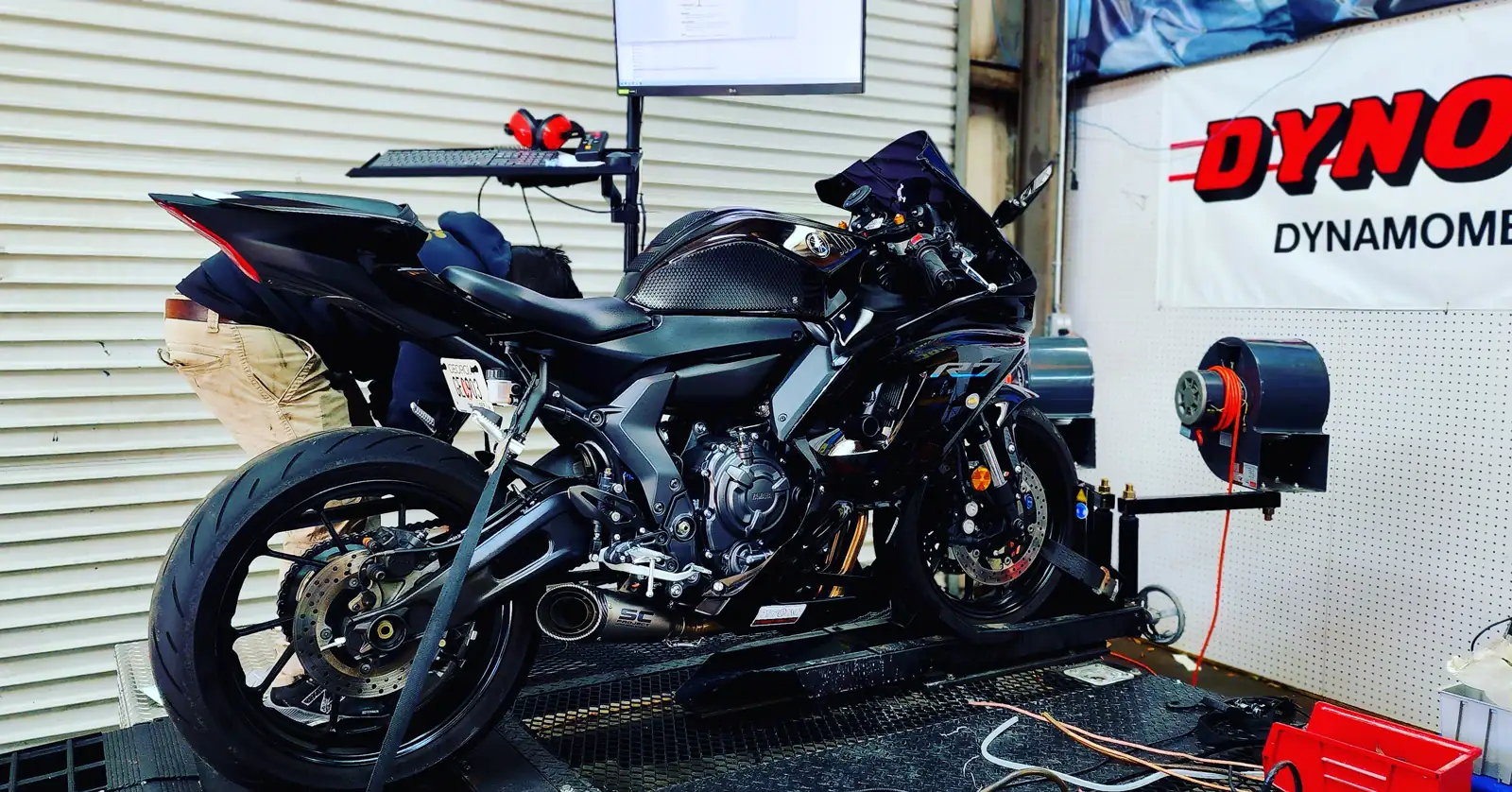
Plus, Strip away the mystique and a dyno is a heavy drum set into the floor. Of course, we strap the bike down, the rear tire spins that drum, and the drum pushes back with a known amount of resistance. Then again, From how hard your engine works to keep it moving, the machine reads how much twist the motor makes and how quickly it makes it. No wizardry. Even so, just a very patient scale for engines.
Meanwhile, the graph is the part everyone posts online, but honestly it’s the less useful half. In fact, that said, what changes how your bike feels is the sniffer we put in the exhaust. It reads the oxygen left over in the burnt gas, which tells us how much fuel the engine got at every throttle position and every RPM. We’re not guessing. We’re reading the engine’s own report card, line by line.
Because the bike is strapped down and rolling, we can hold a steady quarter throttle as long as we need, which you can never safely do on a road. That’s how the best dyno tuning Roswell riders can reach finds the exact cruise spot where a bike surges, instead of shrugging and saying they all do that.
Lean, rich, and why your bike acts up
Lean means the engine got too much air for the fuel it was given. A lean engine runs hot, pops and crackles on the way down through the gears, surges at steady speed, and can feel jumpy when you crack the throttle. Rich is the opposite problem: too much fuel for the air. A rich engine smells strong, fouls plugs, feels lazy and heavy, and drinks more gas than it should.
Neither one means you did something wrong. Factory maps are written to satisfy emissions rules and survive whatever fuel a bike might see anywhere on earth, so they’re cautious by design. Then real life happens. Somebody adds a slip-on or a free-flowing filter, and the air side of the equation changes while the fuel side stays where the factory left it.
Weather piles on too. From June through September the heat and humidity here are relentless, oil breaks down faster, cooling systems work overtime, and tire pressures wander. Thick, wet summer air behaves nothing like the cool dry air of a February morning, so a map that felt fine in winter can feel soft and sulky in August.
Here's what a good shop checks that a rushed one skips
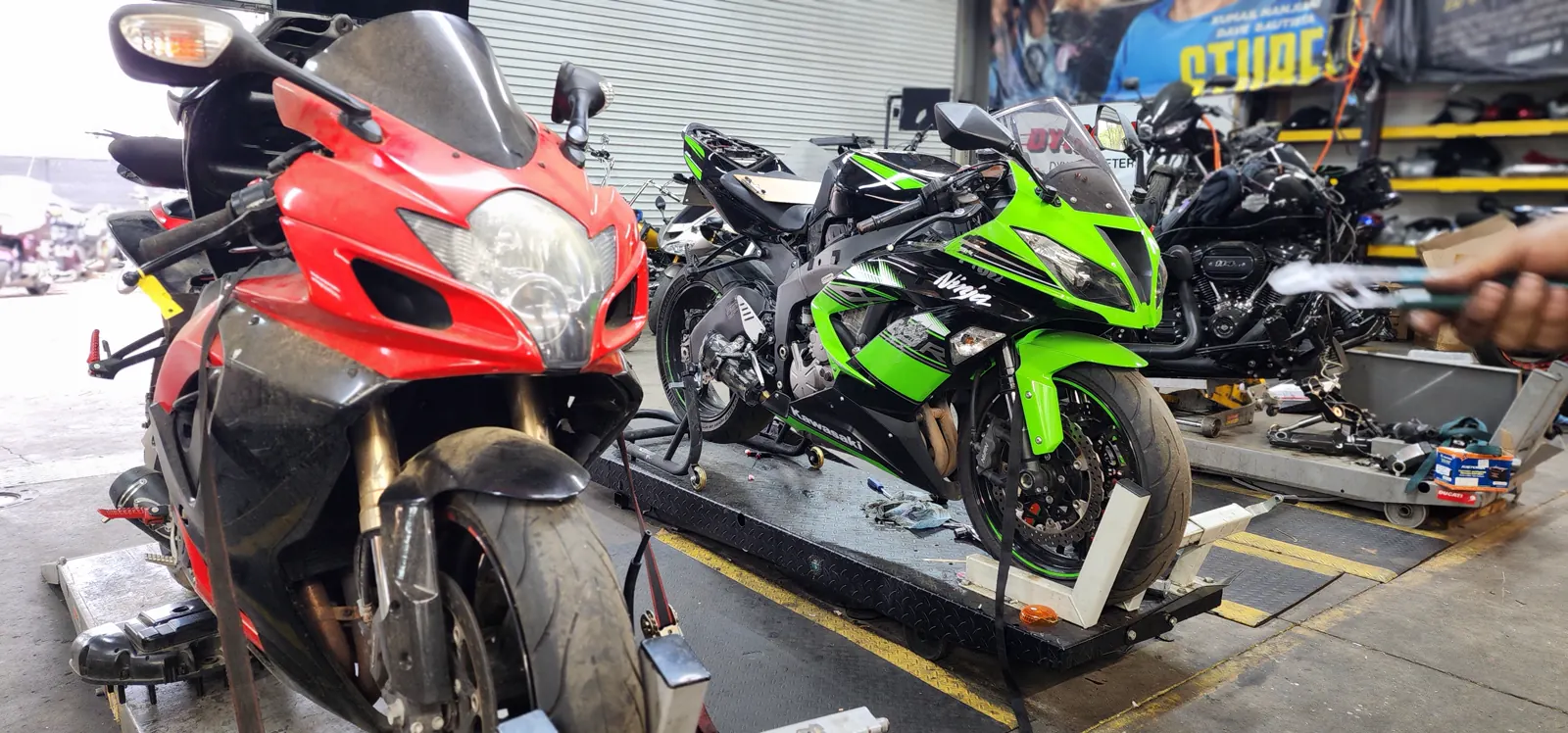
This part is worth reading twice, because it separates a tune that transforms your bike from a tune that hands you a piece of paper. A rushed job goes straight to the dyno, loads a canned file, makes three pulls, prints the graph, and gives you the keys. A careful shop treats the dyno as the last step, not the first.
- Do they inspect before they tune? Air leaks, tired plugs, a clogged filter and overdue valve clearances all fake the symptoms of a bad map.
- Do they read the actual air-fuel numbers, or only the horsepower line?
- Do they ask how you ride? A bike living on GA 400 at commuting speed needs different attention than a weekend mountain bike.
- Is the tuning done in house, or shipped out to a file someone wrote for a bike they’ve never touched?
- Do they log a baseline first, so you can see honestly what changed?
- Will they explain it in plain words? A shop that can’t explain a fix simply usually doesn’t understand it deeply.
- Do they hand you your before and after data, or keep it vague?
None of that is a knock on dealers. Alpharetta Highway between roughly 10800 and 11500 is North Fulton’s motorcycle row, and Mountain Motorsports Roswell at 10885 Alpharetta Hwy runs a genuinely strong operation there, carrying Honda, Suzuki, Yamaha, Can-Am, Sea-Doo and Ducati, Tuesday through Saturday. A volume dealer is excellent at what a volume dealer is built for: new units, warranty work, parts on the shelf.
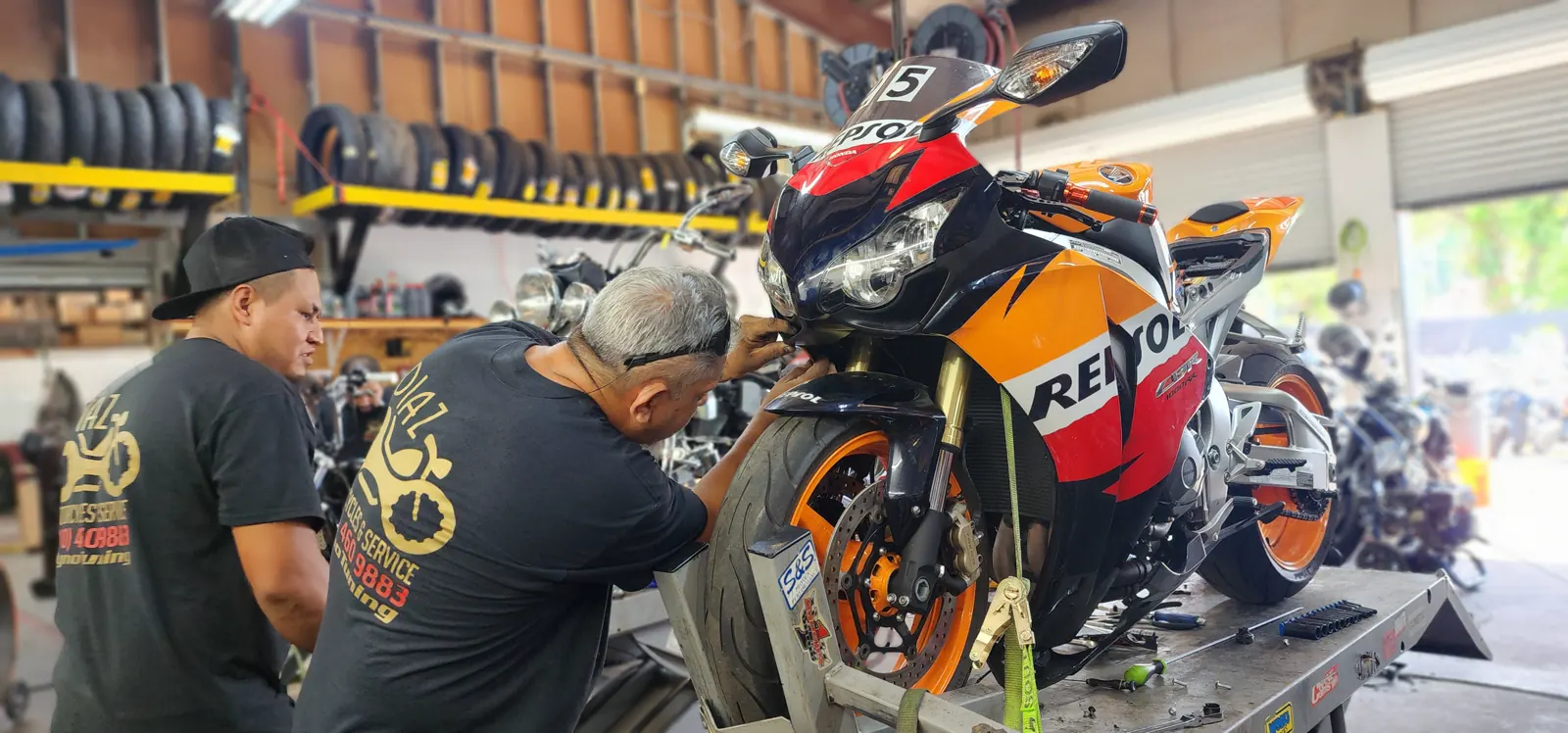
Custom mapping is simply a different job with a different clock. It’s slow, fussy work where one bike ties up a bay and a technician for hours while somebody watches numbers crawl. That’s the lane we chose. We keep the dyno, the ECU flashing gear and the Power Commander work under our own roof, so nothing gets shipped out. If you’d like the tour, here’s what happens in our bays.
The graph is for bragging. The mixture data is what fixes the surge at 45.
How we diagnose before anything spins
Tuning a sick engine only teaches the computer to compensate for a problem instead of solving it. So we work backward from the symptom you described, in a boring order that saves people a lot of grief.
- We listen to you first. When it acts up, at what speed, hot or cold, and what changed recently.
- We pull codes and check the basics: plugs, filter, battery, fuel pressure, and anywhere the engine could sneak in unmetered air.
- Then again, we look at maintenance the tune depends on, especially valve clearances and whatever a previous owner left undone.
- We take a baseline run and record the mixture across the whole rev range.
- Then, and only then, we start changing the recipe.
That last step is where the fun starts. We adjust fuel and timing in small slices, run it again, read it again, and repeat until the numbers stop arguing with us. A proper session is a conversation with the engine rather than one dramatic moment.
Flash or piggyback: what the fix involves
There are two main ways to change what your engine is told to do, and neither wins every time. An ECU flash rewrites the bike’s own computer directly. A piggyback like a Power Commander sits between the computer and the injectors, editing instructions on the fly. Which one we suggest depends on your bike, your parts and what you want it to feel like.
| Approach | What it does | Usually a good fit when |
|---|---|---|
| ECU flash | Rewrites the factory computer's own maps | The bike's computer can be flashed and you want throttle response, rev limits and fueling all handled in one place |
| Piggyback module | Edits the fuel signal between computer and injectors | The stock computer is locked down, or you want a bolt-on that's easy to remove before resale |
| Custom dyno map | Numbers written for your exact bike on the drum | You've changed intake or exhaust, or the bike has never felt right no matter what was loaded on it |
What actually changes for you is how the bike answers. The stumble off closed throttle smooths out. Cruise stops surging. Heat in traffic settles. Power arrives where your wrist expects it instead of a beat later. Riders describe it as the bike finally feeling like it’s on their side, which beats any number on a printout. For a plain-language walk-through, here’s what that service actually involves, and this covers how the work adds up.
WORTH KNOWING
A tune can’t fix a mechanical problem. If your bike needs valves, plugs or a fuel pump, we’ll tell you before we charge you for tuning time. That’s the whole deal.
What this looks like for Roswell riders
Roswell is unusual, and riders here know it. The Historic Roswell and Canton Street district is the 1840s mill-town core, full of Craftsman bungalows with newer infill townhomes between them, so bikes there often live under a cover on a driveway. Up in Crabapple and North Roswell, the historic village and the enclaves around it hide a lot of nice machinery in very tidy garages. Over in East Roswell, near East Roswell Park, garages get shared with cars.
That storage picture matters more than people expect. Most homes here were built decades ago with two-car garages, no lift and no compressor, so riders store bikes properly but rarely have room to wrench on them. Wanting a shop you trust isn’t laziness. It’s geometry.
Riding here shapes the work too. GA 400 is the spine on the east side of the city, and exits 7 at Holcomb Bridge and 8 at Northridge are the ones locals name. Georgia doesn’t allow lane filtering, so commuting on two wheels is about parking and range rather than slipping through traffic, though motorcycles can legally use the GA 400 HOV lanes. A bike that surges at highway cruise is a daily annoyance for those riders, not a weekend one.
Then there’s the good stuff. Willeo Road past the Chattahoochee Nature Center is the tight, tree-lined river road people use for evening rides and post-service shakedown loops, with the center’s 100-plus acres of river trails right there at 9135 Willeo Rd. The Chattahoochee River National Recreation Area wraps the city too, since the Vickery Creek, Island Ford and Gold Branch units all touch Roswell. Low-speed, low-gear roads like those expose a bad map faster than any highway will.
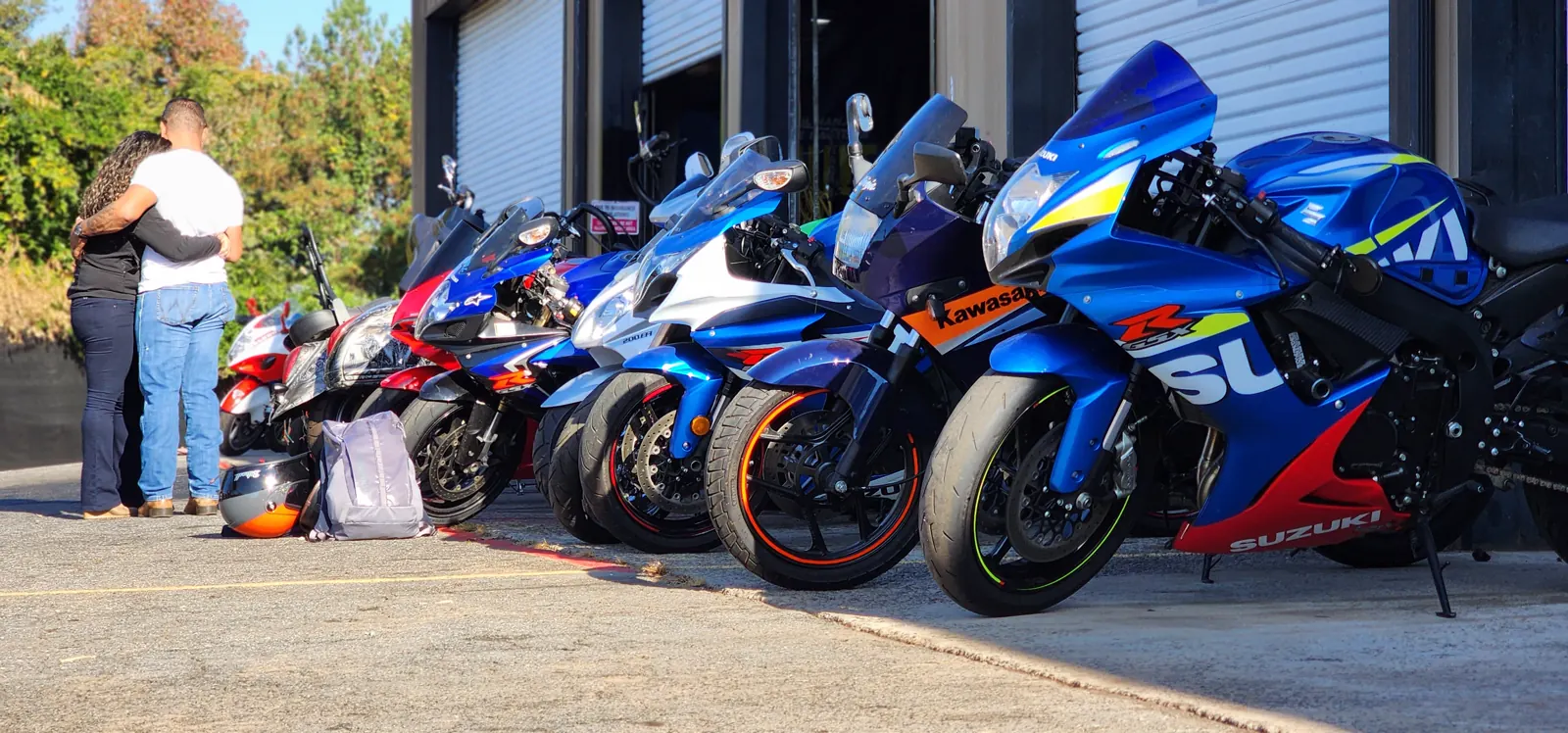
Here's how this played out for someone over by Chattahoochee Nature Center
A friend we helped lives near the Willeo Road corridor with a naked bike wearing a slip-on the previous owner installed. Great bike. Terrible manners. It surged at neighborhood speed, ran hot at lights, and got so twitchy on tight river roads that he’d quit taking his favorite loop. He’d assumed that was simply the bike’s character, because two people told him so.
On the drum it took minutes to see the story. That exhaust change had leaned it out badly through exactly the throttle range he used most, which is the range nobody notices because the factory never expected that pipe. We sorted the small mechanical stuff first, then wrote a map for his actual bike with his actual parts.
He rode home on Roswell Road and texted that night to say the surge was gone and the bike had stopped feeling nervous in second gear. Nothing dramatic happened. It simply started doing what he asked, every time, which is the whole point. Riders elsewhere go through the same arc, so read how this plays out in Newnan for another version.
Getting here, and what to expect
From Canton Street it’s basically one road: Roswell Road, also signed GA 120, running west across the Chattahoochee into East Cobb. Figure roughly seven to nine miles and somewhere around fifteen to twenty minutes, depending on traffic. From the Holcomb Bridge and GA 400 side it’s closer to twelve or fourteen miles and about half an hour. If that drive doesn’t fit your schedule, ask about pickup, because we move bikes for people constantly.
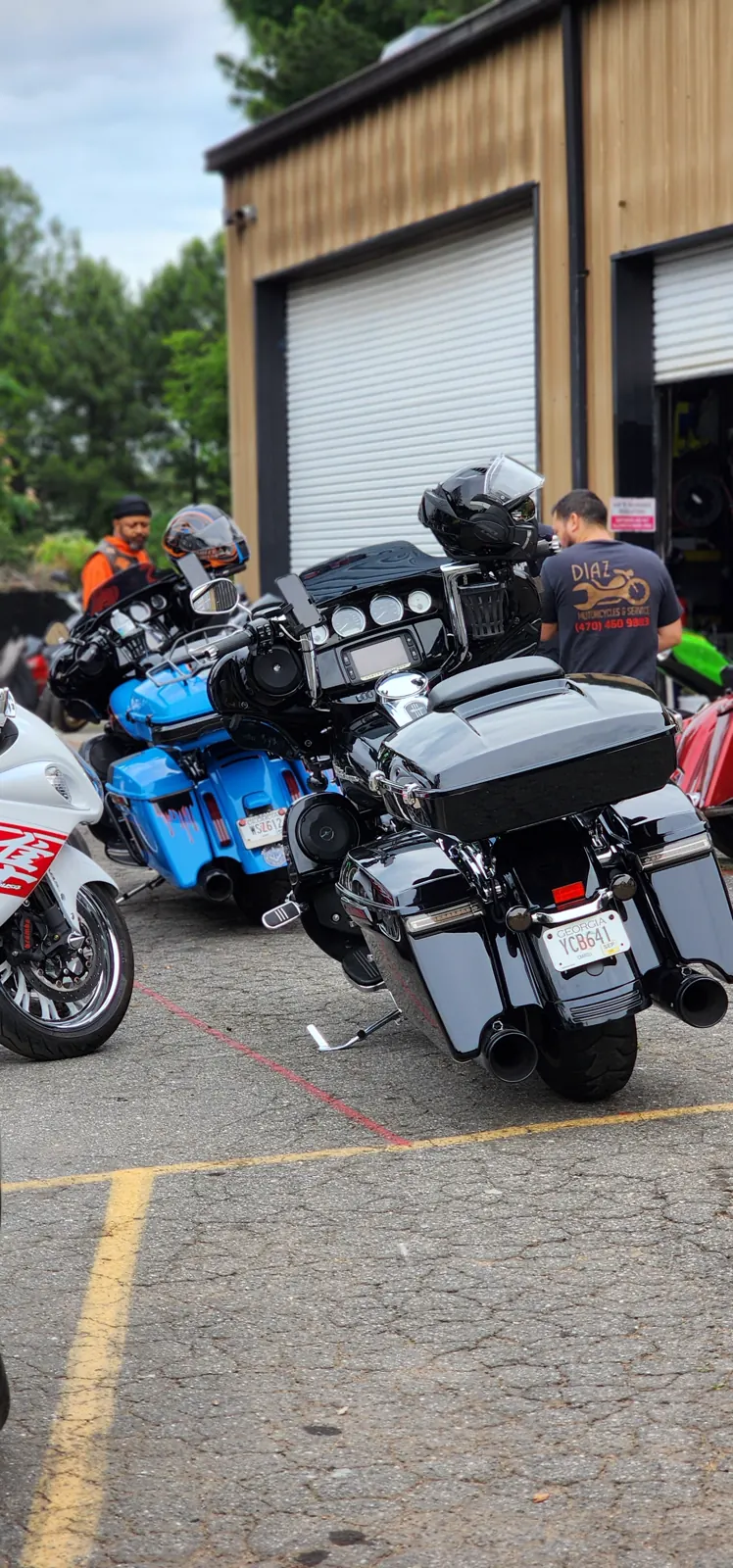
We work on touring bikes and big cruisers, on the premium ADV machines that are everywhere in North Fulton, on sportbikes and nakeds, and on Ducati and older European bikes that need somebody willing to take the job. If you’re newer to riding or coming back after a break, the MSF Basic RiderCourse is a good use of a weekend, and a properly mapped bike makes those skills easier to build.
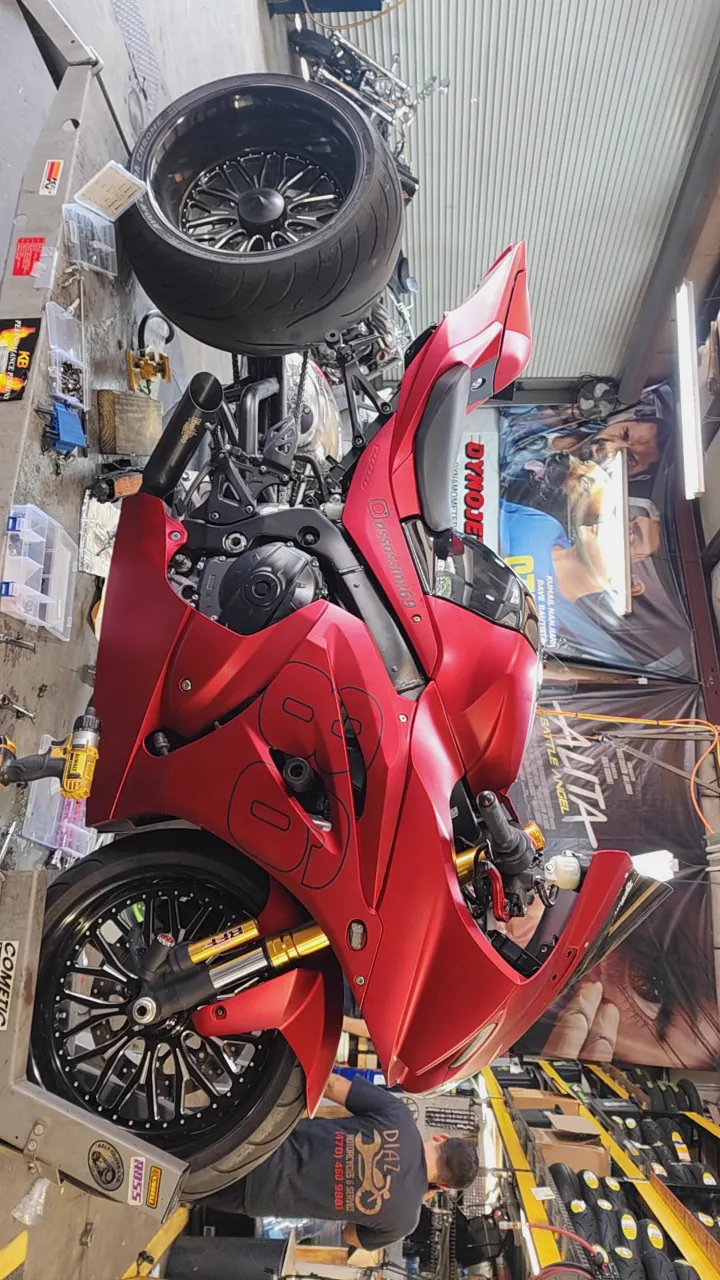
You should leave any shop knowing three things: what was wrong, what changed, and how it should feel now. Ask for your before and after data. Ask why they chose a flash or a module for your bike. If the answers are clear and unhurried, you’ve found the best dyno tuning Roswell can offer you, and if they’re vague, keep looking. You’re allowed to be picky.
That’s the whole message. A rough-running bike isn’t a personality flaw or a sign you bought wrong. It’s a recipe problem, and recipes get rewritten. Once yours is sorted, the only thing left to plan is where you’re riding Saturday.
Questions Roswell riders ask us
What should I ask a shop before I book a tune?
Ask whether the tuning is done in house or sent out, and whether they inspect the bike before it goes on the drum. Ask if they’ll show you the air-fuel data and not just the horsepower graph. Then ask them to explain the plan in plain words. A shop that can explain it simply almost always understands it deeply.
Do you work on all brands?
Just about. We handle Harley baggers and cruisers, Japanese sportbikes and nakeds, big ADV machines, and Ducati and other European bikes including older ones that some shops turn away. If yours is unusual, call and describe it. We’ll tell you honestly whether it’s a job for us.
How far do you serve?
We’re in Marietta, and Roswell riders reach us on Roswell Road across the Chattahoochee into East Cobb. We regularly see riders from Alpharetta, Milton, Johns Creek, Sandy Springs and points north and south of there. Distance is rarely the deciding factor once someone has a bike they actually enjoy riding.
Can you pick up my bike?
Yes. We transport bikes, which helps if your machine won’t run reliably enough to ride over, or if your schedule and our hours refuse to cooperate. Give us a call and we’ll arrange it. Plenty of Roswell riders have never ridden their bike here at all.
How do I know the diagnosis is right?
Because we show you. You get baseline data from before we changed anything and the final numbers afterward, so the improvement isn’t a matter of trust. We also tell you when a tune isn’t the answer, which happens more often than you’d think. A bike with a mechanical problem needs that fixed first.
Will a tune hurt reliability?
A good one shouldn’t. Much of what we do is correcting a lean condition, which actually lowers running temperatures and treats the engine more kindly than the factory compromise did. We tune for how you really ride, not for a number to brag about. Longevity matters more to us than a screenshot.
Diaz Motorcycles is based in Marietta and works with riders all over the north metro, including Roswell, Alpharetta, Milton, Crabapple, East Cobb, Sandy Springs, Johns Creek, Dunwoody, Mountain Park, Woodstock, Kennesaw and Atlanta. Roswell riders usually come straight west on Roswell Road across the Chattahoochee, while folks near GA 400 swing over from the Holcomb Bridge side. If you’re a little outside that list, call anyway, because we move bikes for people regularly and it’s rarely the obstacle riders expect it to be.
LET'S FIX HOW IT FEELS
If your bike surges, stumbles or runs hot, bring it to us and let’s read what the engine is actually doing. Call or text Diaz Motorcycles and tell us you’re coming from Roswell, and we’ll talk through your bike, your parts and how you ride before anything gets strapped down. If riding it over isn’t realistic right now, ask about pickup.
470-460-9883Diaz Motorcycles and Service, LLC · 847 Barnes Mill Road, Marietta, GA 30062