The Best Motorcycle Repair Roswell Riders Can Book With Confidence
You bought a bike with a history you never got to watch. Here's how to read it, and how to read a shop.
You found the bike online. Of course, the photos looked good, the seller said it ran great, and you rode it home grinning. Then again, it’s parked in your garage off Canton Street and there’s a noise nobody mentioned. That’s usually the moment a rider starts hunting for the best motorcycle repair Roswell has to offer, because a used bike comes with a history you never got to watch. Good news? A stranger’s old bike will tell us almost everything, as long as somebody knows where to look. So let’s walk through how to read your bike first, and how to read a shop second.
Start with the symptom list
A secondhand bike can’t tell you where it’s been. Still, it can tell you exactly how it’s doing right now. Almost every job we open starts with a rider saying something felt off. So before you book anywhere, spend ten quiet minutes with the bike cold, then ten more after a short loop around the block. Write down whatever you notice, even the stuff that sounds silly. A messy list from you beats a perfect guess from us.
- A chain that goes tight, then loose, then tight again as you roll the bike forward
- A brake lever that feels spongy, or a rear pedal that slowly sinks under your boot
- Tires with a flat strip down the middle and a scalloped, wavy edge
- Fork legs with wet shiny streaks or a dark ring of grime near the seal
- A cold start that needs coaxing, then a rough idle for the first block or two
- A shimmy at speed that shows up over a patched seam and fades on smooth pavement
- The smell of fuel, oil or coolant after the bike has been sitting
- Rounded bolt heads or mismatched hardware around the fairings and covers
None of that means you bought a bad bike. Truly. Most used bikes rolling through our door simply missed a few services along the way, and skipped maintenance is far easier to fix than real abuse. Honestly, that’s the fun part of the job — the bike shows up grumpy and leaves like it just remembered what it was built for.
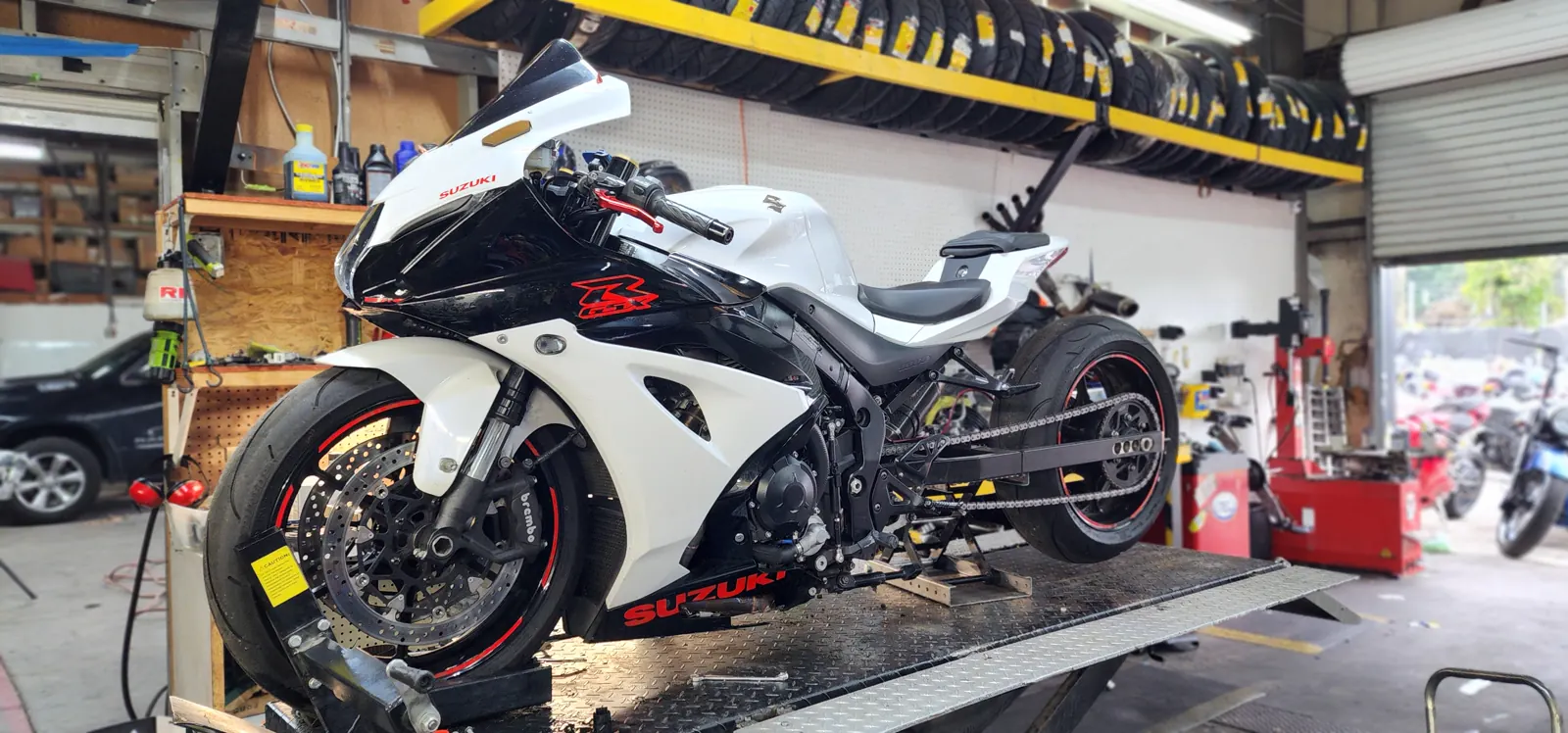
What each symptom is actually telling you
Tight and loose spots in the chain mean the chain has stretched unevenly, and a stretched chain has usually been chewing on the sprockets for a while. Because those three parts wear as a set, we replace them as a set. The fix is quick and the payoff is immediate: smoother roll-on, quieter cruising, and no more clunk when you snap the throttle shut.
A spongy lever almost always points at old brake fluid that has soaked up moisture, or air hiding in the line. Neither one is scary and both are routine. We flush the system, check the pads and rotors while it’s apart, and hand you back a lever with a firm, predictable bite. Riders tell us it feels like somebody turned the volume back up on the front brake.
Flat centers with cupped edges tell a story about commuting. That’s a tire that lived on straight highway miles and never got worked through a corner. It’ll still stop you, but it’ll feel vague and it’ll tramline over grooved pavement. New rubber fixes the handling instantly, and if you’re curious about how the work adds up across a full catch-up service, we lay that out plainly.
Wet fork legs mean a seal gave up, often because grit worked its way past a torn dust cover. Left alone, that oil ends up on your front tire and brake pad, which nobody wants. But seals are a normal wear item, and while the forks are out we can check the oil, the bushings and the spring rate. Suspension work is quietly the biggest feel upgrade on most used bikes.
Rough cold starts usually mean stale fuel, dirty injectors, a tired battery, or a valve check that’s overdue. Each one has a clear test, so we don’t guess. And rounded bolts? Those just tell us a previous owner tried, which we respect.
There’s a version of this that’s cheap and a version that isn’t. The cheap version is the one where you catch the chain before it eats the sprockets, the seal before it soaks the pad, the tire before the cords show. The other version is what happens when a bike gets ridden hard through a whole leaf season with a list of small problems stacking up. Same bike, same shop, very different afternoon. So the single best thing you can do with a used bike is get eyes on it early.
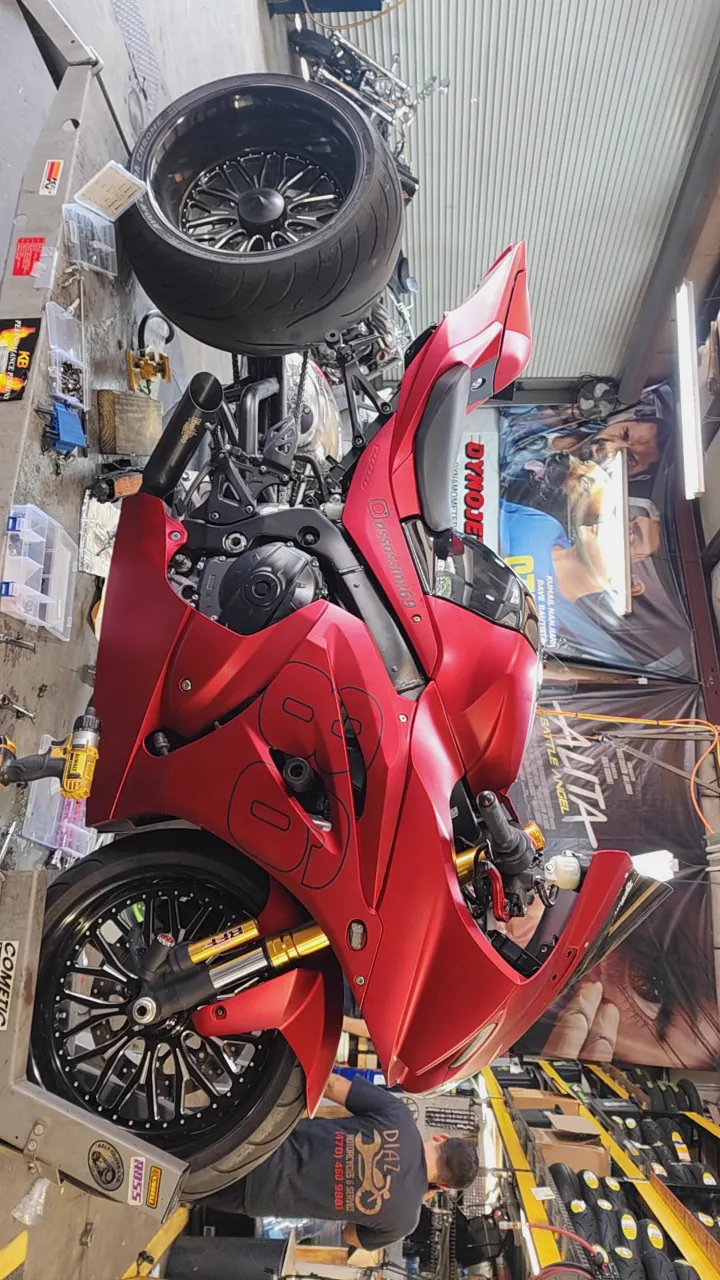
What happens once the bike is on our lift
Plenty of riders have never seen the back of a shop, so the process feels like a black box. It shouldn’t. Here’s the whole thing, start to finish.
- We talk first. You describe the symptom in your own words, and we ask when it happens, not just what it sounds like.
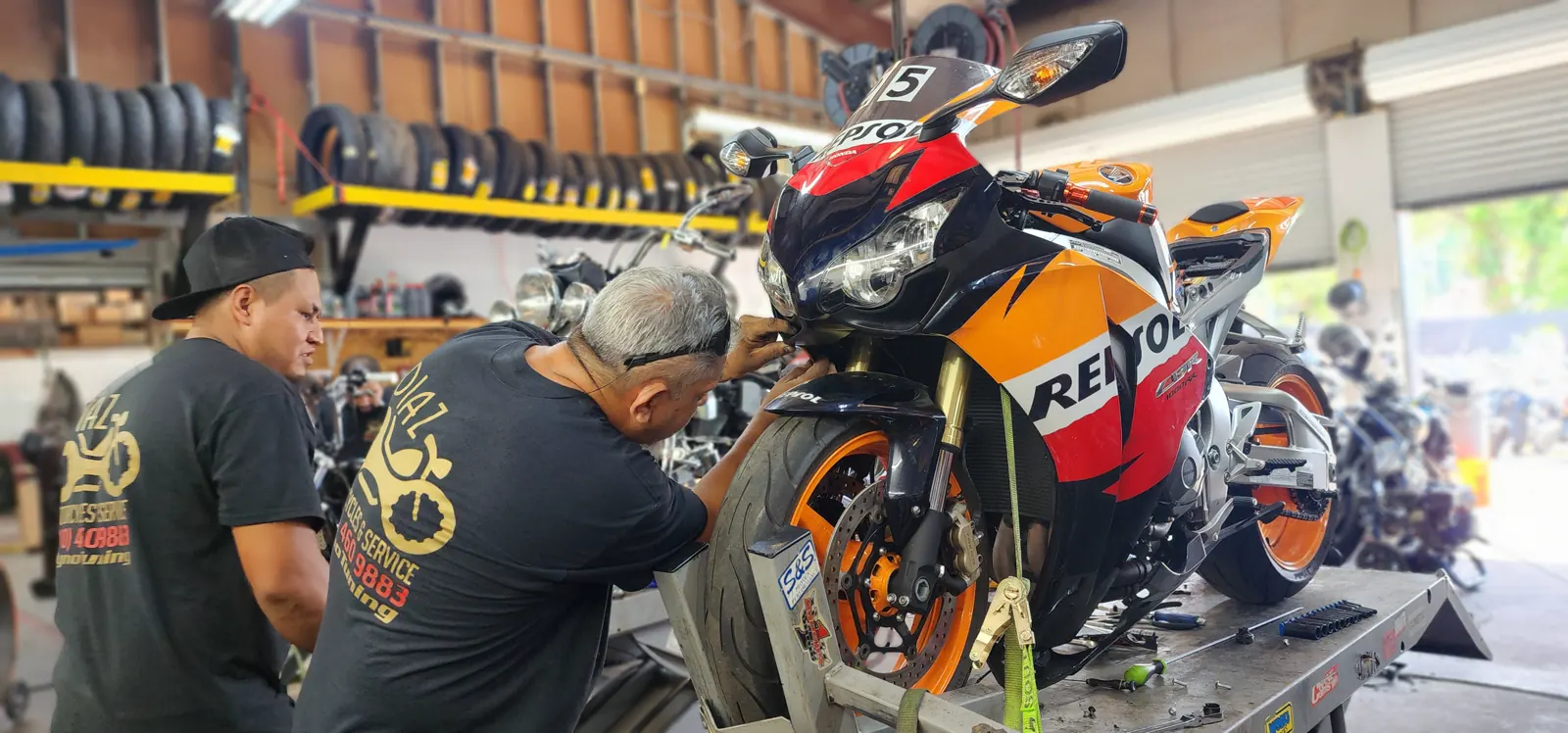
- The bike goes up and gets a full walkaround — fluids, tires, chain, brakes, cables, bearings, fasteners.
- We test the specific complaint instead of assuming. Sometimes that means a road test, sometimes a gauge or a scan tool.
- You get a written breakdown split into three buckets: needs it now, needs it soon, and fine for a while.
- You choose what we do. Nothing gets touched outside what you approved.
- The bike gets road tested again after the work, then washed off before it goes back to you.
That fourth step is where a good shop separates itself, and it’s most of what the best motorcycle repair Roswell riders talk about comes down to. Because a used bike almost always needs more than one thing, an honest list has to be ranked and explained in normal words. If you get handed a list with no priority order, just ask for one.
BRING THIS WITH YOU
Whatever paperwork came with the used bike — receipts, an old inspection, even a scribbled note from the seller. It saves diagnostic time and it sometimes rules out a repair you were about to pay for.
How long a used-bike catch-up really takes
Timing depends on what the bike needs and what’s on the shelf. A tire swap, a fluid flush or a chain and sprocket set is typically a same-day or next-day job. A valve check, a fork rebuild or anything that means splitting the bike apart runs longer, because those jobs have a torque sequence and a settle time that you can’t rush without doing it twice.
Parts are the other clock. Common service items for Harleys, Suzukis, Yamahas and Kawasakis are quick. Older European bikes, Ducatis and odd-year models can take longer, since the part may come from one supplier in the country. We tell you that up front rather than letting your bike sit while you wonder.
Season matters too. Late September through early November is the busiest stretch of the year here, because leaf season pulls everyone north toward Dahlonega, Helen and Suches. Pre-trip inspections, tires, brakes and chain work all spike at once. So if you know you’re riding in October, book in August and skip the line entirely.
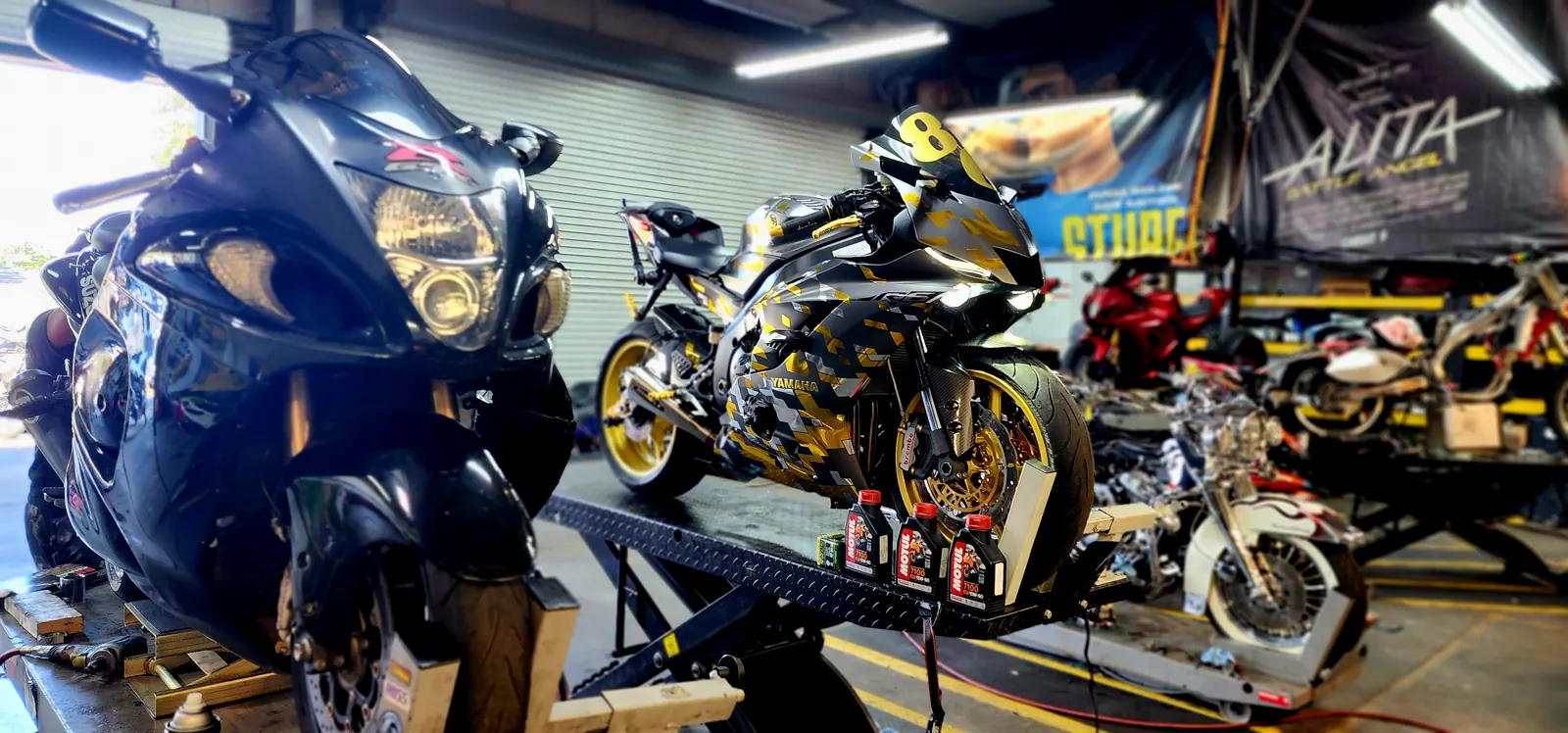
Roswell riding wears bikes in a very specific way
This city is unusually good for motorcycling, and that shows up in the work we see. Alpharetta Highway is North Fulton’s motorcycle row, with several dealerships and shops sitting within about half a mile of each other. Cycle Gear Roswell anchors part of that stretch with gear, parts, basic tire service and a monthly bike night that’s genuinely worth showing up for. Riders here are educated buyers because of it. You already know what a service department feels like, which means we don’t have to explain much.
Pavement is the other factor. Roswell has an active resurfacing and reconstruction program, with Bulloch Avenue, Canton Street, Riverside Road and Old Roswell Road among the named targets, and the city runs a pothole reporting app plus SeeClickFix for the rest. Construction seams, utility cuts and temporary patches are exactly the conditions that bend rims, scuff tires and knock alignment sideways. So if your bike started shimmying this spring, the road probably deserves more blame than the bike.
Then there’s the river. Roswell Road / GA 120 and the Johnson Ferry Road bridge are the only two crossings into East Cobb, and that bottleneck quietly shapes how people schedule everything, service included. Meanwhile GA 400 southbound toward Perimeter and Buckhead is one of the few metro runs where riders genuinely commute year-round. Georgia doesn’t allow lane filtering, so commuting here is about parking and range — though motorcycles can legally use the GA 400 HOV lanes, which is a real reason people ride to work instead of sitting in a car.
Where the bike sleeps matters as well. Most homes in the Historic Roswell area and out toward Horseshoe Bend have garages, but they’re older two-car garages already sharing space with cars, without lift room or a compressor. Storage, yes. Workshop, not really. Over in Mountain Park — its own incorporated city, not a Roswell neighborhood — the lakes and cabins give the place a different character, and plenty of bikes there live under a cover, same as the townhome riders near Canton Street.
Great riding roads and rough pavement in the same zip code. That combination is why Roswell bikes need real service, not just oil changes.
And the riding itself is why brakes, tires, chains and suspension dominate our schedule here. GA 372 / Birmingham Highway toward Ball Ground is the classic first leg out of North Fulton into Cherokee County, and once you’ve done that a few times you’re not putting off a tire decision anymore. Weekend routes like that use a bike properly. That’s a good thing — it just means the service intervals are real intervals, not suggestions. If you want the parts list, here’s the full list of what we do.
Something worth knowing before you book anywhere
Roswell is dealer-rich and independent-thin. Several motorcycle businesses share one highway, which is fantastic for buying a bike or having a factory-trained tech touch a late-model machine under warranty. Dealers are genuinely good at what they’re built for, so we send people to them when that’s the right answer.
Where the gap opens is everything else. An older Italian bike, a custom build, a bike that needs paint and mechanical work at the same time, or a project that three places already turned down — those need an independent shop with breadth. That’s the lane we live in. Also worth knowing: the the American Motorcyclist Association is a solid neutral resource for riders comparing options, and Georgia DOT posts the construction updates that explain half the pavement complaints we hear.
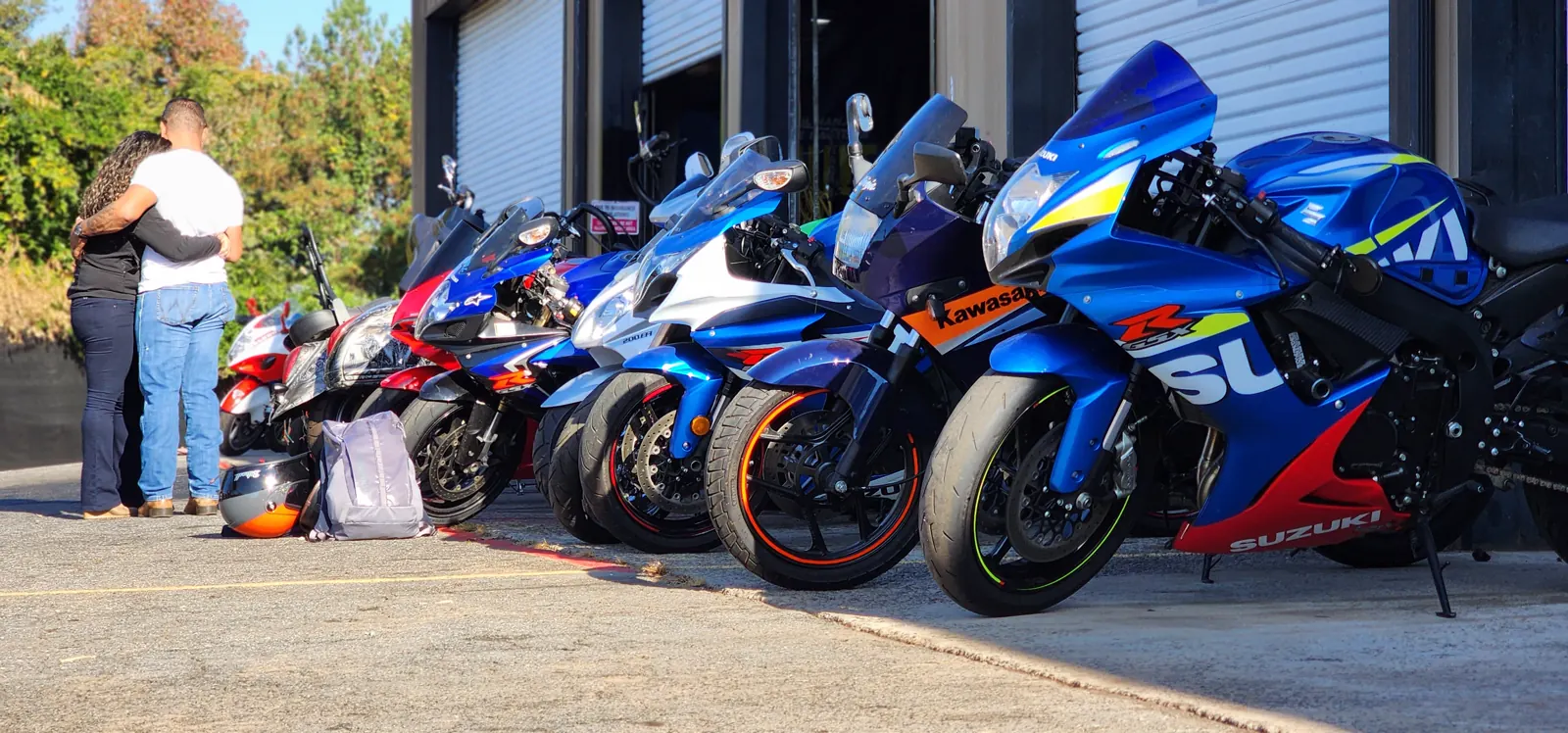
How to judge a shop, fairly
Every rider deserves a real checklist instead of a gut feeling. Use these, and use them on us too.
- They ask questions before quoting anything. Diagnosis first, price second.
- They rank the work instead of dumping one long list on you.
- Still, they show you the old part, or a photo of it, without being asked twice.
- They’re honest about what they don’t do, and they’ll name someone who does.
- They give you a realistic parts timeline instead of a hopeful one.
- Plus, they road test the bike after the work, not just before.
- They talk to you like an adult who can handle the truth.
None of that is about the size of the building, because a great shop can be a small one. What matters is whether the reasoning holds up when you ask a follow-up. By the way, this isn’t a Roswell-only pattern — you can see how this plays out in Dallas with a different rider mix and the same criteria.
What we do a little differently
We’re an independent general shop with a paint booth, a dyno and a transport option under one roof. So a bike can get mechanical work, tuning and cosmetics without bouncing between three places and three schedules. If tuning is on your mind, here’s what that service actually involves in plain language.
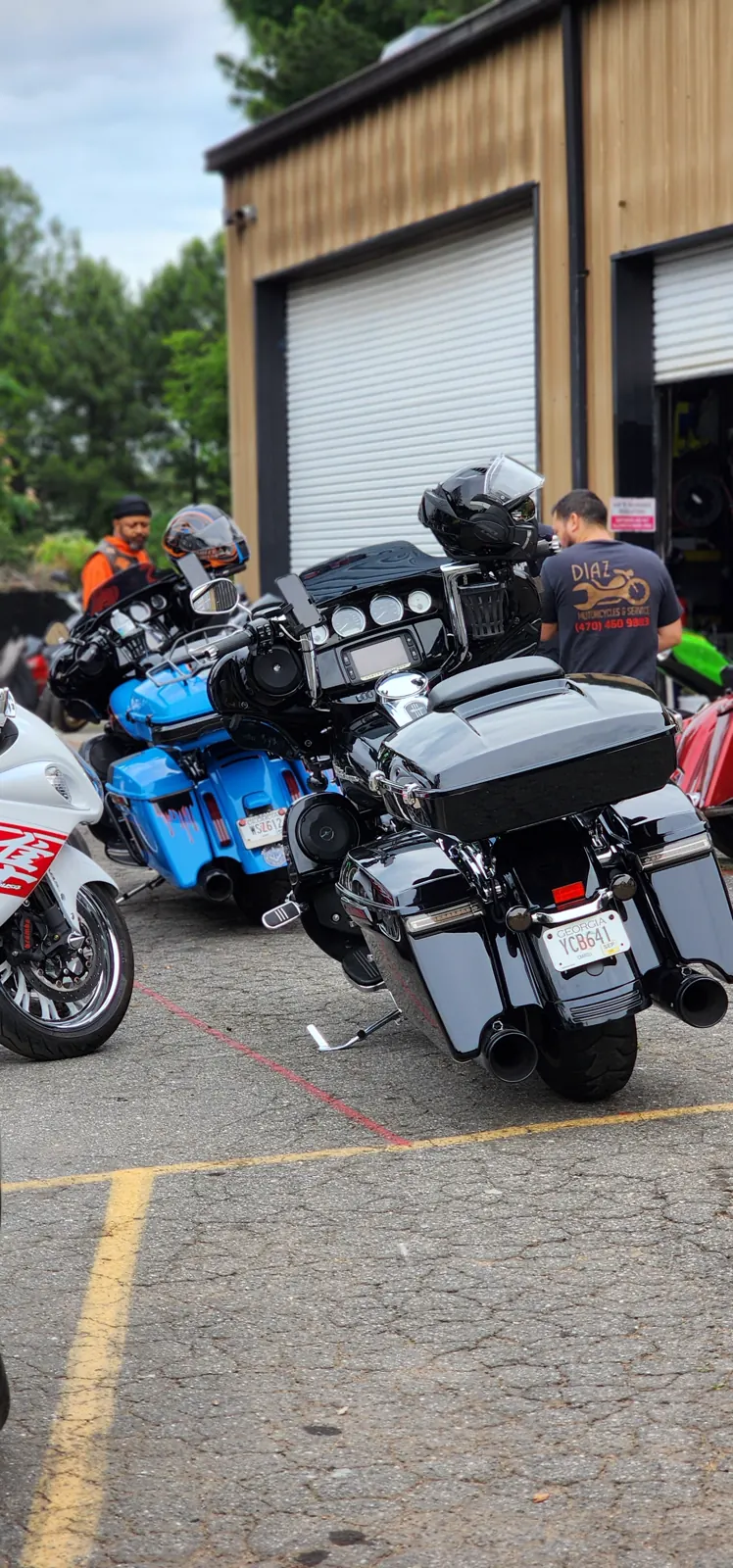
We also pick up and deliver, which quietly erases the river crossing. No sitting on the GA 120 bridge on a Tuesday afternoon, and no borrowing a truck and a set of ramps from a neighbor. You keep your day, we get the bike.
What the good outcome looks like
Here’s the ending we’re aiming for. You get your used bike back with a clean chain, firm brakes, fresh rubber and a written record of what’s been done — so the mystery history stops being a mystery. From there you actually ride it. Maybe a Thursday evening roll to Alive in Roswell, the free street festival on Canton Street on third Thursdays from five to nine, April through October. Maybe a slow lap past the Roswell Mill ruins at Old Mill Park on Vickery Creek, where the old Roswell Manufacturing Company buildings still sit above the water.
Then one crisp Saturday you point it up GA 372 toward Ball Ground and remember why you bought the thing in the first place. That’s the whole goal — not a perfect bike, just a trustworthy one owned by someone who knows what’s under it. Friends we’ve helped describe the same feeling afterward: they stop listening for problems and start listening to the engine again. So if you’re weighing shops right now, ask hard questions everywhere you go. Any place that gets annoyed by them wasn’t your shop anyway.
Questions Roswell riders ask us
How do I know the diagnosis is right?
Ask us to explain the test, not just the conclusion. A real diagnosis has a step behind it — a measurement, a scan, a road test, or a part we can hand you. If a shop can’t tell you how they know, that’s your signal to slow down and ask again.
What makes you different from the shops on Alpharetta Highway?
Breadth, mostly. We’re an independent general shop with a paint booth, a dyno and transport in one place, so mechanical work, tuning and cosmetics don’t get split across three schedules. We also take on older European bikes and custom builds that need a shop willing to work outside a factory checklist.
How do I pick a good shop?
Watch how they handle your questions. Good shops diagnose before quoting, rank the work instead of dumping a list, show you old parts, and tell you plainly when a job isn’t theirs. Consistency across those four things matters far more than the size of the building.
Should I go to a dealer or an independent?
Both, honestly, depending on the job. Warranty work and very new models belong at a dealer with factory tooling and factory backing. Out-of-warranty bikes, older machines, custom work and multi-service projects are usually a better fit for an independent, and we’ll say so either way.
What should I ask a shop before I book?
Ask what the diagnostic process looks like, how they prioritize repairs, how long parts typically take for your make, and whether they road test after the work. Also ask what they don’t do. A confident shop answers that one easily.
I just bought the bike used and don't know its history. Where do I start?
Start with a full inspection instead of chasing one symptom. Used bikes almost always need a small stack of catch-up items, and knowing the whole list lets you space the work out sensibly. Bring any paperwork the seller handed over, because it often saves us diagnostic time.
We take care of riders all over the north side, starting with Roswell and running out to Alpharetta, Milton, Crabapple and Johns Creek. Because we sit just across the river, East Cobb, Marietta and Kennesaw are quick trips for us, and our pickup and delivery makes the bridge a non-issue anyway. We also regularly help friends in Sandy Springs, Dunwoody, Mountain Park, Woodstock and closer in toward Atlanta. If you’re somewhere in that stretch of North Fulton or Cobb, just ask — odds are good we already run that way most weeks.
LET'S FIGURE OUT WHAT YOU ACTUALLY BOUGHT
Bring us the used bike and the mystery history. We’ll go over it top to bottom, rank what it needs, and explain every line in plain words before anything gets touched. Roswell riders can hand off the bike without ever crossing the river, since we pick up and deliver. Text or call and we’ll get you on the schedule.
470-460-9883Diaz Motorcycles and Service, LLC · 847 Barnes Mill Road, Marietta, GA 30062