Best Motorcycle Transport Woodstock — How to Choose
Two Woodstock riders, one dead battery, and the one phone call that made all the difference.
Still, two riders in the Towne Lake area woke up to the very same problem on the very same weekend. Plus, both had a bike that wouldn’t start, sitting in a clean garage, with a mountain trip already on the calendar. Meanwhile, one spent three days borrowing a truck, wrestling ramps alone, and putting a scratch in a tank he loved. Of course, the other made a single phone call and let a crew handle the heavy part. In fact, that gap between them is the whole story behind the best motorcycle transport Woodstock riders can lean on, and it’s a lot simpler than it looks.
For example, both riders live off Towne Lake Parkway. Even so, both keep tidy bikes in the kind of two- and three-car garages that came standard when those 1990s master-planned subdivisions went up. Neither one did anything wrong, either. What’s more, a battery just sat too long between rides, the way batteries tend to do around here, where the riding is destination stuff and a good machine can rest for weeks between runs. So the real difference wasn’t skill or luck. It was the plan each guy reached for the moment that starter went click instead of vroom.
The first rider decided to muscle it himself. He borrowed a neighbor’s pickup, found a ramp that wasn’t really rated for a heavy bike, and tried to walk a full-size machine up a wobbly plank by his lonesome. Anybody who’s tried that knows the feeling in your stomach halfway up. The bike leaned, his boot slipped, and a corner of the tank kissed the tailgate. Nothing broke. But that little silver scar is still there, and it still stings every time he looks at it.
Two riders, one dead battery
The second rider did the boring thing. He called us, described what he was hearing, and asked whether it was worth the fight to load it himself. We told him no. Twenty minutes later we had a pickup on the schedule, and by the next afternoon his bike was on our lift, strapped down and untouched. Same problem, same week, same neighborhood. One rider carried a scratch and a sore back. The other carried nothing but the confidence that his ride was in good hands.
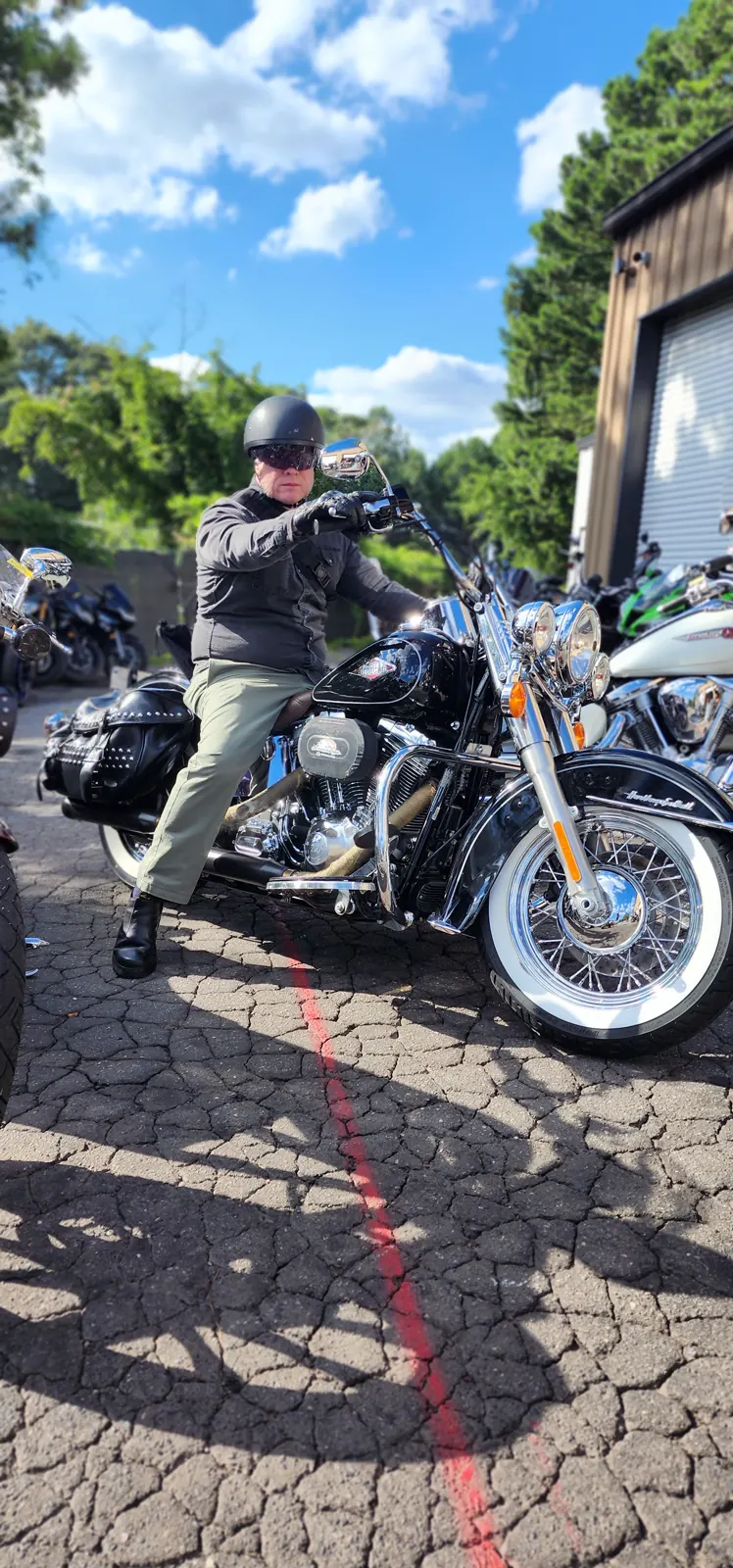
We tell this story a lot because it lands. Riders picture the scratch before they picture the paperwork. And honestly, that’s the right instinct. A bike that won’t run is a bike that can’t defend itself, and every time you try to force a heavy machine somewhere it doesn’t want to go, you’re rolling dice with the finish, the fairings, and your own knees.
The real reason your bike won't move
Here’s the part people miss. A stuck bike is rarely stuck for one dramatic reason. Around Woodstock, most of the time it’s the rhythm of how we ride up here. This is Cherokee County, and the riding culture leans hard toward sport-touring and adventure bikes because I-575 is a straight shot to the north Georgia mountains. A rider can be carving real roads inside of an hour and a half. That’s a blessing. It also means bikes rack up hard miles in short, intense bursts, then sit idle for weeks while life happens.
That idle time is where the trouble hides. Batteries drain. Fuel goes stale. A tire flat-spots. Pollen season, roughly mid-March into late April, coats everything and clogs air filters right as the itch to ride comes back. So a rider pulls the cover off in April, thumbs the starter, and gets nothing. It feels like a disaster. Usually it’s a small, fixable thing that only became a problem because the bike couldn’t be ridden in for a look. And a bike that can’t be ridden in is exactly the bike transport exists for.
Before we go further, one thing worth clearing up. Transport is not just for wrecks and breakdowns. Plenty of the bikes we fetch run perfectly fine. We pick up bikes bought sight-unseen out of state, bikes inherited from a father or an uncle, bikes that belong to a rider who’s healing up and shouldn’t be on two wheels yet, and bikes moving with a family from one Allatoona Downs, Shores, or Woods lake community to the next. If you want the deep version, we wrote up what that service actually involves in its own guide. Transport is simply the door that gets a bike to help when riding it there isn’t smart or isn’t possible.
Your options when a bike won't ride
When a machine can’t roll under its own power, you’ve basically got three roads to choose from, and it helps to see them side by side before you commit to any of them.
| Option | What it costs you | Best for |
|---|---|---|
| Do it yourself | A borrowed truck, ramps, a strong friend, and real risk to the finish | A short hop with the right gear and a spotter |
| A general tow truck | A driver who moves cars, not bikes, and may not know how a bike ties down | A true roadside emergency with nothing else near |
| A motorcycle shop's own transport | A crew that loads bikes daily and owns the right straps and trailers | Almost every non-running or long-distance job |
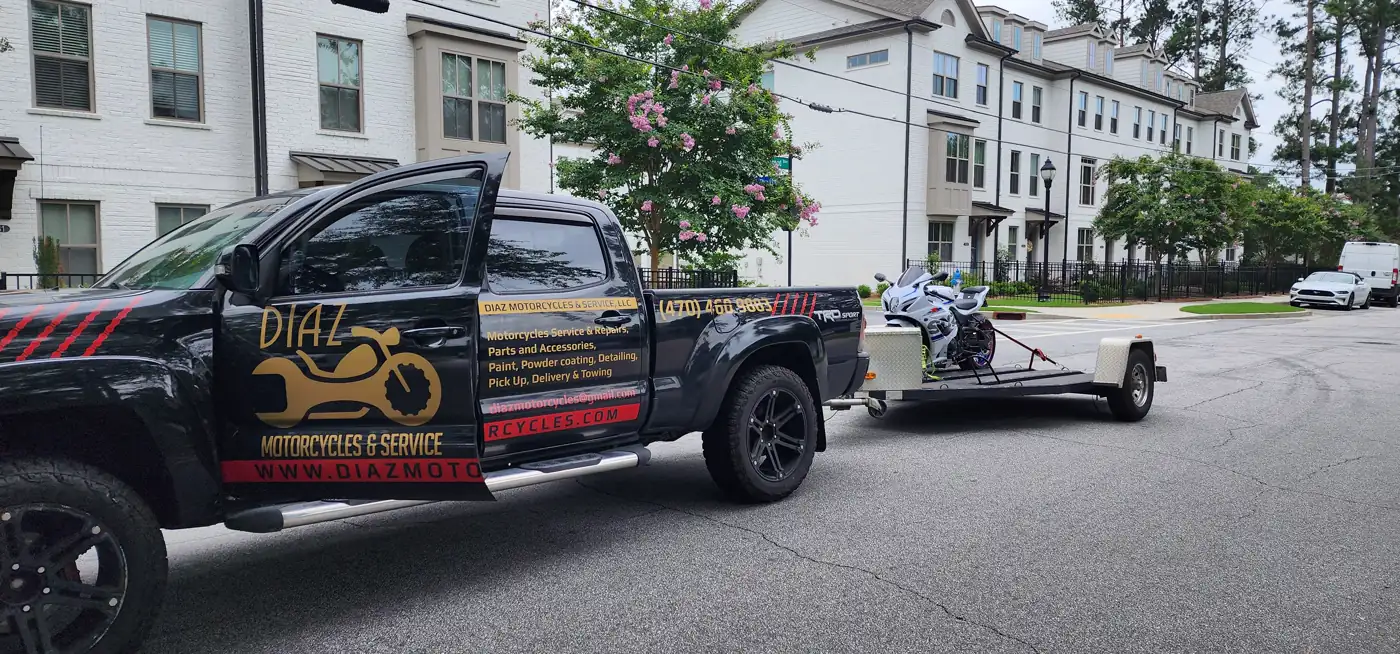
Within that third road, there’s another fork: open trailer versus enclosed. Open works great for most local jobs. Your bike rides on a rail or a deck, strapped at four points, out in the fresh air for a short trip across town. Enclosed is the move for a long haul, foul weather, or a show bike and a fresh custom paint job you don’t want peppered by highway grit. Neither is fancier than the other. They just fit different jobs, and a good shop tells you which one your bike needs instead of upselling you into the bigger rig.
The tie-down is where the whole thing lives or dies. A bike gets loaded, rolled straight, and locked into the front of the trailer. Then soft loops go around solid parts of the frame or the lower triple clamp, never the brake lines or a plastic fairing. Straps pull down and slightly forward to compress the front suspension a touch, which keeps the whole machine planted through every bump on I-575. A wheel chock holds the front tire so nothing can twist. Done right, that bike won’t shift an inch from your garage to our lift.
How we decide what to send
Every pickup starts with a couple of questions, not a truck. We ask what the bike is, whether it rolls and steers, where it’s parked, and how tight the space is. A big adventure bike wedged behind two cars in a Towne Lake garage is a different job than a cruiser sitting in an open driveway in one of the Cottages at Towne Lake, the Courtyards at Towne Lake, or the Cottages of Woodstock, where the low-maintenance layout usually gives us room to work. The answers tell us which trailer, how many straps, and how many hands to bring.
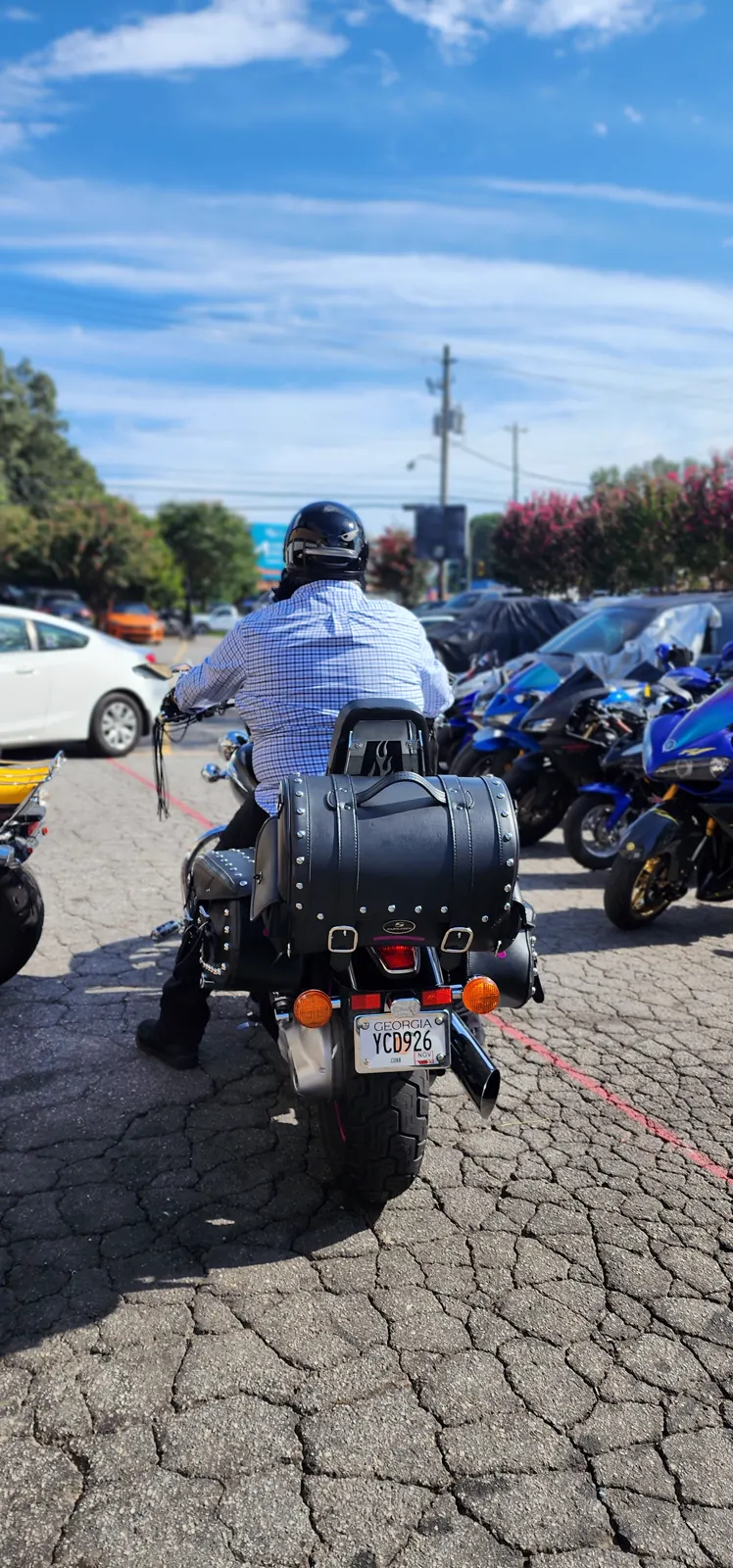
Documentation is the quiet hero of the whole process. Before your bike leaves the driveway, we note its condition, snap photos, and confirm exactly where it’s coming from and where it’s headed. That paper trail protects you. It means there’s a clear record of how the bike looked when we picked it up, which matters most on the jobs where you can’t be there yourself, like an estate bike two states away or a purchase you haven’t laid eyes on yet. You’ll want that same protection from anyone you hire, and it’s a fair thing to ask about up front.
We serve a wide circle from the shop, so distance rarely kills a job. Some of the towns we cover sit 45 minutes to over an hour out, and for those riders the pickup and delivery is the entire point. There’s no riding a dead bike an hour down the interstate. Being able to say we come get it is the difference between help and no help at all, whether you’re in Woodstock or riders over in Newnan on the far south end of the map. You can see how our crew approaches it and the full range of what a lift-and-fetch covers. It’s the same all-brands promise that makes the best motorcycle transport Woodstock owners hunt for worth the search.
What it feels like after the truck leaves
Here’s the part nobody puts in a brochure: the relief. The moment your bike is strapped down and the trailer pulls away, the problem stops being yours to carry. No more staring at a machine that won’t cooperate. No more wondering if you’ll hurt your back or your paint trying to be a hero. You go back to your Saturday, and the bike goes to people who do this every single day.
A bike that can't defend itself deserves hands that treat it like their own.
There’s a reason we bring this up on nearly every intake. Woodstock riders are a sharp, research-heavy bunch. Affluent, educated, and quick to Google a shop thoroughly before they ever dial. Traxxion Dynamics, the nationally known suspension builder over on Rope Mill Parkway, is headquartered right here, and that raises the technical bar for the whole local riding crowd. So when someone hands us a keyboard-warrior worth of questions, we love it. It means they’ll actually understand why our diagnosis is what it is, and why we’d rather send the right part than the expensive one.
That trust has to be earned, not claimed. When we say a bike needs a tune, we can show you the numbers on a dyno, the same kind of measured, repeatable testing you’ll read about at Dynojet’s dyno center. When we talk about staying visible and riding smart on these roads, we’re leaning on real data from IIHS motorcycle research, not guesswork. A shop that can point to its evidence is a shop you can relax around.
How to choose a shop you can trust
Woodstock actually has more motorcycle businesses than any city in our radius, which is great news and also a little confusing when you’re shopping. The catch is that most are narrowly focused. Suspension only. One brand only. Newer bikes only. Those are fine shops doing good work in their lane. But if your bike is older, or an odd brand, or just needs more than one specialty at once, you can end up bounced from door to door. So when you’re comparing, look for a few honest signals.
- They ask about your bike before they quote a truck or a repair. Real diagnosis beats a fast guess every time.
- They document condition with photos before pickup, and they hand you that record without you begging for it.
- So they tell you which trailer your bike needs and why, instead of pushing the priciest option.
- They can show their work, whether that’s a dyno chart or a plain explanation you actually understand.
- They’re honest about what they don’t do, and they’ll say so rather than fumble your bike to save face.
Dealers earn their keep, too, and we send folks their way when it makes sense. A volume dealership like RideNow Powersports Canton, up on Riverstone Parkway about ten miles north, is a solid stop for a brand-new machine or a factory recall on a current model. Different tool for a different job. Where an independent like us shines is the bike a big brand-locked store won’t touch: the fifteen-year-old sport-tourer, the inherited cruiser, the European bike that needs a real once-over. All brands, all ages, all under one roof.
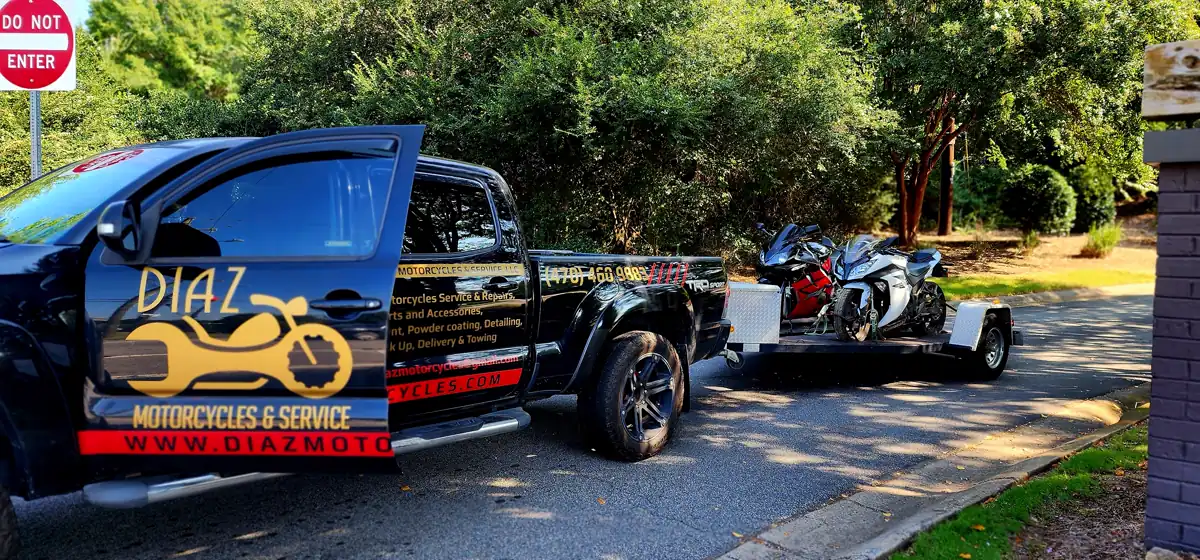
The shop itself sits about 15 to 19 miles south, a 25 to 35 minute run down I-575 to I-75 and then east, or the surface route down Bells Ferry Road into north Cobb if the interstate’s crawling. But here’s the thing: with transport, that distance is our problem, not yours. You never have to make the drive on a bike that won’t run. We come to your door, whether that door opens onto Wiley Bridge, Trickum, or Arnold Mill Road out in the wooded backcountry, or a townhome block a short walk from Woodstock Arts and the Elm Street Cultural Arts Village downtown.
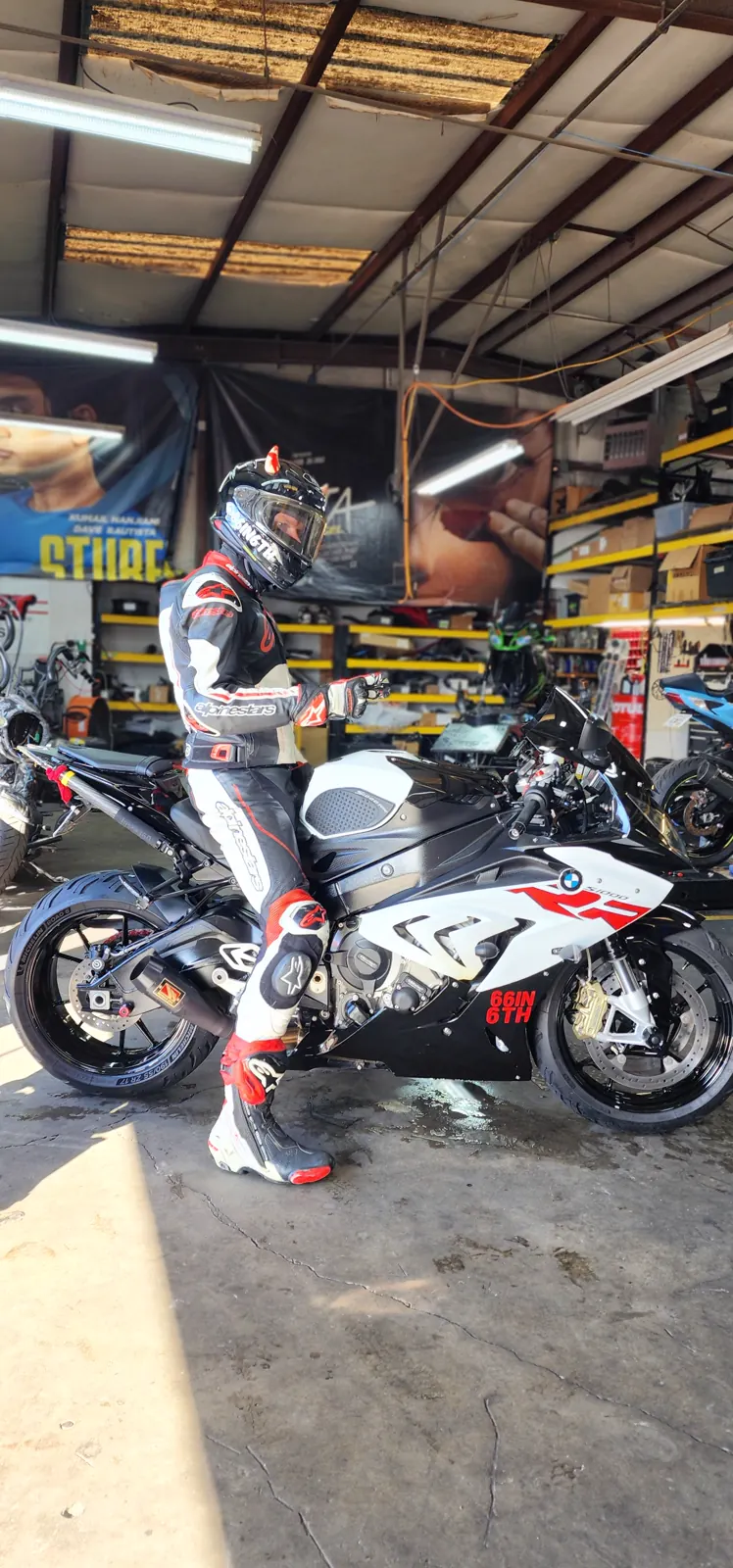
The riders we’ve helped tend to come back, and they tend to send friends. Not because we talked a big game, but because a bike showed up on a trailer, got a straight answer, and rolled home right. If you’re weighing your choices in Woodstock, that’s really the whole test. Pick the shop that treats your bike like it’s the only one they’ll touch all week. If you want to compare on service the same careful way, we laid out the full rundown on it in a companion guide.
THE SHORT VERSION
A stuck, wrecked, inherited, or out-of-state bike doesn’t need to be ridden. It needs to be fetched. One call, the right straps, and a clean record beat every do-it-yourself scramble.
Questions Woodstock riders ask us
How far do you travel for a pickup?
We serve a wide circle around the shop, and Woodstock is well inside it. Plenty of our pickups sit 45 minutes to over an hour out, so distance rarely stops a job. For long-distance moves across state lines, we plan the run and use an enclosed trailer when the weather or the paint calls for it.
Can you really come pick up my bike?
Yes, and it’s often the smartest move. If your bike won’t start, was in a spill, came from out of state, or you just shouldn’t ride it right now, we bring the trailer to your driveway. We ask a couple of questions first about the bike and the space, then schedule a time that works for you.
How do I know your diagnosis is right?
We show our work. When a bike needs a tune, we can back it with dyno numbers instead of a hunch. We explain what we found in plain language, and we’d rather send you the part you actually need than the pricey one. Ask hard questions. Good shops welcome them.
What makes your transport different?
We load bikes every single day, so the straps, the trailers, and the tie-down technique are second nature. We document your bike’s condition with photos before it leaves, and we tell you whether an open or enclosed trailer fits the job instead of upselling. Your bike shows up the way it left, just on our lift.
How do I pick a good motorcycle shop?
Look for a shop that diagnoses before it quotes, documents your bike with photos, explains which trailer it needs and why, and is honest about what it doesn’t do. Dealers are great for brand-new machines and recalls. An all-brands, all-ages independent is your friend for older, unusual, or multi-specialty jobs.
Do you handle bikes other shops turned away?
Often, yes. If your bike is more than fifteen years old, an odd brand, or needs more than one specialty at once, a narrowly focused shop may pass. We take all brands and all ages under one roof, including restoration, custom paint, and engine work, so you’re not bounced from door to door.
From our Marietta shop we run pickups and deliveries all across the northwest metro and into Cherokee County. That covers Woodstock and its Towne Lake community, plus Canton, Acworth, Kennesaw, Holly Springs, and Ball Ground to the north. We reach east into Roswell, Milton, and Alpharetta, west toward Cartersville, and all through East Cobb and greater Marietta. If your bike won’t run, we bring the trailer to your driveway no matter which of these towns you call home.
STUCK BIKE IN WOODSTOCK? WE COME GET IT
Don’t wrestle a dead machine up a wobbly ramp alone. If your bike won’t start, got hurt, or just needs to reach real help, text us and we’ll bring the trailer to your Woodstock driveway. One call, careful straps, and a clean record from your garage to our lift. Tell us the bike, the address, and the trouble, and we’ll take it from there.
470-460-9883Diaz Motorcycles and Service, LLC · 847 Barnes Mill Road, Marietta, GA 30062