Bringing a Classic Motorcycle Back to Life — What Diaz Motorcycles’ Restoration Process Looks Like From Intake to Delivery
Classic motorcycle restoration in Marietta, GA isn’t something that happens all at once. It’s a process — structured, methodical, and built on a foundation of honest communication between the shop and the owner. Riders who bring a classic bike to Diaz Motorcycles often arrive with hope, a history with the machine, and a fair amount of uncertainty about what the process actually looks like on our end. This post is for them. Here’s exactly what happens from the moment a bike arrives at our shop on Barnes Mill Road to the moment it leaves ready to ride.
Phase One — Intake and Honest Assessment
Every restoration begins with intake. When a classic bike arrives, the first thing we do is listen to the owner. What do you know about this bike’s history? When did it last run? What work has been done on it in the past? What’s your goal — a rider, a show bike, or a museum-quality restoration? These answers shape every decision that follows. We’re not applying a template — we’re building a plan specific to this machine and this owner’s vision.
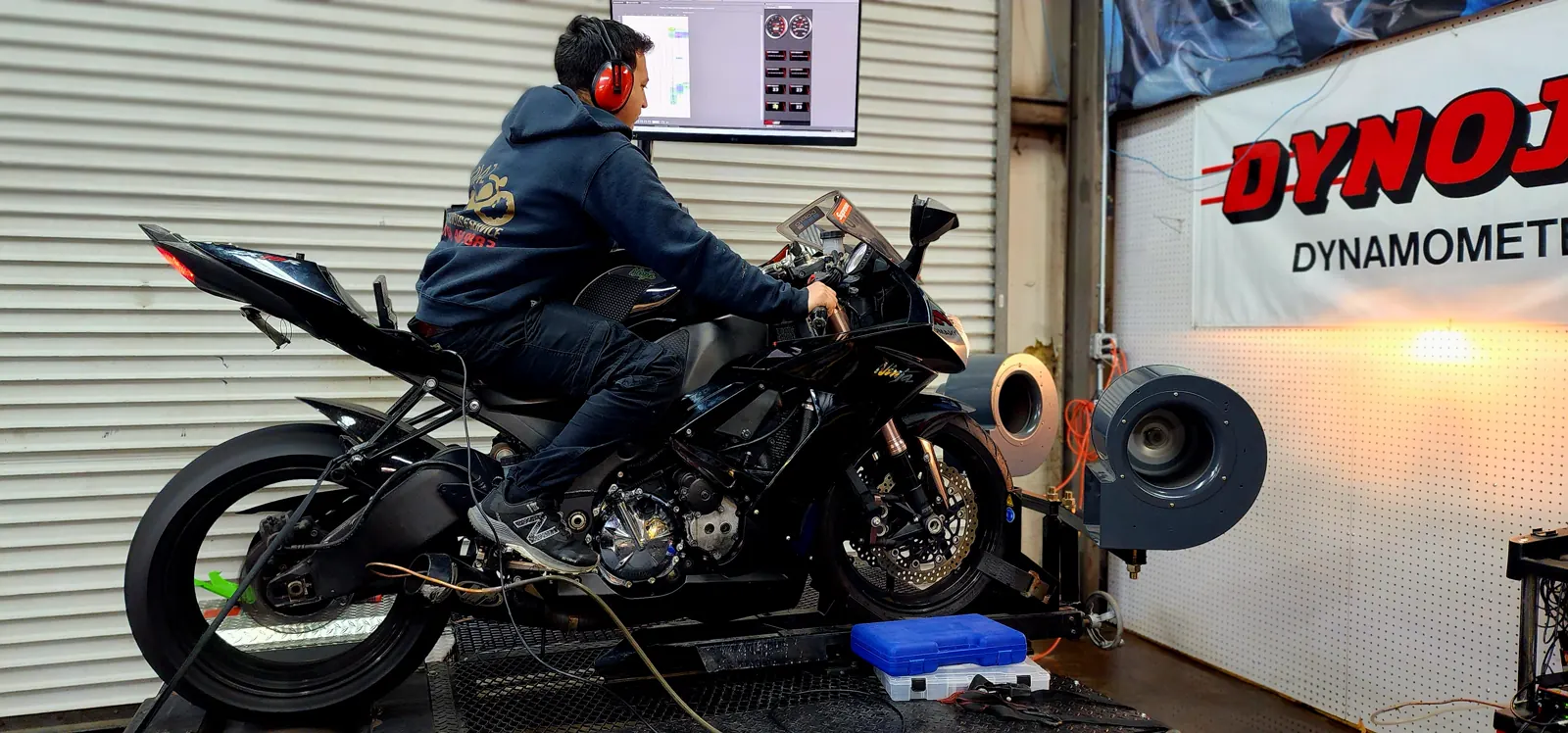
After the conversation, we do a comprehensive mechanical and cosmetic assessment. This is a full inspection — engine compression and leak-down, fuel system condition, brake system integrity, electrical health, frame and chassis condition, and a surface-by-surface cosmetic evaluation. We document what we find in writing. The assessment produces a clear picture of what the bike actually needs versus what the owner thought it might need, and it forms the basis of the project scope we agree on before any work begins.
- Owner intake interview — history, goals, known issues, previous work
- Engine compression and leak-down test to establish baseline mechanical condition
- Full fuel system evaluation — tank condition, lines, carbs or injectors
- Brake system and suspension assessment
- Electrical system check — charging, ignition, lighting
- Frame inspection for cracks, corrosion, or previous damage
- Cosmetic condition documentation across all surfaces
- Written scope of work and project estimate before first bolt is turned
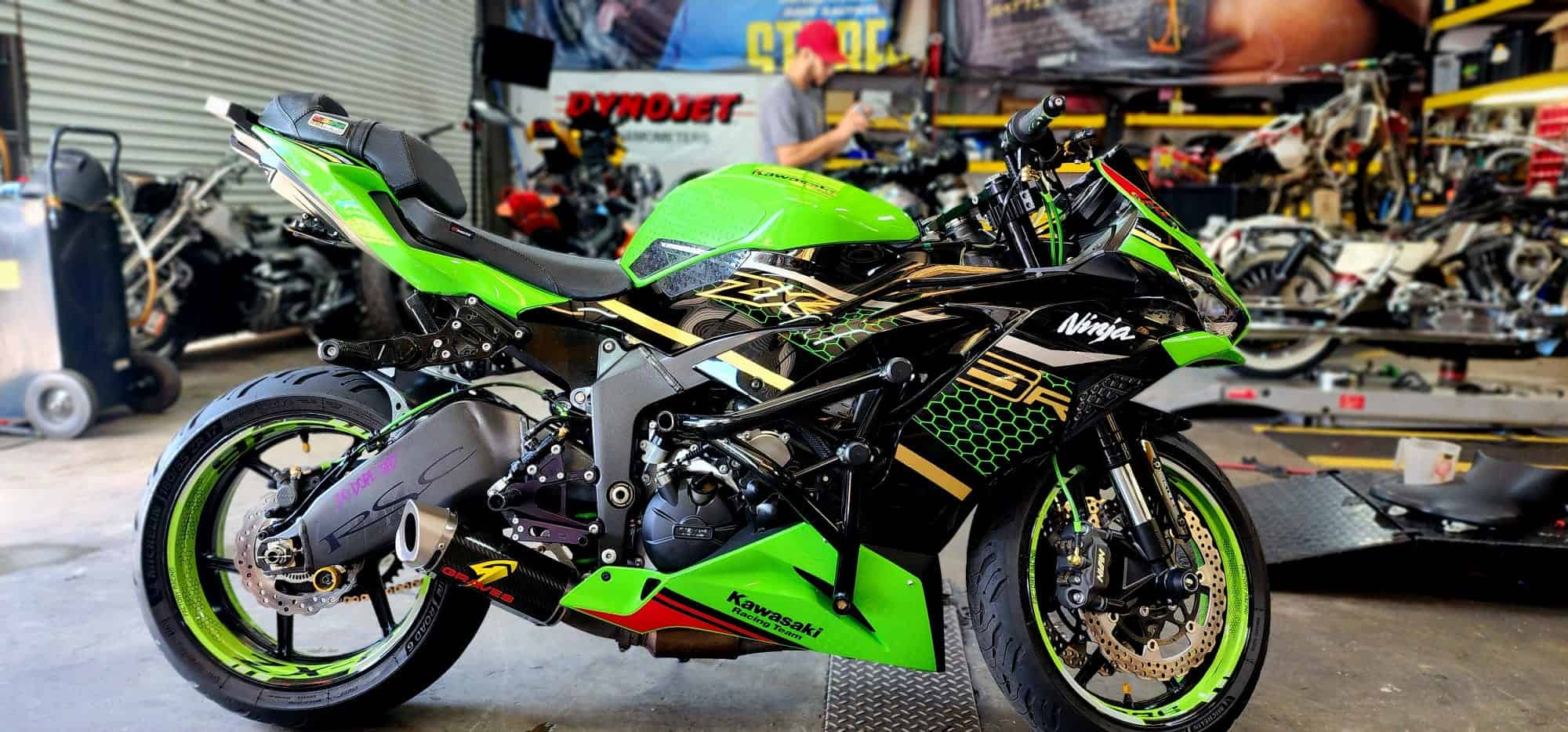
The intake assessment is where every restoration either goes right from the start or sets itself up for surprises — we always do it thoroughly.
Phase Two — Mechanical Restoration
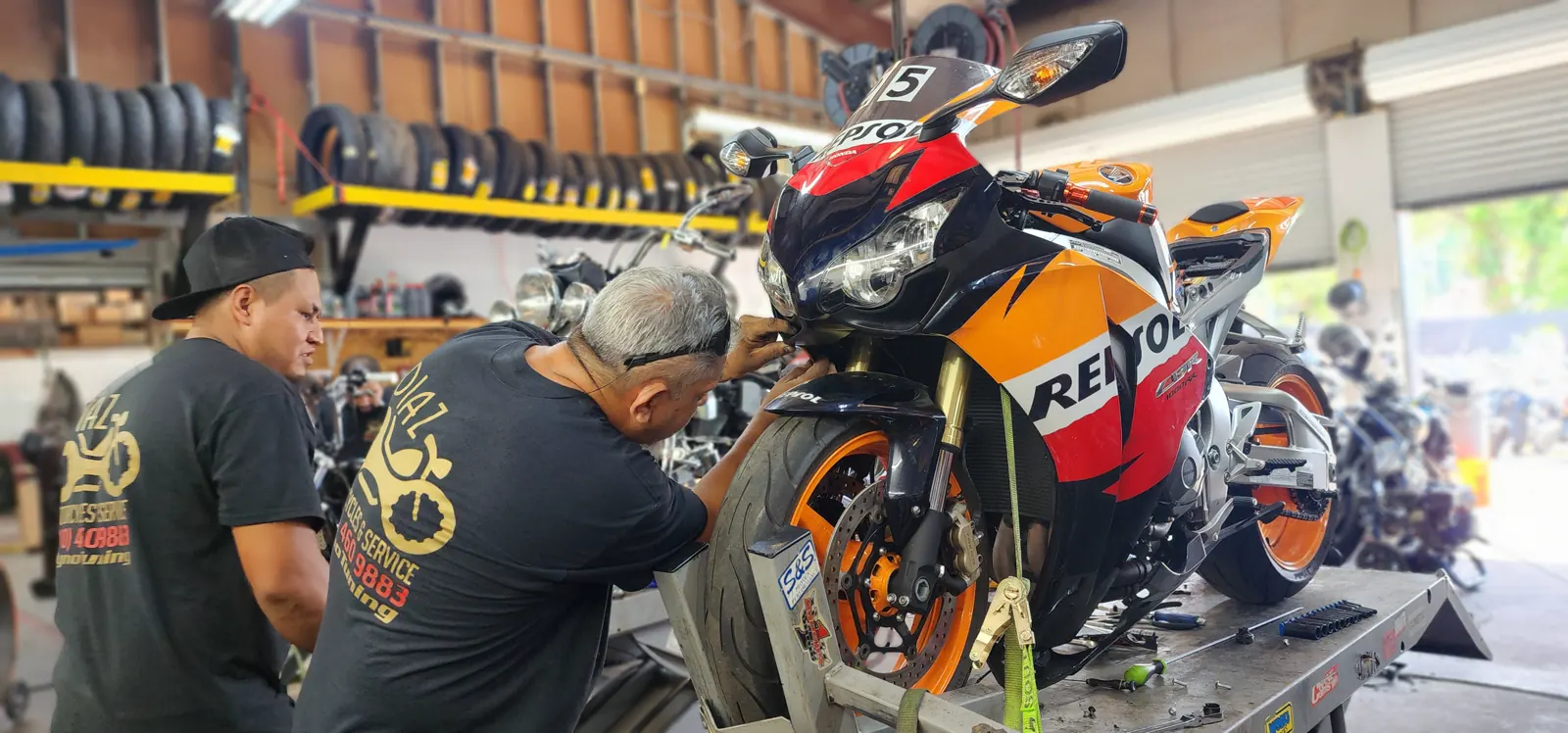
With a clear scope agreed on, mechanical restoration begins. The sequence follows mechanical priority — the systems that affect safety and reliability are addressed before anything cosmetic happens. For classic carbureted bikes, this typically means a carburetor rebuild or replacement, fresh fuel lines, a compression test follow-up after initial service, brake system overhaul, and a full fluids replacement. For bikes with more involved mechanical needs — engine internals, electrical rewiring, or suspension rebuilds — this phase may be the majority of the project timeline.
We communicate throughout. If we open up a carb and find that the throttle bore is more worn than expected, we call. If we pull a brake caliper and find the pistons are seized beyond rebuild, we discuss options. A restoration that runs into unexpected findings is normal — older machines carry surprises. What makes the difference is a shop that tells you what it found, explains your options, and gives you the information you need to make decisions. That’s how every restoration at Diaz is handled.
“A classic motorcycle restoration done right has no shortcuts — and an owner who is informed at every step leaves with a result they’re genuinely proud of.”
Phase Three — Cosmetic Restoration and Final Detail
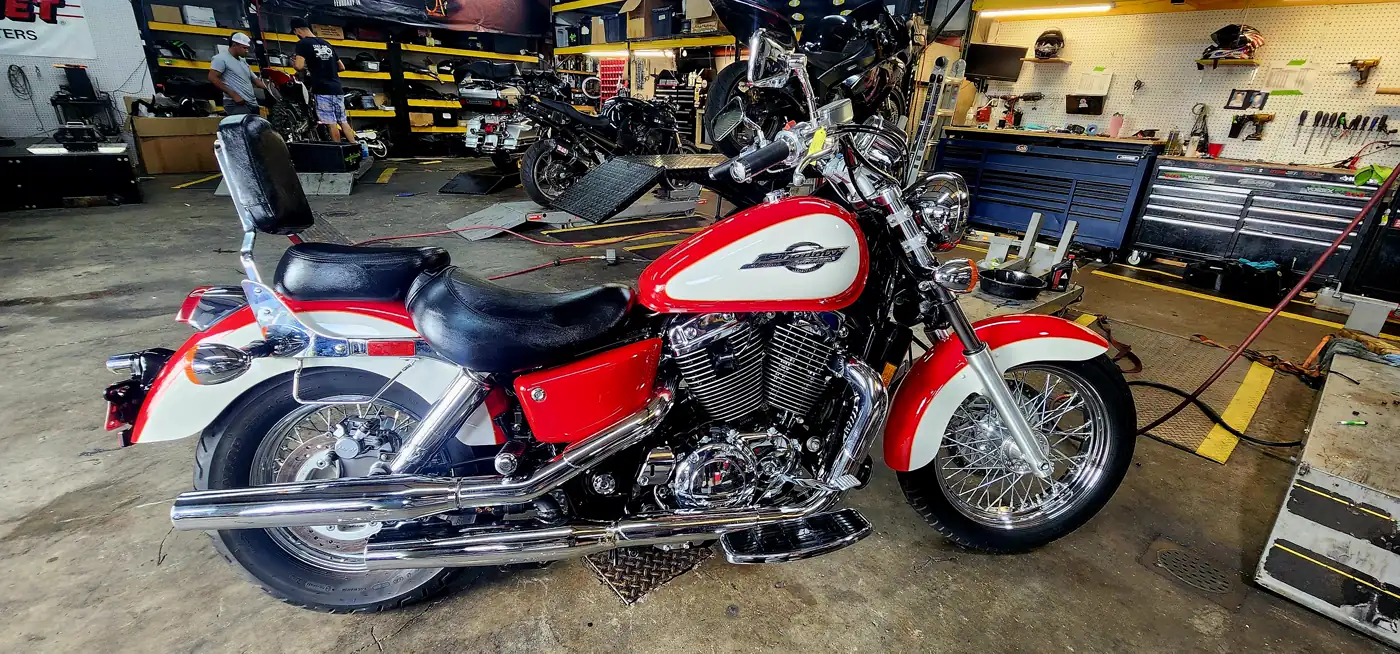
Once mechanical systems are sorted and the bike runs, stops, and handles the way it should, cosmetic restoration begins. Depending on the scope agreed at intake, this phase may include paint correction, a fresh respray, chrome polishing or replating, seat restoration or replacement, plastics repair, and a full professional detail to tie every surface together at the same level of quality. For museum-quality or show restorations, we work toward factory-spec or better on every visible surface. For rider restorations, we focus on cosmetics that match the mechanical quality — the bike should look as good as it rides.
The final detail is what brings the whole restoration together visually. Paint corrected to depth, chrome polished to reflection, rubber conditioned and supple — every surface presented as the best version of itself. A protective coating is applied that gives the restoration its best chance of maintaining this condition through Georgia’s riding season. For riders coming to us from Marietta, Kennesaw, and around Metro Atlanta with a classic bike project, reach out to start the conversation — the first call is just that, a conversation about your bike and what you want it to be.
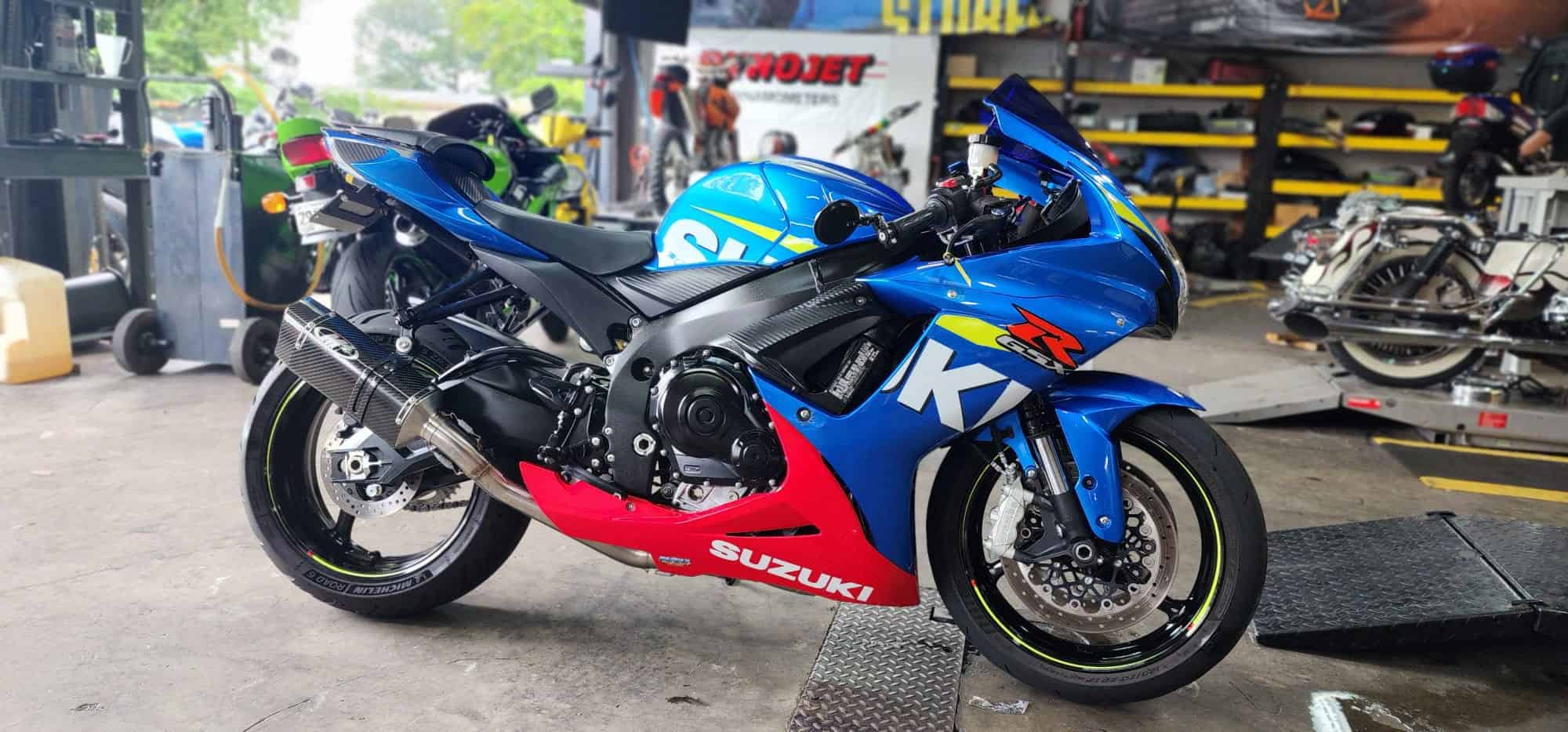
Cosmetic restoration begins after mechanical systems are sorted — the sequence matters, and we never skip steps.
Delivery is the moment we look forward to most. When an owner walks in and sees their bike restored — often the same machine they’ve owned for decades, looking and running better than it has in years — that reaction tells us everything we need to know about whether the work was done right. It’s not a transaction at that point. It’s a reunion. And it’s why classic motorcycle restoration is some of the most meaningful work we do at Diaz Motorcycles.
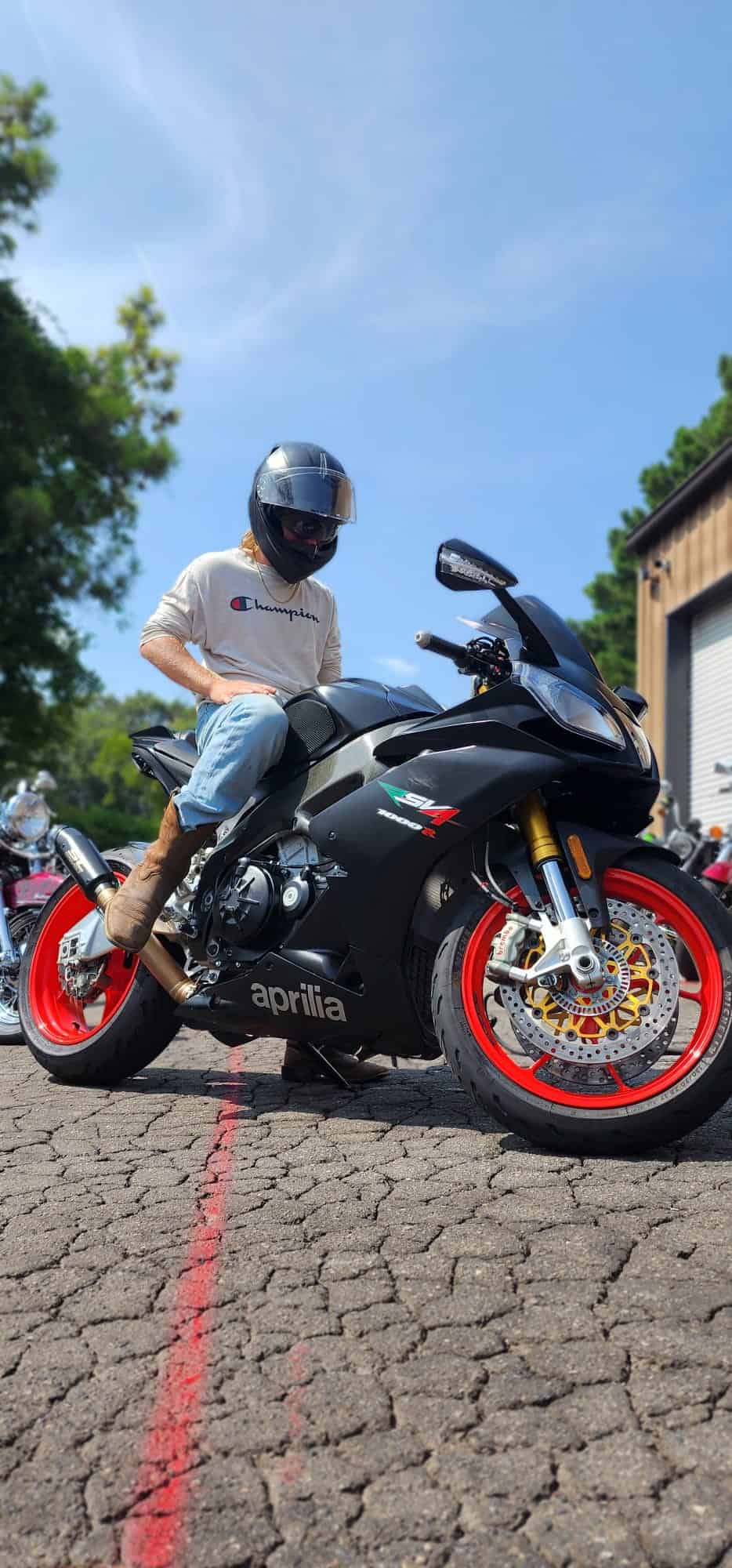
Delivery day — when the work is right, no words are needed. The bike says everything.
Ready to Bring Your Classic Back to Life?
Classic motorcycle restoration in Marietta, done right from intake to delivery. Call Diaz Motorcycles to start the conversation about your project.
470-460-9883 Schedule Service Today847 Barnes Mill Road, Marietta, GA 30062
Serving Cobb County · Marietta · Kennesaw · Atlanta · and surrounding Georgia communities