Ceramic Coating vs Wax Acworth — What Actually Fits Your Bike
Wax or ceramic? The honest answer depends on your bike, how you ride, and where it sleeps at night. Here's how to choose.
Of course, call around town and ask which one keeps your tank looking wet, glossy, and deep, and you’ll get a different answer at every stop. In fact, the honest shops won’t settle it over the phone at all. That’s not them dodging you. The whole ceramic coating vs wax Acworth debate really turns on things nobody can judge without seeing your bike, learning how you ride it, and knowing where it sleeps at night.
Here’s why a real quote can’t happen sight unseen. Two riders can own the same year and model and still need two different answers. One keeps his garaged and hand-washes it like a family heirloom. The other rides hard, parks in the sun, and washes it whenever he remembers. Same bike, totally different needs. So anyone who blurts out “ceramic, always” before looking at your paint is guessing, and guessing with your finish isn’t a great plan.
First, figure out what you're actually fighting
Before you pick a product, look at what your paint and chrome go up against. A finish doesn’t fade on its own. Something does it to them. Once you can name the enemy, the choice between the two gets a whole lot clearer. Here’s what a bike around here actually faces on a normal week:
- Sun and heat that bake the clear coat and cook old wax right off the tank
- Georgia humidity, close to 70% on a summer afternoon, that keeps moisture sitting on metal
- Spring pollen that coats everything yellow and turns gritty the second it gets wet
- Hard water spots that etch in when you rinse and let the bike air-dry in the sun
- Bug guts and road tar that bond to the front of the bike on every highway run
- Fine swirl marks and light scratches from wiping a dusty bike with a dry rag
Every one of those leaves a mark. Pollen and hard water dull the shine. Bug acid and tar can eat into paint if they sit too long. Swirls show up worst on dark tanks, the little spider-web scratches you only notice under a parking-lot light. None of it is the end of the world, though. All of it can be undone, or kept out in the first place, which is exactly the job wax and ceramic are built for.
What wax really is, and what it does
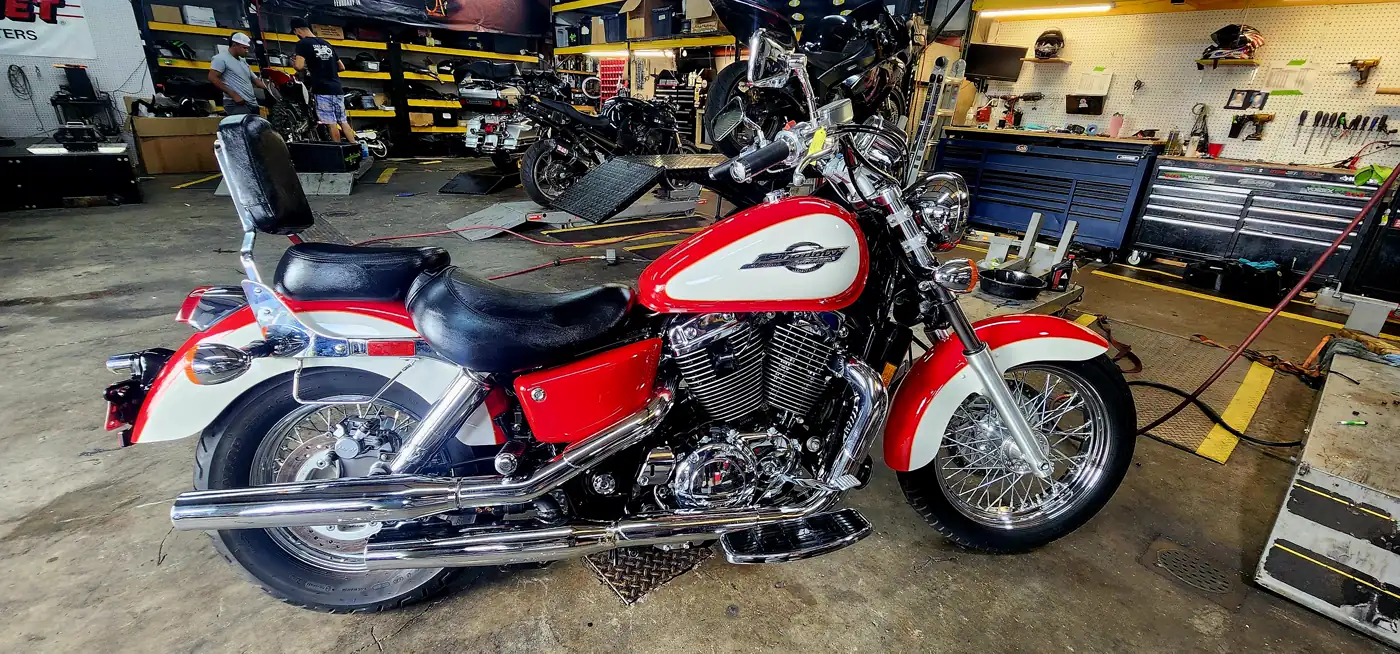
Wax is the old friend. It’s a soft layer you rub on and buff off, and it makes paint look warm and rich right now. On a freshly waxed tank the color goes deeper and water beads up and rolls. It’s quick, it’s forgiving, and you can do it in your own garage on a lazy Saturday. If you like tinkering with your bike as much as riding it, that hands-on part is honestly half the fun.
The catch is that wax doesn’t stick around. Heat softens it. Rain and washing carry it off. So the protection it gives is real but short, and it fades right when summer is being hardest on your paint. That’s fine if you enjoy redoing it often, and it’s a nice little ritual. But if you’d rather someone else handle the fussy parts, the work we do in house covers a full hand-wash and polish that’ll leave you chrome you can see your own face in. We do it by hand, one panel at a time, so nothing gets rushed and no corner gets skipped.
What ceramic coating really is, and what it isn't
Ceramic coating is the newer tool, and it works in a totally different way. Instead of sitting on top like wax, it bonds to the clear coat and hardens into a thin, glass-like shell. That shell is slick. Water sheets right off it, bugs and pollen have a harder time grabbing on, and washing gets easy, one bucket and a rinse and the dirt just lets go. The gloss is a step up too, with more depth and a wetter look that lasts season after season.
Now for the honest part, because this is where shops love to oversell. Ceramic is not armor. It isn’t scratch-proof, it won’t stop a rock chip, and it can’t fix damage that’s already there. What it does is protect and make cleaning simple, and it holds up for years, depending on how you care for it. So if a salesman tells you it makes your bike bulletproof, hold onto your wallet. Whatever you put on top, it’s smart to follow your bike’s own care schedule, and the Harley-Davidson service information is a solid place to check what your model likes.
IN PLAIN ENGLISH
Wax makes paint look great today and needs redoing often. Ceramic takes more effort up front, then protects and eases washing for the long haul. Neither one is a force field.
Look at it from the bike's side
Now flip it around and look at it from the bike’s side. Your paint doesn’t care what the product is called. It only cares whether something is standing between it and the sun, the pollen, and the wash rag. Wax puts up a thin, friendly wall that keeps getting knocked down and rebuilt. Ceramic puts up a tougher one that stays. From the paint’s point of view, the question isn’t which is “better,” it’s how much wall you want and how often you’re willing to rebuild it.
What a real detail looks like at the shop
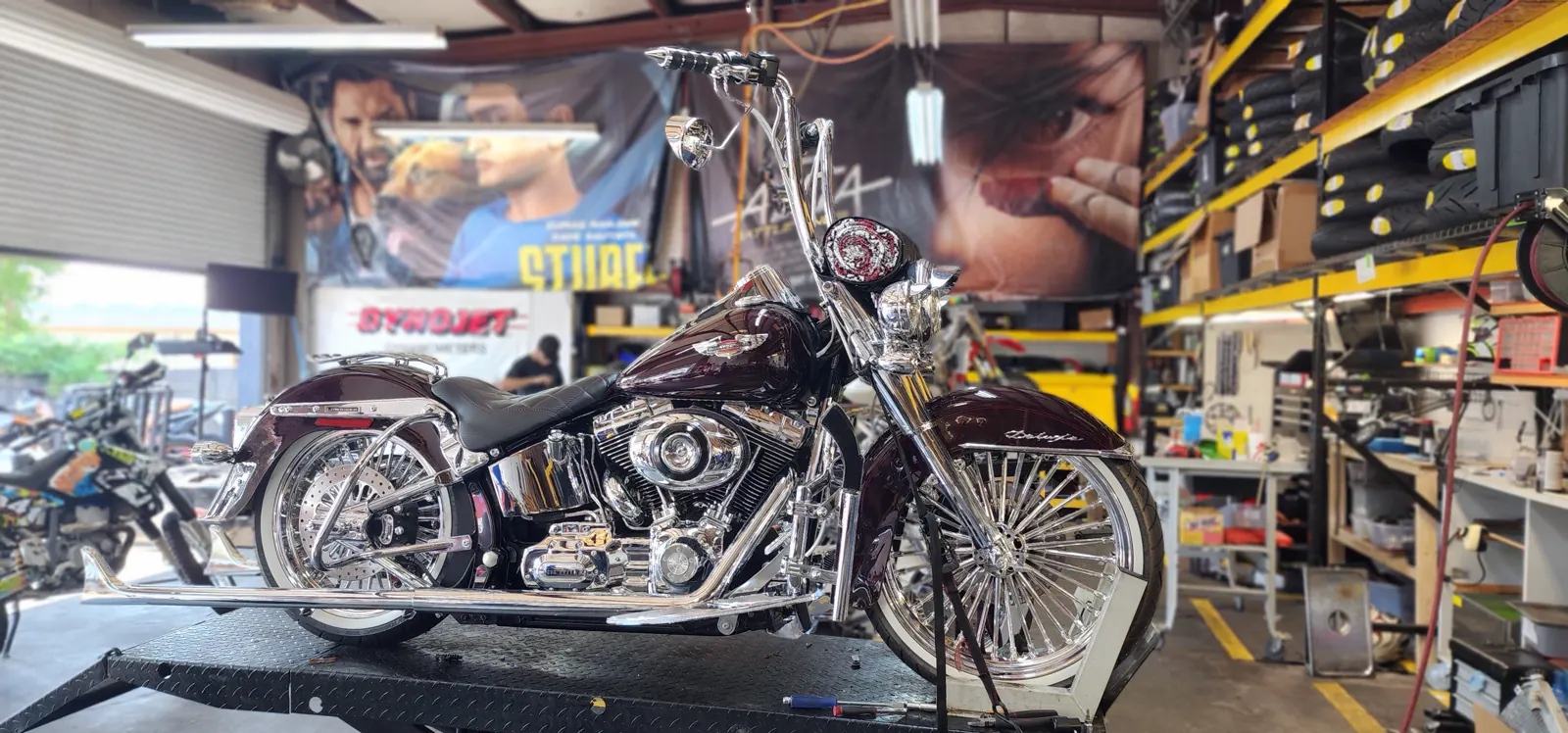
A wash and a detail aren’t the same thing, and the gap is bigger than most folks think. A wash gets the dirt off. A detail brings the finish back to life. When your bike comes to us for the real thing, it’s a whole lot more than soap and a hose. Here’s the order it usually goes in:
- A deep clean of the wheels, engine bay, and every tight spot a sponge never reaches
- Bug and tar removal up front, worked off gently so the paint underneath stays put
- Paint correction, which is machine polishing that levels out swirls and light scratches until the shine comes back
- Chrome polishing until it throws a clean reflection, plus care for leather, vinyl, and plastic trim
- Water-spot removal, then your choice of a sealant, a fresh wax, or a full ceramic coating to lock it all in
Paint correction is the step that surprises people the most. Those swirls aren’t dirt, they’re tiny scratches in the clear coat, and a machine polisher shaves them down until light travels straight again. That’s the trick that makes a detailed bike look better than the day it rolled off the showroom floor. If you want the step-by-step, here’s what that service actually involves, from the first rinse to the final buff. Done right, the difference is the kind you can feel with your hand, a tank that’s slick as glass instead of grabby and rough.
How long does each one really last?
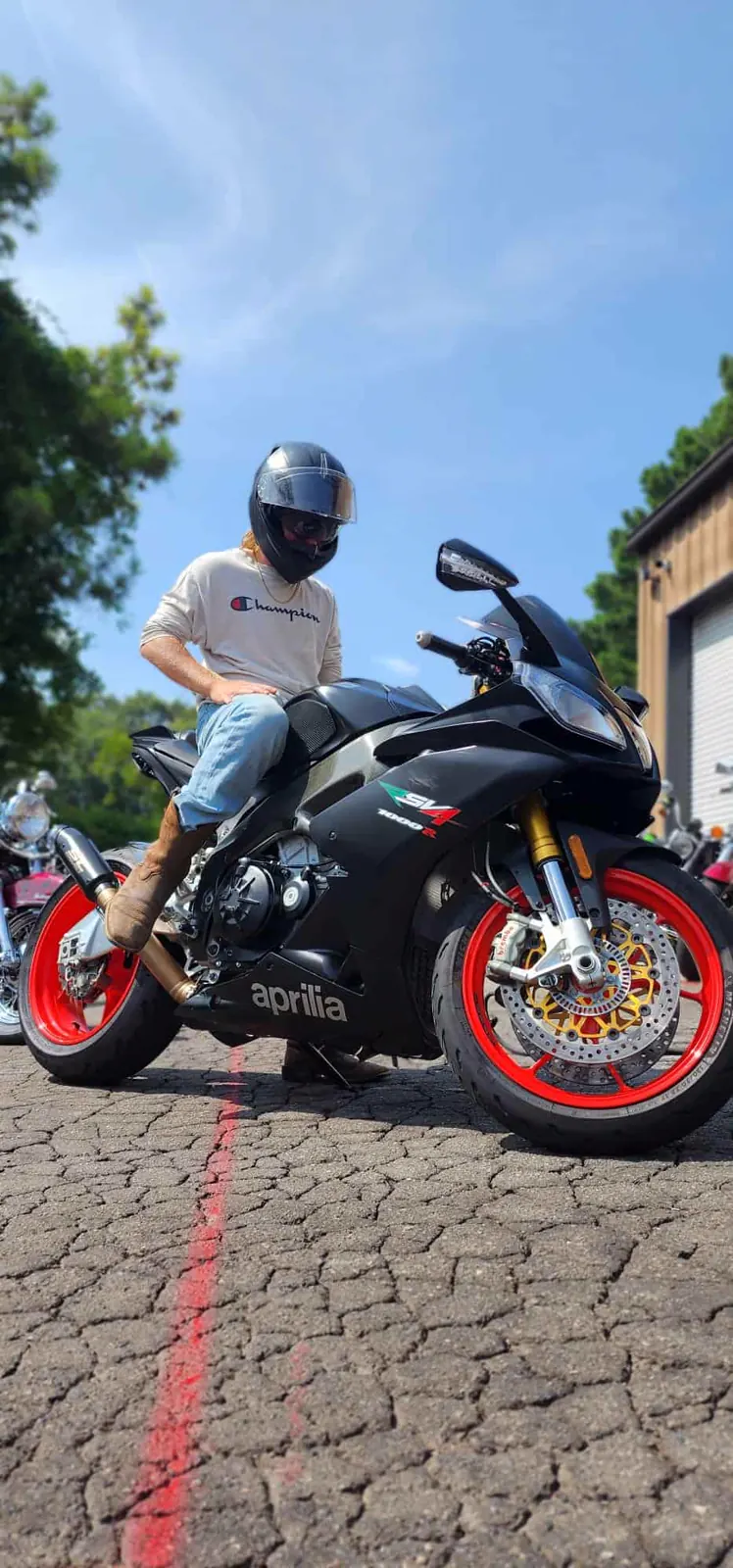
This is where the two split hardest. Wax fades fast, especially once the summer sun starts melting it, so you’re back at it again and again. Ceramic holds for years, depending on care, then all you’re really doing is keeping it clean. Neither is “set it and forget it,” but ceramic gets a lot closer. Think of wax like sunscreen you reapply, and ceramic like tinted windows you install once. Both block the sun. One just asks less of you over time. And since these bikes rack up real miles on routes like the run up to Canton, keeping the finish sharp is only half of it, sharpening your own skills through MSF rider courses is the other half.
Georgia is a tough neighborhood for a finish
Summer here is rough on paint, no way around it. June through August brings heat, humidity that hangs near 70% most afternoons, and near-daily thunderstorms that leave water spots if you don’t dry the bike. Morning fog off the lake coats everything in dew. Even the roads fight you, tar-snake patching turns greasy in the heat and flicks up onto your lower fairings. A slick ceramic shell makes all of that easier to rinse away. Wax helps too, right up until the sun softens it off.
This matters more here than in most places. Acworth bikes live in big garages, out in Bentwater off Cedarcrest Road on the Paulding side, over in Camden Pointe with its lake and fountain, and down in the Lake Acworth area near the public beach. That’s good news, most bikes sleep indoors. But they still roll out into brutal sun, and a summer ride up to Red Top Mountain State Park or a lap of the Emerson-to-Canton loop past Burnt Hickory Park bakes a finish for hours. Even riders headed north toward Southern Devil Harley-Davidson in Cartersville put the same heat on their paint. That’s what makes the ceramic coating vs wax Acworth choice so personal, since no two garages ride the same.
So which one should you pick?
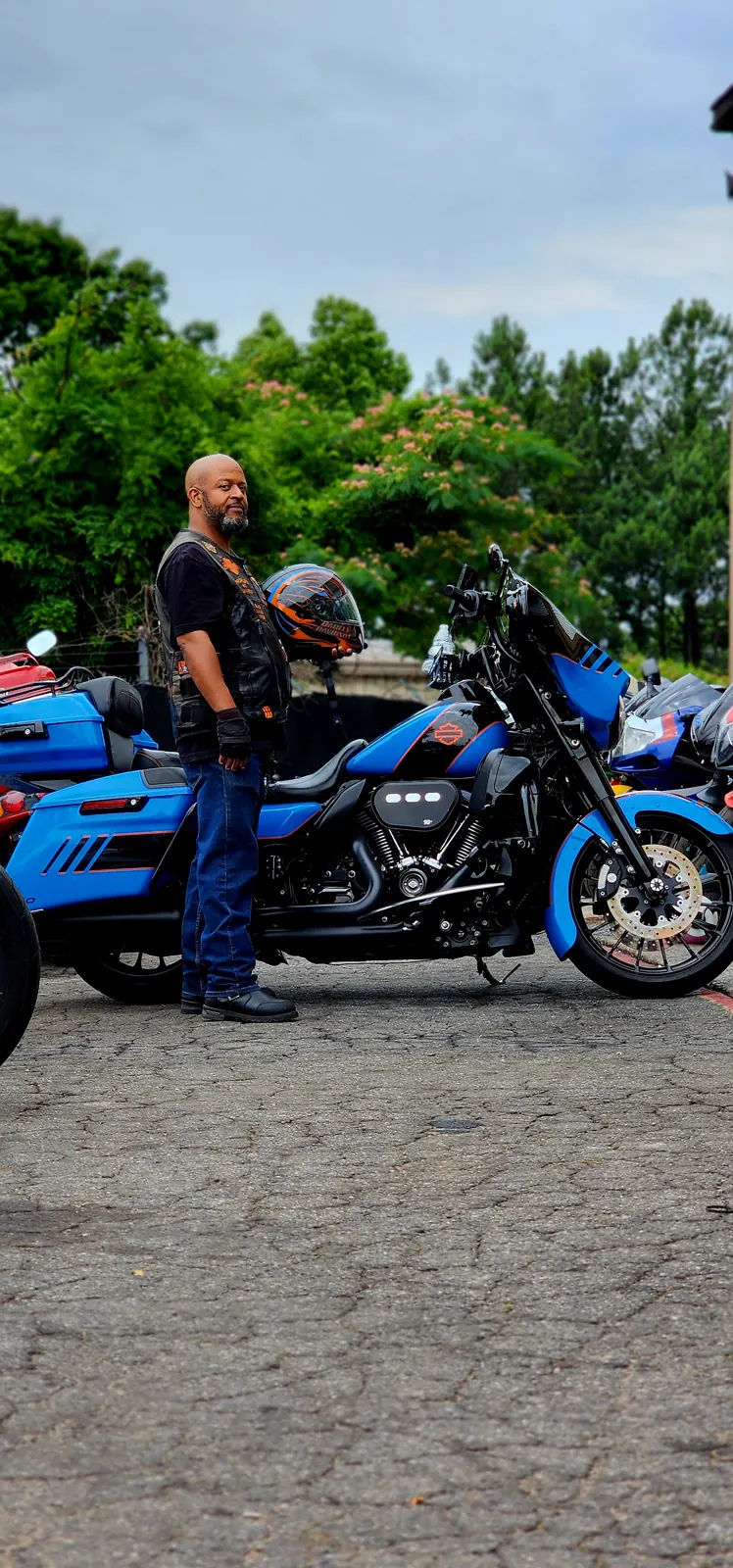
There’s a detail in all this that changes how you’ll ride out of here. Once your bike is either coated or freshly waxed, you stop babying it and start enjoying it, because you know the finish is handled. Here’s our honest call. For most Acworth riders, especially anyone who keeps the bike a while, rides it in the sun, and doesn’t want to wax every few weeks, ceramic coating is the better buy. It protects longer, makes washing a breeze, and holds that showroom gloss right through a Georgia summer. That’s the reassuring part, you set it up once and mostly forget it.
Wax still wins in a few real cases, though, and we’ll tell you straight when yours is one of them. If you flip bikes often and won’t own this one long, wax makes more sense. If you love the hands-on ritual and want to buff your own tank on a slow Sunday, wax is honest fun. And if the paint needs correcting first, we’d never coat over swirls, so sometimes a wax is the right hold-me-over while you plan the bigger job. Right bike, right situation, right product.
| Wax | Ceramic coating | |
|---|---|---|
| Looks today | Warm, rich, instant | Deeper, wetter, glassy |
| How long it lasts | Fades fast in heat | Years, depending on care |
| Washing | Normal effort | Dirt lets go easy |
| Do it yourself | Easy at home | Best done at the shop |
| Best for | Short-term or DIY fans | Riders who keep the bike |
If you want to compare notes, riders over in Atlanta run into the very same trade-offs, and we broke it down for them too. And if your real goal is more power to go with that shine, tuning and detailing pair up nicely, here’s the full rundown on it. A clean, protected bike and a bike that runs its best are two halves of the same pride, and plenty of our friends knock out both in one visit while the bike’s already here.
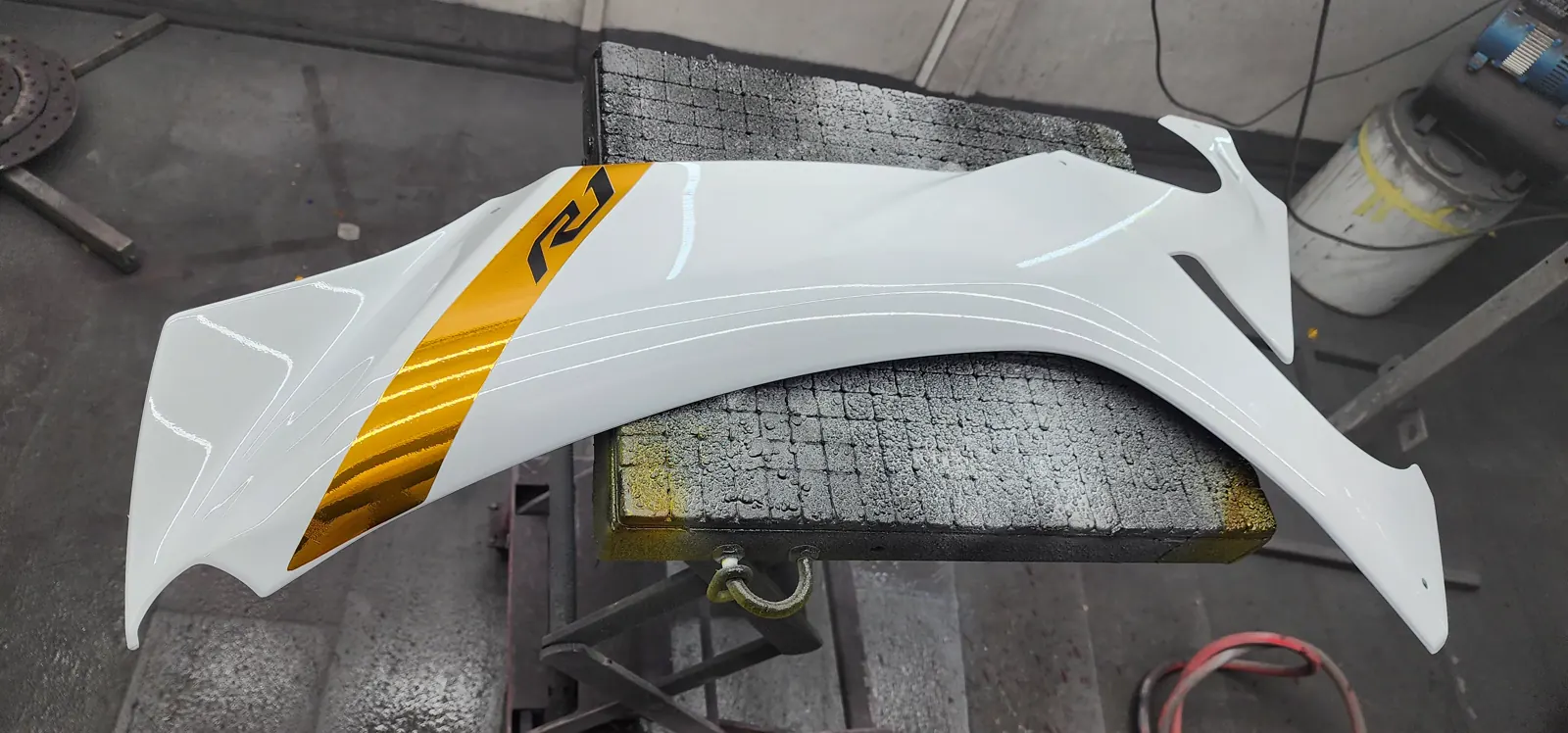
A detailed bike doesn't just look newer than the showroom. It holds its value like it, too.
Here’s the feeling we want you riding out with. A properly detailed bike looks better than the day it left the showroom, and that gloss protects what your bike is worth when it’s time to sell or trade. It pairs perfectly with custom paint, too, since a fresh design deserves a coating that keeps it looking wet for years. So bring us the bike, tell us how you ride, and we’ll point you to the right answer. No upsell, no guessing, just a straight call from folks who fix and finish bikes for a living. And when you catch your own reflection in a tank you can practically see through, you’ll get why we make such a fuss about doing it by hand.
Questions Acworth riders ask us
Can I switch from wax to ceramic later?
Yes, easily. If you’ve been waxing and want to upgrade, we strip the old wax, correct the paint if it needs it, then lay down the coating. You’re never locked in. Plenty of friends we’ve helped start with wax and move up once they decide to keep the bike.
Which one do you actually recommend?
For most riders around Acworth, ceramic coating. It protects longer, makes washing simple, and holds its gloss through our hot, humid summers. We only steer you toward wax when your situation truly calls for it, and we’ll say so plainly.
Does the kind of bike I ride change the answer?
It can. A garage-kept cruiser you plan to keep is a strong case for ceramic. A project bike you’ll flip, or one that still needs paint correction first, might start with wax. Bring it by and we’ll match the product to your bike.
Is the ceramic upgrade really worth it?
For long-term owners, usually yes. You trade a little more effort up front for years of easy washing and lasting shine, depending on care. It also helps hold resale value, since a protected finish keeps looking newer longer.
Which one should I pick if I'm still unsure?
Let the bike decide. Tell us how long you’ll keep it, where it’s parked, and how often you ride in the sun. Those three answers point to one product almost every time, and we’ll walk you through it with zero pressure.
Do I still have to wash a ceramic-coated bike?
You do, but it’s far easier. Dirt, bugs, and pollen don’t grab as hard, so a rinse and a gentle wash usually does it. The coating makes upkeep simple, it just doesn’t make it disappear.
We take care of riders all across the northwest metro. That means Acworth first, of course, plus nearby Kennesaw, Woodstock, and Marietta, out to Dallas and Powder Springs on the Paulding side, up through Cartersville, Emerson, and White along I-75, and over to Canton, Adairsville, Euharlee, and Taylorsville. If you’re within a reasonable drive, we’re glad to help, and we’ll come get the bike when that’s easier on you.
LET'S GET THAT SHINE BACK
Bring your bike to Diaz and we’ll give you the straight answer on ceramic versus wax for your Acworth ride, no upsell and no guessing. Text us a photo of your tank and a quick note on how you ride, and we’ll tell you which one truly fits. We’ll even come pick the bike up if that’s easier on you.
470-460-9883Diaz Motorcycles and Service, LLC · 847 Barnes Mill Road, Marietta, GA 30062