Ceramic Coating vs Wax in Gainesville: Which One Is Right for Your Bike?
The real differences in protection, cost, and effort — and which one actually makes sense for a bike that lives near the lake.
You want your bike protected, and you have heard two words tossed around: wax and ceramic coating. Both promise shine. Both promise protection. So which one do you actually need? The ceramic coating vs wax Gainesville riders keep asking about is not a trick question, and there is no single right answer for everyone. It comes down to how you store the bike, how much effort you want to spend, and how long you want the protection to last.
Let’s clear up the biggest myth first. Neither one fixes your paint. Both wax and ceramic go on top of the finish to protect it, which means they only look as good as the paint underneath. Put either over swirls and water spots and you just seal the flaws in. Correct the paint first, then choose your protection. Get that order right and this whole decision gets a lot simpler.
What wax actually does
Wax is the old-school choice, and it earns its place. It is a soft layer, usually carnauba or a synthetic blend, that you rub onto the paint to add warmth and depth to the color and shed a little water. It is cheap, it is easy, and you can do it yourself in your garage on a Sunday. For a lot of riders, that is exactly the appeal: low commitment, low cost, instant gloss.
The catch is that wax does not last. It is soft, so heat, rain, and washing wear it off in weeks, not years. In Gainesville that clock runs even faster, because our summer sun and the lake humidity are hard on a soft coating. If you wax your bike in April, do not be shocked when the water stops beading by June. Wax is real protection, just short-term protection you have to keep redoing.
What a ceramic coating actually does
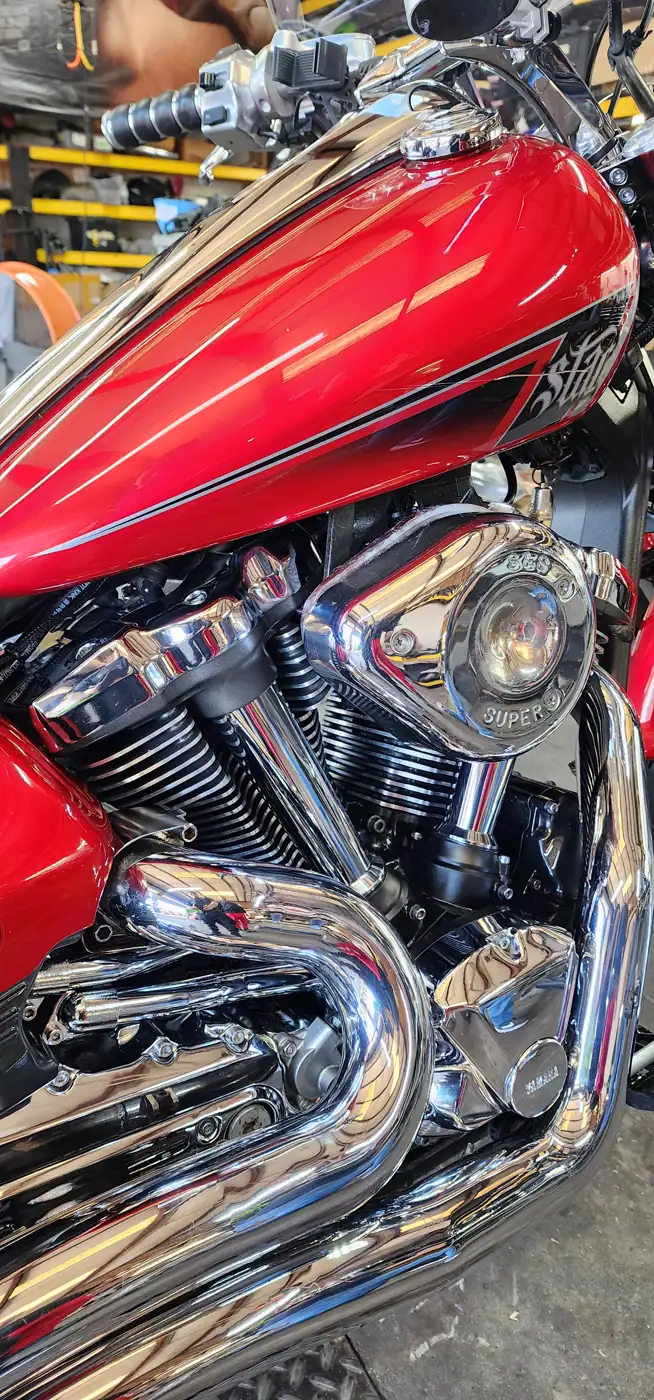
A ceramic coating is a different animal. It is a liquid that chemically bonds to the clear coat and cures into a hard, slick shell. Run your hand across a freshly coated tank and it feels like glass, almost slippery. Water beads up tight and rolls off instead of sheeting and spotting. Bugs and grime wipe away with far less effort. The gloss looks wet even parked in the shade, and it holds that look for years instead of weeks.
That durability is the whole point. Where wax wears off in weeks, a coating measured in years shrugs off sun, water spotting, and light contamination. For a bike that lives outside under a cover near Lanier, that easy cleaning and long life is a genuine gift. You wash less, you fight water spots less, and the finish stays sharp through more than one summer.
NEITHER ONE IS ARMOR
A ceramic coating is not scratch-proof and will not stop a rock chip off 365 or survive a tip-over. It protects against sun, spotting, and light contamination. Anybody promising a bulletproof finish is selling a story.
The honest trade-offs, side by side
Here is the clean comparison. Wax is cheap, easy, and DIY-friendly, but it is soft and wears off in weeks, so you are reapplying it constantly. A ceramic coating costs more up front and needs professional prep and cure time, but it lasts years, beads water hard, and makes every future wash faster. One is low cost and high effort over time; the other is higher cost and low effort over time. Neither is wrong.
- Wax: low cost, easy DIY, warm glow — but soft and gone in weeks, especially in summer.
- Ceramic: higher up-front cost, pro application — but lasts years and beads water hard.
- Wax = high effort over time; ceramic = low effort over time.
- Both need corrected paint underneath, or they just seal in the flaws.
- Neither stops rock chips, scratches, or tip-over damage.
So the decision is really about your habits and your storage. Do you enjoy waxing the bike and do not mind doing it every few weeks? Wax is fine and fun. Would you rather set it and forget it, especially if the bike sits outside near the lake collecting humidity and hard water? Ceramic earns its keep. There is no universal winner, only the right fit for how you actually ride and store.

Which one fits a Gainesville rider?
Let’s make it local. If your bike lives in a climate-controlled garage in Longstreet Hills and only comes out for Saturday runs up 129, wax will serve you fine, because it is not fighting weather all week. But if it sits outside under a cover near Harbour Point or out along Browns Bridge, breathing lake humidity every night, a ceramic coating is the smarter money. It fights the exact enemies our climate throws at your paint.
There is also the pollen factor, which nobody talks about. Late March and April blanket north Georgia in yellow pollen that is mildly acidic if it sits and gets wet. On a waxed bike, you are cleaning it off constantly. On a coated bike, it wipes away easier and the slick surface gives it less to cling to. For a rider who does not want to babysit the paint through pollen season, that alone can tip the scale toward ceramic.
STORAGE DECIDES IT
Garage-kept and hands-on with your bike? Wax works. Stored outside near the lake and want to stop babysitting the paint? Ceramic pays for itself in saved effort and fewer water spots.
Wax is a weekend hobby. A ceramic coating is a decision you make once and forget about for years.
One more honest note: you can absolutely start with wax and move to ceramic later. Nothing is permanent about choosing wax first. Plenty of riders wax for a season, get tired of redoing it, and come back for a coating when they are ready to commit. The only real mistake is coating or waxing over uncorrected paint, because then you are just protecting the flaws instead of the finish.
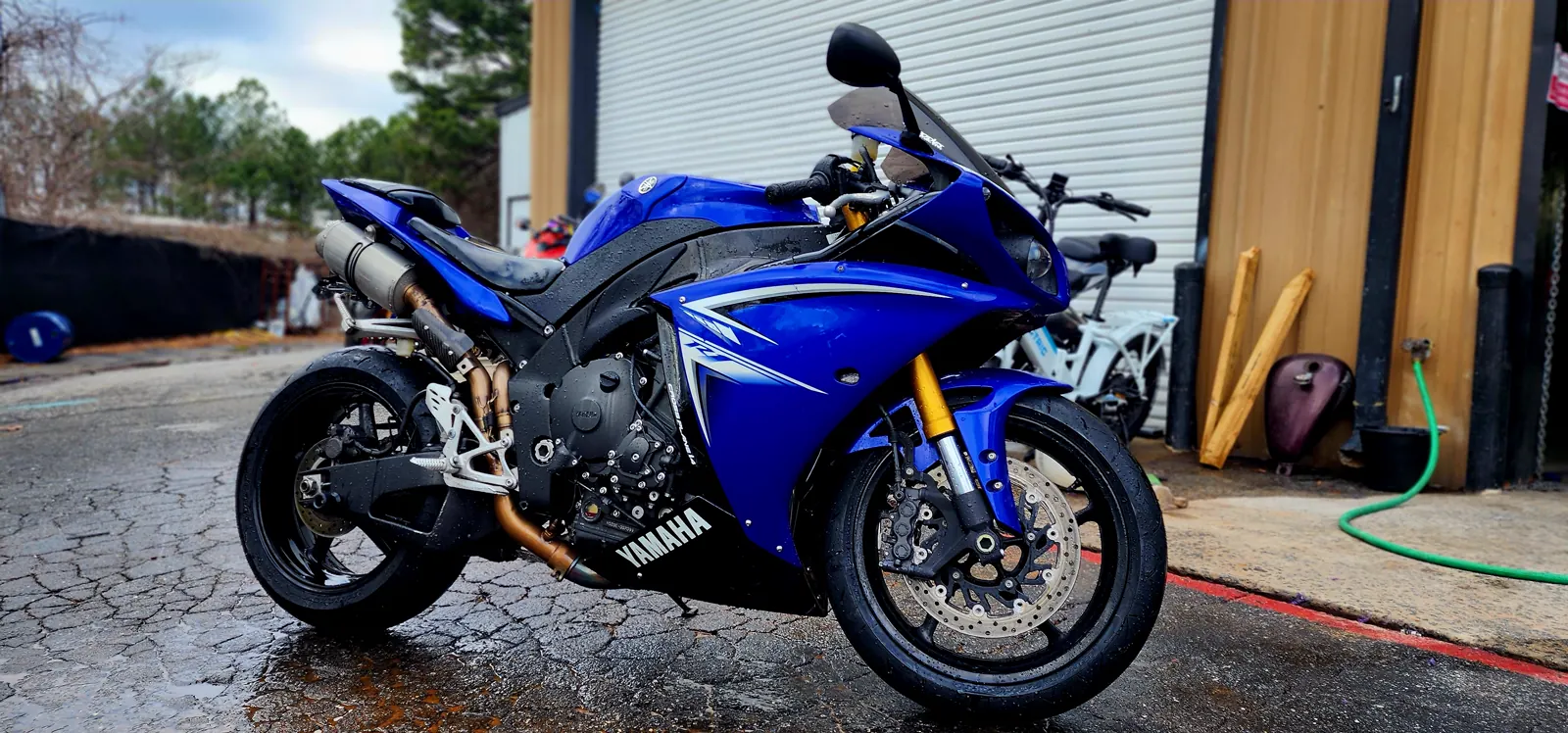
There is a middle option too
Wax and ceramic are not the only two doors. There is a middle ground called a paint sealant, a synthetic step up from wax that lasts months instead of weeks but does not go as long or as hard as a ceramic coating. Think of it as the bridge choice: more durable than a Sunday wax, easier on the budget than a full coating. For a lot of riders it is the sensible in-between.
A sealant makes sense if you want real season-long protection without committing to a coating yet, or if you are testing the waters before you invest. It beads water better than wax and shrugs off pollen and light spotting through the riding months. It is a perfectly honest answer to give you, and any shop that only pushes the priciest option is not looking out for your wallet.
How to make either one last longer
Whatever you choose, how you treat the bike decides how long it holds. The biggest one, again, is drying. Never let a bike air-dry in the sun, because our hard water leaves mineral spots that break down any protection and etch the finish. Two minutes with a clean microfiber towel after every wash does more to protect your wax or coating than the product choice itself.
Storage is the other half. A breathable cover for a bike parked outside near the lake keeps condensation from sitting on the paint all night. Washing with the right soap, not dish detergent that strips protection, keeps the layer intact. Do these small things and a coating goes the full distance while a wax stretches as far as a wax can. Skip them and even the best coating gets cut short.
What about matte and satin finishes?
If you ride a blacked-out build or a matte-finish bike, listen up, because this trips people up. Traditional wax is a hard no on matte paint, because it fills the texture and creates shiny patches that ruin the flat look. Once you gloss up a matte tank by accident, getting it back is a headache nobody wants.
For matte and satin, a ceramic coating made specifically for matte finishes is the right call. It protects and beads water without adding gloss, so the flat look stays flat. This is exactly the kind of detail where asking the shop the right question matters, because the wrong product on a matte finish is an expensive mistake. Always confirm the protection is matte-safe before anyone touches the bike.
The takeaway is simple: match the protection to the finish, not just to your budget. Glossy paint has the most options. Matte demands a matte-specific coating. When in doubt, a shop that knows the difference will steer you right instead of reaching for whatever is on the shelf. That knowledge is part of what you are paying for.
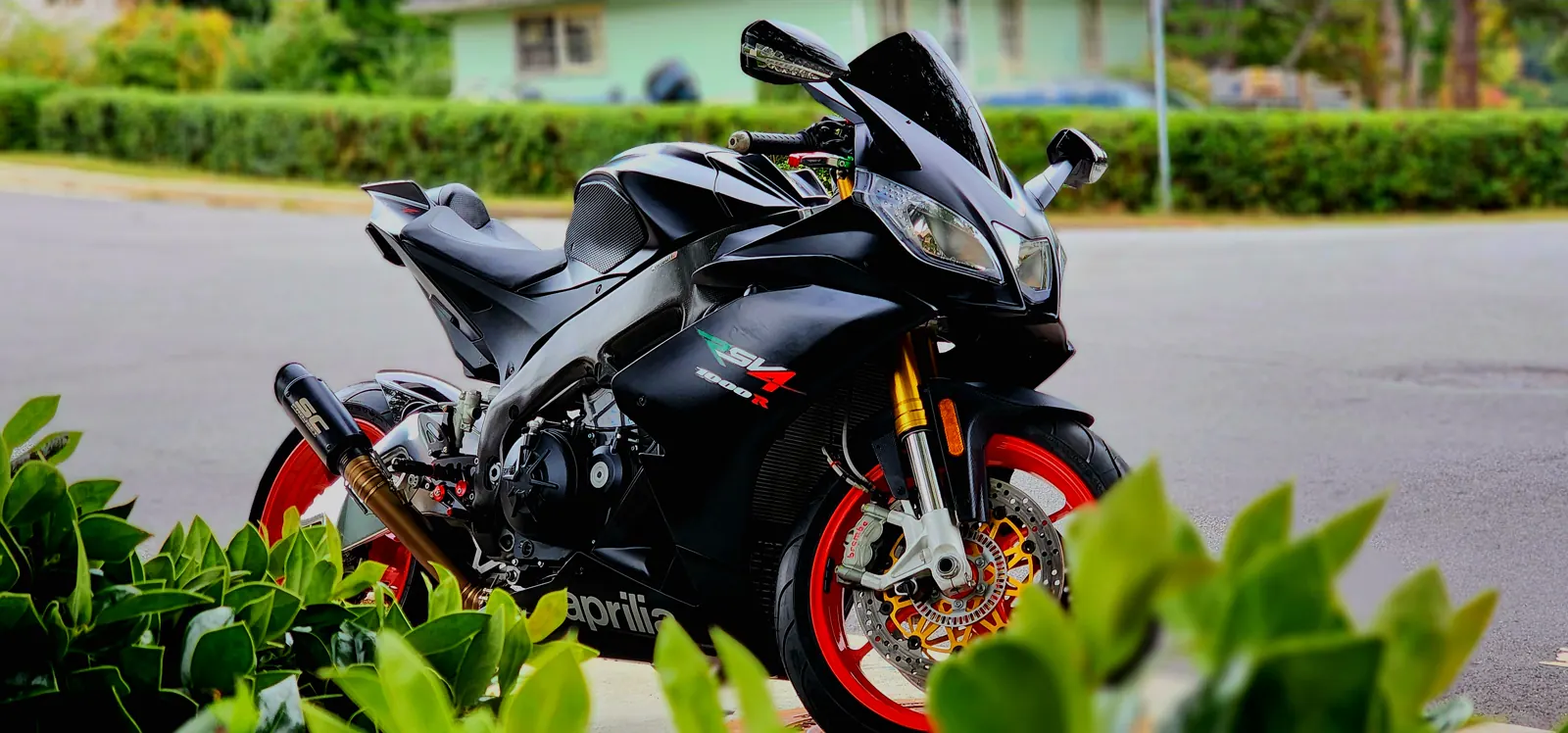
Not sure which way to go? That is what we are here for. Text us a few photos of your bike and tell us how it is stored and how often you ride. We will give you a straight recommendation, wax or ceramic, based on your real situation, not on which one costs more. And because we are down in Marietta, you do not drive it in — we pick up in Hall County, do the work, and bring it back ready for the lake.
Questions Gainesville riders ask us
Is a ceramic coating better than wax?
Better is the wrong word; different is more accurate. Wax is cheap, easy, and DIY, but wears off in weeks. A ceramic coating costs more and needs pro application, but lasts years, beads water hard, and makes future washes easier. The right pick depends on your storage and how much effort you want to spend over time.
How long does each one last near the lake?
Wax is soft and typically fades in weeks, faster in our summer sun and lake humidity. A ceramic coating is measured in years depending on storage and care. If your bike sits outside near Lanier, the coating’s durability is where it really pays off, because it fights humidity and hard water all season.
Can I put wax or ceramic over swirled paint?
You can, but you should not. Both protect the finish; neither fixes it. Applied over swirls and water spots, they just seal the flaws in. Correct the paint first, then choose your protection. Getting that order right is more important than which product you pick.
Which should I choose if my bike is garage-kept?
If it lives in a garage and only comes out for weekend rides, wax serves fine because it is not fighting weather all week. If it sits outside under a cover near the lake, a ceramic coating is the smarter money, because it stands up to humidity, sun, pollen, and hard-water spotting far longer.
Can I start with wax and switch to ceramic later?
Absolutely. Nothing about choosing wax first is permanent. Many riders wax for a season, get tired of reapplying, and come back for a coating when they are ready to commit. The only real mistake is protecting uncorrected paint, so we correct first either way.
Do I have to drive to Marietta for a coating?
No. We pick up in Hall County, do the correction and coating in the bay, and bring the bike back. A ceramic coating needs cure time anyway, so it is a drop-off job by nature. The 65 to 85 minute distance never becomes your problem.
We protect finishes across Hall County and Northeast Georgia, not just downtown Gainesville. Riders come to us from lake communities like Harbour Point and Royal Oaks on Lanier, plus Longstreet Hills and Chicopee Village. We hear from folks near Lake Lanier Olympic Park on Clarks Bridge Road and out toward the Square on Main Street SW. If your bike breathes lake air, you are close enough for us to come get it.
WAX OR CERAMIC? TEXT US AND WE'LL TELL YOU
Not sure which way to go? Text us a few photos of your bike and tell us how it is stored and how often you ride. We will give you a straight recommendation, wax or ceramic, based on your real situation — not on which one costs more. We are in Marietta, about 65 to 85 minutes from Gainesville, so you do not drive it in — we pick up in Hall County and bring it back ready for the lake.
470-460-9883Diaz Motorcycles and Service, LLC · 847 Barnes Mill Road, Marietta, GA 30062