Ceramic Coating vs Wax Smyrna — Compared
Wax or ceramic? Here's the honest comparison for a bike that lives and rides in Georgia heat.
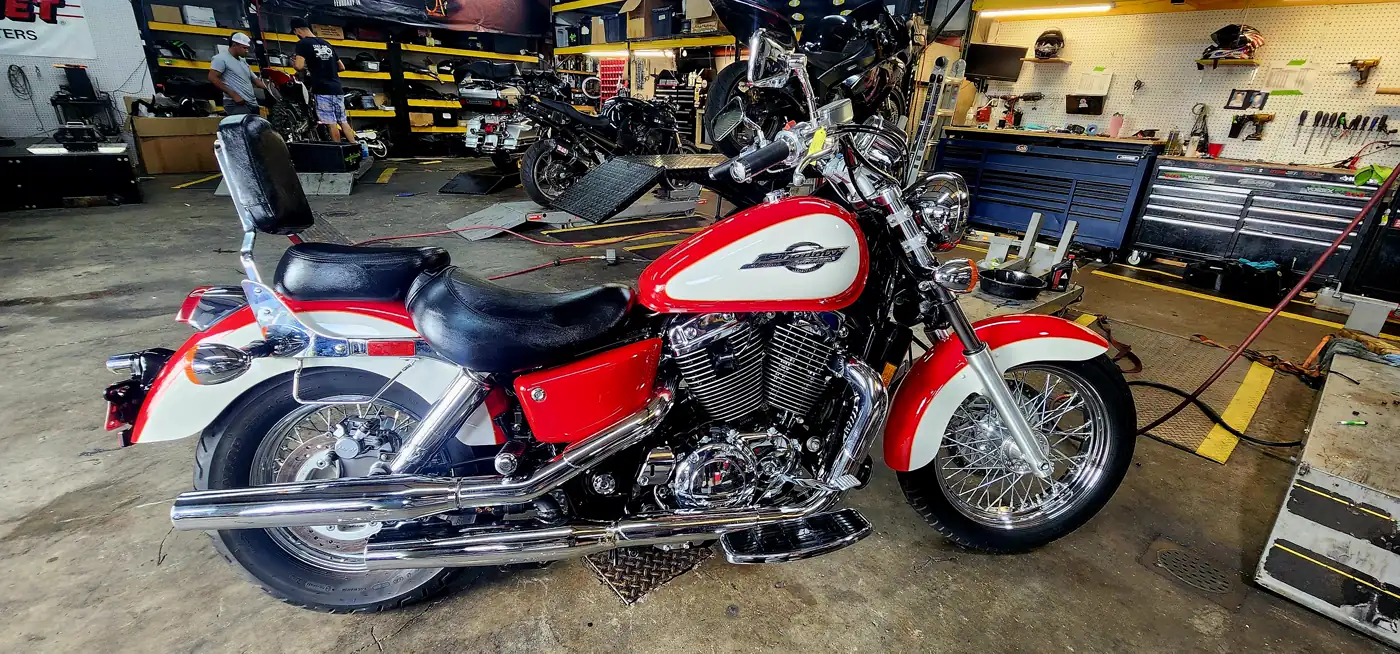
Meanwhile, most weeks, the same bike rolls through our door. It’s clean. Of course, the owner washed it Saturday, towel-dried it in the driveway, and it still looks a little tired. On the other hand the paint holds fine swirl marks. The chrome reads more gray than mirror. Then comes the question we hear more than any other: should I wax it or get it coated? In fact, that right there is the whole ceramic coating vs wax Smyrna debate boiled down to one sentence, and we’re going to settle it with you today.
Here’s the good news up front. For example, you don’t need a garage full of products or a chemistry degree to make the right call. What you need is to know what each one really does, who each one is really for, and when the cheaper choice actually beats the fancy one. We fix and finish bikes for a living, so we’ve tested both on real tanks and real fenders. No hype here. Just what we’d tell a buddy across the counter.
The myth we hear at the counter
The myth goes like this: wax is old news, ceramic is the upgrade, and anybody who still waxes just hasn’t caught up. Riders repeat it because it sounds true. Ceramic is newer. It costs more. So it must be better across the board, right? Not exactly. That story skips the part where the best choice depends on your bike, your storage, and how you actually ride.
So let’s slow down. Wax and ceramic coating are both there to do the same basic job: sit on top of your paint and take the abuse so the paint doesn’t. Both add gloss. So both make water bead and roll off. Both make the next wash easier. Where they split apart is how they bond, how long they last, and how much work goes in up front.
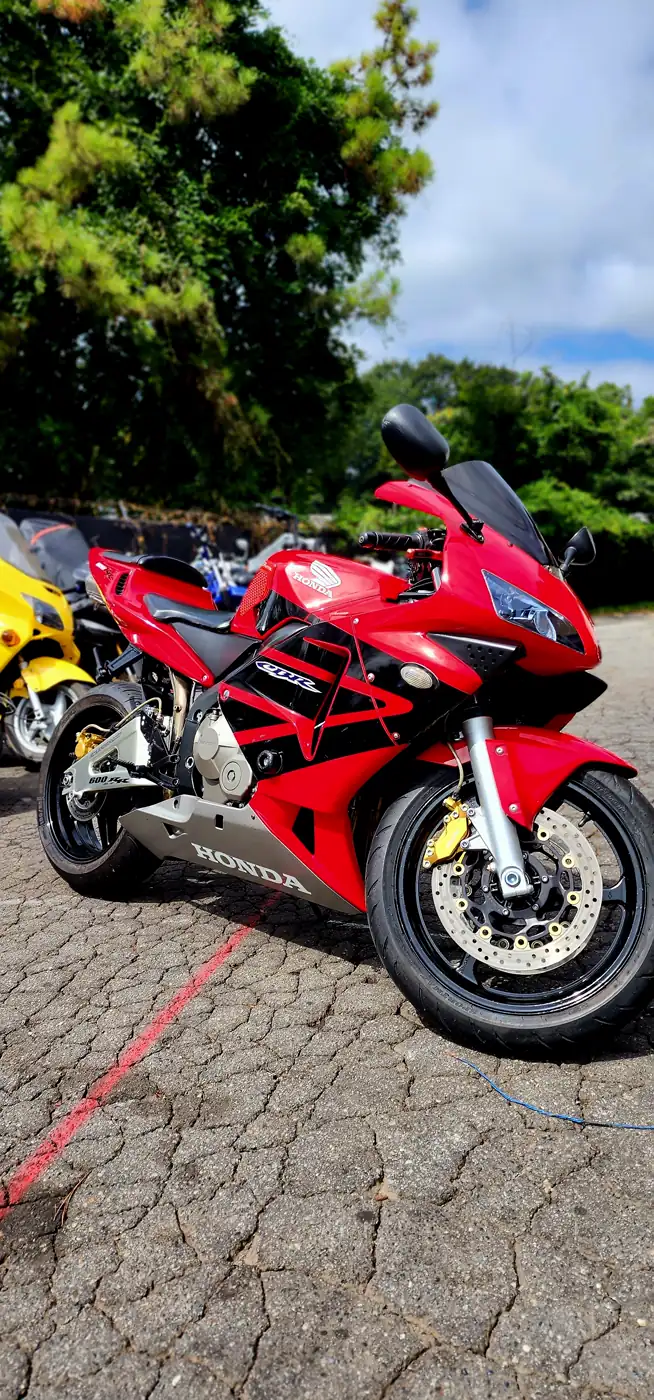
Picture two riders. One keeps a modern sportbike, rides it hard on weekends, and parks it in a clean two-car garage. The other rolls a naked commuter that lives under a carport near Market Village and sees rain, sun, and pollen every single day. Same question, but two very different answers. That’s exactly why a blanket ‘ceramic always wins’ rule leads people wrong.
And a real detail is bigger than either topping. Chrome polishing brings the mirror back to pipes and covers. Machine polishing pulls swirls out of paint. Wheels and the engine bay get cleaned by hand. Leather and vinyl get fed so they don’t crack in the heat. Plastic and trim get restored from chalky gray back to rich black. Bug splatter, road tar, and hard-water spots all come off. Wax or ceramic is only the last step that locks that work in.
Wax has been protecting paint since long before any of us started wrenching. It’s simple, it’s forgiving, and it smells great. Ceramic coating is the newer science: a liquid polymer that cures into a hard, glass-like layer chemically bonded to your clear coat. Both earn their place. Neither is magic, though. The gearheads over at RevZilla’s Common Tread will tell you the same thing about keeping your expectations honest.
What's really going on with your paint
That’s the common version. The real story is a little different. Under a microscope, your clear coat isn’t smooth at all. It’s full of tiny peaks and valleys, plus swirl marks from towels and brushes that catch light and dull the shine. Protection isn’t just a shield laid on top. It’s also about filling and smoothing that surface so light bounces back clean. And that is where the two choices really separate.
Wax mostly fills and hides. It settles into those valleys, masks light swirls, and throws a warm, deep glow across the paint. It feels slick under your palm. The catch is that heat and washing strip it away, so that glow fades in weeks, not months. Georgia makes that worse, and we’ll get to why in a minute.
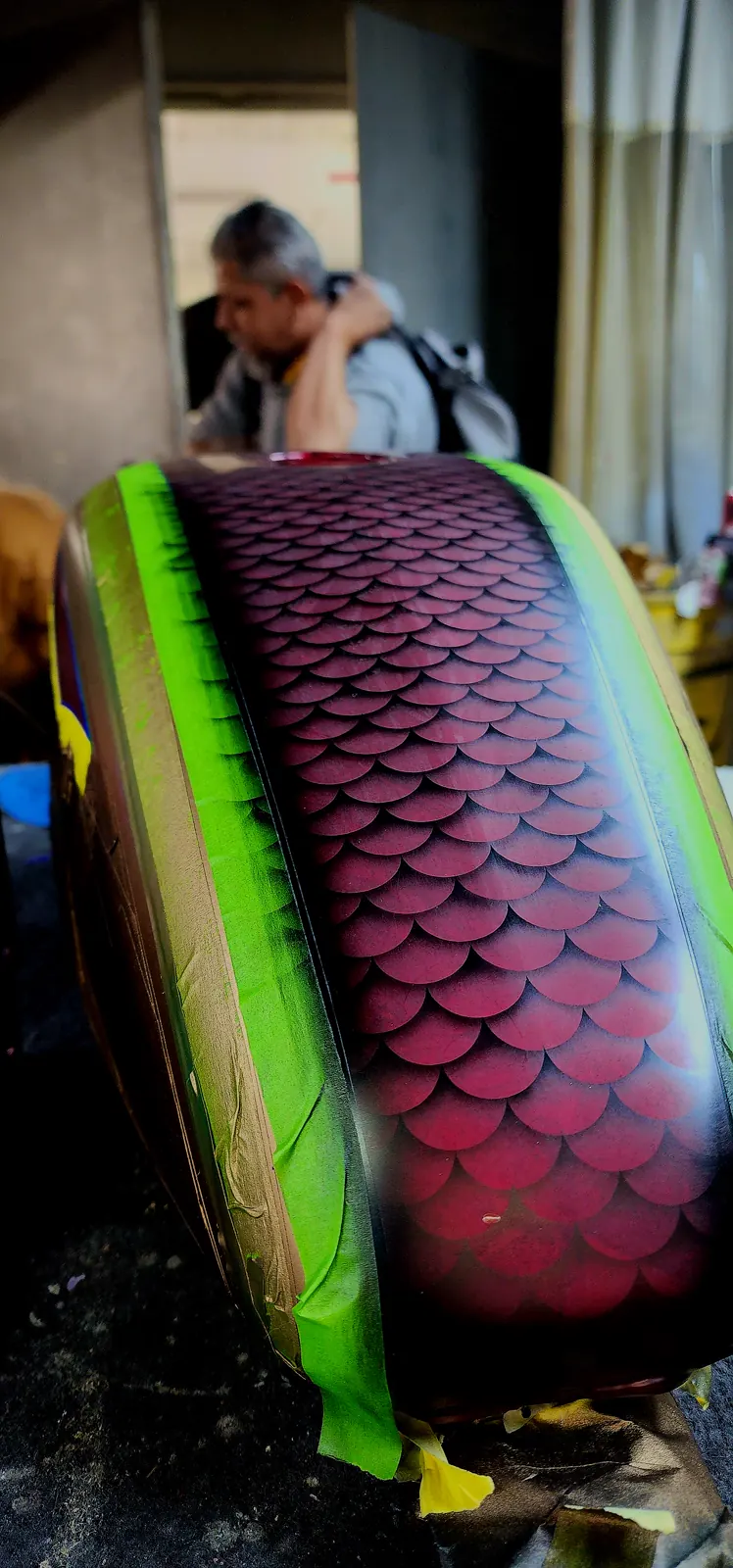
Ceramic coating works differently. Before it goes on, we correct the paint first, because the coating locks in whatever sits underneath. Skip that step and we’re just sealing swirls in glass. Once the surface is right, the coating bonds and cures into a hard layer that shrugs off water spots, bug guts, and UV far better than wax. It lasts years, depending on care, not weeks.
Wax versus ceramic, side by side
Let’s lay it out plainly, because you’re here to choose, not to read a science paper. Here’s how the ceramic coating vs wax Smyrna choice really stacks up for a bike that lives and rides in this kind of heat.
| What matters | Wax | Ceramic coating |
|---|---|---|
| Up-front work | Quick, light prep | Full paint correction first |
| How long it lasts | Weeks | Years, depending on care |
| Gloss | Warm, deep glow | Hard, glassy depth |
| Easier washing | Yes, for a while | Yes, and it holds |
| Scratch-proof | No | No — still not scratch-proof |
| Best for | Riders who enjoy re-applying | Bikes that live outside or get ridden daily |
Notice the scratch-proof row. This is the biggest myth we have to bust, so read it twice. Ceramic coating is not armor. It will not stop a rock chip, a dropped key, or a garage bump. What it does is protect against chemical stains and UV, plus make cleaning far easier, because grime struggles to grab hold. Anybody who promises scratch-proof is selling you a story.
THE HONEST LINE
Ceramic coating protects your finish and makes it easier to clean. It is not scratch-proof, and no coating on earth is. Anyone who says otherwise hasn’t dropped a wrench on a tank.
The part most shops rush
The real value of a coating isn’t the coating. It’s the prep. Paint correction is the step where we machine-polish the clear coat to remove swirls and light scratches, so the paint reflects like a still pond instead of a scuffed window. Chrome gets polished until you can read a license plate in it. Only then does protection go on. Rush the correction and you’ve just made a mediocre finish permanent.
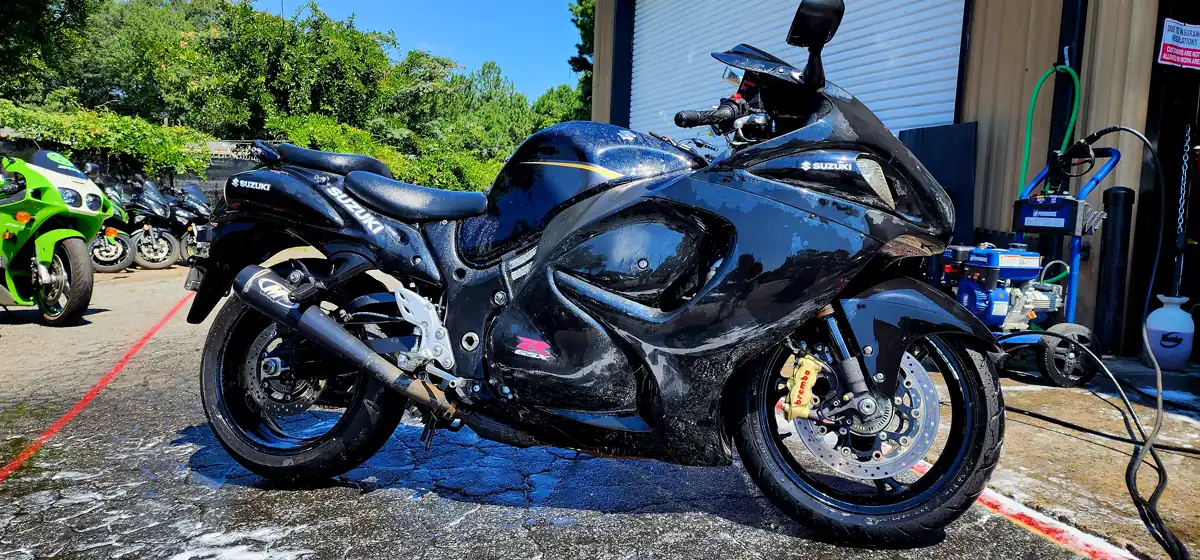
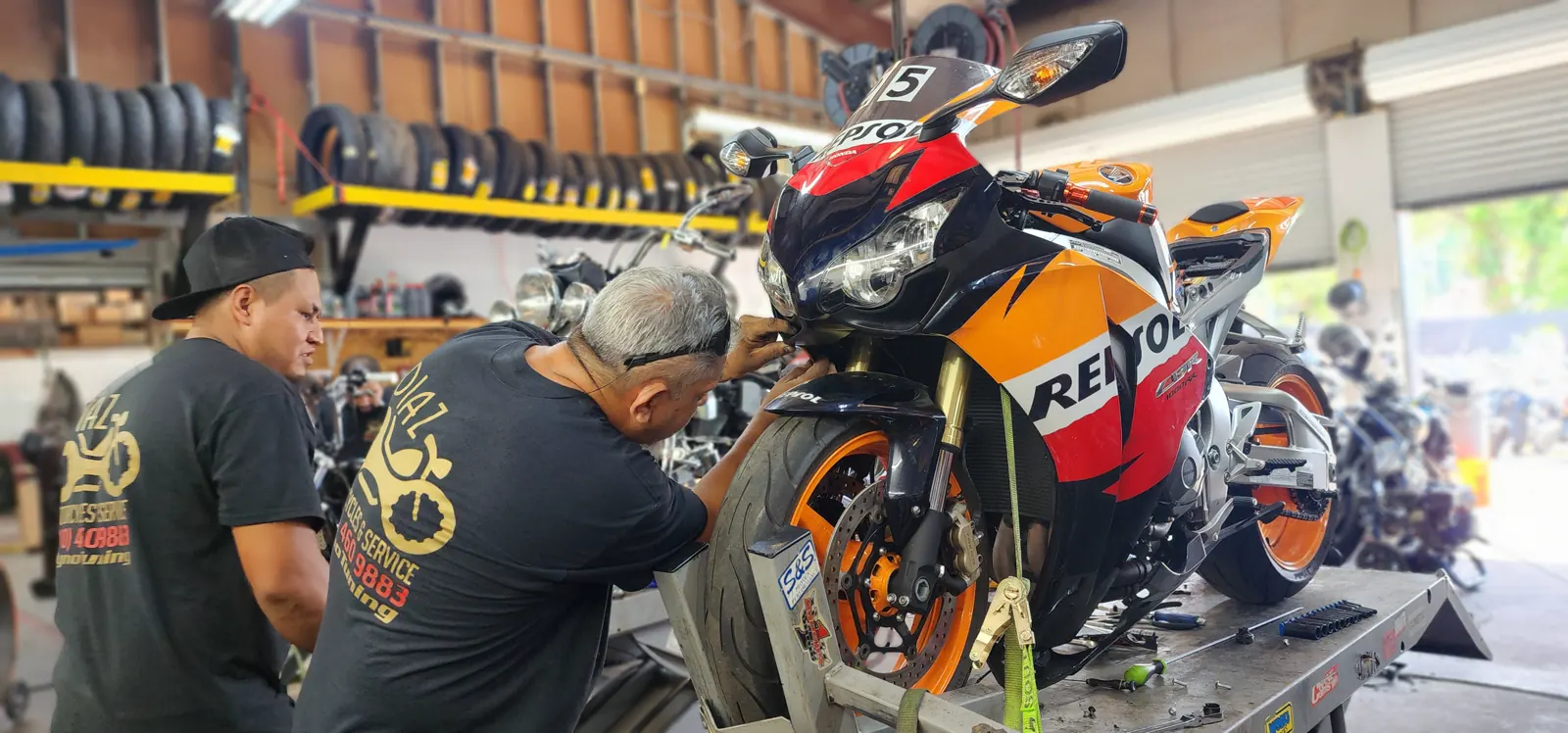
This is also where a wash and a real detail part ways. A wash gets the dirt off. A detail brings the whole finish back: paint correction, chrome polishing, wheel and engine-bay cleaning, leather and vinyl care, trim restoration, bug and tar removal, and water-spot removal. If you’ve never seen what happens in our bays, the difference is night and day. A washed bike is clean. A detailed bike looks better than the day it left the showroom.
How to tell a good detailer from a good talker
Anybody can spray on a coating. Fewer shops do the boring work that makes it worth having. When you’re picking a shop, watch for a handful of things, because what separates a good shop is rarely the flashiest website.
- They correct the paint before they coat it — always, no shortcuts.
- Still, they tell you ceramic isn’t scratch-proof before you even have to ask.
- They show you the bike under proper light, not just a dim corner.
- Plus, they talk about care after, not only the sale.
- They give you a straight answer on what your bike actually needs.
And ask about after-care. A good coating still wants a gentle wash, the right soap, and a quick rinse after a pollen-heavy week. It’s low-maintenance, not no-maintenance. A shop that hands you a simple care routine is a shop that wants your bike looking right a year from now, not just on pickup day.
A shop that walks you through all of that is treating your bike the way you would. That’s the whole game, honestly. And if you’re a rider who searches, reads reviews, and would rather text than call during business hours, the good ones make that part easy too.
Why Georgia is hard on your finish
Now the local part, because where you ride changes the answer. Smyrna summers bring heat, heavy humidity, near-daily afternoon thunderstorms, and pollen that coats everything yellow in spring. Hard water leaves spots whenever a bike dries in the sun. All of that eats wax fast and tests any finish. So a coating’s staying power matters more here than it would in a dry, mild climate.
One rider off Atlanta Road (GA-3 Bus.) put it better than we could. He rides that historic route toward Vinings most mornings, then loops the Chattahoochee River crossings by Paces Ferry on weekends, out toward Sandy Springs. ‘I wax it Saturday,’ he said, ‘and by the next storm it’s dull again.’ He wasn’t doing a single thing wrong. Georgia was just winning. We coated his tank, and three storms later it still beaded like day one.
That story repeats across the city. Friends we’ve helped over in Belmont Hills, where tree-lined streets and a busy neighborhood calendar mean the bike is always parked somewhere people will see it, want a finish that holds between gatherings. A rider in Bryerstone, one of Smyrna’s premium pockets, wanted his bike to match the address. Owners along the Sherwood Road area, where homes run mid-to-premium, ask us the very same thing. And anyone who parks near Market Village and grabs lunch outside Muss & Turner’s already knows a bike downtown draws eyes a car never will.
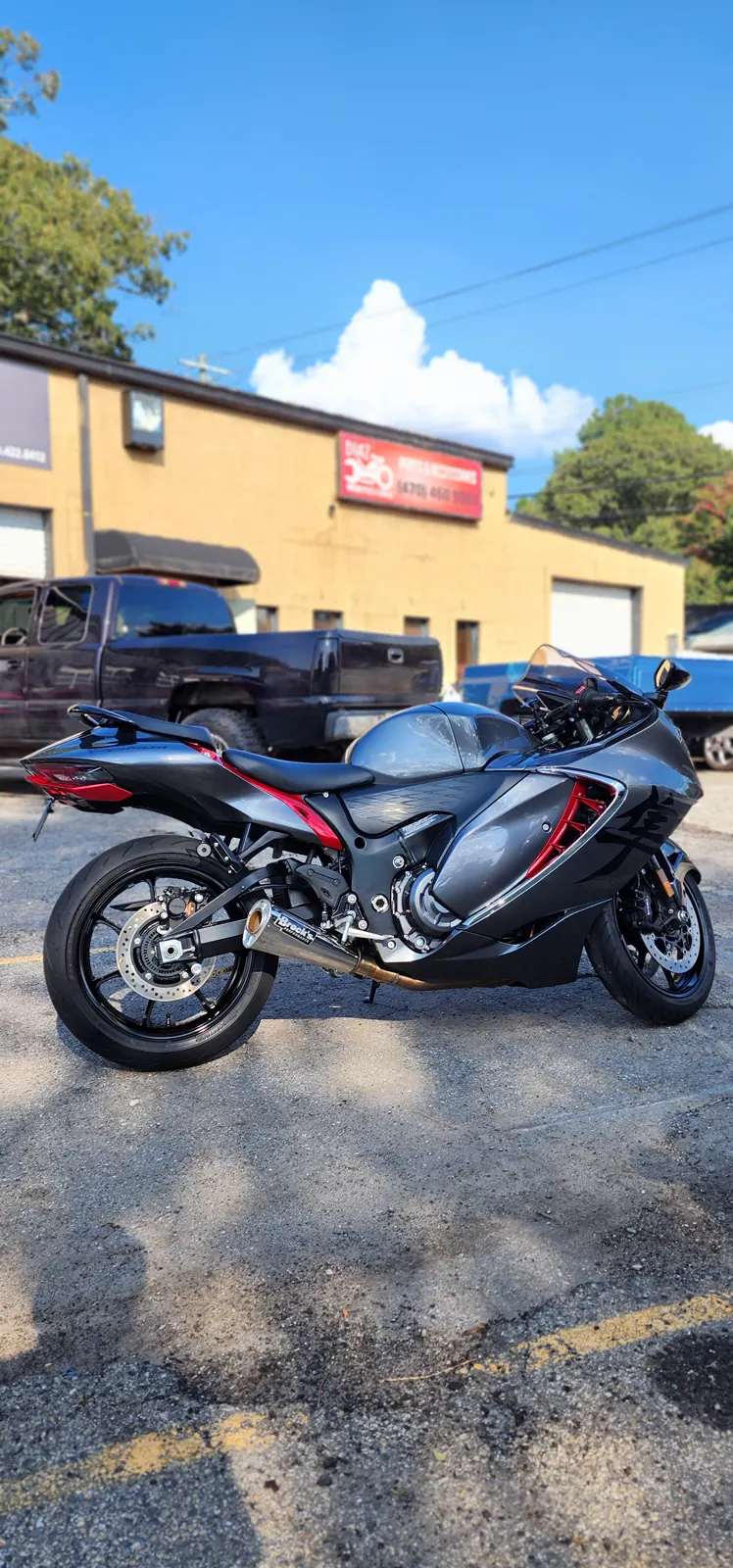
Storage is the other half of it. If your bike lives in a sealed garage, wax can hold up fine, and re-applying it is honestly a nice Sunday ritual. If it lives under a carport or on an open lot near Cumberland, exposed to sun and rain, a coating earns its keep fast. Your parking spot might decide this for you before your paint ever does. A lot of newer townhomes and apartments around here come with open-lot parking and no garage at all, and those bikes take the worst of the weather. For that crowd, ceramic isn’t a luxury so much as plain common sense.
You’ve got options nearby, and we’d rather you know them. WOW Motorcycles up at 522 Cobb Pkwy N in Marietta is America’s largest pre-owned powersports dealer, with more than six hundred units on the lot, though they’re closed Sunday and Monday and sit about twenty minutes out. For a detail, the drive to us runs about eleven miles, roughly twenty-two to twenty-eight minutes from Market Village, usually South Cobb Drive or Atlanta Road north into Marietta and then Roswell Road east. Not far at all to bring a bike back to showroom shine.
So which should you pick?
Here’s our straight recommendation, no fence-sitting. For most riders, the ceramic coating vs wax Smyrna question comes down to one thing: where your bike sleeps. If it’s a daily commuter, a bike that lives outside, or you’d simply rather ride than re-wax, ceramic coating is the better buy — as long as the shop corrects the paint first. It lasts through Georgia’s worst, it makes every wash quicker, and that glassy depth on a coated tank feels slick and looks deep in a way wax can’t hold onto through July.
But wax genuinely wins in one case, and we won’t pretend otherwise. Say your bike sleeps in a clean garage, comes out mostly on nice weekends, and you actually enjoy the ritual of laying on a coat by hand. Then wax is the smarter, simpler choice. There’s real pride in it, and the warm glow it throws is beautiful. Don’t let anyone talk you out of a wax that fits your life.
A washed bike is clean. A corrected, protected bike looks better than the day you bought it.
Whichever way you lean, get the prep right and the rest follows. Not sure your bike will even make the trip, or you can’t ride it in? Here’s how we handle that job, so distance never stops a good detail. If you’re up north, we also cover the Woodstock side of things. And to keep any finish happy between details, Michelin’s motorcycle tire resources have solid basics on caring for rubber and trim through the hot months.
Questions Smyrna riders ask us
Which do you recommend, wax or ceramic?
For most Smyrna riders we recommend ceramic coating, because bikes here live in heat, humidity, and pollen that strip wax fast. It lasts years, depending on care, and makes every wash easier. Wax still wins for a garage-kept weekend bike whose owner enjoys re-applying it by hand.
Does my bike change the answer?
It does. A daily commuter parked outside gets the most out of ceramic, while a pampered garage queen can do just fine on wax. Custom or freshly painted work almost always deserves a coating to protect the art underneath. Tell us how you ride and we’ll match the finish to it.
Is the ceramic upgrade actually worth it?
If your bike sees sun, rain, and storms, yes. You trade more up-front prep for protection that holds through Georgia summers and cleaning that stays quick for years, depending on care. If your bike lives sealed in a garage and rarely comes out, wax gives you plenty for a lot less fuss.
So which one should I pick?
Look at where your bike sleeps. Outside or ridden daily leans ceramic; garaged and gently used leans wax. Either way, insist the shop corrects the paint first, because the topping only locks in whatever is already there. We’ll walk you through it before anything touches your tank.
What's the real difference between them?
Wax fills and hides swirls with a warm glow that fades in weeks. Ceramic coating bonds into a hard, glassy layer that resists water spots and UV for years, depending on care. Neither is scratch-proof, and any shop that claims otherwise isn’t being straight with you.
Is ceramic coating scratch-proof?
No, and that’s the myth we bust most. Ceramic protects against stains, UV, and grime and makes cleaning easier, but it won’t stop a rock chip or a dropped key. Think easier care and lasting gloss, not armor. Honest expectations keep you happy with the result.
We take care of riders all across the west and north metro, so wherever you park matters less than you’d think. Alongside Smyrna, we regularly detail bikes from Marietta, Vinings, and Mableton, out to Austell, Powder Springs, and Douglasville. City riders come to us from Atlanta, Buckhead, and Sandy Springs, while East Cobb, Kennesaw, and Fair Oaks round out the neighbors we see most. If you can get the bike to us, we’ll send it home shining.
READY WHEN YOU ARE, SMYRNA
Still deciding between wax and ceramic for your bike? Text us a couple photos and tell us how you ride around Smyrna — daily commute, weekend loops, garage or carport — and we’ll give you a straight recommendation, no pressure. We’ll correct the paint first, protect it right, and hand your bike back looking better than the showroom day.
470-460-9883Diaz Motorcycles and Service, LLC · 847 Barnes Mill Road, Marietta, GA 30062