Dealer vs Indie Service Canton — Which One Is Right for Your Bike
Two riders, one soft brake lever, two different shops. Here's how we'd actually pick, and when we'd send you the other way.
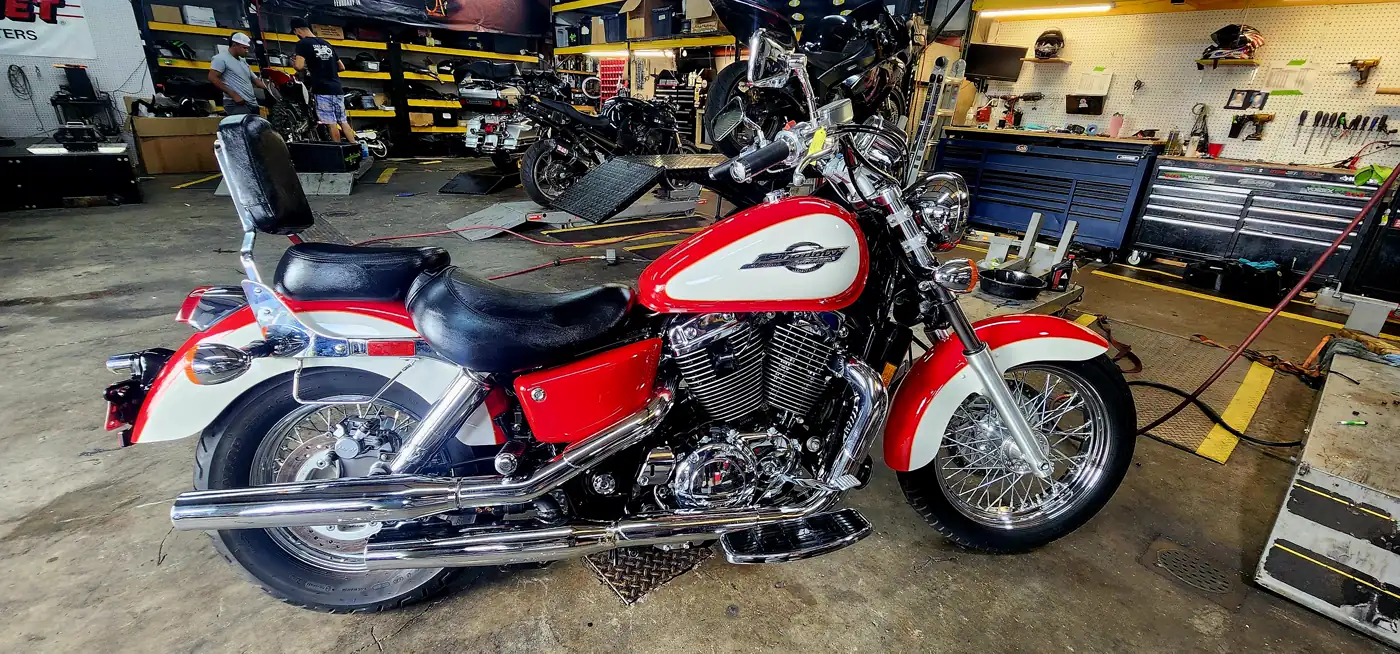
Two riders off the same stretch of GA-372 had the same problem last spring. A front brake lever that squeezed a little too far toward the grip, on a bike that had napped through the winter in a clean two-car garage. One rider booked a slot at a big dealership counter and got it handled. The other called an independent shop, talked to the guy who would actually turn the wrenches, and got it handled too. Both bikes rolled home safe. That is the honest starting line for the dealer vs indie service Canton riders keep asking us about.
The outcome was the same. Of course, the experience was not. The first rider dropped the bike off, spoke with a service writer, and picked it up later that week with tidy paperwork and factory-trained work behind it. The second rider got a text with a photo of his old brake fluid, which had gone the color of weak iced tea, plus a two-minute phone call explaining what that meant. Same repair. Very different feeling in the driveway afterward.
Neither rider made a bad choice, and that is the part we want you to hear before anything else. This is not a fight between good guys and bad guys. It is a fit question, and the fit changes depending on how old your bike is, what kind of riding you do, and how much you want to know about what happened while your bike was on the lift.
What was actually going on with both bikes
The soft lever was not a brake failure. It was old fluid. Brake fluid quietly pulls in moisture over time, and moisture is what makes a lever feel spongy instead of firm. Add pads that had worn thinner than the owner realized, and you get exactly that mushy squeeze. It is a small, cheap, boring job when you catch it early. It becomes a much bigger conversation when you wait until the lever goes to the bar on a downhill turn.
Bikes that sit are the real story around here. Most homes in the master-planned belt have two- and three-car garages, so riders have room to park a cruiser, a bagger, and a project bike all at once. That is a blessing and a trap. A bike that sleeps from November to March comes back with a tired battery, varnished fuel passages, flat spots pressed into the tires, and brake fluid that has been drinking humidity all winter. Every March we hear the same sentence: it ran fine when I parked it.
Then spring arrives and the roads change too. Late March through April is pollen season, when yellow pine dust coats every seat cover in the county, packs itself into air filters, and leaves a slick film on pavement. That is also peak mountain-ride season, so bikes go from zero miles to a lot of miles in about two weekends. Catching the small stuff before that swing is the whole game.
The two options, side by side
What a dealership is genuinely good at
- Warranty work on a newer bike, handled through the manufacturer instead of out of your pocket
- Open recalls and factory service campaigns, which only they can close out
- Brand-specific diagnostic software and modules that talk to that one make
- Special tools that exist for a single model family and nothing else
- Parts on the shelf for the brand they sell, and a parts counter that orders every day
That list is real, and we are not going to pretend otherwise. Dealerships also run the social side of riding well. Southern Devil Harley-Davidson sits about thirty minutes west in Cartersville and keeps a busy events calendar, including the Frosty Bells Toy Run and the Turkey Bowl, which pull riders together in a way an independent service bay simply does not.
What an independent shop is genuinely good at
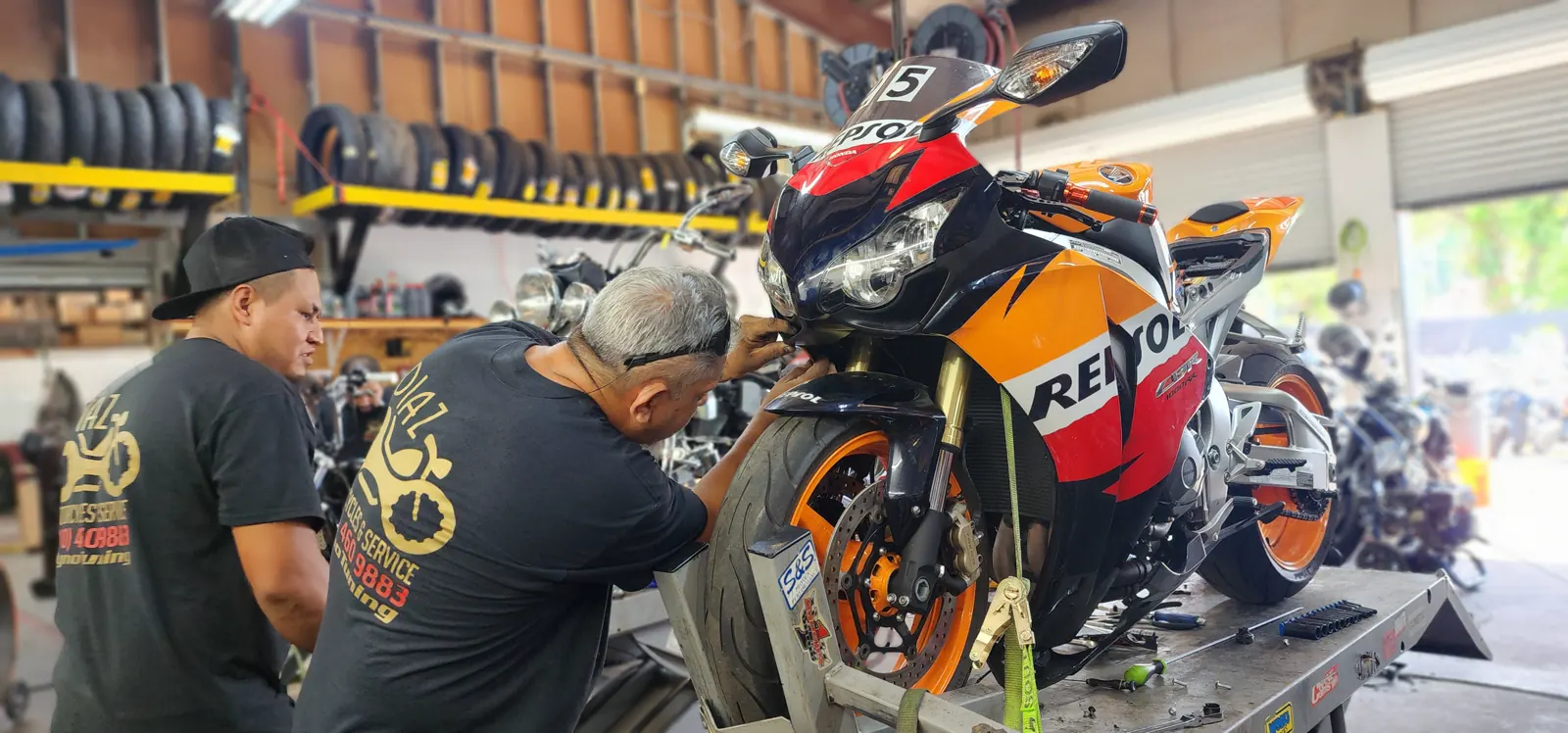
- One named technician who touches your bike every visit and remembers it next time
- A direct line to that person instead of a message passed through a front desk
- Work on every brand in your garage, so the cruiser and the dual-sport go to the same place
- Performance and tuning work, plus paint and restoration, that a high-volume counter rarely prioritizes
- Flexibility on older bikes, carbureted bikes, and projects nobody else wants to touch
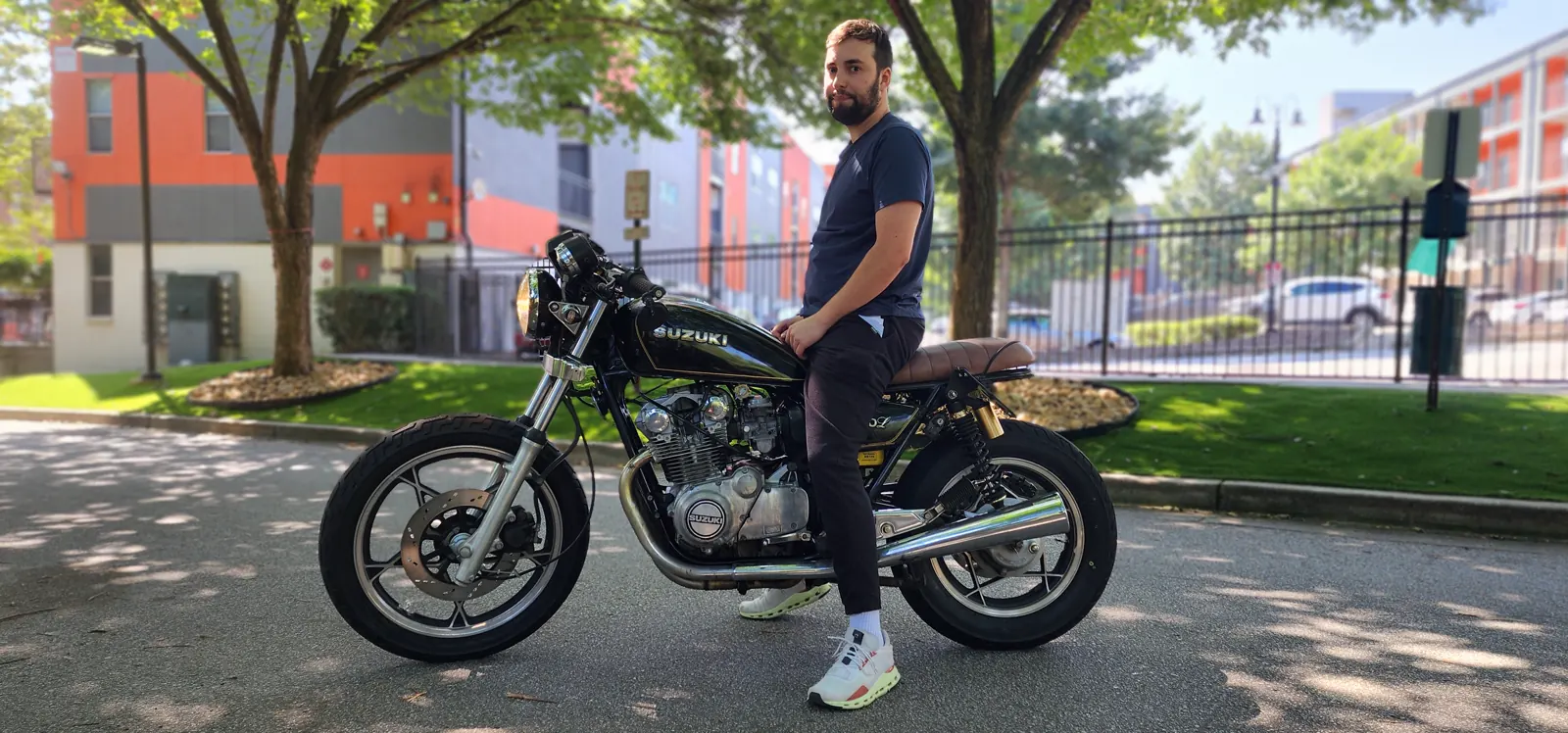
That last point matters more in this county than people expect. The older mill-town housing stock and the rural western side of the county are full of vintage projects, and the mountain access up GA-5 has produced a real ADV and dual-sport crowd. A shop that only knows one badge cannot help a garage holding three. It is the same conversation we have with riders over in Lawrenceville, just with different roads outside the door.
Before we go further, one thing worth clearing up. Taking your bike to an independent shop does not automatically cost you your factory warranty. What protects you is documentation and correct parts, not the sign over the door. Keep your receipts, make sure the fluids and filters match what your manufacturer calls for, and ask your shop to note the mileage and the date on every invoice. Friends we have helped in Orange Shoals and Ashton Farms have run that way for years without a single argument at a warranty desk.
How we decide, and what we would actually tell you
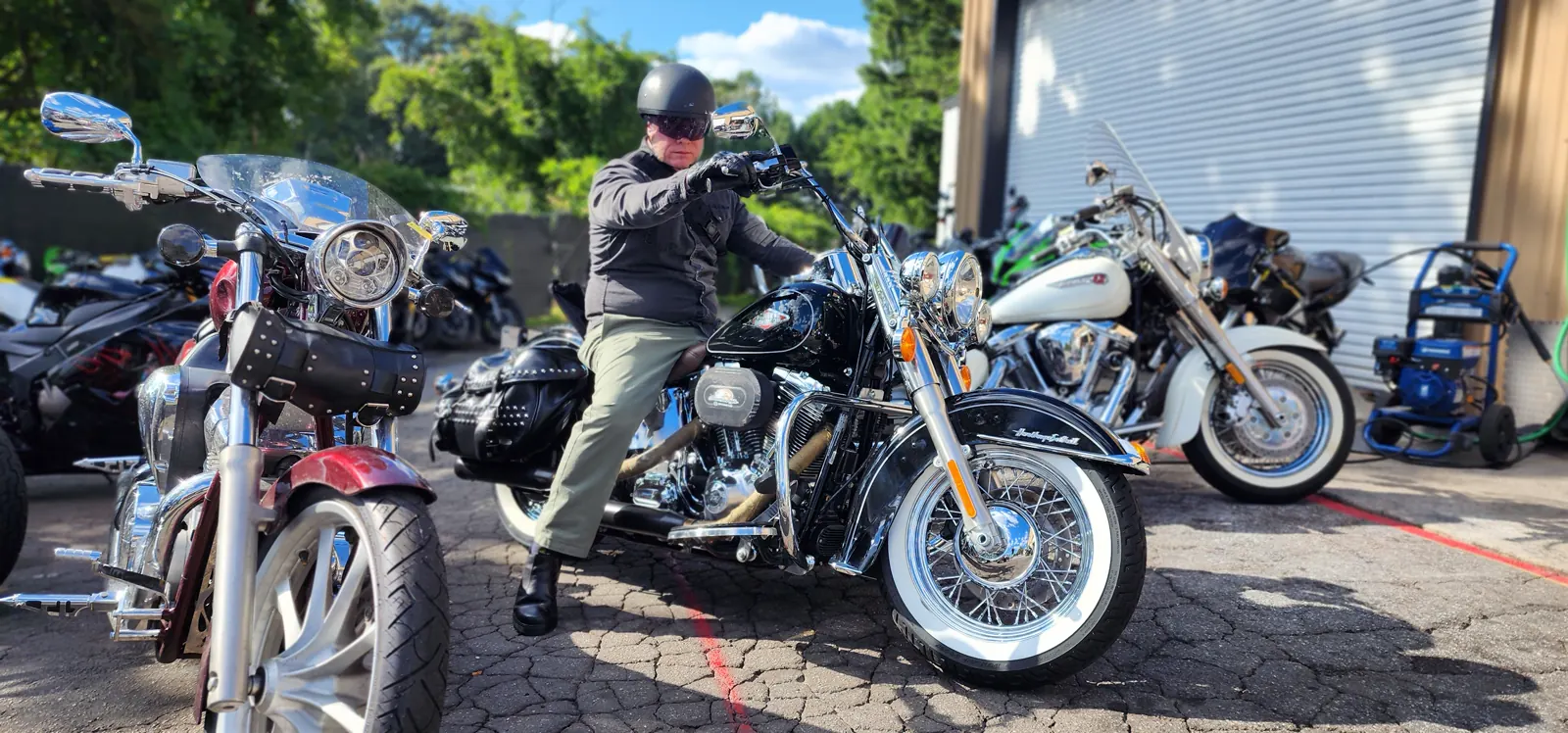
Here is our straight recommendation on dealer vs indie service Canton riders can use today. If your bike is out of its factory coverage, and the work in front of you is routine upkeep, an independent shop is the better home for it. Oil and filter, chain or belt, brakes, tires, fluids, filters, and the yearly once-over do not need a brand-specific computer. They need someone who has done that job on that model a hundred times and will tell you what he saw. Continuity beats everything on maintenance, because the person who adjusted your chain in April is the person who notices it stretched faster than it should have in July.
There is a practical piece too. People up here already drive for everything, so a run down 575 and east through East Cobb is not a real barrier. Riders come to us from BridgeMill, where the golf course, aquatic center, and tennis courts pull in the exact kind of homeowner who keeps a garage-stored bagger, and they come from the neighborhoods around it. If you want a plain list of what we take care of here, it is short on jargon on purpose.
When the dealer is the right call
We will send you to a dealership without hesitation in a few specific spots. Ignoring these would cost you money and time, and that is not why you came to us.
- Your bike is new and still under factory coverage, and the failure is a covered part
- There is an open recall or service campaign in your VIN, which only a franchised dealer can close
- The job needs proprietary factory software to reflash or reprogram a module
- A single-model special tool is required and nobody outside the brand network has it
That is not a fence-sit, it is a boundary. A rider commuting a brand-new bike down I-575 toward Cobb should let the manufacturer pay for a covered failure. Once that coverage ends, though, the math flips hard toward the shop that will pick up the phone and describe your brake pads to you in words you understand.
ABOUT SERVICE INTERVALS
We will never toss you a mileage number off the top of our head. Your owner’s manual sets the intervals for your exact model, and that book beats any shop’s rule of thumb. Bring it, or tell us the year and model, and we will work from what the factory says.
What a service actually includes, in plain words
Service is one of those words that sounds vague until someone lists it out. So here is the plain version of what a proper once-over covers, and how we handle that job when a bike comes off the trailer.
- Oil and oil filter, plus a look at what came out of the drain pan
- Chain cleaned, adjusted, and lubed, or belt tension and condition on a bagger
- Brake pad thickness front and rear, rotor condition, and fluid that gets replaced instead of topped off
- Tire pressure, tread depth, the date code on the sidewall, and any flat spot from long storage
- Air filter, which is a bigger deal here than most places thanks to pollen and gravel dust
- Battery load test and charging output, because a weak battery fakes a lot of other symptoms
- Coolant, fork seals, cables, controls, lights, and every fastener that likes to walk loose
- A real test ride, because some things only speak up at road speed
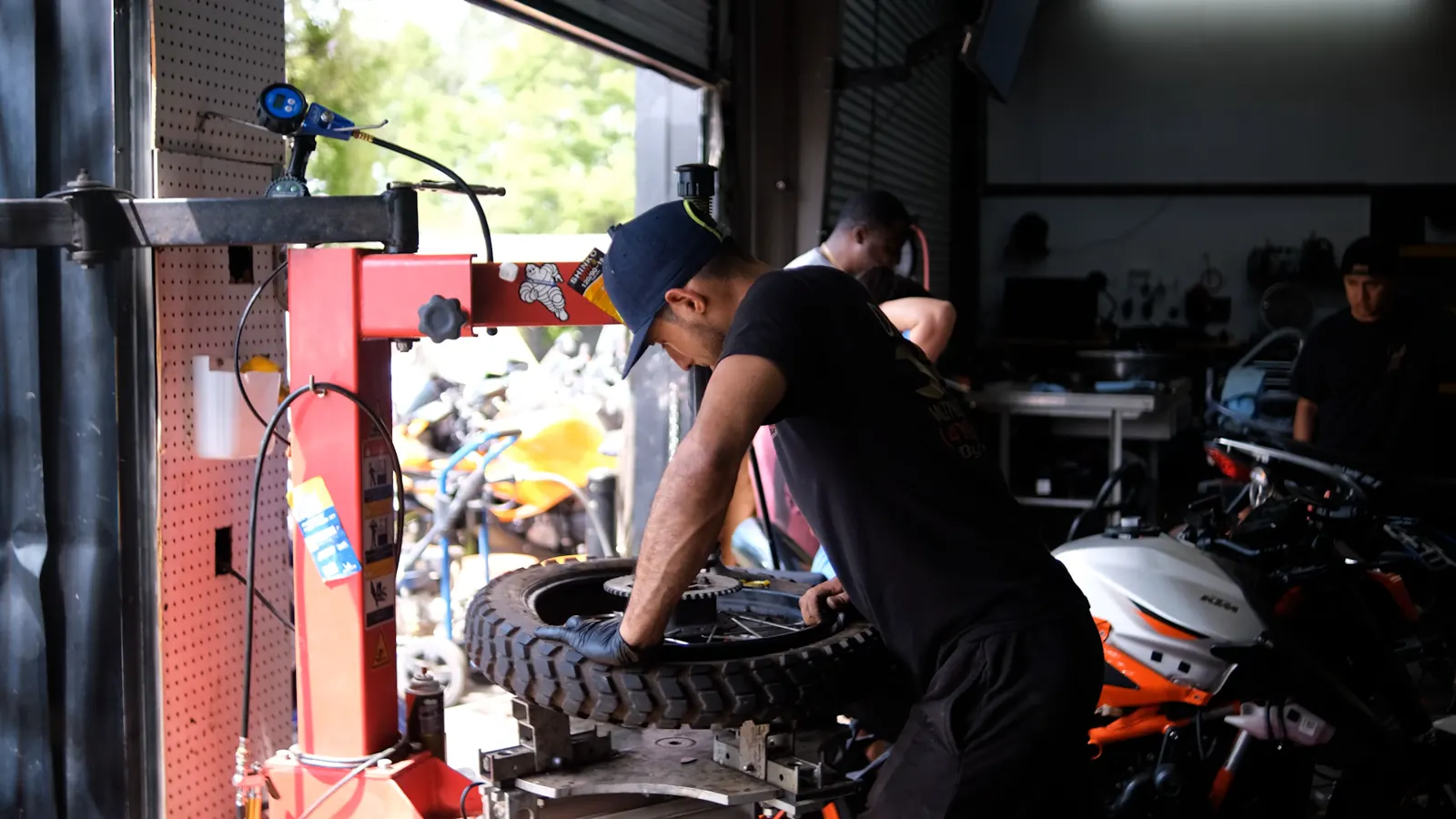
None of that is exotic. All of it is the difference between a bike that starts on the first warm Saturday and a bike that ruins one. If you like knowing the whole picture before you book anything, we put together the full rundown on it so nothing on your invoice is a surprise.
There’s a reason we bring this up on nearly every intake. Tires age even when they are parked, and a garage-kept bike with plenty of tread can still be riding on rubber that has gone hard and shiny. That matters on the pavement around here. I-575 carries heavy truck traffic with grooved pavement, expansion joints, and tar-snake patches, while GA-20 west and the rural two-lanes throw chip-seal and shoulder gravel at you. Winter freeze-thaw on the north-county approach roads breaks up the edges, and those potholes peak from February into April.
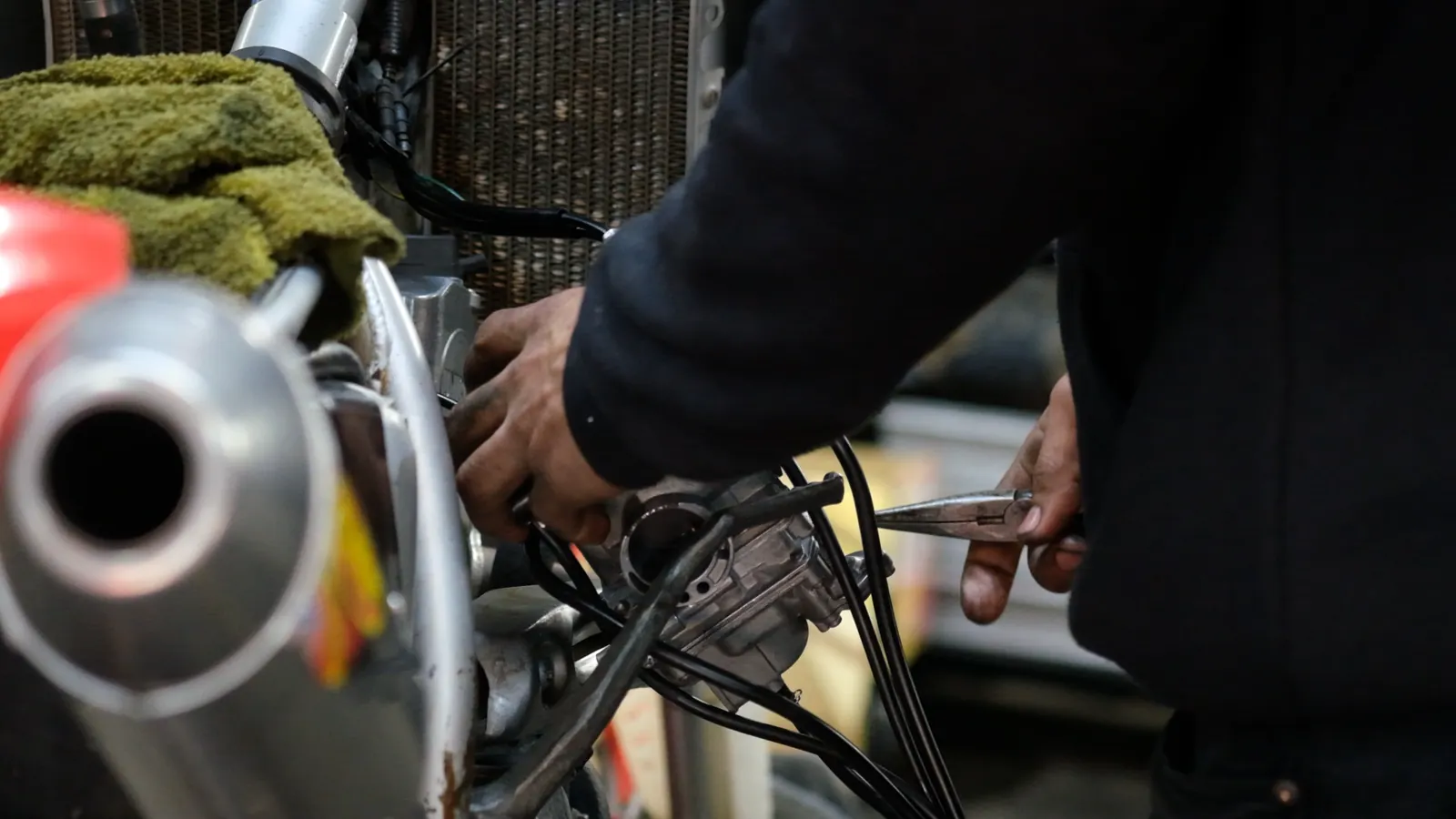
Rubber is one of the few areas where paying attention pays you back immediately. If you want to read up on compounds, pressures, and what those sidewall markings mean, Dunlop’s technical resources explain it better than a shop counter ever will in five minutes. Come in knowing what you want and the conversation gets faster and cheaper for everybody.
What it feels like after
A properly serviced bike does not feel dramatic. That is the point. The lever comes back firm, the throttle picks up clean, the chain stops making that dry ticking sound at parking-lot speed, and the bike stops asking for your attention so you can spend it on the road instead. Riders describe it as the bike finally getting quiet, and quiet is exactly what you want when GA-5 turns into GA-515 and the mountains open up ahead of you.
A bike that has been looked after does not demand anything from you. It just goes.
That confidence changes where you are willing to ride. The Cartersville, Fairmount, Jasper, and Canton loop, running US-411 north, GA-53 east, then GA-5 and I-575 back south, is a long enough day that you want zero doubts in the back of your head. Same with the scenic causeway run west on GA-20 Knox Bridge Highway toward Lake Allatoona. If you are newer to that kind of mileage, the Georgia Motorcycle Safety Program is a genuinely good use of a weekend, and a well-sorted bike makes those skills easier to use.
How both riders ended up
The dealership rider got a clean job and a warranty item covered along the way, which was the right result for a bike that young. The independent rider got the same firm lever plus a heads-up that his rear tire was aging out, which he replaced before summer instead of during it. A year later, the first rider is out of coverage, and now he calls the shop that answers the phone. That is usually how this goes, and there is no drama in it.
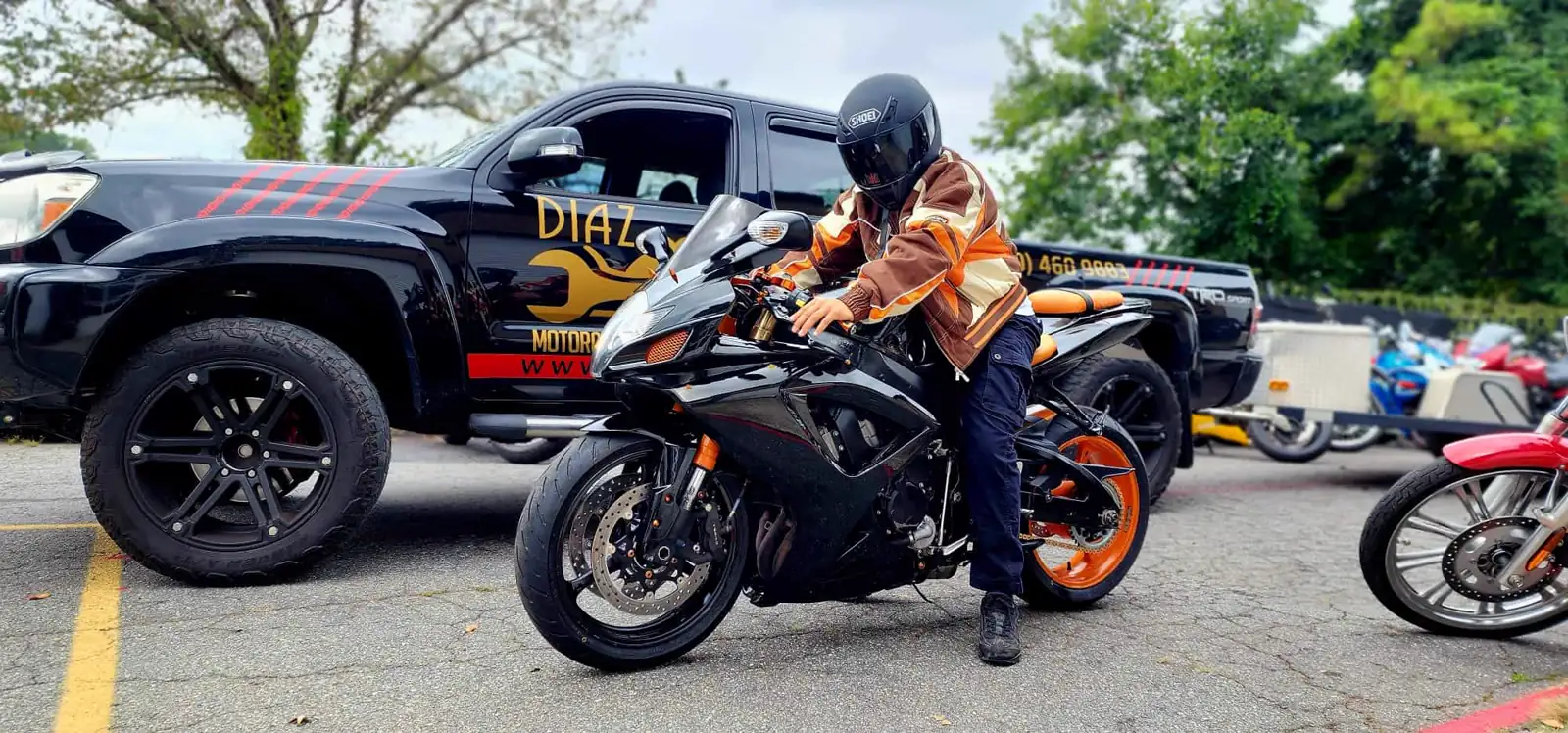
So do not agonize over the dealer vs indie service Canton question. Ride whichever direction fits the bike you own right now, whether that is northeast on GA-372 toward Ball Ground or southeast toward Hickory Flat and Milton, and whether you are a student running back from Reinhardt University about ten miles northwest in Waleska on GA-140 or a weekend rider with a bagger under a cover. Keep your records, use your owner’s manual, and stay ahead of the small stuff. The bike will take care of the rest.
Questions Canton riders ask us
Can I switch from a dealership to an independent shop later?
Absolutely, and plenty of riders do it the year their factory coverage runs out. Bring whatever service records you have so we can see what has already been done and when. If you do not have records, that is fine too. We will start with a full look-over and build the history from there.
Which one do you actually recommend?
For routine upkeep on a bike that is out of warranty, we recommend an independent shop, and we will say that plainly. You get one named technician, a direct line, and someone who remembers your bike from visit to visit. That continuity is what catches problems while they are still small.
Does the bike I ride change the answer?
It does. A brand-new bike still under coverage belongs at a dealership for anything the manufacturer would pay for. An older cruiser, a carbureted dirt bike, a dual-sport, or a restoration project is usually better off with an independent that works across brands and does not mind an unusual job.
Is upgrading parts during a service worth it?
Often, yes, but only in a couple of places. Better tires and fresh brake fluid change how the bike feels immediately, and a quality chain lasts noticeably longer than a budget one. Beyond that, we would rather see you spend on staying current with maintenance than on parts your riding does not require.
If I only pick one shop, which should it be?
Pick the one that matches where your bike is in its life. Under warranty and dealing with a covered failure or an open recall, go to the dealer. Out of warranty and dealing with normal upkeep, go independent. Most riders end up doing both at different points, and that is completely normal.
How do I know when my bike is due for service?
Your owner’s manual sets the intervals for your exact model, so start there rather than with any number a shop guesses at. Tell us the year and model and we will work from the factory schedule. Bikes that sit through winter also deserve a spring check regardless of the odometer.
We take care of riders all over the north metro, and the run down to the shop is a familiar one for people who already drive everywhere. Folks come to us from Canton, Woodstock, Holly Springs, and Ball Ground, along with Free Home, Nelson, and Waleska out toward the northern edge of the county. We see plenty of bikes from Acworth, Kennesaw, and Cartersville on the west side, from Jasper up where the mountains start, and from Marietta and Alpharetta closer in. If you ride here, you are covered here.
LET'S GET YOUR BIKE SORTED
If you are weighing a dealership against an independent shop for your next service, call or text us and just describe the bike. We will tell you honestly which way to go, even when the answer is the dealer. Riders from Canton make the run down 575 to us every week, and most of them wish they had done it a season earlier.
470-460-9883Diaz Motorcycles and Service, LLC · 847 Barnes Mill Road, Marietta, GA 30062