What Really Drives Detail Cost Powder Springs Riders Pay
Why one bike walks out the door for a light polish and another needs a full day of correction — and how we figure out which is which.
What’s more, you’re rolling down GA 61 toward Dallas, the two-lane opens up, and the morning sun swings across your tank. That’s when you catch it. A soft haze. After that, Tiny circle scratches, a cloudy film where the deep gloss used to live, a couple of bug spots baked in hard as glass. Also In the garage this morning your bike looked fine. Instead Out here in raw light, it looks tired. Right about then, most riders start doing the math in their head. So let’s talk honestly about detail cost Powder Springs and what actually pushes that number up or down.
Here’s the good news before we even start. Besides that haze does not mean your paint is ruined. Actually most of what you’re seeing lives in the very top layer of the clear coat, and that top layer is exactly what a real detail works on. That’s why the bike that looks dull on GA 61 today can look wet and deep by the weekend. You just have to know what you’re actually looking at first.
Why your paint looks worse in the sun than in the garage
Either way those little circle scratches have a name. In short we call them swirls, and almost every bike has them. At the same time they come from wiping a dry or dirty tank, from a gas-station rag, from that one time you buffed off a water spot with your sleeve. As a result each wipe drags fine grit across the clear coat and leaves a hair-thin scratch. In shade you never notice. Under direct sun, though, every one of those scratches throws light in a different direction, and your eye reads the whole mess as a dull gray fog sitting on top of the color.
On the other hand Georgia does not make this any easier on you. Our summers run hot and sticky, with July highs near 89 and a thunderstorm most afternoons. Heat bakes bug guts and tree sap right into the finish. Spring pollen coats everything yellow and holds moisture against the paint. Hard tap water dries into chalky spots that etch if you leave them. And humidity keeps chrome and bare metal fighting rust all season long. None of it is your fault. It’s just what a finish goes through living outside Atlanta.
A wash and a real detail are not the same thing
A wash gets a bike clean. A detail makes it correct. That difference is the single biggest thing riders miss when they ask us for a number over the phone. When you wash at home, you’re lifting loose dirt off the surface. Good and necessary, but it does nothing to the swirls, the baked-on spots, the dull chrome, or the tired trim. A real detail is a stack of separate jobs, and each one takes time, skill, and its own materials.
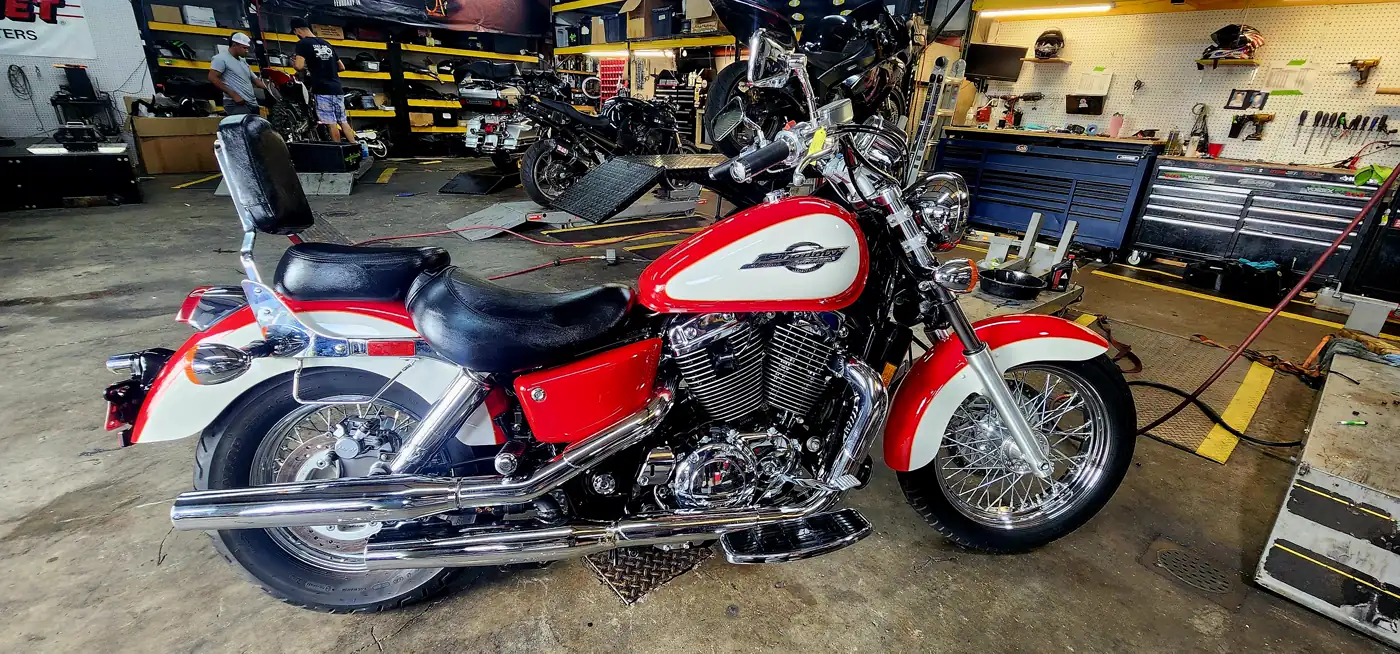
Walk through what a full detail on a cruiser actually includes and you start to see where the hours go. There’s a proper hand wash and a clay treatment that pulls out grit the soap can’t. Then chrome polishing until you can read your watch in the pipes. There’s wheel and engine-bay cleaning, leather and vinyl care on the seat and bags, plastic and trim brought back to life, plus bug and tar removal and water-spot removal done by hand. If you want the plain-English version of every step, we broke down what that service actually involves in a separate post.
Paint correction: what it actually does
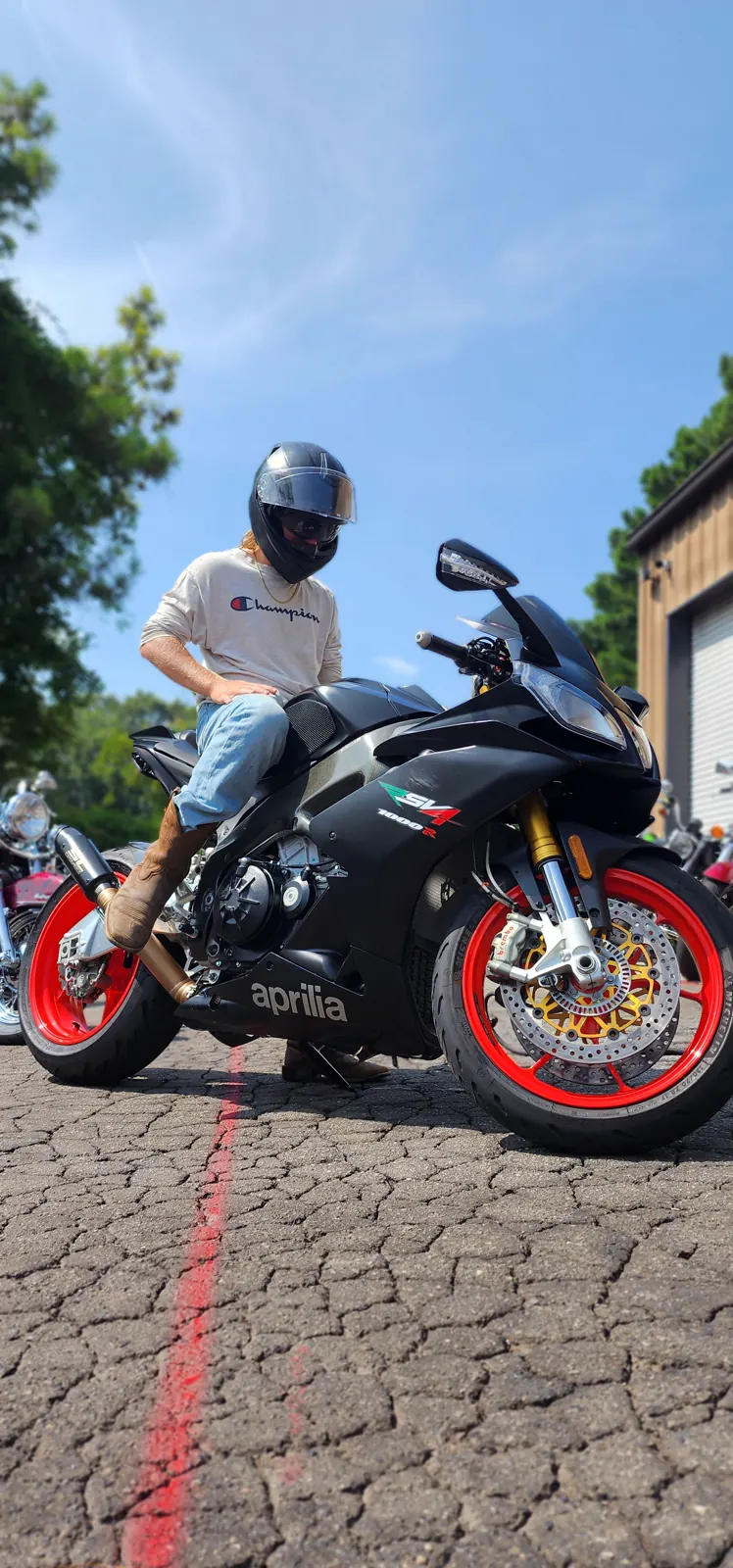
Paint correction is the step that erases those swirls for real instead of hiding them. We use a machine polisher and a mild cutting compound to shave away the tiniest bit of clear coat, just enough to level the surface below the depth of the scratches. Once the surface is flat, light travels straight through it again instead of scattering. That’s the moment the color goes deep and wet-looking, like glass poured over the tank. Light scratches vanish. Deeper ones fade a lot even when they don’t fully leave.
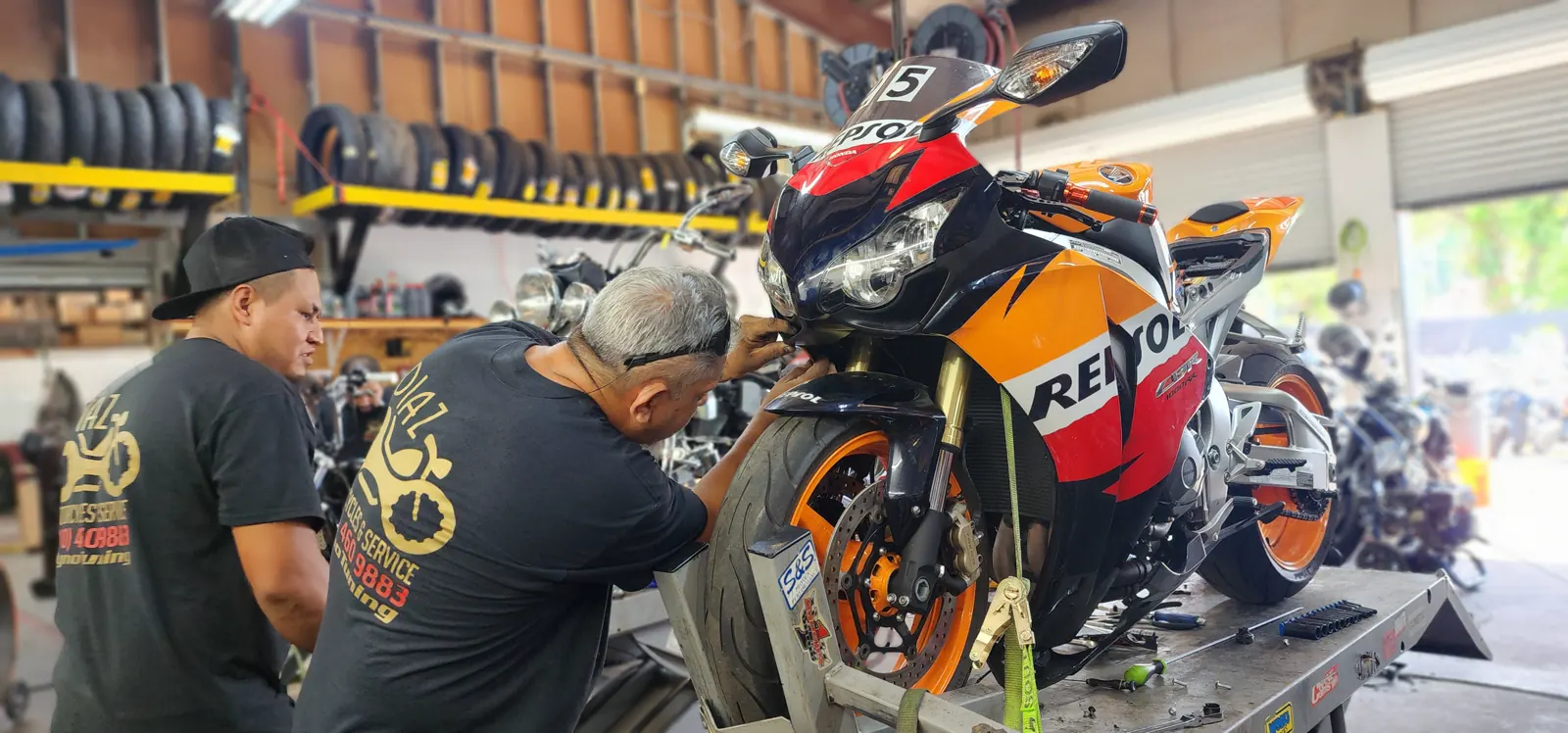
This is careful, slow work, and it’s the biggest reason two details can cost worlds apart. A newer bike that’s been garage-kept might need one gentle pass. A ten-year-old tank full of hard swirls might need two or three stages with different pads and compounds, each done by hand and checked under a bright light. The paint tells us how much correction it wants. We can’t know that until we see it in person and put a light on it. For the complete tour of correction, coatings, and everything in between, here’s the full rundown on it.
Ceramic coating: what it is, and what it isn't
But here’s what most riders get wrong about this. A ceramic coating is not a force field. It’s a thin, clear layer that bonds to your clear coat and does two very useful jobs. First, it makes the surface slick, so water beads up and rolls off and dirt has a hard time grabbing on. Second, it makes cleaning easier for a long time, so the same road grime that used to fight you wipes away with almost no effort. In our humid, hard-water climate, that slick shield is genuinely worth having.
What a coating will not do is stop scratches. Drop a set of keys on the tank or drag a dry glove across it and you can still leave a mark. A coating also has to go on over corrected paint. Seal in swirls and you’ve just locked the fog in place under a glossy layer. That’s why correction comes first and coating comes last. Done right, the protection lasts years, depending on how the bike is stored and cared for. Anybody promising an exact number of years is guessing, and we’d rather tell you the truth.
How we figure out what your bike actually needs
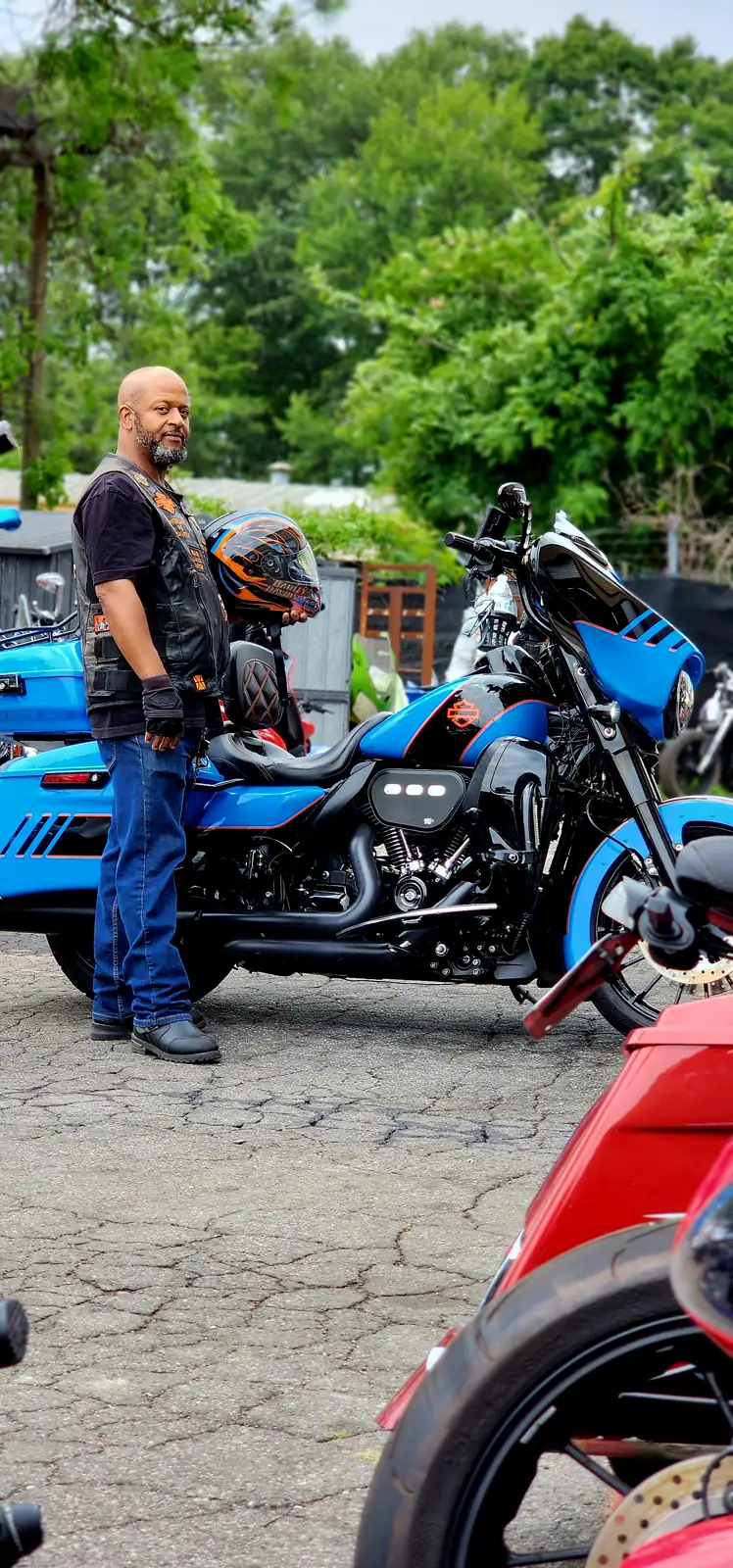
When your bike rolls in, the first thing we do is look, not quote. We put a bright light on the paint at an angle and read the swirls. What’s more, we check the chrome for pitting versus surface haze. We look at how the trim has faded, whether the leather is dry or cracking, and how much baked-on grime is hiding in the engine bay and around the wheels. Then we talk with you about what you want out of it. A show-ready glass finish and a solid weekend-rider clean-up are two different jobs, and both are honest answers.
Access matters more than people expect, too. On a fully dressed bagger, the parts you most want gleaming are the ones tucked behind bags, guards, and pipes. Reaching every inch of chrome around a big touring machine takes real time. A stripped-down sportbike is quicker to move around but has its own tight spots. All of that goes into the plan before a single pad touches paint. If you’re curious about the room where this happens, here’s what happens in our bays.
What makes one detail bigger than another
Detailing is mostly labor and materials, not parts. You’re paying for hours of skilled hands plus the compounds, pads, coatings, and cleaners that get used up on your bike and never again. That’s the opposite of, say, a tire job, where a real chunk of the ticket is the part itself. So when a detail costs more, it’s almost always because the work took longer or the materials were more involved. A few honest factors drive that:
- How deep the swirls and scratches run, which decides how many correction stages the paint needs
- How much chrome the bike carries, since polishing pipes and trim by hand eats real time
- The condition of leather, vinyl, and plastic trim, and whether it needs feeding, cleaning, or full restoration
- How much baked-on bug, tar, sap, and hard-water etching has to come off before polishing can even start
- Whether you’re adding a sealant or a ceramic coating on top of the correction
- How the bike is built for access, because a full dresser hides more surface than a bare sportbike
Notice what’s not on that list: your bike’s badge or your zip code. We don’t charge more because the tank says a fancy name. We charge for the work in front of us, and nothing else. That’s the whole reason the detail cost Powder Springs riders pay swings from a light afternoon job to a full day on the bench.
Why we won't quote it over the phone
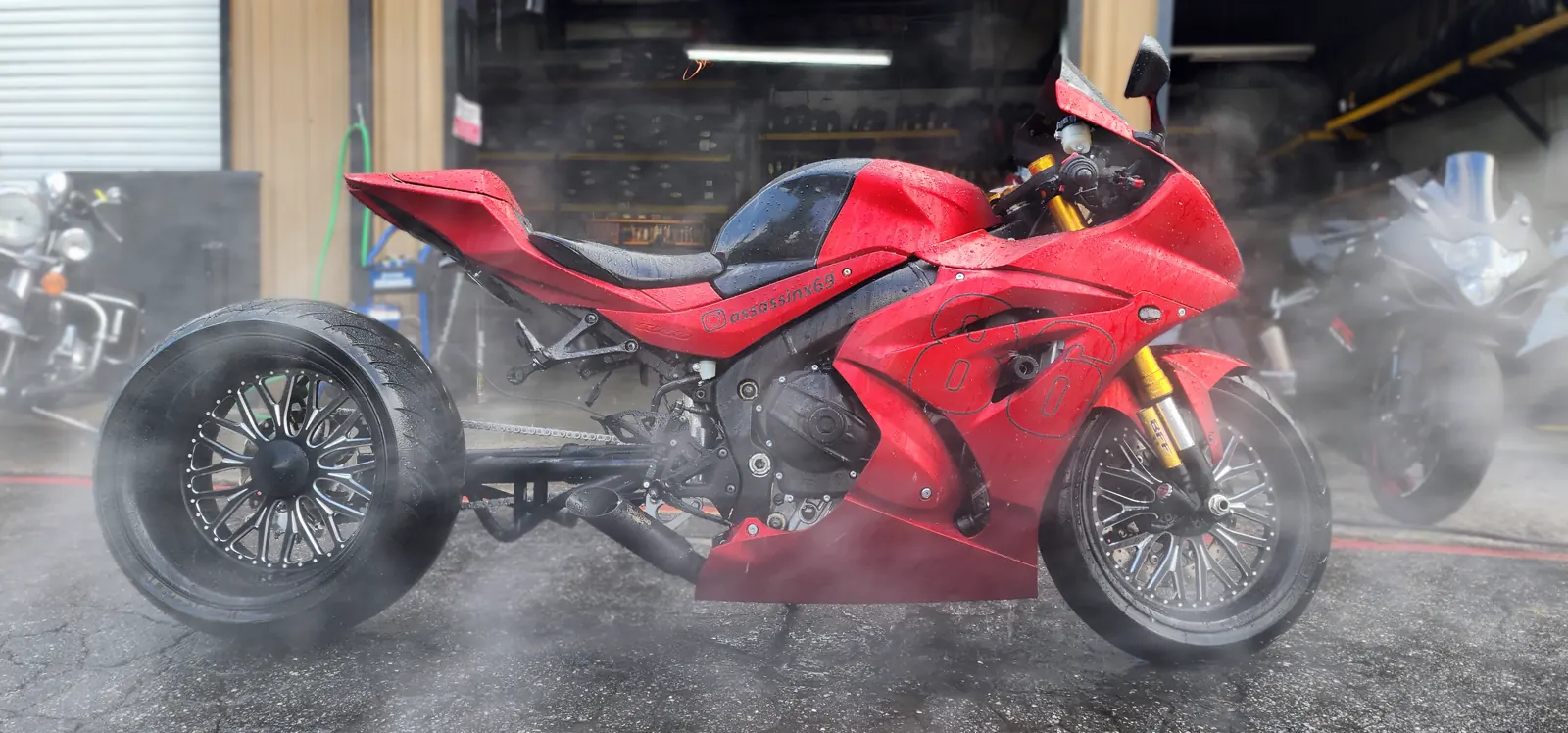
An honest shop can’t hand you a firm number sight-unseen, and any shop that does is either padding it to be safe or lowballing you to book the job. Neither one is fair to you. We could throw out a figure over the phone, sure. Then you’d show up, we’d put a light on the paint, find twice the swirls we guessed, and have an awkward talk about why the price moved. We’d rather look first and tell you the truth once.
Think of it like a doctor who won’t prescribe a fix before the exam. Ten minutes with your bike under good light tells us more than ten phone calls ever could. You get a clear plan and a real number, and you decide from there with no pressure. Riders over in Gainesville ask us the same thing, and we broke it down for riders over in Gainesville the same honest way we do here.
A real bike from right down the road
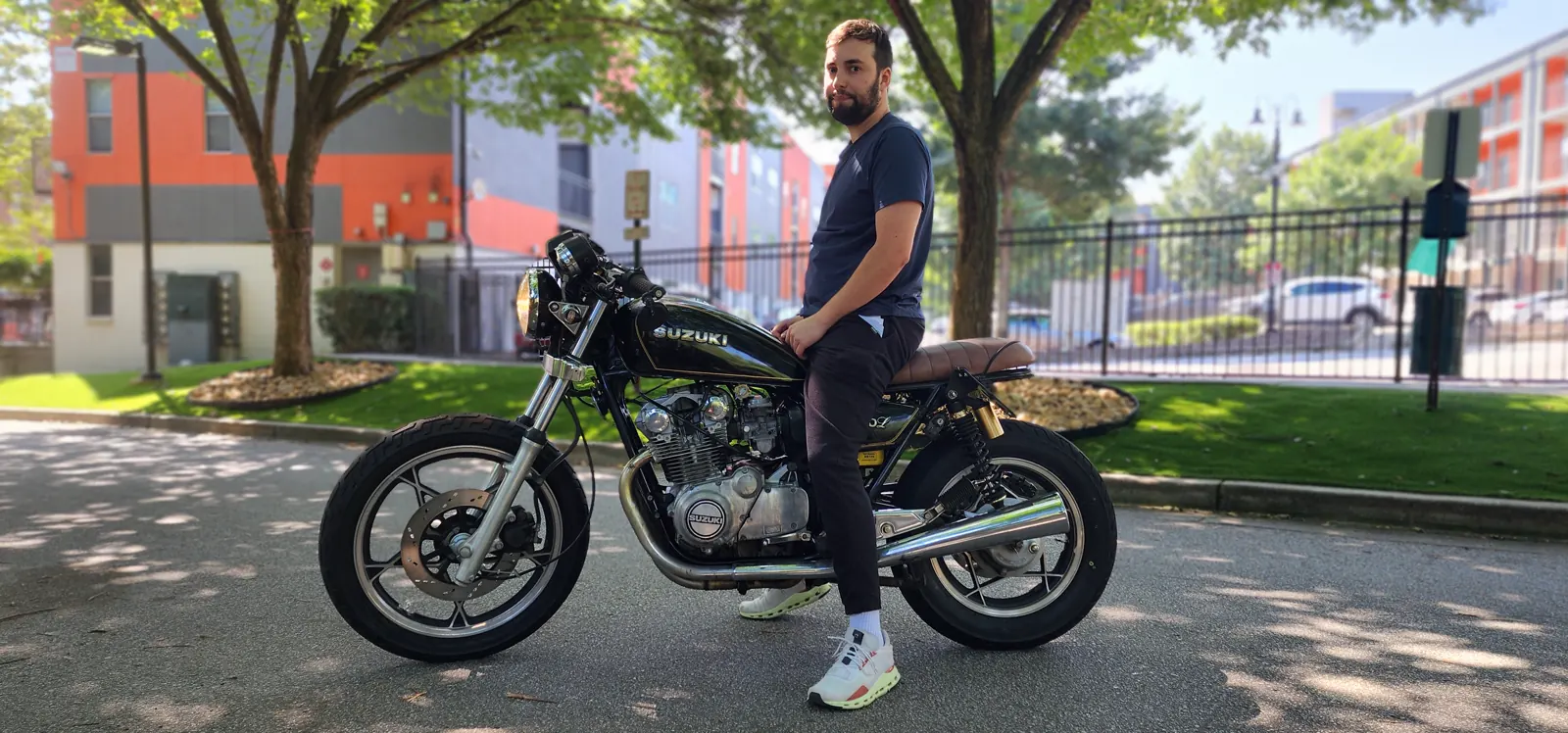
Let us tell you about a rider near Echo Mill. He’d kept a Road King garage-parked next to the truck for years, the way most folks do out in that swim-and-tennis subdivision. It rode maybe a dozen weekends a season and sat the rest of the time. When he finally looked at it in the sun, the paint had gone flat and the chrome had a gray film. He figured it was toast. It wasn’t even close.
Because the bike had lived indoors, the clear coat underneath was in great shape. All that dullness was surface haze and light swirls from years of quick wipe-downs. A single correction pass brought the color roaring back, the chrome polished up to a mirror, and a coating went on to keep it easy from there. He rode it out looking better than the day he bought it. That relief on his face is the whole reason we do this work, and it’s a lot more common than the horror stories.
Powder Springs stories tend to run that way because of how folks live here. Out in the newer west-side subdivisions off New Macland Road and Dallas Line Road, and in the farmhouse-style homes of Springside Reserve, bikes almost always live in a two-car garage. Even in the historic downtown core along Marietta Street and Pine View Drive, where the oldest housing in town sits, riders keep their machines indoors. That indoor life is a gift to your paint. It usually means the damage is shallow and very fixable.
Distance is the only real hitch out this way, and we take that off the table. Powder Springs has no motorcycle dealership inside the city, so your closest full-service options sit a solid drive off. The nearest big dealer, RideNow Powersports Canton over at 645 Riverstone Parkway, is about 35 miles north. Our shop is closer, roughly 15 to 18 miles up through Marietta, but you don’t even have to make the trip. We’ll pick the bike up and bring it back, so a rider grabbing a splash-pad afternoon at Thurman Springs Park on Pine View Drive or a Saturday out at Wild Horse Creek Park never loses a riding day to detailing.
What you actually get when it's done right
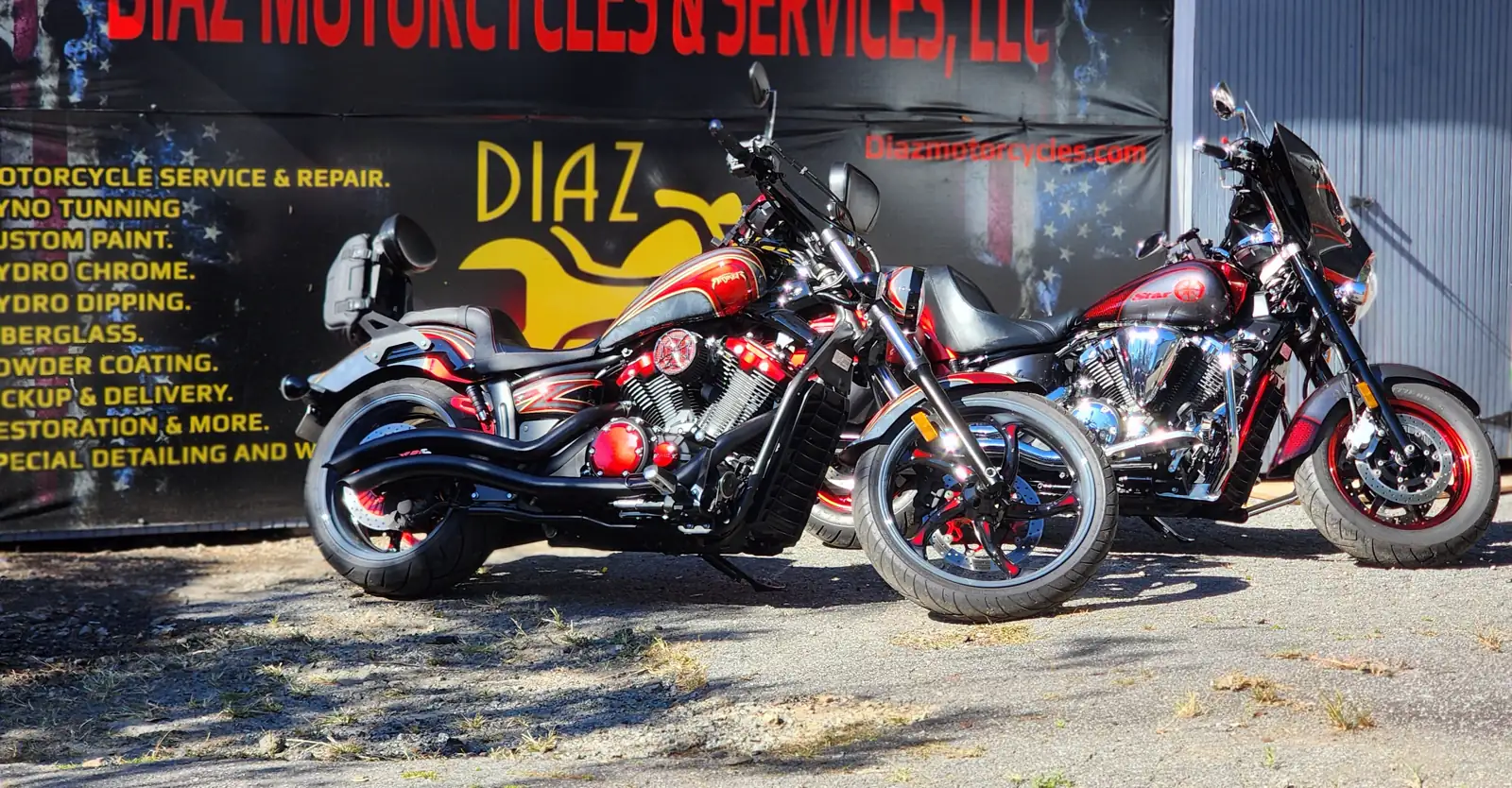
Here’s the payoff, and it’s better than most riders expect. A properly detailed bike doesn’t just look clean. It looks deep. The color has that wet, glassy pull you can see across a parking lot, the chrome throws back a real reflection, and the tank feels slick as glass under your palm. You catch yourself walking back out to the garage just to look at it. That pride is the whole point of owning a machine you love.
There’s a practical upside on top of the pride, too. A clean, corrected, protected finish holds its resale value, and that matters whenever you decide to move a bike along. A well-kept machine photographs better, sells faster, and keeps its title paperwork simple through the Georgia Department of Revenue when the day comes. Groups like the American Motorcyclist Association will tell you the same thing: a bike that’s cared for stays worth caring about.
We don't charge for the badge on your tank. We charge for the work in front of us, and nothing else.
So the next time the sun catches your tank on GA 61 and shows you that haze, don’t write the bike off. Bring it by, let us look, and let us give you a straight plan. Most of the time the fix is easier and the finish is better than you’d ever guess from the driver’s seat.
Questions Powder Springs riders ask us
What makes one detail bigger than another?
It comes down to how much correction the paint needs and how many separate jobs stack up. Deep swirls that take several polishing stages, lots of hand-polished chrome, dry leather, and baked-on grime all add hours. A garage-kept bike with shallow haze is a much smaller job than one that sat outside for years.
Why can't you just quote it over the phone?
Because we can’t see the paint from a phone call. The real work hides in the swirls, the chrome, and the trim, and those only show under a bright light in person. A blind quote is either padded to be safe or lowballed to book you. We’d rather look for ten minutes and give you one honest number.
What's actually included in a full detail?
A proper hand wash and clay treatment, paint correction to remove swirls, chrome polishing, wheel and engine-bay cleaning, leather and vinyl care, plastic and trim restoration, plus bug, tar, and water-spot removal. A sealant or ceramic coating can go on top. We tailor the mix to what your bike needs and what you want out of it.
How long does a detail take?
It depends entirely on the bike’s condition and how much correction it needs, so we set the timeline after we look it over. A light refresh moves faster than a multi-stage correction with a coating. We’ll give you a realistic window once we’ve seen the paint, never a made-up promise before.
Is detailing mostly parts or mostly labor?
Almost all labor and materials. You’re paying for skilled hours plus the compounds, pads, and coatings used up on your bike. Parts only enter the picture if a piece of trim is being restored or replaced. That’s the opposite of a tire or brake job, where the part is a big share of the cost.
Do you really pick up and drop off in Powder Springs?
We do. Powder Springs has no dealership in town, so we come to you and bring the bike back when it’s done. You never lose a riding weekend or make the drive up to Marietta yourself. It’s the easiest way to get real detailing work without the distance headache.
Diaz Motorcycles details bikes for riders all across the west side of metro Atlanta. Beyond Powder Springs, we regularly help friends in Marietta, Austell, Hiram, and Dallas, along with Mableton and Douglasville just down the road. We also serve Kennesaw, Smyrna, and Lithia Springs to the north and east, plus Villa Rica, Clarkdale, and Fair Oaks. If your bike lives anywhere in that stretch, our pickup and delivery brings the shop to your garage.
LET'S SEE THAT FINISH IN THE LIGHT
If the sun’s been showing you swirls and dull chrome, don’t guess at what it takes to fix. Text or call Diaz Motorcycles and we’ll set up a look at your bike, right here or with free pickup in Powder Springs. You’ll get a straight plan, a real number, and a finish that looks deeper than the day you bought it.
470-460-9883Diaz Motorcycles and Service, LLC · 847 Barnes Mill Road, Marietta, GA 30062