Enclosed vs Open Transport Atlanta: Which Is Right for Your Bike
Two riders, one week, the same problem — and two different trailers. Here's how we help you pick the one that fits your bike, your trip, and your week.
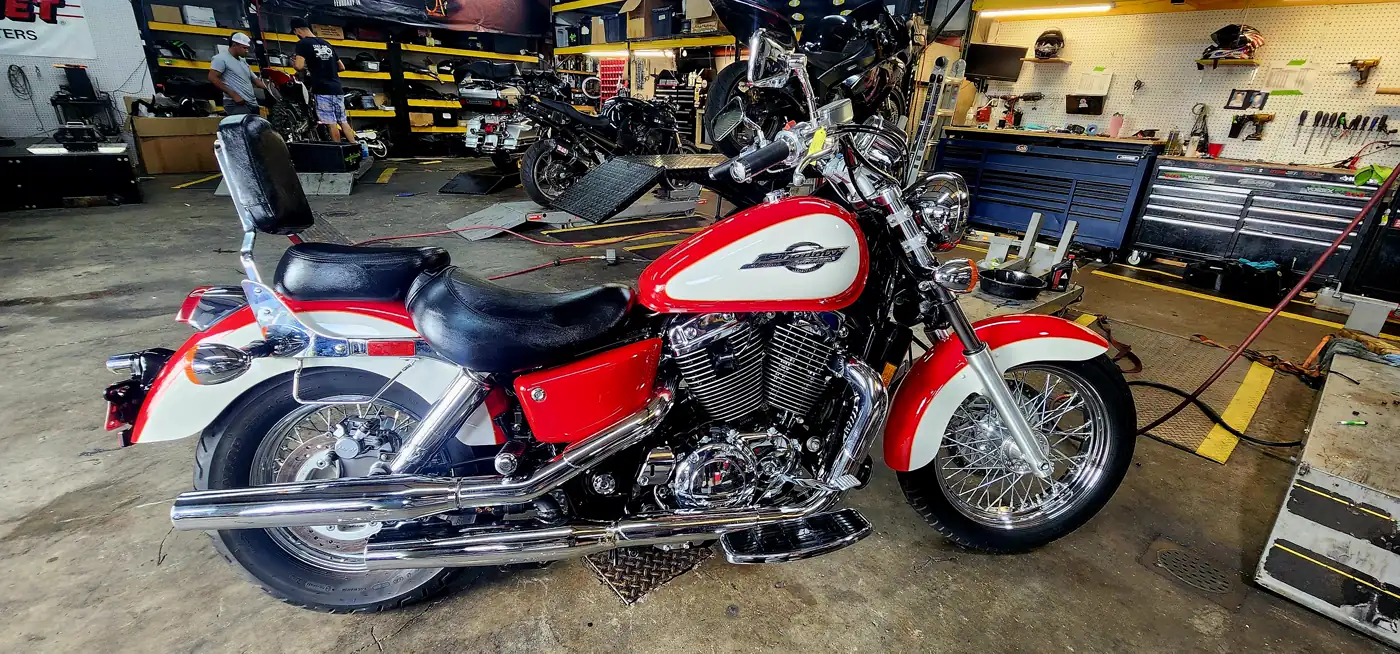
For example, two riders called us the same week. Even so, both had a bike that needed to get somewhere it couldn’t ride to on its own. What’s more, one had a chrome Harley cruiser sitting in a Tuxedo Park garage after a move. After that, the other had a cold sportbike parked off Boulevard with a fried stator. Of course, the same core question landed on our bench both times: when you weigh enclosed vs open transport Atlanta riders keep asking us which one to book. So here’s how those two calls actually went, and why they ended up on different trailers — and why both of them were right.
Also here’s the thing most folks don’t expect. Instead Moving a motorcycle isn’t like moving a car. Besides a bike has two wheels, a tall center of gravity, and paint that costs a small fortune to redo. Actually it can’t just get winched onto a flatbed and forgotten. That’s why it has to be stood up, balanced, and tied down by someone who’s done it a thousand times. That’s true whether the bike runs or not. Either way and in this town, plenty of them don’t run when we get the call. Good news, though — a bike that won’t start is still an easy trailer job for us.
Why an Atlanta bike ends up on a trailer
In short the reasons stack up fast in the city. A bike bought out of state that needs to come home. An inherited machine from a family member that’s been parked for years. A ride that quit mid-trip and won’t fire back up. Sometimes it’s just a seasonal move across town. Riders inside the Perimeter feel this more than most, because there’s no dense cluster of full-service shops in town. Most ITP riders already drive twenty to forty minutes for real work. When the bike can’t roll, that drive turns into a tow.
Our own coverage of what that service actually involves walks through the pickup end of it, but the short version is simple: we bring the trailer to you. You don’t ride a sick bike across the Connector in July heat. You don’t ask a buddy with a rusty ramp to help. We show up, load it right, and take it from there. That’s the whole pitch — we come get it.
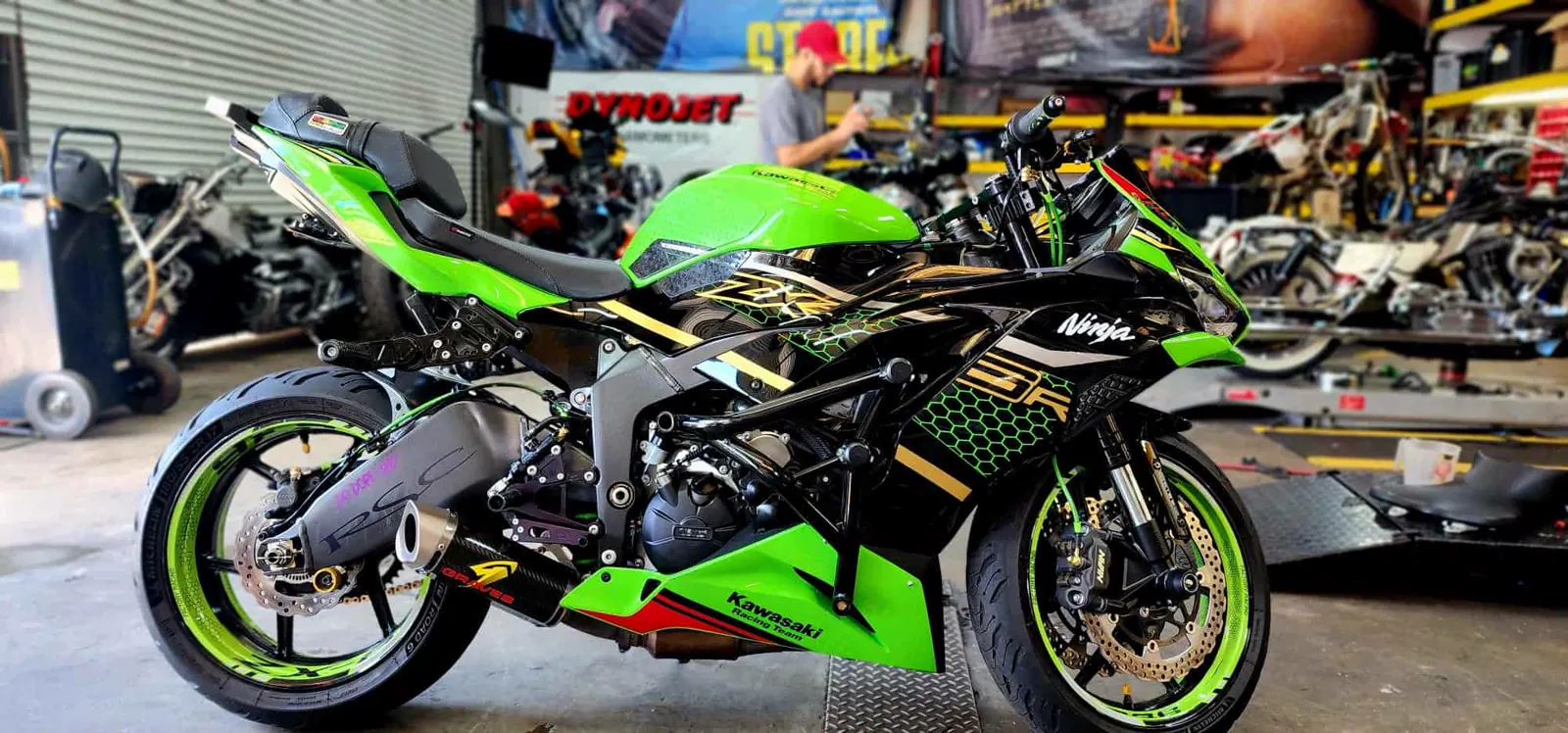
The two riders from the top both had good reasons. In fact, the Buckhead cruiser had just landed from a cross-country move and needed a full going-over. The sportbike had died on a side street and gotten pushed home by hand. Both bikes were fine. Both riders were stuck. The only real question left was which trailer to send.
Open vs enclosed — what's really different
Let’s lay both out plain, because this is the choice you’re actually weighing. Open transport means your bike rides on a trailer with no walls and no roof. You’ve seen these towed behind a truck up Marietta Street a hundred times without noticing. Enclosed transport means your bike rides inside a closed box trailer — walls, roof, a door that shuts and locks. Same job either way, moving your bike safely. The difference is how much shelter it gets along the road.
Open works great for most short hops. It’s quicker to load, easier to maneuver on tight West Midtown streets around Howell Mill Road and 14th Street, and it gets your bike where it’s going without drama. For a run across town or out to the suburbs, it’s honestly all most bikes need. The straps hold. The bike’s built to sit in weather anyway, so a little sun on the way over is nothing new to it.
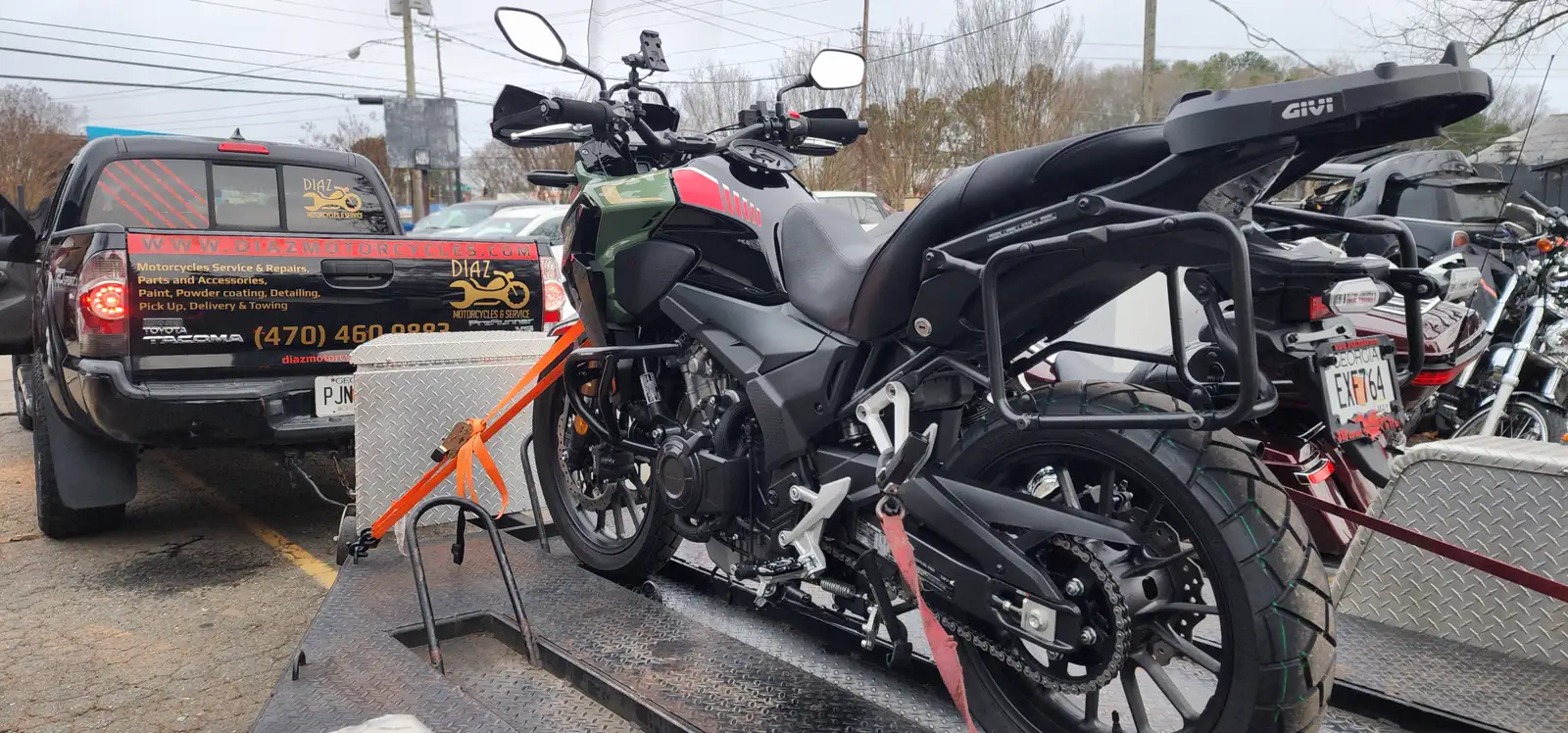
Enclosed is the shelter option. No road grime, no highway grit, no surprise summer storm soaking your seat. It’s also private — nobody at a red light can see what’s inside. For a rare bike, a fresh paint job, a long haul, or a machine you’d just rather not show the world, that closed door earns its keep. It costs a bit more to run, but for the right bike it’s peace of mind on wheels.
The best trailer isn't the fanciest one. It's the one that fits your bike, your trip, and your week.
Now flip it around and look at it from the bike’s side. A bike doesn’t care about your schedule. It cares about vibration, weather, and how it’s held down. On an open trailer, a bike takes wind, sun, and whatever the sky does that afternoon — and Atlanta afternoons in July and August bring near-daily thunderstorms that can soak a machine in minutes. On an enclosed trailer, the bike sits in still, dry air the whole way. For a two-hour hop, most bikes shrug that off. For a two-day haul from another state, those hours add up in a hurry.
How we actually decide with you
We don’t push the fancy option. That’s not how we treat friends we’ve helped. When you call, we ask a few plain questions and the answer usually picks itself. This is the same short checklist we run every time, no matter whose bike it is.
- How far is the bike going — across town, or across state lines?
- What’s the bike? A daily commuter reads different than a restored vintage build.
- Is the paint or finish fresh, rare, or hard to replace?
- Does the weather window look rough for the travel day?
- Do you want the bike out of public view for any reason?
Those five answers sort almost everyone. Most local moves land on open, and that’s a good thing — it’s simpler and it works. We told the same thing to some riders over in Smyrna who were sweating the choice for a short hop. When the bike is common, the trip is short, and the forecast is clear, open transport is the right call, and we’ll say so straight.
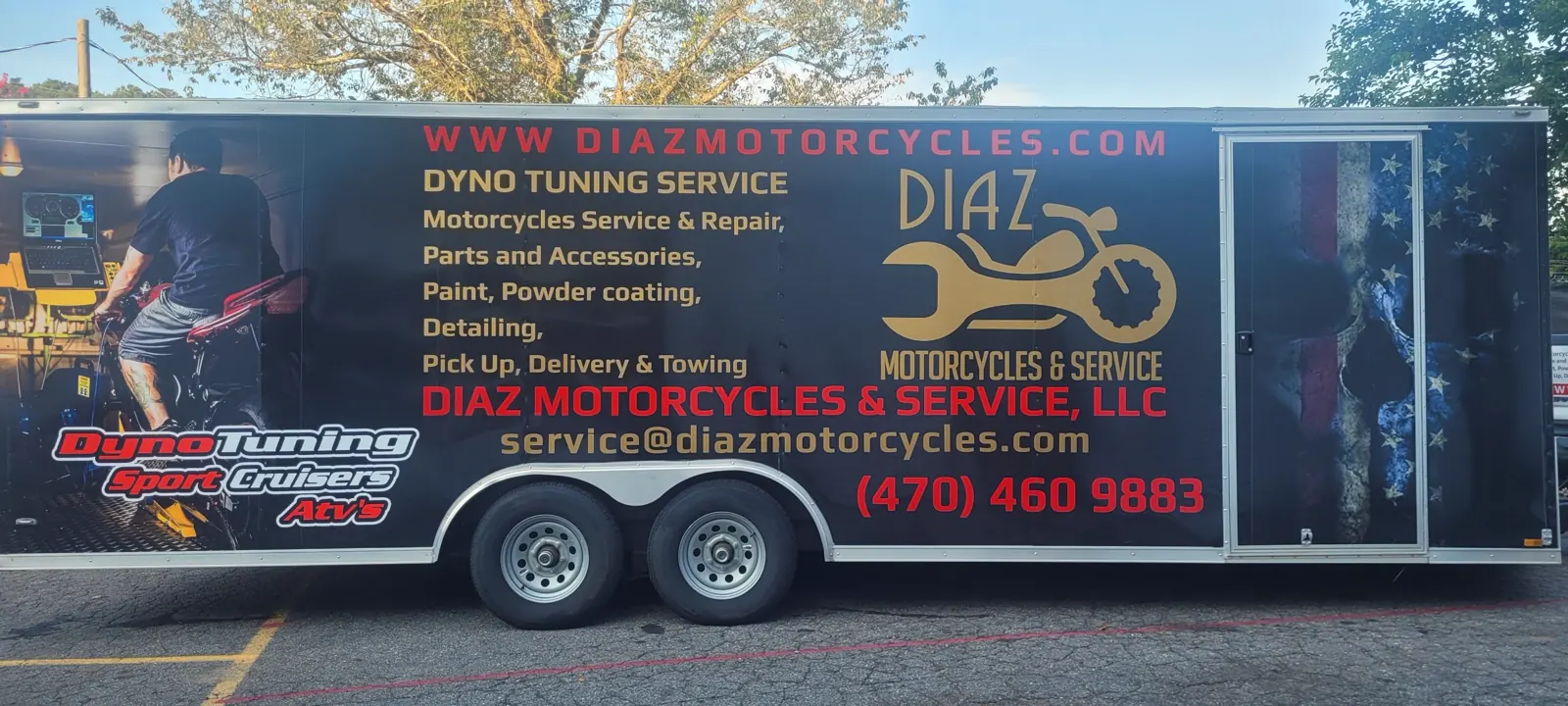
The Buckhead cruiser went enclosed. Here’s the reasoning we walked through with its owner. It was chrome-heavy, freshly detailed, and headed back to one of the estate streets near the Governor’s Mansion — road grime would have meant a re-clean before we could even see the finish. Buckhead riders, in our experience, decide on convenience and confidence over price, and a clean bike arriving in a clean trailer just reads as normal. The closed door made sense. It wasn’t about the trailer being better. It was about that bike, that day.
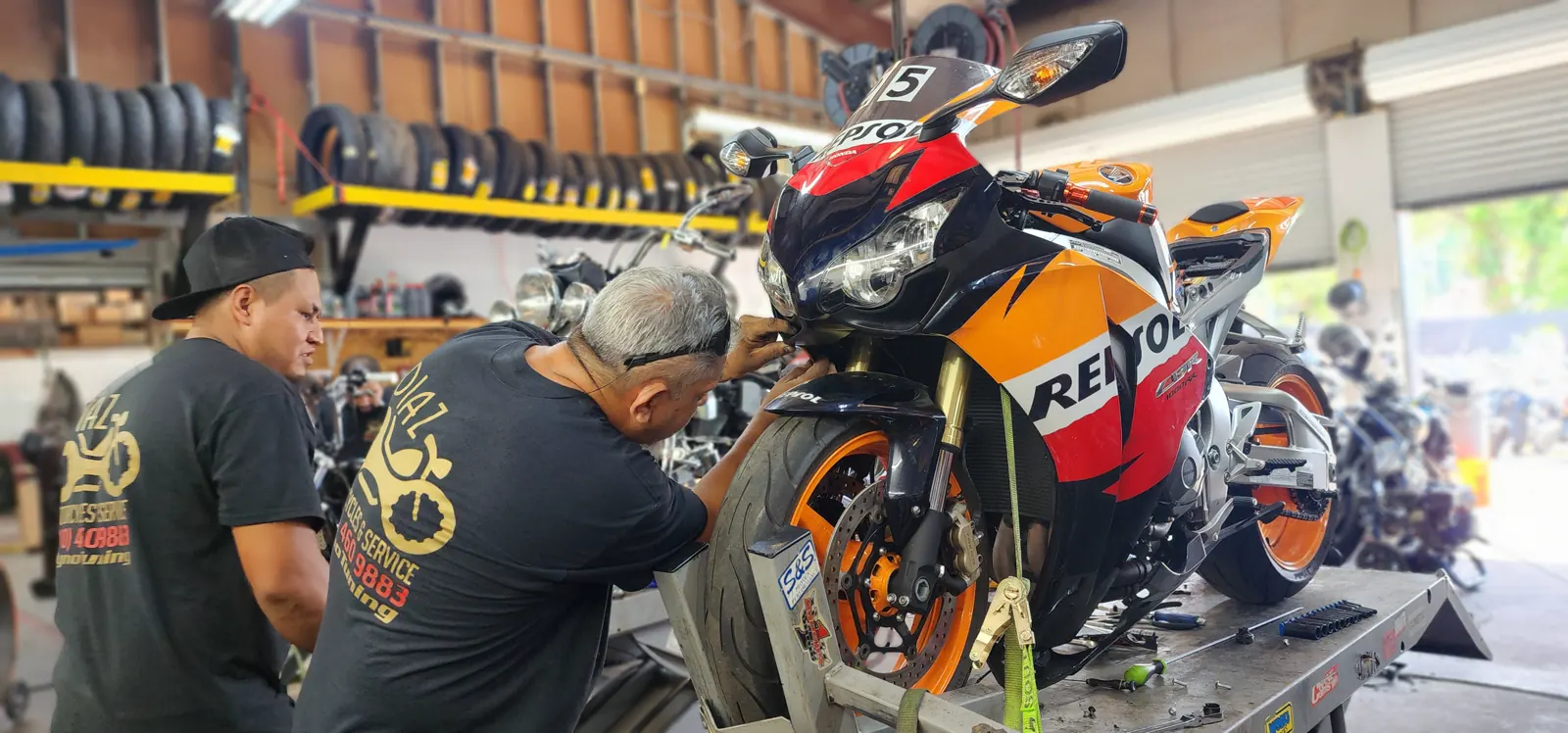
The sportbike went open. It was a common model, the trip was short, the forecast was dry, and the owner wanted it on the bench fast. Open was quicker to load off a cramped side street and got the bike to us the same afternoon. Sending an enclosed rig would have meant paying for shelter the bike didn’t need on a fifteen-minute ride. Two riders, two right answers. That’s how the choice between enclosed vs open transport Atlanta usually shakes out — it bends to the bike, not the other way around.
Who each option is genuinely right for
Open transport is the right pick for daily riders, common bikes, short in-town moves, and clear-weather travel days. If you ride a sportbike around Old Fourth Ward — the stretch north of Freedom Parkway that runs from the MLK birth home district up to Ponce City Market — or a scooter near Georgia Tech and you need it moved a few miles, open does the job without fuss. It’s the default for a reason.
Enclosed transport wins in a specific set of cases, and it’s worth being honest about them. Long-distance hauls, where hours of weather and road spray pile up. Rare, vintage, or high-value bikes — West Midtown’s cafe racer and restomod crowd knows this one well. Fresh paint or a fresh restoration that can’t take grime. And any bike you’d simply rather keep out of sight. In those spots, the closed door isn’t a luxury. It’s the smart move, plain and simple.
| What you're moving | Usually best |
|---|---|
| Common bike, short in-town move | Open |
| Daily rider headed to the shop | Open |
| Rare or vintage build | Enclosed |
| Fresh paint or full restoration | Enclosed |
| Long-distance, multi-day haul | Enclosed |
| Clear forecast, quick trip | Open |
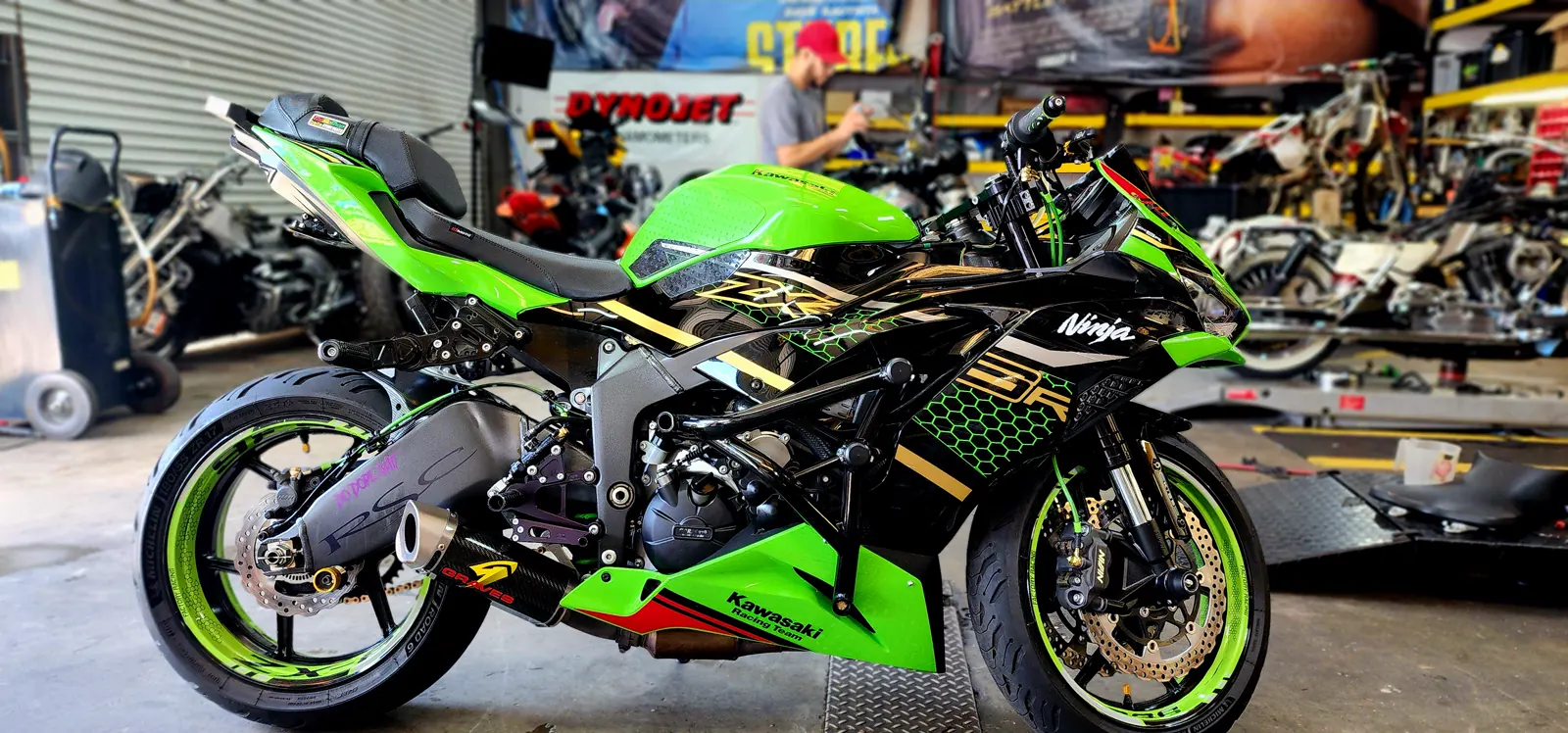
There’s a detail in all this that changes how you’ll ride out of here. It’s the paperwork. Before your bike ever moves, we write down its condition — every scratch, every ding, the mileage, the works. You get that record, and so do we. If anything looks different at drop-off, there’s proof of how it started. That’s the piece that lets you hand over the keys and actually relax. And whether it’s open or enclosed, the bike gets tied down the same careful way: stood upright, front wheel chocked, soft straps at the triple clamp, ratchets snugged so the suspension sits loaded and the bike can’t wander an inch.
QUICK RULE
Short trip, common bike, clear skies? Open. Long haul, rare bike, fresh paint, or you want it out of sight? Enclosed. When in doubt, we’ll tell you straight.
That written record matters more in town than people think. These are mostly older houses on narrow lots, and a lot of riders inside the Perimeter park on apartment or condo decks with no room to work and tight ramp turns. When your only loading spot is a shared parking structure, having a condition report before the wheels roll takes a real worry off your plate. You know exactly what left, and you know exactly what’s coming back.
What it feels like once it's handled
Here’s the part we like best. Once your bike’s on the trailer and rolling, the stress just lifts. The rider who used to dread hauling a dead bike past the Fox Theatre on Peachtree Street in stop-and-go traffic gets to skip every bit of it. No sketchy ramp. No white-knuckle ride on a bike you don’t trust. You go about your day — take the family to Zoo Atlanta over in Grant Park, grab lunch near Ponce City Market — and the bike shows up right where it’s supposed to be.
We hear it a lot from friends we’ve helped. A rider in Blandtown, along the redeveloping stretch of Huff Road, had inherited a bike that hadn’t turned over in years. He figured moving it would be a whole ordeal. Instead we rolled up, loaded it, and had it home before he’d finished his coffee. The bike that felt like a burden turned back into a project he was excited about. That’s the flip we love — a headache becomes a fun weekend.
That’s really the whole point of what our team handles. You’ve got enough going on. The bike shouldn’t be the hard part. Whether you need a quick open haul from Vinings or an enclosed run for a prized machine, the job’s the same on our end: get it right, get it there, keep it safe.
And if your bike quit on you rather than needing a planned move, that’s a slightly different story with the same happy ending. We wrote the full rundown on it for riders who got stranded and needed a lift home. Dead battery, seized engine, flat on the shoulder — the trailer comes either way, and you don’t have to figure out the loading part alone.
One honest note about our neighbors up the road, too. There are good shops in town — Motorcycles and Trikes of Atlanta handles all the Japanese brands and knows old Gold Wings inside and out, for one. But full-service help inside the Perimeter runs thin, and that’s exactly why we built transport into what we do. A rider shouldn’t have to fight the reverse commute up I-75 to East Cobb on a bike that’s barely holding together. We’d rather come get it and save you the sweat.
We also just want you riding safe and legal. Georgia keeps both lane splitting and slow-speed filtering off the table, so a stuck rider on the Connector is stuck for real — one more reason not to push a struggling bike through downtown traffic. If you’re newer to two wheels, the Georgia Motorcycle Safety Program is worth a look, and Dunlop’s technical resources are solid for keeping your tires honest. Good tires and a safe move go hand in hand.
Questions Atlanta riders ask us
Can I switch from open to enclosed later?
Yes, right up until we roll out. Nothing’s locked in when you book. If the forecast turns ugly or you change your mind about a rare bike, just tell us and we’ll bring the other trailer instead. It’s your call and it’s an easy swap.
Which one do you actually recommend?
For most local moves, open. It’s simpler, quicker to load, and it does the job for a common bike on a clear day. We only steer you toward enclosed when the bike, the distance, or the weather really calls for it. We’d rather save you the extra cost when you don’t need it.
Does the kind of bike I own change the answer?
It’s one of the biggest factors. A daily commuter or a common sportbike is happy on an open trailer. A rare vintage build, a fresh restoration, or a high-value touring bike leans enclosed. Tell us the make, model, and condition and we’ll point you the right way.
Is the enclosed upgrade worth it?
For the right bike, absolutely. If you’re hauling something rare, freshly painted, or going a long distance, the shelter and privacy pay off. For a short in-town hop on a common bike, it’s usually more than you need. We’ll tell you honestly which side of that line your bike falls on.
Which one should I pick if I'm still not sure?
Call us and answer five quick questions — distance, the bike, the finish, the forecast, and whether you want it out of view. Those sort almost everyone in a minute. When it’s a toss-up, we’ll give you a real recommendation, not a shrug.
How is my bike tied down so it doesn't get damaged?
The same careful way on either trailer. The bike stands upright with the front wheel chocked, soft straps at the triple clamp, and ratchets snugged so the suspension sits loaded. We also log its condition before it moves, so you have a record either way.
We come get bikes all over the metro, so distance is our problem, not yours. That means riders in Buckhead and Midtown, over in Decatur and Sandy Springs, and out through Smyrna, Vinings, and Brookhaven. We also run the trailer to East Point, Marietta, Mableton, Chamblee, and Tucker. If your bike sits in one spot and needs to be somewhere else, we’ll bring the right trailer to your door and take it from there.
WE'LL COME GET IT
Got a bike in Atlanta that can’t ride to us — a wreck, an inherited machine, an out-of-state buy, or just a bike you’d rather not haul yourself? Text us the make, model, and where it’s sitting, and we’ll tell you straight whether open or enclosed is the better call. The trailer comes to you, the paperwork protects you, and the bike shows up safe. Reach out and let’s get it handled.
470-460-9883Diaz Motorcycles and Service, LLC · 847 Barnes Mill Road, Marietta, GA 30062