Enclosed vs Open Transport in Canton: Which One Your Bike Actually Needs
A plain-English breakdown of both trailer types, who each one is really for, and the honest pick for most riders.
After that, you walk out to the garage on a Saturday morning, coffee in hand, ready to roll toward the mountains. You thumb the starter. Nothing. Also Maybe a click, maybe a crank that won’t catch, maybe a bike that ran fine last fall and has sat quiet all winter. Instead, it needs to get somewhere, and it plainly isn’t riding there under its own power. That’s the moment folks start weighing their options, and enclosed vs open transport Canton riders ask us about constantly is a fair question with a real answer.
Here’s the good news first, because a stuck bike feels worse than it is. You don’t have to solve this in the driveway. You don’t have to borrow a buddy’s ramp or wrestle 600 pounds of dead weight alone. We come get it. That’s the whole point of the service, and if you want what that service actually involves, we’ve laid it out plainly. For today, though, let’s answer the fork in the road: open trailer or enclosed?
First, how you probably got here
Almost nobody researches motorcycle transport for fun. Something happened. So before we compare trailers, let’s name the usual reasons a bike needs a lift, because the reason often points you toward the right answer.
- Of course, the bike won’t start. Dead battery, gummed carbs, a fuel pump that quit — it needs the shop, and it can’t ride to get there.
- You bought it out of state. Great deal three states away, and riding it home isn’t in the cards.
- It came to you as a project. An inherited bike from a family member, or a barn find that hasn’t turned over in years.
- A spill or a low-speed drop. In fact, the bike isn’t roadworthy yet, and you’d rather not chance it.
- Seasonal moves. Winter storage in, spring wake-up out — the same run every March around here.
Notice something: most of these bikes aren’t in showroom shape. Some are precious, some are just tired and need service. That single fact — how much the bike is worth protecting on the ride — is the real hinge between the two options.
What each option actually is
Open transport
Open transport means your bike rides on a trailer that’s open to the air. It’s chocked at the front wheel, strapped down tight, and out in the wind and weather for the trip. Think of it like the way most bikes get hauled to a track day or a swap meet. It’s simple, it’s proven, and it’s how the majority of running bikes travel every day without a scratch.
For example, the trade-off is exposure. Rain, road grime, a stray pebble off the truck ahead — your bike sees all of it, same as it would on any ride. For a bike you already ride in the rain, that’s a non-issue. For most short local hauls, open is plenty.
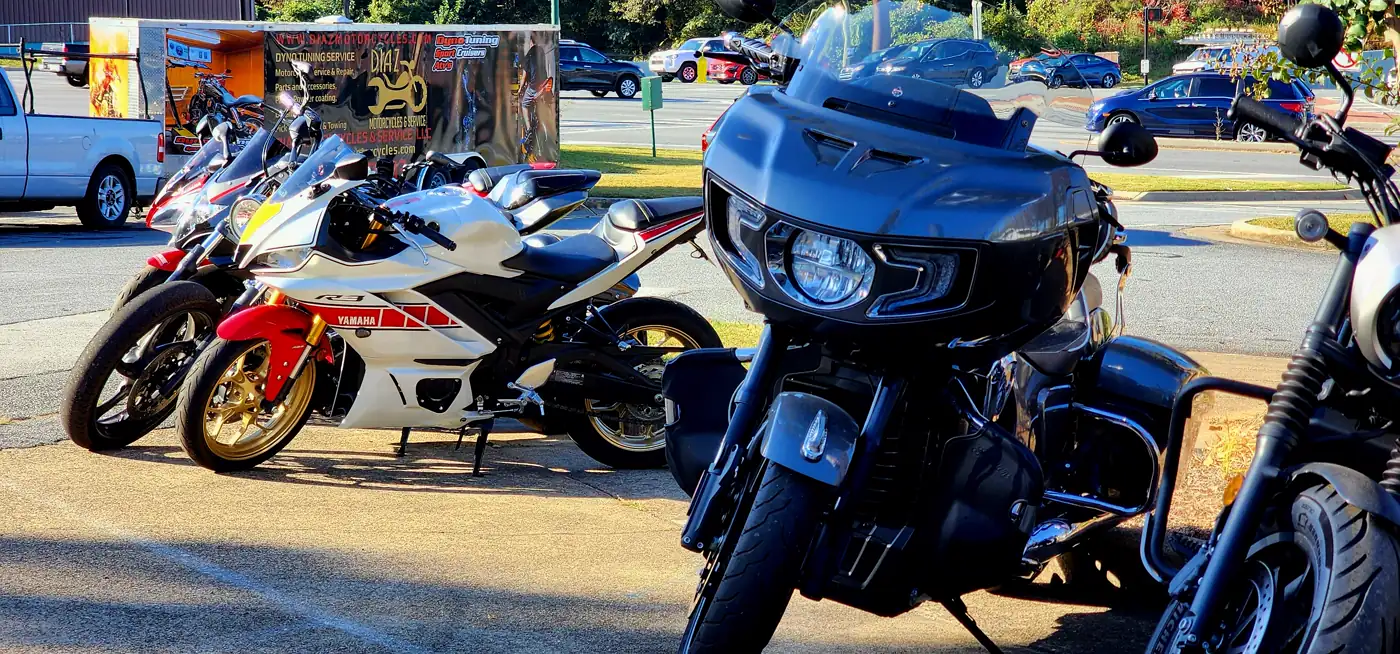
Enclosed transport
Enclosed transport means your bike travels inside a box — a fully covered trailer with walls, a roof, and a door that shuts. No wind, no rain, no rocks, no eyes on it at a fuel stop. It’s the same idea as shipping a painting in a crate instead of tossing it in the truck bed. Even so, the bike is chocked and strapped exactly the same way; it just does the trip in a sealed room instead of out in the open.
That protection is the whole pitch. A fresh custom paint job, a numbers-matching vintage restoration, a long-distance move where the bike sees hours of highway spray — enclosed keeps all of it pristine. What’s more, the cost of that peace of mind is that enclosed is the more involved setup, so it makes the most sense when the bike genuinely earns it.
The internet will tell you one thing. The bikes tell us another.
Search around and you’ll read that enclosed is always the “safe” pick and open is the “budget” pick, like one is good and one is bad. That’s not what we see day to day. We see a garage-stored bagger from BridgeMill ride open across town and arrive spotless, and we see a freshly repainted show bike where enclosed was absolutely the right call. Neither trailer is better. The right one depends on the bike and the trip — and that’s a decision, not a default.
What actually happens at pickup
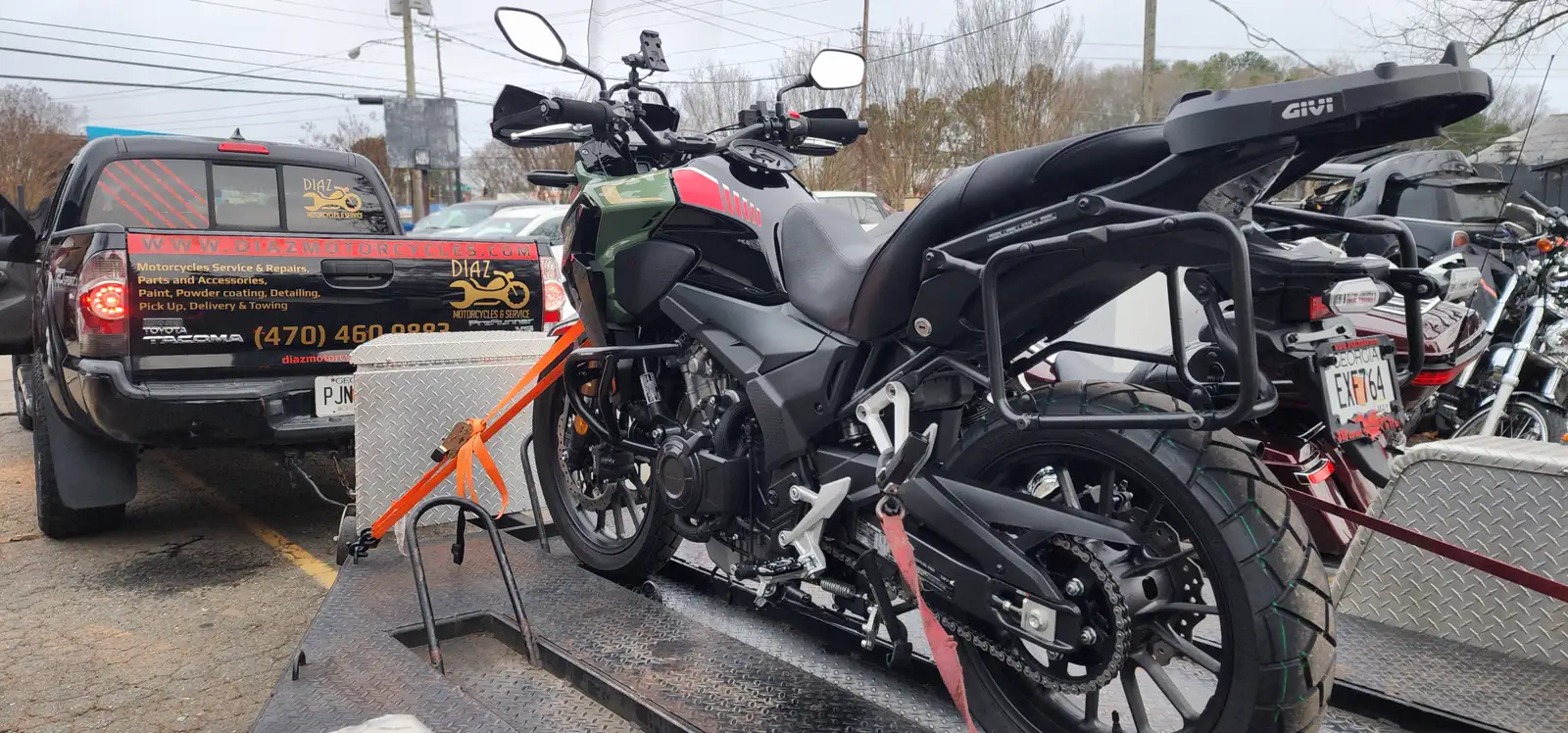
People picture a bike getting yanked around by straps and wince. It’s the opposite. A proper tie-down is calm, methodical, and it’s the same careful routine whether we go open or enclosed. Here’s the order of it, so the mystery’s gone:
- The front wheel rolls into a chock that locks it upright, so the bike stands on its own before a single strap goes on.
- Soft ties or bar straps loop the handlebars or triple clamp — never the throttle side controls — to spread the load.
- We compress the front suspension slightly and cinch it down, so the bike stays planted over bumps instead of bouncing.
- Rear straps steady the tail without over-tightening, keeping the frame square.
- We do a walk-around, check every strap by hand, and photograph the bike loaded before the wheels turn.
That last step matters more than it sounds. Photos and a simple written condition note protect you and us both — everybody agrees on what the bike looked like before the trip and after. That paper trail is standard on any honest haul, and it’s the same on riders over in Kennesaw as it is here. Documentation isn’t red tape. It’s the thing that lets you hand over the keys and stop worrying.
So which one should you pick?
Here’s the straight answer, no fence-sitting. When it comes to enclosed vs open transport Canton owners are deciding, the honest default lands on open. For most riders here, most of the time, open transport is the right call. It’s the workhorse for running errands like a non-starting bike headed in for service, a seasonal storage move, or a solid used bike coming home from a nearby seller. If your bike already lives outside sometimes and gets ridden in real weather, open does the job with zero drama, and it gets your bike to the work we do in house just as safely as anything else.
Now, the situation where enclosed clearly wins — because it does exist, and pretending otherwise would be lying to you. Pick enclosed when the finish is the point. Fresh paint or powder-coat that can’t take a single chip. A collector or vintage restoration where originality is the value. A long-distance move — a bike bought several states away that’ll sit in highway spray for hours. And any bike so rare or personal that you’d lose sleep watching it roll away uncovered. In those cases, the box is worth it, full stop.
Open for the ride you'd make anyway. Enclosed for the bike you can't replace.
That’s the whole decision in one line. If riding the bike in the rain wouldn’t bother you, open is your answer. If the thought of a raindrop on it makes you flinch, go enclosed. Everything else is detail, and we’ll talk it through with you before anything gets loaded.
When to book it
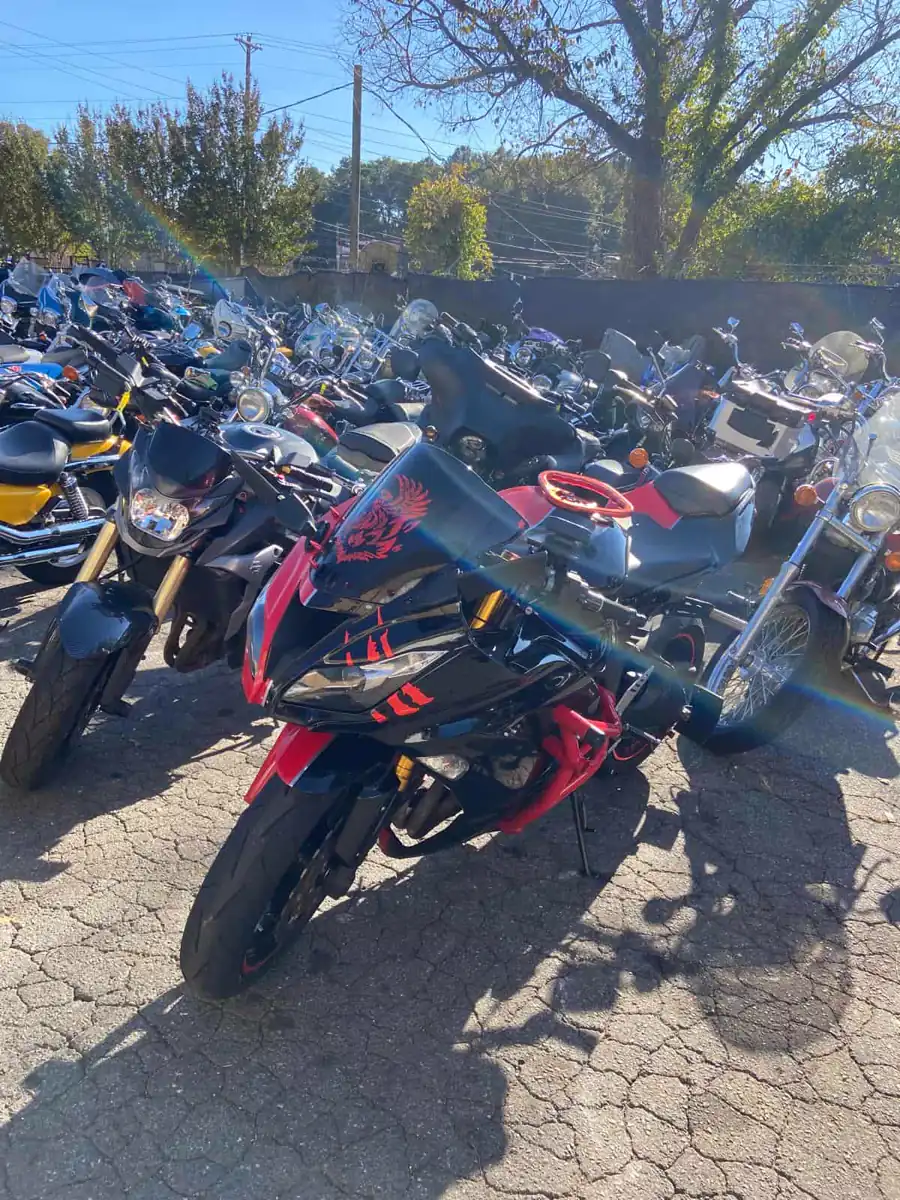
Timing around here is predictable, so use it to your advantage. February through March is wake-up season — the single biggest stretch of the year for bikes that sat all winter. Dead batteries, varnished fuel, flat-spotted tires, sticky brakes, and the potholes that freeze-thaw carves into the north-county roads every spring. That’s when the phone lights up, so a bike that won’t start in early March is in good company.
Because that window is busy, a little lead time helps. If your bike is a seasonal storage mover and you already know the pattern, we wrote up the full rundown on it so you can plan the pickup instead of scrambling. And if you’re between rides while the bike’s out, a refresher never hurts — the MSF rider courses are a good spring reset before the mountains open up.
Why this is easy from Canton
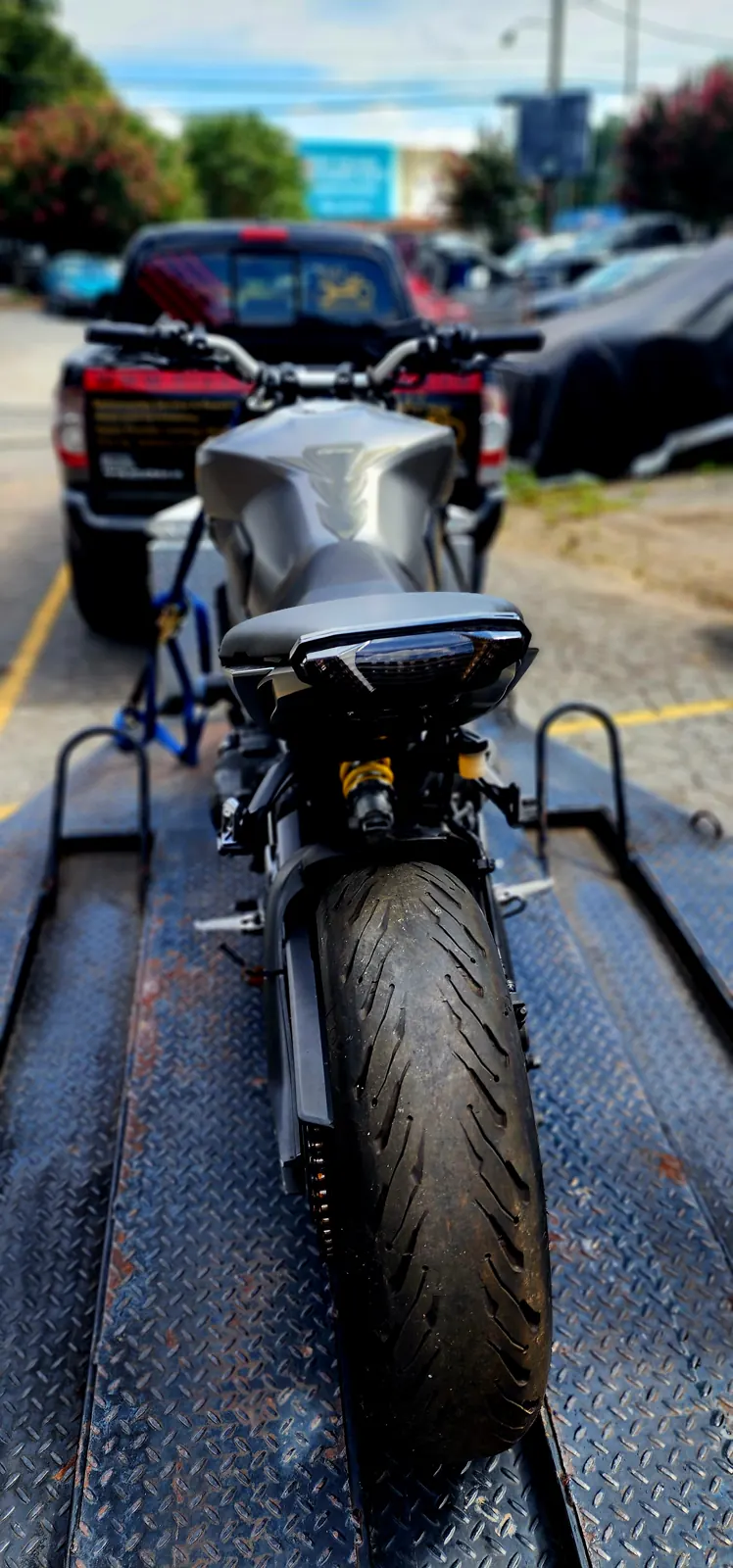
Here’s the part that makes the whole thing painless. You already drive south for everything. Canton sits at the gateway to the North Georgia mountains — the last real services town before the highway becomes GA-515 toward Jasper and Blue Ridge — and that means folks here point their trucks toward Cobb all week without thinking twice. Whether you’re coming off East Cherokee Drive, Bells Ferry Road, Univeter Road, or Sixes Road to skip the I-575 backup, you’re already headed our direction. Dropping a bike in East Cobb is a zero-cost detour, and when the bike won’t run at all, we save you the drive entirely and just come get it.
We help riders all over the county — the garage-stored cruisers out in BridgeMill, the newer builds over in Lakeside at River Green, and the lower-maintenance townhome crowd at Franklin Park at River Green and the River Green Villas at Riverstone. Some of these bikes come off the same roads that make the Henderson Mountain Loop such a good Saturday, and a few belong to the folks who work over at Northside Hospital Cherokee on Bluffs Parkway. Downtown, if you park near History Cherokee across from the deck, you know the drill — it all funnels the same way. The big chain over on Riverstone Parkway, RideNow Powersports Canton, handles plenty of routine work, but for pickup on a stuck bike, a straight comparison of your two transport options, and a real recommendation, that’s where a smaller shop earns its keep.
A quick story, because it makes this concrete.
A friend we helped bought a clean older bagger a couple hundred miles out, sight-mostly-unseen, and couldn’t ride it back. He assumed he needed enclosed because it was “special” to him. We talked it through. The paint was original and honest, but not show-fragile, and the trip was mostly interstate on a dry week. Open was the right call, and it saved him the extra fuss for a bike that was built to be ridden. It arrived exactly as it left. The next month, a different friend brought us a freshly repainted custom, and that one we hauled enclosed without hesitation. Same shop, two answers, both correct. That’s the difference between a default and a decision.
The bottom line
So take a breath. That bike in the garage that won’t cooperate isn’t a crisis — it’s a phone call. Most likely you want open transport, because it’s the honest fit for a running-or-not bike making a normal trip. If the finish is the whole point, or the bike’s crossing several states in the weather, enclosed is worth every bit of the extra care. Either way, the hard part — getting 600 pounds of dead weight loaded safely — is our job, not yours. Weighing enclosed vs open transport Canton doesn’t have to be complicated: tell us the bike and the trip, and we’ll match it to the right trailer in about two minutes.
THE SHORT VERSION
Open transport for the bike you’d ride in the rain anyway. Enclosed for fresh paint, rare restorations, and long hauls across state lines. Not sure? Send us a photo and one line about the trip — we’ll tell you straight which one your bike needs.
If you’re mid-project and want to sanity-check torque specs while the bike’s at the shop, the manufacturer’s own Harley-Davidson service information is a solid reference for the Harley crowd. And when the bike’s back and running, the mountains are 30 minutes north and waiting. That’s the feeling we’re after — you, back on the road, the transport headache already forgotten.
Questions Canton riders ask us
Which one should I pick for a bike that just won't start?
Open transport, almost every time. A non-running bike headed in for service is the textbook open-trailer job — it’s chocked, strapped, and hauled the same careful way regardless of type. Save enclosed for when the finish is the thing you’re protecting, not just the running condition.
What's the real difference between the two?
It comes down to exposure. Open rides in the wind and weather, exactly like your bike does on any ride. Enclosed travels inside a sealed, covered trailer with no rain, road grime, or rocks touching it. The tie-down itself is identical — the difference is the walls and the roof.
Which one protects the bike longer?
For a normal local trip, both arrive in the same shape, so ‘longer’ isn’t really the question. On a long-distance move with hours of highway spray, enclosed keeps a finish cleaner over the miles. For short hauls around the county, open does the job with no downside.
Which is right for my kind of riding?
If you ride a cruiser, ADV bike, or daily rider that already sees weather, open fits you perfectly. If you own a fresh custom paint job, a numbers-matching vintage restoration, or a collector piece, lean enclosed. The bike’s value-you’re-protecting is the deciding factor, not the brand or the size.
Can I switch from one to the other later?
Absolutely. Nothing about one trip locks you into the other next time. Plenty of friends we’ve helped haul a project bike open, then choose enclosed later when the same bike comes back with fresh paint. Just tell us what changed and we’ll set it up.
Do I really need to be there for pickup?
It helps but it isn’t required. We photograph and note the bike’s condition before it loads and after it arrives, so everyone agrees on how it looked. If you can’t be home, we’ll arrange access and keep you updated the whole way.
We run pickup and delivery all across Cherokee County and the surrounding towns, so it’s an easy call whether you’re in Woodstock, Holly Springs, or out toward Ball Ground and Free Home. We regularly help riders in Waleska, Nelson, and up toward Jasper, plus the Cobb and Bartow side in Acworth, Kennesaw, Cartersville, and of course our home turf around Marietta. Even riders over in Alpharetta point their bikes our way, because a short run down 575 beats wrestling a dead bike alone every single time.
STUCK BIKE IN CANTON? WE'LL COME GET IT.
Don’t fight it in the garage. If your bike won’t start, needs a lift to the shop, or is coming home from out of state, text us a photo and one line about the trip. We’ll tell you straight whether open or enclosed is right for your bike, then handle the loading and the drive so you don’t have to. Canton riders, we’re one message away.
470-460-9883Diaz Motorcycles and Service, LLC · 847 Barnes Mill Road, Marietta, GA 30062